分类: politics

  • Ralph, Camillo, ‘ULP bigwigs’ lack ‘moral authority’ on constitutional issues

    Ralph, Camillo, ‘ULP bigwigs’ lack ‘moral authority’ on constitutional issues

    A longstanding political and legal figure in St. Vincent and the Grenadines has delivered a blistering rebuke to top leaders of the opposition Unity Labour Party (ULP), arguing they have forfeited any moral standing to condemn the current government’s planned constitutional amendments over ongoing election legal challenges.

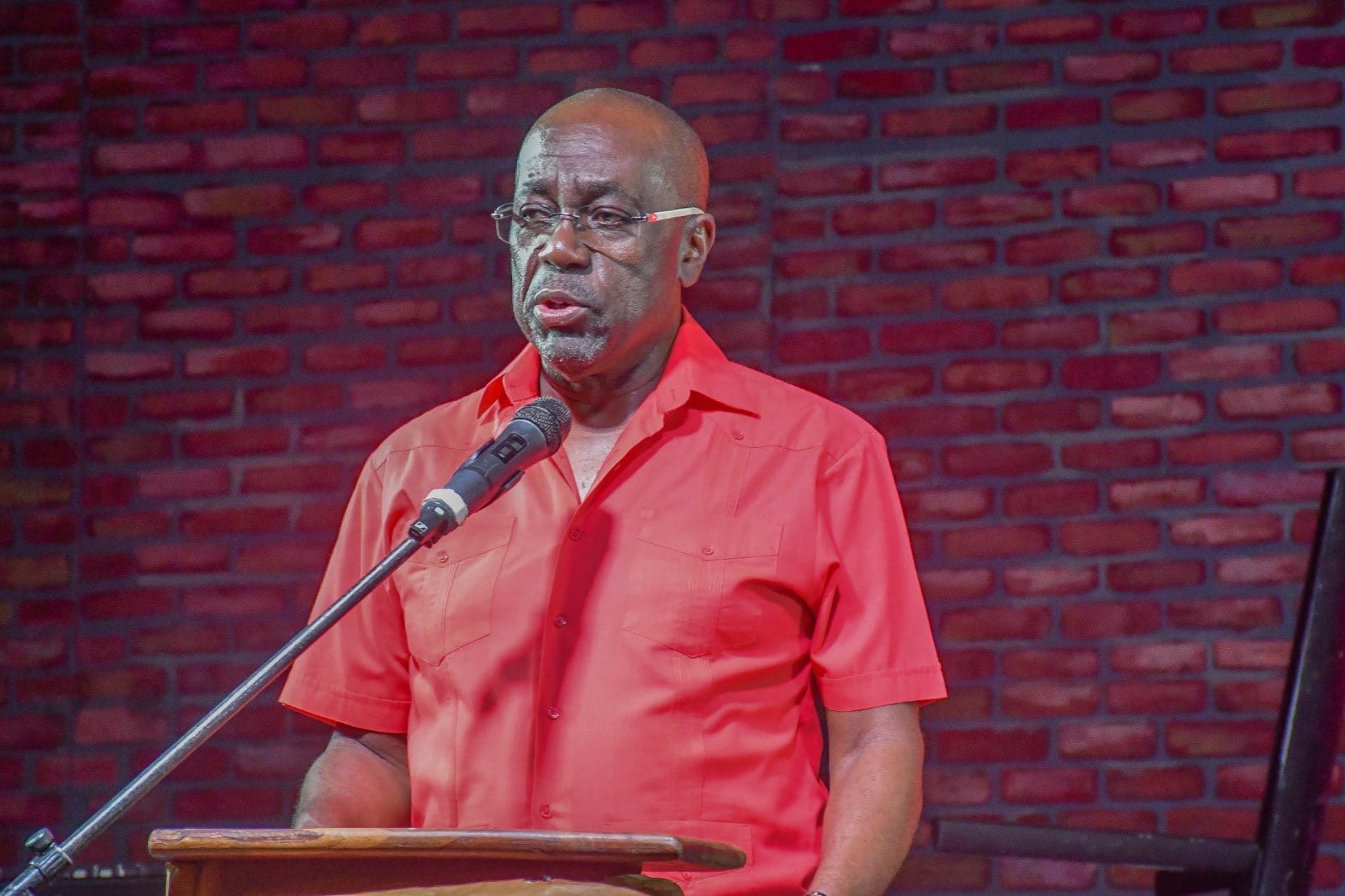
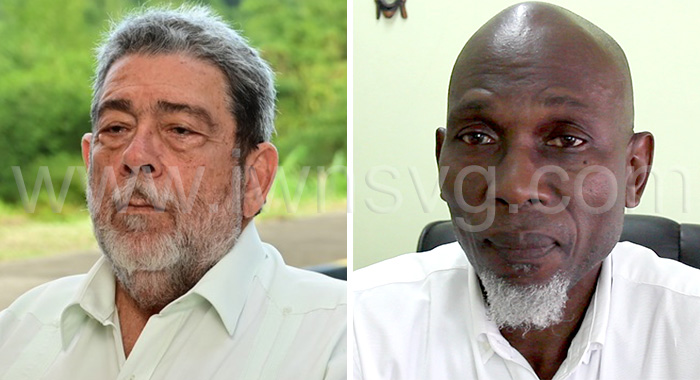
    Jomo Thomas, a former Speaker of the House of Assembly, practicing lawyer, journalist, and one-time New Democratic Party (NDP) electoral candidate, laid out his case in an interview with iWitness News on Wednesday, calling out ULP Opposition Leader Ralph Gonsalves, his son and former ULP Finance Minister Camillo Gonsalves, and other senior ULP figures for their recent sanctimonious rhetoric about constitutional respect.

    The current dispute traces back to last November’s general election, when after two decades in power under Ralph Gonsalves, the ULP was decisively voted out of office by the electorate. The ruling NDP, now led by Prime Minister Godwin Friday, took office, but the ULP has since filed two high-stakes election petitions challenging the legitimacy of Friday’s win in Northern Grenadines and Finance Minister Dwight Fitzgerald Bramble’s victory in East Kingstown. The ULP argues the pair were ineligible to run for office because they hold Canadian citizenship, a fact that has been public since before they first stood for election.

    In response to the pending challenge, scheduled for trial in June, the NDP government has proposed a constitutional amendment to clarify the legal definition of “foreign power” to resolve eligibility questions. The ULP has decried this move as an unconstitutional power grab to protect the sitting government, framing the change as a threat to St. Vincent and the Grenadines’ founding governing document. Thomas, however, says this outrage rings hollow given the ULP’s own long history of disregarding constitutional norms when it held power.

    Thomas points to a 2015 parallel that exposes the ULP leadership’s hypocrisy. After that year’s election, the NDP filed its own election petitions challenging ULP seat wins, and when the courts agreed to hear the case, Ralph Gonsalves, who was still prime minister at the time, publicly dismissed the court’s role in determining election outcomes. In 2017 comments that still stand on record, Gonsalves argued that only voters, not judges, get to decide who represents the public, saying “The courthouse doesn’t determine who represents you… Judges do not decide who are your representatives.” Now, Thomas notes, Gonsalves is insisting the court must be the final arbiter a direct contradiction of his own previous stance.

    Beyond this flip-flop, Thomas details a series of past actions by the Gonsalves-led ULP administration that he says amount to direct assaults on the constitution. He cites the Public Administration Act, which Ralph Gonsalves championed and Camillo Gonsalves supported, a law that Thomas argues improperly stripped the independent Public Service Commission of its constitutional authority over public sector hiring. Thomas’s own legal chambers have won multiple court rulings that found the ULP administration violated the constitution during its time in office. He also points to violations of the Finance Act related to unregulated special warrants, documented in a 2020 article he wrote, as well as the ULP’s maneuvering to block an NDP no-confidence motion when the party held a narrow 8-7 parliamentary majority.

    Thomas acknowledges that he, as speaker at the time, allowed the ULP’s procedural gambit to block the no-confidence debate, but says he was pressured into the decision by Camillo Gonsalves, who argued that standing orders allowed the amendment to kill the motion. Thomas now says that was a mistake: standing orders are subsidiary legislation that cannot override the constitutional requirement to hold votes on no-confidence motions, a fact the ULP leadership knew full well when they pushed the maneuver through to protect their government.

    While Thomas rejects the ULP’s moral authority to comment on constitutional respect, he does not fully back the NDP’s planned amendment either. He agrees with the ULP’s top leadership’s prediction that the court will throw out their election petitions, and says the NDP’s push to amend the constitution ahead of the June trial signals unnecessary insecurity about the legal case. Thomas confirms that the government only needs a two-thirds parliamentary majority to pass the amendment, but argues that moving forward with the change is unnecessary, even as it remains within the government’s power to do so.

  • From Washington, focused on home

    From Washington, focused on home

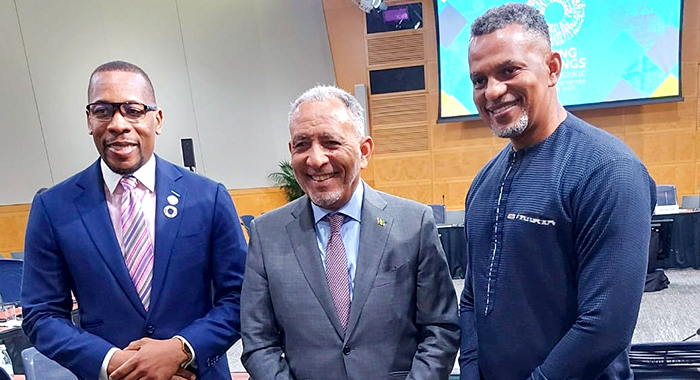
    From the corridors of Washington D.C., where global financial leaders have gathered for the annual World Bank Spring Meetings, Prime Minister of St. Vincent and the Grenadines (SVG), the Honourable Dr. Godwin Friday, has laid out his administration’s core priorities: delivering tangible progress to the people of SVG, expanding high-quality, well-paying employment, reducing the crippling national debt to unlock domestic investment, and ensuring that policy gains directly translate into higher incomes for ordinary citizens.

    Accompanying Friday on this trip are Foreign Minister Bramble and a cohort of senior government officials, who have joined multilateral discussions focused on small island developing states. The Prime Minister emphasized that across the entire Caribbean region, robust employment is the foundation of national resilience. During the 2023 general election campaign, his administration made a clear promise: people will always take precedence over prestige projects. Every government initiative, he says, is rooted in the single objective of improving living standards for all Vincentians.

    For small island economies like SVG, Friday explained, employment is far more than a source of household income—it is the backbone of social stability, post-shock economic recovery, and long-term public and private sector confidence. This year’s Spring Meetings theme, “Building Prosperity Through Policy,” aligns closely with SVG’s domestic agenda: for small vulnerable states, consistent, predictable policy acts as critical economic infrastructure, enabling the government to build the physical and social systems needed to serve citizens. Friday acknowledged that his government inherited a severe economic crisis from the previous administration, but confirmed that targeted corrective measures are already underway to reverse the downturn and put the country on a sustainable path forward.

    This year’s Washington meetings are taking place against a backdrop of heightened global uncertainty, with the spillover effects of ongoing conflicts in Ukraine and the Middle East rippling through global markets and small economies alike. Friday noted that all nations have a shared responsibility to mitigate the impact of these shocks on vulnerable populations. A central focus of his delegation’s work this week has been advancing efforts to address the unsustainable debt burden accumulated by the previous SVG government. Reducing this debt, he argues, will free up critical fiscal space to invest in domestic social and economic programs, unlock the untapped potential of individual Vincentians and local businesses, drive job growth, raise living standards, and address the deep-seated social challenges the country faces.

    No nation can tackle these challenges alone, the Prime Minister stressed. SVG remains fully committed to deepening collaboration with regional and international partners, including the Caribbean Community (CARICOM), the Organisation of Eastern Caribbean States (OECS), the Washington-based multilateral development agencies, and longstanding international partners like Taiwan. This week, a joint ceremonial drill between the Taiwanese Navy honor guard and the Royal Saint Vincent and the Grenadines Police Force is set to take place, a public demonstration of the strength of the bilateral relationship. Though Friday regrets he cannot be present for the event in SVG, he says it embodies the core mission of his trip to Washington: working with all willing partners to advance national development.

    Friday says there is abundant reason for cautious optimism across the Caribbean. The region shares a unified sense of purpose and a growing recognition that collective action is the most effective path to improving lives across all island nations. He offered a metaphor to capture this collective potential: during the Christmas yachting season, SVG’s coastal waters are dotted with the lights of visiting vessels, turning the bay into a glowing sight reminiscent of a Christmas tree. This scene, he noted, is a reminder that the Caribbean’s natural and cultural assets are a shared regional resource, and that instead of competing for investment and tourism, islands should pursue complementary diversification that lifts all regional economies.

    If governments, local populations, and international development partners remain aligned and united, Friday concluded, sound policy will indeed translate into shared prosperity. This prosperity will be measured not just by gross domestic product growth, but by the creation of more jobs, expanded dignity and opportunity for all Caribbean people.

    This op-ed reflects the personal views of the author, and does not necessarily represent the editorial position of iWitness News. The outlet accepts opinion article submissions via email.

  • NDP gov’t ‘unnecessarily burning political capital’ – Jomo

    NDP gov’t ‘unnecessarily burning political capital’ – Jomo

    A prominent Saint Vincent and the Grenadines political figure has launched a sharp rebuke of the incumbent New Democratic Party (NDP) administration’s sudden push to amend the national constitution, arguing the last-minute change is a self-interested move to shield two top ruling party lawmakers from ongoing election challenges rather than a genuine effort at legislative reform.

    Jomo Thomas, a former House of Assembly speaker, trained lawyer, veteran journalist and longtime political commentator who once ran as a Unity Labour Party (ULP) candidate before splitting from the opposition in 2019, shared his critical assessment in an exclusive interview with iWitness News. Thomas, who stepped down from the speaker’s post in early 2020, made clear that despite his break with the ULP, he remains convinced the opposition’s election petitions challenging Prime Minister Godwin Friday and Foreign Minister Fitzgerald Bramble will ultimately fail in court. That, he argues, makes the government’s hasty amendment push all the more unnecessary.

    The controversy stems from two separate election petitions filed by the ULP’s unsuccessful 2025 general election candidates Carlos Williams and Luke Browne. Williams ran in Northern Grenadines, while Browne contested the East Kingstown seat; both challengers failed to unseat Friday and Bramble, who secured their sixth consecutive and second five-year terms respectively, with the ULP having never won either constituency. The petitions center on the fact that Friday and Bramble hold dual Saint Vincentian and Canadian citizenship, a status that opponents argue violates eligibility requirements for parliamentary office.

    After the Order Paper for next Tuesday’s parliamentary sitting was distributed to lawmakers earlier this week, opposition leader Ralph Gonsalves first accused the NDP of rushing the constitutional change to protect its two top officials. Thomas has echoed that critique, going further to argue that the amendment reveals a hidden lack of confidence in the government’s own legal case, despite Friday’s public dismissal of the petitions as “frivolous” after the first court hearing.

    Thomas pointed out that the constitutional section targeted for change is not an entrenched provision, meaning it does not require a two-thirds parliamentary majority or a public referendum to revise. With the NDP holding a dominant 14-1 majority in the 15-seat parliament, the amendment can be passed with a simple majority vote. He noted that if the NDP’s goal was actually to modernize dual citizenship rules for all elected office — a legitimate policy objective — the government could have crafted a broad, forward-looking reform that would allow any native-born Vincentian to run for parliament regardless of what foreign citizenship they hold.

    Instead, Thomas argues the amendment is narrowly tailored to provide short-term protection specifically for Friday and Bramble. “This is not broad, inclusive reform — this is an insurance policy for two of the NDP’s most senior leaders,” Thomas explained. “If the government truly believed their legal position was solid, why would they need to change the law retroactively to insulate themselves from a court ruling? This move makes it look like they don’t actually believe their own claims that the case is frivolous.”

    The former speaker also raised red flags over the proposed change’s retroactive scope, which would apply back to SVG’s independence in 1979, a provision he calls deeply troubling and unnecessary. “Constitutional changes should lay the groundwork for the future, not rewrite the rules of the past to benefit sitting officials,” he said. “I am convinced Friday and Bramble would prevail if the case is decided on its legal merits under the existing constitution. The uniqueness of our constitutional framework means the opposition’s cited precedents from St. Kitts and Nevis, Jamaica, and Australia simply do not apply here. Letting the court issue a ruling would permanently settle all the ongoing debate about dual citizenship eligibility for high office, which is exactly what we need.”

    Thomas also questioned the justification for Friday retaining his Canadian citizenship while serving as prime minister, arguing claims that the status is needed for future health and social security benefits ring hollow. “Former prime ministers in this country already have full access to taxpayer-funded top-tier health care, a benefit that past leaders including Arnhim Eustace and James Mitchell have already used,” he noted. “There is no justifiable reason for a sitting head of government to maintain citizenship in another country, and the public has a right to ask why this is such a priority for the prime minister.”

    Beyond the substance of the change, Thomas criticized the NDP’s process for pushing the amendment through parliament. Reports indicate the government plans to complete all three readings of the bill in a single sitting, cutting off any opportunity for meaningful public input or robust legislative debate. “Changing your country’s constitution is one of the most consequential actions a parliament can take, and doing it in a single day without public discussion does a disservice to democratic governance,” Thomas added.

  • Opposition ‘ramping up’ actions against gov’t

    Opposition ‘ramping up’ actions against gov’t

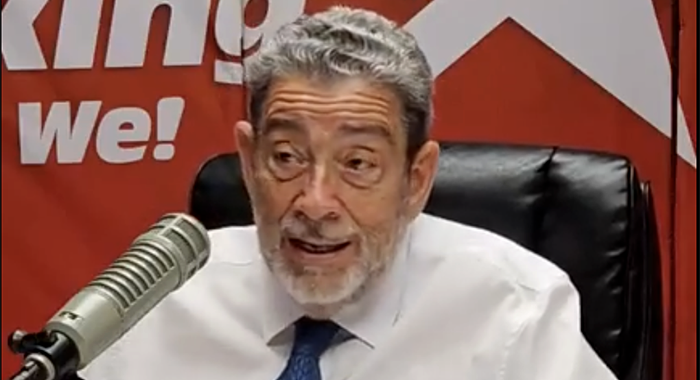
    Four months after the New Democratic Party (NDP) swept the Unity Labour Party (ULP) out of power after 25 years in government, the newly-minted opposition is preparing to escalate its political pushback against the ruling administration, according to opposition leader and former prime minister Ralph Gonsalves.

    Gonsalves, who retained his own parliamentary seat in the November 2024 election as the sole ULP representative to win office, laid out the case for intensified opposition action during an appearance on his party’s owned broadcaster Star Radio Monday. The opposition leader highlighted three core areas of alleged mismanagement by the new government that are driving its planned escalation: widespread dismissals of public sector and allied workers, irregular payment of salaries and benefits to multiple groups of workers, and controversial actions related to state land transactions.

    Among the land disputes Gonsalves cited was a case involving a female buyer who entered into a land purchase agreement with the previous ULP administration and submitted an initial down payment in October 2024, just weeks before the election. Since the NDP took office, the buyer has been blocked from making any further installment payments on the property, effectively freezing the transaction. Gonsalves said he intends to coordinate with Saboto Caesar, the former ULP lands minister and an attorney by training, to pursue legal redress for aggrieved parties like this buyer, noting that binding contracts are being disregarded by the new government.

    “NDP is pushing forward policies that harm working-class and low-income people, from freezing land purchases to holding back paychecks,” Gonsalves said, criticizing the government’s slow response to emerging national issues. He specifically called out the administration’s delayed reaction to market disruptions linked to the Iran conflict, noting it took more than a month for officials to announce any policy response—an action that ultimately only amounted to creating a new task force rather than implementing immediate solutions.

    The NDP government has formally established a task force to address the outstanding salary and economic issues raised by the opposition, with the group scheduled to deliver its preliminary recommendations to Prime Minister Godwin Friday’s cabinet on April 24. Friday has so far declined to publicly comment on potential policy changes, stating that he does not wish to prejudge the task force’s findings. Gonsalves dismissed this approach as a classic delaying tactic, arguing that after four months in office, the NDP administration has failed to deliver any meaningful action on key domestic challenges including rising consumer prices, worker payment issues, and land rights.

    “There is little to no forward momentum in the country right now,” Gonsalves said. “After four months, all we have is firings, unresolved land disputes, late and missing paychecks, and zero action on the cost of living. This government is just kicking the can down the road and hoping problems disappear on their own.”

    To counter what the opposition calls ongoing governmental mismanagement, Gonsalves confirmed that the ULP will ramp up public and political pressure, and pursue legal action in court to resolve disputes over land and contractual agreements reached under the previous administration.

  • Nibbs Calls for ‘Change’ in Barbuda, Backs Beezer with Development Agenda

    Nibbs Calls for ‘Change’ in Barbuda, Backs Beezer with Development Agenda

    Against the backdrop of longstanding calls for renewed infrastructure, economic diversification and improved quality of life on the Caribbean island of Barbuda, a leading political figure has thrown his weight behind a bold new development agenda, pushing for urgent systemic shifts that address the unique challenges facing the island’s community.

    Trevor Nibbs, a prominent voice in Barbuda’s local governance and political discourse, has publicly declared that incremental adjustments to the island’s current development framework are no longer sufficient. In a recent address to community stakeholders and political observers, Nibbs emphasized that Barbuda requires sweeping, meaningful change to unlock its full economic potential, recover more fully from past climate shocks, and deliver equitable opportunities for all residents, particularly young people who have faced growing rates of outmigration in search of better prospects.

    Central to Nibbs’ push for reform is his full endorsement of the development agenda put forward by candidate Knacyntar “Beezer” Nedd. Nibbs highlighted that Beezer’s plan prioritizes targeted investments in climate-resilient infrastructure, sustainable tourism development that centers local ownership, expanded access to affordable healthcare and education, and support for small businesses rooted in Barbuda’s traditional industries such as fishing and agriculture.

    For many years, Barbuda has grappled with systemic challenges that have slowed its progress. The island suffered catastrophic damage from Hurricane Irma in 2017, and many residents have voiced frustration over the slow pace of reconstruction and uneven distribution of recovery funds. Additionally, debates over land use and large-scale development projects have created divisions within the community, with many locals pushing for a model that prioritizes community benefit over outside corporate interests.

    Nibbs argued that Beezer’s development framework directly addresses these community concerns, outlining a clear path that balances sustainable growth with protection of Barbuda’s unique natural environment and cultural heritage. He noted that the agenda prioritizes community-led decision-making, ensuring that Barbudans retain control over their island’s future rather than ceding influence to external actors.

    In closing, Nibbs called on all Barbudans to unite behind the push for change, arguing that a united front is necessary to overcome the political and economic obstacles that have held the island back for decades. He stressed that the upcoming political process represents a critical turning point for Barbuda, and that embracing Beezer’s development agenda will set the island on a path toward long-term prosperity and equity.

  • Greene Defends Road Programme, Says Works in St. Paul’s Are Planned, Not Rushed

    Greene Defends Road Programme, Says Works in St. Paul’s Are Planned, Not Rushed

    Amid growing resident speculation that current road construction projects across St. Paul’s constituency are a rushed pre-election publicity push, Antiguan cabinet minister E. P. Chet Greene has pushed back against these claims, framing the ongoing works as a carefully designed, multi-year long-term infrastructure improvement strategy for the region and the entire country.

    Greene addressed constituent concerns directly during a recent community meeting, where local residents had raised questions about project timing, construction quality, funding transparency, and public safety alongside existing poor road conditions in some neighborhoods. Rejecting outright assertions that crews were rushing work to beat a potential election timeline, he emphasized that the entire programme follows a structured, phased rollout that has been in motion across Antigua for nearly two years.

    “This is not a rush job to check boxes ahead of a vote — we are rolling out projects according to a pre-set plan,” Greene explained. “Major improvements to the country’s core transportation network have been ongoing across the entire nation for the past 24 months, ranging from full upgrades of primary highways to critical arterial routes that connect communities and facilitate commerce.”

    The centerpiece of the current work phase in St. Paul’s is the long-awaited rehabilitation of All Saints Road, a project that Greene says will deliver transformative improvements to regional transportation connectivity. He confirmed that construction has already begun on the high-demand route, noting that the programme extends far beyond major thoroughfares to include incremental upgrades to secondary feeder roads and smaller neighborhood routes. These secondary upgrades are targeted at boosting access for both local residents and small businesses that rely on passable infrastructure for daily operations.

    To address constituent worries over the allocation and use of public funding for the projects, Greene offered explicit reassurance that all resources budgeted for roadworks are being dedicated exclusively to infrastructure development. “The money appropriated for this programme is going directly to fixing roads,” he said, confirming that long-term financing structures are already in place to support continued, incremental improvements across the constituency in coming years.

    In response to resident concerns about persistent poor road conditions and public safety hazards in under-upkept areas, Greene noted that the government’s approach prioritizes long-lasting, durable solutions over quick, low-quality fixes. To extend the functional lifespan of new and reconstructed roads, the ministry is utilizing more resilient, weather-resistant construction materials that can withstand heavy use and local climate conditions. He also called on local community members to partner with the government in preserving new infrastructure, urging residents to avoid actions that could cause premature damage to freshly completed road surfaces.

    Greene wrapped up his remarks by reaffirming that the St. Paul’s road programme forms one core pillar of a broader regional development agenda. He stressed that reliable, well-maintained transportation infrastructure is a foundational requirement for supporting sustained economic activity and improving quality of life for all residents of the constituency.

  • ABLP Launches New Website With Voter Tools and Volunteer Sign-Up Ahead of Election

    ABLP Launches New Website With Voter Tools and Volunteer Sign-Up Ahead of Election

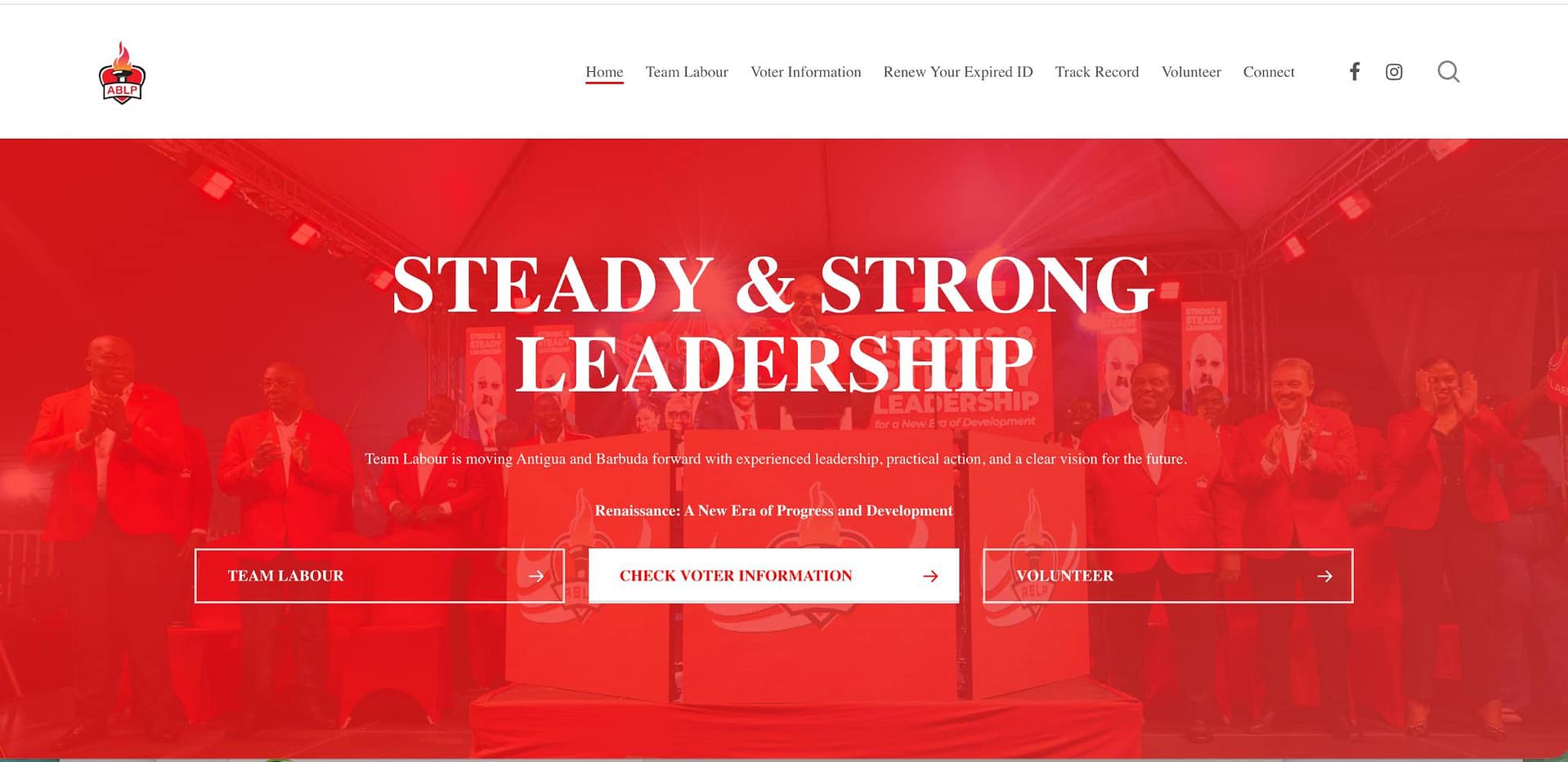
    With the upcoming April 30 general election rapidly approaching, political organizations across Antigua and Barbuda are ramping up their digital-focused voter outreach strategies, and the Antigua and Barbuda Labour Party (ABLP) has taken a major step forward with the official launch of its dedicated centralized campaign website.

    Designed as a one-stop digital space for both party loyalists and undecided voters to connect with ABLP’s electoral efforts, the new platform packs a range of practical tools tailored to address pressing voter concerns ahead of polling day. One of its core features is a streamlined section that lets users quickly check and confirm their current voter registration status, eliminating confusion for citizens who may have updated their personal information or moved residences recently. The site also offers clear, step-by-step guidance for voters who need to replace expired electoral identification cards — an issue that has emerged as a top priority for parties this campaign cycle, as expired IDs are a common barrier to participation on election day.

    Beyond voter services, the platform includes an accessible volunteer sign-up portal that opens opportunities for community members to get involved in campaign activities across all 17 of the country’s electoral constituencies. This feature allows grassroots supporters to connect directly with local campaign teams and contribute to get-out-the-vote efforts, candidate outreach, and other key electoral operations.

    A full navigation of the website reveals a thoughtfully structured layout that organizes resources for visitors. Key functional sections are clearly labeled “Check Voter Registration,” “Renew Your Expired ID,” and “Volunteer,” aligning with the party’s focus on removing barriers to participation. Complementing these practical tools are additional content sections: a “Track Record” page that details the ABLP’s past accomplishments in governing, and a “Team Labour” section that introduces all of the party’s electoral candidates to voters. The website’s homepage leads with the slogan “Steady & Strong Leadership,” which echoes the party’s official campaign theme while ending with a call to action, urging all visitors to step forward and play an active role in the upcoming electoral process.

    The launch of this dedicated digital hub comes amid a broader trend of intensified digital outreach by all major parties ahead of the general election. As political organizers increasingly turn to online platforms to connect with voters, voter engagement and ID renewal have solidified their positions as the defining key issues of this 2025 campaign cycle.

  • Government announces first auction of assets seized from criminal networks

    Government announces first auction of assets seized from criminal networks

    In a groundbreaking step toward combating organized crime and redirecting illicit gains toward public welfare, the Dominican Republic is preparing to host its nation’s first-ever public auction of assets confiscated from transnational and domestic criminal networks. This unprecedented initiative, spearheaded by the National Institute for the Custody and Administration of Seized and Confiscated Assets (INCABIDE), is rooted in the country’s current legal framework, with a clear mission to turn illegally obtained property into sustainable funding for community-focused social programs.

    Slated to take place on May 13 at the Autonomous University of Santo Domingo, the upcoming auction features a diverse catalog of seized properties ranging from private aircraft and luxury yachts to residential and commercial real estate, high-end vehicles, and premium jewelry. All items up for bid have been definitively linked to serious criminal activities, including large-scale drug trafficking, cross-border money laundering, and public sector corruption, authorities confirmed.

    For individuals and entities interested in participating, the Dominican government has outlined clear registration requirements. All bidders must complete their registration in person by May 1 at INCABIDE’s headquarters located in Arroyo Hondo Viejo, and submit a non-refundable registration fee of 5,000 Dominican pesos (RD$). For high-value assets with a minimum valuation exceeding RD$5 million, participants are additionally required to put down a 10% deposit of the asset’s base value to secure their bidding eligibility.

    Officials leading the initiative have stressed that every asset included in the auction has completed the full legal adjudication process outlined under the country’s Law 60-23, guaranteeing that successful buyers will receive full, clear and unencumbered ownership of their purchases. Once the auction concludes, all net proceeds will be allocated exclusively to crime prevention initiatives and social compensation programs designed to support communities harmed by criminal activity.

    This landmark event is widely viewed as a pivotal milestone for the Dominican Republic’s anti-crime and governance reform efforts, demonstrating the government’s commitment to increasing institutional transparency and turning criminal assets into resources that deliver tangible benefits to the general public, rather than allowing illicit gains to remain in the hands of criminal networks.

  • Another April 16th in the daily battle for irrevocability

    Another April 16th in the daily battle for irrevocability

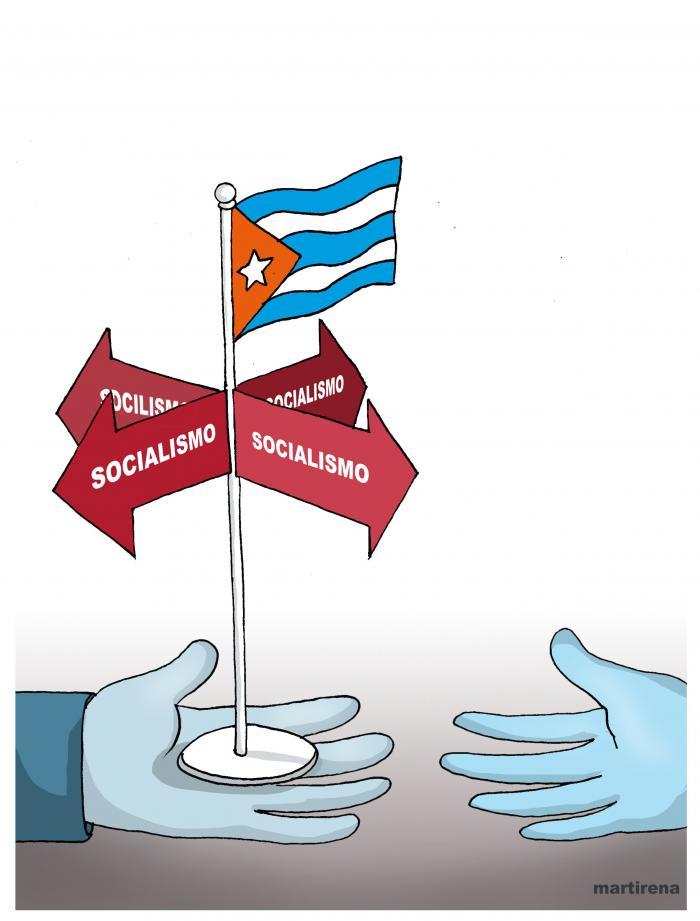
    April 16 returns once more, bringing with it the annual gathering that decades have not been able to erase, held at the iconic intersection of 23rd and 12th Streets in Havana. It is a moment etched deep into the collective memory of the Cuban people, for it was on this site that Fidel Castro publicly confirmed what many already felt in their hearts: the revolution born at Moncada, forged during the Granma expedition and nurtured in the Sierra Maestra and lowland campaign had always been a socialist revolution. This was no empty rhetorical flourish; it was a declaration of fact: Cubans were building something new, something entirely their own, a system that fit no pre-written foreign manual and answered to no outside political slogan.

    A false narrative peddled by critics who refuse to accept that a small, heavily blockaded sovereign nation has the right to chart its own independent course claims that Cuban socialism was imposed from outside. But this claim could not be further from the truth. Cuban socialism is the product of the organic, endogenous evolution of Cuban national consciousness, born on this island out of a urgent need to build a political and social order diametrically opposed to the decades of exploitation and foreign domination that defined colonial rule.

    Today, as Cuba navigates the deepest economic crisis it has faced in decades, compounded by a tightened U.S. blockade that has strained household budgets and tested national morale, some have questioned whether the choice to pursue an independent socialist path was a mistake. The author pushes back against this doubt, arguing that global capitalism’s current model of endless overconsumption is ecologically and socially unsustainable on a planetary scale. How many additional Earths would be required to sustain the reckless wastefulness of a system that measures human worth by how much an individual consumes? Even amid decades of blockade and hardship, Cuba stands as a living proof that another path is possible. This path is not perfect, nor is it a miracle cure for every challenge, but it is the only system that guarantees that every resource the nation has—whether little or much—is shared equitably across the entire population. It proves that a new global order built on cooperation and collective solidarity rather than exploitation is achievable.

    One of the core challenges facing contemporary Cuban socialism, the author argues, is reinterpreting Marxist thought to fit the daily lived experience of ordinary Cubans—translating its core principles into the language people use while waiting in bread lines, riding public buses, walking down neighborhood streets, and gathering with friends. If Cuba’s socialist model were truly a failure, it would never have survived decades of unrelenting, increasingly harsh pressure from a hostile foreign empire. While external enemies are a very real threat, the author stresses that Cubans must also be willing to look inward and acknowledge the internal weaknesses that have held the project back.

    From the revolutionary camp, which remains unwavering in its commitment to building a more just and prosperous Cuba, there are many internal ills that demand open confrontation. Suffocating bureaucratic bloat, widespread indolence, and a persistent tendency to prioritize low-effort shortcuts over long-term collective good are dangerous weaknesses that must be discussed openly. This is not an exercise in self-flagellation; it is a necessary correction: a socialism that refuses to engage in honest self-criticism is a socialism that stagnates, stops progressing, and in the face of aggressive global capitalism, stagnation is fatal.

    Currently, Cuba faces a sustained campaign of cultural hegemony aimed at pushing the nation toward restoring a dependent, predatory form of capitalism—one that turns popular need into a profit opportunity for elites and frames collective solidarity as a weakness. Yet despite this pressure, Cuba remains firm in its commitment to continue building an independent, distinctly Cuban form of socialism, one that does not reject the goals of shared prosperity and long-term environmental sustainability.

    Entrenching the irreversibility of the socialist project is not just an empty slogan to print on banners and ignore; it is a core mandate enshrined in Cuba’s 2019 constitution, ratified by popular vote, that must be re-earned every single day by ordinary Cubans: on factory floors, in agricultural fields, in school classrooms, in doctors’ offices, and in neighborhood grocery stores. Irreversibility is not a guaranteed state of grace; it is a daily battle against apathy, against discouragement, and against the false myth that all political and economic systems are equally good for the Cuban people.

    The path forward demands more open theoretical reflection, more robust public debate about the nature of Cuban socialism, and a renewed commitment to putting those ideas into transformative revolutionary practice. It requires rejecting the stigma attached to the word communism, which has been the target of decades of vicious enemy propaganda, and proving that the generation of Cubans who launched this project were not wrong to choose this path. Cubans must carry forward this work with the same passion that drove their ancestors on that April 16, when a people armed with nothing but their dignity declared that their future would not be shaped by capitalism.

    The author draws on personal experience to illustrate the human cost of abandoning socialism, having known many people whose lives were upended after the fall of the Berlin Wall and the dismantling of socialism in the German Democratic Republic, a nation far more economically developed than Cuba. Some of these people have fared better than others, but all share a common understanding: they lost the system they fought for and believed in, they discovered it was impossible to extract only the positive elements of competing systems, and they watched racism and systemic discrimination reemerge in their homeland. Professionals lost their standing: a prosecutor was forced into a position like a criminal defendant, a doctor refused to treat patients as paying customers, a university rector lost his academic position, even dissidents found their work lost purpose without the system they opposed. Many now feel like strangers in their own native country. The author warns that the pain of losing the socialist project Cubans built would be far deeper, given Cuban national identity, if the nation were to abandon its path.

    There is no use in self-deception: Cuba would not see the wealthy, developed form of capitalism enjoyed by wealthy Western nations if it abandoned socialism. Instead, it would be left with the same exploitative, unequal form of predatory capitalism that has left deep poverty and instability across Haiti, Central America, and much of the African continent, where stories of displacement and deprivation are far worse than what Cuba currently faces.

    That is why this April 16 remains as meaningful as ever: it is a yearly rendezvous with a history that is both a living part of the present and a blueprint for the future. This year, more strongly than ever, the Cuban people continue to choose their own brand of socialism: perfectible, open to improvement, but fundamentally just and humane. This is the same socialism proclaimed on that Havana street corner, successfully defended at the Bay of Pigs, and later enshrined as an irrevocable national project. It is the socialism that the Cuban Constitution guarantees all citizens the right to defend by arms if necessary, and it remains the only viable path for Cuba, here, now, and always.

  • Bay of Pigs, 65 years on: “Analyzing its legacy is not an exercise in nostalgia, it is a strategic necessity”

    Bay of Pigs, 65 years on: “Analyzing its legacy is not an exercise in nostalgia, it is a strategic necessity”

    HAVANA – A landmark theoretical workshop convened to mark the 65th anniversary of Cuba’s Bay of Pigs victory over foreign invasion wrapped up Wednesday at the Fidel Castro Ruz Center, bringing together nearly 200 participants from 19 national institutions and veteran combatants of the 1961 campaign to reaffirm the battle’s enduring strategic relevance for Cuba’s modern fight for sovereignty.

    Organized by the Ideological Department of the Central Committee of the Communist Party of Cuba, the Institute of Cuban History, the Office of Historical Affairs, and the Fidel Castro Ruz Center, the three-day gathering titled “Bay of Pigs, 65 Years after the great victory against imperialism” delivered substantive outcomes, pairing 19 academic presentations with supplementary cultural programming including book launches and documentary screenings.

    Addressing attendees in closing proceedings, Rolando Yero Travieso, head of the Social Sector Affairs Department of the Party’s Central Committee, stressed that revisiting the Bay of Pigs legacy is far more than a retrospective historical exercise. “This is a strategic necessity for our nation today,” Yero explained. “The Bay of Pigs stands as the first major military defeat of U.S.-led imperialism in the Americas, and the lessons of resistance forged over 72 hours of combat continue to light our path as we defend Cuba’s sovereignty, a cause our people have upheld and that has earned admiration from communities across the globe.”

    Noting that the workshop falls on the centennial of revolutionary leader Fidel Castro’s birth, Yero added that examining the 1961 victory is also a way to affirm the lasting value of Castro’s approach to governance and resistance: his unshakable trust in the Cuban people, unwavering ideological clarity, and uncompromising revolutionary commitment. “Today, 65 years after that socialist April, in a world still fractured by imperialist aggression and ongoing fights for national self-determination, Fidel’s words about the Bay of Pigs remain shockingly relevant,” he said.

    René González Barrios, director of the Fidel Castro Ruz Center, highlighted that the personal testimonies shared by Bay of Pigs veterans at the workshop served as a powerful inspiration for young Cuban attendees. The 19 presentations delivered over the course of the event covered core topics including the lead-up to the 1961 invasion, pre-invasion hostile actions by the U.S. military against Cuba, the stark imbalance between the invading force’s heavily weaponized capabilities and Cuba’s militia-led defensive forces, and the enduring validity of the military strategy crafted and led by Fidel Castro during the conflict.

    González Barrios emphasized that the 1961 victory remains a defining source of national pride for Cubans, and a global reference point for anti-imperialist movements across the Americas and the world. He noted that the workshop did not seek to wrap up all existing lines of inquiry into the battle, and announced that the presentations delivered at the event will be compiled into a forthcoming published volume to expand access to their insights.

    The closing ceremony was attended by senior officials and leaders across Cuban political and state institutions, including Yuniasky Crespo Baquero, head of the Ideological Department of the Communist Party Central Committee, representatives of the Revolutionary Armed Forces, the Ministry of the Interior, the Union of Young Communists, and diplomatic representatives accredited to Havana.