分类: politics

  • Suriname en Dominicaanse Republiek versterken banden

    Suriname en Dominicaanse Republiek versterken banden

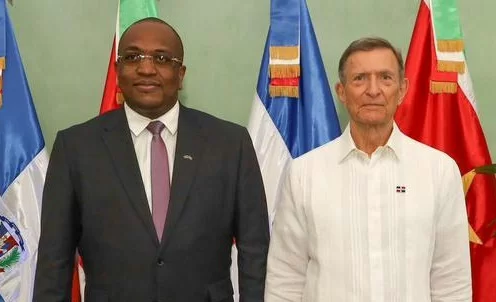
    In a significant step to deepen cross-national ties, Suriname and the Dominican Republic have locked in concrete agreements to expand collaboration across a range of key strategic sectors, following high-level bilateral diplomatic talks held in the Dominican capital of Santo Domingo. The discussions were led by Suriname’s Minister of Foreign Affairs, International Trade and Cooperation Melvin Bouva, who met with his Dominican counterpart Roberto Álvarez on Wednesday. Bouva was joined on the working visit by Raymond Landveld, Suriname’s Minister of Transport, Communication and Tourism.

    The two sides centered talks on strengthening long-standing diplomatic relations and unlocking new mutual economic and social benefits through targeted cooperation across priority sectors. These areas span tourism, education, trade, direct investment, agriculture, transport connectivity, climate action and sustainable energy development.

    During the negotiations, Bouva highlighted the emerging opportunities created by Suriname’s growing oil and gas sector, noting that the expanding industry opens new pathways for joint economic collaboration and cross-border infrastructure development that can benefit both nations. The ministers also pointed out the natural complementarity of the two countries’ tourism industries, a sector that has rebounded strongly globally post-pandemic and offers immediate gains for shared growth.

    Beyond bilateral initiatives, the two leaders emphasized the critical importance of aligned cooperation within regional and international multilateral frameworks, particularly as the world grapples with interconnected global challenges including economic volatility, climate change, and uneven development. Talks also covered a range of shared priority issues: sustainable development, national food security, job creation, and global poverty reduction, all of which were addressed in depth during the formal sessions.

    The diplomatic meeting concluded with the signing of a binding Joint Communiqué, which formally codifies all key agreements and shared intentions for advancing future cooperation between the two Caribbean nations. Beyond the official governmental talks, Bouva held a series of working meetings with representatives from the Dominican private sector, regulatory authorities across tourism, trade, energy and transport, and leaders from ProDominicana, the country’s national investment promotion agency. The agency will partner with the Suriname Investment and Trade Agency to drive forward next steps, with a shared goal of stimulating increased two-way investment and expanding business-to-business connections between enterprises from both countries.

    The visit also laid critical groundwork for an upcoming official visit to the Dominican Republic by Jennifer Simons, President of the National Assembly of Suriname. Bouva concluded his visit and departed for Suriname on Thursday 16 April, traveling on the inaugural flight of Sky High Dominicana, a new air service that will launch a weekly direct flight route connecting Santo Domingo, Dominican Republic, to Paramaribo, Suriname. The new air link is expected to boost tourism, business travel and people-to-people connections between the two nations immediately.

  • National Youth Ambassador Christal Percival delivers compelling national statement at Youth Forum at the United Nations

    National Youth Ambassador Christal Percival delivers compelling national statement at Youth Forum at the United Nations

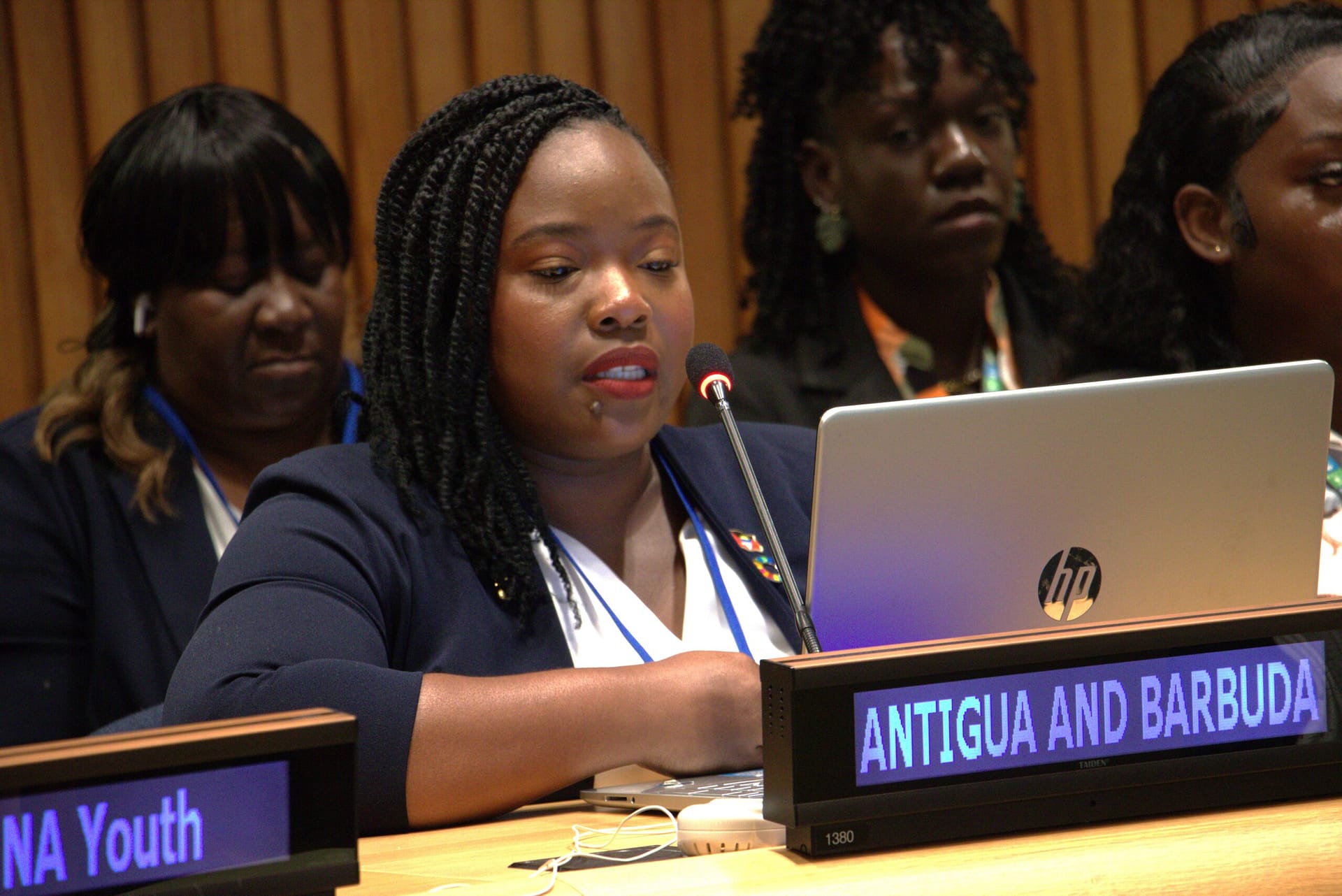
    On April 16, 2026, at the United Nations headquarters in New York, Christal Percival, National Youth Ambassador of Antigua and Barbuda, delivered a powerful national address during the plenary session of the UN Economic and Social Council (ECOSOC) Youth Forum, drawing widespread attention from attending delegates.

    Percival’s intervention opened by spotlighting Antigua and Barbuda’s leading role among the world’s Small Island Developing States (SIDS), while making a clear case for the urgent action needed to accelerate progress on global sustainable development priorities. Her speech centered specifically on Sustainable Development Goal 11: Sustainable Cities and Communities, bringing into sharp focus the daily struggles that low-lying island nations face as they grapple with accelerating sea-level rise, more frequent and intense extreme weather events, and deep-seated economic vulnerability that leaves communities exposed to climate shocks.

    The youth ambassador outlined a series of concrete domestic initiatives that reflect Antigua and Barbuda’s unwavering commitment to building inclusive, climate-resilient development. One flagship program she highlighted is the government’s ongoing effort to break down systemic barriers for young entrepreneurs working in the agricultural sector, by expanding access to affordable land, accessible financing, and targeted tax incentives. These policy changes, she explained, are simultaneously boosting national food security and giving young people the tools to drive growth in more resilient local economies.

    Percival also emphasized that Antigua and Barbuda’s national action plan aligns closely with the Antigua and Barbuda Agenda for SIDS (ABAS), pointing to ongoing work to expand public health access, raise national literacy rates, and mitigate key risk factors for non-communicable diseases, including high obesity rates linked to poor dietary patterns.

    Two key policy areas dominated much of her address: energy transition and climate-resilient affordable housing. She detailed the country’s ongoing efforts to scale up renewable energy generation across the islands, reinforce infrastructure and protective measures for the most climate-vulnerable communities, and roll out a national “housing revolution” designed to deliver safe, climate-resilient homes to all residents.

    In addition to climate and development action, Percival underlined Antigua and Barbuda’s commitment to deepening inclusive governance. She noted that the country is actively expanding opportunities for public participation in policy-making, strengthening national civic education programs, and building more accessible, community-centered platforms for open dialogue between citizens and policymakers.

    Throughout her compelling address, Percival stressed that small island developing states cannot deliver sustainable progress on their own. “It requires steadfast global alliances and sustained investment,” she told the forum, issuing a clear call to the international community to step up and support small island nations as they work to build safer, more resilient cities and communities for current and future generations.

    Percival’s address focused on SDG 11 followed earlier interventions from two other Antigua and Barbuda National Youth Ambassadors, Amelia Williams and Kristine Louisa, who also echoed the urgent need for targeted policy action to advance the outcomes and objectives of the UN Sustainable Development Goals.

    The Antigua and Barbuda delegation to the forum consists of seven members, led by Dr. Jrucilla Samuel, Director of Youth Affairs. Alongside Percival, the delegation includes three other National Youth Ambassadors: Amelia Williams, Kristine Louisa, and Shacia Albertine. The team is also completed by two members of the National Youth Volunteer Corps, Sara Bacchus and Esquire Henry.

  • Who’s Filing and Who’s Not?

    Who’s Filing and Who’s Not?

    Less than two months after the annual legal deadline for Belize’s public officials to submit financial disclosure declarations, transparency and accountability in government has returned to the center of public debate, driven by a social media announcement from one of the country’s sitting cabinet ministers.

    On Wednesday, Infrastructure Minister Julius Espat — who also serves as the elected representative for Cayo South Constituency — made a public post confirming that he had submitted his 14th annual declaration to the nation’s Integrity Commission. In the announcement, Espat emphasized that open accountability and transparent governance are non-negotiable core values for anyone holding public office, noting that he remains committed to upholding these standards through consistent compliance with disclosure requirements.

    “Today I had the honor of submitting my 14th Integrity Commission Report as the representative for the Cayo South Constituency. Transparency and accountability remain at the core of public service, and I am committed to upholding these principles. Grateful for the opportunity to serve,” Espat wrote in his public post.

    Espat’s voluntary confirmation of his compliance has sparked renewed public attention to a longstanding requirement for all elected public officials in Belize, and prompted questions about how many other elected representatives have met their legal obligations ahead of the deadline. Under Belizean existing anti-corruption and good governance legislation, all elected members of the national legislature, appointed senators, and municipal councilors at the town and city level are legally mandated to submit annual declarations of personal assets and private financial interests to the Integrity Commission by March 1 of every calendar year. These disclosures are explicitly designed to prevent conflicts of interest, increase government transparency, and reinforce broader good governance practices across all levels of elected office.

    In follow-up comments to reporters this week, Henry Charles Usher, Belize’s Minister of Public Service and Disaster Risk Management and the Area Representative for Fort George, confirmed that he has completed all required submissions and met the March 1 deadline without requesting an extension. “I’m up to date and I was on time. The Integrity Commission filings are due on March first of each year, so I was on time. I didn’t have to ask for an extension,” Usher stated.

    When pressed to address longstanding public concerns that the Integrity Commission lacks sufficient enforcement authority to compel non-compliant officials to submit their declarations and penalize those who miss the deadline, Usher said that the current legislative framework already includes the tools necessary to hold public officials accountable for meeting this requirement. “I think that the law, the legislation is there to hold public officers to account. Remember this is part of good governance for elected officials to make sure that they produce these filings every year. It has to be done on time,” he added.

    A full interview with Usher is set to air on News 5 Live this evening, where further questions about compliance rates and the Integrity Commission’s oversight role are expected to be discussed.

  • Dominica has seized thousands of ammunition and over 160 firearms since 2023, says Blackmoore

    Dominica has seized thousands of ammunition and over 160 firearms since 2023, says Blackmoore

    At a three-day intergovernmental security roundtable held in early April 2026, Dominica’s Minister for National Security Rayburn Blackmoore has unveiled significant progress in the island nation’s fight against illicit arms trafficking, revealing that local law enforcement has seized more than 160 illegal firearms and nearly 4,000 rounds of ammunition since 2023.

    Speaking to attendees on April 8–10 at the event hosted by Dominica’s Ministry of National Security and Legal Affairs, in partnership with the United Nations Regional Centre for Peace, Disarmament and Development in Latin America and the Caribbean (UNLIREC) and the CARICOM Implementation Agency for Crime and Security (CARICOM IMPACS), Blackmoore detailed the results of sustained enforcement operations: between 2023 and the time of the announcement, officers recovered 3,929 rounds of ammunition, 161 unregistered firearms, and took 121 individuals into custody on related charges.

    The national security minister extended public recognition to the frontline personnel leading these counter-arms efforts, singling out the Commonwealth of Dominica Police Force and the island’s Customs and Excise Division for their commitment, bravery, and consistent operational excellence. He highlighted that representatives from these agencies were in attendance at the roundtable to coordinate next steps for regional and local security cooperation.

    Blackmoore emphasized that eliminating the threat of illegal weapons, which he described as a fundamental danger to Dominica’s social stability, cannot be achieved through isolated action. “If we are to realize success in dealing and combating that threat to our civilization, it’s going to require a collective endeavor going forward,” he told the gathering.

    The current enforcement push is part of a broader coordinated regional effort to implement the Caribbean Firearms Roadmap, a targeted strategy designed to curb illegal gun trafficking across the Caribbean basin, reduce community violence, and strengthen public safety infrastructure for all member states.

    Beyond reviewing progress on anti-trafficking operations, attendees at the inter-institutional roundtable also discussed plans for the construction of a new regulated explosive storage facility in Dominica, a key infrastructure upgrade to improve public safety and weapons management on the island.

  • Inheemse organisatie waarschuwt voor rechtsongelijkheid

    Inheemse organisatie waarschuwt voor rechtsongelijkheid

    On April 16, Het Inheems Kollectief Suriname (IKSur), Suriname’s leading indigenous advocacy organization, issued a blistering rebuke of the starkly divergent sentencing demands put forward by the country’s Public Prosecution Service (OM) in the high-profile Pikin Saron violence case, arguing that the lopsided punishments confirm long-held allegations of unequal treatment under Suriname’s rule of law.

    The case traces back to violent unrest that broke out in the Pikin Saron indigenous community on May 2, 2023. During the unrest, two indigenous residents — Martinus Wolfjager and Ivanildo Dijksteel — were killed by responding police officers. Forensic pathology examinations later confirmed that the two men posed no immediate threat to officers and were not attempting to flee when they were shot; both were already on the ground when they were struck by gunfire at close range, confirming the use of excessive, unwarranted force.

    Seven police officers are currently on trial for their roles in the deadly incident. On February 3, 2026, the OM submitted a sentencing demand calling for a 12-month suspended prison sentence with a three-year probation period for all seven officers, allowing them to remain free throughout and after the trial. In a stark contrast, just weeks earlier on March 24, 2026, the OM reaffirmed its demand for a 15-year unconditional prison sentence for multiple indigenous defendants in the same case during an appeal hearing, maintaining the original harsh sentencing request from the first trial even after a lower sentence was initially handed down.

    IKSur has condemned this disparate treatment as “impossible to reconcile with the core principle of equal justice under law”, describing the lopsided sentencing demands as both “shocking” and “unacceptable”. Beyond the sentencing gap, the organization also raised a series of serious concerns about the investigation and broader trial process. Immediately after the 2023 violence, community leaders called for an independent international forensic pathology investigation to avoid bias, but this request was denied despite accessible international expertise, leaving the probe entirely in the hands of domestic authorities. The trial itself has also shown clear procedural inequalities, IKSur claims: indigenous suspects were arrested swiftly and held in pre-trial detention for extended periods, while the implicated police officers have remained free on bail throughout the entire investigation, which has proceeded at a far slower pace.

    Beyond procedural issues, IKSur emphasizes that the entire case fails to address the root causes of the 2023 unrest, focusing narrowly on the violence itself without acknowledging the decades of unaddressed grievances driving indigenous activism in Suriname. For years, indigenous communities have pursued peaceful advocacy to secure legal recognition of their traditional land rights and protection of their ancestral territories. These repeated calls have been consistently ignored by national authorities, the organization says, allowing unregulated logging, gold mining, and agricultural concession operations to continue expanding into traditional indigenous lands — often without the free, prior, and informed consent of local communities. These activities have left severe environmental damage in their wake and created major public health risks for indigenous populations.

    “What happened in Pikin Saron was an eruption after years of ignored warnings,” stated IKSur chair Captain Lloyd Read. The organization warned that ongoing systemic disregard for indigenous communities’ legitimate demands, paired with clear dual standards in the justice system, is fueling rising social tensions across Suriname and poses an existential threat to the credibility of the country’s rule of law.

    “Without justice, there is no trust. Without trust, there can be no rule of law,” IKSur said in its statement. The organization has issued a public call for greater awareness and urgent collective action from Suriname’s civil society, independent judiciary, and the broader international community to address the inequalities exposed by the Pikin Saron case and advance long-overdue justice for indigenous peoples.

  • COMMENTARY: CARICOM and the New Normal in International Politics

    COMMENTARY: CARICOM and the New Normal in International Politics

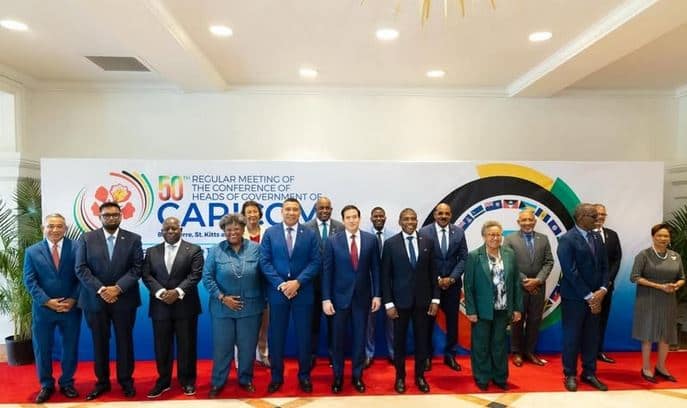
    The Caribbean Community (CARICOM) finds itself navigating one of the most challenging periods in its institutional history, as long-simmering regional tensions amplified by shifting global geopolitics push the 15-nation bloc to its breaking point. When St. Kitts and Nevis assumed the rotating six-month chairmanship of CARICOM’s supreme governing body, the Conference of Heads of Government, this past January, it inherited a bloc fractured by deepening divides over core foreign policy principles at a time of unprecedented global upheaval.

    Under the terms of CARICOM’s founding constituent treaty, the Conference of Heads of Government holds ultimate decision-making authority over the bloc’s agenda, with the rotating chair tasked with advancing collective regional priorities for their term in office. For Prime Minister Terrance Drew, who leads St. Kitts and Nevis and serves as the current chair, the weight of regional fragmentation has shaped every dimension of his leadership from day one. The bloc is currently split along sharp lines over divergent responses to the so-called “Trump Corollary” to the Monroe Doctrine, a high-stakes U.S. foreign policy framework that has created a months-long diplomatic impasse within CARICOM.

    This schism comes as the entire global international order undergoes a seismic transformation — a shift not seen on this scale since the collapse of the Soviet Union and the end of the Cold War, which erased the bipolar global system and paved the way for the decades-long unipolar era that is now drawing to a close. For small developing states that make up CARICOM, this global realignment has created acute pressure to align with competing great power blocs, straining the collective diplomatic coherence the bloc has spent decades building.

    The majority of CARICOM member states have approached the Trump Corollary with deep suspicion and caution, anchoring their positions in the bloc’s long-standing foundational principles: commitment to multilateral dialogue, respect for sovereign international cooperation, and independence in foreign policy decision-making for small states. But a smaller faction of members has broken ranks to offer unapologetic, full-throated support for the U.S. framework.

    The most high-profile split came in response to the recent escalation of tensions between the U.S.-Israeli alliance and Iran, which only recently settled into a fragile, uncertain ceasefire after weeks of spiraling direct conflict. Trinidad and Tobago drew widespread controversy across the region when it openly aligned with Washington’s position on the conflict, while neighboring Barbados took an early, contrasting stance, publicly calling for all parties to exercise restraint as Middle East tensions reached a boiling point. For Drew and his chairmanship, bridging this deepening foreign policy divide and restoring CARICOM’s collective diplomatic voice will be the defining test of his term, as the bloc grapples with whether it can maintain unity amid a rapidly changing global order.

    This report was originally published by the Jamaica Gleaner on April 16, 2026.

  • Motorcades and music mark a festive Nomination Day

    Motorcades and music mark a festive Nomination Day

    Nomination Day for the Bahamas’ upcoming May 12 general election concluded smoothly on Wednesday, with approximately 130 candidates formally qualifying to contest 39 parliamentary seats across the nation, marked by festive political spectacle and only minor administrative hurdles.

    Parliamentary Commissioner Harrison Thompson, the top election official overseeing the process, reported that the day’s proceedings unfolded largely in line with pre-planned expectations, with only limited disruptions and eligibility disputes across a small number of constituencies. No nomination applications were ultimately rejected, Thompson confirmed, after election officials reviewed eligibility concerns that arose in three constituencies: Fort Charlotte, Pinewood, and Garden Hills.

    “From all indications, my team carried out their responsibilities as planned, and it appears everything went off without major issues,” Thompson told reporters. “All candidates who met the formal requirements were able to secure their nomination. Every aspiring candidate submitted the necessary documentation, which was approved by returning officers in their respective constituencies.”

    While official final vote tallies were still being consolidated from remote Family Islands polling districts, early projections put the total number of nominees at roughly 130 across all 41 constituencies. Thompson noted that the final count deviated from preliminary projections in two key ways: the number of independent candidates was lower than anticipated, and one expected minor party ultimately failed to put forward any nominees.

    To secure a spot on the ballot, all candidates were required to submit formal nomination papers, complete mandatory declarations of personal assets and liabilities, and provide additional supporting documentation tailored to their individual eligibility circumstances. Thompson confirmed that several constituencies will see as many as five candidates on the ballot, though a full breakdown of party affiliations per constituency has not yet been released.

    With the nomination process finalized, the Parliamentary Registration Department has shifted its operational focus to preparing for the advance poll, while all candidates’ public asset and liability disclosures are scheduled to be published within two business days. A total of just over 206,000 registered voters are eligible to cast ballots in the election.

    Across New Providence and the Family Islands, the formal administrative process was paired with boisterous political celebration, as candidates arrived at nomination centers accompanied by large supporter entourages, blaring vehicle horns, and traditional Junkanoo musical groups that set a festive tone across the country.

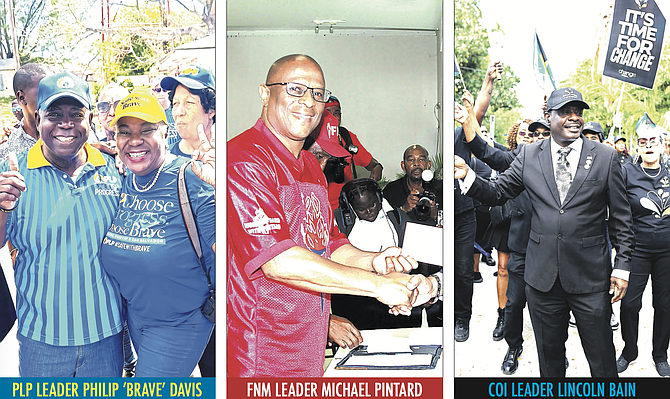
    Prime Minister Philip Davis, leader of the incumbent Progressive Liberal Party (PLP), was among the high-profile candidates formally nominated on Wednesday, confirming his eighth consecutive run for office representing the constituency of Cat Island, Rum Cay and San Salvador. Davis said he felt “exhilarated” to enter the race, and praised the PLP’s full slate of candidates as a unified bloc that balances experienced incumbents with new young political talent.

    “It is a great honour to renew my commitment to serving the people of Cat Island, Rum Cay, and San Salvador,” Davis said after completing his nomination. “Growing up on Cat Island shaped who I am, and it remains a privilege to work every day for real change in these communities.”

    On Grand Bahama Island, Michael Pintard, leader of the opposition Free National Movement (FNM), secured his nomination for the Marco City constituency, arriving at the Belinda Wilson Convention Centre at the head of a large procession led by a decorated campaign truck and hundreds of cheering supporters.

    “I am humbled by the support we are getting from people of Marco City and from the people of Grand Bahama,” Pintard said. “Today, we are happy to get over the formalities of being nominated, and now it’s back to work on the campaign trail. We are optimistic, and we know by the grace of God, on the evening of May 12, we will be the next government.”

    Pintard, who has held the Marco City seat since 2017 and won re-election in 2021, added that the FNM remains fully unified and prepared for what he described as an intensive, hard-fought campaign schedule leading up to election day.

    The Killarney constituency drew some of the day’s biggest media and voter attention, thanks to a crowded ballot that includes former FNM Prime Minister Dr. Hubert Minnis running as an independent candidate. Minnis confirmed his nomination on Wednesday, which also marked his birthday. His decision to run as an independent automatically disqualified him from the FNM, though he was not expelled from the party. “This same photo you’re taking today will be in the history books,” Minnis said. “Never before in the history of The Bahamas has a prime minister who led his party to the greatest victory in recorded history run as an independent after leaving that party.” Minnis said his independent campaign will center on amplifying the voices of ordinary voters, rather than advancing the priorities of any established political party.

    Minnis will face off against FNM nominee Michela Barnett-Ellis, who arrived at the Gambier Primary School nomination center with dozens of red-clad supporters, including her father, former Chief Justice Sir Michael Barnett. “The constituency is ready for a new chapter,” Barnett-Ellis said. PLP candidate Robyn Lynes is also in the race for Killarney, earning a public endorsement from former Governor General Dame Marguerite Pindling, who appeared alongside Lynes at her nomination. “I support the woman,” Dame Marguerite said. “I think she is just so worthy, and I’ll do whatever I can to help see that she wins this seat.”

    For some first-time candidates, the nomination process was a deeply personal milestone. PLP Marco City candidate Eddie Whan, who said he had previously turned down requests to run for the seat nine times, called the moment “a feeling I can’t explain.”

    Assistant Parliamentary Commissioner Denise Pinder confirmed that 16 candidates were nominated across Grand Bahama, with three contenders in most constituencies and four candidates contesting the Pineridge seat. Pinder said the process on the island went entirely smoothly, with all candidates submitting the required documentation without issue.

    The only public dispute of the day came from Lincoln Bain, leader of the Coalition of Independents, who raised questions about the eligibility of Fort Charlotte independent candidate Sebas Bastian, alleging Bastian held undisclosed government contracts that would bar him from running. Bastian rejected Bain’s allegations outright.
  • Bonaby dodges questions on $141m parks authority spending

    Bonaby dodges questions on $141m parks authority spending

    In a tense, rare face-to-face meeting with a political reporter on the eve of the Bahamas’ upcoming general election, sitting Mount Moriah MP McKell Bonaby has stonewalled all questions about the controversial Bahamas Public Parks and Beaches Authority, as growing public outrage builds over the agency’s repeated, unaccountable overspending of public funds.

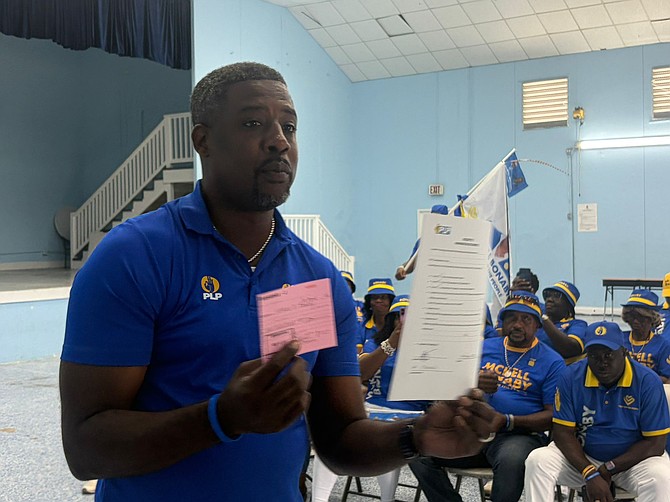
    Bonaby, who filed his official nomination papers to seek re-election at Nassau’s Government High School while surrounded by cheering supporters from his Progressive Liberal Party (PLP), deflected all attempts at questioning about the spending scandal. Framing the nomination day as a unifying, optimistic moment for his campaign, he declined to address any questions about the parks authority, cutting off the interview abruptly. After stating “no further questions”, Bonaby walked away from the reporter, raising his hand in the PLP’s iconic three-finger gesture and shouting the party’s slogan.

    Scrutiny of the public parks agency intensified dramatically this week, after local outlet The Nassau Guardian published an investigation exposing consistent budget overruns with no clear documentation of how allocated public funds have been spent. According to the outlet’s analysis of official budget documents, the agency spent $24.6 million in the 2021/2022 fiscal year – nearly 62 percent over its original $15.2 million budget. For the 2023/2024 fiscal cycle, overspending grew even larger: the agency expended more than $33 million against a $24 million approved budget. Total public allocations to the authority through December 2025 exceed $141 million, according to official budget projections.

    The Bahamas Public Parks and Beaches Authority is tasked with managing and maintaining more than 220 public parks across New Providence, alongside public beaches, roadside green spaces, and public verges. As far back as last year, local residents and officials already raised widespread concerns about the deteriorating condition of many of these public facilities, a gap that has drawn even more attention amid revelations of massive overspending.

    This is not the first time Bonaby has been pressed for transparency on the agency. Previously, the MP pledged to deliver full public accountability, promising a complete public accounting of all financial activity at the parks and beaches authority. To date, that promise has never been fulfilled.

    Additional reporting from The Tribune this week has also revealed that Bonaby, who routinely ignores calls and messages from press inquiries, ranks among the most absent sitting members of parliament since the Davis administration took power in 2021. Official records show he has missed 52 sittings of the House of Assembly, attending just 73.2 percent of all scheduled parliamentary sessions.

    Marvin Dames, Bonaby’s opposition challenger for the Mount Moriah seat, slammed the sitting MP’s refusal to address the spending scandal, saying the complete lack of accountability raises grave red flags for voters and that the Bahamian public has been failed by Bonaby’s leadership.

  • PM highlights bureaucratic pains at Cherry Gardens handover

    PM highlights bureaucratic pains at Cherry Gardens handover

    Nearly 21 years after it first broke ground in 2004, a National Housing Trust (NHT) residential development project in Jamaica marked a major milestone Wednesday, with 34 fully serviced lots formally handed over to beneficiaries at the Cherry Gardens Housing Development in Kitson Town, St Catherine. Speaking as the keynote speaker at the handover ceremony, Prime Minister Dr Andrew Holness framed the multi-decade delay not just as an infrastructure planning issue, but as a stark illustration of deep-rooted productivity challenges holding back national development.

    Holness explained that while missing sewage infrastructure and other unaddressed supporting utilities directly extended the project timeline, the delay exposed a broader systemic cultural problem: even with strong initial planning, public project implementation in Jamaica remains glacial. He noted that Jamaicans often hold a unique cultural perspective that conflates length of process with quality of work, a mindset that has embedded itself in how the country manages public affairs.

    “When we compare our actual achievements against our full national potential, we have to admit that while we have accomplished much, we could have achieved far more,” Holness told attendees. “There is a long-held view in our bureaucracy that if a project does not take years to complete, it cannot have been done properly.”

    The prime minister argued that Jamaica’s bureaucratic culture has for generations prioritized rigid adherence to process over delivery of tangible results, a legacy of the colonial era that continues to slow the rollout of critical public assets including housing. “We were left with a bureaucratic mindset that hides behind regulations and procedural checks, because we have been taught not to trust our own judgment,” he explained. “Currently, our system only frames a lack of process as corruption; the failure to deliver outcomes that citizens need is not held up as a failure at all. That has to change. We need to reframe success around what is actually delivered to the Jamaican people, not just how many boxes are checked.”

    Holness emphasized that boosting productivity across both the public and private sectors is non-negotiable if Jamaica wants to speed up development of all types, including much-needed residential projects. His critical remarks came alongside praise for the NHT and its private partner Preview Limited for finally delivering this phase of the Cherry Gardens development, which forms one segment of a larger 193-lot master project supported by the NHT’s interim financing programme. To date, the NHT has retained 80 lots for public beneficiaries, 47 of which were already handed over prior to Wednesday’s ceremony, with the 34 lots transferred this week marking the completion of that segment.

    Under the NHT’s financing model, the agency provides up to 100% concessionary-rate financing to private developers, on the condition that developers pass those savings on to low- and middle-income home buyers via reduced lot and home prices. Holness acknowledged that the NHT has made major strides in expanding access to housing finance, including offering mortgage rates between 0% and 2% for a large share of low-income borrowers. However, he warned that Jamaica’s housing crisis has shifted: the primary challenge is no longer lack of access to financing, but a chronic shortage of housing supply to meet growing consumer demand.

    Holness explained that ongoing government and NHT efforts to expand financing access without a matching increase in available housing units have inadvertently driven up residential prices across the market. “We keep increasing the amount borrowers can access to buy homes, and we create special preferences for public servants and young buyers to help them get a foot on the property ladder,” he noted. “But what we’ve found is that the more we expand access to financing, the more prices climb. That’s purely a matter of supply and demand: there simply are not enough homes being built to meet the demand we’ve created.”

    To address this systemic mismatch, Holness announced that the NHT and national government are rolling out a new comprehensive master planning framework designed to unlock unused developable land and speed up housing delivery across the country. The centerpiece of this new approach is the Greater Innswood strategic plan, led by the NHT, which will coordinate integrated development across existing and new communities in St Catherine by resolving long-standing infrastructure gaps that have stalled residential projects for decades.

    Holness said the plan will directly target the core constraints that have historically delayed or blocked development approvals: inadequate road networks, poor drainage systems, unreliable water access, and missing sewage infrastructure. Once fully implemented, the master plan is projected to unlock thousands of new housing units across the Greater Innswood area, with multiple pre-identified projects already lined up that will deliver more than 3,000 new residential units in the near term.

    Closing his address, Holness stressed that a national cultural shift to prioritize productivity and outcome-focused governance is essential for Jamaica to meet its development goals and deliver public projects far more efficiently. “Right now, our system only cares if every ‘i’ is dotted and every ‘t’ is crossed – we call that good governance, and we ignore if people never get the road or the home they were promised,” he said. “We need to tie the performance of administrators, executives and ministers directly to whether citizens get the tangible outcomes that improve their lives. Effort must equal outcome, and we must measure success by delivery. This shift is the only path that will let Jamaica deliver 34 lots in far less than 21 years going forward.”

  • Charles Jr claims trickery in some hurricane grant demands

    Charles Jr claims trickery in some hurricane grant demands

    Nearly two months after Category 5 Hurricane Melissa swept across Jamaica’s affected regions on October 28, 2025, Jamaica’s Minister of Labour and Social Security Pearnel Charles Jr has raised sharp allegations of political manipulation surrounding the island’s multi-billion dollar national hurricane shelter recovery initiative. Speaking at the weekly post-Cabinet press briefing held at Jamaica House in St Andrew on Wednesday, Charles Jr claimed that a large share of the 9,958 households classified as sustaining “no significant damage” during post-storm damage assessments are being weaponized as political pawns by bad actors to incite unwarranted calls for unqualified grant assistance.

    In his address to reporters, Charles Jr urged disaster-affected Jamaicans not to allow themselves to be co-opted for political gain, reaffirming a core eligibility rule for the government’s flagship Shelter Recovery Programme: households that have already received any form of recovery support do not qualify for additional benefits under the initiative, regardless of unsubstantiated claims to the contrary.

    Following the destructive passage of Hurricane Melissa, official assessment teams from the Ministry of Labour completed damage surveys across more than 113,000 affected households, a figure confirmed by the ministry’s new real-time digital tracking system. Final classification broke down damage into four tiers: 17,826 households recorded severe damage, 42,586 major damage, 41,079 minor damage, and 9,958 no significant damage.

    The national Shelter Recovery Programme, which is administered by the Ministry of Labour, was designed to streamline post-disaster recovery efforts, eliminate redundant support, and restore safe living conditions for all storm-impacted families across Jamaica. The initiative integrates multiple support pathways: targeted cash assistance, government and non-government partner-led home repairs, relocation support, and connections to long-term housing solutions. Its core grant-based component is the Restoration of Owner or Occupant Family Shelters (ROOFS) programme, which allocates verified grants based on official damage assessments: eligible households receive JMD $75,000 for minor damage, $200,000 for major damage, and $500,000 for severe damage. Backed by an initial $10 billion government allocation, ROOFS prioritizes recovery support for vulnerable groups including seniors, people with disabilities, and households that suffered the most extreme storm damage.

    Charles Jr told reporters that bad actors have deliberately mixed factual information with exaggeration and false claims to spread public confusion about eligibility requirements. He stressed that households categorized as either “no damage” or “no significant damage” do not meet the threshold for any grant under ROOFS or the broader Shelter Recovery Programme, and that duplicate benefits will not be approved under any circumstances. “The non-negotiable core principle of this programme is one benefit per household across the entire Shelter Recovery Programme, not just per component,” he explained. “If you have already received government-led repairs, for example from the Jamaica Defence Force (JDF) fixing your damaged roof, you cannot also access a cash grant through ROOFS, and vice versa.”

    Charles Jr specifically called out political actors who are spreading misinformation to already-supported households, telling them they are owed cash grants despite already receiving in-kind repair support. “Most of the public agitation we are seeing right now comes from people who know the rules, but they are deliberately misleading families whose roofs have already been fixed to stir up anti-government sentiment,” he added.

    While the minister acknowledged that the new digital assessment and tracking system, rolled out for the first time for this recovery effort, has encountered some early operational challenges, he pushed back against ongoing claims about unresolved cases that have already been addressed. He noted that community and political leaders should not continue to frame resolved issues as ongoing problems to incite public anger.

    Speaking directly to Members of Parliament and other public figures who have raised individual case concerns publicly, Charles Jr said that all named cases shared so far have already been reviewed by his ministry. “To protect the integrity of our recovery process, I can confirm that every person named has already had their case processed, and we have full records of who has received their benefit,” he stated, warning against attempts to defraud the recovery programme.

    He emphasized that the new digital system, which processes assessment data in real time, makes systemic manipulation far more difficult than past recovery efforts. “The digital innovation we have put in place gives us full, transparent access to all data, and our ongoing reconciliation process cross-checks every claim to eliminate duplication. If anyone has a legitimate concern, instead of raising it publicly to agitate — which you have a right to do — we ask that you share the details with our team directly so we can resolve the issue,” Charles Jr added.

    The ROOFS programme has already begun disbursing benefits to qualified beneficiaries, with a formal grant handover ceremony held on January 30 at the Ministry of Labour and Social Security’s Santa Cruz, St Elizabeth office. The event saw Prime Minister Dr Andrew Holness present a grant cheque to beneficiary Chevanese Myrie, in attendance with Agriculture Minister Floyd Green and Charles Jr.