分类: politics

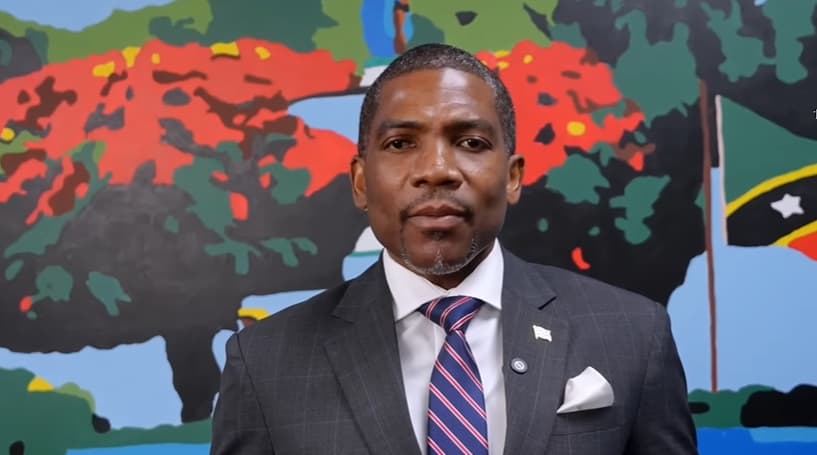
  • Honourable. Mark A. G. Brantley Premier of Nevis and Leader of the Opposition in St. Kitts and Nevis New Year’s Address 2026

    Honourable. Mark A. G. Brantley Premier of Nevis and Leader of the Opposition in St. Kitts and Nevis New Year’s Address 2026

    In his comprehensive New Year’s Address for 2026, Honourable Mark A. G. Brantley, Premier of Nevis and Leader of the Opposition in St. Kitts and Nevis, articulated a compelling vision for national progress while calling for renewed social cohesion among citizens. The address balanced celebration of 2025’s economic achievements with a sober acknowledgment of growing societal divisions, particularly in public discourse and social media interactions.

    Premier Brantley commenced with traditional seasonal greetings before launching into an extensive review of the federation’s accomplishments throughout 2025. The nation witnessed significant economic growth with a 3% increase in employment figures and a remarkable 30% surge in new registrations within the Financial Services Sector. Infrastructure development saw substantial progress through road construction at Morgan Estate and widespread rehabilitation of transportation networks across Nevis.

    The healthcare sector achieved groundbreaking milestones, including 25 patients receiving specialized colon treatments, 633 men undergoing prostate screenings, and 1,576 individuals benefiting from the Eye Care Program. Alexandra Hospital made history by performing cataract surgeries, glaucoma treatments, diabetic eye care, and pioneering corneal transplant procedures.

    Housing development emerged as a particular success story, with the Nevis Housing and Land Corporation constructing 25 homes valued at $6.9 million in 2025 alone. Since 2013, the administration has delivered 346 homes totaling $76.1 million in investment—a transformation Premier Brantley characterized as a ‘housing revolution.’

    The address highlighted innovative economic diversification strategies, particularly the development of a film industry initiated during the COVID-19 pandemic. Six major motion pictures filmed on the island in 2025, accompanied by a second fashion shoot from Southern Tide Fashion Brand, creating both economic opportunities and platforms for local talent.

    National security received significant enhancements through the operationalization of a modern 911 Dispatch Unit, expansion of the K9 Unit with three new dogs, and installation of phase one of a sophisticated Radar System with high-resolution cameras.

    Looking forward, Premier Brantley outlined an ambitious agenda for 2026 featuring: geothermal drilling contracts in the first quarter, construction of 34 additional affordable homes, sale of 134 lots at Garner’s Estate, accelerated chicken broiler project development at Prospect, and commencement of both the Airport Project and Alexandra Hospital Wing Project. The cultural sector will see production of a major film starring acclaimed actor Taye Diggs, while infrastructure improvements will continue with road rehabilitation projects.

    The tourism sector anticipates a substantial 27.7% increase in cruise arrivals and daily flights between St. Maarten and Nevis via WINAIR.

    Premier Brantley addressed concerns regarding the proposed Destiny south coast development, acknowledging public apprehensions while emphasizing the necessity of bold economic decisions for sustainable progress. He argued that avoiding necessary development due to fear would result in economic stagnation and dependency, urging citizens to embrace transformative projects that would create jobs, attract investment, and enable diaspora citizens to return home.

    The Premier concluded with a powerful call for national unity, respect for diverse opinions, and collective commitment to building a prosperous future for St. Kitts and Nevis, invoking divine blessing for the nation and its people in the coming year.

  • Opposition Leader: Preparation and renewal in 2026

    Opposition Leader: Preparation and renewal in 2026

    In her New Year’s Day address, Opposition Leader Pennelope Beckles articulated the People’s National Movement’s strategic roadmap for 2026, emphasizing organizational preparation and structural renewal as core priorities. The first female political leader in PNM’s history declared the party’s fundamental objective involves rebuilding public trust in governance while ensuring optimal management of national resources for all citizens’ benefit.

    Beckles, who assumed leadership responsibilities in 2025 following the PNM’s electoral defeat, underscored her solemn duty to advocate for Trinidad and Tobago’s populace and maintain governmental accountability. The April 28 general election had resulted in a significant political shift, with the United National Congress securing 26 parliamentary seats against PNM’s 13, alongside two seats captured by the Third Party Platform.

    The Opposition Leader acknowledged profound national challenges throughout the past year, citing escalating living expenses, economic volatility, struggling small enterprises, and persistent criminal activity affecting citizens’ security. These realities, she emphasized, necessitate responsible leadership, clear vision, and reinvigorated dedication to national interests.

    Beckles reaffirmed her commitment to standing alongside citizens in defending their dignity and right to governance that serves rather than exploits. While recognizing the seriousness of existing challenges, she expressed confidence that disciplined leadership and national unity could overcome these obstacles.

    The New Year’s message highlighted the unique global moment where cultures, borders, and beliefs converge in shared anticipation of improved circumstances. Beckles extended greetings to domestic and international citizens, along with Caribbean and global communities, urging purposeful advancement into 2026 with collective dedication to creating a safer, more equitable, and prosperous Trinidad and Tobago.

  • Coastguardsman denied promotion, gets $175,000 in damages

    Coastguardsman denied promotion, gets $175,000 in damages

    In a landmark ruling that exposes significant administrative failures within Trinidad and Tobago’s defense establishment, High Court Justice Kevin Ramcharan has ordered the state to pay $175,000 in damages to Coast Guard Lieutenant (Naval) Chevon Diaz for unlawfully denying his promotion. The December 30 judgment revealed that flawed performance evaluations and unsubstantiated allegations regarding a missing weapon were improperly utilized to hinder Diaz’s career advancement.

    The court determined that Diaz, an 18-year veteran of the TT Coast Guard (TTCG), was unjustly bypassed for promotion to acting lieutenant commander due to irrelevant and unsupported claims that contaminated decisions affecting his seniority, compensation, and professional trajectory. Justice Ramcharan delivered a sharply critical assessment of the evidence presented by the state, particularly questioning the affidavit testimony of then-Coast Guard commanding officer Captain Don Polo (now Chief of Defence Staff), which demonstrated repeated claims of ignorance regarding matters directly within his purview.

    Central to the case was a 2018 incident involving a missing firearm. The court established that Diaz was not in command of the vessel when the weapon disappeared and that a rating outside his crew was responsible. Since no finding of guilt was ever made against Diaz, the judge ruled that his seniority could not legally be impacted and that negative appraisals connected to the incident should not have been used to penalize him.

    Justice Ramcharan expressed particular concern about the quality of the defense’s evidence, noting: ‘On several occasions, Capt Polo averred that he could not admit or deny certain allegations because it was not within his knowledge. Clearly that cannot be true. He must know about matters concerning him. Therefore, the court views Capt Polo’s averments with respect to those issues very skeptically.’

    The court established that Diaz should have been promoted to acting lieutenant commander on September 15, 2017—exactly six years after his appointment as lieutenant—and to the substantive rank on September 15, 2020, aligning with previous High Court precedent regarding promotion timelines.

    Regarding Diaz’s claim for the Efficiency Medal, which requires 12 years of ‘irreproachable’ service, the court determined that while the standard exceeds mere absence of convictions, the weapons incident could not have tarnished Diaz’s reputation since he was not responsible. The judge ordered reconsideration of the medal decision based solely on relevant factors, though stopped short of directly awarding the medal.

    The court awarded Diaz $100,000 in compensatory damages and $75,000 in vindicatory damages, plus 2.5% annual interest from the claim date until judgment, along with legal costs. Attorneys Arden Williams and Mariah Ramrattan successfully represented Diaz in both judicial review and constitutional proceedings against the Coast Guard commanding officer, the Defence Force Commissions Board, and the Attorney General.

  • In New Year’s message, PM reflects on overcoming challenges while staring down crises

    In New Year’s message, PM reflects on overcoming challenges while staring down crises

    Prime Minister Andrew Holness delivered a sobering yet resolute New Year’s address, framing Jamaica’s recovery from Hurricane Melissa—the most destructive storm in the nation’s history—as a catalyst for transformative change. The Category 5 hurricane, which claimed numerous lives and caused widespread devastation, has prompted what Holness termed a “renewed sense of purpose” among Jamaicans.

    Significant progress has been made in restoring critical infrastructure, with 90% of customers now having electricity, water, and telecommunications services reinstated. The government has initiated comprehensive school repairs and is implementing rotational learning modalities to ensure educational continuity, particularly for exam-bound students. Medical facilities are being restored with support from field hospitals, while first responders and healthcare workers received special commendation for their heroic efforts.

    A landmark home-repair program is underway, leveraging the administration’s economic management which enabled one of Jamaica’s largest social-care initiatives. Over 16,000 citizens have already received rehabilitation grants, with 50,000 damage assessments completed to facilitate targeted aid distribution. The Jamaica Defence Force, alongside engineering corps from Ghana and Guyana, is actively engaged in roof restoration, while modular housing solutions have been procured for those rendered homeless.

    Holness announced the establishment of a National Reconstruction and Resilience Authority with sweeping powers to coordinate rebuilding efforts across multiple sectors including infrastructure, healthcare, tourism, and agriculture. This ambitious initiative is backed by $6.7 billion in multilateral support for reconstruction, which the Prime Minister attributed to Jamaica’s strengthened economic foundation.

    The address highlighted remarkable security achievements, with murders declining by 42% in 2025—marking the first time in 31 years that homicides fell below 700. This third consecutive year of reduced violence demonstrates the success of Plan Secure Jamaica, which involved transforming security forces, creating MOCA, tripling security budgets, and implementing emergency measures.

    Despite these accomplishments, Holness issued a stark warning about impending challenges in 2026, citing climate change as an existential threat. He noted that historically rare weather events are now occurring with alarming frequency, citing back-to-back hurricanes Beryl (2024) and Melissa (2025) as evidence of this new reality. The Prime Minister also pointed to shifting global秩序, geopolitical maneuvering, and economic instability as additional sources of potential crisis, urging national preparedness and resilience in the face of multifaceted challenges.

  • Central Bank: US, Venezuela tensions create economic uncertainty in TT

    Central Bank: US, Venezuela tensions create economic uncertainty in TT

    Escalating military tensions between the United States and Venezuela in the southern Caribbean are creating significant economic uncertainty in Trinidad and Tobago, according to the latest monetary policy report from the nation’s Central Bank. The report, released December 31, 2025, identifies the “fluid geopolitical tension” as a primary contributor to domestic economic instability.

    The military buildup began in August 2025 with the deployment of guided missile destroyers USS Gravely, Sampson, and Jason Dunham to the region. This presence has since expanded dramatically to include the aircraft carrier USS Gerald R. Ford and its strike group, US amphibious assault vessels, the nuclear attack submarine USS Newport News, and elements of the US Marine Corps 22nd Marine Expeditionary Unit (MEU). Notably, this marks the MEU’s first Caribbean engagement since the 1983 invasion of Grenada.

    Trinidad and Tobago has facilitated this military presence by granting the US military indefinite access to Piarco International and ANR Robinson International Airports for transit flights. In November, US Marines established a military radar system at ANR Robinson International Airport.

    Prime Minister Kamla Persad-Bissessar has consistently supported the US deployment, including military strikes on alleged drug vessels that have resulted in at least 107 fatalities across 31 vessels since September 2. This week, President Trump confirmed the destruction of an alleged onshore drug facility via drone strike with CIA involvement.

    The Prime Minister has condemned regional critics of the deployment, asserting that the United States represents Trinidad and Tobago’s sole protector against external threats.

    Economically, the Central Bank reports that growth remains “somewhat tentative” despite increased energy production from two new natural gas fields in the second quarter of 2025. This growth is being partially offset by a non-energy sector losing momentum across multiple sub-sectors, indicating the domestic economy still requires support for sustained recovery.

    International context shows the IMF projecting global output expansion of 3.2% in 2025, marginally down from 3.3% in 2024. While the US economy demonstrates durability despite labor market challenges and elevated inflation, other major economies experience softer growth with persistent inflation.

    Energy markets reflect these uncertain conditions, with West Texas Intermediate crude slipping below $60 per barrel, averaging $59.57 in November and remaining below that threshold in December. This presents challenges for Trinidad and Tobago’s budget, which was pegged against crude oil at $73.25 per barrel and natural gas at $4.25 per mmbtu.

  • PM: 2026 a year of rebuilding, recovery and delivery

    PM: 2026 a year of rebuilding, recovery and delivery

    In her New Year’s Day address, Trinidad and Tobago Prime Minister Kamla Persad-Bissessar unveiled an ambitious governance agenda for 2026, emphasizing economic reconstruction, institutional accountability, and national security enhancement. The Prime Minister characterized the coming year as a pivotal period for tangible delivery across all government ministries and agencies.

    Persad-Bissessar articulated that her administration’s core principle remains “TT first, above all,” asserting that every policy decision and fiscal allocation must directly advance citizen safety, economic prosperity, and national dignity. She mandated all cabinet ministers to demonstrate measurable outcomes, coordinate effectively, and eliminate inefficiency in program execution.

    The government’s 2026 priorities will concentrate on stimulating economic growth through small and medium enterprise support, accelerating public infrastructure development, and strengthening both energy and non-energy sectors to expand employment opportunities. The Prime Minister emphasized that public spending must translate into concrete benefits for citizens.

    Regarding national security, Persad-Bissessar highlighted sustained efforts against violent crime, gang activity, and narcotics trafficking through enhanced international cooperation, particularly with United States authorities. The administration has expanded intelligence sharing, maritime security coordination, and joint operations to disrupt transnational criminal networks and intercept illegal firearms.

    The Prime Minister referenced several legislative achievements including Stand Your Ground and Home Invasion laws designed to protect law-abiding citizens, alongside recently enacted Fireworks and Noise Pollution legislation aimed at safeguarding vulnerable populations.

    Infrastructure improvements and drainage management initiatives have already yielded reduced flooding in multiple communities, while the government has delivered on commitments including the reopening of Couva Children’s Hospital and fulfillment of student laptop programs.

    Persad-Bissessar concluded with New Year’s wishes for safer communities, economic strength, and expanded opportunities for Trinidad and Tobago’s youth, urging national unity and confidence in the nation’s future.

  • New political geography

    New political geography

    The upcoming Tobago House of Assembly (THA) election on January 12, 2026, is poised to serve as a crucial political barometer for Trinidad and Tobago’s transformed political environment. This electoral contest will not only gauge support for Farley Augustine’s emerging Tobago People’s Party (TPP) but also indirectly reflect on Kamla Persad-Bissessar’s United National Congress (UNC) and Penny Beckles’ People’s National Movement (PNM).

    Watson Duke’s December 8 endorsement of the TPP, while politically predictable, raises questions about his current influence. His advocacy for tactical voting to eliminate PNM from Tobago governance echoes broader political strategies gaining traction. Duke asserts that consecutive defeats of PNM—first by the PDP in December 2021 and potentially by the TPP in the upcoming election—would confirm the party’s diminished prospects in Tobago.

    The political rhetoric surrounding ‘Tobago’s interests first’ mirrors the UNC’s ‘Trinidad first’ positioning, which itself reflects the populist nationalism reminiscent of Donald Trump’s ‘America first’ approach. This occurs amid Trinidad and Tobago’s shifting international alignments toward Trump-leaning Latin American nations rather than traditional Caricom partnerships.

    Major political parties demonstrate concerning positions regarding international affairs. The UNC maintains silence on Trump-related matters, the TPP claims ignorance of US political developments, and the PNM operates as if the public has forgotten their decade-long governance.

    The evolving political landscape will face multiple tests throughout 2026. Crime prevention strategies will undergo scrutiny as emergency measures expire and new legislation takes effect. The UNC’s management of Carnival events will reveal administrative capabilities, while mid-year fiscal reviews will test economic management against a five-year development plan potentially influenced by foreign policy decisions.

    Foreign policy orientations and climate crisis responses will increasingly define the nation’s trajectory. While 2025 represented a historic political shift, 2026 may prove even more consequential in determining Trinidad and Tobago’s future direction within this reconfigured political order.

  • NEW YEAR MESSAGE from the Incoming Chair of the Caribbean Community, Hon. Dr Terrance Drew, Prime Minister of St Kitts and Nevis

    NEW YEAR MESSAGE from the Incoming Chair of the Caribbean Community, Hon. Dr Terrance Drew, Prime Minister of St Kitts and Nevis

    Dr. Terrance Drew, Prime Minister of St. Kitts and Nevis, has formally assumed the rotating chairmanship of the Caribbean Community (CARICOM) on January 1, 2026, marking the beginning of his six-month tenure at the helm of the regional organization. In his inaugural New Year address, the incoming Chairman outlined both the historical significance and contemporary imperatives facing the 20-member bloc.

    Drew commenced by acknowledging the contributions of his predecessor, Jamaican Prime Minister Andrew Holness, whose leadership navigated the Community through periods of regional instability. The new Chairman emphasized that CARICOM’s founding principles—established through the 1973 Treaty of Chaguaramas—remain critically relevant in today’s rapidly evolving global landscape. He characterized the organization as a strategic response by visionary predecessors who recognized that vulnerable states required collective strength to address shared challenges.

    The address highlighted CARICOM’s concrete achievements across multiple domains, including expanded regional trade, enhanced labor mobility, strengthened health systems, coordinated disaster response, and influential climate advocacy. Drew particularly emphasized that regional integration has evolved from being merely advantageous to becoming an absolute necessity in an increasingly uncertain world.

    Among the pressing regional priorities identified were the ongoing situation in Haiti, which Drew described as requiring sustained engagement through mechanisms including the Eminent Persons Group and UN Security Council Resolution 2793. He also reaffirmed CARICOM’s commitment to reparatory justice through the established Ten Point Plan, acknowledging the Caribbean’s unique historical experience while celebrating its extraordinary cultural and intellectual contributions to global civilization.

    Addressing recent public disagreements among member states, the Chairman acknowledged that differences are inherent in diverse communities but stressed the importance of managing dialogues with mutual respect and regional responsibility. He framed CARICOM not as a forum avoiding disagreement but as a mechanism for constructively addressing differences while maintaining collective strength.

    Looking forward, Drew announced that St. Kitts and Nevis will host the 50th Regular Meeting of the Conference of Heads of Government from February 24-27, 2026, inviting fellow leaders to engage in substantive discussions on regional priorities. He concluded with a call for renewed commitment to Caribbean unity, stronger institutional coordination, and strategic maturity on the global stage, affirming that CARICOM represents both the identity and aspirations of the Caribbean people.

  • Leftist Mamdani begins first day as New York mayor

    Leftist Mamdani begins first day as New York mayor

    NEW YORK — Zohran Mamdani, a 34-year-old democratic socialist who emerged from relative obscurity to claim America’s most prominent municipal office, was formally inaugurated as New York City’s mayor during a historic ceremony commencing the new year. The swearing-in ceremony occurred precisely at midnight within a decommissioned subway station beneath City Hall, symbolizing both the city’s infrastructure heritage and Mamdani’s grassroots political origins.

    The inauguration events continued Thursday with a ceremonial celebration featuring prominent progressive allies including Senator Bernie Sanders and Congresswoman Alexandria Ocasio-Cortez. The production anticipated approximately 4,000 ticketed attendees with additional public viewing areas accommodating tens of thousands of spectators along Broadway, reflecting Mamdani’s commitment to accessible governance.

    In his initial remarks, Mamdani characterized the mayoralty as “the honor and privilege of a lifetime,” while political analysts immediately began scrutinizing his capacity to implement an ambitious progressive agenda featuring rent stabilization, universal childcare, and fare-free public transportation. The administration’s trajectory appears inevitably intertwined with national politics, particularly given Mamdani’s strained relationship with former President Donald Trump.

    Despite Trump’s previous characterization of Mamdani as a “communist lunatic” and threats to reduce federal funding, the two conducted unexpectedly cordial discussions at the White House in November. Columbia University political analyst Lincoln Mitchell noted the meeting exceeded expectations for Mamdani, though he cautioned about the relationship’s volatility, especially regarding impending immigration enforcement actions.

    The mayor, who has labeled Trump a fascist, has simultaneously pledged to protect immigrant communities, setting the stage for potential jurisdictional conflicts. Mamdani’s oath was administered by New York Attorney General Letitia James, who recently successfully prosecuted Trump for civil fraud, adding another layer of political symbolism to the transition of power.

  • Golding says Opposition will champion transparency, accountability in 2026

    Golding says Opposition will champion transparency, accountability in 2026

    In a comprehensive New Year’s address, Jamaican Opposition Leader Mark Golding outlined a vision of accountable governance and national unity while reflecting on the catastrophic Hurricane Melissa that devastated the nation in 2025. The People’s National Party (PNP) leader emphasized reconstruction with resilience as Jamaica enters 2026, promising intensified parliamentary scrutiny of government operations.

    Golding acknowledged the extraordinary humanitarian response that followed the natural disaster, noting that ‘Jamaicans at home and abroad demonstrated unprecedented generosity through container shipments and relief missions to affected communities.’ He described how citizens rallied behind national colors in ‘a torrent of love, caring and support for our fellow Jamaicans in need.’

    The Opposition Leader highlighted significant electoral gains made by the PNP in the September general elections, where the party gained approximately 100,000 additional votes and doubled its parliamentary representation to 28 seats. ‘This mandate indicates many Jamaicans seek leadership embracing integrity, accountability, and responsive governance,’ Golding stated, adding that the strengthened opposition position enables more forceful scrutiny of government actions.

    Rejecting partisan approaches to disaster recovery, Golding committed to constructive opposition: ‘We have avoided any temptation to make political mileage out of this disaster. We recognize national unity is desired and needed.’ He outlined specific priorities including transparent distribution of relief resources, restoration of critical infrastructure, and expanded mental health support for trauma victims.

    Golding emphasized the dual challenge of physical reconstruction and trust-building, stating: ‘The Jamaica we are striving to rebuild must be one where investment decisions are people-centered, opportunities are accessible to youth and persons with disabilities, women are empowered, the elderly supported, and vulnerable families strengthened.’

    The PNP leader concluded with a personal pledge to prioritize national interest and responsible governance, urging Jamaicans to ‘live with purpose and kindness’ while supporting local businesses and hurricane-affected communities throughout the recovery process.