
Bronto Somohardjo, Chairman of the Permanent Committee on Land Policy and Forest Management (GBB) in Suriname’s National Assembly, has called for an emergency meeting with the Court of Audit and the Ministry of Land Policy following a damning report on land allocations in 2023. The report, which Somohardjo described as containing \”a stark and undeniable conclusion,\” reveals that land distributions were conducted unlawfully, leaving the public as victims of improper governance.
分类: politics
-
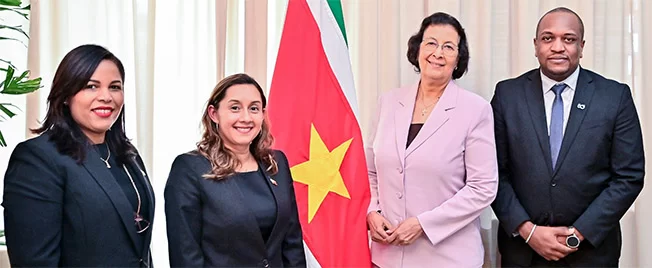
Suriname en Venezuela verkennen verdieping landbouw, energie en visserij
On Friday, President Jennifer Simons of Suriname welcomed Venezuelan Ambassador Ayerim Flores Rivas for an introductory and exploratory meeting at the Cabinet of the President. The discussions reaffirmed the longstanding friendly relations between the two nations and explored avenues to enhance bilateral cooperation. Key areas of focus included agriculture, fisheries, oil and gas, with additional interest in cultural and health-related exchanges. Minister of Foreign Affairs, International Business, and Cooperation, Melvin Bouva, who attended the meeting, emphasized Venezuela’s role as a significant economic partner. ‘We discussed the involvement of Venezuelan companies in Suriname’s fish processing and export sectors,’ Bouva stated. He also highlighted the strategic importance of the oil and gas industry, noting Venezuela’s valuable expertise in this domain. Bouva reiterated Suriname’s commitment to maintaining South America as a zone of peace, grounded in dialogue and mutual respect. The Communications Service of Suriname reported that the country will continue to advocate for regional stability. Ambassador Flores Rivas described the meeting as constructive and underscored the historical ties between the two nations. ‘Our relationship spans over fifty years. We see tremendous opportunities for collaboration, especially as Suriname develops its energy economy,’ the diplomat remarked.
-
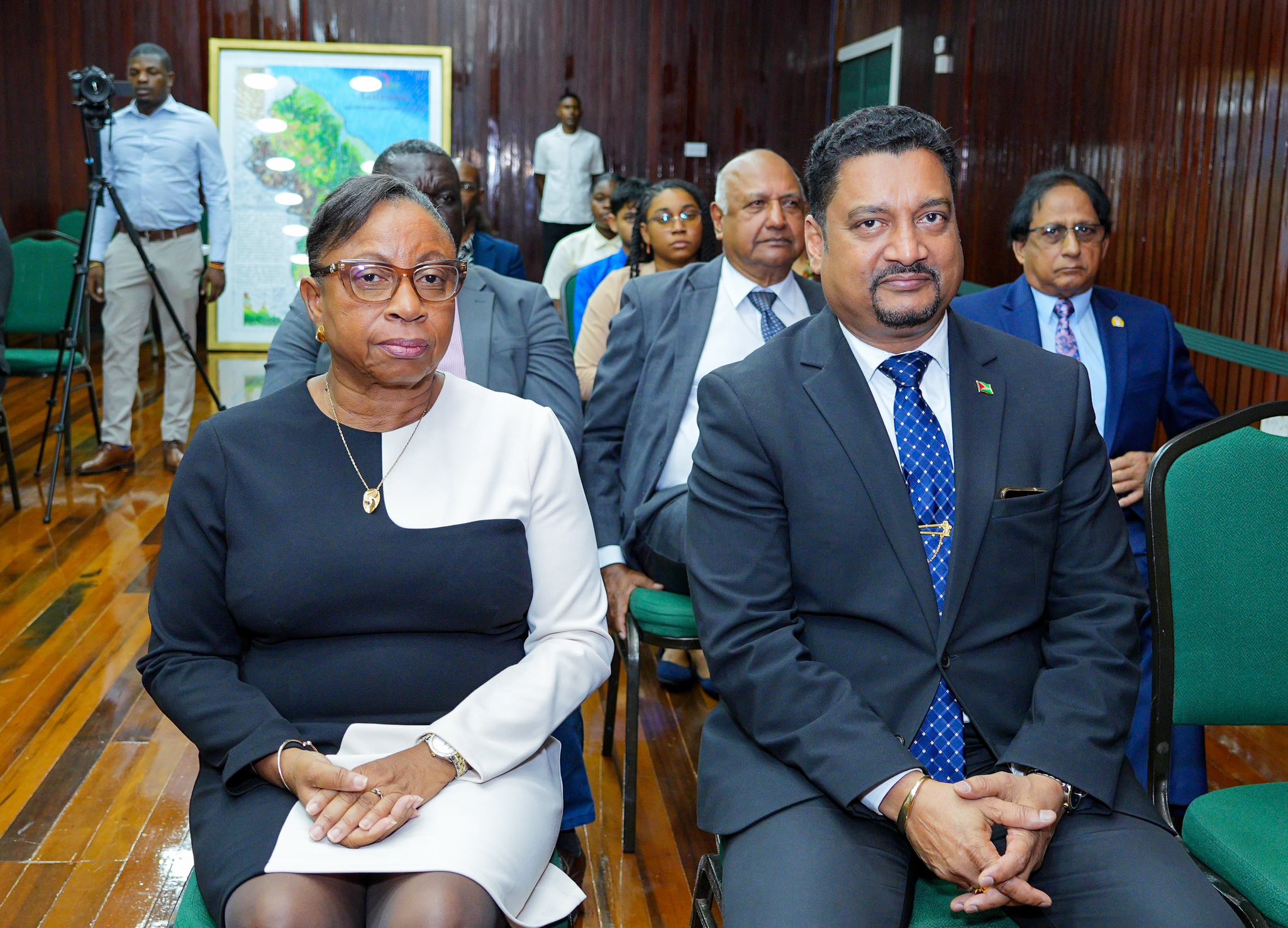
Ali awaits Norton’s word on substantive appointment of Chancellor, Chief Justice; Norton unlikely to agree
Guyana’s political landscape is currently embroiled in a tense standoff over the substantive appointments of key judicial positions. President Irfaan Ali has proposed the appointments of Justice Roxane George-Wiltshire as Chancellor and Justice Navindra Singh as Chief Justice, a move that requires the concurrence of Opposition Leader Aubrey Norton. However, sources indicate that Norton is unlikely to support the proposal, citing concerns over the circumstances surrounding the early retirement of Justice Yonette Cummings-Edwards, the former Chancellor. Norton had previously expressed support for the appointments of George-Wiltshire and Cummings-Edwards in their respective roles. President Ali announced on Friday that Cummings-Edwards would be proceeding on pre-retirement leave, with George-Wiltshire and Singh continuing in their acting capacities. Efforts to reach Norton for comment on Saturday were unsuccessful, and Attorney General Anil Nandlall also remained unreachable. A source within the People’s National Congress Reform (PNCR) suggested that Norton might defer the decision to the incoming Opposition Leader, expected to be Azruddin Mohamed, leader of the We Invest in Nationhood (WIN) party. Under Guyana’s constitution, the Opposition Leader retains their position until the National Assembly’s opposition parliamentarians elect a new leader following general and regional elections.
-
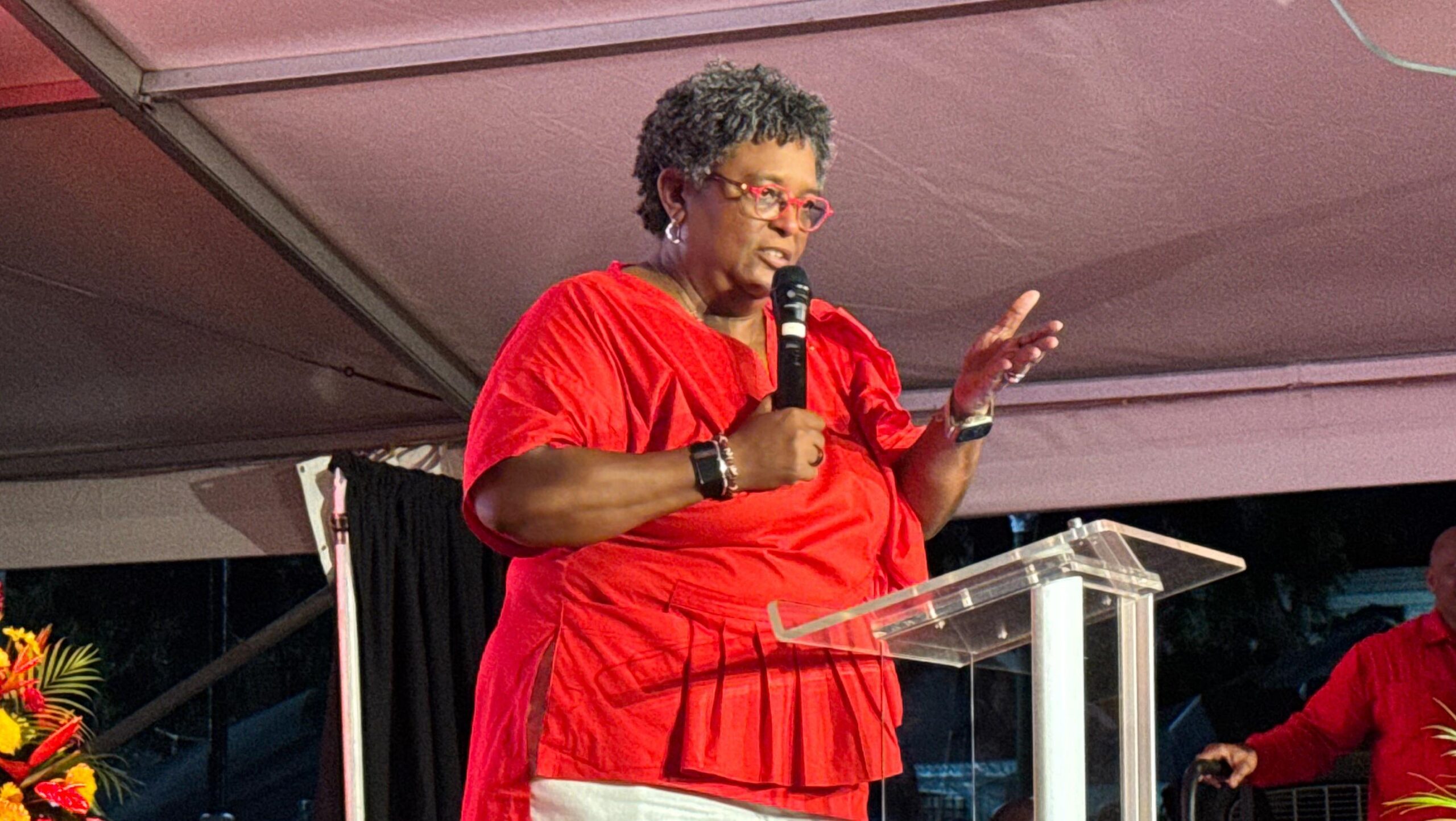
Mottley assures fair competition as Uber expands in Barbados
Prime Minister Mia Mottley has officially outlined the Barbados government’s stance on the entry of international ride-hailing giant Uber into the local market. Addressing attendees on the second day of the Barbados Labour Party’s 86th Annual Conference at Queen’s Park, Mottley reassured citizens that the platform’s expansion would not undermine the livelihoods of local taxi operators. She highlighted specific measures to ensure equitable competition, including restrictions on Uber’s operations at the Bridgetown Port during the winter season and fair practices at the Grantley Adams International Airport. Mottley underscored her administration’s dedication to fostering a balanced environment for all transportation providers, emphasizing that regulatory fairness is paramount as technology-driven services integrate into the island’s economy. This move reflects the government’s broader commitment to harmonizing innovation with the protection of local industries.
-
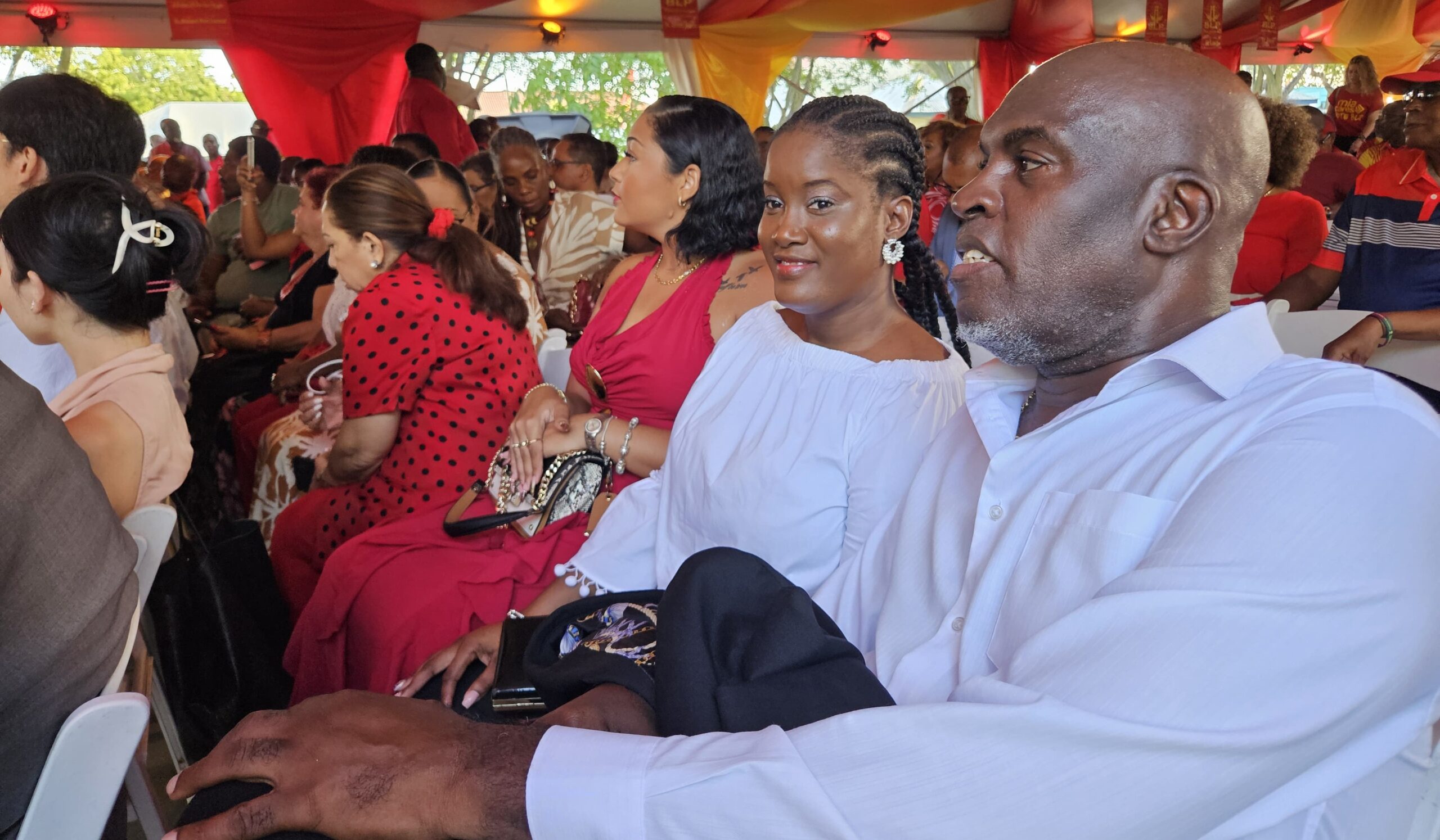
Former DLP representative Michael Lashley attends BLP conference
In a surprising turn of events, former Member of Parliament Michael Lashley made a notable appearance at the Barbados Labour Party’s (BLP) 86th Annual Conference on Saturday afternoon. The seasoned politician, who represented the St Philip North constituency for three consecutive terms under the Democratic Labour Party (DLP) banner, was met with enthusiastic applause and cheers as he entered Queen’s Park. His presence at the event, held just months after the DLP confirmed he would not contest the upcoming general election, has ignited widespread speculation about his political future. In April, the opposition party announced attorney-at-law Simon Clarke, a political newcomer, as their candidate for St Philip North. While Lashley has remained silent about his next steps, his unexpected attendance at the BLP conference has fueled discussions across Barbados’ political landscape, leaving many to wonder if a party shift is on the horizon.
-
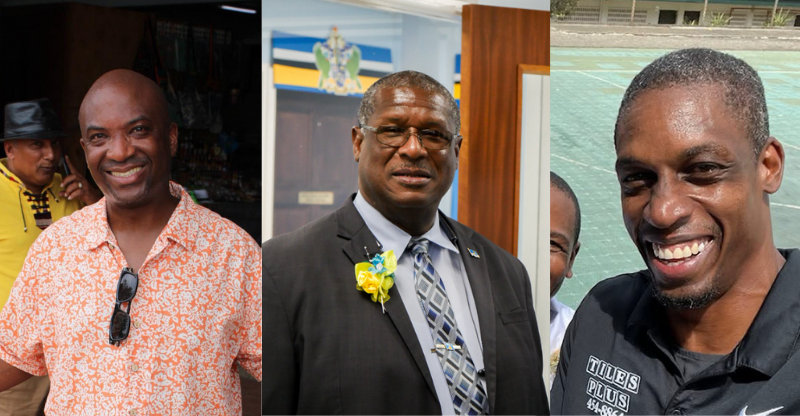
King, Fevrier, Stiede: Three-way race for Castries North
The upcoming general election in Saint Lucia is shaping up to be a historic event, with Castries North emerging as the focal point of national attention. This constituency, once a stronghold of the United Workers Party (UWP), is now a battleground for three formidable candidates: the seasoned incumbent Stephenson King, UWP’s rising star Stephen Fevrier, and independent newcomer Marcellus Stiede. The race is emblematic of a broader clash between experience, innovation, and grassroots leadership. Stephenson King, a political stalwart with a career spanning over four decades, has been a dominant figure in Castries North. However, his decision to leave the UWP in 2021 and run as an independent candidate marked a turning point in his career. Despite his long-standing influence, King now faces stiff competition from Fevrier, a globally experienced diplomat, and Stiede, a former professional basketball player turned community advocate. Fevrier, with his international background and vision for economic revitalization, promises to bring fresh perspectives to the constituency. Meanwhile, Stiede emphasizes youth development and transparency, critiquing the culture of political dependency. The election has sparked widespread debate, with voters weighing the merits of King’s legacy against the transformative potential of his challengers. As Saint Lucia prepares for this pivotal moment, Castries North stands as a microcosm of the nation’s political evolution, where tradition meets the promise of change.
-
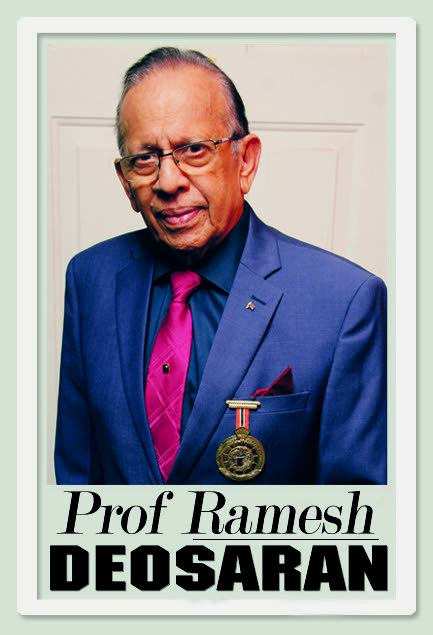
Welcome, CJ, now tackle reforms
Amidst ongoing struggles to address social, political, and economic issues, the UNC government faces yet another high-profile controversy with the rapid appointment of Justice Ronnie Boodoosingh as the new Chief Justice. This follows the unexpected retirement of former Chief Justice Ivor Archie, raising questions about the haste and transparency of the process. Acting President Wade Mark defended the appointment, citing constitutional adherence, while the judiciary lauded Boodoosingh’s distinguished career and commitment to fairness. However, concerns linger over the lack of extensive consultation, particularly with Opposition Leader Pennelope Beckles and substantive President Christine Kangaloo, who is currently on leave. Boodoosingh’s installation speech emphasized hard work, humility, and dedication to public trust, values that resonate deeply in a nation grappling with systemic inefficiencies. His appointment comes at a critical juncture, as the judiciary faces challenges such as case backlogs, ethical reforms, and public accessibility. Boodoosingh’s leadership will be pivotal in driving meaningful judicial reforms, from tightening night courts to addressing systemic injustices. As the dust settles, the focus must shift to restoring public confidence in the judiciary, ensuring it serves not just legal professionals but the broader public interest.
-
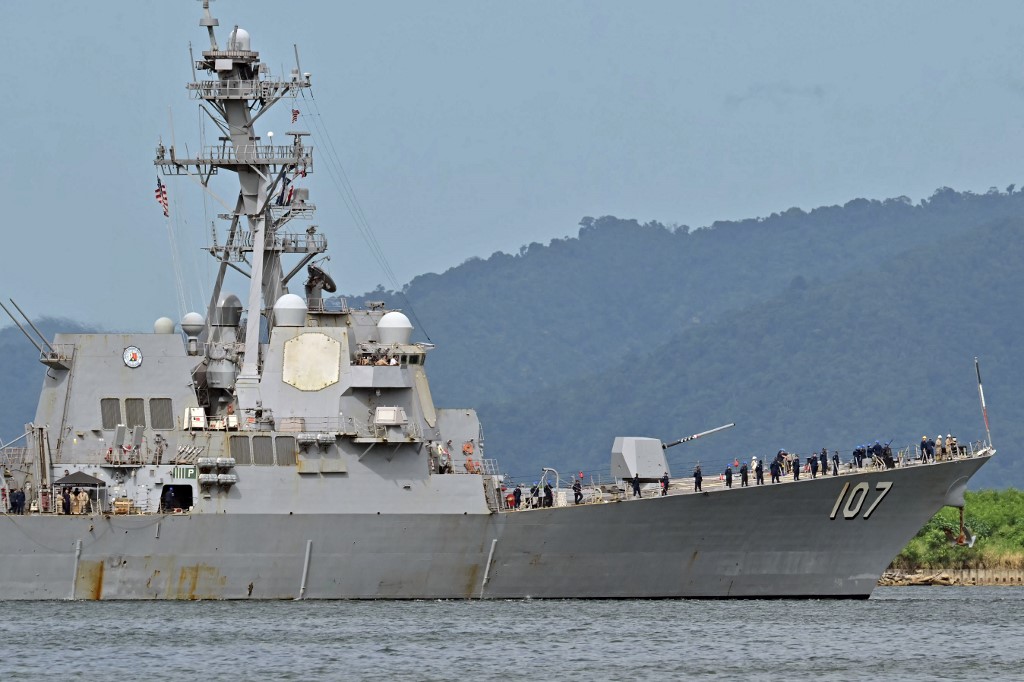
US warship docks in Trinidad amid fears of military aggression in the Caribbean
The arrival of the USS Gravely, a United States warship, in Trinidad and Tobago has reignited debates over military aggression and regional stability in the Caribbean. While Trinidadian Prime Minister Kamla Persad-Bissessar emphasized the necessity of US collaboration in combating drug trafficking and crime, Barbados Prime Minister Mia Mottley voiced concerns over the militarization of the region, urging dialogue to preserve peace. Mottley, addressing her party’s annual conference, highlighted the Caribbean’s vulnerability to external threats, including the presence of US military vessels and the impending Hurricane Melissa. She called for adherence to the Caribbean Community’s (Caricom) founding principle of maintaining the region as a ‘zone of peace.’
This development follows the Trump administration’s announcement of intensified military operations in the Caribbean, including the deployment of the USS Gerald R Ford, the world’s largest aircraft carrier, as part of a counter-drug initiative. Critics argue that these actions could serve as a pretext for a potential land invasion of Venezuela. Recent US military strikes in international waters, which resulted in the deaths of Trinidad and Tobago nationals, have further fueled tensions. The US has yet to provide evidence supporting its claims of drug trafficking.
Prime Minister Persad-Bissessar defended the US presence, citing Trinidad and Tobago’s severe crime and drug-related challenges. She emphasized the benefits of joint training exercises and infrastructure upgrades facilitated by the US military. However, former Caricom leaders, including PJ Patterson and Bruce Golding, have called for a reduction in military buildup to avoid destabilizing the region.
Mottley, a staunch advocate for the rule of law, condemned extrajudicial killings and unilateral military actions, urging disputes to be resolved through the United Nations. She stressed the importance of negotiation and peaceful conflict resolution, warning against conflating law enforcement with military intervention. As the Caribbean grapples with these complex issues, the region’s leaders remain divided on the best path forward to ensure safety and stability.
-
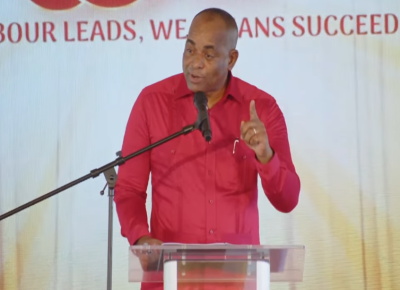
Dominica Prime Minister reiterates call for Caribbean to be zone of peace
In a powerful address at the 86th annual conference of the Barbados Labour Party (BLP), Dominica’s Prime Minister Roosevelt Skerrit emphasized the Caribbean’s commitment to maintaining itself as a zone of peace. He warned that any military escalation in the region would have dire consequences for all Caribbean nations. Skerrit’s remarks echoed those of Barbados Prime Minister Mia Mottley, who earlier called for an end to the United States’ military build-up off Venezuela’s coast, ostensibly aimed at combating drug trafficking. Both leaders stressed the importance of resolving conflicts through dialogue and diplomacy rather than force. Skerrit highlighted the region’s historical struggles for freedom and independence, urging Caribbean nations to stand firm on these principles. He shared excerpts of Mottley’s speech on the Caribbean Community (Caricom) leaders’ social media page, underscoring the need to speak truth to power. Mottley, in her opening address, described the current situation in the southern Caribbean as ‘extremely dangerous and untenable,’ emphasizing the region’s tragic history of being subjected to external powers’ violence. She called for unity in upholding the Caribbean as a zone of peace, a principle enshrined since Caricom’s inception. Mottley also rejected the notion of extrajudicial killings and the conflation of law enforcement with military action, advocating for the rule of law. The recent deployment of the USS Gerald Ford and over 10,000 U.S. troops to the Caribbean has raised concerns among regional leaders, who view it as a potential precursor to an invasion of Venezuela. The U.S. claims these actions are part of a counter-drug initiative, but critics argue they lack transparency and justification.
-

PM Browne Calls Harold Lovell a ‘Spent Force,’ Urges All Saints West Voters to Reject Him
In a recent town hall meeting held in Seaview Farm, Prime Minister Gaston Browne of Antigua and Barbuda launched a scathing critique against opposition politician Harold Lovell, urging residents of All Saints West to reject the United Progressive Party’s (UPP) candidate in the upcoming general elections. Browne labeled Lovell as a “spent force” and “delusional,” questioning his capacity to effectively represent the constituency and highlighting his alleged decades of political shortcomings.
Browne referenced biblical scripture to underscore his point, stating, “A spent force. A man who is 70 years of age. The Bible says what? Three score and ten. So nothing tall futuristic about him. Now, a 70-year-old man can’t have no energy. But he’s going around telling people that he’s younger than Comrade Smith. I say better look at me.”
In contrast, Browne praised Hon. Anthony Smith Jr., a young leader who recently joined the Antigua and Barbuda Labour Party (ABLP) after departing from the UPP. Browne lauded Smith’s “energy and ambition,” positioning him as the embodiment of the constituency’s future. “I want the people of All Saints West to understand that by supporting this young man, Comrade Smith, you are literally supporting the future,” Browne asserted. “Why would anyone want to go back to a candidate who is on rewind? We are moving forward—he’s on rewind.”
Browne further criticized Lovell’s tenure as the former Member of Parliament for St. John’s City East, alleging that his former constituents had repeatedly rejected him and that he failed to deliver essential community improvements. “The place where he came from, City East, where he spent practically all his life—they rejected him eight out of ten times,” Browne remarked. “He was finance minister and representative, and he didn’t see the Bishopgate Street Clinic in disrepair. It took Gaston Browne in 2014 to get the People’s Republic of China to build a new polyclinic in Villa.”
Concluding his address, Browne warned that electing Lovell would “reverse progress” in All Saints West, urging constituents to send a clear message: “It is for the people of this constituency to send Harold Lovell a firm message—go back from whence you came.”