分类: politics

  • President proclaims stand-your-ground legislation

    President proclaims stand-your-ground legislation

    Trinidad and Tobago has officially enacted groundbreaking stand-your-ground legislation, marking a significant shift in the nation’s approach to self-defense and property protection. President Christine Kangaloo formally proclaimed the Home Invasion (Self-Defence and Defence of Property) Act, 2025 into effect on January 20 through Legal Notice 16, implementing one of the United National Congress’s key electoral promises to address rising crime rates.

    The comprehensive legislation establishes home invasion as a specific criminal offense, defining it as unlawful entry into a dwelling with intent to use force against occupants. The act explicitly removes the duty to retreat, granting occupants the legal right to stand their ground when facing home invaders. The law permits the use of defensive force, including deadly force, when occupants reasonably believe their lives are in immediate danger or face threats of grievous bodily harm, sexual assault, or death.

    The legislation outlines detailed parameters for justified self-defense, requiring that the occupant’s response must be proportionate to the perceived threat and based on honest, instinctive assessment of the situation. Courts must consider multiple factors when evaluating the reasonableness of defensive actions, including the nature of the threat, weapon involvement, and the proportionality of the response.

    However, the act establishes crucial limitations on the use of defensive force. Protections do not apply against lawful occupants or law enforcement officers performing official duties. The law excludes those engaged in criminal activities, individuals with substantially impaired mental faculties due to voluntary drug consumption, and cases where the force used is grossly disproportionate to the threat encountered.

    The legislation specifically addresses aggravated circumstances, providing enhanced considerations for invasions involving criminal organizations or occurring in the presence of children, senior citizens, or vulnerable persons. This legislative reform represents Trinidad and Tobago’s substantial policy response to public safety concerns while maintaining legal safeguards against potential misuse of self-defense claims.

  • Rowley: Zones of special operations will breed abuse

    Rowley: Zones of special operations will breed abuse

    In a significant political development, former Trinidad and Tobago Prime Minister Dr. Keith Rowley has publicly challenged current Prime Minister Kamla Persad-Bissessar’s approach to the Law Reform (Zones of Special Operations) Bill, 2026. The controversial legislation, which passed the House of Representatives on January 16, is currently undergoing Senate debate requiring a three-fifths majority for final approval.

    The proposed law would empower Prime Minister Persad-Bissessar, in her capacity as National Security Council chair, to designate specific areas as Zones of Special Operations (ZOSOs) for periods up to 180 days, following consultation with police and military leadership. This measure has sparked intense parliamentary discussion, with the government holding 15 Senate seats against the Opposition’s 6 and Independent senators’ 9.

    Through a January 22 Facebook statement, Rowley expressed profound concerns about the legislation’s potential societal impact. He criticized the administration’s rhetoric toward independent senators, noting Persad-Bissessar’s suggestions that their opposition stemmed from alleged ties to his party, the PNM. “If I had said anything nearly as offensive and arrogant,” Rowley remarked, “everyone in this country would have known not to accept that from the Prime Minister.”

    The former leader argued that the bill represents inappropriate crime-fighting methodology for Trinidad and Tobago’s diverse society, warning that it could stigmatize communities and remove fundamental rights without proper parliamentary oversight. Rowley cautioned that unsupervised authority would inevitably “breed abuse and resentment,” questioning whether crime-fighting justification would sufficiently address potential fallout when the law is implemented. He maintained that his administration was held to higher standards, expressing pride in having met those expectations during his tenure.

  • UK PM slams Trump for saying NATO troops avoided Afghan front line

    UK PM slams Trump for saying NATO troops avoided Afghan front line

    LONDON — British political leaders across the spectrum have expressed unified outrage following former U.S. President Donald Trump’s controversial comments regarding NATO allies’ military contributions in Afghanistan. The diplomatic firestorm erupted after Trump claimed in a Fox News interview that British forces “stayed a little back, a little off the front lines” during the conflict.

    Prime Minister Keir Starmer delivered a forceful rebuke from Downing Street, characterizing Trump’s assertions as “insulting and frankly, appalling.” The Prime Minister began his remarks by honoring the 457 British service members who lost their lives in Afghanistan, emphasizing the profound hurt caused to families of the fallen and injured.

    The controversy has transcended partisan boundaries, with Conservative opposition leader Kemi Badenoch dismissing Trump’s claims as “complete nonsense” that potentially undermine NATO solidarity. Even longstanding Trump supporter Nigel Farage, leader of Reform UK, publicly contradicted the former president, affirming that British forces “fought bravely alongside America’s in Afghanistan” for two decades.

    Defense Minister John Healey commemorated the fallen as “heroes who gave their lives in service of our nation,” while Armed Forces Minister Al Carns—a veteran of five Afghan tours—denounced the remarks as “utterly ridiculous.”

    The international dimension of the dispute expanded as Polish Defense Minister Wladyslaw Kosiniak-Kamysz called for respect toward Polish veterans who lost 43 soldiers in the conflict. According to UK Ministry of Defence statistics, over 150,000 British personnel served in Afghanistan between 2001-2021, making the UK the second-largest contributor to the US-led mission. Official records indicate 405 of the 457 British casualties resulted from hostile action.

    Veterans’ organizations joined the condemnation, with Royal British Legion Director General Mark Atkinson emphasizing that the service and sacrifice of British troops “cannot be called into question.” The organization noted thousands more personnel and their families continue living with lifelong physical and psychological impacts from their service.

  • House debates private motion on socio-economic concerns

    House debates private motion on socio-economic concerns

    The Trinidad and Tobago House of Representatives convened a critical session on January 23rd to examine a pressing private motion filed by Laventille West MP Kareem Marcelle, addressing what he characterizes as a deepening socio-economic emergency. The motion demands governmental recognition of severe unemployment impacts and implementation of substantial social relief measures.

    Marcelle’s proposition emphasizes the state’s fundamental obligation to ensure citizen welfare and foster conditions conducive to dignified living standards. The parliamentarian cited widespread terminations and non-renewals of contracts across public institutions, state agencies, and local government bodies as primary drivers of the crisis. These developments have particularly devastated vulnerable demographics including single mothers, female-headed households, youth, elderly citizens, and persons with disabilities.

    The motion further outlines severe consequences stemming from employment instability: intensified food insecurity, rising school absenteeism, deteriorating mental health conditions, and increased risks of exploitation and social marginalization. Marcelle cautioned that diminished employment opportunities coupled with reduced community engagement directly threaten public safety and social stability while undermining local commerce and micro-enterprise sustainability.

    The political context reveals sharp contrasts between governing and opposition parties. Following the April general election that resulted in a 26-13-2 victory for the UNC, the opposition PNM has consistently criticized the new administration for terminating thousands of positions through closures of Cepep, the Unemployment Relief Programme (URP), and other social initiatives established during the PNM’s 2015-2026 governance period.

    Opposition Leader Pennelope Beckles reinforced these criticisms during a January 21st press conference, accusing Prime Minister Persad-Bissessar of misleading voters into believing job security would continue post-election. Beckles characterized the current government as indifferent to citizen welfare and urged public awareness regarding employment protections.

    Simultaneously, the Senate convened to advance debate on the Law Reform (Zones of Special Operations) Bill 2026, previously approved by the House on January 16th. This legislation empowers the National Security Council chair, in consultation with police and defense force leadership, to designate special security zones for maximum 180-day periods.

    Preceding both parliamentary sessions, the Finance and Legal Affairs joint select committee conducted a public inquiry into credit union supervisory frameworks, chaired by Independent Senator Dr. Marlene Attzs with participation from Justice Minister Devesh Maharaj and San Fernando East MP Brian Manning.

  • Congres zet modernisering rechterlijke macht centraal voor rechtszekerheid en ontwikkeling

    Congres zet modernisering rechterlijke macht centraal voor rechtszekerheid en ontwikkeling

    Suriname has embarked on a comprehensive judicial modernization program that national leaders describe as fundamental to legal certainty, public trust, and economic advancement. The initiative was formally launched today during a joint congress convened by the National Assembly, the Court of Justice, and the Public Prosecutor’s Office at Hotel Torarica’s Ballroom.

    Assembly Chairman Ashwin Adhin delivered the opening address, emphasizing that the modernization effort extends far beyond technical legal discussions. He identified three critical pillars for societal stability and sustainable economic growth: accessible justice, predictable legal procedures, and authoritative jurisprudence. The congress, supported by the Center for Democracy and Rule of Law, represents a significant moment of national consensus regarding the urgent need for structural reforms within Suriname’s judicial system.

    The conference focuses on two primary reform areas: establishing a third judicial instance responsible for cassation (appeals) jurisprudence and modernizing the Public Prosecutor’s Office. These transformations aim to promote legal uniformity, judicial development, transparency, and effectiveness in criminal proceedings. The themes align with ongoing parliamentary initiatives to constitutionally anchor these judicial components.

    Rather than serving as a concluding event, the congress functions as a foundational element within a broader institutional and parliamentary trajectory. Organizers emphasize that the gathering provides concrete instruments and conceptual frameworks to support decision-making processes regarding judicial modernization. Outcomes and recommendations will be documented in a comprehensive final report that will serve as the basis for subsequent legislation and policy development.

    As a structural follow-up, the National Assembly will establish a Parliamentary Platform for Rule of Law and Constitutional Framework. This platform will facilitate periodic consultation with key judicial actors and monitor reform progress and coherence while fully respecting judicial independence.

  • OECS debuts digital dashboard to manage partnerships

    OECS debuts digital dashboard to manage partnerships

    In a significant advancement for regional governance, the Organisation of Eastern Caribbean States (OECS) Commission unveiled its groundbreaking Partnership Dashboard on January 8, 2026. This innovative digital platform represents a transformative approach to managing international collaborations across member states, developed through strategic cooperation with the Inter-American Institute for Cooperation on Agriculture (IICA).

    The newly launched dashboard addresses critical governance challenges by centralizing previously fragmented partnership data into an accessible, transparent system. The platform enables real-time monitoring of initiatives, projects, and collaborative engagements, providing unprecedented visibility into the organization’s multilateral operations. This technological solution allows OECS leadership to instantly identify partnership networks, geographical distribution, and strategic objectives across the Eastern Caribbean region.

    OECS Director General Dr. Didacus Jules emphasized the platform’s fundamental purpose during the launch ceremony: “This initiative transcends mere digitalization—it represents our commitment to operational clarity in an increasingly complex international landscape. By consolidating dispersed information streams, we transition from theoretical cooperation to demonstrable, measurable impact throughout our member states.”

    The development process involved extensive consultation workshops and rigorous technical discussions to ensure the platform meets practical operational needs. Dr. Manuel Otero, outgoing IICA Director General, highlighted the dashboard’s adaptive design philosophy: “We engineered this system with scalability as a core principle, creating a dynamic tool that will evolve alongside the OECS’s expanding requirements. This partnership exemplifies how international cooperation can yield practical solutions for regional development.”

    The launch event also served as a recognition ceremony for Dr. Otero’s contributions to regional cooperation. Both organizations acknowledged the project’s significance in overcoming traditional barriers to collaboration. Senior officials including Ms. Beverly Best (IICA Director of External Relations) and Ms. Nadege Jn Baptiste (OECS Head of Development Cooperation) emphasized how the dashboard demonstrates strategic partnerships’ ability to transcend linguistic, geographical, and institutional divides.

    This innovation has already strengthened OECS’s internal capabilities while promoting bilingual engagement and knowledge-sharing protocols. The platform stands as a testament to how targeted technical cooperation can produce tangible improvements in governance transparency, accountability mechanisms, and ultimately, more effective development outcomes across the Eastern Caribbean region.

  • Bangladesh: Campagne gestart voor eerste verkiezingen na afzetting Hasina

    Bangladesh: Campagne gestart voor eerste verkiezingen na afzetting Hasina

    Bangladesh stands at a critical democratic crossroads as it prepares for its first national elections since the 2024 uprising that ousted long-serving Prime Minister Sheikh Hasina. Scheduled for February 12, these elections represent the most significant electoral process in the nation’s history, with profound implications for its political future.

    Interim leader Muhammad Yunus, the Nobel laureate known as “banker to the poor” for his groundbreaking work with Grameen Bank, has committed to overseeing free and fair elections. Returning from exile in August 2024 amid popular demand, Yunus leads a transitional government that has championed comprehensive political reforms through the National Charter of July 2025.

    The reform charter proposes substantial constitutional changes including enhanced presidential powers, term limits for parliament members, and robust anti-corruption measures. While 25 of 52 registered parties have endorsed the charter, its implementation requires a national referendum to achieve constitutional status.

    Notably absent from the electoral landscape is Hasina’s Awami League, barred from participation since May following the suspension of its registration. The 78-year-old former leader, convicted in absentia for crimes against humanity during violent crackdowns on protesters, currently resides in India under political asylum.

    Political dynamics feature Tarique Rahman, chairman of the Bangladesh Nationalist Party (BNP) and son of former Prime Minister Khaleda Zia, emerging as a frontrunner. His campaign launch in Sylhet attracted massive crowds, signaling strong popular support. Simultaneously, a ten-party coalition led by Jamaat-e-Islami seeks to expand its influence, potentially marking a dramatic resurgence for the group that faced severe suppression during Hasina’s administration.

    The electoral process occurs amid concerning challenges including disinformation campaigns that Yunus attributes to both foreign media and domestic sources. These developments coincide with deteriorating relations with neighboring India following Hasina’s flight to the country during the palace storming by protesters.

    With 170 million citizens electing 350 parliamentary representatives, European Union observers have designated this event “the largest democratic process of 2026,” underscoring its global significance and potential to reshape South Asian politics.

  • ABEC’s officials participate in Global Democracy Conference in India

    ABEC’s officials participate in Global Democracy Conference in India

    Ambassador Arthur G. B. Thomas, Chairman of the Antigua and Barbuda Electoral Commission (ABEC), alongside Supervisor of Elections Mr. Ian S Hughes, is currently representing the nation at the India International Conference on Democracy and Election Management (IICDEM) 2026 in New Delhi. The high-level gathering, convened by the Election Commission of India through its India International Institute of Democracy and Election Management (IIIDEM) and in partnership with International IDEA, commenced on January 21st and will conclude on January 23rd at the Bharat Mandapam convention center.

    This significant international forum has assembled a distinguished cohort of participants, including over 40 Election Management Bodies and delegates from more than 30 countries. The attendee list features diplomats, senior electoral officials, academic experts, and seasoned practitioners, all converging under the conference’s central theme: ‘Democracy for an Inclusive, Peaceful, Resilient and Sustainable World.’ This theme underscores the global imperative to reinforce democratic institutions, ensure electoral integrity, and bolster public trust amid rapidly changing political and technological landscapes.

    Chairman Thomas is scheduled to play a prominent role in the conference’s official program, particularly during the thematic session titled ‘Regulating Media Campaigns’ (Best Practices and Innovation – BP 20) on Friday, January 23rd. His address will confront the mounting challenges presented by the modern information ecosystem, including the proliferation of rapid-fire misinformation, unverified claims, opaque political advertising, and sophisticated manipulation tactics across both traditional and digital media platforms.

    In his presentation, Chairman Thomas will draw upon comparative international experiences and Antigua and Barbuda’s own regulatory framework to articulate fundamental principles for balanced media regulation. These principles encompass ensuring equitable media access, enforcing transparency in political advertising, mandating sponsor disclosure, guaranteeing balanced coverage, and implementing robust safeguards against hate speech and incitement. His discourse will also tackle emerging threats such as artificial intelligence-driven amplification and political microtargeting, while proposing practical, context-sensitive strategies for election management bodies to uphold electoral fairness, foster informed citizen participation, and maintain public confidence.

    The active participation of Antigua and Barbuda in this global dialogue highlights the nation’s steadfast dedication to independent, professional election management and its commitment to democratic governance through international cooperation. This engagement provides a valuable platform to contribute distinctive Caribbean perspectives to the global conversation while absorbing and evaluating worldwide best practices in election administration and democratic innovation.

  • ‘Breuk in de wereldorde’: toespraken van Carney en wereldleiders in Davos

    ‘Breuk in de wereldorde’: toespraken van Carney en wereldleiders in Davos

    The World Economic Forum in Davos has become the stage for a profound geopolitical confrontation as world leaders grapple with the destabilizing effects of Donald Trump’s aggressive foreign policy maneuvers. The atmosphere was charged with tension as representatives from major powers expressed starkly divergent visions for the future of international relations.

    French President Emmanuel Macron delivered a stark warning about emerging ‘rule-free world order’ where international law is trampled and might makes right. In a notable visual metaphor, Macron addressed the forum wearing sunglasses—attributed to a burst blood vessel—while delivering sobering remarks about record global conflicts in 2024, acknowledging that some might be ‘fabricated’ while emphasizing the seriousness of the situation.

    Canadian Prime Minister Mark Carney presented perhaps the most dramatic assessment, declaring the world is experiencing a ‘rupture rather than transition’ in the US-led global system. He dismissed the concept of American hegemony as ‘fiction’ and warned that middle powers risk being sidelined if they don’t unite. ‘If you’re not at the table, you’re on the menu,’ Carney cautioned, emphasizing that traditional assumptions about geography and alliances no longer guarantee security or prosperity.

    The forum specifically addressed Trump’s threatened takeover of Greenland, which has alarmed European allies. Macron announced France would participate in joint exercises in Greenland specifically to support Denmark, while EU Commission President Ursula von der Leyen affirmed Denmark and Greenland’s territorial integrity is ‘not up for discussion.’

    Von der Leyen outlined the EU’s response to geopolitical shocks, noting progress in energy, raw materials, defense and digitalization. She revealed the EU is close to finalizing a historic trade agreement with India that would create a market representing nearly a quarter of global GDP.

    Chinese Vice Premier He Lifeng struck a contrasting tone, emphasizing cooperation and portraying China’s development as an opportunity rather than threat. He promised further market opening and equal treatment for foreign companies while calling for fair treatment of Chinese businesses abroad.

    The collective response from traditional US allies suggests a significant recalibration of global alliances as nations seek to navigate an increasingly unpredictable international landscape where established rules and institutions appear increasingly fragile.

  • May these difficult times be an opportunity for growth

    May these difficult times be an opportunity for growth

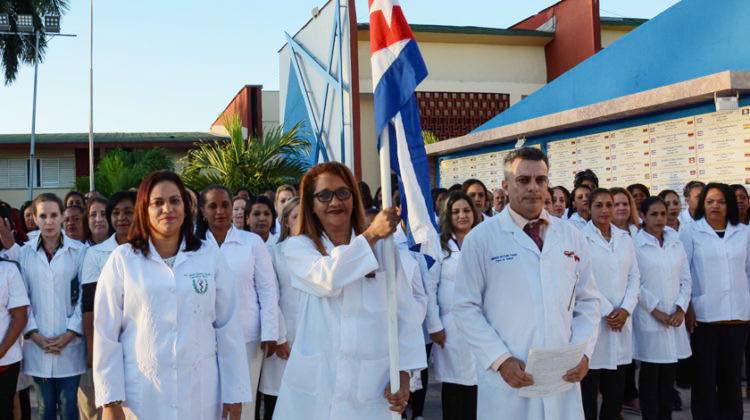
    In a significant political mobilization, the Cuban Communist Party conducted extraordinary plenary sessions across Sancti Spíritus and Villa Clara provinces this Wednesday. Presided over by First Secretary Miguel Díaz-Canel Bermúdez, these assemblies marked a strategic reinforcement of national priorities amidst escalating global tensions.

    The gatherings, attended by high-ranking officials including Political Bureau member Roberto Morales Ojeda, focused on implementing resolutions from the Party’s 11th Central Committee Plenum. Discussions centered on three foundational principles: national unity, anti-imperialism, and patriotism as essential frameworks for navigating current challenges.

    Key priorities emerged with particular urgency, emphasizing homeland defense, agricultural productivity, stabilization of the National Electric System, and enhanced ideological work. Díaz-Canel characterized the current imperial decline phase as particularly hazardous, noting that “they tend to resolve things through the language of war,” necessitating comprehensive national preparedness.

    The sessions produced concrete operational directives, moving beyond theoretical discussions to practical implementation strategies. Morales Ojeda emphasized disciplined execution without extremism, while provincial leaders presented detailed progress reports. Sancti Spíritus demonstrated positive indicators across multiple metrics, including organizational growth and economic initiatives under the “Sancti Spíritus en marcha” mobilization program.

    Villa Clara’s First Secretary Susely Morfa González outlined dual economic and ideological battles, emphasizing development chains that directly improve citizens’ quality of life. The province is advancing municipal autonomy models and transforming grassroots units into state-owned enterprises or MSMEs to strengthen local economies.

    A recurring theme was the necessity of conscious unity through frank discussion rather than uniform discourse. Leadership emphasized engaging non-party members in decision-making processes, particularly youth, and eliminating bureaucratic obstacles to production. The gatherings concluded with commitments to intensified implementation, with follow-up sessions scheduled for the quarter’s end.