
Senior Trump administration officials informed lawmakers on Wednesday that the United States has no current plans to launch military strikes within Venezuela and lacks the legal basis to justify such actions against land targets. This revelation came during a classified briefing led by Secretary of State Marco Rubio, Defense Secretary Pete Hegseth, and a representative from the White House’s Office of Legal Counsel, according to sources familiar with the session. The briefing emphasized that the Justice Department’s legal opinion, which previously justified strikes against suspected drug boats, does not extend to operations within Venezuelan territory or other land-based targets. The officials also clarified that the “execute order” initiating the US military campaign against drug trafficking in September does not authorize land strikes. While the administration has not ruled out future actions, it is reportedly seeking a separate legal opinion from the Justice Department to justify potential land-based operations without congressional approval. The buildup of US military assets in the Caribbean, including the Ford Carrier Strike Group, has sparked speculation about possible strikes in Venezuela. However, officials stated that these assets are solely intended to support counternarcotic efforts and intelligence gathering. The administration has avoided involving Congress in its military operations in Latin America, asserting that it can conduct lethal strikes against alleged drug traffickers without legislative approval. Since September, the US military has carried out 16 strikes against boats in the Caribbean and eastern Pacific, resulting in at least 67 deaths. Lawmakers have raised concerns about the legality and transparency of these operations, with some questioning the necessity of lethal force over interdiction methods. Despite assurances from officials like Rubio that strikes are meticulously tracked and justified, critics argue that the evidence linking targeted vessels to drug trafficking remains insufficient.
分类: politics
-
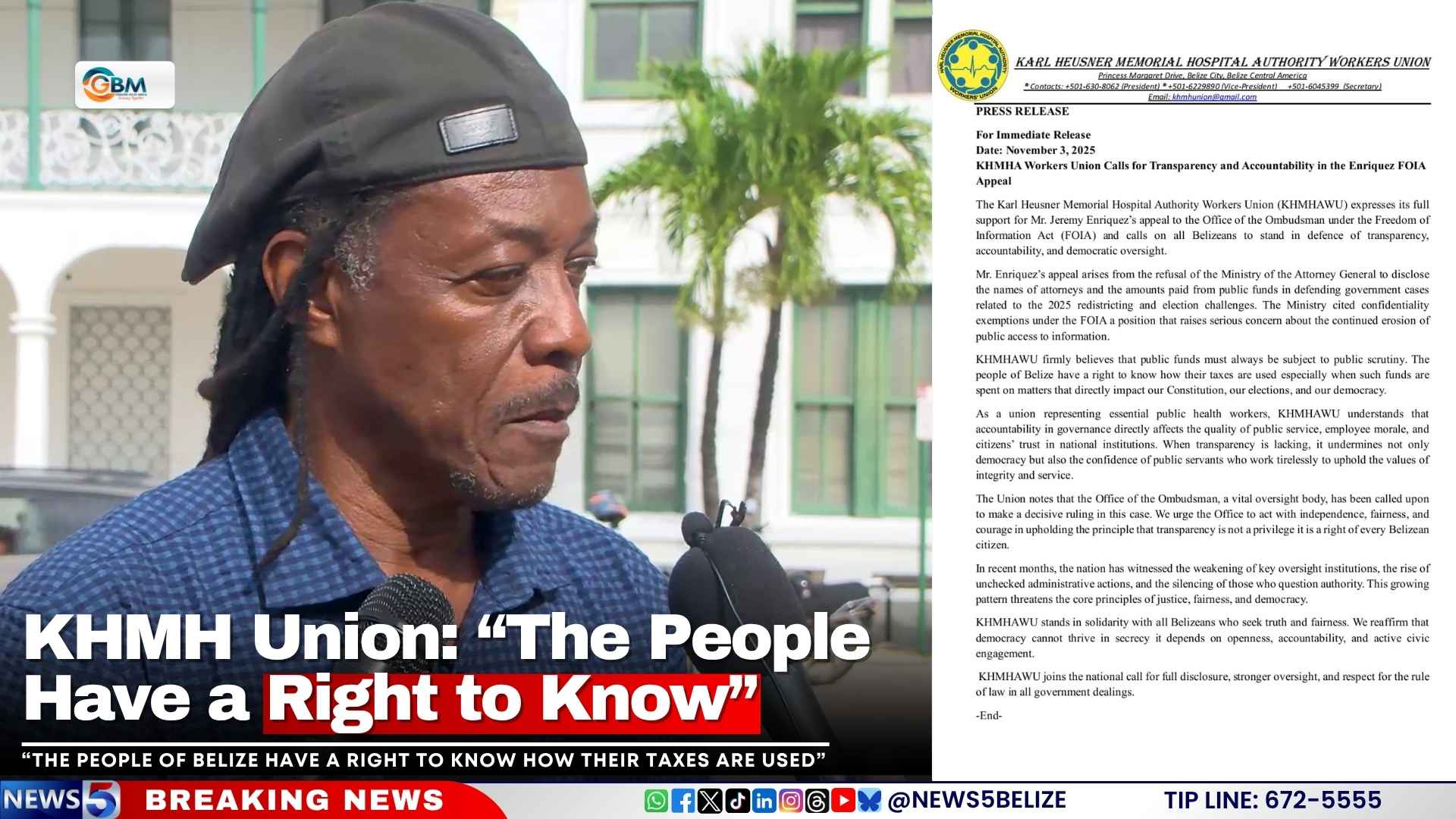
KHMH Union: “The People Have a Right to Know”
The Karl Heusner Memorial Hospital Authority Workers Union (KHMHAWU) has joined the chorus of voices calling for greater government transparency in Belize. The union is supporting activist Jeremy Enriquez’s Freedom of Information (FOIA) appeal, which seeks to uncover the names of attorneys and the amounts paid from public funds in redistricting and election-related cases. The Attorney General’s Ministry had previously denied the request, citing exemptions under the FOI Act, a decision that KHMHAWU described as ‘a position that raises serious concern about the continued erosion of public access to information.’
In a recent statement, KHMHAWU emphasized that ‘the people of Belize have a right to know how their taxes are used, especially when such funds are spent on matters that directly impact our Constitution, our elections, and our democracy.’ The union’s stance aligns with the National Trade Union Congress of Belize (NTUCB), which earlier this week called for ‘accountability, transparency, and fairness in public administration.’
KHMHAWU has demanded ‘full disclosure, stronger oversight, and respect for the rule of law in all government dealings.’ The union’s statement underscores the growing public concern over the lack of transparency in how public funds are allocated and spent. Earlier this week, Eamon Courtenay, a prominent attorney, defended the Attorney General’s Ministry’s decision, stating that he understood the concerns raised by the Attorney General regarding the Ombudsman’s interpretations.
The issue has sparked widespread debate in Belize, with many citizens and organizations urging the government to uphold the principles of transparency and accountability. As the FOIA appeal progresses, the spotlight remains on the government’s handling of public funds and its commitment to democratic principles.
-
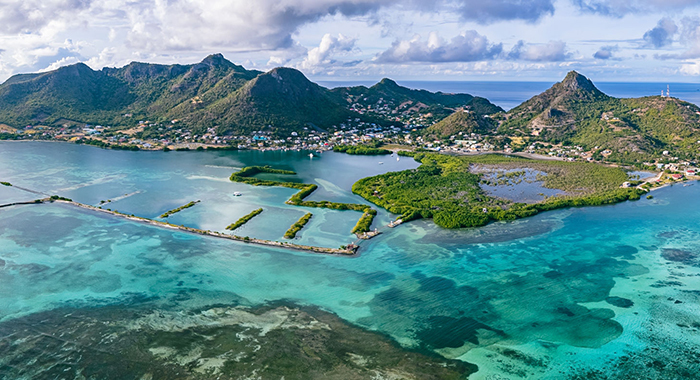
The curious case of the Southern Grenadines
In the aftermath of the 2020 elections in St. Vincent and the Grenadines (SVG), Prime Minister Ralph Gonsalves of the Unity Labour Party (ULP) claimed victory in the popular vote on the mainland. However, this assertion has sparked significant controversy, as the New Democratic Party (NDP) secured 32,900 votes, marking their first popular vote win since 1998. Gonsalves’ analysis has been criticized for disregarding the votes of Grenadine residents, effectively marginalizing their political voice. This approach raises questions about the inclusivity of the electoral process in SVG, a multi-island nation where all citizens, regardless of their island of residence, should hold equal political weight. Gonsalves’ rhetoric, which emphasizes the mainland’s majority while sidelining the Grenadines, has been likened to absurd hypotheticals, such as the NDP claiming victory by excluding certain constituencies. The Prime Minister’s stance contradicts his earlier campaign messaging, which lauded the citizen as the highest office in the land. This inconsistency has led to concerns about the political representation of Grenadine residents, who have historically supported the NDP. The situation worsened in July 2024, when Hurricane Beryl devastated the Grenadines. Instead of prioritizing relief efforts, the ULP was accused of exploiting the disaster for political gain. Gonsalves’ remarks at the opening of the Union Island Ferry Terminal, where he framed appliance distribution as a means to sway voter allegiance, further highlighted the transactional nature of the relationship between the government and Grenadine residents. Chevonne Stewart’s assertion that proper representation for the Southern Grenadines hinges on a cabinet seat underscores the systemic neglect faced by the region. Historical data reveals that the NDP has consistently won the Grenadine vote since 1979, with the 2020 margin being the largest in ULP’s history. This trend reflects decades of neglect by the ULP, which has failed to secure a single Grenadine seat since its inception in 1994. The upcoming 2025 election cycle presents an opportunity to address these disparities and ensure equitable representation for all Vincentians.
-

Tribunal rejects claims of delay in reviewing SoE detentions
The State of Emergency Review Tribunal has firmly rebutted public criticism regarding its handling of Preventive Detention Order (PDO) reviews, labeling recent media reports as ‘misinformed’ and inconsistent with the legal procedures it is mandated to follow. In a statement issued on November 7, the tribunal addressed concerns raised by attorneys representing detainees under the state of emergency, who alleged delays or withholding of decisions on their clients’ detention. The tribunal expressed disappointment, particularly given that such claims originated from legal professionals expected to base their statements on factual and legal grounds. It emphasized that, under paragraph 8(1) of the Schedule to the Emergency Powers Regulations 2025, its role is strictly limited to reviewing detention upon request and submitting reports to the Minister of Homeland Security, not directly to attorneys or detainees. The tribunal clarified that its recommendations on whether detention should continue are exclusively provided to the minister, who is then responsible for sharing the relevant portions of the report with the detainee. The tribunal highlighted that it has already completed and forwarded reports on multiple cases, with submissions made on September 12, 19, 28, and October 6, 9, and 22. Additionally, a decision on a preliminary application in another matter was sent to the detainee’s attorney on November 1. These actions, the tribunal asserted, demonstrate its adherence to the Emergency Powers Regulations, countering claims of inefficiency or procedural lapses. The tribunal’s response comes amid escalating national debate over the prolonged detention of individuals under the state of emergency, with attorneys and rights advocates criticizing the review process for lacking transparency and violating fair hearing principles. The government, however, maintains that these measures are lawful and essential for public safety. Earlier this week, former national security minister and several defense attorneys urged the government to release individuals detained for months without charges, condemning the situation as a severe infringement of constitutional rights. Attorney Subhas Panday criticized the tribunal’s independence, arguing that its appointment by the Attorney General compromises its impartiality. Detainees have also reported dire conditions at the Arouca facility, including overcrowding, poor ventilation, and inadequate medical care. Attorneys Sanjiv Boodhu and Darren Mitchell, representing several detainees, claimed the review process has stalled, with their clients awaiting decisions months after appearing before the tribunal. They argued that the tribunal’s failure to provide reports directly to lawyers undermines natural justice. The tribunal was appointed by former Chief Justice Ivor Archie on July 21, in accordance with Section 11 of the Constitution and Paragraph 5(1) of the Emergency Powers Regulations, 2025. Attorney David Alexander serves as chairman, with retired Army Major Arden Williams and attorney Shivangelie Ramoutar as members. President Christine Kangaloo declared the state of emergency on July 18, and it was extended for a second three-month period on October 31.
-
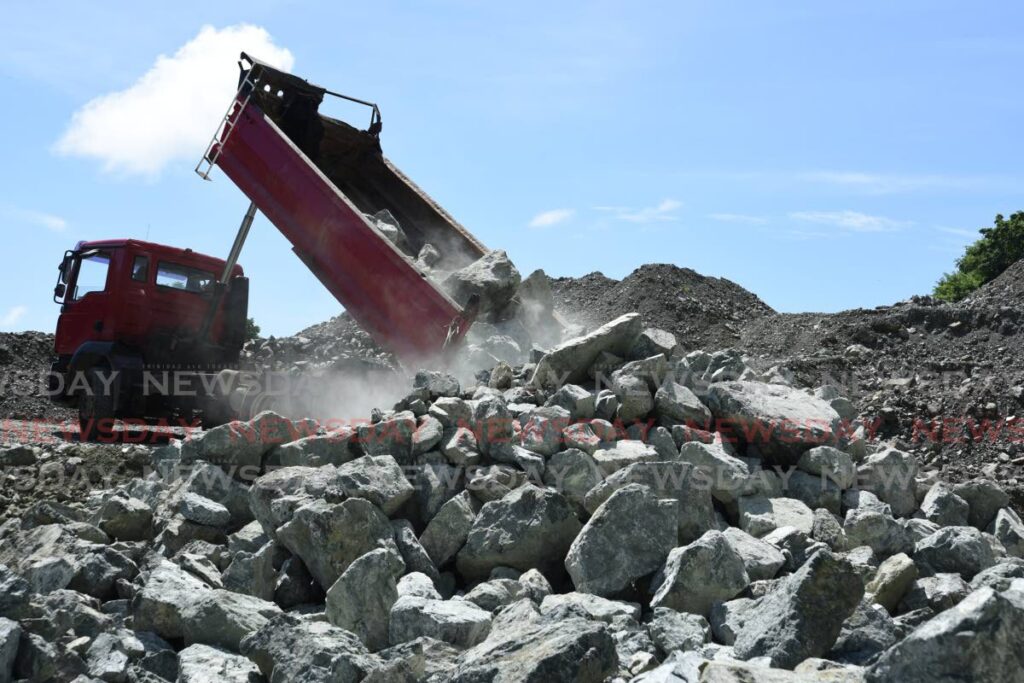
Young: Studley Park materials needed locally
A heated political debate has emerged following the recent issuance of an export licence to Studley Park Enterprises Ltd by Prime Minister Kamla Persad-Bissessar. Port-of-Spain North/St Ann’s West MP Stuart Young has criticized the move, labelling it as ‘political gimmickry.’ Speaking at a media conference on November 6, Young defended the previous administration’s decision not to grant the Tobago House of Assembly (THA) the licence, emphasizing the high local demand for the quarry’s high-grade materials. Young highlighted that aggregate from Studley Park was crucial for several local projects, including the Diego Martin Interchange, and that the quarry’s production capacity was insufficient to meet domestic needs. He questioned the rationale behind prioritizing exports when local demand remains unmet, warning that the export licence could exacerbate foreign exchange challenges and impact roadworks across the country. Young also revealed that former Prime Minister Dr Keith Rowley and former Works Minister Rohan Sinanan were previously barred from visiting the quarry. Prime Minister Persad-Bissessar, however, defended the licence, stating it would enable Studley Park to market its aggregate regionally and generate much-needed foreign exchange, empowering Tobago to chart its own economic destiny.
-
CCJ hears case of Trini political analyst’s detention in Suriname
The Caribbean Court of Justice (CCJ) commenced hearings on November 6 regarding a high-profile case involving political analyst Derek Ramsamooj, who claims he was unlawfully detained in Suriname. The case, titled *Derek Ramsamooj v The State of Suriname*, is being adjudicated at the CCJ’s headquarters in Port of Spain, Trinidad and Tobago, with proceedings set to conclude on November 7. Ramsamooj, a Trinidadian citizen, asserts that his fundamental rights under the Revised Treaty of Chaguaramas were violated during his detention, which spanned from October 2020 to September 2022. He alleges that Surinamese authorities denied him access to legal representation and medical care throughout this period. Additionally, Ramsamooj claims he was coerced into signing documents written in Dutch, a language he does not comprehend, which were subsequently presented in court as a confession. The case has drawn significant attention due to its implications for human rights and cross-border legal accountability within the Caribbean region.
-
High Court dismisses ‘Presidential wine’ defamation lawsuit
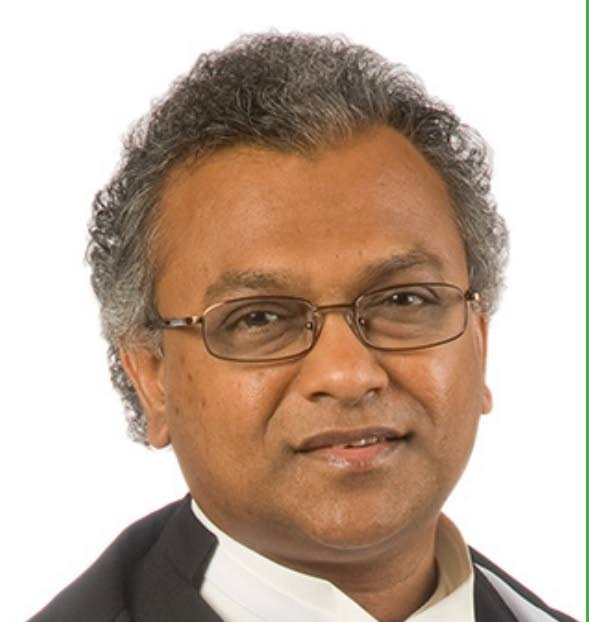
The High Court has dismissed a defamation lawsuit filed by former presidential aide Pramati Noe, her husband Antonio Piccolo, and their company, Italian Import & Export Ltd, against Trinidad Express Newspapers Ltd. Justice Robin Mohammed ruled that the articles in question were not defamatory and were protected under the principle of responsible journalism. The case originated from five articles published by the Express between September 21 and 29, 2016, which alleged that Noe and Piccolo’s company supplied wine to then-President Anthony Carmona’s official residence and that Noe was dismissed as his private secretary after ten months of employment. Noe, who served as the President’s private secretary from 2013 to 2016, claimed the reports falsely implied cronyism and misconduct, damaging her reputation and that of her company. The Express defended its reporting, stating the stories were in the public interest and protected under the Reynolds privilege, which safeguards fair and responsible reporting on matters of public concern. In his ruling on November 5, Justice Mohammed noted that the claimants failed to identify specific defamatory passages and instead summarised alleged falsehoods. He also found that while two articles could suggest impropriety, a later report, which included President Carmona’s public denial of any wrongdoing by Noe or her company, effectively removed the defamatory sting. Justice Mohammed concluded that the Express’ journalists acted responsibly, relied on credible sources, and reported on a legitimate issue concerning procurement practices at the Office of the President. He dismissed the claim in full and ordered costs payable to the media house.
-
Meaning behind Mamdani
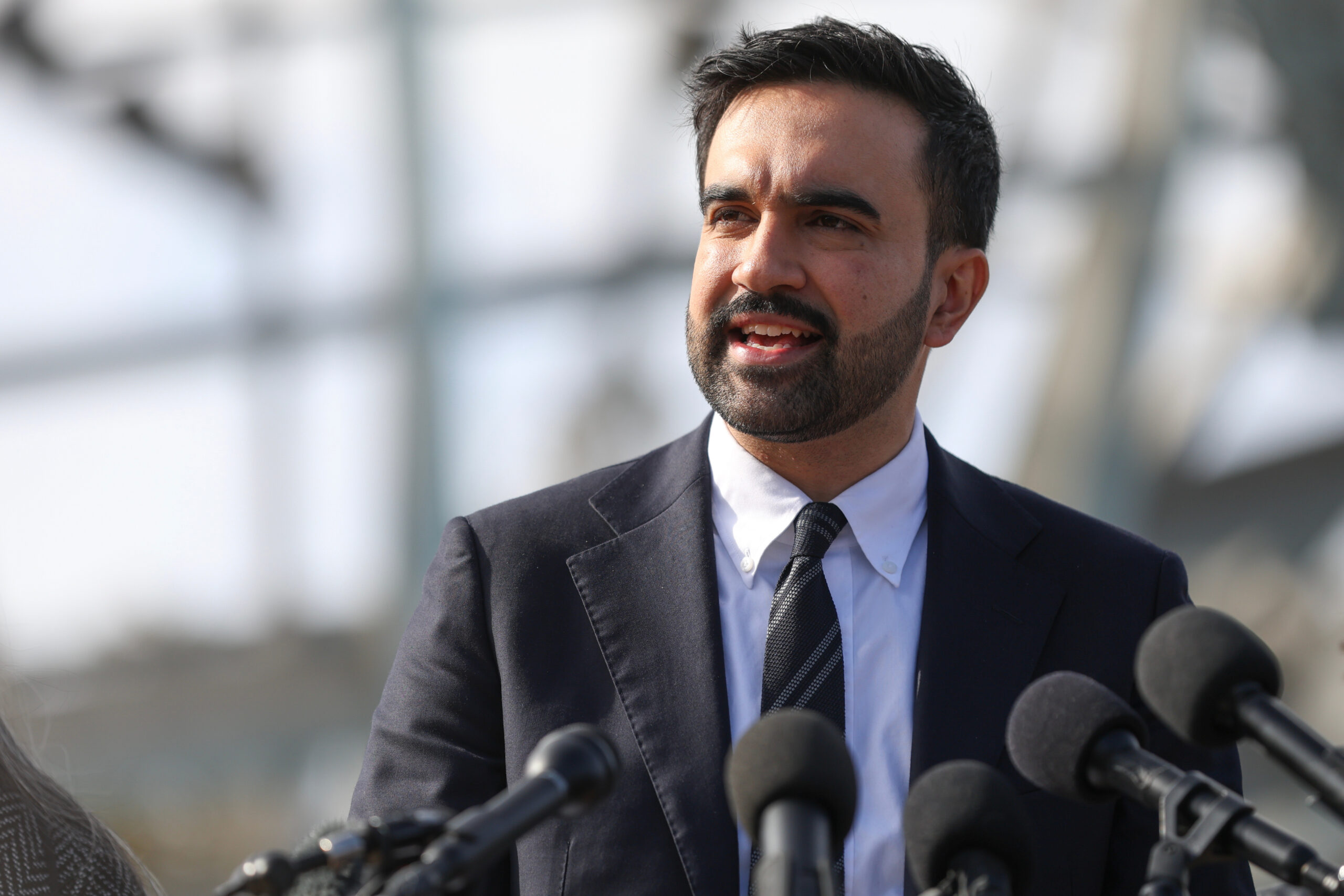
The election of Zohran Mamdani as New York City’s mayor on November 4 signifies a transformative moment in American politics and a beacon of inspiration in the global arena. At just 34 years old, Mamdani’s triumph is historic: he will become the city’s first Muslim mayor, the first of South Asian descent, the first born in Africa, and the youngest in over a century. His victory, securing 50% of the vote against Andrew Cuomo’s 42% and Curtis Sliwa’s 7%, underscores a significant shift in a traditionally Democratic stronghold, where past mayors like Eric Adams and Bill de Blasio enjoyed far more decisive wins.
-
US kill three more in Caribbean airstrike
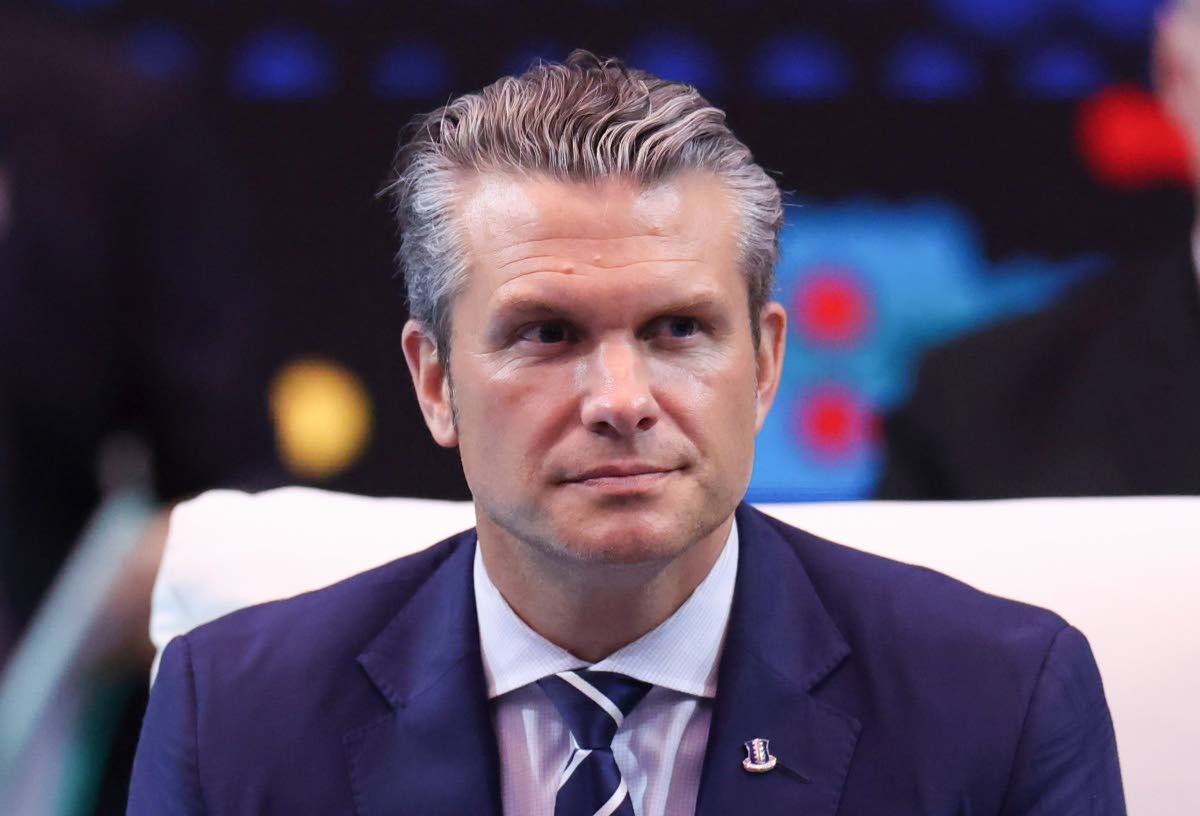
In its ongoing campaign against narcoterrorism, the US military conducted another airstrike in the Caribbean on November 6, resulting in the deaths of three individuals. Secretary of War Pete Hegseth announced the operation on X, emphasizing the US’s commitment to combating drug trafficking. The strike targeted a vessel operated by a designated terrorist organization in international waters, with no US casualties reported. This marks the tenth such attack in the Caribbean since September, totaling approximately 44 fatalities. Among the victims were two Trinidad-born men, Chad Joseph and Rishi Samaroo, who were feared killed in an October 14 strike. Two survivors from an October 26 attack were repatriated to Colombia and Ecuador. The Trinidad and Tobago government, led by Kamla Persad-Bissessar, has supported these operations, citing the nation’s struggle with narcotics and firearm smuggling from Venezuela. Concurrently, a US Senate motion to block President Trump from attacking Venezuela failed, despite concerns that his actions in the Caribbean could escalate tensions. Trump has denied intentions of war with Venezuela but hinted at the potential downfall of President Nicolas Maduro.
-
Presidenten Simons en Lula zetten nieuwe stap in regionale samenwerking
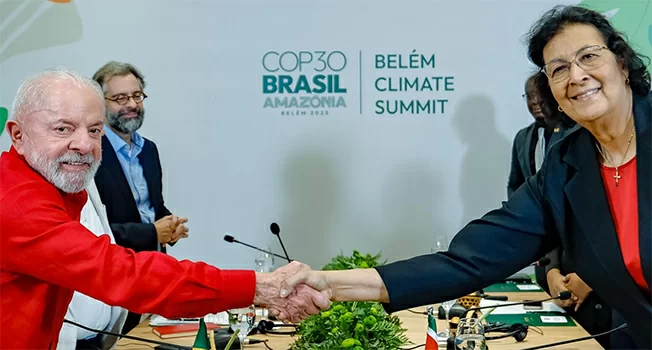
During the Belém Climate Summit in Brazil, President Jennifer Simons of Suriname and Brazilian President Luiz Inácio Lula da Silva held a significant bilateral meeting aimed at deepening cooperation between their nations. The leaders agreed to organize a presidential-level working visit by February 2026 to further develop concrete areas of collaboration. Suriname’s Minister of Foreign Affairs, International Trade, and Cooperation, Melvin Bouva, announced that foreign ministers from both countries will convene a follow-up meeting before the end of this year to prepare for the visit. Key topics discussed included the Amazon rainforest, climate policy, and poverty alleviation. Suriname formally expressed its support for Brazil’s Tropical Forests Forever Fund, a climate initiative recently launched by President Lula. Social development also took center stage, with President Simons expressing interest in learning from Brazil’s successful Bolsa Família program, which supports vulnerable families. Minister Bouva highlighted upcoming discussions on agriculture, tourism, infrastructure, and education, as well as plans to strengthen ties with Brazil’s Rio Branco Institute to provide more Surinamese students with opportunities to study in Brazil. Bouva emphasized that the relationship with Brazil is a foreign policy priority and stressed the importance of regional collaboration with Guyana and neighboring countries, aiming to maximize societal and economic benefits through targeted investments.