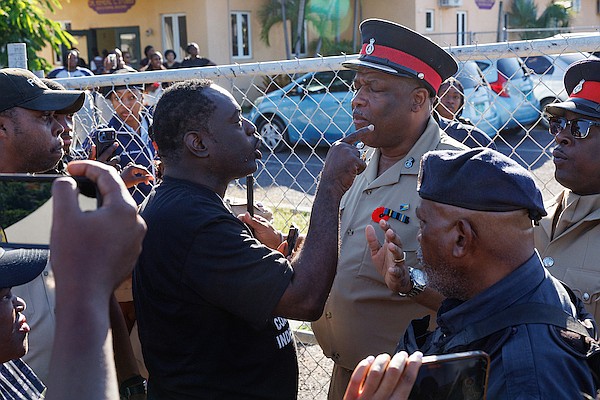
Tensions flared in Golden Isles following the conclusion of advance polling yesterday, as supporters of the Free National Movement (FNM) and the Coalition of Independents (COI) blocked the removal of ballot boxes. The dispute arose over allegations that election officials violated a prior agreement regarding the transportation of voting materials. FNM candidate Brian Brown asserted that presiding officers failed to honor a Wednesday agreement, which stipulated that party representatives should accompany the boxes to the Parliamentary Registrar. The standoff was resolved only after agents were permitted to escort the boxes, which were reportedly taken to the Parliamentary Registrar instead of police headquarters. FNM leader Michael Pintard expressed broader concerns about the election’s integrity, questioning the impartiality of the returning officer, whom he claimed had ties to the prime minister’s campaign. Pintard also alleged that Progressive Liberal Party (PLP) supporters interfered with voters entering the polling station, though he emphasized the FNM’s commitment to avoiding confrontation in the interest of maintaining peace. The PLP dismissed the FNM’s accusations, labeling them as an attempt to create ‘organized chaos’ and distract from internal weaknesses. Earlier in the day, the polling station was a hub of activity, with political tents, chanting supporters, and over 200 registered early voters. A minor dispute over FNM campaign music near the polling entrance was quickly resolved. Voters offered mixed reviews of the process, with some praising its efficiency and others expressing frustration over long waits and pressing local issues, such as flooding and healthcare. Bahamas Kidney Association president Tamika Roberts emphasized the need for actionable leadership, citing the country’s high rates of kidney disease as a critical concern.
分类: politics
-

PLP slams Pintard’s ‘phantom’ passport allegations
The Davis Administration has vehemently refuted claims made by Opposition Leader Michael Pintard regarding the alleged discovery of ‘a bag of passports’ on a Bahamasair flight. Senior officials have accused Pintard of disseminating false information that fosters ‘xenophobic attitudes’ and erodes trust in national institutions. National Security Minister Wayne Munroe emphasized that investigations by Bahamasair, the Passport Office, and the police have all confirmed that no such incident occurred. Munroe urged Pintard to retract his statement, labeling it as ‘reprehensible’ and indicative of poor judgment. He further criticized Pintard’s leadership, suggesting that such behavior disqualifies him from holding any significant public office. The Progressive Liberal Party (PLP) issued a press statement demanding that Pintard either provide evidence for his claims or admit to fabricating the story. The statement underscored the importance of maintaining public confidence in national institutions and condemned Pintard’s alleged pattern of making unfounded statements. Despite the government’s denials, Pintard remained defiant, accusing the administration of dishonesty and vowing to continue challenging its policies. He alleged widespread corruption and lack of transparency within the government, particularly in areas such as procurement, economic management, and immigration. Pintard insisted that his party would not retreat from its stance, emphasizing the need for accountability and truth in governance.
-
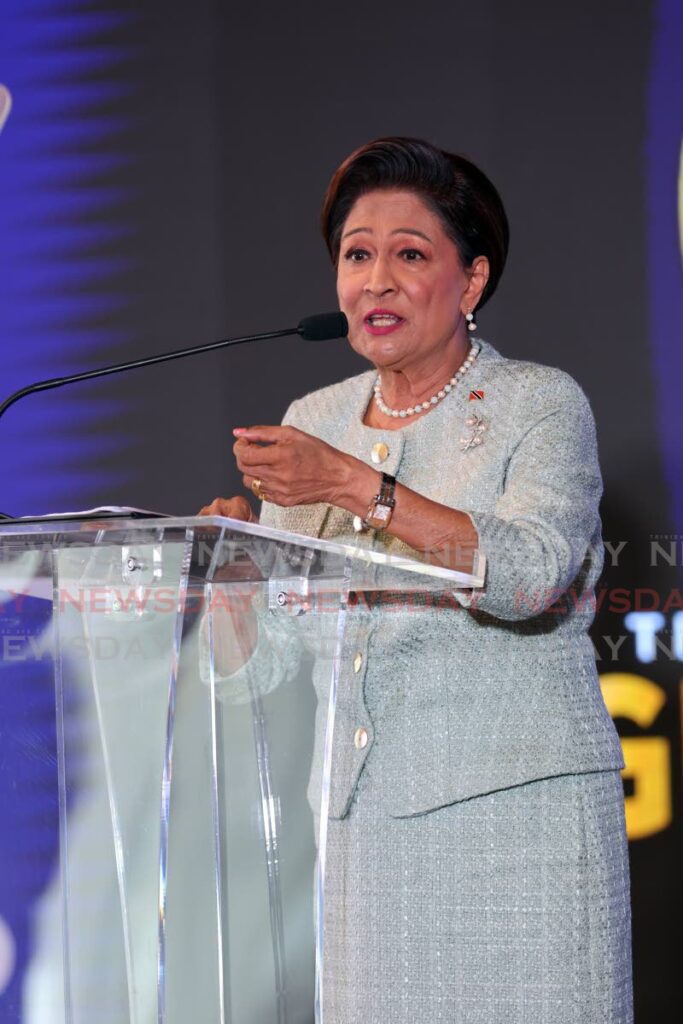
PM dismisses Rowley’s concerns: No US request to attack Venezuela from TT
Prime Minister Kamla Persad-Bissessar of Trinidad and Tobago has firmly denied claims that the United States has sought to use the country’s territory to launch attacks against Venezuela. Addressing concerns raised by former Prime Minister Dr. Keith Rowley, Persad-Bissessar emphasized that Trinidad and Tobago would not permit its land to be used for such purposes. Rowley had warned of potential economic and security risks stemming from what he termed reckless governance and ill-informed decisions by the current administration. Persad-Bissessar dismissed these concerns, asserting that Rowley’s remarks were unfounded and that he had every democratic right to express his views. She highlighted that Rowley, during his tenure, had signed an updated Status of Forces Agreement (SOFA) with the US in 2024, which mandates cooperation with the US military in regional training exercises. However, she reiterated that Trinidad and Tobago remains a sovereign state, guided by a ‘TT first’ foreign policy approach, and does not blindly align with the US or any bloc, including Caricom. Persad-Bissessar underscored the country’s commitment to maintaining peaceful relations with Venezuela and its refusal to engage in actions that could harm the Venezuelan people. She also affirmed her government’s support for leaders elected through free and fair democratic processes and reassured citizens that neither they nor national infrastructure were at risk due to any involvement in aggression against Venezuela.
-
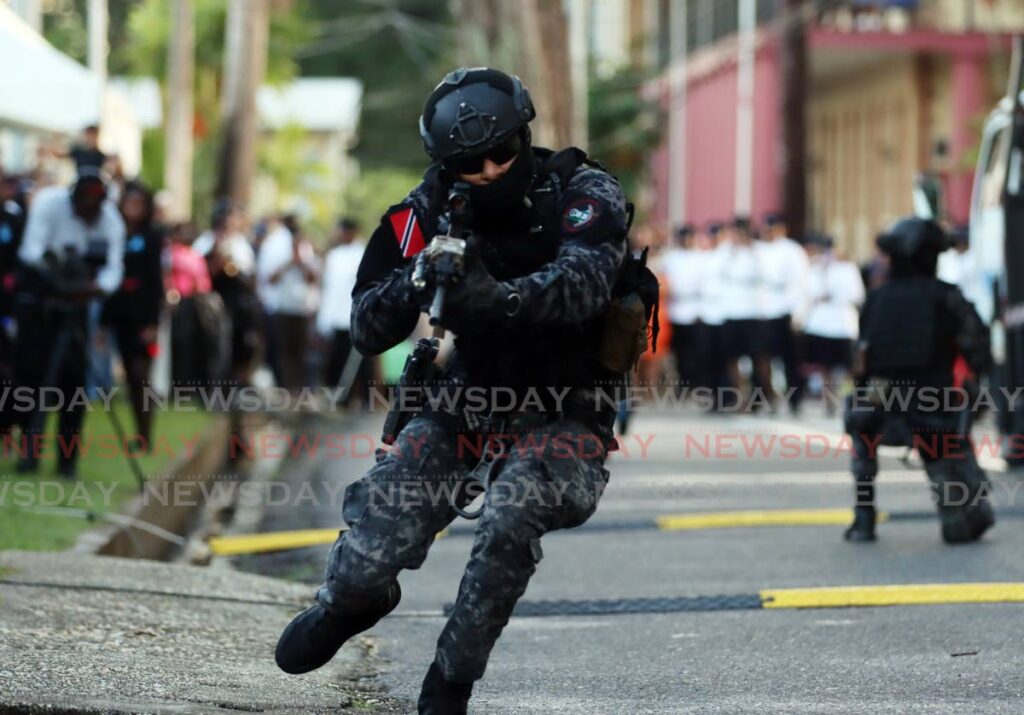
CoP mum on police involvement in US military training
Commissioner of Police Allister Guevarro remained tight-lipped regarding the Trinidad and Tobago Police Service’s (TTPS) involvement in joint training exercises with the US military’s 22nd Marine Expeditionary Unit. Speaking at the passing-out parade for 126 new police officers at the Police Training Academy in St James on November 17, Guevarro emphasized the strategic nature of such collaborations, stating it would be unwise to disclose specific details publicly.
-
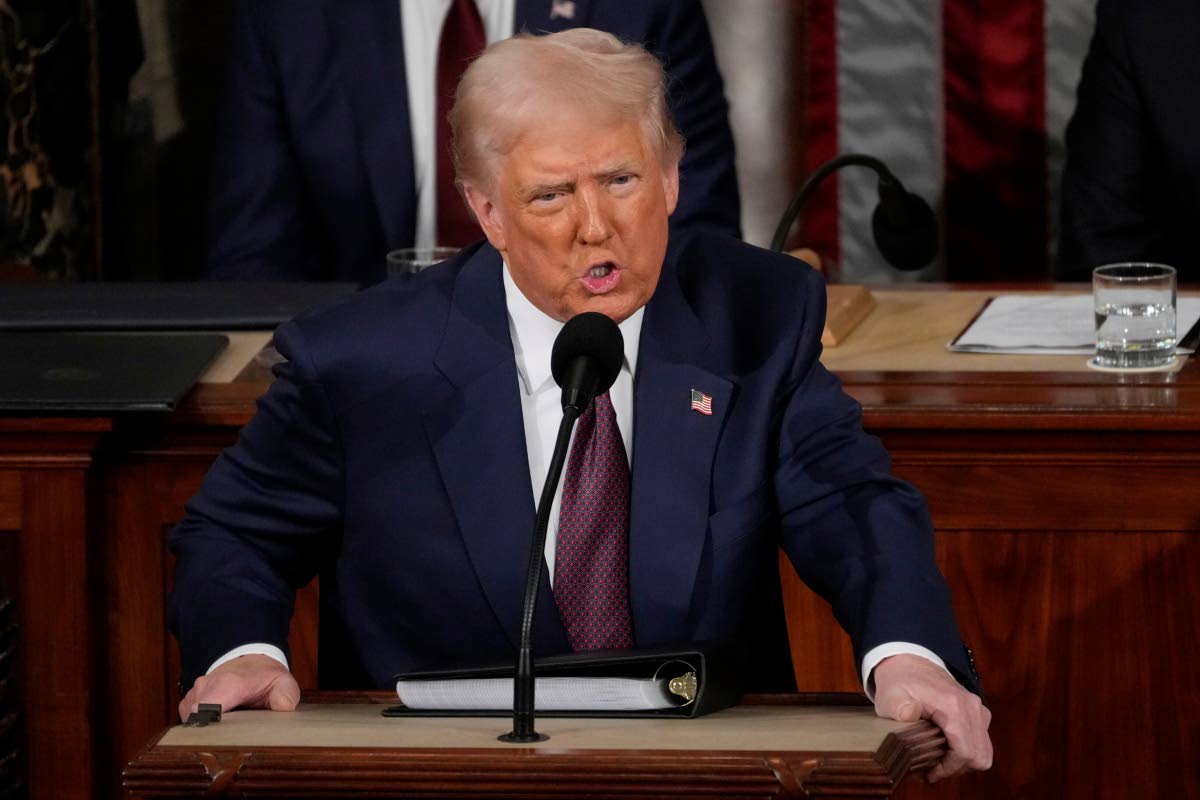
Trump promises to talk with Maduro
US President Donald Trump has hinted at possible discussions with Venezuelan leader Nicolás Maduro, marking a potential shift in the strained relations between the two nations. Speaking to reporters at Palm Beach International Airport on November 16, Trump stated, ‘Let’s see how that turns out. They would like to talk.’ However, he remained noncommittal about Maduro’s future as Venezuela’s leader, citing the significant damage Maduro has caused to the US, particularly through drug-related issues and the release of prisoners into the country. Trump emphasized that the situation is complex and that further decisions would be made in due course. This announcement came shortly after the US Department of State declared its intention to designate Venezuela’s Cartel de los Soles as a terrorist organization, effective November 24. Secretary of State Marco Rubio affirmed that the US would continue to employ all available tools to safeguard national security and disrupt funding to narco-terrorists. Trump acknowledged that the designation could enable the US to target Maduro’s assets but clarified that no definitive actions have been decided. The backdrop to these developments includes a reported offer from Maduro’s administration to grant the US a dominant stake in Venezuela’s oil and mineral wealth, as revealed by The New York Times on October 10. Meanwhile, US Secretary of War Pete Hegseth has launched Operation Southern Spear, aimed at dismantling drug cartels in the Western Hemisphere. The US has also increased the bounty for Maduro’s arrest from $15 million to $50 million. Recent US military actions in the Eastern Pacific and Caribbean Sea have resulted in at least 83 deaths, further straining relations between Venezuela and Trinidad and Tobago (TT). Venezuela has accused TT of collaborating with the US, a claim vehemently denied by TT Prime Minister Kamla Persad-Bissessar, who has expressed strong support for US efforts to curb illegal weapons and drugs. In response, Venezuela has suspended energy deals with TT and declared Persad-Bissessar persona non grata.
-
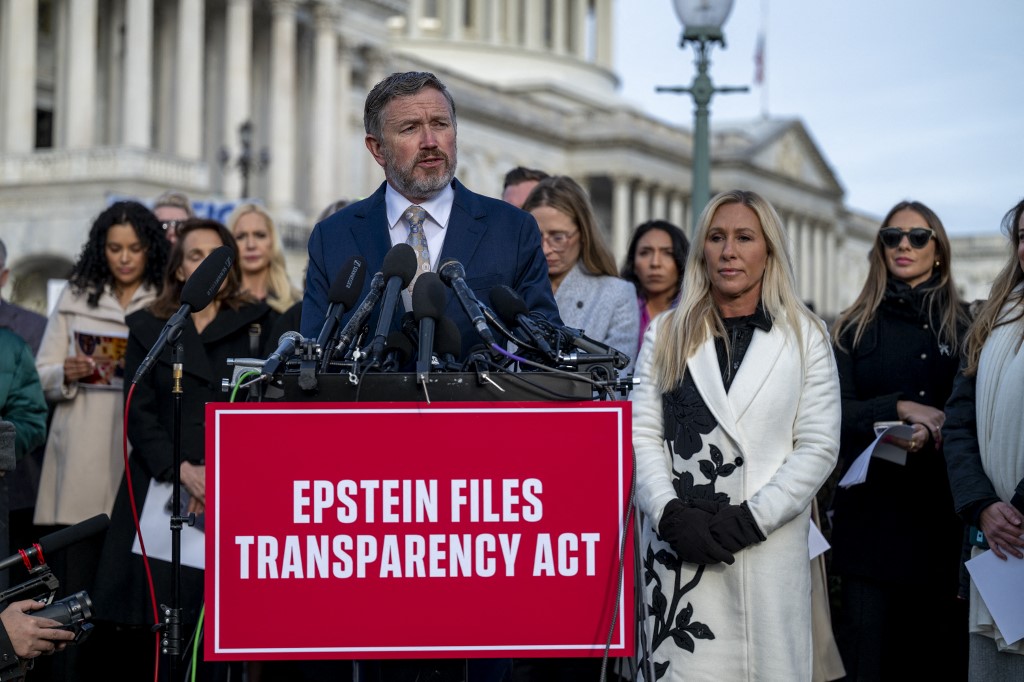
US lawmakers set for explosive vote on Epstein files
In a significant political development, the US House of Representatives is set to vote on Tuesday for the release of government records related to Jeffrey Epstein, the convicted sex offender whose case has sparked widespread controversy. This move comes despite initial resistance from President Donald Trump, who had sought to suppress the documents. However, mounting pressure from within his own party has forced a reversal of his stance. The Epstein Files Transparency Act, which mandates the publication of unclassified documents detailing the investigation into Epstein’s operations and his 2019 death in custody, is expected to pass, potentially unanimously. Lawmakers argue that the public deserves transparency in a case involving over 1,000 alleged victims. Trump has claimed the files will expose powerful Democrats’ ties to Epstein, but his own long-standing friendship with the financier has drawn scrutiny. While the House vote appears decisive, the Justice Department retains the authority to withhold information if it jeopardizes an active investigation. The saga has revealed rare divisions within the Republican Party, with some members defying Trump to push for the release. Epstein survivors have expressed skepticism about the president’s motives, emphasizing the need for accountability. The case continues to cast a shadow over Washington, with potential revelations likely to fuel further political and public debate.
-

Sentenced to death
In a landmark ruling, Bangladesh’s former Prime Minister Sheikh Hasina has been sentenced to death for crimes against humanity, following a brutal state crackdown on student-led protests in 2024. A UN fact-finding report revealed that 1,400 people were killed, including 13% children, while thousands were maimed and 11,700 arbitrarily detained. The crackdown, marked by extrajudicial killings, torture, and surveillance, targeted dissenters, journalists, and medical staff. Women and girls faced sexual and gender-based violence, all orchestrated under Hasina’s iron-fisted regime. Despite her conviction, Hasina, exiled in India, remains unlikely to face extradition. She dismissed the tribunal’s ruling as a “farce,” claiming it was politically motivated. Her lawyers preemptively lodged a complaint with the UN, arguing the trial was retribution. The UN report corroborated the tribunal’s findings, detailing how Hasina, also the defense minister, directed security forces to violently suppress opposition. UN Human Rights Chief Volker Türk described the response as a calculated strategy to retain power. Hasina, the world’s longest-serving female head of state, openly demeaned protesters, asserting their efforts were futile. While international bodies face challenges in enforcing accountability, this ruling serves as a stark reminder that leaders may eventually face consequences for disregarding due process and human rights for political gain.
-
Trump’s Venezuela strategy collapsing
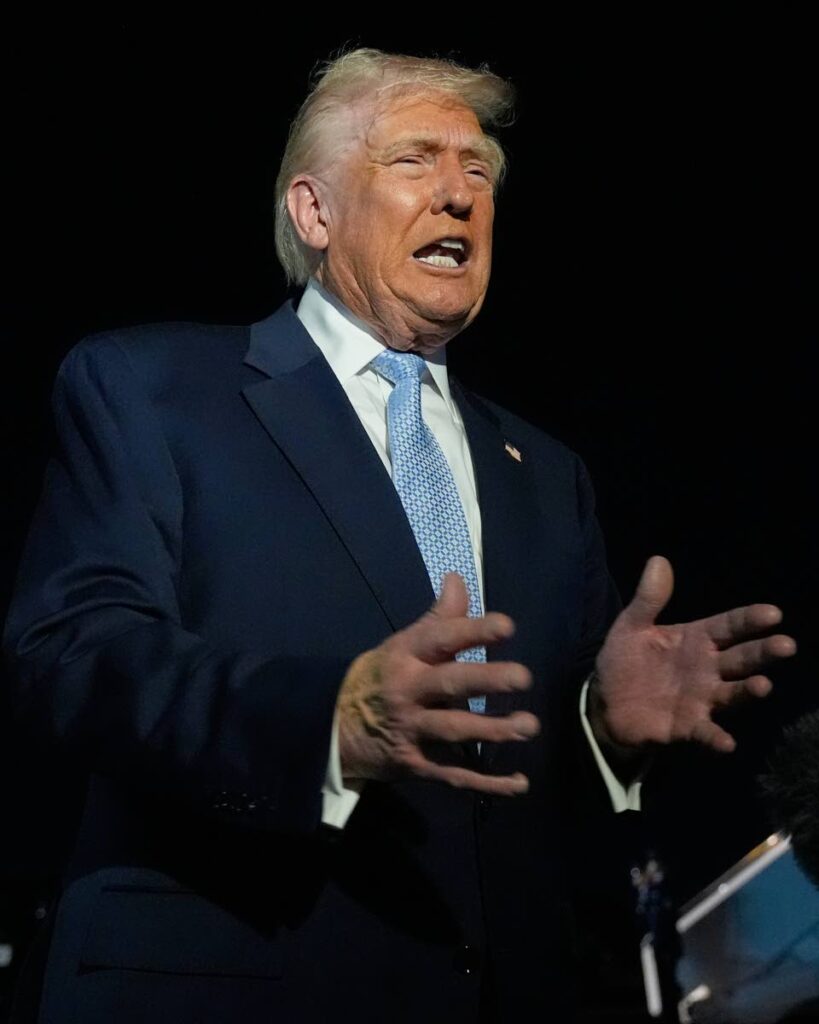
US President Donald Trump’s recent decision to launch missile strikes on suspected drug-trafficking boats in the Caribbean has ignited a firestorm of criticism, both domestically and internationally. Initially framed as a decisive move against organized crime, the operation has instead highlighted the limitations of unilateral military action and the perils of prioritizing force over diplomacy. The strikes resulted in 76 fatalities, yet the US has failed to provide concrete evidence linking the destroyed vessels to drug trafficking. This lack of transparency raises serious concerns about due process and the rule of law, principles that are foundational to any democratic society. The most striking reactions have come not from Trump’s critics but from his traditional allies. The UK, America’s closest partner, has ceased intelligence-sharing to avoid complicity, while Canada has distanced itself and Colombia has severed ties entirely. This widespread disengagement underscores the flawed nature of the strategy. Trump’s supporters argue that the strikes were necessary to protect American citizens, but such actions, devoid of legal justification, represent unchecked power rather than genuine security. History has repeatedly shown that wars waged on fear and instinct, rather than clear evidence, rarely yield positive outcomes. Equally troubling is the silence from Republican leaders, who once championed constitutional values but now turn a blind eye to extrajudicial killings carried out in America’s name. The global backlash is not an overreaction but a stark warning. When a nation forsakes transparency, legality, and alliances, it does not strengthen itself—it isolates itself. Trump’s promise of strength rings hollow when it lacks the support of allies, adherence to law, and a foundation of humanity. This episode marks the beginning of a decline, and the world is already witnessing it unfold.
-
What about removal of online tax?
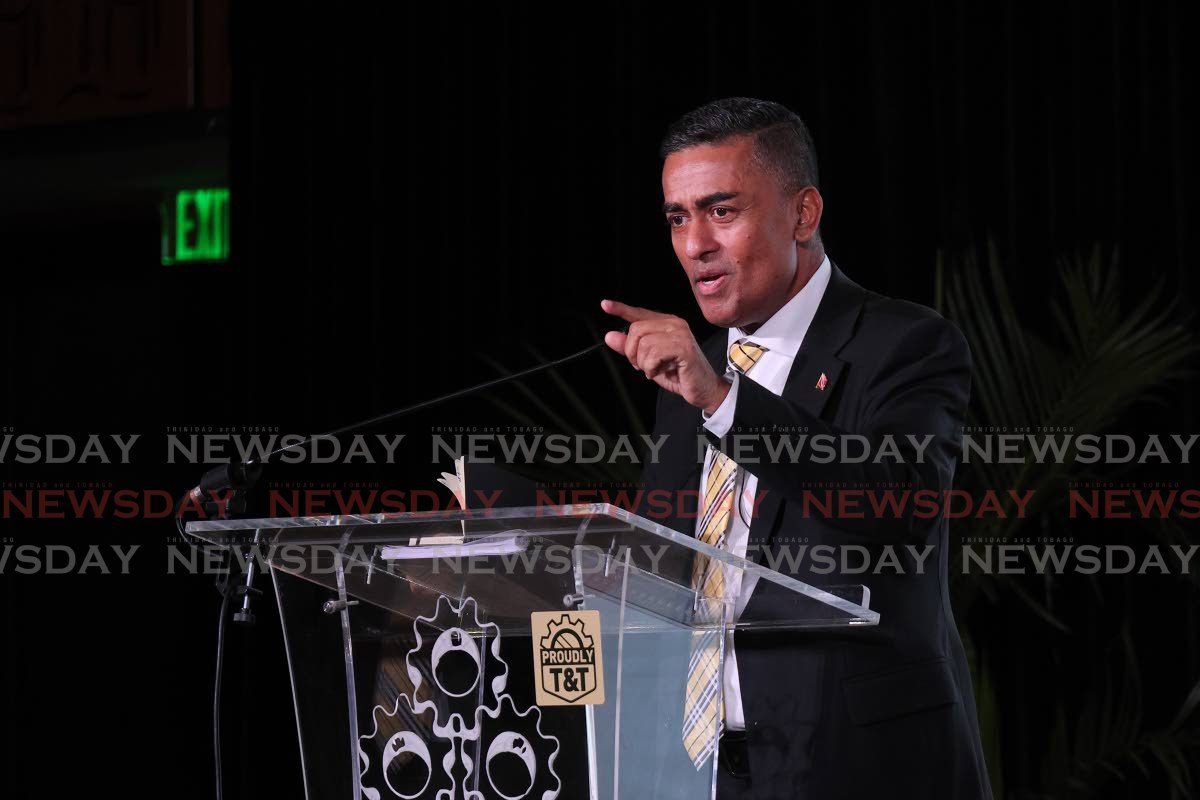
In a heartfelt letter to the editor published in Newsday, Barry S. Bissessar, a self-proclaimed ‘Fyzo boy’ and former schoolmate of Finance Minister Davendranath Tancoo, extended his congratulations on Tancoo’s recent appointment to public office. However, Bissessar also took the opportunity to remind the minister of a significant campaign promise: the removal of the seven per cent Online Purchase Tax (OPT).
Bissessar recalled that the current Prime Minister, during his time as opposition leader, had repeatedly criticized the OPT as a ‘nuisance tax’ and vowed to eliminate it. The tax was introduced during the 2016-2017 budget by the then finance minister, placing an additional burden on an already heavily taxed population.
While acknowledging that the removal of the OPT might have been overlooked in the preparation of the 2025-2026 budget, Bissessar expressed confidence that the issue would be addressed during the mid-year review or, at the latest, in the next budget cycle. The letter serves as both a congratulatory message and a gentle nudge to the finance minister to fulfill a key electoral promise.
-

New York AG urges temporary protected status for Jamaicans after Hurricane Melissa
In the wake of the catastrophic impact of Hurricane Melissa, which struck Jamaica on October 28, 2025, New York Attorney General Letitia James has called on the federal government to grant Temporary Protected Status (TPS) to Jamaicans currently residing in the United States. The hurricane, the most intense to ever hit the island, has resulted in at least 45 fatalities and caused over $2 billion in property damage, displacing approximately 30,000 households and severely disrupting access to essential services such as electricity, clean water, and medical care.
In a formal letter addressed to the Department of Homeland Security (DHS), James emphasized the urgent need for TPS, a designation that allows individuals from countries experiencing severe crises to live and work legally in the U.S. without fear of deportation. ‘Hurricane Melissa has inflicted unimaginable devastation on our Jamaican neighbors, destroying vital infrastructure and leaving tens of thousands homeless,’ James stated. ‘Forcing Jamaicans in the U.S. to return to a shattered homeland would be both dangerous and inhumane. TPS was designed precisely for such situations, and the federal government must act swiftly to protect those affected.’
James’s appeal has garnered widespread support from political leaders, including Congresswoman Yvette Clarke, who highlighted the U.S.’s moral and diplomatic obligations to Jamaica. ‘Jamaica has been a steadfast ally to the United States since its founding,’ Clarke remarked. ‘We must honor our humanitarian commitments by ensuring that Jamaicans are not forced to return to unsafe conditions while their nation rebuilds.’
Queens Borough President Donovan Richards Jr., whose family has Jamaican roots, echoed these sentiments, urging the Trump administration to ‘set politics aside’ and extend TPS without delay. ‘The heart-wrenching images of devastation in Jamaica compel us to act,’ Richards said. ‘The U.S. must stand with our Caribbean brothers and sisters during this critical time.’
New York City Council Majority Whip Selvena Brooks-Powers, representing one of the largest Caribbean communities in the city, also voiced her support. ‘Extending TPS is not only the right thing to do but also a testament to the deep cultural and historical ties between New York City and Jamaica,’ she asserted. ‘It is our shared responsibility to provide safety and stability to those in need.’
The call for TPS follows a precedent set by the U.S. government, which has previously granted the designation to nationals of Haiti, Honduras, Nicaragua, and Nepal following natural disasters. As Jamaica begins the arduous process of recovery, the extension of TPS would offer critical relief to those affected by the hurricane’s unprecedented destruction.