分类: politics

  • Hof beslist: Vervolging Hoefdraad rechtmatig

    Hof beslist: Vervolging Hoefdraad rechtmatig

    The Court of Justice in Suriname has ruled that the 2020 decision by the National Assembly (DNA) to place former Minister Gillmore Hoefdraad under formal accusation was lawful. This decision, made after nearly five years of legal battles, renders Hoefdraad’s civil lawsuit against the State, the National Assembly, and the Public Prosecution Service (OM) inadmissible. Hoefdraad, who remains a fugitive, had contested his prosecution, which stemmed from his alleged involvement in the high-profile case concerning the Central Bank of Suriname (CBvS).

    Hoefdraad and his legal team argued that the National Assembly’s decision was unlawful, as the parliament, then led by Jennifer Simons, had previously decided not to prosecute him during the second term of the NDP government. However, following the May 2020 elections, then Attorney General Roy Baidjnath Panday resubmitted a request to prosecute Hoefdraad. The new parliament, led by Marinus Bee and comprising a coalition of VHP, ABOP, NPS, and Pertjajah Luhur, approved the prosecution. Hoefdraad claimed this decision was politically influenced, asserting that the parliament could not revisit a prior decision unless new evidence emerged—a condition not met in this case.

    In 2023, Hoefdraad was convicted in absentia, alongside other key figures, including former CBvS Governor Robert van Trikt and legal director Faranaaz Hausil. All defendants appealed their convictions, while Hoefdraad continued his civil case to challenge the legitimacy of his prosecution. The court handling the criminal appeal has completed its investigation but awaits the outcome of this civil case, which has been delayed multiple times.

    Hoefdraad’s lawyer, Murwin Dubois, argued that a favorable ruling in the civil case could have impacted the criminal proceedings. Notably, Interpol refused to extradite Hoefdraad to Suriname, removing him from its wanted list and barring Suriname from using its channels, citing the prosecution as politically motivated. With the Court’s ruling affirming the legitimacy of the prosecution, the path is now clear for a final verdict in the criminal appeal.

  • Opposition leader: UNC silent on refinery

    Opposition leader: UNC silent on refinery

    Opposition Leader Pennelope Beckles has criticized the United National Congress (UNC) for its silence on its campaign pledge to restart the former Petrotrin refinery in Pointe-a-Pierre, suggesting the party has realized it cannot deliver on this promise. Beckles made these remarks during her contribution to the 2025/2026 budget debate in the House of Representatives on October 17. She highlighted the absence of any mention of the refinery in Finance Minister Davendranath Tancoo’s budget presentation on October 13, contrasting it with the firm agreement in place when the People’s National Movement (PNM) left office after the April 28 general election. Beckles accused the UNC of misleading voters during the election by promoting false hopes of new jobs and foreign exchange revenues from the refinery’s revival. She emphasized that the PNM had made significant progress in restarting the refinery through a competitive evaluation process, which led to the selection of Nigerian company Oando Trading DMCC to lease and operate the facility. Beckles noted that this approach ensured no taxpayer burden and provided a structured path forward. However, she claimed the UNC scrapped this process without building on the PNM’s groundwork. Beckles also referenced a committee formed to explore the refinery’s feasibility, which reportedly admitted to minimal progress due to high capital costs and financial uncertainties. She criticized Minister Ernesto Kesar for prematurely claiming the refinery was ready to restart, warning the government against bypassing procurement laws. Beckles vowed to monitor the situation closely, emphasizing the legal consequences of breaching the Procurement and Disposal of Public Property Act. The refinery’s potential restart has been a contentious issue since the PNM’s 2024/2025 budget statement, which shortlisted three companies, including Oando, for the lease.

  • Protesters turn out for anti-Trump ‘No Kings’ rallies

    Protesters turn out for anti-Trump ‘No Kings’ rallies

    WASHINGTON, United States — This Saturday, the United States witnessed an unprecedented wave of protests as millions of Americans took to the streets from New York to San Francisco to voice their dissent against President Donald Trump’s controversial policies. Dubbed the ‘No Kings’ rallies, these demonstrations have been criticized by Republicans as ‘Hate America’ events, yet organizers argue they are a patriotic call to action against what they perceive as authoritarian governance.

  • Ruling upstages Penny’s budget reply

    Ruling upstages Penny’s budget reply

    The recent budget debate in Trinidad and Tobago’s Parliament has thrust Opposition Leader Pennelope Beckles into the spotlight, but not entirely for the reasons she might have hoped. On October 17, Beckles delivered her response to Finance Minister Davendranath Tancoo’s budget presentation at the Red House in Port of Spain. This moment, intended to solidify her position as the PNM’s first female opposition leader, was overshadowed by a contentious ruling from Deputy Speaker Dr. Aiyna Ali. Dr. Ali referred Beckles to the privileges committee over a complaint of contempt, a move that has sparked significant debate.

    Beckles, dressed in military black and gold, adopted a subdued yet critical tone during her three-hour speech. She labeled the budget as a “con-job,” analyzed fiscal figures, and warned of an impending economic crisis unlike any seen in the past four decades. However, her efforts were largely eclipsed by the drama surrounding Dr. Ali’s decision, which stemmed from a complaint filed by government whip Barry Padarath. The complaint was related to a statement issued by Beckles’ party earlier this month, accusing Speaker Jagdeo Singh of “biased and prejudicial” behavior.

    This incident highlights the turbulent start to the 13th Republican Parliament’s budget debate. With many new faces in the House, including MPs and presiding officers, the political landscape remains unpredictable. The use of the privileges committee, a rare and serious parliamentary tool, adds to the tension. Beckles’ response also opened new lines of attack, particularly regarding her claims about the government’s economic management. She argued that the current administration had undone in five months what the PNM achieved in ten years, a statement met with skepticism. Additionally, her critique of the Tobago allocation figures was fact-checked and found to be inaccurate.

    As the debate continues, Beckles faces the challenge of distinguishing her leadership style from both former Prime Minister Kamla Persad-Bissessar and current Prime Minister Keith Rowley. Her performance in the coming weeks will be crucial in determining her effectiveness as opposition leader and her party’s prospects in future elections.

  • Huge crowds as body of revered Kenya politician Odinga heads home

    Huge crowds as body of revered Kenya politician Odinga heads home

    KISUMU, Kenya — Tens of thousands of mourners gathered in western Kenya on Saturday to pay their final respects to Raila Odinga, a revered political figure whose death has left the nation in profound grief. The massive turnout in Kisumu, Odinga’s political stronghold, marked the climax of a week-long mourning period that has already claimed at least five lives. As his coffin arrived by helicopter at the city stadium, the crowd erupted in emotional chants of “Baba” (father) and “We are orphans,” reflecting the deep connection Odinga had with his supporters. Odinga, 80, passed away on Wednesday in India from a suspected heart attack, sparking nationwide sorrow, particularly among the Luo community, which he championed. Despite the overwhelming crowd, the event in Kisumu was relatively orderly compared to earlier ceremonies in Nairobi, where security forces resorted to lethal measures to control surging crowds. A medical source reported that 74 people were treated for fainting and dehydration at the stadium. Odinga’s legacy as a key architect of Kenya’s multi-party democracy and the 2010 constitution remains undisputed, though his death leaves a leadership vacuum in the opposition. His pragmatic alliances, including a recent deal with President William Ruto, had alienated some young voters. As Kenya prepares for potentially turbulent elections in 2027, the future of Odinga’s political movement remains uncertain.

  • Shameful walkout by PNM

    Shameful walkout by PNM

    The recent walkout by the People’s National Movement (PNM) from Parliament on October 10 has sparked intense debate, with critics labeling it as a calculated act of political theater rather than a genuine protest. The move, described as a ‘disgraceful retreat,’ is seen as an attempt to divert public attention from the party’s internal failures and lack of unity. Speaker Jagdeo Singh, who has been praised for his impartiality and adherence to parliamentary procedures, has become a focal point in this controversy. The PNM’s accusations of bias against Singh are dismissed as baseless, with critics arguing that the party’s real issue lies in its inability to handle scrutiny and accountability. The walkout, far from being a legitimate protest, is viewed as a desperate act of political posturing, aimed at masking the party’s leadership vacuum. The opposition’s behavior has been condemned as childish and detrimental to the democratic process, with calls for a return to constructive debate and respect for parliamentary institutions. The incident underscores the need for political maturity and a commitment to the principles of democracy, rather than resorting to theatrics and disruption.

  • US sanctions affiliates of Haitian gang coalition, Viv Ansanm

    US sanctions affiliates of Haitian gang coalition, Viv Ansanm

    The United States Department of the Treasury’s Office of Foreign Assets Control (OFAC) has imposed sanctions on two key figures linked to Haiti’s escalating gang violence. Dimitri Herard, a former Haitian police officer and head of the National Palace’s general security unit, and Kempes Sanon, leader of the Bel Air gang, were targeted for their roles in supporting the Viv Ansanm gang coalition. OFAC accused Viv Ansanm of perpetuating violence, extortion, and terrorism, which have destabilized Haiti. Herard, previously imprisoned for his alleged involvement in the assassination of former President Jovenel Moïse, escaped custody in 2024 and has since collaborated with Viv Ansanm, providing training and firearms to gang leaders. Sanon, meanwhile, has been instrumental in consolidating the coalition’s power through civilian killings, extortion, and kidnappings. The sanctions, enacted under Executive Order 13224, freeze all US-based assets of the designated individuals and prohibit transactions involving their property. OFAC also warned that foreign financial institutions engaging with these individuals risk secondary sanctions. The move underscores the US commitment to holding accountable those who endanger Haitian citizens and destabilize the nation.

  • Tobago West MP: CEPEP and URP to continue in Tobago

    Tobago West MP: CEPEP and URP to continue in Tobago

    Tobago West MP Joel Sampson has confirmed that the Community-Based Environmental Protection and Enhancement Programme (Cepep) and the Unemployment Relief Programme (URP) will persist in Tobago, despite plans to phase them out in Trinidad. Speaking during the budget debate in Parliament on October 17, Sampson emphasized that these initiatives remain under the jurisdiction of the Tobago House of Assembly (THA), which has no intention of discontinuing them. He highlighted that URP is managed by the Division of Infrastructure, Quarries and Urban Development, while Cepep falls under the Division of Community Development, Youth Development and Sport. Sampson noted that since the THA took office in 2021, the programmes have been restructured to produce meaningful outcomes, including revenue-generating workshops and agricultural units. He acknowledged that central government funding has been insufficient, but the THA has creatively addressed the shortfall using unspent balances. Sampson reassured Tobagonians employed in these programmes that their jobs are secure, emphasizing that they operate under a proper structure rather than a political contract. This announcement comes after Finance Minister Devendranath Tancoo revealed plans to eliminate Cepep and URP in Trinidad to curb state funding of criminal gangs, promising better-paid, full-time jobs for affected workers. Sampson also praised the government’s budget, calling it one of the most comprehensive in THA history, with Tobago receiving $3.724 billion, or 6.3% of the national budget.

  • A smart and necessary move: Taxing luxuries to fund necessities

    A smart and necessary move: Taxing luxuries to fund necessities

    The government’s recent decision to increase taxes on alcohol and tobacco in the 2025-2026 budget marks a significant shift towards a more responsible and equitable economic framework. This policy, far from being a mere fiscal adjustment, represents a strategic move to address both public health and financial stability. By imposing higher taxes on these non-essential and harmful goods, the government is realigning national spending priorities with the country’s most pressing needs. The initiative raises critical questions about societal values: Should access to alcohol and tobacco take precedence over funding for healthcare, education, and food security? The resounding answer is no. This policy underscores the interconnectedness of public health and financial health. Higher prices on cigarettes and alcohol are expected to reduce consumption, thereby alleviating the strain on the healthcare system and freeing up resources for essential services. Additionally, the measure aims to optimize foreign exchange reserves by discouraging the import of luxury goods like scotch whisky and premium beers. Instead, these funds can be redirected towards vital sectors such as medical equipment, educational technology, and agricultural development. The tax hike also provides a competitive edge to local producers, fostering economic diversification and safeguarding domestic jobs. However, the success of this policy hinges on its integration into a broader strategy. Strengthening customs enforcement to combat illicit trade, expanding the tax framework to include other non-essential imports, and balancing regional trade dynamics within Caricom are crucial next steps. This initiative reflects a government willing to make tough decisions for long-term national well-being, prioritizing economic justice and public welfare over short-term popularity. It’s a commendable first step towards a more sustainable and equitable future.

  • Trump says Venezuela’s Maduro offered ‘everything’ to ease tensions

    Trump says Venezuela’s Maduro offered ‘everything’ to ease tensions

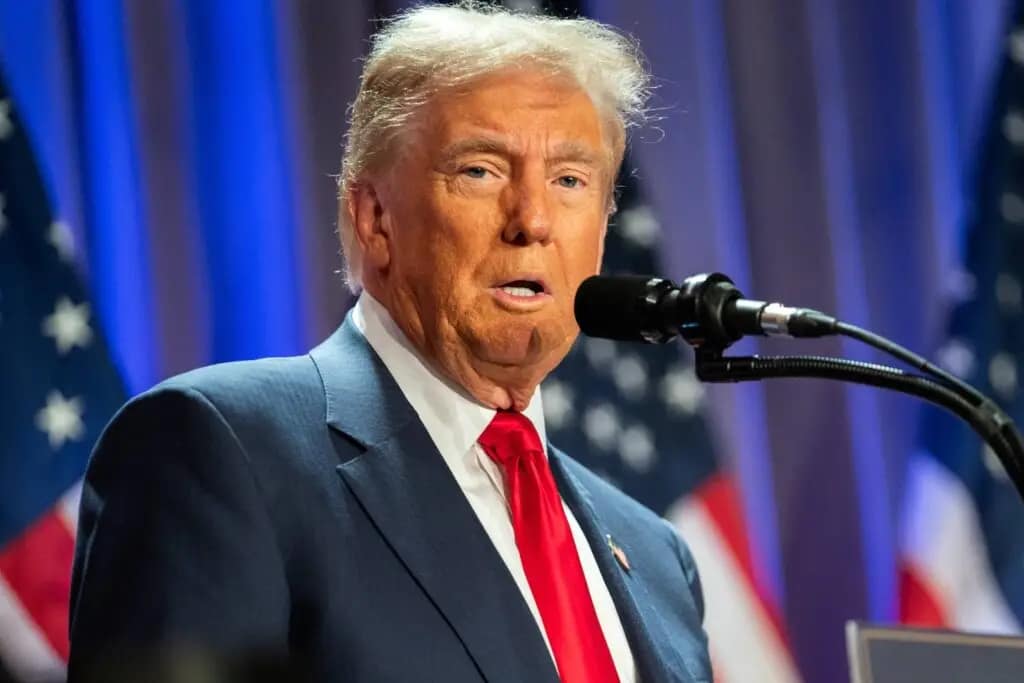
    In a significant development in the ongoing tensions between the United States and Venezuela, President Donald Trump confirmed on Friday that Venezuelan leader Nicolas Maduro had proposed major concessions to ease the strained relations. However, Trump dismissed these overtures with sharp criticism, stating that Maduro’s actions were driven by fear of U.S. retaliation. This comes alongside reports of a new U.S. military strike targeting a drug-smuggling vessel in the Caribbean, which allegedly left survivors onboard. The vessel, described by Trump as a ‘drug-carrying submarine,’ is part of a broader U.S. campaign against narcotics trafficking in the region. Washington has accused Maduro of leading a drug cartel and has deployed significant military assets, including stealth warplanes and naval ships, to combat the issue. Maduro, meanwhile, has accused the U.S. of orchestrating a regime change, a claim that has fueled further tensions. The U.S. has intensified its military presence in the Caribbean since September, targeting at least six vessels, mostly speedboats, allegedly linked to drug smuggling. While the U.S. claims its operations are dealing a decisive blow to drug trafficking, experts have raised concerns about the legality of summary killings, even if the targets are confirmed drug smugglers. The campaign has also drawn in neighboring countries, with Trinidad and Tobago investigating whether its citizens were killed in a recent strike, and Colombian President Gustavo Petro expressing concerns about Colombian casualties. Amid these developments, Trump has hinted at expanding U.S. military operations to include land targets, while the head of U.S. Southern Command announced his unexpected retirement, adding another layer of complexity to the situation.