分类: politics

  • An uprising that gave continuity to the Revolution

    An uprising that gave continuity to the Revolution

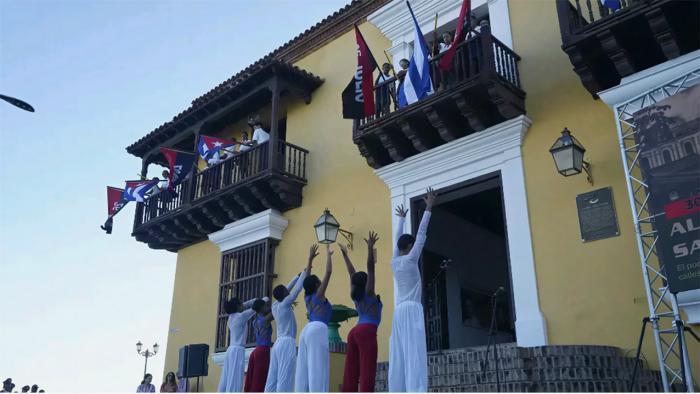
    SANTIAGO DE CUBA – The city commemorated the 69th anniversary of the November 30, 1956 uprising with a solemn ceremony that echoed the revolutionary spirit of the past while reaffirming contemporary political commitments. The event marked the historic action led by Frank País that supported the landing of the Granma yacht, a pivotal moment in Cuba’s revolutionary struggle.

    At Loma del Intendente, floral tributes were ceremoniously placed before the memorial plaque honoring the uprising. The offerings included wreaths from Army General Raúl Castro Ruz, revolutionary leader and former president; First Secretary of the Communist Party and President of the Republic Miguel Díaz-Canel Bermúdez; National Assembly President Esteban Lazo Hernández; and one representing the Cuban people.

    The ceremony, presided over by Beatriz Johnson Urrutia, First Secretary of the Party in Santiago de Cuba province, served multiple purposes beyond historical remembrance. New members of the Young Communist League received their membership cards during the event, while various organizations and entities presented their commitments in celebration of the upcoming 67th anniversary of the Revolution’s triumph.

    The original 1956 uprising, as described by Frank País himself, demonstrated overwhelming popular support for the revolutionary cause. Citizens provided critical assistance to revolutionaries by caring for the wounded, concealing combatants, safeguarding weapons and uniforms, offering their homes as refuge, and monitoring army movements. This collective courage during the struggle’s most challenging moments created what País characterized as “a beautiful sight” of unified resistance.

    The contemporary ceremony effectively bridged historical memory with current political symbolism, emphasizing continuity between the revolutionary past and present governance structures through the participation of both veteran leaders and new party members.
  • Electoral body assures seamless voting after advance-poll hiccups

    Electoral body assures seamless voting after advance-poll hiccups

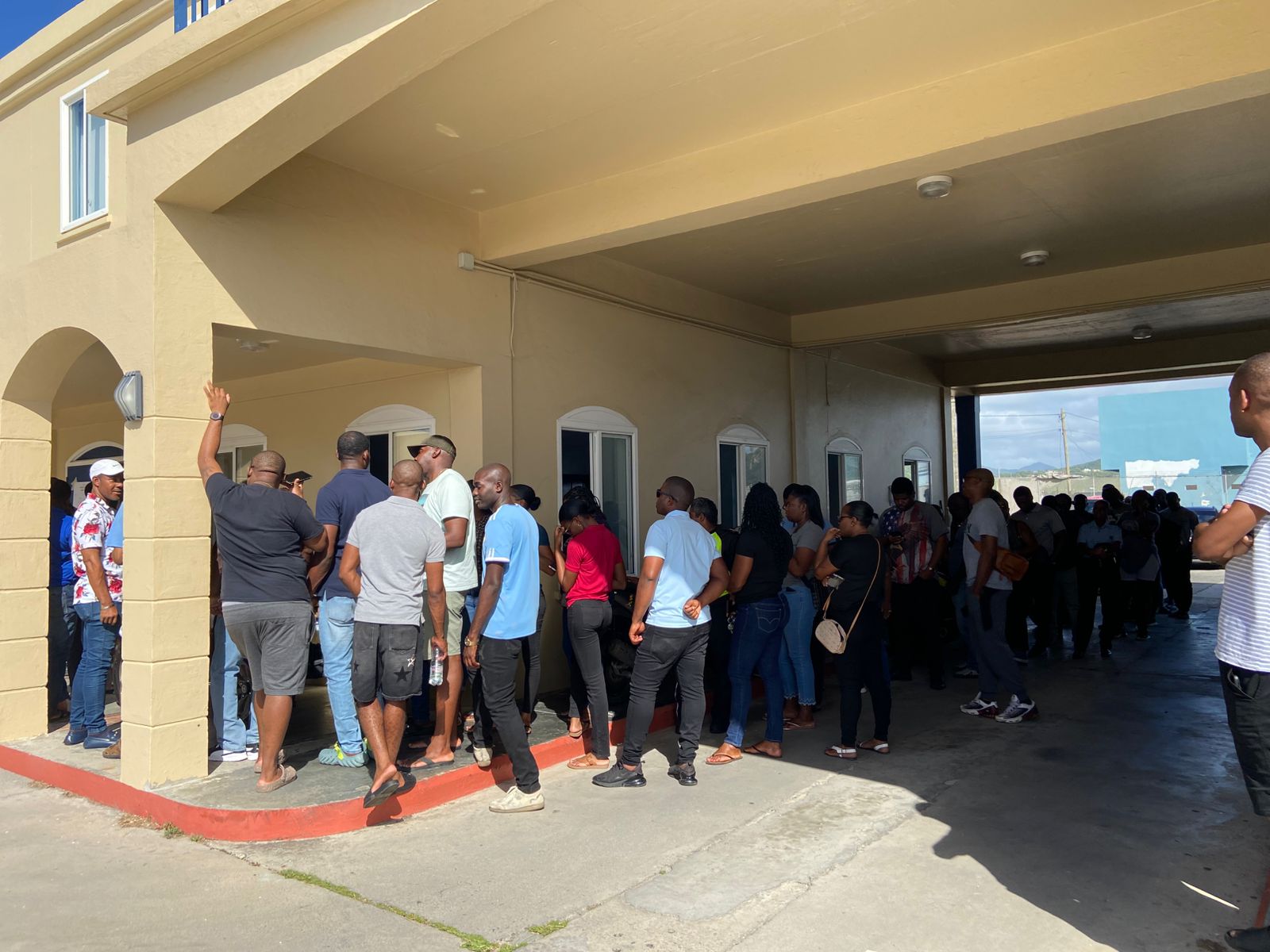
    The Electoral Commission has moved to address public concerns regarding potential voting delays, offering firm assurances that tomorrow’s general election will proceed with efficiency and minimal disruption. This response follows significant logistical challenges encountered during advance polling for essential service personnel on November 28, where police officers, firefighters, and correctional officers faced extensive queues and late voting.

    In an official statement released today, the Commission detailed that the Electoral Department—which holds complete authority over election proceedings—has already enacted comprehensive measures to guarantee streamlined operations across all polling stations. The previous delays were attributed to an expansion of polling divisions from two to four without proportional increases in polling stations, creating a bottleneck effect.

    Compounding the issue was a notable surge in the number of essential service voters since the 2021 election, alongside the retention of retired officers on voter rolls. This demographic growth resulted in a substantially larger electorate than anticipated, overwhelming the available infrastructure at all four advance polling locations.

    The Electoral Department had initially recommended additional polling stations to accommodate the increased voter volume. However, resource constraints within the police force prevented the implementation of this expansion. In retrospect, the Commission acknowledged that each division required more stations—with Soufriere needing at least four, and Vieux Fort, the Police Training School, and Gros Islet requiring up to six.

    Despite these advance polling complications, officials emphasized that the circumstances were unique to the essential service electorate. The Commission confirmed that any essential service workers unable to vote during the advance poll retain full eligibility to cast their ballots on Election Day.

    The Commission concluded: “The Electoral Department will reevaluate this matter in collaboration with police authorities to prevent recurrence in future elections. For December 1, 2025, all necessary protocols have been established to ensure a swift and uninterrupted election process for all voters.”

  • Nederlandse koning reist met delegatie van 15 bedrijven voor versterking samenwerking

    Nederlandse koning reist met delegatie van 15 bedrijven voor versterking samenwerking

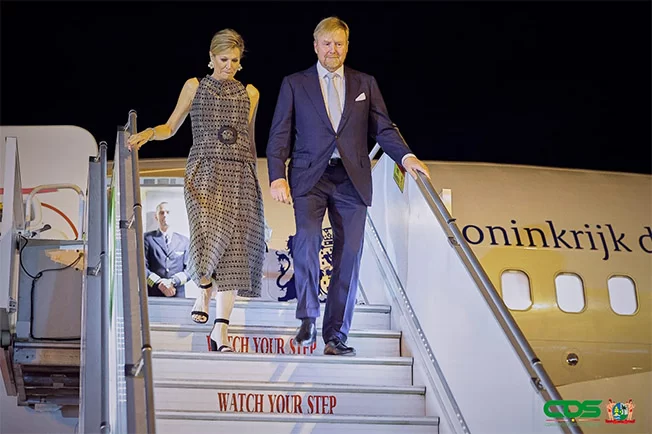
    King Willem-Alexander and Queen Máxima of the Netherlands arrived in Suriname on Sunday evening, accompanied by a substantial Dutch business delegation comprising 15 prominent companies and institutions. This high-profile state visit signals a robust commitment to enhancing economic cooperation between the two nations across multiple sectors including water management, infrastructure, health technology, logistics, agriculture, and innovation.

    The delegation, coordinated by VNO-NCW—the Netherlands’ largest employers’ organization—and led by Mr. Maarten Schuurman, represents a strategic effort to deepen sustainable economic relations. The composition of the delegation reflects the key pillars of the Dutch economy while identifying specific collaboration opportunities with Suriname.

    Water and infrastructure form a central focus, with world-leading companies such as Boskalis, De Boer (Dutch Dredging), Fugro, Royal HaskoningDHV, and research institute Deltares participating. These organizations bring expertise in climate adaptation, coastal protection, dredging, geodata, river management, and sustainable infrastructure. During the visit, an agreement will be signed with Suriname’s Ministry of Public Works and Spatial Planning for dredging the Suriname River, supported by a donation exceeding 50 million euros.

    A second cluster includes companies active in energy, industry, and transport: Koole Group (liquid storage and logistics), Janson Bridging (modular bridges and emergency infrastructure), Royal Van Lent Shipyard (Feadship, shipbuilding), and KLM (strengthening air connectivity). Their involvement indicates interest in modernizing transport chains, maritime cooperation, and improving regional connectivity.

    Invest International plays a pivotal role in financing international projects utilizing Dutch expertise, demonstrating openness to co-financing initiatives in water, infrastructure, climate, energy, and innovation.

    The delegation also features technology and innovation partners like Philips and TNO (through geodata overlap with Fugro), bringing expertise in medical technology, research innovation, digitalization, energy innovation, and strengthening public services. This highlights cooperation beyond traditional sectors.

    Trade and agriculture are represented by Koppert Cress (innovative horticulture) and Jacaranda Trading (heavy equipment international trade), emphasizing opportunities for entrepreneurship, agro-innovation, and smaller-scale trade.

    The diversity of the delegation underscores the Netherlands’ comprehensive approach to strengthening economic relations, knowledge exchange, sustainable infrastructure, innovation, maritime and air connectivity, agriculture, trade, and development-oriented project financing.

  • Pierre, Chastanet make final pitch on eve of election

    Pierre, Chastanet make final pitch on eve of election

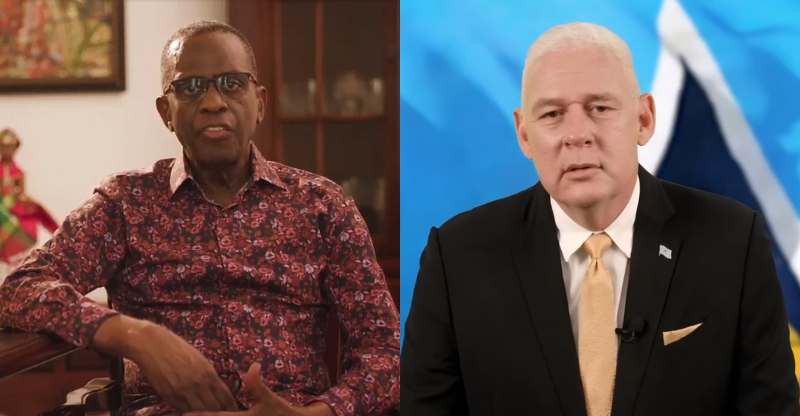
    In a climactic conclusion to Saint Lucia’s election campaign, the nation’s principal political figures delivered compelling final addresses to voters on November 30th. Prime Minister Philip J. Pierre of the Saint Lucia Labour Party (SLP) and United Workers Party (UWP) leader Allen Chastanet presented contrasting governmental visions hours before citizens cast their ballots in the December 1st general election.

    Pierre framed the electoral decision as a fundamental choice between divergent national trajectories rather than mere party preference. The incumbent leader emphasized maintaining proven leadership and steady economic management, advocating for continuity in economic growth strategies, youth development programs, and equitable opportunity creation. “Choose progress, choose unity, choose a Saint Lucia that will go forward together,” Pierre declared in his closing argument to the electorate.

    Conversely, Chastanet positioned his party as agents of transformative change, seeking to return the UWP to power after their 2016-2021 governance period. The opposition leader promised a revitalized approach, stating, “We’re now stronger. We’re ready for a fresh beginning with a new mindset and the right team.” Both leaders engaged in strategic criticism of their opponent’s administrative records while making their ultimate appeals for voter support.

    The televised addresses represented the final opportunity for both parties to influence undecided voters in what appears to be a closely contested election that will determine Saint Lucia’s leadership for the upcoming five-year term.

  • UDP Elects New Leadership Team

    UDP Elects New Leadership Team

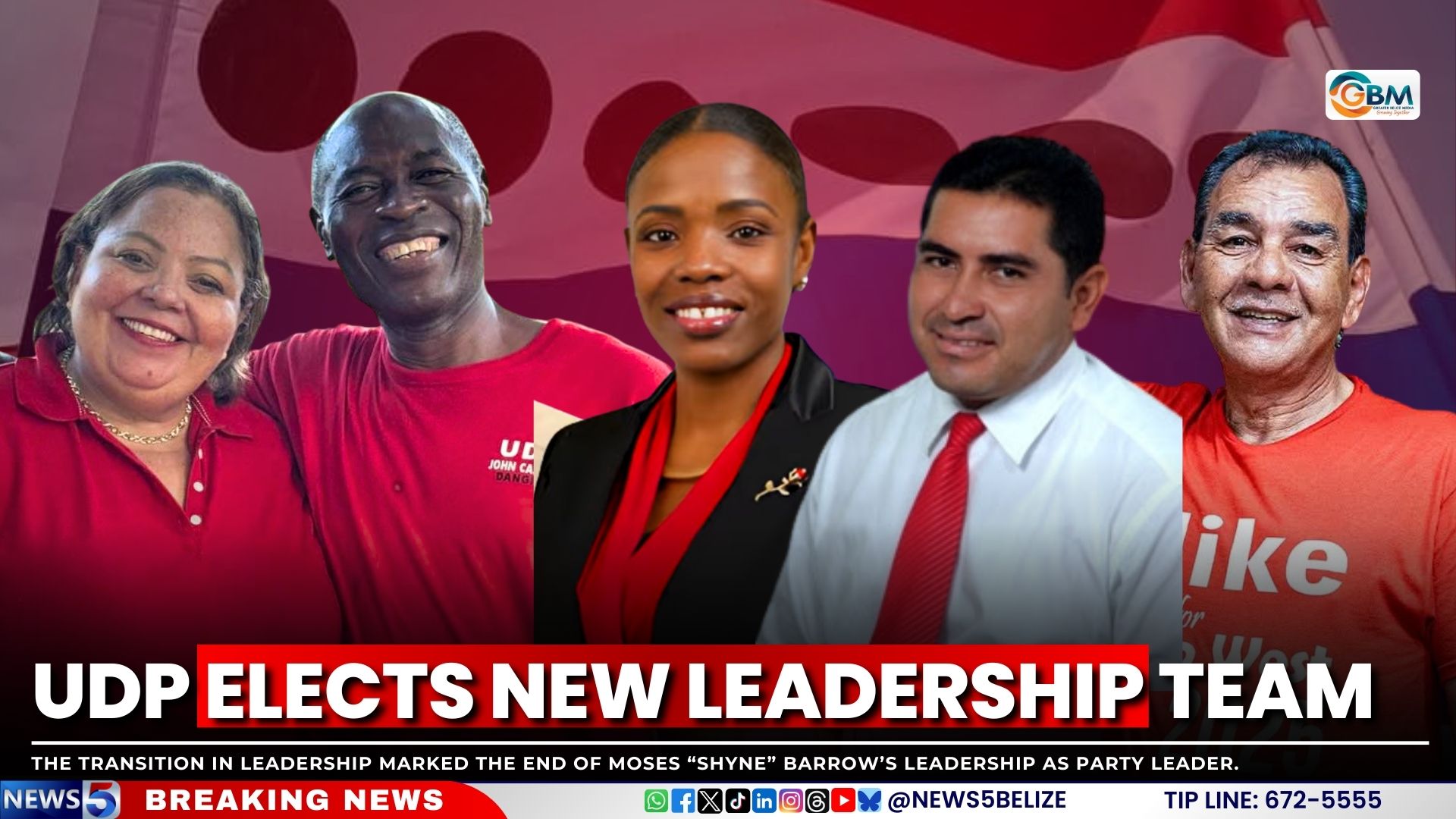
    In a landmark political transition, Belize’s United Democratic Party has undergone a comprehensive leadership restructuring, culminating in the election of Tracy Panton as the party’s first female leader. This historic appointment not only shatters gender barriers within the UDP but establishes Panton as the inaugural woman to command a major political party in Belize’s history.

    The leadership convention, held on November 30, 2025, witnessed the consolidation of Panton’s position as Opposition Leader following her endorsement as party head. The newly formed executive team features Hugo Patt as First Deputy Party Leader and Miguel Guerra assuming the role of Second Deputy.

    Among the most closely contested positions was the Party Chairmanship, which saw a three-way competition between Roosevelt Blades, Sheena Pitts, and John Saldivar. After rounds of intense voting, Pitts emerged victorious, adding this responsibility to her existing role as one of UDP’s senators. The Vice Chairman position was secured by John Castillo following a direct contest with Ivan Williams.

    This leadership transition marks the conclusion of Moses “Shyne” Barrow’s tenure as party leader. In his farewell address, Barrow emphasized the peaceful transfer of power, stating: “As I engage in the peaceful, united transfer of leadership to my successor, the honourable Tracy Panton, I pray that the creator impart her with the wisdom and the knowledge, understanding, and political will to execute effective strategies in the rebuilding processes of our United Democratic Party.”

    Panton characterized the endorsement as the culmination of extensive groundwork, acknowledging: “It has been a long journey. My first task is uniting this party across the north, west, south, and central regions… The work is now only beginning.”

    The convention occurred against a backdrop of internal tensions that have persistently challenged party cohesion throughout the year. These divisions were further highlighted by a leaked WhatsApp exchange among delegates mere hours before the convention, raising concerns about the party’s ability to achieve unity despite repeated attempts.

    Panton now assumes command of a freshly constituted UDP executive, tasked with steering the party toward a renewed political direction and rebuilding its organizational strength.

  • Delegatie koning Willem-Alexander aangekomen te Zanderij

    Delegatie koning Willem-Alexander aangekomen te Zanderij

    King Willem-Alexander of the Netherlands, accompanied by Queen Máxima, has commenced a significant three-day state visit to Suriname, arriving at Johan Adolf Pengel International Airport with a substantial governmental and business delegation. The royal contingent, which includes four cabinet ministers and representatives from fifteen leading Dutch corporations, signifies the comprehensive nature of this diplomatic mission.

    Upon arrival, the delegation was formally received by Suriname’s Minister of Foreign Affairs, International Trade, and International Cooperation, Melvin Bouva, alongside Dutch Ambassador Walter Oostelbos. Minister Bouva characterized the visit as a pivotal moment in the bilateral relationship between the two nations, emphasizing its potential to deepen cooperation across multiple sectors.

    The agenda focuses on enhancing collaboration in economic development, water management, climate change initiatives, healthcare innovation, and mutual cultural understanding. The participation of multiple ministers and business leaders underscores the mission’s broad scope, with at least three formal cooperation agreements scheduled for signing during the visit. This diplomatic engagement represents one of the most substantial bilateral exchanges between the Netherlands and Suriname in recent years, highlighting ongoing efforts to strengthen historical ties through contemporary partnerships.

  • OPINION: The case for campaign finance legislation

    OPINION: The case for campaign finance legislation

    Across the Caribbean archipelago, a critical democratic deficit persists as nations grapple with the unregulated flow of money in political campaigns. While election seasons regularly spark public questioning about the origins of political funding—particularly evident in the lavish importation of regional artists and expensive campaign materials—these concerns typically evaporate once polling concludes. This cyclical pattern has created an environment where potentially problematic donations face tacit acceptance, with some politicians even encouraging voters to accept campaign money while rejecting the donors at the ballot box.

    The core concept of campaign finance legislation revolves around mandatory disclosure of contributions and expenditures, designed to prevent undue influence on electoral outcomes. Such regulations aim to create equitable conditions for opposition parties that must compete against governing parties wielding both private donations and largely unrestricted access to state resources. Caribbean scholars note the particularly thin distinction between legitimate governance activities and electioneering, especially in systems without fixed election dates where sitting governments can time initiatives for maximum electoral impact.

    This regulatory gray zone was starkly illustrated during Guyana’s recent elections, where the European Union Election Observer Mission documented the incumbent’s exploitation of state resources through project inaugurations and social programs strategically timed with campaign activities. The problem extends beyond domestic concerns, with scholars like Cynthia Barrow-Giles documenting allegations of foreign governments funneling millions into Caribbean campaigns to advance strategic interests.

    While Jamaica stands as a regional exception with comprehensive regulations including donation limits, disclosure requirements, and meaningful sanctions for violations, most Caribbean nations exhibit weak enforcement mechanisms and negligible penalties. In Saint Lucia, spending limits exist without corresponding contribution transparency requirements, while Antigua’s disclosure thresholds remain easily circumvented.

    The path forward requires serious consideration of model legislation frameworks, such as the OAS Draft Model Legislation, which proposes independent regulatory commissions, spending caps, clear donor definitions, and prohibitions on state resource misuse for campaigning. However, current signals from major political parties across the region suggest more virtue signaling than genuine commitment, with campaign finance reform conspicuously absent from party manifestos despite rhetorical support.

    Meaningful reform necessitates bipartisan cooperation, recognizing that both governing and opposition parties stand to benefit from a more transparent and equitable system. Ultimately, establishing robust campaign finance regulations would strengthen democratic institutions, ensure fair political competition, and address the lingering authoritarian tendencies rooted in the region’s historical context.

  • De koning komt

    De koning komt

    Surinamese parliament member Michael S. Marengo has expressed profound concerns regarding the Dutch king’s upcoming state visit to Suriname, questioning the official itinerary’s failure to acknowledge regions most impacted by colonial exploitation and slavery.

    The visit, scheduled to commemorate 50 years of Surinamese independence (Srefidensi) and the unique historical ties between the Netherlands and its former colony, arrives at a moment of heightened sensitivity surrounding colonial reckoning. Marengo contends that while symbolically significant, the planned program demonstrates a troubling lack of recognition for the nation’s painful past.

    Central to the criticism is the omission of the district of Para from the royal itinerary. Marengo emphasizes that Para represents far more than just a geographic region; it serves as the cultural heartland for a substantial portion of Suriname’s Indigenous communities—the original inhabitants of the land. Furthermore, it remains home to the highest concentration of descendants of enslaved Africans and contains the majority of surviving plantations from the colonial era.

    The lawmaker finds it “extremely inappropriate and disappointing” that these historically burdened places, emblematic of both immense suffering and remarkable resilience, are excluded from the king’s agenda. This oversight, he argues, signals a deficiency in acknowledging those communities most devastated by historical systems, particularly the trans-Atlantic slave trade.

    Adding to the consternation, the king’s schedule includes stops at former plantations currently operated by, among others, foreign Dutch nationals. Marengo suggests this choice prioritizes the perspective of those who continue to benefit from historical structures of power, rather than centering the voices of descendants who bear the lasting scars and burdens of that era.

    Marengo asserts that a visit to Para would constitute a powerful gesture of respect and moral responsibility. Engaging directly with Indigenous villages and communities of Maroon descendants would demonstrate the Kingdom of the Netherlands’ willingness to confront the painful chapters of shared history, moving beyond superficial ceremony.

    The parliamentarian calls for genuine appreciation and visible recognition for all groups central to Suriname’s history and identity, urging that the royal visit transcend a mere half-hour symbolic meeting. He frames this as a historical responsibility born from centuries of domination, injustice, and economic exploitation, concluding that Suriname—and particularly the groups still experiencing the legacy of 500 years of oppression—deserves nothing less than dignified, sincere, and tangible recognition.

  • UDP Chairmanship Race Heats Up

    UDP Chairmanship Race Heats Up

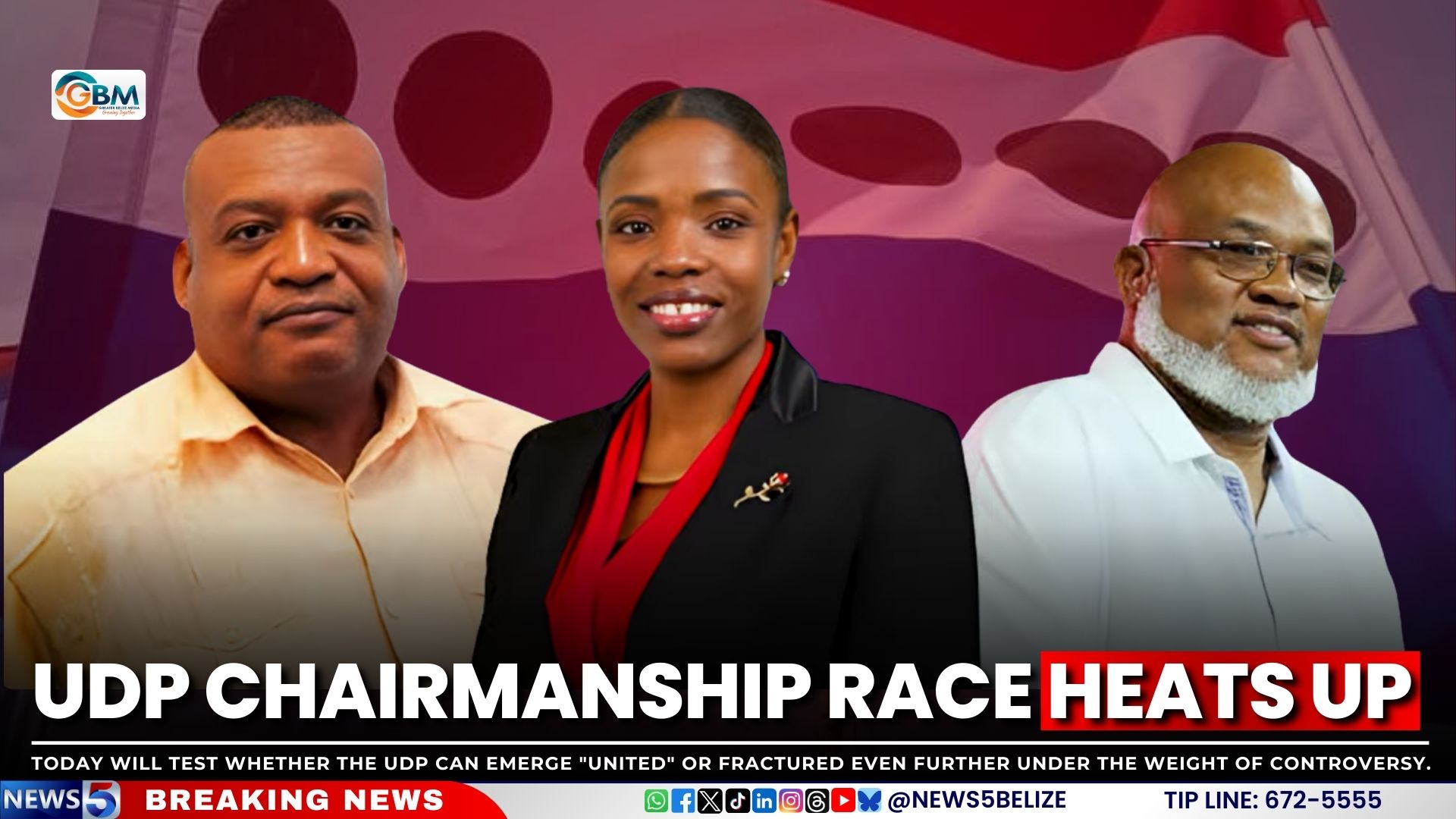
    The United Democratic Party’s national convention has evolved into a contentious battleground as three prominent figures vie for the influential position of party chairman. This high-stakes leadership contest has exposed significant internal divisions within the political organization, challenging its fundamental promise of unity.

    John Saldivar, making a political comeback following years of controversy, positions himself as the experienced candidate capable of revitalizing the party. “The organization requires my expertise, capabilities, and the strategic knowledge I possess regarding political organization and grassroots mobilization,” Saldivar asserted. He emphasized his comprehensive understanding of both electoral victories and defeats, presenting himself as the ideal candidate to restore the party’s street-level presence.

    Sheena Pitts enters the race with the endorsement of incoming leader Tracy Panton, countering narratives of internal discord. “I have not observed the turmoil being referenced,” Pitts stated to News 5 correspondents covering the event. She positioned herself as the unifying figure committed to reconciliation within party ranks.

    The political landscape intensified with Roosevelt Blades receiving public support from Mesopotamia representative and key party financier Lee Mark Chang. This endorsement triggered a series of contentious WhatsApp exchanges among delegates, revealing allegations of greed, betrayal, and political maneuvering centered around the chairmanship role.

    Blades dismissed the emerging controversy, stating, “I possess the winning strategy having managed numerous successful convention campaigns and elections within the UDP.” He emphasized the critical need to reengage youth voters and modernize party operations if elected.

    With Tracy Panton’s endorsement as party leader secured without opposition and other senior positions uncontested, the chairmanship vote has become the primary focus of political observers. The convention’s outcome will determine whether the party emerges strengthened or further divided by internal conflicts.

  • Colombian president says oil is ‘at the heart of’ US pressure campaign on Venezuela

    Colombian president says oil is ‘at the heart of’ US pressure campaign on Venezuela

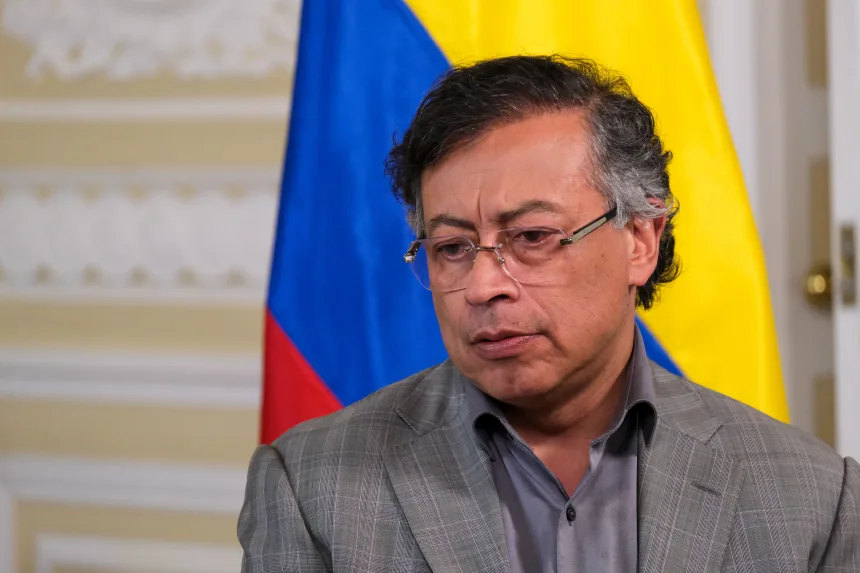
    Colombian President Gustavo Petro has launched a scathing critique of the Trump administration’s Venezuela policy, asserting that Washington’s true motivation centers on accessing Venezuela’s vast oil reserves rather than combating drug trafficking or promoting democracy.

    In an exclusive CNN interview, Petro characterized oil as “at the heart of the matter,” noting Venezuela possesses the world’s largest proven petroleum reserves. “That’s a negotiation about oil. I believe that is Trump’s logic. He’s not thinking about the democratization of Venezuela, let alone the narco-trafficking,” Petro stated, challenging the official U.S. justification for increased military presence in the Caribbean and Pacific.

    The Colombian leader dismissed Venezuela’s significance in global drug trafficking, citing United Nations Office on Drugs and Crime data showing the country produces no cocaine and handles only a minor portion of international drug flows. Instead, Petro emphasized Colombia’s dominant role in both production and interdiction, claiming his government has seized more cocaine than any administration in history.

    The relationship between Petro and Trump has deteriorated significantly since the Colombian leader returned to the White House. Tensions escalated when the U.S. State Department revoked Petro’s visa following his UN General Assembly speech where he urged American soldiers to disobey Trump and “not to point their rifles at humanity.”

    Further complications emerged in October when the U.S. Treasury sanctioned Petro, alleging his involvement in the global drug trade—accusations the Colombian president vehemently denies. The sanctions followed Trump’s threat to halt all U.S. payments and subsidies to Colombia, claiming Petro “does nothing to stop” drug production.

    Petro attributed the administration’s stance to personal animosity, suggesting Trump views him as “a subversive thug, a terrorist” due to his past membership in the M-19 guerrilla movement during the 1970s and 1980s.

    Despite these high-level tensions, U.S. officials maintain that bilateral relations with Colombia remain strong. Secretary of State Marco Rubio emphasized that administration issues are specifically with Petro rather than Colombian institutions, noting the enduring partnership between the two nations will outlast the current leadership.