分类: politics

  • Guyana signs agreement to expand military cooperation with US

    Guyana signs agreement to expand military cooperation with US

    In a significant move to bolster regional security, Guyana has formalized an expanded military cooperation agreement with the United States. The pact, endorsed following high-level discussions in Georgetown, signals a strategic realignment of US defense priorities toward the Caribbean Community (CARICOM) and Western Hemisphere.

    President Irfaan Ali confirmed the agreement after meeting with key US defense officials, including Senior Advisor to the Secretary of War Patrick Weaver and Acting Assistant Secretary for Western Hemisphere Affairs Joseph Humire. The arrangement establishes a framework for intensified joint military operations while expressly respecting both nations’ sovereignty and legal systems.

    This development represents the operationalization of Washington’s new ‘Southern Spear’ security initiative, which calls for increased strategic attention and resource allocation to CARICOM nations. The agreement specifically enhances existing mechanisms like the Shiprider Agreement, enabling US security forces to pursue, intercept, and board vessels suspected of drug trafficking within Guyanese territorial waters.

    When questioned about the potential for a full defense treaty, President Ali characterized the agreement as an ‘evolving process,’ indicating that more substantive cooperation agreements would be discussed in coming months.

    The timing of this military accord follows President Ali’s emphatic statements about safeguarding regional stability. In talks with Grenadian Prime Minister Dickon Mitchell, Ali highlighted concerns about criminal exploitation of Guyanese airspace and waterways for illicit activities. He emphasized the necessity of international partnerships to combat transnational crime and ensure long-term regional security for future generations.

  • New Equipment Arrives to Resume Dredging at Parham and St. John’s Harbours

    New Equipment Arrives to Resume Dredging at Parham and St. John’s Harbours

    The Government of Antigua and Barbuda has acquired specialized heavy-duty dredging equipment to overcome significant geological obstacles that had paralyzed critical harbor development projects. Prime Minister Gaston Browne announced this strategic intervention during his appearance on the ‘Browne and Browne’ show on Pointe FM, revealing that previous dredging attempts at Parham Harbour had been completely halted by impenetrable rock formations and bedrock.

    According to PM Browne, the substantial rock layers proved insurmountable for originally deployed machinery, ultimately compelling even a contracted Dutch dredging firm to withdraw from the project after their equipment failed to perform under the challenging conditions. This operational deadlock left the government with ‘no other choice’ but to procure a more robust mechanical solution capable of fragmenting and extracting the dense geological material.

    The newly acquired dredger, which arrived disassembled, is presently being reconstructed on-site by technical crews. Prime Minister Browne projected that the machine will become operational within approximately one week. In a complementary move, the administration has arranged to lease an additional barge from Guadeloupe within the forthcoming fortnight to bolster the dredging operations.

    Upon activation, work will recommence at Parham Harbour—locally referred to as Crabbs—with subsequent redeployment planned for St. John’s Harbour. PM Browne emphasized that the successful execution of these dredging activities is indispensable for enhancing maritime accessibility and facilitating the progression of associated port infrastructure developments, which are pivotal to the nation’s economic and logistical advancement.

  • PM Says Nation Has Lost a “True Patriot”,  Sir Gerald Watt To Receive Official Funeral

    PM Says Nation Has Lost a “True Patriot”, Sir Gerald Watt To Receive Official Funeral

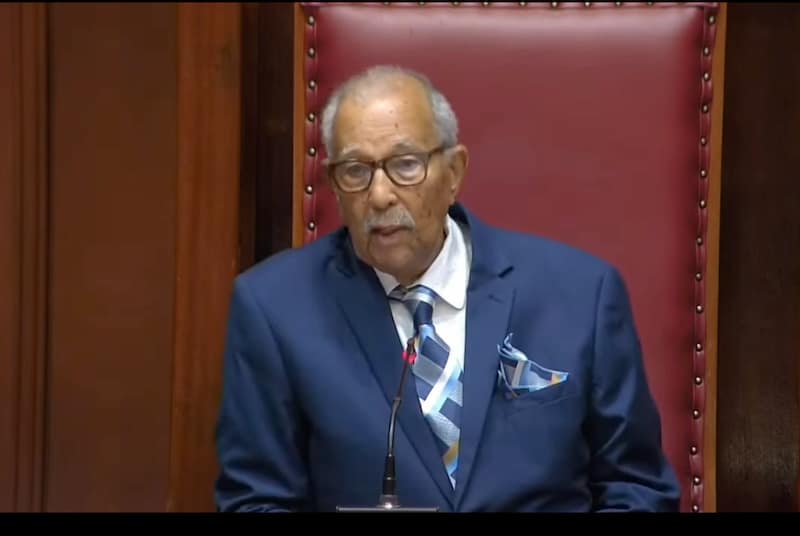
    Prime Minister Gaston Browne has publicly eulogized the late Sir Gerald Watt, former Speaker of the House, characterizing him as an intellectually robust and courageous patriot whose enduring legacy will profoundly shape Antigua and Barbuda’s democratic traditions. During a recent appearance on Pointe FM, Browne expressed profound shock at Sir Gerald’s unexpected passing, which occurred merely days before his 87th birthday, despite reports of his vigorous health.

    The Prime Minister revealed that while their personal acquaintance deepened after 2014, his admiration for Sir Gerald originated from a remarkably lucid and bold article the former Speaker penned in 2000. This initial respect was further fortified through conversations with the late Prime Minister Sir Lester Bird, who consistently praised Sir Gerald as possessing one of the nation’s most brilliant legal intellects.

    Browne particularly emphasized Sir Gerald’s unwavering resolve and intellectual independence during his challenging tenure as head of the Electoral Commission. These sterling qualities ultimately motivated Browne to appoint him as Speaker following the Antigua and Barbuda Labour Party’s 2014 electoral triumph. Over his subsequent eleven-year speakership, Sir Gerald demonstrated extraordinary physical vitality, intellectual acuity, and unshakeable principles, frequently adopting controversial stances when convinced of their righteousness.

    Notably, the Prime Minister highlighted Sir Gerald’s distinctive parliamentary management style, marked by both firmness and impartiality. He consistently maintained parliamentary decorum without yielding to political pressures, often confronting ministers and opposition members alike with equal determination. This steadfast approach, while sometimes unsettling for political opponents, fundamentally reflected his profound institutional respect for Parliament itself.

    Although Sir Gerald had previously served under different political banners, Browne observed his remarkable transformation into one of the Labour Party’s most articulate defenders in recent years. This political evolution exemplified the vital importance of integrating talented individuals across ideological spectrums to strengthen national governance structures.

    In extending heartfelt condolences to Sir Gerald’s family, including his son and relatives, Browne proclaimed him “a true patriot” and “a great son of the soil” whose nation-building contributions remain invaluable. The government will accord Sir Gerald an official state funeral, with parliamentary tributes scheduled when the House reconvenes.

    Concurrently, Browne expressed sympathies for the passing of veteran educator Genevieve “Teacher Gen” Smith, grandmother of Minister Anthony Smith Jr., reaffirming his endorsement for renaming Potters Primary School in her honor. While acknowledging the profound loss of both figures, the Prime Minister emphasized that their extensive lives of national service should be celebrated gratefully, with their legacies continuing to inspire forthcoming generations.

  • DNA: Maandag benoeming commissies van rapporteurs 8 wetten

    DNA: Maandag benoeming commissies van rapporteurs 8 wetten

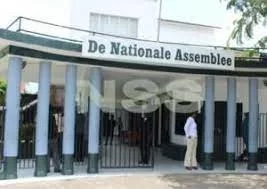
    Suriname’s National Assembly (DNA) has initiated a substantial legislative overhaul this week, marking a significant shift in parliamentary dynamics. During Monday’s procedural session, eight specialized committees were appointed to prepare a comprehensive package of initiative laws for public deliberation.

    The legislative agenda features groundbreaking proposals including constitutional amendments, judicial branch restructuring, elimination of gag laws from the criminal code, and virtually全新的 nature conservation legislation. These measures address fundamental aspects of governance, touching upon rule of law, environmental management, anti-corruption efforts, transparency, and criminal justice reform.

    Notably absent from the agenda is a proposed ban on online gambling, despite its previous submission. Sources indicate divergent views within the coalition have temporarily stalled this socially sensitive matter from entering formal parliamentary discussion.

    The majority of legislative proposals originate from parliamentarians representing the six coalition partners, signaling a strategic move to actively exercise parliamentary initiative rather than relying exclusively on government-sponsored legislation. This approach repositiones the parliament as a proactive legislative center rather than merely a approval body for executive policies.

    Key legislation moving forward includes the Asset Forfeiture of Illegally Obtained Gains Act, Sustainable Nature Management Act, and measures directly impacting judicial structure. Additional proposals concern transparency of administrative information, adjustments to the Labor Advisory Council Act, and amendments to the Criminal Code.

    Thursday’s scheduled public meetings will launch the substantive debate phase, while all initiative proposals have been simultaneously forwarded to the Council of State for advisory review. This extensive legislative package is poised to dominate parliamentary proceedings in the coming period, reflecting the coalition’s concerted effort to drive institutional reforms through parliamentary channels.

  • SOVA vraagt zorgvuldige afweging bij inrichting derde rechterlijke instantie

    SOVA vraagt zorgvuldige afweging bij inrichting derde rechterlijke instantie

    The Suriname Bar Association (SOVA) has issued a comprehensive response to legislative proposals currently before the National Assembly regarding the establishment of a third judicial instance in the country’s legal system. SOVA Dean Alleson Freank emphasized that while the organization recognizes Suriname’s clear need for enhanced judicial oversight, any structural changes require meticulous examination before implementation.

    The proposed legislation includes a constitutional amendment to create a Surinamese High Council as the nation’s third judicial body. This initiative aligns with SOVA’s ongoing exploration of the same matter through a dedicated committee established earlier this year. The Bar Association acknowledges the fundamental importance of strengthening legal protections for Surinamese citizens through judicial reform.

    Critical to the debate is determining the most effective framework for this third instance. SOVA highlights that a domestic High Council represents only one potential solution, noting that several regional neighbors have instead chosen to integrate with the Appellate Jurisdiction of the Caribbean Court of Justice (CCJ). Both models present distinct advantages and considerations that warrant careful analysis.

    The Association’s committee has been tasked with evaluating both options objectively, examining which approach best suits Suriname’s legal system and societal context. This assessment requires comprehensive multidisciplinary research encompassing constitutional, legal, and practical implementation factors to ensure the chosen model functions effectively in daily practice.

    Following a recent general members’ meeting where preliminary findings were presented, SOVA plans to organize a discussion evening to foster broad-based consensus. The Association stresses that regardless of the selected model, professional and societal support remains essential, with timely involvement of relevant stakeholders including judiciary members, legal practitioners, and the Public Prosecutor’s Office.

    Regarding separate proposals to lower the retirement age for the Prosecutor General, SOVA notes that while no principled objections exist against age limits, such changes must consider available human resources and should generally apply only to future officeholders. The Association also questions how this initiative aligns with existing legislative proposals for Public Prosecutor’s Office reforms.

    SOVA expressed disappointment at not being consulted prior to the submission of these legislative initiatives but remains encouraged by the President’s commitment to stakeholder consultation during further deliberations. The organization reaffirms its dedication to constructively strengthening Suriname’s rule of law and anticipates continued productive dialogue on these crucial judicial matters.

  • Hofpresident Rasoelbaks geïnformeerd over opname derde instantie in Grondwet

    Hofpresident Rasoelbaks geïnformeerd over opname derde instantie in Grondwet

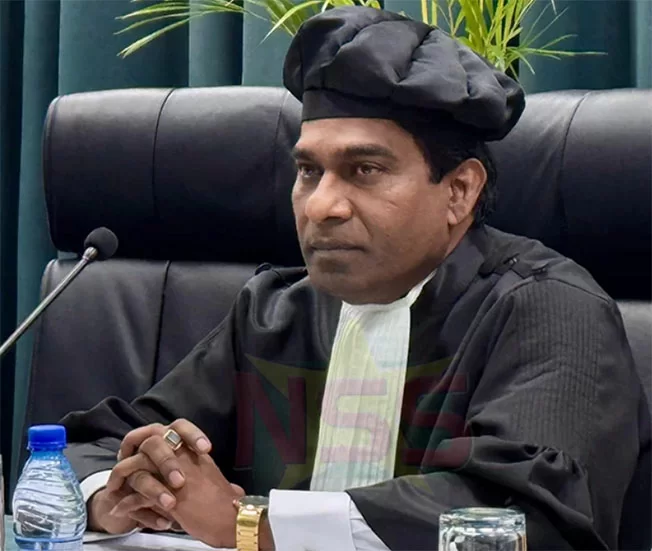
    Suriname’s judicial landscape may undergo significant transformation as six parliamentarians have submitted initiative proposals to establish a third-tier cassation court within the country’s legal system. The proposed constitutional amendments, introduced on Thursday, aim to create a Supreme Court or similar high judicial authority, though the current Court of Justice President Iwan Rasoelbaks confirms his institution hasn’t been formally consulted in the legislative drafting process.

    President Rasoelbaks clarified that while National Assembly President Jennifer Simons informed him about plans to constitutionally anchor the third instance, substantial consultations regarding implementation details would occur later through secondary regulations. The Court of Justice will thoroughly examine the proposed legislation once formally submitted for judicial review, after which lawmakers will receive comprehensive advisory input.

    The judicial leader emphasized the court’s longstanding support for cassation jurisdiction, noting that such reform would enhance legal development and broaden societal legal protection. For several years, the Court of Justice has independently researched possibilities through a specialized task force comprising local and international experts. This think tank produced two comprehensive options presented earlier this month to both the National Assembly and the President, with reports publicly available on the court’s website for transparent public access.

    The proposed models include conditional accession to the Caribbean Court of Justice’s appellate jurisdiction with a civil law chamber, or alternatively, establishing a domestic Supreme Court grounded in civil law tradition. Rasoelbaks stressed that any future cassation court wouldn’t function as a factual instance but would focus exclusively on reviewing proper legal application, while the Court of Justice would maintain its position as Suriname’s highest factual jurisdiction.

    Three of the four submitted initiatives concern constitutional modifications to judicial organization, with the fourth addressing the judicial branch’s legal status. This separation of competencies between factual and cassation jurisdictions aims to foster credible, thorough jurisprudence and legal evolution, according to the Court President.

  • Nieuwe wet moet Surinaams natuurbeheer moderniseren

    Nieuwe wet moet Surinaams natuurbeheer moderniseren

    Suriname’s parliamentary coalition has introduced groundbreaking legislation aimed at fundamentally transforming the nation’s approach to environmental protection and resource management. The ‘Sustainable Nature Management’ initiative law represents a comprehensive overhaul of the country’s outdated 1954 Nature Protection Act, addressing contemporary ecological challenges while acknowledging economic realities.

    With approximately 93% forest coverage and ranking among the world’s most biodiverse nations, Suriname faces critical decisions regarding conservation amidst growing economic pressures. While internationally recognized as a High Forest Low Deforestation country, recent data reveals deforestation rates are climbing to approximately 0.06% annually. Mining operations account for the majority (73%) of forest loss, followed by infrastructure development and urbanization—trends that not only cause ecological damage but directly impact indigenous and tribal communities through habitat disruption and land use conflicts.

    The proposed legislation shifts from strict conservation toward sustainable management principles, recognizing nature as both ecological treasure and economic resource under stringent conditions. The core philosophy establishes that those who benefit from nature must contribute to its preservation. Innovative mechanisms include nature tourism concessions, payments for ecosystem services, and provisions for designating private lands as protected areas—all aimed at stimulating green growth while reducing economic dependence on oil and gold.

    A cornerstone of the new framework is the enhanced role of the National Environmental Authority (NMA), which will coordinate nature management, oversee protected areas, supervise concessions, and enforce regulations. The Environmental Fund will be expanded to finance nature management projects accessible to government agencies, local communities, and private managers alike.

    Perhaps the most transformative aspect is the formal incorporation of the Free, Prior and Informed Consent (FPIC) principle, requiring explicit approval from indigenous and tribal communities for protected areas, buffer zones, or concessions within their territories. The law further recognizes traditional knowledge and enables communities to submit proposals for independently managed protected areas, elevating their role from stakeholders to full partners in environmental stewardship.

    Aligned with IUCN guidelines and international biodiversity treaties, the legislation introduces modern enforcement mechanisms including administrative coercion, fines, and criminal sanctions for serious violations. It explicitly grants citizens and organizations access to objection and appeal procedures against NMA decisions, strengthening legal protection and transparency.

    This legislative initiative represents Suriname’s attempt to solidify its international reputation as a forest-rich biodiversity haven while promising greater participation, enhanced protection, and the integration of conservation with economic development. Its ultimate success will depend on implementation factors including adequate capacity, political will, and genuine community engagement—determining whether it becomes a paper reform or a foundational pillar of Suriname’s future environmental policy.

  • Politic : Intervention by Haitian Ambassador Lesly David at SELA

    Politic : Intervention by Haitian Ambassador Lesly David at SELA

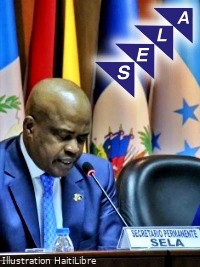
    In a landmark address at the 51st Ordinary Session of the Latin American and Caribbean Economic System (SELA), Haiti’s Ambassador Lesly David charted a bold course for regional cooperation. The session, convened in Caracas, Venezuela on December 11, 2025, marked a historic moment as Ambassador David, who also serves as Haiti’s envoy to Colombia and Ecuador, addressed the ministerial meeting in his new capacity as the elected Permanent Secretary of SELA—the first Haitian national to hold this prestigious position.

    Ambassador David positioned regional integration as ‘the most powerful tool’ available to counter global uncertainties, emphasizing that this approach transcends mere economic considerations. ‘It is not just about the economy, but about building collective unity, even from our differences,’ he declared before the assembly of member state representatives. The diplomat highlighted the paradoxical reality of a resource-rich region of approximately 660 million inhabitants that simultaneously remains ‘the most unequal region on the planet.’

    Drawing attention to persistent structural challenges, David noted that ‘millions of our citizens still live in poverty, and extreme poverty, remaining at alarming levels, particularly affecting women, young people and vulnerable communities.’ In response to these pressing issues, he presented the Permanent Secretariat’s Work Programme as a ‘concrete response to these challenges, a roadmap that transforms good intentions into measurable actions.’

    The comprehensive strategy rests on three foundational pillars: economic recovery, social development, and digitalization with infrastructure modernization. For economic revitalization, SELA committed to aggressively advance trade facilitation measures and organize the ‘Third China-Latin America and Caribbean Investment Cooperation Forum’ to attract essential foreign resources and technologies.

    Regarding social development, the organization will prioritize poverty eradication initiatives, formulate cooperative development policies, and implement virtual workshops focused on educational strategies for integrating migrant women and girls. These efforts specifically aim to transform migration from a potential source of exclusion into a development opportunity incorporating gender perspective frameworks.

    Concerning digital transformation, SELA pledged to promote comprehensive digitalization and develop sustainable, intelligent infrastructure throughout the region. Ambassador David emphasized that ‘modern infrastructure is the essential platform for the digital economy and that the synergy between these two pillars is crucial for development.’

    The session reaffirmed SELA’s continuing role as a principal mechanism for fostering regional integration through intra-regional cooperation, ultimately aiming to stimulate economic recovery and comprehensive development across Latin America and the Caribbean.

    Established in 1975 and headquartered in Caracas, Venezuela, SELA represents 28 member states after five decades of continuous operation. The organization specializes in promoting economic coordination, developing unified strategies for international engagement, and strengthening South-South cooperation through its recognized international legal personality.

  • Government Offering $50,000 Reward for information leading to conviction of person who destroyed APUA materials

    Government Offering $50,000 Reward for information leading to conviction of person who destroyed APUA materials

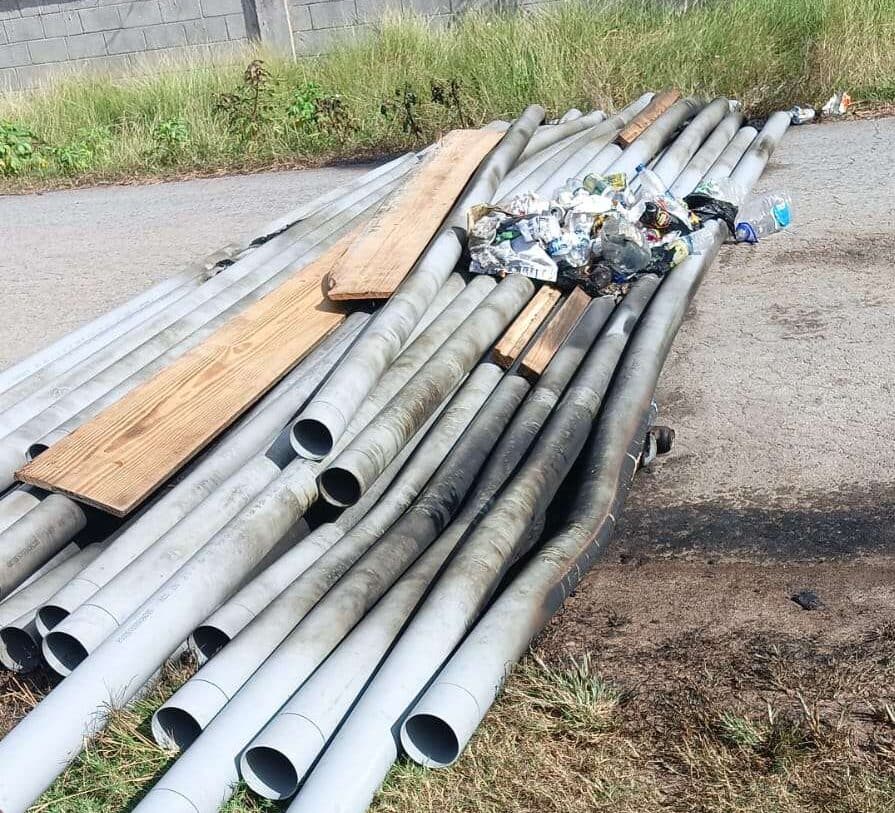
    In a decisive response to acts of infrastructure sabotage, Antigua and Barbuda’s Prime Minister Gaston Browne has declared a $50,000 reward for information resulting in the arrest and conviction of perpetrators responsible for deliberately setting fire to critical fiber-optic materials in Old Road. The announcement came immediately following confirmation of the vandalism targeting the Antigua Public Utilities Authority (APUA) installation site at Morris Bay.

    Prime Minister Browne, speaking via national radio broadcast Pointe FM, emphasized the government’s zero-tolerance stance toward disorder, stating: ‘We’re taking the fight to these people. We cannot allow these people to become lawless and to destroy our country.’ The substantial reward extends to anyone providing credible intelligence leading to successful prosecution, with provisions established for anonymous tip submissions to either Cabinet ministers or law enforcement authorities.

    The incident represents a significant escalation in local tensions surrounding preparatory works for a vital subsea cable project. According to APUA’s detailed account, the destruction occurred on December 12, 2025, following days of escalating community tensions unrelated to the utility’s operations. Preliminary assessments indicate several thousand dollars in damages to conduits and project materials essential for the national infrastructure initiative.

    APUA officials confirmed the vandalism was deliberate, occurring despite previous community engagement efforts including an October town hall meeting that reportedly generated largely supportive feedback. The authority emphasized the project’s critical importance for enhancing the nation’s digital resilience, ecommerce capabilities, educational infrastructure, and overall economic development with full operational launch anticipated by 2027.

    While police investigations continue, both government and utility authorities have appealed for public cooperation and calm, underscoring that all citizens stand to benefit from the completed project. The administration has reiterated its commitment to upholding legal order and preventing further acts of destruction against national infrastructure assets.

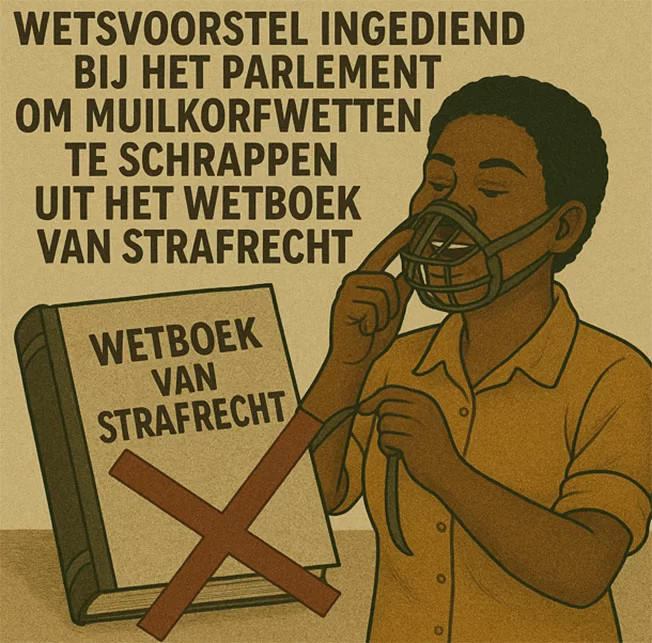
  • Initiatiefwet: ‘muilkorfartikelen’ schrappen uit strafrecht, vrije meningsuiting centraal

    Initiatiefwet: ‘muilkorfartikelen’ schrappen uit strafrecht, vrije meningsuiting centraal

    A landmark legislative initiative currently before Suriname’s National Assembly proposes the comprehensive elimination of eight controversial articles from the country’s Criminal Code. Submitted in March 2022 by assembly members Ebu Jones and Tashana Lôsche, the bill targets provisions widely criticized as suppressing free speech and political dissent.

    The targeted statutes—Articles 152, 153, 154, 157, 158, 159, 173, and 174—criminalize various forms of expression including insult, undermining state authority, and criticism of public officials. Proponents argue these colonial-era provisions fundamentally contradict both Suriname’s constitutional free speech protections under Article 19 and its international human rights commitments, particularly the American Convention on Human Rights and the Universal Declaration of Human Rights.

    In their explanatory memorandum, the legislators characterize freedom of expression as the ‘cornerstone of a free and democratic society,’ asserting that without robust protections for critical speech, genuine democratic governance remains unattainable. The proposed reforms aim to align Suriname’s legal framework with its democratic aspirations by preventing the criminal justice system from being weaponized against political opponents or dissenters.

    Civil society organizations including the Surinamese Association of Journalists have long documented the chilling effect these provisions exert on public discourse. Media professionals, activists, and ordinary citizens reportedly self-censor due to fears of prosecution, particularly during periods of political tension. The legislation’s prolonged stagnation since March 2022 raises questions about parliamentary commitment to fundamental rights reform amid ongoing national debates about democratic renewal and rule of law.

    If adopted, the law would take immediate effect upon promulgation, marking a historic shift toward a legal system that protects rather than punishes free expression. The Assembly now faces a defining choice: embrace reforms befitting a modern democracy or maintain a legal framework that keeps free expression under perpetual threat of criminal prosecution.