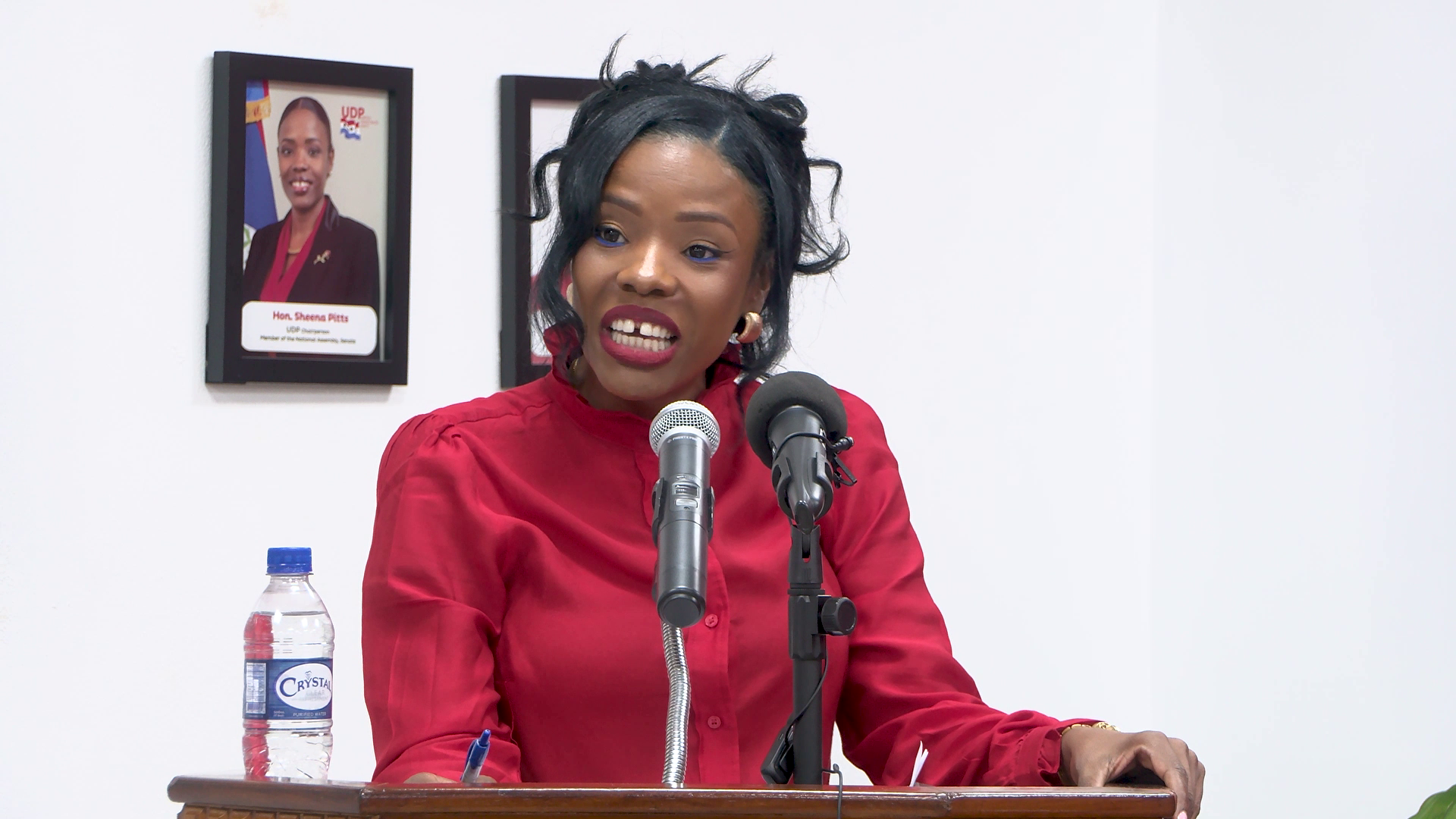
In an early show of organizational strength ahead of the 2027 Belize municipal elections, the country’s United Democratic Party (UDP) has announced a robust surge in candidate interest, signaling the opposition’s aggressive preparation to unseat the incumbent People’s United Party (PUP) government. UDP Chair Sheena Pitts shared details of the party’s nomination cycle, which ran from February 26 to March 31, 2026, revealing that more than 90 aspiring politicians have already submitted their applications to run on the UDP ticket. The flood of early contenders demonstrates far greater grassroots momentum than many observers expected, Pitts said, countering any narrative that the party lacks widespread public and political support ahead of the upcoming vote. The candidate pool already holds competitive races for top municipal posts across the country. In Belize City, the nation’s largest urban center, three candidates have already put their names forward for the mayoral nomination, with 18 more hopefuls vying for city council seats. In the national capital of Belmopan, the contest is similarly competitive: two candidates are seeking the UDP’s mayoral endorsement, while 11 residents have applied to run for city council positions. Beyond the two major urban centers, the UDP has already secured full candidate slates for multiple municipalities: three complete slates for Dangriga, and full slates for Orange Walk, Punta Gorda, Benque Viejo del Carmen, San Pedro, and Corozal. Pitts emphasized that the early nomination surge is a deliberate strategy, not an accident. Rather than waiting until the final months before the 2027 election to begin organizing, the UDP has moved months ahead of schedule to lock in candidates and build campaign infrastructure across the country. “If unu mih think Belizean nuh ready, the report we have gotten from our nomination chair show proof positive that there are a number of Belizeans ready to join with the UDP leadership to take down this PUP government,” Pitts said, speaking in Kriol, transcribed in standard spelling per the outlet’s translation policy. The party has already begun the vetting process for applicants, and has sent acceptance notices to the first wave of successful candidates, Pitts confirmed. All remaining notification letters will be sent out by the end of the week, she added, noting that not all applicants passed the party’s vetting requirements to appear on the UDP ticket. This early display of force positions the UDP as an organized, energized opposition more than a year out from the municipal contests, setting the stage for a competitive campaign cycle across Belize’s municipal governments. This report is adapted from a transcript of an evening television news broadcast.
分类: politics
-
UDP Demands Budget, Contractor Details on NHI Expansion
As the Government of Belize pushes forward with a nationwide expansion of its National Health Insurance (NHI) Scheme, the country’s main opposition United Democratic Party (UDP) is escalating demands for accountability by invoking the Freedom of Information Act (FOIA) to obtain unshared critical administrative and financial records.
The formal request for documents, announced publicly by UDP leader Tracy Panton on June 16, 2026, comes after the party’s representatives on the official NHI oversight committee were repeatedly blocked from accessing key details through standard legislative and committee channels. Panton emphasized that this lack of transparency is a major cause for concern for all Belizean residents, who deserve clarity on how the public-funded health scheme is being managed as it scales up.
Among the core documents the UDP has requested are detailed budget allocations for the NHI program for both the current fiscal year and the upcoming fiscal cycle. The party is also demanding a complete, public roster of all public and private primary care providers contracted to deliver NHI-covered services, alongside full disclosures of the ownership of each contracted provider entity.
Panton pointed to conflicting and incomplete remarks made by the Minister of Health during a recent sitting of Belize’s National Assembly to underscore the need for full disclosure. During that assembly session, Panton noted, the health minister only confirmed that seven public health facilities currently hold NHI contracts, leaving the vast majority of participating providers unaccounted for.
“What that leaves unaccounted for is the next ninety percent of providers,” Panton said. “We need to know the names of these providers, the names of the owners.”
Beyond administrative and ownership details, the UDP has also directed a request to Belize’s Financial Secretary for a line-by-line breakdown of all medical services covered under the expanded NHI scheme, as well as the full list of reimbursement rates that the government pays to contracted providers for each covered service.
The formal FOIA filing marks a significant intensification of public pressure on the ruling administration to open its books on the NHI expansion, a major public health policy initiative that affects access to care for all Belizeans. Transparency advocates have long flagged that large public health schemes with contracted private providers carry inherent corruption risks without regular public disclosures, making the UDP’s demand a key test of the government’s commitment to open governance as it rolls out the expanded program nationwide.
This report is adapted from a transcript of an evening television newscast originally published by local Belizean media.
-
UDP Questions $73M BEL Share Purchase
Nearly two weeks after Belize’s Prime Minister John Briceño unveiled a controversial $73 million plan to acquire shares in national utility BEL, the opposition United Democratic Party (UDP) is escalating scrutiny over the proposal, pressing the administration to answer critical questions about funding sources and the ultimate purpose of the transaction. The plan, which calls for the government to buy just over 8.1 million BEL shares at a price of $9 per share, has sparked fierce political debate over whether it amounts to a hidden bailout for the struggling utility, with growing concerns that public social security funds could be tapped to cover the massive cost.
Tracy Panton, leader of the UDP and the country’s opposition, told reporters that the party has repeatedly pushed the ruling People’s United Party (PUP) administration for full transparency, and is set to demand clear answers when the proposal goes before a House Committee meeting on Wednesday. Panton emphasized the staggering scale of the proposed expenditure, noting that the $73 million price tag is no trivial sum at a time when the country’s total national debt is already approaching $1 billion.
Drawing a parallel to the earlier controversial BTL acquisition, Panton declined to pre-empt her party’s formal position ahead of Wednesday’s committee review, where the party will conduct a line-by-line critical examination of the legislation backing the share purchase. She did, however, warn the public of the risks tied to the plan, noting that when she questioned a senior PUP government official about the funding source during a recent visit to Belmopan for separate legislative business, the official could not provide a definitive answer — only offered an unconfirmed denial that funds would come from the Social Security Board (SSB) Investment Fund.
Panton stressed that regardless of where the administration sources the $73 million, the ultimate cost will fall on ordinary Belizean taxpayers. She added that while the public might be willing to accept the expenditure if it delivered tangible benefits like lower electricity bills and more reliable service, there is no evidence those outcomes will materialize from the proposed purchase. If the committee meeting reveals any concrete indication that SSB public funds will be used for the transaction, Panton said the UDP will immediately alert the Belizean public to the plan’s risks.
The proposal marks the latest high-stakes political flashpoint between the ruling PUP and opposition UDP, with public accountability for public spending emerging as a central campaign and legislative issue ahead of upcoming political processes.
-
UDP Calls for Mira’s Resignation After Deadly Weekend
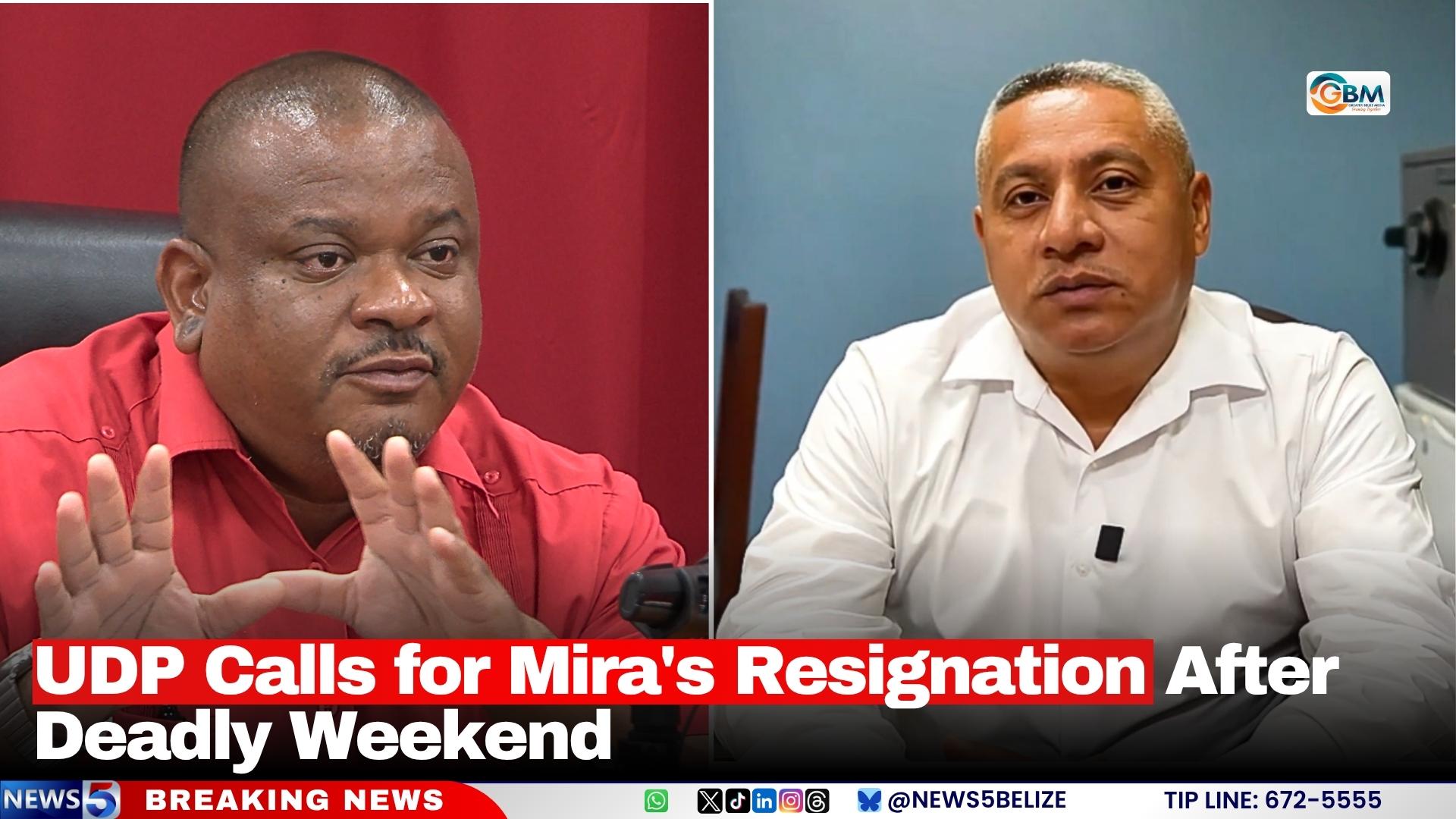
On June 16, 2026, Belize’s main opposition United Democratic Party (UDP) has launched a formal demand for the resignation of national Home Affairs Minister Oscar Mira, triggered by a wave of brutal fatal violence that left multiple people dead across the country over a single weekend.
Speaking on behalf of the UDP, opposition Senator Patrick Faber laid out the specifics of the three high-profile killings that have sparked public outrage and political backlash. The first victim, Dr. Bonilla, was murdered in front of his own daughter, who remained trapped in the back seat of the vehicle during the attack. Second, Kiffer McKenzie was shot dead in a public shooting on busy Albert Street while his own young children were seated inside his parked car. The third victim, 25-year-old Eric Nelson, was killed in what investigators allege was a senseless gang-related killing, targeted solely for wearing a shirt of the wrong color in a territory controlled by a rival gang.
Faber argued that Mira has lost all credibility to lead the ministry tasked with curbing violent crime and protecting public safety, stating bluntly: “Minister Mira must go before he is completely impotent. He has no meaningful agenda to fight crime.” The senator drew a sharp contrast between the current administration’s delayed, low-profile response to the bloodshed and the protocols of previous governments, noting that former prime ministers would immediately address the nation to outline next steps and acknowledge public grief following any major outbreak of fatal violence. In Faber’s assessment, Mira’s prolonged public silence and the complete absence of visible, decisive action following the weekend violence are clear proof that he is unfit to hold his post overseeing national public security.
Senior officials within the Home Affairs Ministry have pushed back against the opposition’s demands, however. Rear Admiral Elton Bennett, Chief Executive Officer of the Home Affairs Ministry, told local outlet News 5 that Minister Mira remains fully focused on his official duties and has not been distracted by what Bennett characterized as “noise in the market” – a direct dismissal of the opposition’s calls for resignation.
Full additional details on the unfolding political dispute and the ongoing investigations into the three weekend killings are set to be broadcast during News 5 Live’s prime time 6 p.m. broadcast Monday evening.
-
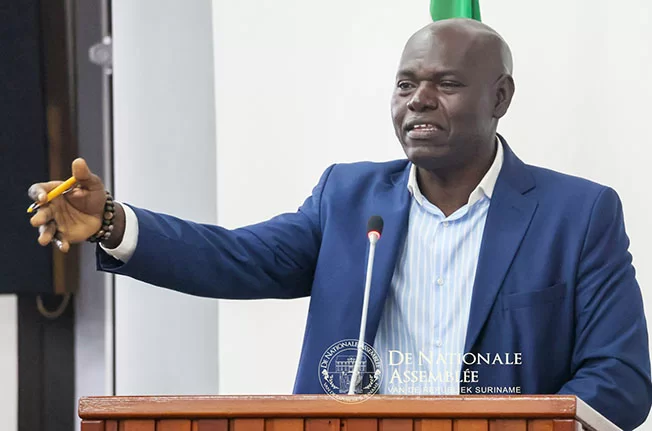
Asabina wil inzage in oliecontract: Parlement mag niet in het duister tasten
A Surinamese parliamentary opposition leader has reignited debate over transparency in the country’s burgeoning offshore oil sector, renewing scathing criticism of the government’s refusal to grant the National Assembly full access to the critical exploration and development contract between state-owned oil firm Staatsolie and French energy giant TotalEnergies.
Ronny Asabina, who leads the BEP political faction in the Surinamese legislature, argues that parliament is fundamentally blocked from fulfilling its constitutionally mandated oversight role as long as the terms of the landmark agreement remain hidden from elected representatives.
In unusually harsh remarks, Asabina labeled the ongoing secrecy a “national shame” for the South American nation, pointing out that the country’s state oil company has explicitly rejected requests to share the full text of the deal with the nation’s lawmaking body – even as elected officials are expected to extend political trust to the agreements struck behind closed doors.
The parliamentary leader says that without access to the full contract, key details that matter deeply to the Surinamese public remain out of sight, including legally binding environmental protection clauses, frameworks for resolving commercial disputes, and critical fiscal terms that outline how much revenue the state will earn from the development of the offshore reserves. In particular, Asabina has raised pointed questions about the timeline of projected government tax revenues from the project. Under the terms of typical large-scale oil development deals, companies do not pay income tax until all upfront capital investments have been recouped and operational profits are generated.
Given the extremely capital-intensive nature of offshore oil exploration and production, and the ability of firms to offset early operational losses against future tax obligations, Asabina warned that substantial tax revenues for the Surinamese government could be delayed for decades after production first begins, a timeline that would put immense strain on the country’s already stretched public finances.
Asabina stressed that the National Assembly has an inalienable right to full disclosure of all agreements that the executive branch has negotiated on behalf of the Surinamese state and its people. He also recalled that government officials previously made a public promise to convene a special parliamentary committee to review all oil sector contracts, a commitment that has yet to be fulfilled. “As the elected representatives of the Surinamese people, we have a non-negotiable responsibility to know exactly what terms have been agreed to in the name of our entire society,” Asabina told the government in his address.
-
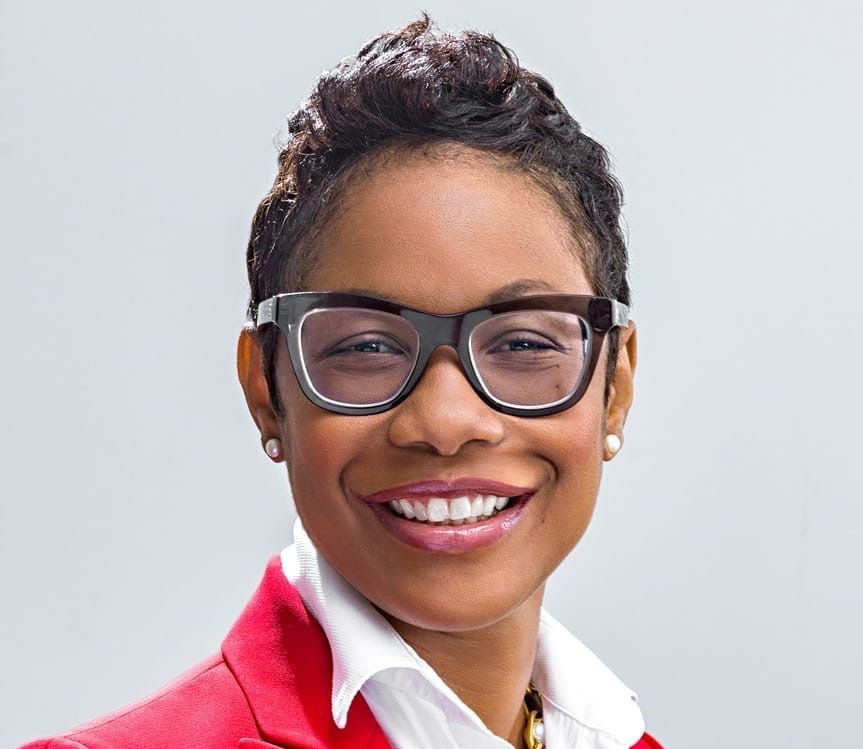
Medical Products Bill aims to strengthen drug safety, production
Barbados is taking a major step toward reshaping its national healthcare framework, as a transformative new piece of legislation targeting pharmaceutical regulation and supply chain security moves forward through the country’s Parliament. Titled the Barbados Medical Products Bill, the proposed law marks a historic milestone not just for its policy goals, but also for the procedural context in which it was introduced: it was piloted through its second reading in the House of Assembly by Health Minister Senator Lisa Cummins, marking the first time a sitting senator has appeared on the floor of the lower house of parliament following constitutional amendments ratified late last year.
In her address to lawmakers, Minister Cummins framed the bill as a critical step toward establishing full medical products sovereignty for the Caribbean island, with public safety serving as the core priority. The primary risk the new regulations aim to address is the growing threat of counterfeit pharmaceuticals, which put public health at severe risk through untested ingredients and fraudulent claims of efficacy. Key to the new regulatory structure is Section 6 of the bill, which lays out formal requirements for the registration and marketing authorization of all medical products sold or distributed in Barbados.
Minister Cummins emphasized that strong, centralized regulation is non-negotiable to protect Barbadians from substandard or fraudulent drugs that are often marketed with false claims about their ability to treat medical conditions. “One of the things that this legislation is meant to do is to protect this community by way of regulation from counterfeiting drugs and drugs that are marketed to do one thing but really are not doing what they’re said to do,” she told assembled lawmakers.
The push for this new framework grew directly out of disruptions that hit the island during the COVID-19 pandemic, when global supply chain breakdowns and export restrictions left many small nations struggling to access critical medical supplies. Compounding those ongoing challenges are current global supply chain disruptions linked to rising international tensions, which have added new layers of uncertainty to global pharmaceutical trade. Currently, Barbados imports 47 percent of all pharmaceutical products consumed domestically, a level of dependence that left the country extremely vulnerable during recent crises.
Minister Cummins described the confluence of pandemic-related disruptions, export bans, international supply chain breakdowns, and country-level hoarding of medical supplies as a “perfect storm” – but also a perfect opportunity to build long-term self-reliance. The bill aligns with Barbados’ broader national strategy to secure sovereignty across key strategic sectors, from energy and agriculture to food production, now extending that momentum to health and medical supplies. The goal, she stressed, is to ensure Barbados is never again fully reliant on the goodwill of foreign nations, a vulnerability laid bare during the peak of the COVID-19 pandemic when many countries prioritized domestic access to critical supplies over exports.
A core complementary initiative tied to the bill is the launch of Barbados Pharmaceutical Inc., a state-backed domestic pharmaceutical production company that will serve as a foundation to transform Barbados from a regional logistics hub into a full-fledged pharmaceutical, distribution, and regulatory hub for the Caribbean and broader global south. Minister Cummins revealed that the new facility is already working with key partners in Nigeria to build collaborative partnerships with pharmaceutical manufacturers across the African continent, opening new avenues for South-South cooperation in pharmaceutical production.
The bill also formalizes the structure for a new Barbados Medical Products Regulatory Authority, which will operate under the legislation’s framework to oversee both domestic manufacturing and research and development activity carried out at the Barbados Living Lab, the country’s new pharmaceutical R&D facility. Minister Cummins simplified the authority’s role: just as the U.S. Food and Drug Administration provides trusted verification of pharmaceutical safety and efficacy for global markets, the new Barbadian regulator will fill that same role for domestic and regional production. Without a formal, robust regulatory framework, she noted, domestic manufacturing and international collaboration cannot expand.
The legislation also draws heavily on existing regional regulatory frameworks across both the Caribbean and African regions, where leaders have prioritized expanding domestic pharmaceutical manufacturing and strengthening independent regulatory authorities. Under the new structure, the existing Barbados Drug Service will be separated from the new regulatory authority, which will take on full independent oversight of all medical products. The bill also incorporates formal requirements for pharmacovigilance, including systematic quality monitoring, processes for product recalls, and removal of unsafe products from the market.
From the moment pharmaceutical products arrive at Barbados’ border, through customs clearance, import licensing, and final placement on retail shelves, multiple government agencies including Customs, the Department of Commerce, the new regulatory authority, and the Ministry of Health will collaborate to maintain extensive regulatory oversight and surveillance, with each institution holding clear defined responsibilities under the law.
The procedural milestone of a senator presenting legislation to the House of Assembly follows the December 2023 ratification of amendments to the Constitution of Barbados, which explicitly allow sitting ministers from the Senate to attend sittings of the House of Assembly, and vice versa for ministers sitting in the lower house. The first cross-chamber ministerial appearance took place just last week, when two members of the House of Assembly – Criminal Justice Minister Michael Lashley and Attorney General Wilfred Abrahams – presented the Criminal Gangs (Prevention and Control) Bill for its second reading before the Senate.
-
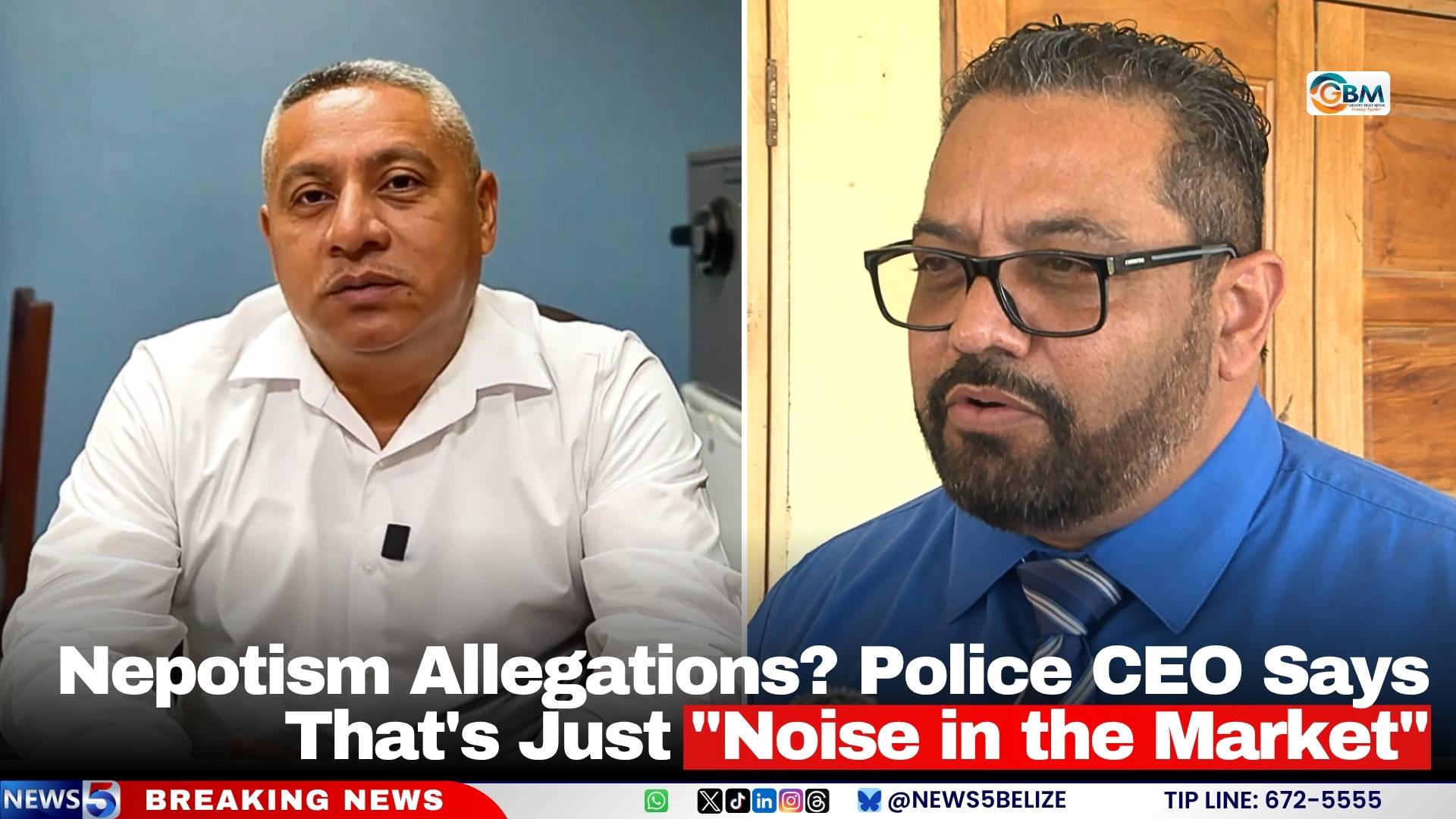
Nepotism Allegations? Police CEO Says That’s Just “Noise in the Market”
Amid a growing wave of unaddressed nepotism allegations targeting Belize’s Minister of Home Affairs Oscar Mira, the top police chief has stepped forward to dismiss the controversy as unfounded public speculation. In an exclusive interview with local outlet News 5 on June 16, 2026, Rear Admiral Elton Bennett, Chief Executive Officer of the department, pushed back against claims that the scandal is undermining Mira’s ability to lead.
Bennett emphasized that despite the swirling public discourse, Minister Mira has maintained unbroken focus on his official responsibilities, and the unsubstantiated claims have had no tangible impact on his leadership of the ministry. According to Bennett, all core operations across the Ministry of Home Affairs are running smoothly as planned, including critical functions of the Police Department and national forensic services. He also confirmed that regular communication and coordination between himself and the minister remain unchanged.
When questioned about whether the nepotism claims could damage ongoing efforts to restore public trust in national law enforcement, Bennett rejected any link between the allegations and institutional integrity. “No, not at all,” he stated firmly. “I don’t see the connection, and I don’t see there is any question as it relates to trust and the integrity of the minister at all.”
As of the publication of this report, Minister Mira has not offered any direct on-the-record response to repeated media requests for comment on the allegations. Prior to this, Mira only released a brief public statement via Facebook, labeling the nepotism claims as deliberate “lies and misinformation” aimed at discrediting his office.
-
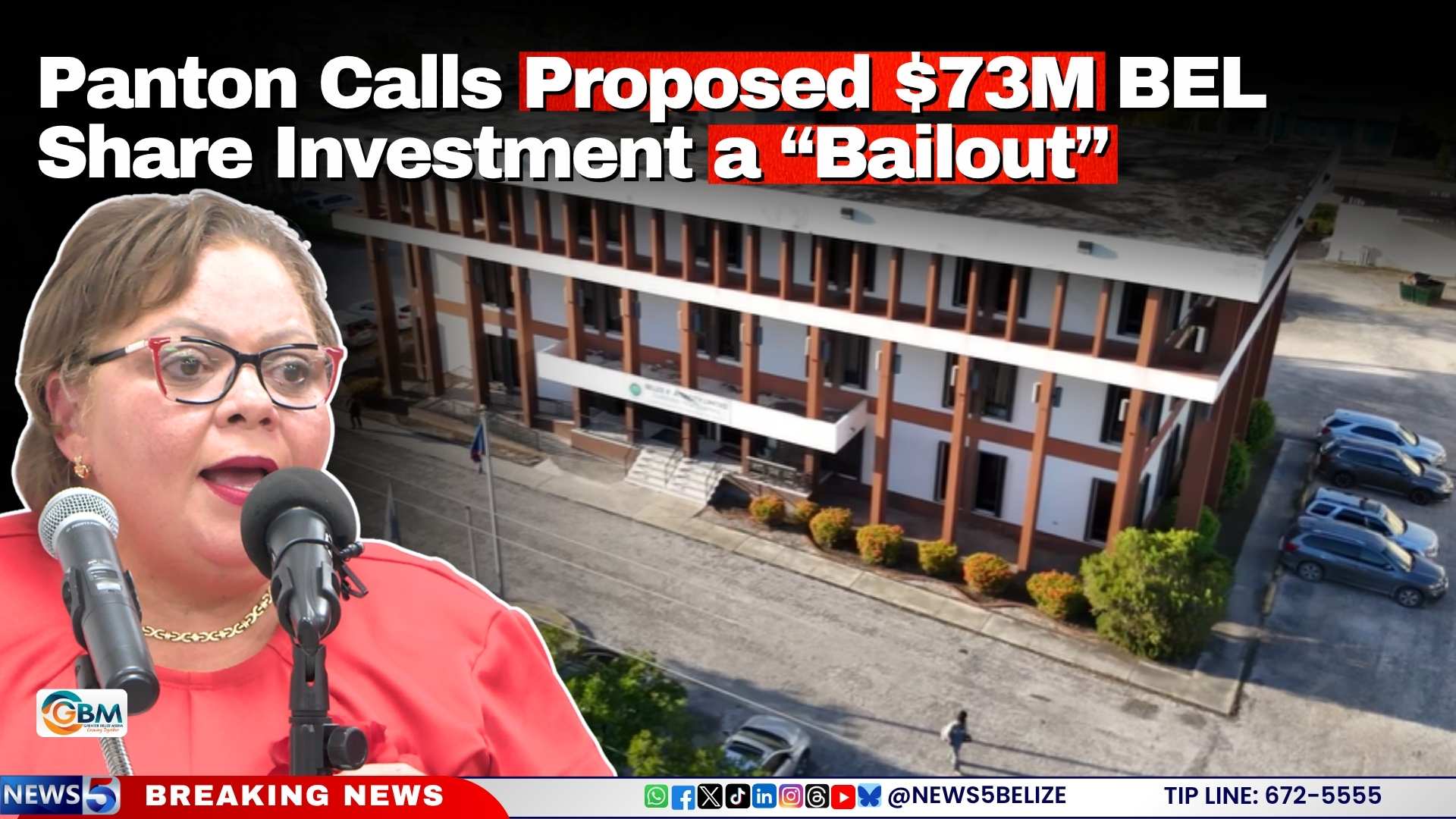
Panton Calls Proposed $73M BEL Share Investment a “Bailout”
A planned $73 million government investment into Belize Electricity Limited (BEL) has ignited sharp political debate in Belize, as the opposition lashes out at the proposal framing it as an underdisclosed bailout that will ultimately burden ordinary taxpayers.
The initiative, put forward by Prime Minister John Briceño’s administration, asks for legislative approval to acquire just over 8.1 million newly issued shares of BEL at a price point of $9 per share. In defending the plan, Briceño has emphasized that the core goal of the investment is to reinforce national control over Belize’s critical electricity infrastructure, strengthening domestic ownership of the country’s core power supply network.
But the proposal has quickly drawn fierce scrutiny from the country’s political opposition. Tracy Panton, leader of the United Democratic Party, is leading the charge against the plan, questioning both the source of the $73 million in funding and the ultimate impact on public finances. During a press briefing held by her party on June 16, 2026, Panton publicly labeled the share acquisition nothing more than a bailout for the state-linked power provider.
Panton raised concerns specifically about whether the government intends to draw funds from Belize’s Social Security Board (SSB) to cover the cost of the purchase, a move she argues would put retirement and social welfare funds at risk. Ahead of a scheduled House of Representatives committee meeting set to discuss the proposal the following day, Panton warned she would immediately make the information public if there was any confirmation of SSB funds being tapped for the investment.
The opposition leader also noted that while she had directly raised the funding question to a member of the ruling People’s United Party (PUP) during a visit to Belmopan, she did not receive a clear response. The ruling party member did, however, deny that SSB funds would be used for the share purchase.
Despite that denial, Panton maintained her position that no matter what funding stream the government chooses to use, the full cost of the $73 million investment will eventually be passed on to the Belizean public. She added that while Belizeans would likely be far more open to supporting public spending on the power sector if it translated to lower monthly electricity bills or more reliable service, she remains deeply skeptical that the proposal will deliver any such tangible benefits for ordinary citizens.
The upcoming House committee meeting is expected to be the first major legislative step for the proposal, where further details on funding and policy goals will likely be debated publicly.
-
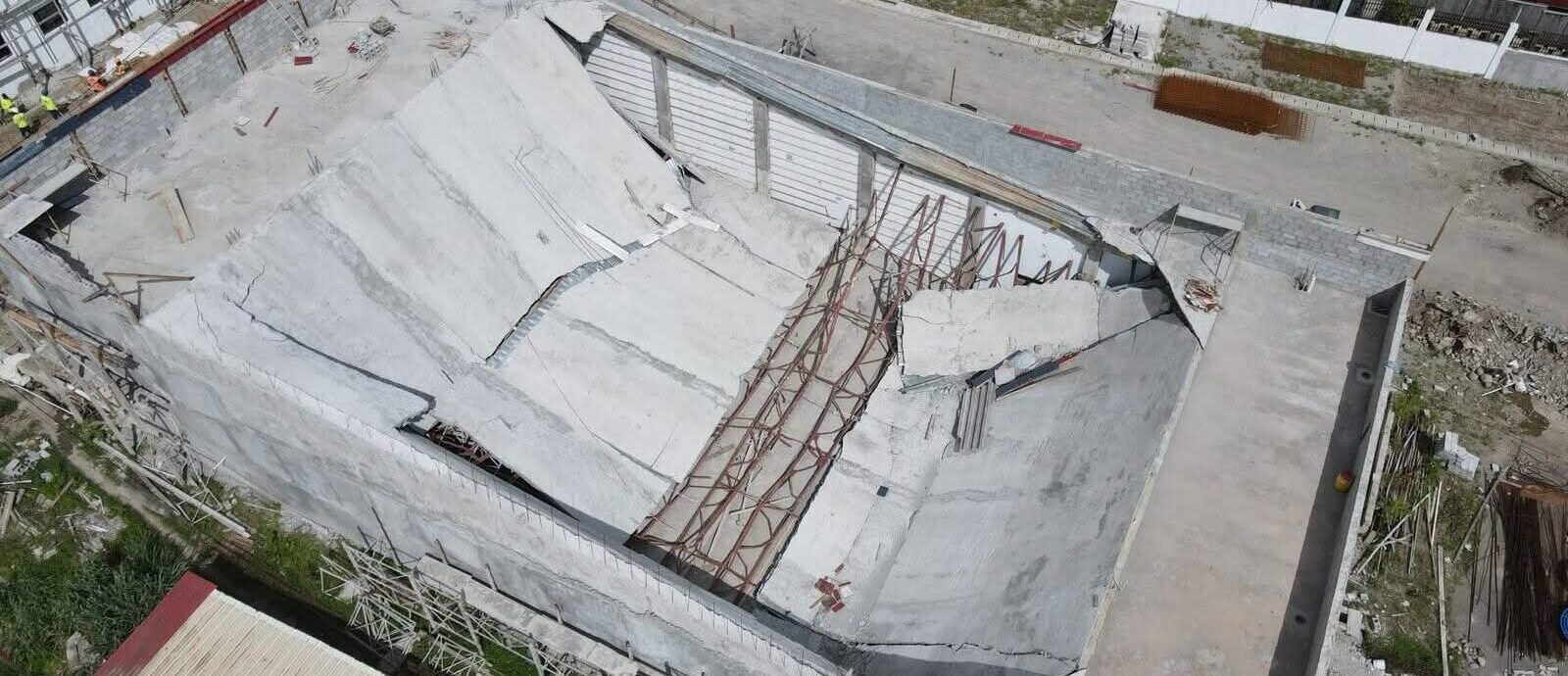
LETTER TO THE EDITOR: Dominica Grammar School roof collapse, June 16
It has been exactly one year since the catastrophic roof collapse at the under-construction Dominica Grammar School auditorium, yet Dominican government authorities have still not released any official explanation for the serious structural failure of a facility designed to hold 600 people, mostly students and faculty. The site of the incident, the collapsed roof debris has long been cleared away, but the remaining unfinished structure sits frozen in time like an empty graveyard, leaving passersby to only speculate about what exactly went wrong – and what devastating outcomes could have unfolded if the collapse had occurred while the building was occupied.
For the island nation’s governing bodies, the incident appears to have been brushed off as a non-urgent matter. For much of the general public, the common dismissive attitude boils down to a fatalistic shrug: no lives were lost, so there is little cause to push for further action. Overall construction work on the wider school upgrade project has crawled forward at a glacial pace, despite public promises from both the Prime Minister and the Minister of Education that all construction would be fully completed in time for the September 2025 school reopening.
Most troublingly, not a single individual or entity has been held responsible for the structural failure to date. The country’s Physical Planning Division, the contracted construction firm, project consultants, and the lead developer have all been allowed to step away from the incident without issuing even a basic public statement to the Dominican people, let alone to the student body that could have become victims of what would have been the worst disaster in the Commonwealth of Dominica’s modern history – a catastrophe only avoided by sheer chance, which many locals describe as divine intervention. Community advocates note that June 16, the anniversary of the collapse, should serve both as a day of remembrance for the near-tragedy and a reminder of the unanswered questions that remain unaddressed by the nation’s leadership.
-

DLP claims Ashma McDougall turned down UWP offer before accepting Roseau North candidacy
Ahead of the hotly anticipated Roseau North parliamentary by-election, Dominica’s governing Dominica Labour Party (DLP) has made a striking announcement: its newly selected candidate Ashma McDougall was actively courted by the opposition United Workers Party (UWP) to run on their ticket before committing to the ruling party.
The upcoming by-election was triggered after former Roseau North representative Miriam Blanchard stepped down from her post, leaving an open parliamentary seat that will be contested by voters in the coming weeks. In an official public statement released by the DLP’s Roseau North campaign team on June 16, 2026, the party confirmed that both of Dominica’s major political parties identified McDougall as their top prospective candidate for the constituency.
According to the statement, UWP leadership reached out to McDougall first to invite her to stand as their nominee, framing her as a potential future leader who would bring significant strength to their political bloc. McDougall agreed to a meeting to hear the opposition’s proposal in full, but ultimately turned down the offer after a period of careful consideration, opting instead to run for the DLP.
McDougall’s decision, the DLP explained, was rooted in her conviction that she could best deliver for Roseau North’s residents as part of the incumbent governing administration, which holds the institutional capacity to turn policy pledges into tangible results. The ruling party highlighted that the opposition’s own outreach to McDougall reveals a telling detail about their internal priorities: even UWP leaders were searching for a new face and a new direction for the Roseau North seat, long before the by-election was called. The DLP drew a direct contrast between McDougall and the UWP’s eventual nominee, three-time candidate Danny Lugay, arguing that the opposition’s attempt to recruit McDougall proves they themselves acknowledge the need for fresh leadership in the constituency, rather than repeating the same political approach that has failed to win in past elections.
Both parties, the DLP emphasized, recognized the same strengths in McDougall: sharp intellect, proven leadership ability, strong credibility, unwavering discipline, a clear sense of purpose, contagious energy, and authentic ties to the communities that make up Roseau North, including Goodwill, St. Aroment, Pottersville, Gutter, Stock Farm, Yam Piece, Tarish Pit, Bellevue Rawle, Louisville and Morne Daniel. Where the parties differed was in McDougall’s own choice: she selected to align with progress over protest, development over division, and a governing party that has a track record of delivering critical public goods from affordable housing and upgraded infrastructure to expanded education and healthcare access.
For the DLP, the 2026 Roseau North by-election is far more than a simple race between two individual candidates. The party has framed the contest as a clear choice between two competing visions: a forward-looking future led by new, broadly admired leadership, and a stagnant past defined by the same outdated political approaches. With voting set to take place in the coming weeks, the key question hanging over the contest is whether Dominica voters will back McDougall, the candidate both major parties sought out, and deliver a victory for the DLP’s vision of continued progress for Roseau North.