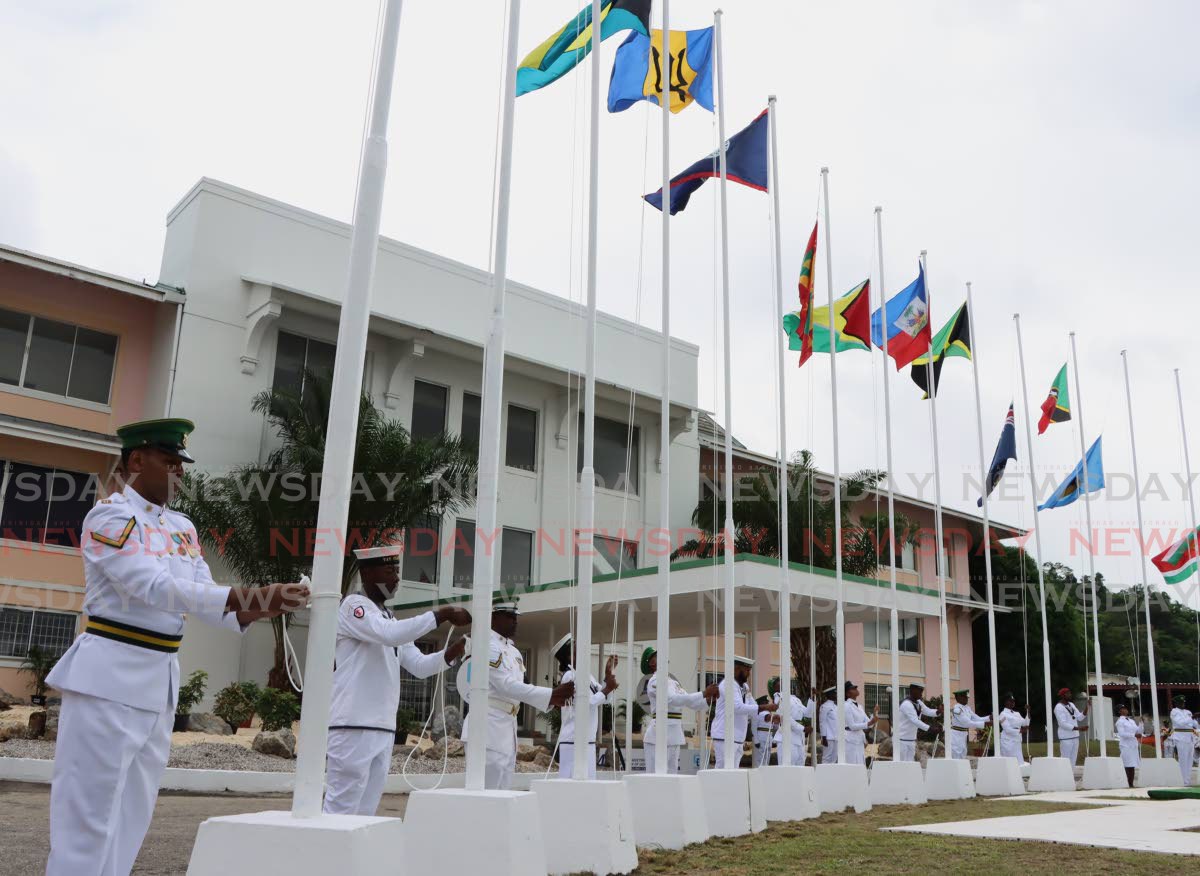
In a significant diplomatic move, Taipei City and Basseterre, the capital of Saint Kitts and Nevis, formalized a Sister City Agreement on November 13, 2025. The ceremony, held in Taipei, was attended by Taipei Mayor Wayne Chiang and Saint Kitts and Nevis’ Ambassador to Taiwan, H.E. Donya Francis. Prime Minister Hon. Dr. Terrance Drew and Taipei City Council Speaker Tai Hsi-Chin were also present to witness the historic signing. This agreement marks a pivotal step in enhancing bilateral cooperation between Taiwan and Saint Kitts and Nevis, building on a 42-year friendship. Mayor Chiang emphasized the importance of the partnership, highlighting future collaboration in education, culture, commerce, tourism, and smart city development. Prime Minister Drew echoed these sentiments, expressing optimism for increased exchanges in smart governance, sustainable development, and cultural initiatives. The agreement follows years of active engagement, including Taipei’s donation of 50 YouBikes in 2023 and Basseterre’s participation in the Taipei Lantern Festival. This new relationship is expected to deepen practical cooperation and reinforce the enduring bond between the two nations.
分类: politics
-

VS kondigt ‘Southern Spear’-missie aan nabij Zuid-Amerika
The U.S. Secretary of Defense, Pete Hegseth, has officially announced the launch of ‘Operation Southern Spear,’ a military initiative aimed at combating so-called ‘narcoterrorists’ in Latin America. This announcement coincides with a significant increase in U.S. troop deployments, warships, and fighter jets in the region. Hegseth emphasized the mission’s focus on defending the homeland, eliminating drug-related threats, and safeguarding the population from the deadly impact of narcotics. The operation is led by the Joint Task Force Southern Spear and the U.S. Southern Command (Southcom), which oversees 31 countries across South America, Central America, and the Caribbean. Recent activities include U.S. Marines conducting artillery training aboard the USS Iwo Jima in the Caribbean, aligning with President Donald Trump’s priorities to curb illegal drug trafficking. The announcement follows reports of the U.S. military conducting its twentieth attack on suspected drug-smuggling vessels in the Caribbean and Pacific, resulting in four fatalities. Critics, including Venezuelan President Nicolás Maduro, argue that the operation is a pretext to exert pressure on Venezuela, with the impending arrival of the USS Gerald R. Ford, the U.S.’s most advanced aircraft carrier, seen as a show of force. Maduro accused the U.S. of fabricating narratives to justify military actions, while Venezuela’s Defense Ministry mobilized nearly 200,000 military and civilian personnel in response to the perceived threat. Regional analysts, such as Elizabeth Dickinson of the International Crisis Group, suggest that the deployment of the aircraft carrier is more about signaling political pressure on Caracas than addressing drug trafficking.
-

UWP leader points to urgent challenges facing country
In a candid interview with St. Lucia Times, Allen Chastanet, leader of the United Workers Party (UWP) and former Prime Minister, highlighted the pressing issues plaguing Saint Lucia, including soaring living costs, deteriorating public services, and escalating crime. Chastanet warned that the nation cannot sustain its current trajectory under the St. Lucia Labour Party (SLP) administration, led by Prime Minister Philip J. Pierre, who recently announced a general election for December 1. Chastanet outlined what he termed as the most urgent failures of the current government and signaled the priorities of a UWP-led administration. He identified the cost of living as the paramount concern, attributing its sharp rise to unprecedented tax increases by the SLP, compounded by post-COVID-19 inflation. Chastanet criticized the health and security levy, arguing it failed to deliver promised funding, and lamented the government’s inability to cap fuel prices, which has further burdened consumers. He also pointed to the declining state of healthcare, citing the exodus of medical professionals and the government’s reliance on Cuban doctors and nurses, a program now jeopardized by U.S. visa restrictions. Chastanet questioned the viability of the proposed universal healthcare system, warning of potential VAT increases, and contrasted it with the UWP’s national health insurance model. He also criticized the delayed completion of St. Jude Hospital, despite Prime Minister Pierre’s announcement of its completion. On crime, Chastanet noted an increasing homicide rate and ineffective government response, pledging tighter border control and decisive action under a UWP government. He also highlighted delays in major infrastructure projects, water shortages, and the neglect of agriculture, promising to revive key crops and support farmers. Chastanet called for a more sophisticated approach to evaluating tourism performance, emphasizing the importance of bed nights and visitor spending over mere arrival numbers. He reaffirmed support for community tourism, promising to provide local investors with the necessary support to succeed.
-

Impact revealed How many homes has the Luis Abinader administration delivered?
In a recent announcement, Luis Madera, Deputy Minister of the Presidency of the Dominican Republic, underscored the remarkable achievements of President Luis Abinader’s administration over its first five years. Notably, the government has significantly accelerated the pace of housing delivery, doubling the annual rate compared to previous administrations. While the average number of homes delivered annually stood at 1,400 during the last four government terms, the current administration has delivered over 15,000 housing units since 2020, averaging 3,000 per year. Madera emphasized that this represents a substantial improvement in addressing the nation’s housing needs. Beyond housing, the administration has successfully translated the country’s economic growth into tangible poverty reduction. Madera highlighted that poverty levels have dropped from 27% to below 19%, lifting approximately 800,000 to 900,000 people out of poverty since 2022, when the nation recovered from the economic downturn caused by the COVID-19 pandemic. Additionally, the Dominican Republic has seen a surge in foreign investment, which has grown by over 80% from $2.5 billion in 2019 to $4.5 billion in 2024. This investment has been channeled into key sectors such as hotel construction, electrical projects, and infrastructure, fostering job creation and economic development. Madera also pointed to the administration’s efforts in granting property titles, with more than 140,000 titles issued in the last five years, further enhancing the dignity and security of citizens. These accomplishments, according to Madera, reflect the administration’s commitment to improving the quality of life for Dominicans and strengthening the nation’s international standing.
-

Abinader and the DEA strengthen anti-drug alliance
In a significant move to bolster regional security, a high-level delegation from the U.S. Drug Enforcement Administration (DEA) recently visited the Dominican Republic, engaging in pivotal discussions with President Luis Abinader. The meeting underscored the shared commitment to combat drug trafficking, narco-terrorism, and other illicit activities that threaten the stability of the Caribbean region. The DEA team, led by Principal Deputy Administrator Daniel Salter and Deputy Chief of International Operations Miles Aley, emphasized the importance of binational cooperation in dismantling criminal networks. President Abinader expressed gratitude for the DEA’s recognition of the Dominican Republic’s efforts and reaffirmed his government’s dedication to maintaining a strong partnership with the United States. The discussions also included Michael A. Miranda, DEA Special Agent for the Caribbean Division, and Kaleb T. Sanderson, DEA Attaché for the Dominican Republic and Haiti, alongside Vice Admiral José M. Cabrera Ulloa, head of the National Drug Control Directorate (DNCD). Following the presidential meeting, DEA officials visited the DNCD headquarters, where they agreed to enhance real-time information sharing and improve operational equipment. The focus remains on targeting major criminal organizations, including the Cartel de los Soles, which operates in the region. Salter highlighted the success of the existing alliance and pledged to strengthen international cooperation to dismantle destabilizing criminal structures. Vice Admiral Cabrera Ulloa commended the trust and support extended by the U.S. through the DEA, which has been instrumental in combating transnational organized crime.
-

PM Briceño Marks Milestone with Major Ministerial Moves
In a significant political move, Prime Minister John Briceño has announced a Cabinet reshuffle, marking the fifth anniversary of his administration. One of the most notable changes is the departure of Kareem Musa from the Ministry of Home Affairs after five years of service. Briceño emphasized that the reshuffle is part of a broader strategy to rejuvenate his government, though the timing has sparked speculation about potential links to recent controversies, such as the Joseph Budna investigation. Briceño, however, insists the decision was long-planned, citing the demanding nature of the Home Affairs portfolio. Initially, Minister Henry Charles Usher was set to take over the role, but he declined the appointment, opting to remain in his current position at the Ministry of Public Service. Consequently, Defense Minister Oscar Mira will now oversee both the Ministry of Home Affairs and the Ministry of Defense and Border Security. Briceño defended the reshuffle, stating that ministers are policy-makers rather than experts in their respective fields, and their primary role is to implement the government’s Plan Belize manifesto. He also dismissed allegations of nepotism, asserting that the appointments were based on merit and the need for strategic adjustments.
-

Fonseca Lands Largest Portfolio in Cabinet Shuffle
In a significant cabinet reshuffle, Prime Minister John Briceño has reassigned key ministerial roles, with Francis Fonseca taking on the largest portfolio in the government. Fonseca, previously known for his transformative work in education, will now oversee multiple critical areas, raising questions about the support he will need to manage his expanded responsibilities effectively. The reshuffle also saw Oscar Requena move from the Ministry of Education to Rural Development, a decision Briceño explained as strategic, emphasizing Requena’s effectiveness in representing rural communities. Briceño expressed full confidence in Fonseca’s ability to handle the increased workload, citing his extensive experience and leadership skills. The changes are part of a broader effort to optimize the government’s effectiveness, with Briceño stressing the importance of placing ministers in roles where they can make the most significant impact. The reshuffle has sparked discussions about the future direction of the administration and its ability to address pressing national issues.
-

Requena Explains Short Term as Education Minister
In a significant cabinet reshuffle, Prime Minister John Briceño has reassigned several ministers, including Oscar Requena, who is now returning to his previous role as Minister of Rural Transformation. Requena’s tenure as Education Minister lasted just eight months, sparking widespread speculation about the reasons behind the move. While some attribute it to performance issues, others suggest it aligns with the Prime Minister’s broader strategic vision, particularly given the emphasis on education reform. Requena’s departure paves the way for Francis Fonseca to take over the education portfolio, one of the largest in the Cabinet. In an exclusive interview, Requena expressed gratitude for his brief stint in the education sector, thanking staff, teachers, and the broader education community for their support. He emphasized his commitment to serving wherever the Prime Minister deems fit, stating, ‘I am here to serve wherever the Prime Minister sees it fit. I am prepared to serve.’ When questioned about the rationale behind the reshuffle, Requena deferred to the Prime Minister, acknowledging public concerns such as unpaid teacher salaries but refraining from speculating on the decision-making process.
-

Panton Calls Home Affairs Reshuffle ‘Purely Cosmetic’
Opposition Leader Tracy Taegar-Panton has sharply criticized the Briceño Administration’s recent cabinet reshuffle, labeling it as ‘purely cosmetic.’ Panton contends that the changes, particularly the removal of Kareem Musa and the appointment of Henry Charles Usher to the Ministry of Home Affairs, are a direct response to the ongoing controversy surrounding the abduction of Joseph Budna. She emphasized that the reshuffle fails to address the root issues and called for a thorough investigation to hold all responsible parties accountable. Additionally, Panton commented on the changes in the Ministry of Education, acknowledging the challenges faced by the sector but expressing confidence in the new appointee, Francis Fonseca, to navigate these complexities. She stressed the importance of addressing educational concerns, given the growing discontent among unions like the BNTU. Despite her criticisms, Panton clarified that her remarks were not an indictment of outgoing Education Minister Oscar Requena, whom she praised for his responsiveness to constituency needs. The reshuffle, according to Panton, reflects deeper systemic issues within the administration that require more substantive action than mere personnel changes.
-

Budna Case Sparks Rift Between PM and DPP
A growing rift has emerged between Prime Minister John Briceño and Director of Public Prosecutions (DPP) Cheryl-Lynn Vidal over the handling of the Joseph Budna investigation. The conflict stems from Vidal’s stark criticism of the case files, which she described as containing “less than nothing.” This assessment has drawn sharp disagreement from the Prime Minister, who defended the quality of the investigation and praised the work of lead investigator Assistant Superintendent Suzette Anderson. Briceño emphasized his respect for Anderson, calling her a “good cop” who performed admirably under challenging circumstances. While Vidal has indicated that the current evidence is insufficient to warrant an arrest, Briceño remains optimistic, suggesting that further investigation could uncover more details. The disagreement highlights the tension between the executive and judicial branches, with Briceño reiterating his commitment to not interfering with the DPP’s independence. The case has sparked widespread debate about the effectiveness of the investigation and the dynamics between key government offices.