分类: politics

  • OPINION: Why Saint Lucia’s ministers still hold power – and why the constitution says they should

    OPINION: Why Saint Lucia’s ministers still hold power – and why the constitution says they should

    Last week, Saint Lucia’s Prime Minister Philip J. Pierre announced the dissolution of Parliament, invoking Section 55(4) of the Constitution. This move, which paves the way for a general election, sparked debates over the authority of Deputy Prime Minister Ernest Hilaire, who subsequently issued ministerial statements. Critics questioned the legitimacy of his actions, arguing that the executive branch had effectively ceased to exist with the dissolution. However, this interpretation is a misconception rooted in a misunderstanding of the constitutional framework. The Constitution of Saint Lucia remains the supreme law, and its provisions ensure the continuity of government functions during such transitional periods. The dissolution of Parliament, as outlined in Section 40, halts legislative activities but does not dismantle the executive branch. Ministers, including the Prime Minister, retain their roles under the ‘caretaker’ convention, ensuring the day-to-day governance of the country. The Governor General, while vested with executive authority, typically acts on the advice of the Prime Minister, reflecting Westminster conventions. This constitutional continuity allows ministers to exercise their powers until the new Parliament convenes. The debate over the legitimacy of initiatives like the VAT-free holiday and the St. Jude Hospital ceremony during this period is thus unfounded. The Constitution, supported by legal precedents and conventions, provides a clear framework for governance during dissolution, ensuring stability and continuity in Saint Lucia’s democratic processes.

  • Grenada High Commission re-established in Ottawa, Canada

    Grenada High Commission re-established in Ottawa, Canada

    In a significant diplomatic move, Grenada has officially reopened its High Commission in Ottawa, Canada, on November 14, 2025. This marks the return of Grenada’s independent diplomatic presence in Canada after decades of representation through the Organisation of Eastern Caribbean States (OECS), which ceased operations in 2011. The reestablishment ceremony was attended by key officials, including Grenada’s newly appointed High Commissioner to Canada, His Excellency Sylvester Quarless, who formally presented his credentials to Canadian Prime Minister Mark Carney on September 17, 2025. The event also saw the presence of Hon. Joseph Andall, Grenada’s Minister for Foreign Affairs, Trade & Export Development, alongside former High Commissioners George Griffith and Jennifer Hosten-Craig. Representatives from Global Affairs Canada, the Diplomatic Corps, and the Grenadian Diaspora joined the celebrations, highlighting the importance of this milestone. High Commissioner Quarless emphasized Grenada’s commitment to strengthening bilateral relations with Canada and fostering deeper ties with the Grenadian diaspora. The High Commission aims to engage the diaspora community in Canada to leverage their skills, knowledge, and resources for Grenada’s development. Hon. Andall expressed gratitude to the Canadian government and people for hosting the High Commission, acknowledging Canada’s longstanding support through initiatives like the Canadian International Development Agency (CIDA) and the Canada-Caricom Strategic Partnership. The newly reestablished High Commission, located at 350 Sparks Street, Suite 1210, Ottawa, is poised to serve as a vital bridge between Grenada and its diaspora, ensuring the preservation of Grenadian culture and heritage for future generations.

  • Activate Data Protection law to prevent repeat of political, malicious use of ‘cash grant’ personal data- EU Observer Mission

    Activate Data Protection law to prevent repeat of political, malicious use of ‘cash grant’ personal data- EU Observer Mission

    The European Union Election Observation Mission (EUEOM) has issued a final report on the September 1 general and regional elections in Guyana, urging the government to activate the 2023 Data Protection Act. The move aims to prevent the recurrence of politically motivated misuse of personal data, particularly information collected for cash grant processing. The report, published on Tuesday, highlights that the absence of enforced data protection legislation allowed for unchecked doxing and the exploitation of government-held personal data for political gains. The EUEOM emphasized the need for the establishment of a publicly accountable Data Protection Office to safeguard voters’ personal information from unauthorized publication and political misuse. This recommendation comes amidst the government’s push for public servants to register for the Digital Identity Card, despite the lack of a commencement order for the Digital Identity Card Act and the Data Protection Act. The report also criticized the incumbent People’s Progressive Party Civic (PPPC) for allegedly using mobile phone numbers of cash grant recipients to solicit votes, a practice deemed inconsistent with Guyana’s international commitments, including the EU-Latin America and Caribbean Joint Declaration on a Digital Alliance. The EUEOM noted that police failed to take action against PPP/C activists accused of profiling individuals from We Invest in Nationhood (WIN) political party events, leading to intimidation and unwarranted publicity. The report, already presented to the Chairman of the Guyana Elections Commission (GECOM) and political party representatives, calls for the appointment of a Data Commissioner and the establishment of a Data Protection Office, which are yet to be realized. The 2023 Data Protection Act, praised for its alignment with international standards, mandates individual consent for personal data use and protects against unwarranted profiling. The EUEOM’s recommendation references Article 17 of the United Nations International Covenant on Civil and Political Rights, which safeguards against arbitrary interference with privacy.

  • Peter David is latest licensed local CBI agent

    Peter David is latest licensed local CBI agent

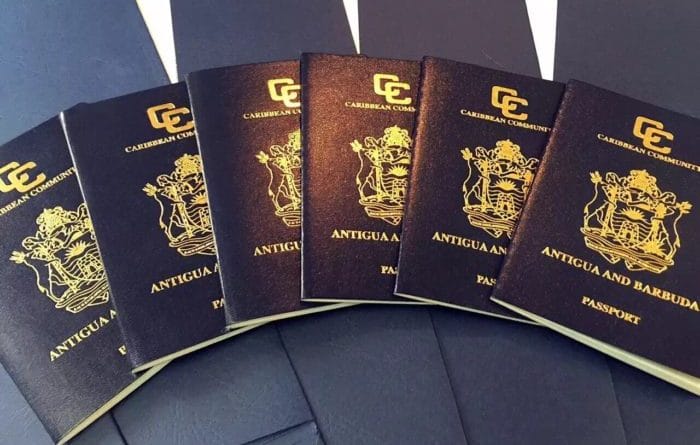
    Charles Peter David, a prominent Member of Parliament for the Town of St George, has been officially appointed as a local agent for Grenada’s Citizenship by Investment (CBI) programme, now rebranded as the Investment Migration Agency (IMA). This appointment, announced in the 14 November 2025 issue of the Government Gazette, grants David the authority to operate under the 2013 Citizenship by Investment Act, with his license number being #GCBI-LA-046. The notice explicitly states that David is authorised to conduct business in Grenada in accordance with the terms and conditions specified in the Act. David, who has previously served as a government minister in both the Tillman Thomas National Democratic Congress Administration and the Dr Keith Mitchell New National Party administration, recently launched his own political party, the Democratic People’s Movement. As a local CBI agent, David is tasked with assisting applicants in preparing and submitting their documents, managing their applications, and liaising with the CBI Unit throughout the process. The role of a local agent is crucial, as all applications must go through these intermediaries rather than being submitted directly to the government processing unit. Currently, there are over 20 licensed local CBI agents in Grenada. Since its inception 11 years ago, the CBI programme has generated significant revenue for the government and has granted citizenship to nearly 20,000 individuals from various countries.

  • Opposition members seek answers from ministers through Parliament

    Opposition members seek answers from ministers through Parliament

    In an upcoming parliamentary session scheduled for Wednesday, 18 November 2025, Opposition Leader Emmalin Pierre and Member of Parliament Clarice Modeste are poised to challenge the government on a range of critical issues. The session, set to take place in the Lower House or House of Representatives, will see Pierre and Modeste address pressing matters concerning public projects, cannabis policy, and agricultural support. Pierre’s inquiries will focus on the status of the newly established Cannabis Commission, the government’s stance on cannabis legalization and decriminalization, and the restructuring of the Marketing and National Importing Board (MNIB). Additionally, she will seek transparency regarding the distribution of funds from the Caribbean Catastrophe Risk Insurance Facility (CCRIF) to local farmers and fishermen. Meanwhile, Modeste will question Prime Minister Dickon Mitchell on the progress of the Waltham Land Expansion Project, the renovation status of the Victoria Hotel, and the development of key farm roads, including the Red Mud and Mt Cenis to Brothers routes. These questions, listed on the Order Paper, will precede ministerial statements, highlighting the opposition’s commitment to holding the government accountable for its policies and projects.

  • “Srefidenki moet Suriname opnieuw leren vooruitdenken”

    “Srefidenki moet Suriname opnieuw leren vooruitdenken”

    The Srefidenki Conference, inaugurated on Monday in the Congress Hall, marks the beginning of a three-day national dialogue aimed at restoring Suriname’s capacity for forward-thinking. President Jennifer Simons emphasized that the country is at a pivotal juncture, where not only immediate repairs are needed but also a collective vision to guide its future. Organized by Sync Dynamics with support from the Inter-American Development Bank (IDB), the conference is the first in a series of nationwide consultations set to continue until mid-2026. Its ambitious goals include formulating a shared Vision Suriname 2050, establishing a roadmap for 2026–2030, and laying the groundwork for a widely supported National Social Compact. President Simons highlighted that while Suriname is in a ‘repair phase,’ addressing urgent issues in education, economy, and public health, the real challenge lies in crafting a clear path toward a stable and prosperous society. The government seeks broad consensus, engaging with the private sector, producers, educational institutions, and civil society groups. Marvin Pollack, Director of Sync Dynamics, urged participants to set aside their titles and institutional interests, framing the conference as a national moment for citizens to collaboratively envision Suriname’s future. The IDB’s representative, Adriana La Valley, underscored Suriname’s unique potential, rooted in its diversity, heritage, and natural wealth, while stressing the importance of investing in human capital, innovation, and modern economic structures. The Srefidenki Conference serves as a test case for national unity and long-term planning, aiming to shift Suriname from crisis management to a culture of proactive thinking.

  • Bangladesh’s Ousted Prime Minister Sentenced to Death

    Bangladesh’s Ousted Prime Minister Sentenced to Death

    In a landmark verdict, Bangladesh’s former Prime Minister Sheikh Hasina has been sentenced to death by the International Crimes Tribunal (ICT) for her role in the violent suppression of student protests in 2024. The court found her guilty of crimes against humanity, including incitement and failure to prevent the deadly crackdown, which the United Nations estimates claimed up to 1,400 lives, primarily due to gunfire by security forces. Hasina, who has been living in exile in New Delhi, India, since being ousted in August 2024, denounced the verdict as “biased and politically motivated” in a statement released through a public relations firm. She also claimed she was denied a fair trial, stating, “I was given no fair chance to defend myself in court, nor even to have lawyers of my own choice represent me in absentia.” The ICT also sentenced former Home Affairs Minister Asaduzzaman Khan to death, while a former police chief received a five-year sentence after cooperating as a state witness. The court held Hasina accountable for inciting violence, issuing orders, and failing to take punitive measures against the perpetrators. Bangladesh’s interim government has requested her extradition from India, though New Delhi has yet to respond. The case has drawn international attention, raising questions about justice, political motivations, and the legacy of Hasina’s leadership.

  • Newly Appointed Police Minister Opts to Stay Out of Budna Case

    Newly Appointed Police Minister Opts to Stay Out of Budna Case

    In a significant development, Oscar Mira, the newly appointed Minister of Home Affairs, has announced his decision to refrain from intervening in the ongoing Joseph Budna investigation. Mira emphasized that he will leave all decisions to the Director of Public Prosecutions (DPP), Cheryl-Lynn Vidal, respecting the independence of the legal process. Speaking to Plus TV, Mira stated, ‘I will not interfere with the investigation or the DPP’s guidance. This matter is in her hands, and I trust her judgment.’

    Mira, who previously served as the National Defence Minister, assumed the role of Police Minister after his predecessor, Henry Charles Usher, declined the Home Affairs portfolio. The Budna case, which has been under intense public scrutiny for months, is one of the first major challenges Mira faces in his new position. The investigation was prompted by video footage that allegedly implicated the police department in Budna’s kidnapping.

    Despite the gravity of the case, Mira confirmed that he has not reviewed any related materials, including the controversial footage or investigation files. ‘I have not seen any footage or files. My role is to ensure the process remains unbiased and independent,’ he reiterated.

    Meanwhile, DPP Cheryl-Lynn Vidal expressed her dissatisfaction with the police investigation file submitted to her office, describing it as containing ‘less than nothing.’ Vidal told reporters on November 12 that the file lacked sufficient evidence to support arrests, citing limited and uncertain witness accounts. ‘I was expecting nothing, but what I received was even worse,’ she remarked, highlighting the challenges in pursuing charges at this stage.

    The Budna case continues to draw public attention, with calls for transparency and accountability growing louder. Mira’s decision to distance himself from the investigation underscores his commitment to upholding the integrity of the legal process.

  • STATEMENT: UWP calls for reinstatement of a birth certificate and photo ID in confirmation process

    STATEMENT: UWP calls for reinstatement of a birth certificate and photo ID in confirmation process

    The United Workers Party – Team Dominica has issued a pressing appeal to the Electoral Commission, urging the immediate withdrawal or reversal of SRO 39. The party advocates for the reinstatement of SRO 27 of 2025, which permits the use of a birth certificate alongside a photo ID for voter confirmation. This call comes in response to the potential disenfranchisement of thousands of Dominicans who either lack the IDs mandated by SRO 39 or face significant challenges in obtaining them. The party warns that the Commission’s oversight could lead to the removal of eligible voters from the electoral list, undermining the integrity of the democratic process. Additionally, the party highlights the logistical hardships faced by voters in remote villages such as Morne Prosper, San Sauveur, and Warner, where confirmation centers are absent. In the Roseau North Constituency, the largest in Dominica, only two centers are available, forcing communities to incur additional costs and inconvenience to confirm their voter status. To address these issues, the party proposes that enrollment officers rotate across constituencies during the confirmation period, ensuring accessibility and minimizing costs for voters. Furthermore, the party calls for the immediate resumption of new voter registration in alignment with Article 17 (1) of the Registration of Electors Act 2025, which mandates continuous registration. The United Workers Party emphasizes that the Commission’s failure to act promptly could severely damage the electoral process, preventing thousands of eligible Dominicans from exercising their right to vote. The party urges swift action to safeguard the nation’s democratic traditions and ensure the fairness of future elections.

  • Returning officer defends impartiality

    Returning officer defends impartiality

    Neil Campbell, the returning officer overseeing the Golden Isles by-election, has firmly defended his impartiality following a chaotic standoff over the handling of advance poll ballot boxes. The controversy erupted after Michael Pintard, leader of the Free National Movement (FNM), accused Campbell of political bias, citing his close personal ties to Prime Minister Philip ‘Brave’ Davis, whom Campbell refers to as his ‘adopted father.’ Campbell, who is responsible for supervising the vote count and ensuring legal compliance, dismissed these allegations as baseless, emphasizing that his professional conduct remains unaffected by personal relationships.

    Campbell, a native of Cat Island, highlighted his extensive experience in electoral processes, having served in numerous general, local government, and labor elections. He stressed that his connections span across party lines, noting that Pintard is his cousin and that he has known FNM candidate Brian Brown since childhood. ‘I call Mr. Davis my adopted father,’ Campbell stated, ‘but my professional actions are guided by my oath to serve all Bahamians impartially.’

    The dispute arose when FNM and Coalition of Independents (COI) supporters blocked the removal of ballot boxes, claiming officials had deviated from an agreed-upon transportation procedure. Parliamentary Commissioner Harrison Thompson intervened, asserting that the voting process had been orderly and lawful, with agents witnessing and signing off on every step. Thompson described the confrontation as ‘deeply regrettable’ and called for ‘sober judgment and responsible leadership.’

    Campbell revealed that the hostility has shaken senior civil servants, with some now reluctant to participate in future elections. Despite the tension, a compromise was reached to allow party agents to accompany the ballot box, ensuring transparency. Campbell’s steadfast defense of his integrity underscores the challenges of maintaining impartiality in politically charged environments.