分类: politics

  • Three-Way Showdown in Castries Central as Nominations Close

    Three-Way Showdown in Castries Central as Nominations Close

    The nomination process for the highly anticipated Castries Central constituency concluded this morning at the CSA Centre in Sans Souci, marking the official entry of three candidates into the upcoming general election. The contenders include Rosh Clarke of the United Workers Party (UWP), Richard Frederick of the Saint Lucia Labour Party (SLP), and independent candidate Stanley Felix. The event was marked by spirited displays of support and competing visions for the constituency’s future. Richard Frederick, the first to arrive, emphasized his dedication to eradicating poverty and improving the lives of constituents. ‘I’ve made significant sacrifices to ensure we address poverty,’ he told reporters, adding that his commitment has earned him widespread support. One of his supporters praised Frederick’s track record, citing his efforts to assist the needy and empower youth in the community. Shortly after Frederick’s departure, Stanley Felix arrived, coinciding with the UWP team’s entrance, creating a lively atmosphere outside the nomination center. Felix expressed confidence in his candidacy, stating, ‘My chances are as good as any of the candidates.’ He outlined plans to revitalize infrastructure, particularly in neglected neighboring communities, emphasizing the need for improved sidewalks and transportation. Rosh Clarke, the UWP candidate, presented a comprehensive vision centered on four key pillars: alleviating traffic congestion, expanding sporting opportunities, enhancing healthcare with a 24-hour clinic, and improving housing conditions. Despite the competitive atmosphere, moments of unity were observed as Clarke and Felix warmly greeted supporters of their opponents outside the venue.

  • Persad-Bissessar warns of CARICOM implosion amid row with Gonsalves

    Persad-Bissessar warns of CARICOM implosion amid row with Gonsalves

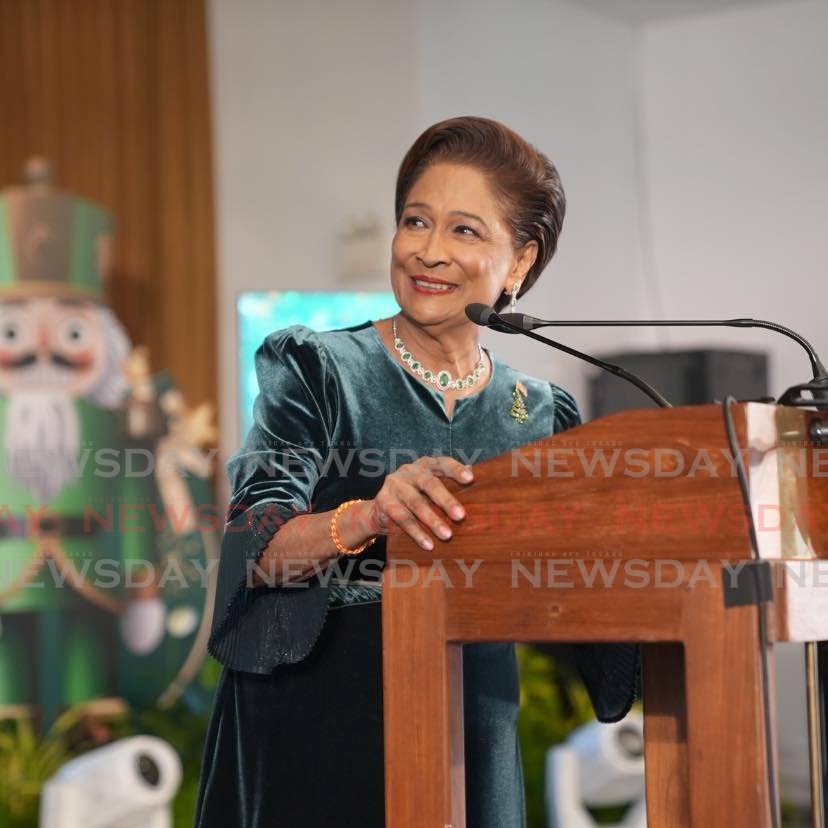
    Trinidad and Tobago’s Prime Minister Kamla Persad-Bissessar has issued a stark warning about the future of the Caribbean Community (CARICOM), stating that the regional bloc risks imploding if leaders continue to interfere in the domestic affairs of member states. Her comments came in response to allegations made by St Vincent and the Grenadines Prime Minister Ralph Gonsalves, who accused financiers of Trinidad’s ruling United National Congress (UNC) of funding the opposition New Democratic Party (NDP) ahead of the November 27 general elections in Kingstown. Gonsalves claimed that UNC operatives were actively involved in St Vincent, motivated by access to lands and economic opportunities. Persad-Bissessar vehemently denied the allegations, calling them baseless and challenging Gonsalves to provide evidence or cease what she described as ‘gaslighting’ his citizens. She also highlighted ongoing investigations into how members of Gonsalves’ family acquired luxury apartments in Trinidad, questioning the legality of the transactions. The controversy has exacerbated tensions between the two nations, with Trinidad’s Housing Minister Anil Roberts suggesting the matter be referred to the police. Gonsalves defended his family, asserting that they followed proper procedures and received no special treatment. Persad-Bissessar, however, broadened her critique, emphasizing that CARICOM’s credibility is at stake if leaders persist in meddling in each other’s politics. She stressed that the choice of leadership in any member state should be left to its people, warning that continued interference could lead to the bloc’s collapse.

  • UWP to host 10th town hall meeting in Roseau Central

    UWP to host 10th town hall meeting in Roseau Central

    The United Workers Party (UWP) is set to hold its 10th Town Hall Meeting today in Roseau Central, Dominica. The event will commence at 5:00 p.m. at the Public Service Union (PSU) Building on Valley Road. Glenroy “Soso” Cuffy, the Public Relations Officer of the UWP, emphasized the importance of the meeting during a recent Q-95 Radio broadcast, urging citizens to attend in large numbers. He highlighted that the gathering would serve as a platform for the party to present its development strategies for Dominica. Cuffy stressed the need for public participation, stating, “You need to turn out in large numbers to hear some of the things we have planned for Dominica and to hear how it is we are going to make sure things are happening.” He also addressed criticisms of the party’s inactivity, asserting that the UWP has already conducted nine similar meetings nationwide, engaging directly with citizens. The Roseau Central meeting is expected to be a significant event, with Cuffy expressing confidence in a strong turnout. Additionally, Cuffy encouraged the public to participate in the ongoing Voter Confirmation Process, emphasizing the importance of ensuring citizens’ right to vote. He remarked, “We need to support the movement of unity and we need to move forward expeditiously to get everybody confirmed and to have the government out.” Cuffy underscored the necessity of decisive action if elections are called, stating that Dominicans deserve a trustworthy government. He elaborated on the party’s vision, saying, “It is important that every Dominican should be impacted by the policies of a government going forward and to benefit from the country. This is why we talked about shared prosperity, we talked about the 10-pillar plan.” The Roseau Central Town Hall Meeting is part of the UWP’s broader effort to communicate its policies and vision to the nation.

  • Uruguay joins Trans-Pacific Partnership

    Uruguay joins Trans-Pacific Partnership

    Uruguay has successfully secured membership in the Comprehensive and Progressive Agreement for Trans-Pacific Partnership (CPTPP), following approval from key member nations including Australia, Brunei, Canada, Chile, Japan, Malaysia, Mexico, New Zealand, Peru, Singapore, the United Kingdom, and Vietnam. The announcement was made by Uruguay’s Ministry of Foreign Affairs on its official website. This milestone marks the culmination of efforts initiated under the leadership of former President Luis Lacalle Pou and carried forward by the current administration of President Yamandu Orsi. Foreign Minister Mario Lubetkin emphasized the significance of this achievement, stating, ‘The results are clear: work that transcends governments, in favor of Uruguay’s interests. We are opening opportunities.’ Lubetkin further highlighted that the CPTPP accounted for an average of nine percent of Uruguay’s total merchandise exports between 2022 and 2024, underscoring the economic importance of this partnership. Uruguay’s accession to the CPTPP is expected to enhance its trade relations and provide new avenues for economic growth.

  • China urges Japan to respect political basis of bilateral ties

    China urges Japan to respect political basis of bilateral ties

    Chinese Foreign Ministry Spokesperson Mao Ning has called on Japan to adhere to the four political documents established between the two nations, emphasizing the need for Tokyo to ‘immediately retract its erroneous comments and demonstrate its commitments to China through concrete actions.’ This statement comes amid growing concerns over Japan’s recent military policy shifts. Mao highlighted that Japan has consistently increased its defense budget for 13 consecutive years and revised its arms export policy, permitting the sale of lethal weapons like ‘Patriot’ missiles to the United States for the first time. Additionally, Tokyo is reportedly considering altering its long-standing principle of ‘not producing, possessing, or transporting nuclear weapons,’ potentially paving the way for nuclear weapon-sharing agreements. Mao reiterated that the post-war international order, rooted in documents such as the Cairo Declaration, the Potsdam Declaration, and Japan’s Act of Surrender, mandates the country’s complete demilitarization. She warned that any attempt by Japan to revert to militarism, abandon its peaceful development pledge, or disrupt the post-war order would face staunch opposition from the Chinese people and the international community, ultimately leading to failure. The remarks were made in response to Japanese Prime Minister Sanae Takaichi’s recent assertion in the Diet that a Chinese attack on Taiwan would constitute an ‘existential crisis’ for Japan, potentially triggering the mobilization of its Self-Defense Forces and intervention in the conflict.

  • Venezuela’s Nobel Peace Prize Winner Threatened With Arrest

    Venezuela’s Nobel Peace Prize Winner Threatened With Arrest

    In an unprecedented turn of events, María Corina Machado, Venezuela’s 2025 Nobel Peace Prize laureate, has been threatened with arrest by her own government. The Venezuelan authorities have declared that Machado will be considered a “fugitive” if she attempts to leave the country to receive her award in Oslo, Norway, on December 10. Tarik William Saab, a prominent Venezuelan politician and lawyer, has accused Machado of charges including “conspiracy, incitement of hatred, and terrorism.”

  • Israeli government and army support bill to execute Palestinians

    Israeli government and army support bill to execute Palestinians

    The Israeli government and military have thrown their support behind a contentious legislative proposal that would permit the execution of Palestinian prisoners convicted of terrorism and fatal attacks. This development, reported by Yedioth Ahronoth, has sparked widespread criticism across the region. The security cabinet convened last night to discuss the initiative, which has already passed its first reading in the Knesset (Israeli Parliament). During the meeting, Shin Bet security service chief David Zini lauded the legislation as a ‘highly effective deterrent.’ A representative of the Armed Forces stated that ‘there is no obstacle to the law,’ while Government Secretary Yossi Fox emphasized the need to consider whether discretionary power should be introduced and if the penalty should be mandatory. National Security Minister Itamar Ben-Gvir, known for his expansionist and anti-Arab views, supported this stance. Meanwhile, Palestinian groups and NGOs have vehemently condemned the bill’s initial approval, decrying it as a severe violation of human rights.

  • Russian security prevents attack on Krasnodar railways

    Russian security prevents attack on Krasnodar railways

    The Federal Security Service (FSB) of Russia has announced the prevention of a planned terrorist attack in Krasnodar City, allegedly orchestrated by Ukrainian special services. According to the FSB’s Directorate for the Krasnodar region, the sabotage aimed to target the region’s transport infrastructure, specifically intending to disrupt the delivery of military equipment and weapons to the area of Russia’s special military operation. The FSB revealed that the plot involved the detonation of railway tracks using an improvised explosive device (IED), which would have severely impacted logistical operations. The suspect, identified as a Ukrainian citizen residing in the Krasnodar region, was reportedly recruited through a banned social network by an agent of Ukraine’s Security Service (SBU). The individual has since been arrested, and a criminal case has been initiated. This incident underscores the escalating tensions between Russia and Ukraine, with both sides accusing each other of engaging in covert operations to destabilize the other’s military and civilian infrastructure.

  • Russia does not know whether Ukraine accepted US peace plan

    Russia does not know whether Ukraine accepted US peace plan

    Moscow has yet to receive formal notification regarding Ukrainian President Volodymyr Zelensky’s agreement to engage in negotiations over the peace plan proposed by former US President Donald Trump, according to a recent statement. The Kremlin emphasized that there is no official confirmation of reports circulating in foreign media about Kiev’s readiness to discuss the plan’s specifics, ongoing consultations, or potential signing dates. These reports have sparked widespread speculation about the future of the conflict between Ukraine and Russia.

    In a related development, Zelensky took to his Telegram channel last night to address the matter. He revealed that during a meeting with US representatives on Thursday, he outlined Ukraine’s key principles for resolving the conflict. Zelensky also expressed his intention to hold discussions with Trump in the near future, signaling a potential diplomatic breakthrough.

    Earlier this week, several US media outlets disclosed that Russia and the United States had conducted secret consultations to develop a 28-point peace plan aimed at ending the hostilities between Kiev and Moscow. The draft reportedly includes controversial provisions, such as reducing Ukraine’s military forces by half and withdrawing from contested territories in Donbas. In exchange, Ukraine would receive security guarantees from Washington. Additionally, the plan suggests formal recognition of Crimea and Donbas as Russian territories by the US and other nations, though Ukraine would not be compelled to accept this recognition.

    A senior US official confirmed to NBC News on Wednesday that Trump has endorsed the plan. Meanwhile, Axios reported that the White House has characterized the document as ‘open,’ inviting input from Kiev and its European allies to ensure their perspectives are incorporated. This approach underscores the complexity of the negotiations and the challenges of reaching a consensus among all stakeholders.

  • DRC and UAE reaffirm commitment to deepening cooperation

    DRC and UAE reaffirm commitment to deepening cooperation

    In a significant diplomatic engagement, Congolese President Felix Tshisekedi met with UAE Foreign Minister Sheikh Shakhboot Nahyan Al Nahyan on November 16. The meeting, detailed in a document published by the DRC Presidency on its X account, highlighted the robust and enduring partnership between the Democratic Republic of Congo (DRC) and the United Arab Emirates (UAE). Both parties reviewed their bilateral relations and discussed regional issues of mutual interest, underscoring the steady progress in their cooperation over recent years. The UAE Foreign Minister expressed strong support for the DRC’s presidency of the International Conference of the Great Lakes Region (ICGLR), a move seen as pivotal for regional stability. Additionally, the UAE lauded the signing of the Doha Peace Framework Agreement between the DRC Government and the Congo River Alliance—March 23 Movement (AFC/M23), describing it as a crucial step toward national reconciliation and the fulfillment of the Congolese people’s aspirations for security, prosperity, and lasting peace. The two nations agreed to further enhance and expand their collaborative efforts, signaling a commitment to deepening their strategic partnership.