分类: politics

  • Dealers Cry Foul Over Cuts to Long-Standing Fuel Margins

    Dealers Cry Foul Over Cuts to Long-Standing Fuel Margins

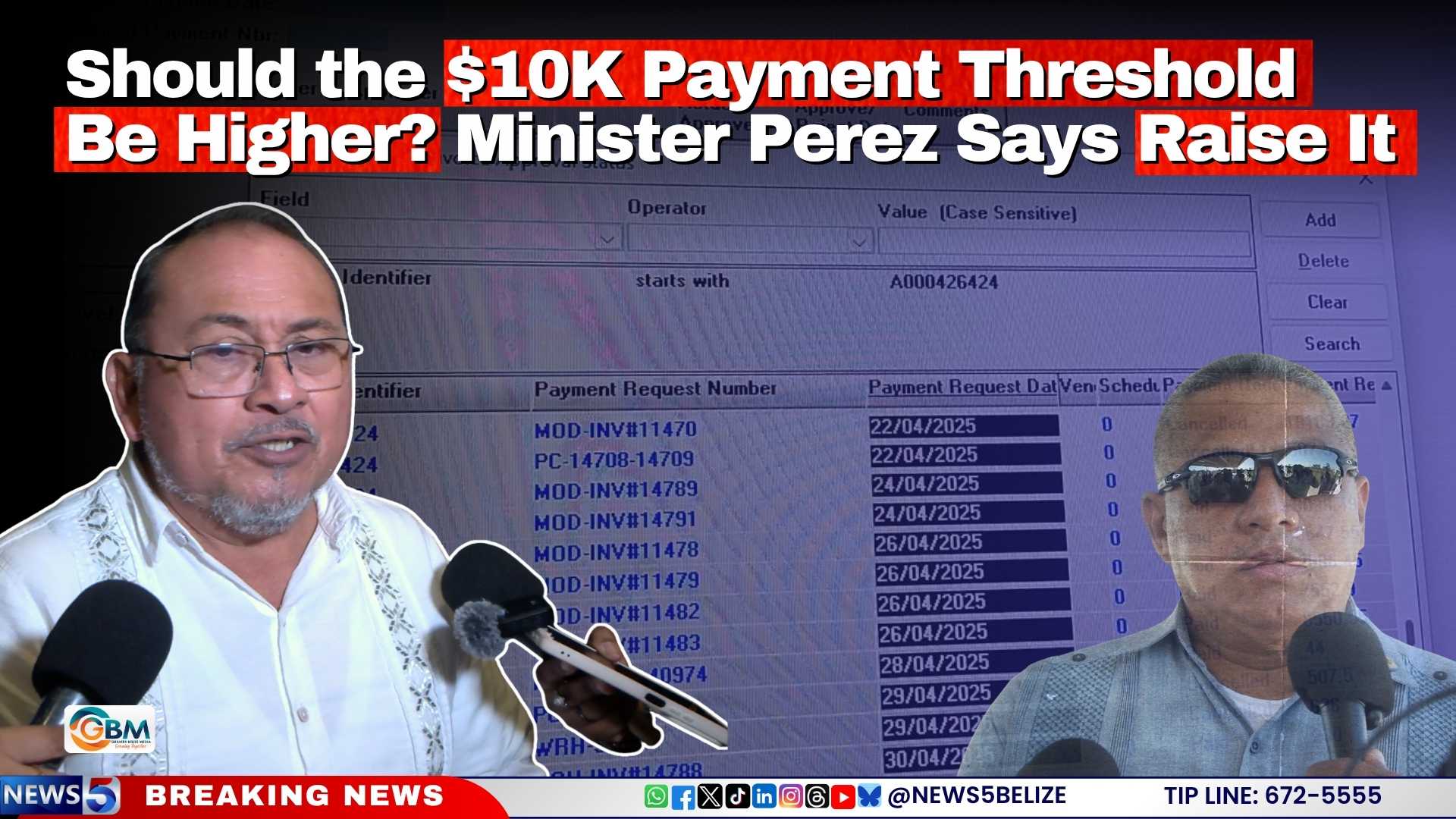
    Belize is facing growing political and economic unrest in May 2026, centered on a controversial government decision to slash long-standing fuel dealer margins that have remained unchanged for nearly 20 years. Fuel retailers across the country are crying foul over the unilateral adjustment, arguing that the government violated a 2004 bilateral agreement that required written mutual consent for any changes to the margin calculation formula.

    Dealers say they were given no advance warning or opportunity to consult on the cuts, and now warn that the reduced margins will severely cut into their operational profits, threatening the viability of many small and medium-sized retail businesses. Some dealers have even threatened to go on strike to protest the policy, raising fears of potential fuel supply disruptions across the country.

    In response to the outcry, Prime Minister John Briceño, head of the ruling administration, defended the policy, stating he had no knowledge of the 2004 agreement requiring joint consent for margin changes. Briceño explained that the 2004 framework set margins as a percentage of fuel costs, meaning margins rose automatically as global fuel prices climbed – costs that were ultimately passed directly to consumers already struggling with price hikes. The new policy replaces the variable percentage model with a flat-rate margin, paired with a corresponding cut in government fuel tax, as a joint effort to cap soaring fuel prices for ordinary households. Briceño emphasized that all stakeholders, including dealers and the government, must share the burden to keep price increases in check, and confirmed that the administration remains open to dialogue with discontented dealers, saying “we are always ready to listen, and if they want to meet, we are prepared to meet.”

    The fuel margin dispute has dovetailed with wider opposition criticism of the Briceño administration’s handling of the ongoing cost of living crisis. At a press conference held this week by the opposition United Democratic Party (UDP), Mesopotamia Area Representative Lee Mark Chang launched a scathing attack on government policy. Chang argued that while the administration touts a relatively low national inflation rate of 1.9% as of March 2026, working-class Belizean families are facing crippling price hikes across essential goods.

    Chang highlighted that the Belizean public feels the impact of inflation far more acutely than official statistics suggest, noting that the Belize Kriol phrase “Wih dalla nuh the stretch as far as before” (our dollar doesn’t go as far as it used to) captures the everyday reality of household budget stress. Data from the country’s Statistical Institute of Belize (SIB) confirms that the biggest drivers of domestic inflation are rising fuel, food, and recently increased electricity costs – all essential expenses that hit low-income and working households the hardest. Chang emphasized that inflation is not an abstract economic metric: it translates directly to higher grocery bills, more expensive transportation, and steeper utility payments that put unbearable financial pressure on working families.

    Beyond rising prices, Chang also drew attention to the country’s growing national debt, calculating that every Belizean, including newborn children, currently carries more than $11,000 in individual national debt liability. The UDP has pledged to continue holding the Briceño administration accountable for its economic policies and will continue to challenge measures that have driven up living costs for ordinary Belizeans.

    This report is a transcribed adaptation of an evening television newscast from Belize, with Kriol language phrases transcribed using standard spelling conventions.

  • New CEO Takes Charge at Belize Central Prison as Era Ends

    New CEO Takes Charge at Belize Central Prison as Era Ends

    A key leadership transition is underway at Belize’s only maximum-security correctional facility, the Belize Central Prison, as the Board of Directors of the Kolbe Foundation — the non-profit organization that manages the institution — has appointed George Gomez as its new Chief Executive Officer.

    Gomez takes over the role from outgoing CEO Virgilio Murillo, who has dedicated 24 years of his career to transforming the country’s correctional system. In his first public remarks following the appointment, Gomez reaffirmed his commitment to steady, forward-looking leadership at the facility. He highlighted that his top priorities will be collaborating closely with the prison’s entire staff team and expanding evidence-based rehabilitation programming that supports incarcerated people to build stable, law-abiding lives after their release.

    Both Belize’s Ministry of Home Affairs and Enterprise and the Kolbe Foundation Board issued public statements praising Murillo’s decades of exceptional service. Under his transformative leadership, the Belize Central Prison shifted dramatically from its historical focus on purely punitive incarceration to align fully with the Kolbe Foundation’s core mission and vision of restorative justice. Murillo championed the expansion of accessible education, accredited vocational training, and mental health counseling programs, all designed to cut recidivism rates and give inmates the tools they need to successfully reintegrate into local communities post-release.

    Far from stepping away entirely from the institution, Murillo will stay connected to the Kolbe Foundation as a Special Advisor to the Board of Directors, bringing his decades of institutional knowledge to support Gomez and the leadership team during the transition.

    This report is adapted from a transcribed evening television news broadcast, with all Kriol-language commentary rendered using a standardized spelling system for the online publication.

  • Jackson presents credentials as SVG’s ambassador to Cuba

    Jackson presents credentials as SVG’s ambassador to Cuba

    In a meaningful diplomatic milestone that closes a 20-year personal and professional circle, Angella Jackson has officially presented her credentials as Saint Vincent and the Grenadines’ (SVG) new ambassador to Cuba, marking a fresh chapter in the longstanding bilateral ties between the two Caribbean nations.

    Jackson, a professionally trained accountant who earned her higher education in Cuba, assumed her post as Kingstown’s top diplomatic representative in Havana starting March 1. Her path to the ambassadorial role traces back to 2007, when she graduated from Cuba’s University of Ciego de Avila with a bachelor’s degree in Accounting and Finance. Reflecting on the credential presentation ceremony, Jackson called the formal procedure “a wonderful experience for me”, noting the full-circle nature of her return to the island that shaped her early career.

    “I consider Cuba my second home, as I spent six years of my life here earning my bachelor’s degree in accounts and finance. It was, indeed, a heartwarming experience that 20-plus years later I am now here to serve and represent my country,” Jackson shared in comments after the official event.

    Diplomatic preparations for Jackson’s appointment began in mid-May, when she submitted a copy of her credentials to Cuban Vice Minister of Foreign Affairs Josefina Vidal Ferreiro in Havana on May 12. During that meeting, the two officials held cordial discussions focused on the future of bilateral cooperation. Jackson also recalled that SVG and Cuba first established formal diplomatic relations back in 1992 under SVG’s then New Democratic Party (NDP) administration.

    “And we have come full circle. We are back, with me representing our government and, specifically, our people. So it’s indeed a pleasure and an honour,” she added.

    The formal credential presentation to Cuban President Miguel Díaz-Canel took place on Thursday, May 14, 2026, where Jackson joined other new heads of diplomatic missions from across the globe at the ceremony held in Havana. A photo from the event captures (from left to right) Cuban Acting Minister of Foreign Affairs Gerardo Peñalver Portal, President Miguel Díaz-Canel, Ambassador Angella Jackson, and her two sons Afari Samuel and Jahfari Samuel at the official gathering.

    Jackson highlighted that she was received with full diplomatic honors during her visit, including a formal escort to Havana’s iconic Plaza de La Revolucion ahead of the ceremony. Following the official submission of her credentials to President Díaz-Canel, the two held a short, productive discussion. In the talks, President Díaz-Canel extended congratulations to SVG Prime Minister Godwin Friday on his recent election to office.

    The Cuban president also expressed gratitude for SVG’s consistent backing of Cuba in multilateral global forums, particularly SVG’s ongoing calls to end the decades-long economic blockade imposed on Cuba. For her part, Jackson thanked the Cuban leader for his country’s longstanding support to SVG over the decades. She conveyed warm personal greetings from Prime Minister Friday and SVG Minister of Foreign Affairs, Foreign Trade, Foreign Investment and Diaspora Affairs Dwight Fitzgerald Bramble, and reaffirmed SVG’s commitment to maintaining its solid partnership with Havana.

    Jackson’s appointment to the Havana ambassadorial post was first announced publicly by Bramble during a press statement in Kingstown on January 22, as part of a broader round of new appointments to heads of missions and consular posts around the world.

  • PM Briceno Rejects Corruption Claims in Immigration Funds Probe

    PM Briceno Rejects Corruption Claims in Immigration Funds Probe

    Scheduled for publication on May 20, 2026, this report unpacks a developing public controversy over missing public funds in Belize’s Immigration Department, where top government officials have pushed back against opposition allegations of systemic corruption. Not long after Immigration Minister Kareem Musa presented an initial briefing on the missing funds to Prime Minister John Briceño and the national Cabinet, Briceño offered a clear public rebuke of claims that high-level corruption underpins the financial irregularities, framing the incident as an isolated case of employee malfeasance instead.

    In comments following the closed-door Cabinet briefing, Briceño emphasized that the irregularities stemmed from alleged criminal conduct by a single staff member, rather than institutional corruption. “I don’t think that is a case of corruption. That is a case of theft,” the prime minister stated, noting that he could not disclose full details of the ongoing investigation. He outlined the alleged scheme, explaining that the employee is accused of exploiting gaps in the department’s administrative systems: the worker reportedly issued receipts for fees paid by immigration applicants, then canceled the transactions in the official system and pocketed the funds.

    The controversy escalated after opposition figures pushed back against the government’s framing, with opposition leader Paul Lopez repeating a common critique that institutional graft starts at the top – a claim Briceño declined to engage with directly, saying only that he would refrain from public confrontation with the opposition leader.

    As the investigation progresses, the Ministry of Immigration has already ordered a comprehensive independent audit to trace the missing funds and identify any weaknesses in the department’s financial oversight protocols that allowed the alleged scheme to proceed. No further updates on the total value of missing funds or potential charges against the accused employee have been released to the public, as officials prioritize completing the investigative process before making additional announcements.

    This report is adapted from a transcribed transcript of an evening television news broadcast.

  • Government Moves Toward Establishing Public Sex Offender Database

    Government Moves Toward Establishing Public Sex Offender Database

    In a significant policy shift aimed at boosting community child protection, Belize’s top government body has thrown its full weight behind a proposal to turn the country’s existing private sex offender registry into a publicly accessible database. The initiative, led by Special Envoy for Families and Children Rossana Briceño, has cleared a key approval hurdle after winning unanimous support from Cabinet this week. Prime Minister John Briceño confirmed that the proposal is no longer in the preliminary planning stage: the Office of the Attorney General has already begun work to put the public registry into effect.

    Speaking to reporters following Tuesday’s Cabinet session, the Prime Minister framed the move as a long-overdue measure that aligns with growing public demand for greater transparency around community safety. “I think it is something that the time has come,” he said, noting that while a registry has existed for years, it has remained entirely restricted to law enforcement and internal government use. When the proposal was brought to the full Cabinet for discussion, every member voiced immediate backing for the Special Envoy’s push. “On a serious note, it is something that is necessary,” the Prime Minister added, confirming that technical work on reporting frameworks for the new public system is already underway.

    Currently, the registry is maintained jointly by the Ministry of Home Affairs and the Belize Police Department, but its records are not available to ordinary residents. Prime Minister Briceño explained that public access will add a critical extra layer of protection for children across the country. If residents are able to check whether a known sex offender lives in their neighborhood, they will be able to take extra precautions when they encounter that individual in public spaces such as local corner stores. This proactive transparency, he argued, will not only better protect vulnerable children and families but also strengthen accountability for convicted offenders.

    This development marks a major milestone in ongoing efforts to strengthen child protection policies in Belize, responding to longstanding calls from child advocacy groups and community members for greater public access to information that impacts local safety.

  • Guyana records 63.9% percent ICAO compliance

    Guyana records 63.9% percent ICAO compliance

    On Wednesday, May 20, 2026, senior aviation officials from Guyana outlined the country’s plans to lift its 63.4 percent overall score from the 2024 International Civil Aviation Organization (ICAO) audit, a result that already stood as the highest rating earned by any nation in the Latin American and Caribbean (LATAM) region. While Guyana’s leadership celebrated the “comfortable pass” that outperformed all neighboring states in the region, officials acknowledged that a last-minute legislative update held back the country’s final result in the rigorous international assessment.

    Aviation Minister Deodat Indar explained that the Guyanese government had completed a full overhaul of the national Civil Aviation Act just weeks before the ICAO audit team arrived. The new legislation brought sweeping changes to the country’s aviation regulatory framework, but the tight timeline between the bill’s passage and the audit left insufficient time to demonstrate full on-the-ground implementation of the new rules. This gap translated to a lower than expected score in the regulatory implementation segment of the audit, even as the country posted strong results across most other evaluated areas.

    Notably, Guyana earned scores above 89 percent in the standalone regulatory framework assessment, and secured an 80.14 percent rating in the aviation security category, outperforming many regional peers across multiple key metrics. Egbert Field, Director General of the Guyana Civil Aviation Authority (GCAA) and retired Lieutenant Colonel, added further context to the score dip, noting that aviation inspectors were still completing on-the-job training aligned with the new regulatory requirements when the audit took place.

    Despite the lower overall score, Guyana’s aviation leadership has expressed unwavering confidence that targeted improvements will raise the national rating significantly. To formalize this progress, the country has taken an unusual step: it has voluntarily called for an ICAO Coordinated Validation Mission (ICVM) to conduct a follow-up inspection in 2027, a proactive move that few sovereign nations initiate. A dedicated GCAA officer has been assigned to oversee a structured corrective action plan, with progress updates delivered to senior leadership every two weeks to keep the process on track.

    The 2024 ICAO audit evaluated participating member states across eight core thematic areas, covering more than 700 individual assessment criteria. Key evaluation domains included national aviation legislation, regulatory frameworks, enforcement mechanisms, record-keeping systems, personnel competency, and operator certification, creating a comprehensive benchmark for global aviation safety and governance.

  • Political Race Accelerates Ahead of 2027 Municipal Vote

    Political Race Accelerates Ahead of 2027 Municipal Vote

    As the 2027 Belizean municipal elections scheduled for March draw nearer, the contest between the country’s two leading political parties has entered a more urgent phase, with one side moving early to lock in endorsements and the other preparing a deliberate, strategic launch of its candidate slates.

    The center-left People’s United Party (PUP), led by incumbent Prime Minister John Briceño, has already begun formalizing its electoral lineup. Briceño confirmed Monday following a national executive committee meeting that the party will fully endorse the sitting Orange Walk Town Council, which has earned high marks for its performance in office. No internal convention will be held there, as the party sees no need to challenge the successful incumbent team.

    The most closely watched contest unfolding ahead of the vote is in Belize City, the country’s former capital, where an open PUP mayoral nomination has drawn three interested candidates. Current Deputy Mayor Eluide Miller has already secured the public backing of sitting Mayor Bernard Wagner, while two other prominent local figures – former Deputy Mayor Allan Pollard and City Administrator Candice Pitts – have also publicly signaled their interest in seeking the party’s nomination. A PUP internal convention will be held in the city to select the final candidate.

    Briceño downplayed suggestions of intraparty tension around the Belize City contest, noting that all potential candidates are qualified local leaders. “Whichever one was to emerge as the next mayoral candidate, I think Belize City is going to be in good hands,” he told reporters.

    Meanwhile, the center-right United Democratic Party (UDP) is taking a more gradual approach, declining to announce its full candidate slates for the 2027 vote for the time being. UDP Chairlady Sheena Pitts framed the party’s slow pace as a deliberate strategic choice, noting that the party plans to “strike when the iron is hot” once all candidate vetting and preparations are complete.

    “In this press conference did you not realize that there is a foreshadowing. But my response is that the UDP is gearing up and we are ready and the names are being floated around. However we are a party that strikes when the iron is hot. So as much as I want you to poke me and get me to act when you are ready. We will do so after we have all our ducks in a row and we are able to do so strategically, in each municipality,” Pitts stated in her response to PUP’s early announcement.

    In a reveal of the UDP’s electoral priorities, the party also confirmed that boosting youth representation across all municipal candidate slates will be a core focus as it finalizes its lineup in the coming months.

    This report is adapted from a transcribed evening television broadcast from Belize, originally published online in May 2026, ten months ahead of the scheduled municipal voting.

  • Voter Fraud Claims Rock San Ignacio, Santa Elena Ahead of Elections

    Voter Fraud Claims Rock San Ignacio, Santa Elena Ahead of Elections

    As the 2026 Belize municipal election approaches, explosive allegations of widespread voter registration fraud have thrown the twin municipalities of San Ignacio and Santa Elena into political turmoil, with sitting Mayor Earl Trapp leading calls for urgent oversight from national election authorities. The long-serving incumbent, who is currently campaigning for his fifth consecutive term in office, has formally raised alarms over suspicious voting rolls in the region, bringing the dispute before the Magistrate’s Court even as campaigning enters its final stretch.

    Trapp, who won all three of the Twin Towns’ polling districts — numbered 72, 73 and 76 — during the 2024 municipal election, highlighted a deeply anomalous jump in registered voters just 12 months later, during the 2025 national general election. According to his analysis, most neighboring polling areas saw steady, predictable growth in voter numbers: District 72 recorded a 15% increase, which independent political analysts and election observers have confirmed falls within normal demographic and registration trends, while District 76 saw a more modest 9% uptick. By sharp contrast, District 73 saw an unprecedented 65% expansion of its voter rolls, adding more than 1,056 new registered voters in just 12 months — a jump that Trapp calls statistically impossible under normal circumstances.

    To illustrate the scale of the alleged fraud, Trapp shared a striking example of fraudulent registration: a single two-bedroom residential home on Orion Street had 18 new voters added to its roll ahead of the January 2024 registration deadline, with all 18 individuals carrying 15 different surnames, most of whom were listed as teenagers and young adults with no established connection to the address. During the official voter transfer window the following July and August, an additional 16 voters were transferred to that same single residential address, further deepening suspicions of organized, fraudulent voter stacking.

    With only months remaining until voters head to the polls, Mayor Trapp has publicly called on the national Elections and Boundaries Department to ramp up vigilance, conduct full audits of suspicious voter registrations, and crack down on any illegal activity that could undermine the integrity of the upcoming vote. Trapp’s allegations have already triggered formal legal action, with the dispute now pending before the Magistrate’s Court, marking one of the most high-stakes election integrity controversies in Belize ahead of the 2026 municipal contests.

  • Abi Mai Facing Double Health Battle, Knee and Back Issues

    Abi Mai Facing Double Health Battle, Knee and Back Issues

    Six months after stepping down from his cabinet post as Belize’s Minister of Agriculture, Jose Abi Mai remains sidelined by concurrent chronic knee and back issues, with no clear timeline for his return to government, Prime Minister John Briceño confirmed in a recent public update.

    Briceño shared details of Mai’s care plan, explaining that medical providers opted to prioritize knee surgery first to address his mobility impairment. For weeks before the procedure, Mai had been forced to walk with a distorted sideways gait due to unmanaged knee pain. Doctors determined that correcting the spinal issue first would have little benefit as long as Mai’s walking pattern remained compromised, Briceño noted.

    “Unless you are a trained medical professional, it is hard to second-guess the clinical judgment,” Briceño told reporters, adding that spinal surgery carries well-documented risks that have made both clinicians and Mai cautious about moving forward with the back procedure immediately after knee recovery.

    When pressed by reporters on when the former minister might rejoin the national cabinet, Briceño said any decision on a potential return will be made at a later date, dependent entirely on Mai’s recovery progress. This update comes half a year after Mai formally resigned his ministerial position to focus on addressing his long-standing health concerns.

    This report is adapted from a transcript of a televised evening news broadcast from the source outlet.

  • The Haitian Gov is toughening its response against gangs.

    The Haitian Gov is toughening its response against gangs.

    In a decisive step to address the country’s long-running gang violence crisis, Haitian Prime Minister Alix Didier Fils-Aimé gathered top security leadership on May 20, 2026, to ramp up the government’s crackdown on armed groups that have seized swathes of national territory.

    The closed-door meeting at the Prime Minister’s Office brought together the highest-ranking command of the Haitian National Police (PNH), the High Command of the Armed Forces of Haiti (FAd’H), Defense Minister Mario Andresol, and leadership of the specialized Gang Suppression Force (GSF), alongside all frontline operational commanders deployed across conflict zones. What started as a one-off security briefing has now become a recurring weekly check-in, with the government formalizing a permanent mechanism held every Wednesday to assess evolving security conditions, coordinate cross-force operations, and refine tactical plans for joint intervention.

    At the core of the gathering was a review of Haiti’s deteriorating national security landscape, and a finalization of aggressive new offensive measures designed to accelerate the recapture of all areas held by armed criminal groups. Following the meeting, the Prime Minister’s office announced that the Haitian government would enact a sustained nationwide security deployment across every region of the country.

    Under the new plan, counter-gang operations led by the PNH, with critical backing from the FAd’H and GSF, will be immediately expanded in scale and intensity. These operations will continue around the clock without interruption until full state authority is reestablished in every territory currently controlled by armed gangs.

    The government also formalized a strict zero-tolerance policy that applies not only to armed gang members and the groups classified as terrorist entities, but also to their supporting networks, logistical suppliers, financial backers, and any individual who directly or indirectly enables the ongoing climate of insecurity.

    In an official statement released after the meeting, the Prime Minister’s office laid out three non-negotiable commitments from the government: no territory held by gangs will be written off as lost, no acts of complicity with criminal groups will be overlooked within state ranks, and no illicit financing for gangs will escape legal punishment.

    “The State is standing firm, the response is underway, the Republic will triumph, and order will be restored,” the statement read, marking a clear show of resolve from the Haitian administration as it launches one of its most ambitious counter-gang campaigns in recent history.