分类: politics

  • Chilean parliamentarians condemn invasion of Venezuela

    Chilean parliamentarians condemn invasion of Venezuela

    Prominent Latin American senators have launched vehement condemnations against what they characterize as unlawful U.S. aggression targeting Venezuela, framing recent statements from American officials as endorsements of international crimes driven by resource exploitation.

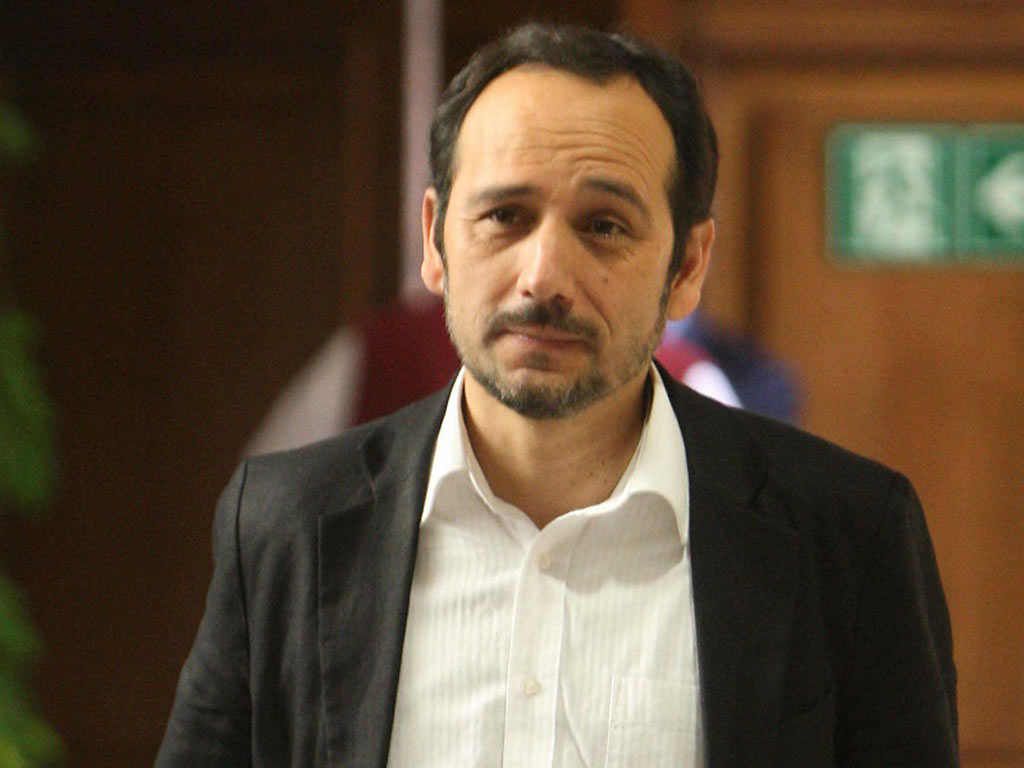
    Senator Daniel Nunez issued a forceful declaration via social media, asserting that military invasion and the abduction of a head of state constitute grave breaches of international law. “Invading a sovereign nation and kidnapping both the president and his wife represent egregious international crimes,” Nunez stated. “These actions serve a singular purpose: to seize control over Venezuela’s oil reserves once again.”

    The parliamentarian further amplified concerns regarding provocative statements emanating from former U.S. President Donald Trump and Secretary of State Marco Rubio directed at Cuba, underscoring a pattern of hemispheric interventionism. Nunez called for global solidarity, emphasizing that “the international community must vocally defend every nation’s inherent right to self-determination. I express my complete solidarity with Cuba and its revolutionary legacy.”

    Echoing these sentiments, legislator and Senator-elect Karol Cariola characterized U.S. military posturing toward Venezuela as flagrant violations of both national sovereignty and established international legal frameworks. Cariola articulated a skepticism toward Washington’s professed motives, stating, “The primary interest for Trump and his administration is not the promotion of democracy—it is the control of petroleum resources. This objective justifies the commission of any atrocity in their view.”

    Adding to the chorus of criticism, legislator Luis Cuello referenced concerning endorsements from Chile’s President-elect Jose Antonio Kast, who has openly supported aggressive U.S. maneuvers against Venezuela. This alignment, according to Cuello, illustrates a dangerous regional divide regarding the principles of non-intervention and national sovereignty.
  • Restitution, readiness, and renewal: navigating expectations in a new political era

    Restitution, readiness, and renewal: navigating expectations in a new political era

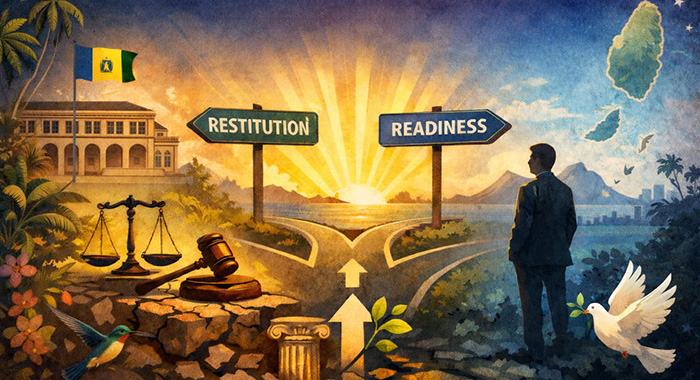
    The historic transfer of power in St. Vincent and the Grenadines, ending 25 years of Unity Labour Party governance, has unleashed profound emotional responses among citizens who experienced marginalization during that era. Supporters of the New Democratic Party—particularly those who were visibly aligned with the opposition—frequently encountered tangible professional limitations, stalled career trajectories, and deferred aspirations throughout the previous administration.

    This political shift has naturally generated powerful expectations of moral reckoning and restitution among previously excluded groups. However, while acknowledging the legitimacy of these grievances, the transition presents complex challenges that transcend mere political allegiance. Democratic restitution must not be conflated with entitlement, nor should political change be expected to reverse the irreversible passage of time.

    The fundamental dilemma emerges from concurrent developments: while individuals faced political constraints, both the nation and global landscape underwent radical transformation. Over the past quarter-century, economic structures evolved, technological advancements revolutionized industries, professional standards escalated, and governance mechanisms grew increasingly sophisticated. Qualifications that were once adequate may now be insufficient, while skills that were previously competitive have potentially become obsolete.

    This reality constitutes not a judgment on individual character or loyalty, but rather recognition of structural evolution. Political discrimination may explain historical stagnation but does not automatically confer preparedness for senior responsibilities in today’s dramatically altered environment. Ignoring this discrepancy risks both personal disappointment and national underperformance.

    At the individual level, this transition demands rigorous self-assessment: evaluating maintained skills, identifying knowledge gaps, and pursuing necessary training or certification. For some, this may require retraining, professional development, or even pivoting to related fields—a potentially frustrating process given the circumstances that necessitated it.

    Patience represents not passive acceptance but strategic positioning. Investing in skills development and professional growth constitutes preparation for sustainable advancement rather than abandonment of justice. Short-term appointments prioritizing political loyalty over competence may yield temporary satisfaction but ultimately weaken institutions and undermine meaningful progress.

    Nationally, the new government must resist merely inverting previous patronage patterns. Substituting one form of political favoritism for another deepens societal divisions rather than healing them. Genuine restitution involves constructing fair, transparent, and merit-based systems that ensure future generations are neither punished nor rewarded solely based on political affiliation.

    This moment invites collective reflection toward national renewal grounded in competence, integrity, and adaptability. While acknowledging past injustices, the future necessitates preparedness. The path forward—for both individuals and the nation—lies in balancing justice with realism, creating space for healing and inclusion while maintaining commitment to standards and excellence.

    Through measured patience, realistic expectations, and deliberate self-improvement, those once excluded can position themselves not merely as beneficiaries of political change but as meaningful contributors to it. This approach enables the country to transcend cycles of grievance and entitlement toward a more mature democratic culture where opportunity expands based on capability rather than political connections.

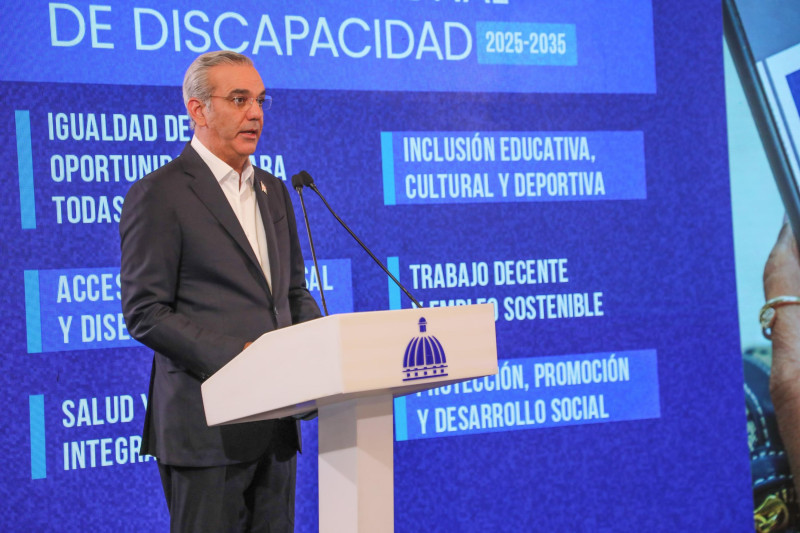
  • Abinader: The Dominican Republic is willing to help restore democracy, peace, and harmony in Venezuela

    Abinader: The Dominican Republic is willing to help restore democracy, peace, and harmony in Venezuela

    SANTO DOMINGO – Dominican President Luis Abinader has publicly commented on the dramatic apprehension of Venezuelan leader Nicolás Maduro by United States forces. The operation, which resulted in Maduro and his wife Cilia Flores being taken into custody in New York on charges encompassing drug trafficking and terrorism, prompted an official response from the Caribbean nation.

    Through an official statement disseminated on social media platforms, President Abinader confirmed that his government is monitoring the situation with keen interest. He contextualized the Dominican Republic’s position by referencing its longstanding diplomatic stance, which has consistently rejected the legitimacy of Maduro’s presidency following the contentious July 2024 elections.

    Abinader highlighted the nation’s prior diplomatic efforts, specifically the promotion of the Santo Domingo Declaration in August 2024. This initiative was championed by the Dominican government to advocate for the unequivocal respect of the electoral will expressed by the Venezuelan populace.

    Stressing the profound and historic bonds of solidarity between the Dominican and Venezuelan peoples, the president articulated a firm commitment to facilitating a peaceful democratic transition. “We reiterate our readiness to collaborate in the restoration of democracy, peace, and national harmony in Venezuela,” Abinader declared. He concluded with a powerful affirmation of his nation’s principles: “The Dominican Republic will always stand on the side of democracy. Wherever, whenever, and before whomever.”

    The capture of the Venezuelan head of state marks a significant escalation in international relations, placing the Caribbean nation in a pivotal role as a regional advocate for democratic governance.

  • COMMENTARY: Governor General To Call National Inquiry Independent Of The Prime Minister

    COMMENTARY: Governor General To Call National Inquiry Independent Of The Prime Minister

    Political commentator Yves Ephraim has advanced a compelling case for constitutional amendments in Antigua and Barbuda, focusing specifically on constraining executive authority and enhancing governmental accountability mechanisms. The proposal centers on two fundamental reforms: establishing prime ministerial term limits and empowering the Governor General to initiate independent national inquiries.

    The analysis begins with a philosophical foundation that constitutions must serve as vigilant guardians against state power concentration. Historical evidence demonstrates that nations can unfortunately elevate individuals with criminal tendencies to their highest offices, making constitutional safeguards essential for preserving rule of law, protecting individual rights, and ensuring blind justice administration.

    Ephraim identifies a critical vulnerability in Antigua and Barbuda’s current constitutional framework: the Prime Minister wields absolute power to such an extent that even criminal acts committed publicly cannot be investigated by the Police Commissioner. This creates a perception that legal equality remains absent for those in leadership positions.

    Regarding term limits, the proposal notes that Antigua and Barbuda already mandates term restrictions for directors of public companies and credit unions—a practice established for over fifteen years. The argument follows logically that if term limits protect financial institutions, they become exponentially more crucial for national leaders who can potentially damage entire countries.

    The commentary dismantles counterarguments about losing effective leadership through term limits. Historical analysis reveals that truly capable leaders inherently cultivate successors as part of their leadership philosophy, recognizing that effective delegation and succession planning constitute essential leadership qualities. By contrast, ineffective leaders typically micromanage and surround themselves with inferior talent, creating unhealthy power dynamics.

    Empirical observations indicate that administrative corruption frequently emerges during third-term administrations, with most productive governance occurring during initial terms. International examples include Margaret Thatcher’s British government, where early economic successes became overshadowed by corruption scandals during later tenure. Nations with regular leadership transitions, such as the United States and Barbados, demonstrate greater prosperity and democratic resilience.

    The specific proposal recommends a maximum of two successive terms (not exceeding ten years) for any Prime Minister, followed by a mandatory five-year hiatus before potential reelection. This structure balances experience with regular leadership renewal.

    Regarding inquiry mechanisms, the proposal highlights the fundamental legal principle ‘Nemo debet esse judex in propria causa’ (no one should be judge in their own cause). The current requirement for government consent to investigate itself represents an obvious conflict of interest. The reformed system would empower the Governor General to initiate national inquiries based on Senate recommendations and citizen petitions (minimum 1,000 signatures), particularly in cases involving fraud allegations. The Prime Minister would be excluded from the process, with the Governor General receiving authority to revoke ministerial appointments for process obstruction.

    These proposed constitutional amendments aim to establish robust accountability frameworks and enhance civil liberty protections in Antigua and Barbuda’s democratic system.

  • Van buschauffeur tot president: Nicolás Maduro bleef altijd in de schaduw van Chávez

    Van buschauffeur tot president: Nicolás Maduro bleef altijd in de schaduw van Chávez

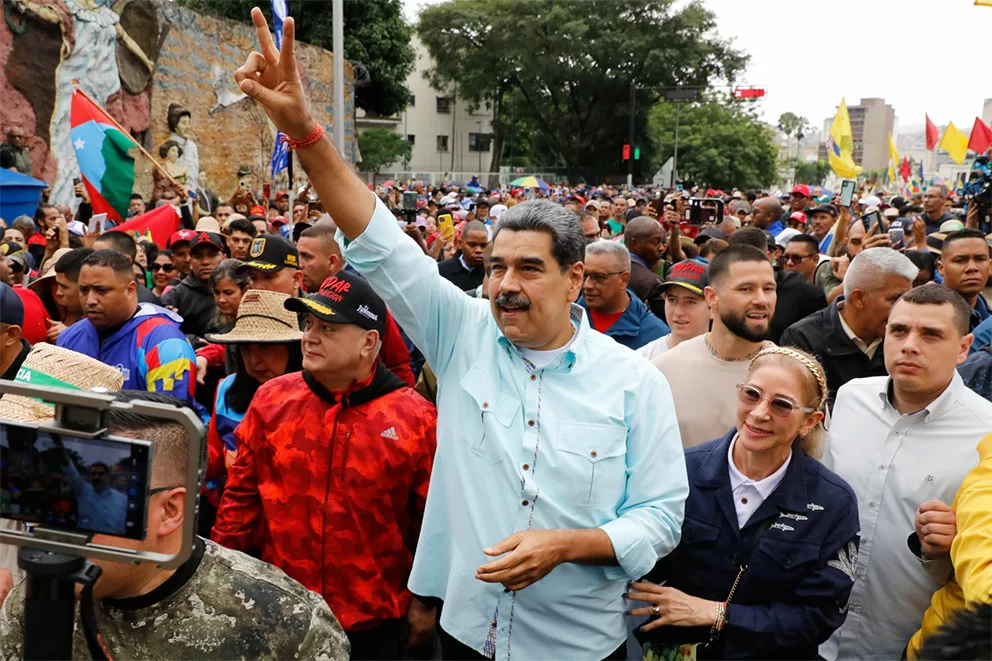
    In a dramatic turn of events, Venezuelan President Nicolás Maduro was apprehended during an early morning US military operation in Caracas on Saturday, marking a stunning conclusion to his controversial leadership that witnessed Venezuela’s descent into economic collapse and democratic erosion.

    The operation, announced via social media by US President Donald Trump, resulted in Maduro and his wife Cilia Flores being taken into custody. Venezuelan Vice President Delcy Rodríguez confirmed their whereabouts remained unknown shortly after the operation. US Attorney General Pam Bondi stated both would face trial on American soil for serious charges including drug trafficking and corruption.

    Maduro’s capture represents the culmination of mounting US pressure across multiple fronts. The Venezuelan leader had spent his final months in power anticipating military intervention aimed at dismantling the socialist revolution initiated by his mentor Hugo Chávez in 1999. Throughout his presidency, Maduro consistently portrayed the United States as Venezuela’s primary antagonist, resisting efforts by both Democratic and Republican administrations to restore democratic norms.

    Maduro’s extraordinary political journey began over four decades ago. After receiving ideological training in Cuba in 1986—his only formal education beyond high school—he returned to Caracas as a bus driver for the metro system, quickly rising through union ranks. By the 1990s, intelligence agencies identified him as a left-wing radical with close Cuban ties.

    His political ascent accelerated when he joined Chávez’s movement following the latter’s presidential pardon after a failed military coup. Maduro progressed through party ranks, serving six years in parliament before becoming National Assembly president. He additionally held the foreign ministry portfolio for six years and briefly served as vice president.

    Chávez formally anointed Maduro as his political heir during his final address before dying in 2013. Though the choice surprised many, Chávez’s substantial electoral capital secured Maduro a narrow victory and his first term. However, he never achieved his predecessor’s popularity levels.

    Maduro’s presidency became characterized by profound socio-political and economic crisis. Millions were plunged into poverty, over 7.7 million Venezuelans fled the country, and thousands of government opponents faced imprisonment and frequent torture—sometimes allegedly ordered by Maduro himself. Critical voices were systematically purged from state institutions.

    The crisis erupted during his first year with protests resulting in 43 deaths and numerous arrests. In 2015, Maduro’s party lost parliamentary control after sixteen years, prompting him to establish a pro-government constituent assembly in 2017 to sideline opposition. This triggered months of protests with over 100 fatalities and thousands injured. Maduro survived an assassination attempt involving explosives detonated during a military parade in 2018.

    The US-led capture operation signifies the lowest point of Maduro’s rule, forming part of broader American strategy to end socialist governance and reestablish influence in Venezuela. The arrest has provoked strong global reactions, with US allies applauding the action while other nations warn against escalation and emphasize peaceful, lawful transition needs.

    Regional countries are closely monitoring developments given the ongoing humanitarian crisis and refugee flows. Venezuela’s political and economic situation remains extremely fragile, with recovery expected to require years amid significant stability and security challenges. The international community now faces the complex task of facilitating Venezuela’s transition toward democratic and economic recovery while respecting human rights and sovereignty.

  • Former NDP chair says opposition will not be easy for ULP

    Former NDP chair says opposition will not be easy for ULP

    In the wake of a seismic political shift in St. Vincent and the Grenadines, veteran political figure Linton Lewis has delivered a sobering assessment of the challenges facing the defeated Unity Labour Party (ULP). The former New Democratic Party (NDP) chairman drew upon his own extensive experience to outline the difficult path ahead for the party that governed for nearly a quarter-century.

    The November 27th election results delivered a stunning blow to the ULP, relegating them to opposition status with a mere single parliamentary seat against the NDP’s commanding 14-seat victory. This dramatic reversal marks the end of 24 years of continuous ULP governance, echoing the NDP’s own transition to opposition in 2001 after 17 years in power.

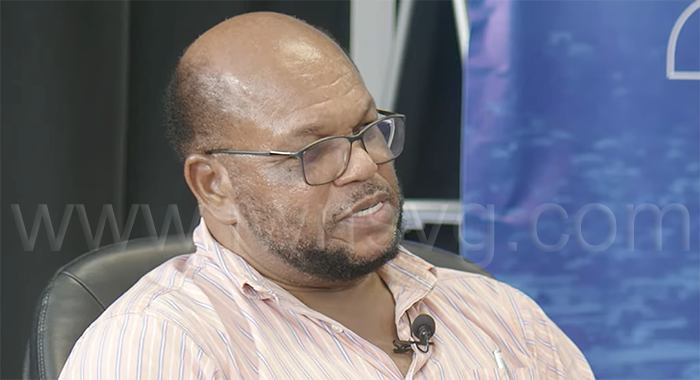
    Lewis, appearing as an analyst during the national election broadcast, emphasized the psychological and social challenges of opposition life. “It is not an easy experience,” he noted, describing how former allies often distance themselves from defeated parties. “People feel more comfortable keeping their distance and gravitating towards the winning side. You sometimes become very lonely.”

    The veteran politician highlighted the particular significance of the ULP’s defeat under Ralph Gonsalves, a remarkably successful political leader who had represented North Central Windward since 1994. Gonsalves’ solitary victory amidst the electoral landslide represents both a personal endorsement and a party rejection.

    Lewis raised crucial questions about the ULP’s future resilience, noting that Vincentian voters historically grant extended mandates to governing parties. With the NDP having governed for 17 years (1984-2001) and the ULP for 24 years (2001-2025), the psychological preparation for potentially lengthy opposition becomes paramount.

    The electoral statistics reveal the depth of the ULP’s defeat. The NDP secured 37,207 popular votes against the ULP’s 27,152—a decisive margin of 10,055 votes. Lewis suggested this indicated discontent beyond the traditional voter base, noting that “the rank and file alone cannot bring about this result. There must have been people at a higher level.”

    Several key constituency results underscored the electoral revolution. In West St. George, political newcomer Kaschaka Cupid defeated experienced ULP incumbent Curtis King by 1,081 votes. Similarly, in East St. George, Laverne Gibson-Velox unseated Finance Minister Camillo Gonsalves by 1,043 votes—a particularly symbolic defeat given Gonsalves’ status as a presumed ULP successor.

    Lewis predicted a period of political isolation for ULP supporters, drawing parallels with his own experiences during the NDP’s transition to opposition. He questioned whether the ULP’s newer, younger members possess the political grounding and loyalty to withstand the rigors of extended opposition.

    The analysis gains additional complexity given Lewis’s own recent endorsement of the ULP just four days before the election, during which he praised the party’s developmental record and questioned the NDP’s policy offerings. This context adds depth to his current assessment of the challenges facing his former political rivals.

  • America First en de hertekening van het Guiana Shield

    America First en de hertekening van het Guiana Shield

    The escalating crisis in Venezuela represents not an isolated incident but the most visible manifestation of a comprehensive geopolitical repositioning by the United States across the Western Hemisphere. This strategic shift, formalized in the December 2025 National Security Strategy under the ‘America First’ doctrine, demonstrates a calculated integration of energy interests, governance influence, and regional power projection.

    Venezuela has transitioned from sovereign nation to geopolitical testing ground following a unilateral US military intervention that resulted in the capture and extradition of President Nicolás Maduro and his wife to New York. Conducted without Congressional authorization or UN Security Council mandate, the operation has drawn international condemnation while revealing Washington’s broader ambitions. President Donald Trump has explicitly stated that military action constitutes merely the initial phase, with plans for direct involvement in Venezuela’s governance and development of its oil resources by American corporations—effectively establishing elements of externally imposed administration.

    International legal experts warn these actions violate fundamental principles of the UN Charter regarding prohibitions on force, non-interference in domestic affairs, and self-determination rights.

    Venezuela’s strategic significance stems from possessing the world’s largest proven reserves of heavy crude oil—a resource particularly suited to US refinery infrastructure despite years of sanctions and economic decline. This explains why American discourse encompasses not merely resource extraction but complete governance restructuring, positioning Venezuela as a demonstration case for how far the US will go to secure strategic energy interests.

    Neighboring Guyana exemplifies alternative approach within the same framework. As the world’s fastest-growing oil producer—approaching one million barrels daily under predominantly US corporate leadership—Guyana maintains formal sovereignty while becoming deeply integrated into American economic and security arrangements. Though Venezuelan claims over oil-rich Essequibo remain unresolved, Washington views Guyana as proof that energy development can occur within its strategic framework without overt confrontation.

    Suriname emerges as the next strategic focal point, poised to commence large-scale offshore oil production within the same geographic corridor. Recent replacement of the US ambassador to Suriname—part of broader diplomatic reshuffling affecting 29 nations—signals heightened American interest in the country’s future direction, with embassies increasingly functioning as strategic hubs connecting economic, security, and political interests.

    Regional bodies including the Organization of American States (OAS) and Caribbean Community (CARICOM), alongside Surinamese President Jennifer Simons, advocate counterbalancing power politics with normative frameworks emphasizing de-escalation, international law, constitutional order, and regional stability. For smaller nations, this represents not merely diplomatic rhetoric but essential self-protection in an era where resources increasingly drive geopolitical maneuvers.

    The Venezuela crisis demonstrates that energy has transcended economic status to become geopolitical currency attracting influence that seeks administrative control. Resource-rich nations consequently face heightened vulnerability when institutions, oversight mechanisms, and regional solidarity remain underdeveloped. As Suriname contemplates its oil future, it must consider not merely production partnerships but institutional strengthening to preserve governance autonomy amid great power competition.

  • Venezuela condemns US military aggression; declares state of emergency

    Venezuela condemns US military aggression; declares state of emergency

    The Venezuelan government has issued a formal declaration condemning what it characterizes as unprecedented military aggression by the United States against its sovereign territory. Official reports indicate multiple strikes targeted both civilian infrastructure and military installations across several regions including Caracas, Miranda, Aragua, and La Guaira.

    In a strongly worded statement, Venezuelan officials decried the attacks as a direct violation of fundamental principles enshrined in the United Nations Charter, specifically citing Articles 1 and 2 which guarantee respect for national sovereignty and prohibit the use of force between states. The government warned that these actions pose a severe threat to regional stability throughout Latin America and the Caribbean, potentially endangering millions of civilians.

    The administration accused the United States of attempting to orchestrate a resource-grab operation aimed at Venezuela’s extensive oil reserves and mineral wealth through the destabilization of its democratically elected government. Venezuelan authorities emphatically stated that such efforts to undermine the nation’s political independence would ultimately fail, emphasizing their unwavering commitment to preserve national sovereignty that has endured for over two centuries.

    Drawing parallels to historical resistance against foreign intervention, the statement referenced President Cipriano Castro’s defiance during the 1902 naval blockade and invoked the revolutionary legacy of national heroes Simón Bolívar and Francisco de Miranda.

    In response to the crisis, President Nicolás Maduro has implemented sweeping emergency measures including the activation of comprehensive national defense protocols and the declaration of a nationwide State of External Emergency. This presidential decree aims to ensure civilian protection, maintain institutional functionality, and prepare for potential armed resistance scenarios.

    The government has mobilized civilian populations to demonstrate unity through street protests, coordinating social and political organizations alongside the Bolivarian National Armed Force and law enforcement agencies. Defense command structures have been deployed throughout the country while Venezuela’s diplomatic corps prepares to formally present grievances before the UN Security Council, UN Secretary-General, CELAC, and the Non-Aligned Movement.

    Citing Article 51 of the UN Charter, Venezuela asserted its inherent right to self-defense and called upon international communities throughout Latin America, the Caribbean, and global allies to demonstrate solidarity. The statement concluded with an inspirational quotation from former President Hugo Chávez emphasizing unity and victory in the face of adversity.

  • PM Browne confirms WIOC official was questioned in U.S.

    PM Browne confirms WIOC official was questioned in U.S.

    Prime Minister Gaston Browne of Antigua and Barbuda has publicly verified that a high-ranking executive from the West Indies Oil Company (WIOC) underwent questioning by United States authorities during a recent visit to the US. The disclosure came after Browne reviewed a report from the media outlet Real News Antigua and conducted subsequent direct inquiries with the official involved.

    During an appearance on Pointe FM’s ‘Browne and Browne Show’ this past Saturday, the Prime Minister recounted how he initiated contact with WIOC Chief Executive Officer Gregory Georges upon learning of the incident through press reports. According to Browne’s account, Georges acknowledged being temporarily detained by US officials, who also confiscated his electronic devices for examination before returning them.

    Prime Minister Browne contextualized the interrogation within the framework of ongoing international scrutiny, specifically highlighting Venezuela’s longstanding 25 percent stake in WIOC. He emphasized that this shareholding arrangement predated current US sanctions against Venezuela and asserted that WIOC has maintained full compliance with all international regulations since their implementation. “There has been absolutely no violation whatsoever,” Browne stated unequivocally.

    The Prime Minister explained his motivation for addressing the matter publicly stemmed from a desire to provide accurate information verified through direct channels. His comments appear designed to clarify circumstances surrounding increased international attention focused on Antigua and Barbuda’s state-affiliated corporations, particularly those with historical ties to nations under US sanctions. No indications were given that any disciplinary measures would be taken against the WIOC official involved.

  • Maduro indicted in U.S. Court on charges of narco-terrorism conspiracy among others

    Maduro indicted in U.S. Court on charges of narco-terrorism conspiracy among others

    In an unprecedented escalation of international legal and military action, Venezuelan President Nicolás Maduro and First Lady Cilia Flores have been apprehended by U.S. forces and transported to New York to face federal charges. The dramatic operation, which unfolded in Caracas on January 3, 2026, marks the physical culmination of a multi-year investigation into what American prosecutors describe as state-sponsored narcoterrorism.

    The judicial foundation for this extraordinary action was laid in March 2020 when the U.S. Department of Justice unsealed indictments against Maduro and fourteen high-ranking Venezuelan officials. The charges allege their orchestration of a sophisticated cocaine trafficking network in collaboration with Colombia’s FARC guerrillas, operating under the designation ‘Cartel de los Soles’ (Cartel of the Suns). This organization allegedly facilitated the movement of thousands of kilograms of cocaine through Venezuelan territory destined for American markets.

    The legal case gained substantial momentum through successive guilty pleas from key figures within Maduro’s inner circle. Former General Clíver Alcalá admitted to related charges in 2023, followed by former intelligence chief Hugo Carvajal’s 2025 confession to drug trafficking offenses in Spain connected to the same conspiracy network.

    Attorney General Pam Bondi characterized the capture as a landmark achievement in international justice, declaring that the defendants would ‘face the full wrath of American justice on American soil in American courts.’ The judicial proceedings are scheduled to commence in Manhattan federal court where Maduro and Flores will answer charges including narco-terrorism conspiracy, cocaine importation conspiracy, and weapons offenses.

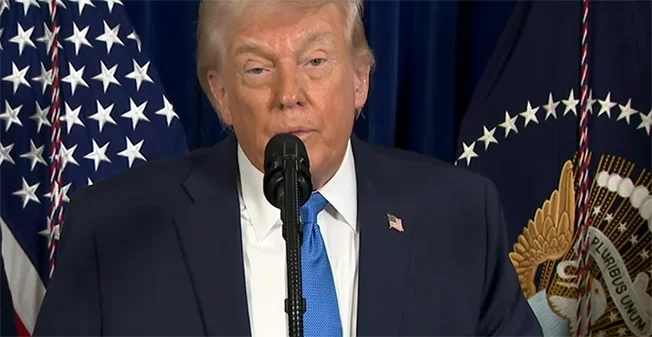
    President Donald Trump framed the intervention as both a law enforcement necessity and a strategic geopolitical move, announcing Washington’s intention to oversee Venezuela’s transition while leveraging American energy companies to revitalize the nation’s oil industry under U.S. military protection. This declaration prompted immediate condemnation from Venezuelan Vice President Delcy Rodríguez, who denounced the operation as an imperialist resource grab disguised as judicial process.

    The military operation resulted in civilian casualties according to Venezuelan authorities, while U.S. sources acknowledged several American troops sustained non-life-threatening injuries during the engagement. The political aftermath has revealed deep divisions, with expatriate communities in South Florida celebrating Maduro’s capture while residents in Caracas face uncertainty about their nation’s future. Opposition leader María Corina Machado has called for opposition leadership to assume power during this transitional period.

    This extraordinary intersection of international law, military intervention, and energy geopolitics represents one of the most significant developments in Western Hemisphere relations in decades, setting profound precedents for extraterritorial justice and sovereign intervention.