分类: politics

  • Government to present 2026 Budget focussed on jobs, investment and climate resilience

    Government to present 2026 Budget focussed on jobs, investment and climate resilience

    The Government of Saint Kitts and Nevis is poised to introduce its fiscal year 2026 budget in December 2025, marking a strategic continuation of its Sustainable Island State transformation agenda. Prime Minister and Finance Minister Honourable Dr. Terrance Drew announced the budget’s core priorities during a November 25th Roundtable press engagement, emphasizing three fundamental pillars: employment generation, investment stimulation, and climate adaptation enhancement.

    Dr. Drew articulated the administration’s comprehensive approach, stating, “We are examining critical issues including cost of living pressures and food security mechanisms to further strengthen our nation’s resilience. Our strategy encompasses job creation through enhanced investment opportunities while simultaneously fortifying our population against climate change impacts.”

    The budget’s climate resilience component gains urgency following Hurricane Melissa’s catastrophic impact on Jamaica. This Category 5 event has accelerated the government’s infrastructure modernization plans, which include implementing hurricane-resistant construction methodologies for housing developments and the new smart-hospital project. Additionally, the budget will allocate resources for underground utility line installation to mitigate weather-related service disruptions.

    The Prime Minister confirmed that these strategic priorities will form the foundational framework of the 2026 budget, with detailed allocations and policy measures to be formally presented on Budget Day. The specific date for the budget presentation is expected to be announced imminently, providing full transparency regarding the nation’s fiscal direction and developmental objectives.

  • Cop close to NDP campaign charged, sent on no-pay leave

    Cop close to NDP campaign charged, sent on no-pay leave

    A senior police officer with 26 years of service in the Royal St. Vincent and the Grenadines Police Force has been charged with assaulting a constable during a campaign rally for the New Democratic Party (NDP) in Owia. Acting Corporal Kenroy Martin, who is reportedly close to the NDP’s West St. George candidate, Cashaka Cupid, was placed on no-pay leave immediately after the incident, despite regulations requiring half-pay leave for officers facing criminal charges. Martin, represented by NDP candidate Israel Bruce, was granted EC$1,500 station bail and is set to appear in court. The incident occurred on Saturday when Martin, off-duty and a passenger in a vehicle delivering medical personnel and food to the rally, allegedly took over driving after the original driver became unnerved by the constable’s actions. The constable reportedly refused entry to the rally site, leading to a confrontation that resulted in the alleged assault. This incident follows a prior altercation in Sandy Bay, where the constable allegedly disobeyed Martin’s traffic instructions. Martin’s recent transfers within the police force have raised questions about the circumstances surrounding the charge.

  • Alianza País leader warns government’s U.S. deal violates sovereignty

    Alianza País leader warns government’s U.S. deal violates sovereignty

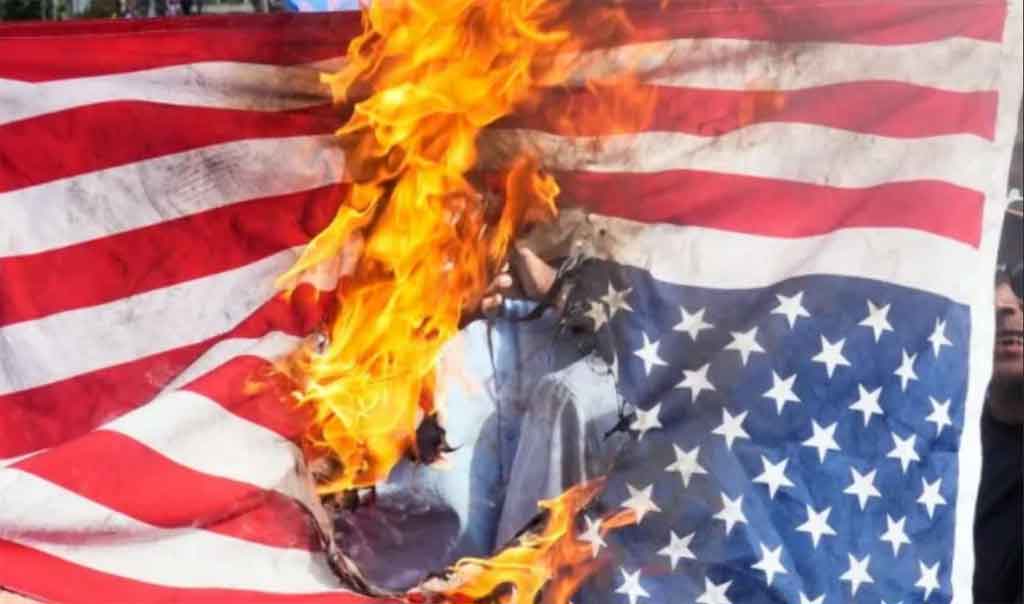
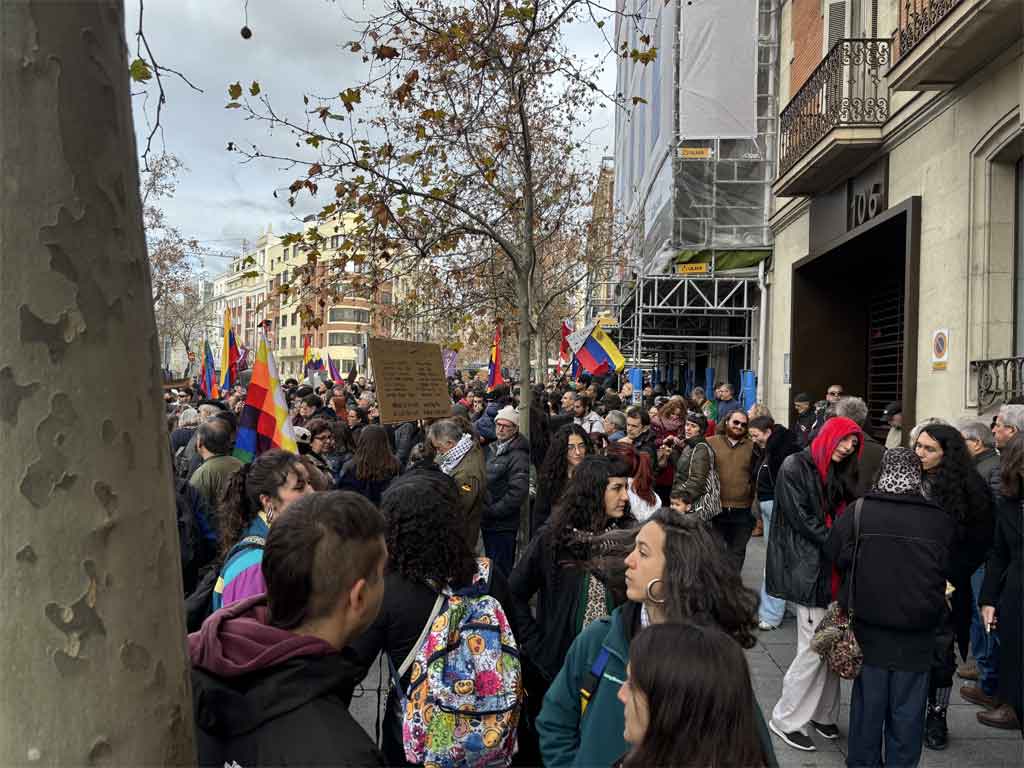
    SANTO DOMINGO – Opposition leader Guillermo Moreno, president of the Alianza País party, has launched a vehement critique against the Dominican government’s recent authorization permitting the U.S. Department of War to utilize key national infrastructure for military logistics. The approved sites include the strategic San Isidro Air Base and Las Américas International Airport.

    Moreno condemned the move as a direct violation of the nation’s constitutional principles and a severe compromise of its sovereignty. While the government has framed the agreement as essential cooperation in the multinational fight against drug trafficking, Moreno posits a more alarming ulterior motive. He contends that this access could potentially be leveraged to stage military operations against neighboring Venezuela and Colombia, nations he referred to as ‘sister republics.’

    Citing historical precedent, the politician invoked the memory of two separate U.S. military incursions into Dominican territory. This history, he argued, bestows upon the nation a profound ‘moral and political responsibility’ to resist any measure that could enable aggression against fellow Latin American and Caribbean states. He asserted that the agreement fundamentally undermines the country’s stance of neutrality and contravenes established international doctrines advocating for non-intervention and the peaceful resolution of conflicts.

    Concluding his address, Moreno issued a dual call to action. He urgently appealed to the administration to rescind its authorization and simultaneously urged the citizenry to maintain vigilant oversight of the situation. He emphasized the imperative for the Dominican Republic to conduct its international relations ‘with dignity’ and to steadfastly avoid becoming a staging ground for foreign military agendas or a catalyst for escalating regional tensions.

  • 6th Ordinary Session of the National Assembly of People’s Power, in its 10th Legislature, convened

    6th Ordinary Session of the National Assembly of People’s Power, in its 10th Legislature, convened

    Havana, Cuba – The National Assembly of People’s Power has officially announced the convocation of its 6th Ordinary Session, marking a significant moment in Cuba’s legislative calendar. President Esteban Lazo Hernández, exercising constitutional authority under Article 111, has scheduled the parliamentary gathering for December 18, 2025, at Havana’s Convention Center.

    The session will commence at 9:00 a.m. with a comprehensive agenda focused on critical national issues. Central to the discussions will be the evaluation of Cuba’s Government Program measures designed to address economic distortions and stimulate growth. Lawmakers will examine the implementation effectiveness and socioeconomic impact of these ongoing reforms.

    Additionally, the assembly will review proposed economic objectives and targets for the upcoming year, with particular emphasis on the draft State Budget Law for 2026. This budgetary deliberation comes at a crucial juncture as Cuba continues to navigate complex economic challenges.

    The legislative schedule also includes accountability sessions featuring the Ministry of Science, Technology and Environment alongside the Provincial Government of Ciego de Ávila. The Ministry of Justice will present a report on its oversight activities, while various legislative bills will undergo thorough analysis and debate.

    Preceding the main session, permanent working committees will convene from December 15-17 to examine over 90 agenda items affecting Cuban citizens’ daily lives. The official announcement, published November 26 on the parliamentary website, will be distributed to deputies, central state administration agencies, and relevant authorities. Full documentation will appear in the Official Gazette of the Republic and various media outlets for public transparency.

  • A voice in Ramah crying above the noise

    A voice in Ramah crying above the noise

    As the election season unfolds, the palpable tension and emotion across the nation symbolize a collective yearning for fairness, compassion, and meaningful transformation. From longtime friends to new acquaintances and coworkers, the recurring sentiment is clear: ‘We want change.’ This desire is not born out of bitterness or blind political allegiance but from a profound fatigue and a longing for leadership that listens, evolves, and remains accountable to the people.

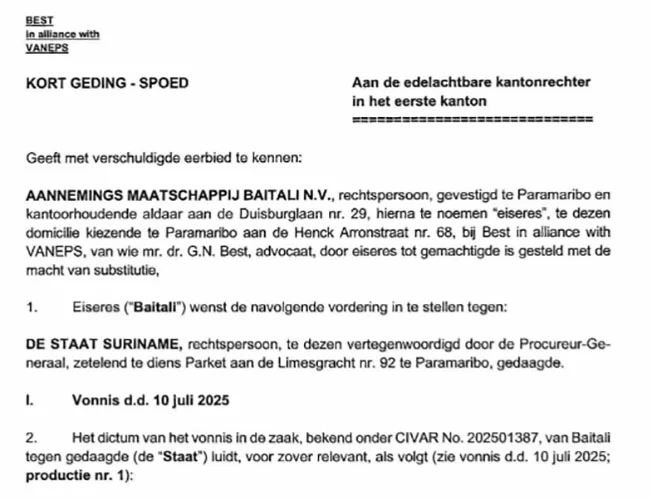
  • De Surinaamse Nationaliteit 50 Jaar Later: Feiten, Wetgeving en Identiteit

    De Surinaamse Nationaliteit 50 Jaar Later: Feiten, Wetgeving en Identiteit

    On November 25, 2025, Suriname marked a dual milestone: 50 years of political independence and 50 years of Surinamese nationality. The Surinamese nationality, established concurrently with the republic itself, offers a unique historical perspective on the evolution of its nationality laws since 1975. Anastatia Kanapé-Pokie, Director of the Central Bureau for Civil Affairs, provided an in-depth analysis of this journey. The foundation of Surinamese nationality was laid by the Allocation Agreement (T.O.K.) between Suriname and the Netherlands, which determined nationality based on residency at the time of independence. Key provisions included the prohibition of dual nationality and specific criteria for acquiring Surinamese nationality. Since 1975, the Ministry of Home Affairs has overseen nationality matters under the Nationality and Citizenship Act (WNI), which has undergone several amendments to address issues of discrimination and adapt to modern realities. The 2014 revision was particularly significant, allowing for dual nationality in certain cases and ensuring gender equality in nationality acquisition. As of 2025, the Central Bureau for Civil Affairs reports 578,041 registered Surinamese citizens, 34,474 Surinamese nationals abroad, and 46,824 foreign residents from 101 countries. The evolution of Surinamese nationality reflects a shift from strict separation to a more inclusive system that acknowledges heritage, identity, and global realities.

  • Shallow says Camillo resigned twice as Finance Minister

    Shallow says Camillo resigned twice as Finance Minister

    In a heated political climate ahead of St. Vincent and the Grenadines’ general election, Kishore Shallow, the New Democratic Party (NDP) candidate for North Leeward, has made startling allegations against Finance Minister Camillo Gonsalves. Shallow claims that Gonsalves attempted to resign from his ministerial role twice since late 2024, only to remain in office after his father, Prime Minister Ralph Gonsalves, promised him the premiership. These accusations were made during a rally in Campden Park, where Shallow also criticized the ruling Unity Labour Party (ULP) for what he termed ‘recklessness’ and disconnection from the public. Shallow, a first-time candidate, further alleged that he possesses incriminating files on ULP members, including details of a lucrative contract awarded to the Prime Minister’s brother-in-law. The Finance Minister’s alleged resignation attempts reportedly occurred in October 2024 and January 2025, with Shallow suggesting Gonsalves had plans to leave the country for a high-paying job abroad. Prime Minister Gonsalves, in response, dismissed Shallow’s claims and labeled him a ‘puny jackass,’ accusing him of mudslinging and attacking the wife of North Leeward incumbent Carlos James. The election campaign has been marked by intense rhetoric, with both parties making their final appeals to voters. The ULP, in power since 2001, has emphasized its stability, while the NDP has positioned itself as a fresh alternative to what it calls a ‘power-hungry’ and ‘money-grabbing’ administration.

  • PM Briceño Doubles Down on Jose Mai’s Bad Back Story

    PM Briceño Doubles Down on Jose Mai’s Bad Back Story

    The resignation of Jose Abelardo Mai, Belize’s long-serving Minister of Agriculture, has sparked widespread debate and speculation. Prime Minister John Briceño announced that Mai stepped down due to health concerns, specifically a chronic back injury from a horse-riding accident that requires surgery. However, this explanation has been met with skepticism, particularly on social media, where many believe it to be a cover-up for deeper issues. Mai’s departure follows weeks of controversy, including allegations from a Mexican news outlet linking him to criminal activities, which he vehemently denied as defamatory and politically motivated. Additionally, rumors of pressure from the U.S. Embassy have surfaced, though Briceño has dismissed these claims, asserting that no such request was made. The timing of Mai’s resignation is particularly puzzling, given his recent participation in an international agriculture conference in Brazil. Further complicating matters is an invoice for bulletproof vests under his ministry, which officials claim was related to an armed robbery investigation rather than cartel threats. As the public continues to question the true reasons behind Mai’s exit, Briceño maintains that the situation is a testament to Belize’s democratic values, where speculation is a natural part of public discourse. For now, Mai is out, and the agriculture portfolio has been reassigned.

  • PM Weighs In on Gamboa Visa Revocation

    PM Weighs In on Gamboa Visa Revocation

    A significant diplomatic and administrative issue has emerged involving Superintendent Aaron Gamboa, head of the Special Patrol Unit, whose U.S. visa was abruptly revoked over the weekend. Gamboa, who was prevented from boarding a U.S.-bound flight, expressed confusion and denied any wrongdoing. He plans to consult his attorney and the U.S. Embassy to resolve the matter. Prime Minister John Briceño addressed the situation publicly, stating that he was unaware of the revocation and emphasized the U.S. government’s authority to revoke visas at its discretion. However, Briceño acknowledged the concern surrounding the incident, given Gamboa’s influential position. The Prime Minister urged caution and advised waiting for further developments before drawing conclusions. This incident has sparked speculation about potential links to past investigations and raised questions about the implications for other senior police officers whose visas may also be at risk.

  • Diplomacy : Towards the opening of a Haitian Embassy in Ethiopia

    Diplomacy : Towards the opening of a Haitian Embassy in Ethiopia

    In a significant expansion of its global diplomatic footprint, Haiti is establishing its first embassy in Ethiopia, marking a strategic move to strengthen ties with the African continent. The Haitian Ministry of Foreign Affairs has deployed senior official Marie-Hélène Calvin to Addis Ababa to finalize preparations for the new diplomatic mission.

    During her visit, Calvin engaged in productive discussions with Ethiopian Minister of State for Foreign Affairs Berhanu Tsegaye. The Ethiopian official expressed enthusiasm for Haiti’s decision, characterizing it as a renewal of longstanding bilateral friendship. Tsegaye specifically requested Calvin to convey Ethiopia’s commitment to reinforcing diplomatic bonds to her Haitian counterparts.

    The Ethiopian government has pledged comprehensive support throughout the establishment process, facilitating meetings between Calvin and various Ethiopian authorities and prominent figures to accelerate the embassy’s opening.

    This diplomatic initiative gains additional significance from Addis Ababa’s unique position as a global diplomatic hub. The Ethiopian capital hosts numerous United Nations agencies and pan-African organizations, ranking as the world’s third-largest diplomatic capital after New York and Geneva. This strategic positioning offers Haiti enhanced access to multilateral forums and African continental affairs.

    The embassy establishment represents Haiti’s broader strategy to expand its diplomatic presence abroad, particularly across Africa where historical and cultural connections remain underexplored diplomatically. This move signals Haiti’s ambition to play a more active role in international affairs and African diaspora engagement.