分类: politics

  • Historian warns against political reliance for Dennery segment’s future

    Historian warns against political reliance for Dennery segment’s future

    With Saint Lucia’s December 1 General Election approaching, cultural policy has emerged as a significant battleground, particularly regarding the future of Dennery Segment music. Historian Sant Justin has issued a compelling warning to the genre’s artists: maintain creative independence despite political promises. His caution comes as the United Workers Party (UWP) pledges substantial support, including an internationally-produced dedicated event and expanded Carnival celebrations throughout July if elected.

    The UWP’s cultural proposals extend beyond events to include placement of Dennery Segment artists on major stages, mirroring the exposure given to international performers during Saint Lucia Jazz. This commitment has garnered strong endorsement from performer Kurtly ‘Pablo’ Estava, who publicly criticized the incumbent Saint Lucia Labour Party (SLP) for what he termed ‘years of neglect’ of the creative sector during a November 16 rally.

    Justin provided crucial historical context, describing Dennery Segment as a ’21st-century blend of soca, dancehall, and zouk’ born from ‘rebellion, audacious self-awareness and confidence.’ He emphasized that the genre historically created its own opportunities through timely, regular releases addressing topical issues, rather than waiting for permission or external validation. This independent spirit, Justin argued, embedded the genre firmly in Saint Lucia’s cultural landscape and drove recent entertainment industry growth.

    While acknowledging the positive community response to the 2025 D’Vibez festival and the genre’s growing international visibility (including appearances at Expo Dubai, Expo Japan, Miami Carnival, and Soca Monarch victories), Justin maintained that ‘quality and frequent releases remain the best way to continue carving out a niche.’ He advocated for artist unity in participating in development opportunities while preserving the genre’s foundational independence.

    The political landscape reveals competing visions for cultural development. The UWP emphasizes immediate support and international promotion, with leader Allen Chastanet promising ‘everybody in the world will know what Dennery Segment is.’ Meanwhile, the SLP has outlined a comprehensive cultural modernization roadmap in its 2025 manifesto, including financial mechanisms like low-interest loans and tax concessions, structural reforms through a transformed Development and Training Agency for the Arts (DATA), and an Orange Economy Unit to coordinate international promotion. The SLP also proposes tangible recognition through National Music Awards, public art installations, and a national museum.

    This intersection of cultural preservation and political ambition highlights the delicate balance artists must maintain between welcoming support and safeguarding creative autonomy as Saint Lucia approaches a pivotal election.

  • OPINION: Inclusion Is Not a Gesture — It Is Governance in Action

    OPINION: Inclusion Is Not a Gesture — It Is Governance in Action

    In a significant departure from superficial political reforms, the Gaston Browne administration has fundamentally restructured Antigua and Barbuda’s governance architecture by formally integrating statutory boards into the core of policy execution and oversight mechanisms. This institutional transformation represents a substantial advancement in the nation’s democratic maturity rather than mere bureaucratic reorganization.

    Government boards in Antigua and Barbuda serve as critical operational engines across essential sectors including housing, utilities, healthcare, tourism, education, financial services, and land management. Their new central role acknowledges the practical reality that effective governance extends beyond cabinet discussions to include boardroom deliberations and community engagement interfaces.

    This structural reform addresses fundamental governance design challenges by clarifying accountability channels, strengthening decision-making protocols, and enhancing coordination between ministries and implementing agencies. The integration reduces policy implementation gaps, accelerates feedback mechanisms, and reinforces cabinet oversight capabilities through a more coherent operational framework.

    The administration’s approach demonstrates political courage by embracing participatory governance that leverages professional expertise from engineers, financiers, medical practitioners, educators, and community advocates. This institutionalizes continuous learning within government structures, allowing operational insights from frontline agencies to directly inform policy formulation rather than merely receiving directives.

    This governance model establishes a powerful antidote to institutional fragmentation and operational drift by creating measurable performance frameworks and visible accountability standards. The reform represents a profound statement against strongman politics prevalent in the region, demonstrating that authentic authority emerges through structured participation rather than centralized control.

    For citizens, this transformation promises more reliable service delivery through systematically integrated institutions. For public servants and board members, it validates their contributions as fundamental to national development rather than peripheral activities. The reform ultimately positions Antigua and Barbuda as a nation serious about governance as a deliberate craft rather than political rhetoric.

  • Prime Minister Browne Writes to New and Former Leaders of St Vincent and the Grenadines

    Prime Minister Browne Writes to New and Former Leaders of St Vincent and the Grenadines

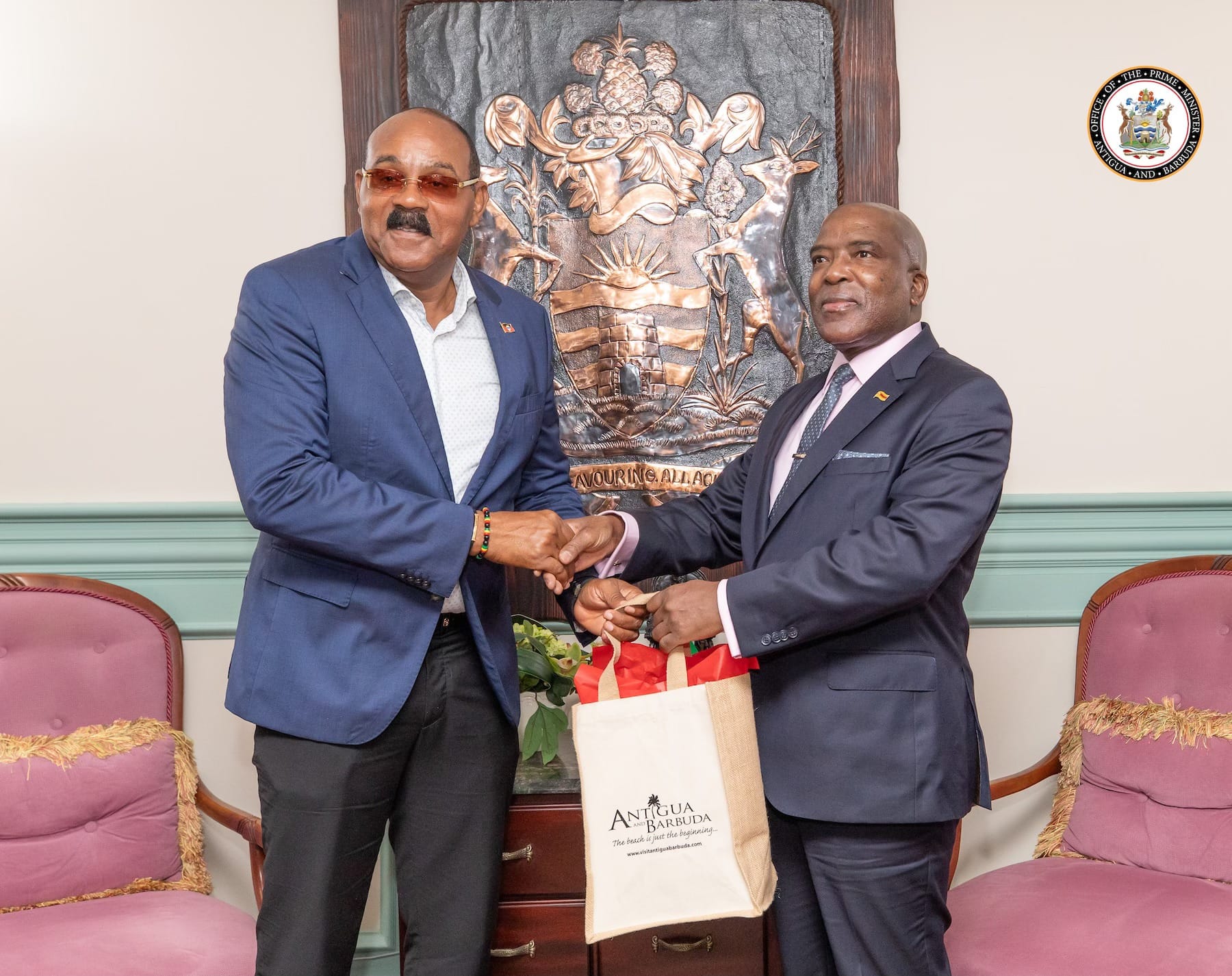
    In a significant diplomatic gesture, Antigua and Barbuda’s Prime Minister Gaston Browne has formally congratulated Dr. Godwin Friday on his recent electoral victory and assumption of office as Prime Minister of St Vincent and the Grenadines. The communication was dispatched from Morocco on November 28, where PM Browne was participating in an international conference.

    Browne’s correspondence emphasized his administration’s unwavering commitment to fostering strengthened collaboration with the new Vincentian government. Specifically, he highlighted the importance of enhancing cooperative efforts within two pivotal regional bodies: the Organization of Eastern Caribbean States (OECS) and the Caribbean Community (CARICOM). The Antiguan leader expressed his intention to work jointly with PM Friday to advance shared regional priorities that benefit the entire Caribbean populace.

    In a parallel diplomatic move, Prime Browne also addressed a separate communication to the outgoing Prime Minister, Dr. Ralph E. Gonsalves, who concluded a notable 24-year tenure at the nation’s helm. Browne’s letter paid tribute to Gonsalves’ extensive contributions to the process of Caribbean integration and his profound impact on regional public life. The message conveyed deep appreciation for the outgoing leader’s friendship and strategic counsel over the years, characterizing his legacy as one that ‘endures and speaks for itself.’ Browne extended sincere best wishes to Dr. Gonsalves as he transitions to continued service within the Vincentian Parliament.

    The communications collectively reaffirm Antigua and Barbuda’s strategic foreign policy objective of maintaining robust bilateral relations with St Vincent and the Grenadines. Prime Minister Browne underscored a shared determination to deepen this cooperation across multiple sectors, ultimately aiming to generate tangible benefits and improved quality of life for the citizens of both neighboring island nations.

  • Gonsalves says Unity Labour Party very much alive despite election defeat

    Gonsalves says Unity Labour Party very much alive despite election defeat

    In a defiant concession speech delivered on Saturday, former St. Vincent and the Grenadines Prime Minister Dr. Ralph Gonsalves declared his Unity Labour Party (ULP) remains politically viable despite suffering a crushing electoral defeat that ended their 25-year governance. The New Democratic Party (NDP) secured a commanding victory, capturing 14 of the 15 parliamentary seats in Thursday’s general election.

    Gonsalves, who previously served as Opposition Leader from 1998 to 2001, announced he would resume that role but offered no direct congratulations to Prime Minister-designate Dr. Godwin Friday or the NDP. Instead, he delivered a stark warning to the incoming administration, suggesting their triumph marked the beginning of their eventual decline.

    “At this very height of the NDP’s triumphalism, it is the moment of the start of their descent,” Gonsalves proclaimed. “The unravelling usually commences imperceptibly and then becomes a flood of disarray, as the centre cannot hold and things fall apart. History and experience so teach, and in our fast-changing world, the clock of their demise is already ticking.”

    The veteran politician pledged to lead the opposition with “dignity, duty and love,” emphasizing his readiness to confront political challenges. “Please be assured that the menace of the years finds and shall find me unafraid; it is my lot to accept, indeed prefer, a strenuous life to one of ignoble ease,” he stated.

    Gonsalves outlined immediate plans to convene the ULP’s collective leadership on Sunday to select two senatorial appointments. While acknowledging the opposition would be “routinely out-voted” due to the NDP’s overwhelming majority, he promised to maintain high parliamentary standards and indicated the party would focus on internal renewal ahead of the next scheduled election in 2030.

    “Renewal, rebuilding, is sweet. Indeed, it is the sweetest of life’s experiences,” Gonsalves reflected. “And within and outside the Labour family, there is abundant material, some even hidden or submerged, which is available for renewal.”

  • Trump maintains pressure campaign on Venezuela, saying its airspace should be considered closed

    Trump maintains pressure campaign on Venezuela, saying its airspace should be considered closed

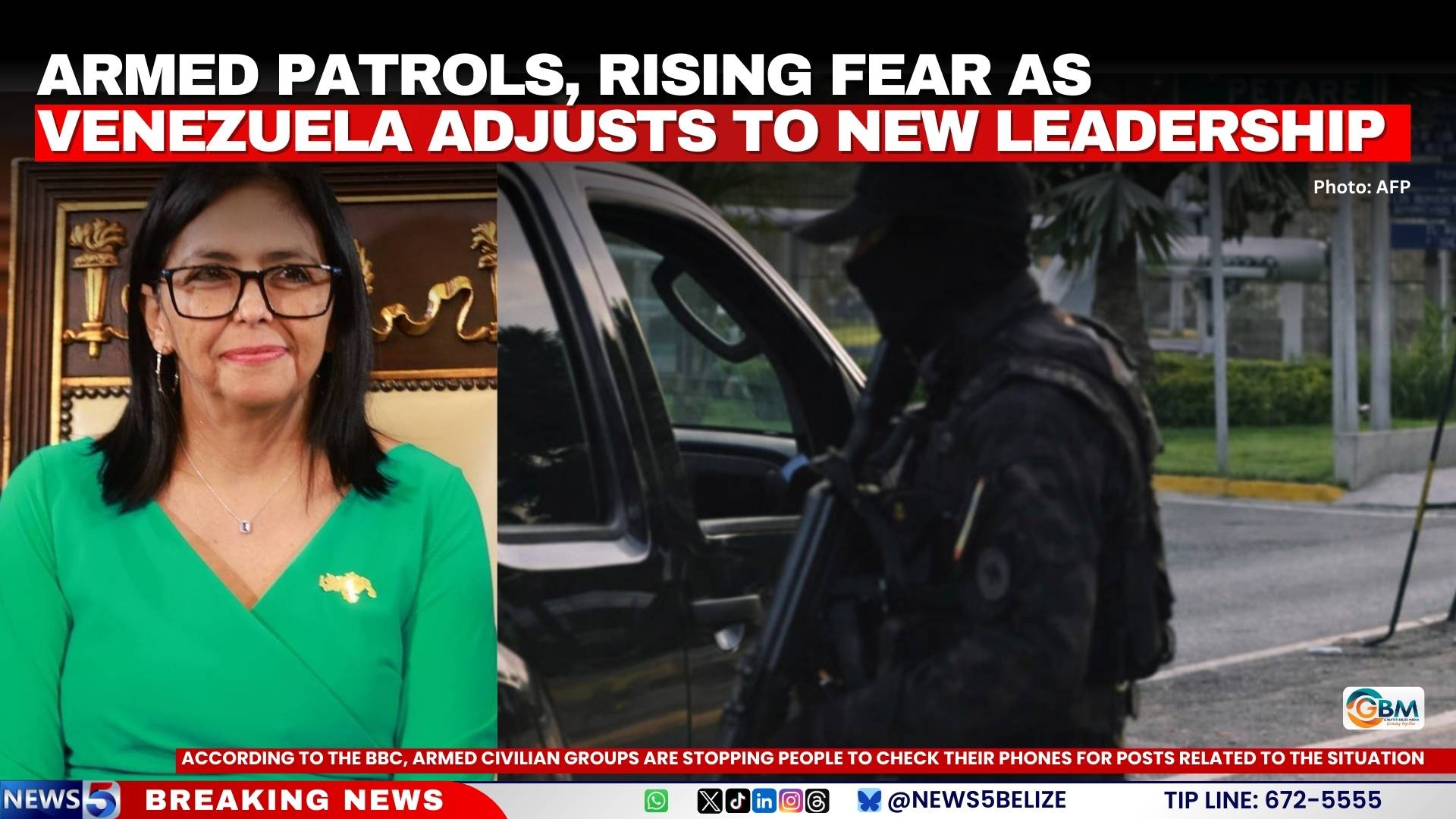
    The Trump administration has dramatically intensified its campaign against the Venezuelan government of Nicolás Maduro, declaring the complete closure of airspace above and surrounding Venezuela through a presidential post on Truth Social. This unprecedented announcement represents the latest maneuver in Washington’s sustained effort to force a change in leadership, officially framed as a measure to combat illegal migration and narcotics trafficking.

    Venezuelan Foreign Minister Jorge Arreaza immediately condemned the directive as a ‘colonialist threat’ and an ‘extravagant, illegal, and unjustified aggression.’ While the United States lacks legal authority to close another nation’s airspace, the Federal Aviation Administration had previously warned airlines of potentially hazardous conditions when flying over Venezuelan territory. U.S. passenger and cargo carriers have maintained a suspension of direct flights since 2019, though some commercial routes continue to traverse Venezuelan airspace for South American destinations.

    This escalation follows a series of aggressive measures including the designation of Maduro and his associates as members of a foreign terrorist organization, which administration officials argue expands military options. President Trump has acknowledged authorizing CIA operations within Venezuela and suggested imminent land strikes during remarks to service members on Thanksgiving. ‘We’ll be starting to stop them by land also,’ Trump stated, referencing drug trafficking routes. ‘The land is easier, but that’s going to start very soon.’

    Republican Senator Lindsey Graham endorsed the president’s approach, applauding the determination to confront what he termed ‘drug caliphate countries’ in America’s backyard. The Pentagon has deployed over a dozen warships and 15,000 troops to the region under ‘Operation Southern Spear,’ an anti-trafficking campaign that has already resulted in dozens of casualties from boat interdictions.

    Despite the bellicose rhetoric, diplomatic channels remain partially open. Multiple administration officials confirm that Maduro and his associates have reached out through various means, and discussions about communication frameworks continue. The New York Times and Wall Street Journal reported that Trump and Maduro spoke recently, with Trump suggesting a potential willingness to engage directly ‘if we can save lives.’ Earlier informal talks reportedly included Maduro signaling openness to eventually stepping down, though not for at least 18 months—a timeline rejected by Washington, which insists on immediate departure.

    Within Venezuela, citizens face the escalating geopolitical tension with apprehension amid economic collapse and political instability. While public life maintains a semblance of normalcy with seasonal celebrations continuing, the threat of government repression remains tangible. Human rights group PROVEA documented at least 54 detentions for dissent in October alone, including arrests for sharing anti-Maduro messages on WhatsApp. As one Caracas waitress summarized: ‘Will they bomb? Will they not bomb? Who knows… nobody knows nothing.’

  • Dennery Segment – the new soundtrack to political campaigning

    Dennery Segment – the new soundtrack to political campaigning

    Saint Lucia’s political arena has undergone a profound sonic transformation since Prime Minister Philip J. Pierre initiated the election cycle on November 9. The traditional campaign elements—rallies, posters, and slogans—now share the stage with an unexpected powerhouse: the infectious beats of Dennery Segment music that have become the soundtrack of this election season.

    This distinctive Saint Lucian musical genre, characterized by its percussive intensity and catchy hooks, has revolutionized political mobilization strategies. Campaign events have evolved into carnival-like festivities where Dennery Segment artists perform customized tracks supporting various parties and candidates. The phenomenon has particularly resonated with younger demographics, creating an unprecedented fusion of political messaging and musical entertainment.

    The current musical landscape contrasts sharply with historical approaches. During the 1970s political awakening, conscious reggae from icons like Bob Marley and Peter Tosh underpinned the Saint Lucia Labour Party’s messaging. Later eras incorporated calypso’s social commentary and even international pop hits, such as the UWP’s strategic use of Bryan Adams’ “Everything I Do, I Do It for You” in 1992.

    Sociologist and former Labour Party MP Damian Greaves observes: “Politics, to some extent, is a vibe and it has to be the vibe of the times. What we’re witnessing represents a shift from the anti-colonial intellectualism of previous generations to a new ethos shaped by social media dynamics.”

    The digital dimension has proven crucial to Dennery Segment’s political ascendancy. Tracks like Ricky T’s “Ring the Bell” and General Bakes’ “Flambeau Off” have generated viral memes and TikTok trends, amplifying their reach beyond physical rallies. Music industry expert Ian Sanchez notes: “The creativity of these artists makes their songs easily adaptable to suit any party or candidate, while their social media mastery ensures maximum visibility.”

    However, concerns emerge regarding substantive political discourse potentially being drowned out by rhythmic entertainment. Some observers question whether the musical spectacle might overshadow critical policy discussions, reducing complex electoral decisions to emotional responses to musical performances.

    Adding to the conversation, creative promoter Sant Justin highlights economic implications: “Campaign season now rivals traditional peak periods for creative professionals. But we must address the troubling practice of importing foreign talent when our local artists possess superior cultural understanding and creative capability.”

    This musical politicization represents more than temporary campaign strategy—it signifies a fundamental evolution in how democratic engagement manifests in the digital age, where cultural expression and political messaging increasingly intertwine.

    (Note: All photographic credits remain with original sources as indicated in source material)

  • The barriers facing women in politics

    The barriers facing women in politics

    As Saint Lucia approaches its 2025 general elections, an unprecedented six female candidates—three from each major party—are mounting a historic challenge to the island nation’s male-dominated political landscape. This record number of women contenders represents a potential turning point in Saint Lucian politics, yet their campaigns reveal how deeply entrenched gender barriers remain.

    Historical context underscores the magnitude of their challenge. Over the past fifteen years, female representation among general election candidates has consistently languished below 25%, with elected women in the House of Assembly rarely exceeding two simultaneously. The 2021 election saw merely 11 women among 45 total candidates, with only two securing seats—maintaining parliamentary representation at approximately 11%, far below modern democratic standards.

    The campaigns of these six women illuminate the persistent obstacles facing female politicians. Marcella Johnson, United Workers Party candidate for Gros Islet, describes enduring weekly televised character assaults from male opponents. “Every single week, a minister uses his television show to shame women, insult women, demean women,” Johnson revealed to St. Lucia Times, noting her personal life becomes fodder for fabricated narratives despite being unknown to her detractors.

    Similarly, Labour Party Senator Lisa Jawahir, candidate for Castries South East, confronted gender-based opposition when UWP Deputy Leader Guy Joseph dismissed a $250,000 allocation for addressing period poverty in schools as unnecessary spending. Jawahir’s swift rebuttal resonated particularly with young female constituents, galvanizing support from women demanding recognition that “our voices matter.”

    Perhaps most unexpectedly, political newcomer Leeana “Lady Lee” Johannes-Paul entered the race despite previous disdain for politics, describing her decision as a divine calling. Her campaign in Vieux Fort has faced overt misogyny, with critics asserting male candidates possess superior experience and strength. This lack of institutional support forced Johannes-Paul to largely self-fund her early campaign, though adversity strengthened her resolve to bring what she terms a “feminine touch” to governance focused on community care rather than personal enrichment.

    Veteran politician Alvina Reynolds, who entered politics in 2011 and now serves as President of the Senate, provides historical perspective. While she experienced greater party support than current candidates, Reynolds still faced condescension from male colleagues who depicted her as a “headless chicken” and used musical metaphors to suggest she was an unprepared child needing maternal guidance. She emphasizes that contemporary candidates face comparatively less hostility than pioneers like Heraldine Rock, who endured public humiliation from within her own party.

    Reynolds advises the new generation: “Don’t be tokenized. Be strong. Negotiate. Represent your constituencies with confidence.” She maintains an open-door policy for all female candidates across party lines, embodying her belief that women must uplift each other.

    These six candidates are consequently campaigning on dual fronts: seeking electoral victory while simultaneously battling historical stereotypes about political leadership. Their collective effort represents a referendum on whether Saint Lucia will continue male-dominated governance or embrace leadership reflective of its entire population.

  • New cabinet could be sworn in on eve of NDP’s 50th anniversary

    New cabinet could be sworn in on eve of NDP’s 50th anniversary

    Newly inaugurated Prime Minister Godwin Friday has confirmed the imminent formation of his administration’s cabinet, with swearing-in ceremonies anticipated for Tuesday. This development follows the New Democratic Party’s (NDP) decisive electoral triumph, securing 14 of 15 parliamentary seats after a quarter-century in opposition.

    The Prime Minister revealed that majority cabinet appointments have been finalized, though specifics remain undisclosed until formal notifications are delivered to designated ministers. Friday emphasized the deliberate selection process, noting the exceptional range of talent available within his parliamentary cohort following Thursday’s electoral sweep.

    In a departure from constitutional conventions, only the Prime Minister took oath during Friday’s ceremony at Government House. Friday attributed this anomaly to unresolved technical considerations requiring additional resolution time, assuring full cabinet inauguration would proceed next week.

    The administration is immediately engaging with critical governance structures, including police leadership and senior civil servants, to ensure seamless transition. Friday acknowledged ongoing celebratory activities among newly elected representatives but emphasized the urgency of convening parliamentary colleagues to establish governance priorities.

    Addressing diplomatic attendance concerns, the Prime Minister characterized the minimal foreign representation at his inauguration as purely logistical, anticipating broader international participation during Tuesday’s comprehensive swearing-in event.

    Geographic representation emerged as a significant theme, with Friday becoming the second Bequia-native to assume Vincentian leadership. While acknowledging regional pride, he stressed national unity across the archipelago, particularly highlighting development initiatives for historically neglected northern regions including North Leeward and North Windward.

    The Prime Minister expressed profound gratitude for the electorate’s emphatic mandate—37,002 votes compared to the incumbent’s 27,148—interpreting the result as both validation of change demands and foundation for stable governance. This victory marks the NDP’s most significant achievement since its founding December 3, 1975, by former Prime Minister Sir James Mitchell.

  • No congratulations to Friday. So what?

    No congratulations to Friday. So what?

    The political landscape of St. Vincent and the Grenadines has been stirred by the conspicuous absence of congratulations from designated Opposition Leader Ralph Gonsalves toward newly elected Prime Minister Godwin Friday. This deliberate omission, rather than undermining the legitimacy of Friday’s administration, has instead become a revealing reflection of Gonsalves’ political posture in the aftermath of a decisive electoral defeat.

    Political analysts observe that Gonsalves’ response mirrors allegorical narratives of power dynamics, reminiscent of Orwellian themes where established orders struggle to acknowledge shifting realities. The electoral outcome demonstrated that Vincentian voters exercised independent judgment rather than flocking behavior, decisively rejecting the previous governance model.

    Gonsalves characterized his party’s performance as merely ‘a setback,’ a description that many commentators consider strikingly disconnected from the comprehensive nature of the electoral results. This minimization stands in stark contrast to the overwhelming public mandate received by the new administration, suggesting a significant divergence between political leadership and popular sentiment.

    The former leader’s recent address contained ominous predictions about the National Democratic Party’s future, delivered with almost prophetic undertones. This is particularly notable given his apparent failure to foresee his own party’s electoral collapse. The irony is compounded by his literary references to Frost, Thomas, and Henley—poetic invocations of resilience that now accompany a diminished political standing.

    Vincentian public discourse suggests that Gonsalves’ request for political ‘lifting’ was fulfilled in the most literal sense: while he maintains his position, nearly all of his party’s candidates were dropped by the electorate. This selective elevation speaks volumes about the nuanced will of the people.

    The absence of traditional political courtesy, while notable, aligns with Gonsalves’ established pattern of operating outside conventional diplomatic norms. Rather than diminishing the new administration, this behavior invites public assessment of statesmanship qualities and appropriate political conduct in democratic transitions.

    Ultimately, the electoral verdict remains unchanged by the lack of ceremonial acknowledgment. The people have spoken through constitutional processes, and the new government proceeds with its mandate undiminished by predecessor’s refusal to recognize its legitimacy.

  • NPS fractieleider: Pawiroredjo: Terugdraaien feestbudget is verstandig besluit

    NPS fractieleider: Pawiroredjo: Terugdraaien feestbudget is verstandig besluit

    In a significant policy reversal, the Surinamese government has withdrawn its initial approval of SRD 2.3 million allocations to each ministry for Christmas and New Year celebrations following substantial public criticism. The decision, originally ratified during Thursday’s Council of Ministers meeting, was deemed financially irresponsible by opposition leaders given the country’s current economic challenges.

    Jerrel Pawiroredjo, parliamentary leader of the National Party of Suriname (NPS), characterized the retraction as both “prudent and necessary,” stating that such expenditure patterns contradict the nation’s economic reality. The original budget would have totaled approximately SRD 41 million across all ministries.

    Pawiroredjo contrasted the canceled celebration funds with the government’s SRD 1,000 support program for civil servants, pensioners, disabled citizens, and socially vulnerable households, which he believes deserves commendation. “Large segments of our society struggle to keep their heads above water,” he noted, emphasizing the inappropriate message that lavish holiday spending would send during times of widespread financial difficulty.

    The NPS leader acknowledged that while recent Independence Day celebrations were understood by the community, another large-scale expenditure would convey the wrong signals. He applauded the administration for adjusting the budget to a level “more balanced with the state’s financial situation” and suggested that year-end celebrations could occur modestly without straining public resources.