分类: politics

  • Raúl Castro Ruz: Coherence made words

    Raúl Castro Ruz: Coherence made words

    As Cuban Army General Raúl Castro approaches his 95th birthday, a new edited collection of his public remarks brings his decades of revolutionary commitment, unwavering loyalty to Fidel Castro, and steadfast resistance to the U.S. trade blockade into sharp focus. Titled *Revolución, la obra más hermosa* (Revolution, the Most Beautiful Work) and published by Ediciones Celia, the two-volume anthology compiles 138 of Raúl’s speeches, interviews, and official statements spanning the last 10 years of Cuba’s revolutionary journey. Any reader hoping to understand the core of Raúl Castro’s lifelong ideology must start with four non-negotiable pillars of his public life: unshakable faith in the Cuban Revolution, unwavering loyalty to Fidel Castro, relentless opposition to the long-standing U.S. blockade, and a consistent commitment to self-critical reflection, all of which permeate every page of the new collection.

    To know Raúl Castro through his own words is to encounter a leader both sensitive to the human cost of revolution and unyieldingly tenacious in pursuit of the movement’s goals. He consistently urges Cubans to deepen their understanding of the nation’s history, embrace constant renewal, reject political complacency, hold firm to their stated values, and maintain clear focus on long-term objectives rather than being swayed by fleeting overenthusiasm. As he often emphasizes, honesty and intentional reflection must guide all revolutionary action.

    Belkis Duménigo García, editorial director of the Office of Historical Affairs, notes that the collection offers readers a chance to revisit the most pivotal moments of the Cuban Revolution over the past decade, covering topics ranging from domestic policy to global affairs. The texts highlight Raúl’s longstanding advocacy for regional integration across Latin America and the Caribbean, his commitment to the core foreign policy principles of sovereignty, national dignity, and non-interference in the internal affairs of other nations, and his work shaping Cuba’s contemporary political and economic governing model. He also uses the collected remarks to reinforce his unwavering campaign against national indiscipline and illegal activity, while openly offering self-critical assessments of the Cuban Revolution’s ongoing challenges.

    The book also includes Raúl’s sharp critiques of U.S. foreign policy and its decades-long interventionist approach toward Cuba, while making clear that the Cuban government supports the reestablishment of mutually respectful bilateral relations. He repeatedly underscores the devastating human and economic harm caused by the U.S. trade blockade, a policy he has consistently opposed throughout his career. In a memorable September 27, 2006 address included in the collection, he reminded audiences that Cuba cannot afford to overlook the threat posed by a powerful adversary dedicated to eliminating the Cuban Revolution entirely. He pointed to the long history of U.S. intervention on the island, dating back to the 1898 thwarting of Cuban independence that imposed American overseers on the nation, noting little has changed in the power dynamic that continues to shape U.S.-Cuba relations today.

    What sets this collection apart, however, is its ability to reveal the human side of Raúl Castro beyond his public roles as a military leader and former head of state. Readers will encounter a man moved to emotion when speaking of Fidel Castro, who honors every fallen revolutionary by name, calls former Venezuelan President Hugo Chávez “My Brother,” and holds the young revolutionaries who participated in the 1953 Moncada Barracks attack as the forever youth of the Cuban movement. It is this intimate, unfiltered voice that makes *Revolución, la obra más hermosa* a unique addition to the historical record of modern Cuba.

  • Amidst the storms, the UCI brings good news

    Amidst the storms, the UCI brings good news

    On a Wednesday morning in late May 2026, Cuba’s top leader — Miguel Díaz-Canel Bermúdez, First Secretary of the Central Committee of the Communist Party of Cuba and President of the Republic — traveled to the University of Computer Sciences (UCI), an institution that has embodied founding revolutionary leader Fidel Castro Ruz’s vision of linking academic innovation to the long-term success of the Cuban Revolution for nearly 25 years.

    Accompanied by senior government officials including Deputy Prime Minister Eduardo Martínez Díaz, Education Minister Naima Ariatne Trujillo Barreto, Higher Education Minister Walter Baluja García, and UCI Rector Raydel Montesino Perurena, Díaz-Canel held wide-ranging dialogues with students and faculty, toured campus laboratories and the university’s pioneering K-9 program for children of staff, and observed the institution’s growing software export operations.

    Rector Montesino walked the delegation through UCI’s decades-long evolution, from its launch in 2002 with just a single degree program to its current portfolio of four undergraduate credentials: three bachelor’s degrees in Computer Science Engineering, Bioinformatics Engineering, and Cybersecurity Engineering, plus one associate degree in high-demand Network Administration. To date, more than 18,000 students have graduated from the institution, which now counts six faculties, seven development centers, and 2,552 enrolled undergraduates — a figure campus leadership says it is positioned to expand. Even amid the ongoing national energy crisis and persistent U.S. economic pressure, Montesino emphasized UCI’s core commitment to leaving no student behind, adjusting curricula and prioritizing in-person learning where possible. This year alone, 554 students will complete their degrees, 100 more than the 2025 graduating class. While transportation challenges remain the institution’s most pressing operational hurdle, Montesino noted that campus leaders have leaned into adaptive, flexible strategies to keep operations running smoothly, staying true to Fidel’s founding vision of UCI as an experimental teaching-production hub that blends innovation and public service.

    One of the most notable adaptive initiatives on display during the tour was UCI’s on-campus primary and secondary school, the Pioneers Project.uci.cu, launched in response to barriers created by the intensified U.S. blockade. When children of UCI faculty and staff who live on campus were cut off from their zoned schools in the La Lisa district due to transport and resource constraints, campus and education leaders repurposed existing university space and teaching talent to launch a full-scale program serving learners from preschool through 9th grade. Education Minister Naima shared that the program, which draws students from multiple local school zones and leverages existing university faculty expertise, has filled a critical gap while creating a replicable model of adaptive education. “There’s a lot of heart behind this experience,” Naima told reporters, noting that while the exact model may not work at every Cuban university, its core approach of leveraging existing institutional potential can be scaled across the country. Even amid the prolonged hardship imposed by the blockade, Naima emphasized, all participating students are on track to complete their grade levels on schedule — a victory for creative resilience in the face of external pressure. During a warm interaction with young students, a second-grade pioneer expressed affection for the Cuban leader, to which Díaz-Canel responded with a call for the next generation to prepare diligently to serve their country.

    The final stop on the tour was UCI’s Software Export Laboratories, where more than 600 specialists including students, faculty, and dedicated industry professionals develop digital products for international markets. Dr. Reynaldo Rosado Roselló, who leads the program, explained that the initiative operates on a shared benefit model that generates revenue for the national government, the university, and the participating specialists, all of whom are paid in foreign currency for their work. Over recent years, the program has ramped up its export operations to increase foreign currency earnings for Cuba, with one three-year-old spinout company already generating more than 150 million pesos in domestic revenue and over half a million pesos in foreign currency in 2025. Rosado noted that expanding software exports remains UCI’s top strategic priority, aligned with Fidel’s original vision for the institution: to train top digital talent, drive national digital transformation, and generate critical foreign currency for the Cuban people. Díaz-Canel challenged the UCI community to expand their work further, emphasizing the university’s central role in advancing Cuba’s national artificial intelligence strategy and integrating AI across all sectors of Cuban life. He shared his vision for UCI to become Cuba’s first “Smart University”, calling for accelerated progress toward that goal.

    At the close of the tour, Díaz-Canel visited a commemorative plaque marking Fidel Castro’s first visit to UCI on December 12, 2002 — the date now recognized as the institution’s official founding. On that historic day, Fidel called UCI students “the troops of the future”, a phrase that grew into the university’s enduring motto: “Connected to the future, connected to the Revolution.” Speaking to young innovators on campus, Díaz-Canel struck a hopeful tone amid ongoing economic pressure from the United States. “Waking up here today at UCI — with the little school, with the new school model, and now with this development you (the young people) are experiencing — fills one with happiness and, above all, with confidence that, even in the most complex situation, we will overcome it,” he said, framing the campus’s progress as a powerful example of creative resistance: resistance that is not merely about enduring hardship, but about growing and advancing even in the most challenging circumstances. The work underway at UCI, he emphasized, proves that Cuba can continue to build and thrive despite external pressure, laying a strong foundation for future progress across every sector of the nation.

  • Belize Freezes Construction of Tall Buildings Amid Environmental Concerns

    Belize Freezes Construction of Tall Buildings Amid Environmental Concerns

    In a decisive move to safeguard Belize’s ecologically vulnerable and culturally iconic coastal regions, the national government has enacted a six-month moratorium halting all construction of buildings over three stories in high-priority tourist and residential destinations including Caye Caulker, Hopkins, Placencia, and the Sittee River area. The policy shift comes in response to mounting public and scientific alarm over unregulated rapid development that has threatened delicate coastal ecosystems and eroded the unique low-rise charm that draws millions of visitors to Belize each year.

    Andre Perez, Area Representative for Belize Rural South, explained that the temporary pause is intended to give government agencies time to conduct comprehensive environmental risk assessments, engage in structured community consultations, and revise development frameworks to align with long-term conservation and public interest goals. The moratorium, which was formally approved by the country’s cabinet, targets overdevelopment that has increasingly altered the character of popular coastal communities, most notably the small island of Caye Caulker.

    “Caye Caulker holds a very special, quaint character that we are committed to preserving,” Perez emphasized in remarks following the cabinet decision. “We refuse to let overdevelopment and sprawling high-rise construction take over the island and destroy the charm that makes it one of Belize’s most beloved destinations. That is why the moratorium is now in effect.”

    The crackdown on unregulated development extends beyond high-rise construction to address unpermitted infrastructure in popular coastal spots like San Pedro’s Secret Beach. Perez noted that starting in June, authorities will convene collaborative meetings with local business owners to address longstanding concerns about illegal waterfront construction including unauthorized docks, floating platforms, water-side bars and commercial kitchens. Rather than imposing immediate punitive measures, the government is prioritizing cooperative solutions to bring existing unregulated structures into compliance with environmental and land-use rules.

    When questioned about whether limited government staffing would hamper enforcement of the new moratorium – a challenge that has undermined past regulatory efforts in Belize – Perez acknowledged the resource constraints. To address this gap, the government has coordinated a joint task force bringing together staff from all relevant regulatory departments including the public health agency, mining authority, and Department of the Environment. By consolidating inspections and enforcement efforts across agencies, the task force will maximize limited human resources to review construction sites and ensure compliance across all targeted coastal regions, from San Pedro to Caye Caulker.

    This regulatory action marks one of the most significant steps Belize has taken in recent years to balance its growing tourism economy with the protection of the coastal ecosystems that underpin that sector’s long-term viability.

  • $1.5M Caye Caulker Police Station Coming Soon

    $1.5M Caye Caulker Police Station Coming Soon

    More than three years after this report was first scheduled for publication, a key public infrastructure project on Belize’s popular Caye Caulker island is back in motion. The $1.5 million planned police substation, which was sidelined for weeks amid public controversy, has received official confirmation that construction will resume, ending the uncertainty that has surrounded the development for months.

    The facility is one component of the government of Belize’s broader $60 million Belize Integral Security Program, a national initiative designed to upgrade law enforcement infrastructure across the country. When completed, the new substation will offer far more functional and modern amenities than the island’s current outdated police facility, including a dedicated unit for responding to domestic violence cases, climate-controlled secure evidence storage, and confidential private interview rooms. These upgrades are designed to better serve both the island’s permanent resident population and the millions of international tourists that visit Caye Caulker each year.

    Andre Perez, the elected Area Representative for Belize Rural South, made the official announcement confirming the project’s restart in late May 2026. During his statement, Perez addressed the public concerns that had delayed the project, acknowledging the community’s feedback while reaffirming that the designated parcel of land is legally reserved for government use specifically for the police station. He also pushed back against any suggestions of misallocation of funds for this project, noting that all allocated funding will be used exclusively for the construction of the substation as planned.

    In a sharp critique of the previous national administration, Perez called public attention to a completed police housing project built by the prior government just two years before the most recent transfer of power. That initiative, he said, received $2 million in public funding to construct police barracks and living quarters, but the completed structure is now valued at less than $800,000, with widespread reports of poor construction quality. Perez noted that the current administration has no intention of repeating that costly mismanagement, and is committed to delivering a high-quality facility that meets the needs of Caye Caulker’s police force and community.

    Addressing the public disagreement over the substation’s proposed location at the entrance of Caye Caulker’s main town, Perez acknowledged that some community members oppose the site, but stressed that the priority is delivering a functional, well-built facility that improves local law enforcement capacity, rather than repeating past mistakes of public fund mismanagement.

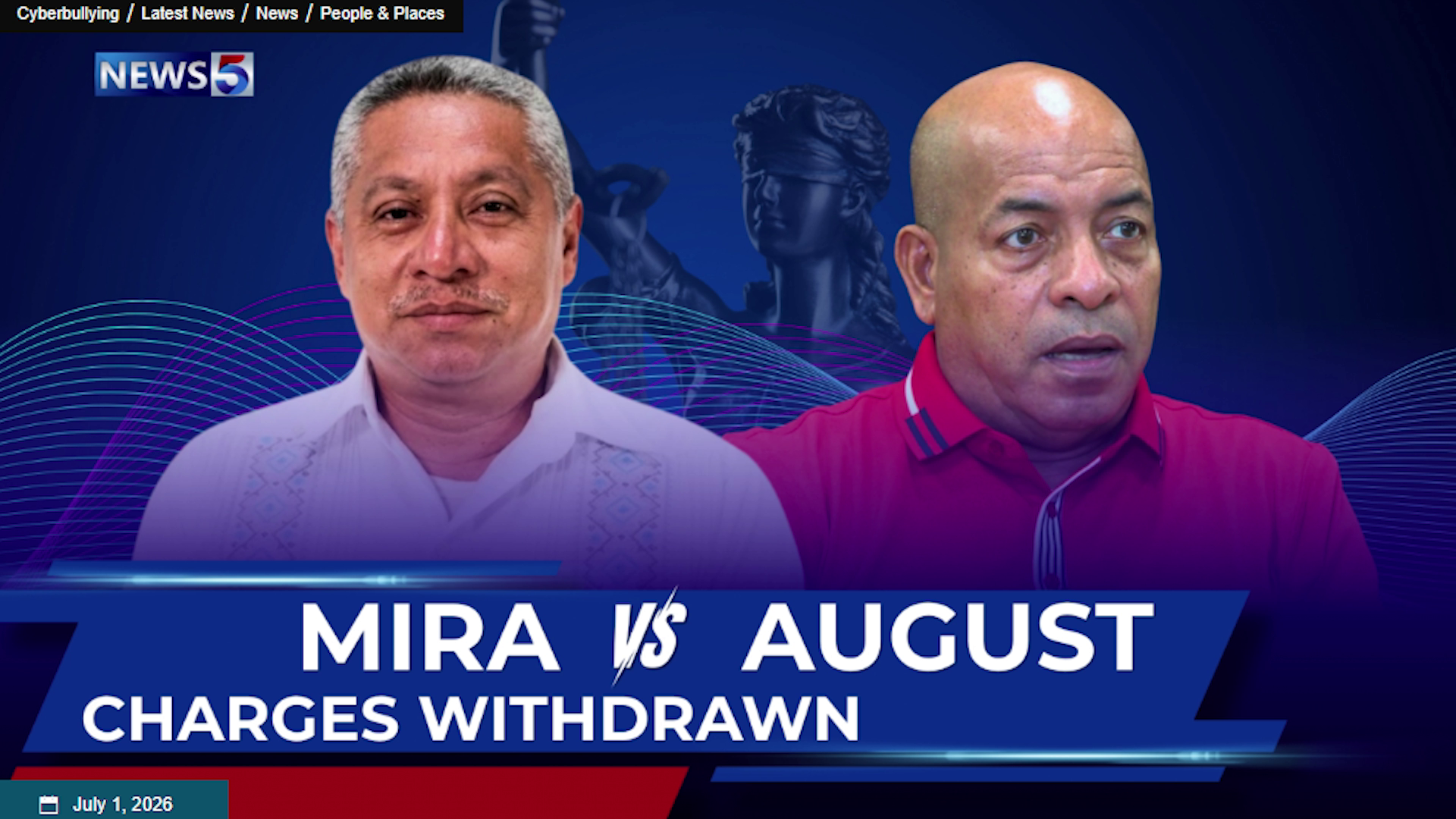
    Oscar Mira, Belize’s Minister of Home Affairs, added that the new substation will deliver two core public benefits: it will drastically improve the day-to-day working conditions for officers stationed on the island, and it will boost overall public safety for both residents and the island’s large annual influx of visitors. This report is a transcribed excerpt from an evening television news broadcast, with all Kriol-language statements transcribed using a standardized spelling system for accessibility.

  • Deadlock Deepens as PM Eyes Unilateral Move on Maya Lands

    Deadlock Deepens as PM Eyes Unilateral Move on Maya Lands

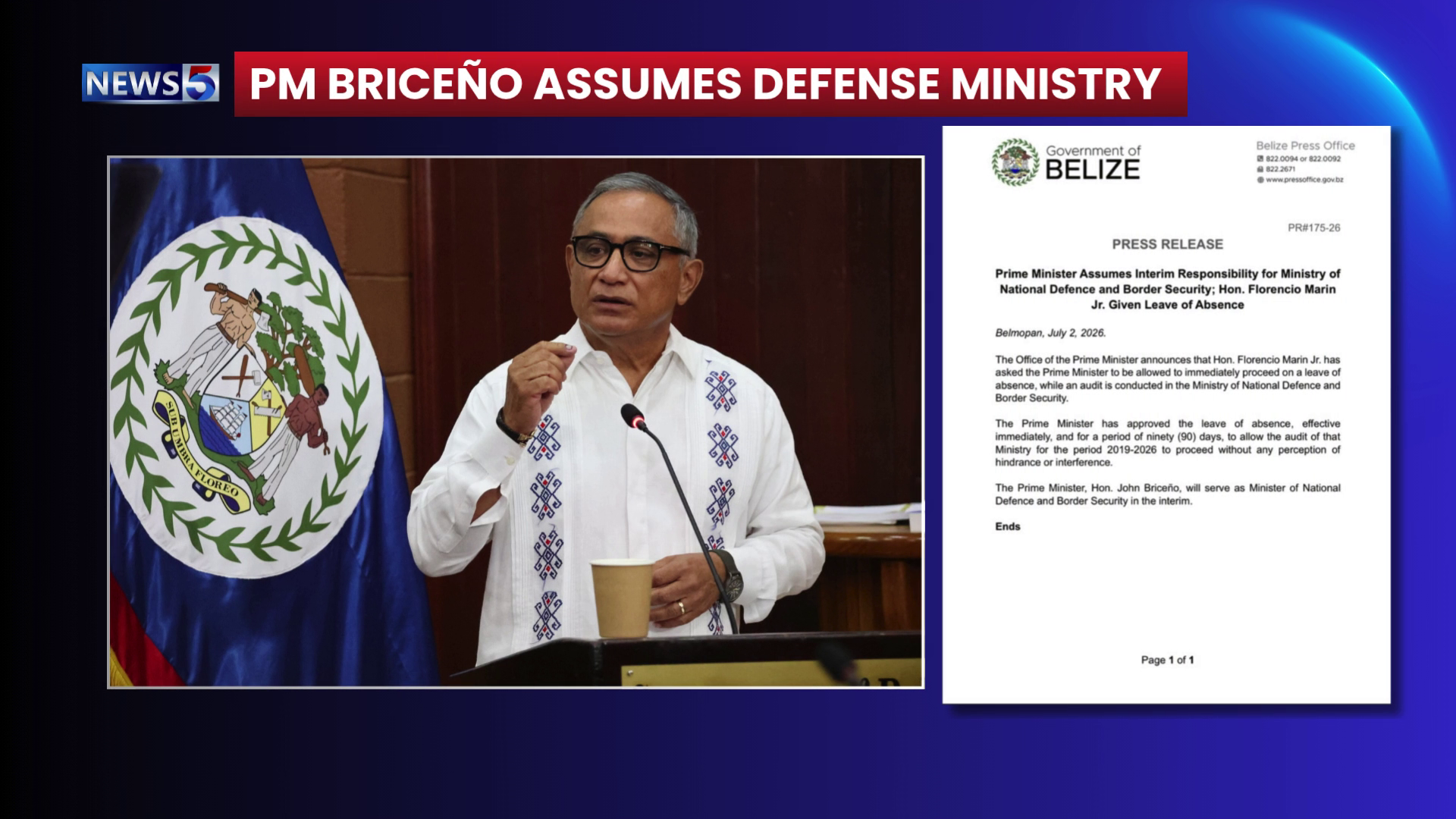
    One of Belize’s most contentious and decades-long policy disputes over Indigenous land rights has reached a new impasse, with Prime Minister John Briceño confirming that negotiations with the Maya Leaders Alliance (MLA) have collapsed into repeated gridlock — prompting his government to consider pushing forward with unilateral legislation regardless of opposition.

    In comments delivered during an evening national broadcast this week, the Briceño administration head laid bare the full scope of the breakdown in talks, noting that the MLA has rejected every compromise proposal put forward by the government to resolve the long-running conflict over Maya land claims. After years of iterative negotiations and one last-ditch effort to carve out a 35,000-acre land reserve as a starting point for negotiations, Briceño said the MLA refused to accept even that framework.

    “Our party, the People’s United Party, has stood on a clear foundation laid by George Price: we will not accept the balkanization of this country — we remain one unified nation,” Briceño said in the broadcast. He added that the government faces competing pressures from within its own support base: while some PUP backers align with the MLA’s positions, many other supporters who voted the PUP into office have criticized the administration for delaying action on the file and ignoring their concerns over territorial integrity.

    “We have invested countless hours in working with the alliance to find a mutually acceptable settlement,” Briceño explained. “We have bent over backward to meet them halfway, but every proposal we put on the table gets a flat rejection. At this point, I believe the only path forward is to finalize our draft legislation, bring it to a vote, and let any disagreements be settled through the judicial system. If we do not take this step, this issue will remain stalled indefinitely, and no one will get the resolution they need.”

    The MLA has already pushed back against the government’s plan, rejecting key provisions of the draft legislation and formally submitting concerns of a flawed process to the Caribbean Court of Justice, the region’s final appellate body. The clash puts the years-long fight for formal Maya land rights back at the center of Belize’s national political agenda, with both sides digging in ahead of what is expected to be a protracted legal and political battle.

    This report is adapted from a transcript of a televised evening news broadcast.

  • Belize Stands at Health Policy Crossroads Amid U.S. Concerns

    Belize Stands at Health Policy Crossroads Amid U.S. Concerns

    As of May 27, 2026, the small Caribbean nation of Belize finds itself caught between long-standing reliance on Cuban medical support and mounting diplomatic pressure from the United States, creating a tense policy standoff that tests the country’s sovereign decision-making. At the heart of the first dispute is the Cuban medical brigade, a program that has propped up Belize’s under-resourced public healthcare system for years, but which Washington has decried as a state-run forced labor and human trafficking operation.

    Multiple other nations across the Latin American and Caribbean region have already bowed to U.S. pressure and expelled Cuban medical teams in recent months, leaving Belize as one of the last remaining holdouts. In a public update on the ongoing negotiations, Belizean Prime Minister John Briceño laid out his government’s delicate balancing act: working to craft a compromise that satisfies both Washington’s demands and Belize’s need to retain qualified medical staff. Briceño emphasized that from the program’s launch, Belize has directly paid participating doctors rather than sending compensation to the Cuban government, a structure that already aligns with core U.S. requirements. The government’s current goal, he explained, is to reach a new agreement with Havana that allows individual brigade members to choose to remain in Belize voluntarily, formally confirming their independent employment status to address U.S. concerns.

    Beyond the medical brigade controversy, Briceño has also taken a clear, public stance against another recent U.S. action targeting Cuba: the indictment of 95-year-old former Cuban President Raúl Castro on charges of murder and conspiracy stemming from the 1996 shootdown of two unarmed civilian aircraft operated by a Cuban exile group. The incident killed four people, including three U.S. citizens and one U.S. permanent resident.

    Briceño called the indictment deeply troubling and unjustified, noting that the Cuban government had repeatedly warned the aircraft that they were violating Cuban sovereign airspace prior to the incident. “When it comes to Cuba, the Americans have a totally different outlook on that,” Briceño said. “It is certainly something small countries are concerned of, we in CARICOM. We have always taken the position of CARICOM. We are very concerned when any country starts to interfere with the sovereignty of any country.”

    For Belize, the dual disputes underscore the persistent challenges small Caribbean states face as they seek to uphold their own policy priorities amid competing geopolitical pressure from global powers, with the future of the country’s healthcare access and its stance on regional sovereignty hanging in the balance.

  • Diaspora : Preparations for the general elections in Haiti

    Diaspora : Preparations for the general elections in Haiti

    On May 27, 2026, four key Haitian government agencies convened a critical working session to lay the groundwork for Haitian diaspora engagement in the country’s upcoming general elections. Participants included senior representatives from the Ministry of Haitians Living Abroad (MHAVE), the Ministry of Foreign Affairs, the Provisional Electoral Council (CEP), and the National Identification Office (ONI), who gathered to finalize tangible, actionable mechanisms to ensure overseas voters can exercise their democratic rights.

    This meeting is more than a routine administrative step: it marks a historic milestone for Haitian electoral governance. For years, Haitians residing outside the country have pushed for formal recognition of their right to participate in national elections. The recent electoral decree that officially authorizes the CEP to organize voting processes for diaspora communities fulfills that longstanding demand, and this interagency session is the first concrete step to turn that legal mandate into practice.

    During the day-long discussions, officials zeroed in on three core strategic priorities. First, they reviewed plans for voter registration to be carried out through Haitian consulates and embassies across the globe, alongside updates on the ongoing national citizen identification process led by the ONI, which is a prerequisite for voter eligibility. Second, the group explored the feasibility of opening polling stations in major international cities with large concentrations of Haitian expatriates. Finally, attendees worked through details of logistical coordination between electoral bodies and overseas diplomatic missions to resolve potential bottlenecks ahead of voting.

    Kathia Verdier, who leads both the Ministry of Foreign Affairs and the diaspora portfolio, has taken on a central bridging role in the process. Verdier continues to serve as the key liaison between the CEP and Haitian communities living abroad, working to remove administrative barriers and ensure the voting process for overseas voters is organized, transparent, and inclusive.

    This year’s national mobilization campaign for diaspora participation carries the unifying theme: “Haiti : Security, Elections, the Diaspora Participates to Support Stability”, framing overseas voter engagement as a core contribution to restoring stability to the Caribbean nation.

  • President Simons aangekomen in Brazilië voor gesprekken over economie, landbouw en veiligheid

    President Simons aangekomen in Brazilië voor gesprekken over economie, landbouw en veiligheid

    Suriname’s President Jennifer Simons has touched down in Brazil for a high-stakes official working visit focused on expanding bilateral collaboration across multiple key policy areas, according to official government announcements. The visit, which kicked off after months of detailed pre-negotiations between the two nations, will center on deepening economic partnerships, advancing agricultural development, boosting cross-border security, and advancing regional integration across South America.

    Simons is not traveling alone: she is accompanied by a high-level delegation that includes five cabinet ministers and a team of technical specialists, covering every priority sector set for the talks. The delegation includes Foreign Affairs, International Trade and Cooperation Minister Melvin Bouva, Transport, Communication and Tourism Minister Raymond Landveld, Social Affairs and Housing Minister Diana Pokie, Agriculture, Livestock and Fisheries Minister Mike Noersalim, and Defense Minister Uraiqit Ramsaran.

    The centerpiece of the Brazil trip will be a formal meeting between Simons and Brazil’s President Luiz Inácio Lula da Silva, where the two leaders are set to lay the foundational framework for future strategic cooperation between Suriname and Brazil. Ahead of the presidential summit, Surinamese ministers have already held preliminary working sessions with their Brazilian counterparts to hash out details of concrete joint projects, streamlining negotiations ahead of the leaders’ meeting.

    Each minister will lead sector-specific discussions aligned with their portfolios. Landveld will prioritize upgrading direct air connectivity between the two countries to boost trade and tourism flows. Pokie will travel to Brazil to study the country’s landmark Bolsa Familia social welfare program, with an eye toward adapting successful frameworks for Suriname’s own social policy initiatives. Noersalim will lead talks on advancing sustainable agricultural development, expanding farmer training programs, and coordinating regional responses to cassava witches’ broom disease, a devastating pathogen that threatens cassava production across the entire region. For the defense portfolio, discussions will focus on enhancing joint border patrols, protecting shared border territories, and securing shared airspace against transnational security threats.

    Following the conclusion of her official engagements in Brazil, Simons and her full delegation will travel onward to the Dominican Republic for a second leg of the overseas trip. This visit is framed as primarily exploratory and economic, with a core goal of attracting new foreign direct investment to Suriname, particularly in the agricultural and tourism sectors.

    Simons will use the Dominican Republic leg to explore new models of collaboration between Suriname’s landowners, national government, and international investors that can drive growth in agricultural output and expand Suriname’s tourism footprint. The presidential delegation is scheduled to return to Suriname on June 2 following the conclusion of both overseas engagements.

  • Gov’t orders VINLEC to cut fuel surcharge to contain power bills

    Gov’t orders VINLEC to cut fuel surcharge to contain power bills

    Amid a sharp global uptick in oil and fuel prices that is driving soaring energy costs worldwide, Prime Minister Godwin Friday of St. Vincent and the Grenadines has rolled out a package of targeted, temporary policy measures designed to block crippling spikes in electricity bills for residential households and small local businesses. The interventions were formally announced during a nationally broadcast address Wednesday focused on the country’s mounting economic pressures and the growing cost-of-living crisis hitting ordinary citizens.

    Friday opened his address by warning that rising fuel costs for power generation have already pushed up the fuel surcharge added to monthly utility bills, and without urgent government action, electricity costs would become financially unbearable for large swathes of the Vincentian population. He noted that VINLEC, the country’s state-owned national electricity provider, had already recorded a roughly 29% jump in fuel surcharges during the first quarter of this year, and that costs would continue climbing without intervention.

    At the center of the government’s three-month cost containment plan is a full waiver of two key taxes on diesel purchased exclusively for electricity generation: the customs service charge and the national excise tax. Friday emphasized that this policy represents a deliberate short-term sacrifice of public revenue, with the government expected to forego approximately $1.65 million in income over the three-month period. All savings generated by the tax waiver will be passed directly to consumers, rather than retained by the utility, he confirmed. “We as government are absorbing part of the blow, so that ordinary Vincentians do not have to absorb them all by themselves,” Friday stated, adding that the goal is to cap or even lower monthly electricity bills for end users.

    In addition to the tax relief, the government is mandating that VINLEC share the burden of elevated global fuel prices with consumers through a tiered discount program for fuel surcharges that activate once surcharges cross specific price thresholds. Friday framed this framework as a model of partnership and shared responsibility between the public sector, the state utility, and private citizens.

    Under the mandatory discount scheme, if the per-kilowatt-hour fuel surcharge exceeds EC$0.71, VINLEC is required to apply a 50% matching discount to the fuel portion of the cost calculation. If the surcharge rises even higher, crossing EC$0.77 per kilowatt-hour, the utility must cover 100% of any additional increase for residential customers. “This intervention means relief on utility bills and protection against runaway increases,” the prime minister said.

    Friday repeatedly stressed that protecting electricity affordability is foundational to protecting overall household financial stability and small business viability across the country. Unchecked electricity price growth would force families into impossible choices between covering basic needs, he argued, noting: “It means the difference between a bill that remains manageable and one that forces families to choose between electricity and groceries, both essential.”

    For small enterprises — from barbershops and tailors to neighborhood grocers, restaurants, bakeries, and small local manufacturing operations — the price controls will protect existing jobs, keep operating margins sustainable, and allow businesses to keep consumer prices affordable, the prime minister added. By capping electricity costs, the government also aims to slow the transmission of higher generation costs into the broader prices of goods and services, including food and products that rely heavily on power for refrigeration, lighting, and machinery.

    Beyond these short-term relief measures, Friday used the address to lay out the government’s medium- and long-term strategy to eliminate St. Vincent and the Grenadines’ exposure to volatile global fuel markets: accelerating a national transition to renewable energy, with a particular focus on utility and residential solar power. The administration already maintains a full 100% tax waiver on solar photovoltaic systems to encourage adoption, and Friday said the current crisis has only increased the urgency of this shift. “The current crisis is an opportunity, forced upon us, to move aggressively towards renewable energy production, especially solar,” he said.

    The transition will require updating national legislation to modernize regulations for electricity production and distribution, and Friday confirmed that VINLEC will be expected to take a leading collaborative role in driving this transition forward. The government is also engaged in ongoing discussions with regional partners through blocs including CARICOM and ALBA to negotiate more stable long-term government-to-government energy arrangements that strengthen regional energy security.

    The electricity relief package forms just one pillar of a broader 90-day cost-of-living strategy the government is rolling out to address rising prices across key household expenses. The wider plan also includes temporary interventions for pump fuel, cooking gas, freight charges, and food prices, including cuts to excise taxes and a 50% reduction in the customs service charge on imported petroleum products. These broader fuel measures are designed to cap price increases for gasoline and diesel at no more than $5 per gallon, a change that complements electricity price controls given the country’s reliance on diesel for both power generation and ground transport.

  • PM calls for deeper trade and investment cooperation between Africa and the Caribbean

    PM calls for deeper trade and investment cooperation between Africa and the Caribbean

    Thousands of attendees gathered at Victoria Park in Grenville, Grenada, on Monday to mark African Liberation Day, where top political and community leaders used the commemorative platform to push for transformative, mutually beneficial economic and social collaboration between the African continent and Caribbean nations. Opening with a keynote address, Grenadian Prime Minister Dickon Mitchell framed closer cross-Atlantic cooperation as a catalyst for inclusive growth, innovation, and long-term sustainable development across both regions. Mitchell outlined a wide range of under-tapped areas for partnership, spanning creative arts, formal education, cultural industries, tourism, heritage preservation, youth exchange programs, and technological collaboration. Noting Grenada’s deep historical roots as part of the broader African diaspora, the Prime Minister emphasized that the island nation is fully committed to forging a modern, dynamic relationship with Africa built on equal mutual respect, shared ancestral history, and a collective commitment to unlocking new opportunities for all citizens. Mitchell articulated a bold, forward-looking vision for the future of Africa-Caribbean relations, stating that Grenada eagerly anticipates the day when seamless, meaningful connectivity between the two regions becomes a daily reality. “We long for the day when young Grenadians can study, trade, create and innovate with young Africans as naturally as they engage with North America and Europe,” Mitchell said. “We long for the day when African and Caribbean businesses can move goods, services, ideas and investments across the Atlantic with greater ease, confidence and purpose.” Aligning with the 2024 event theme “African Rooted, Diaspora Rising, Identity Reclaiming,” Tourism, Creative Economy and Culture Minister Adrian Thomas echoed Mitchell’s call, stressing the critical need for younger generations to reconnect with their ancestral identity and shared history. Thomas pushed back against long-standing colonial narratives, noting that Africa is far more than a ancestral homeland for diaspora communities—it is a dynamic continent brimming with untapped economic opportunity, groundbreaking innovation, vibrant cultural creativity, and enormous growth potential that represents the future for people of African descent worldwide. He argued that the time has come for African and Caribbean peoples to build their own independent systems and define their own collective worth, rejecting reliance on external powers to address systemic challenges rooted in a painful history. “Africa and the Caribbean must no longer sit idle and beg others to solve the very problems created by slavery, colonialism, exploitation, unfair trade and unjust global systems,” Thomas said. “We cannot continue to outsource our destiny. We cannot continue to wait for others to rescue us. We cannot continue to complain about the chains while refusing to break them.” St Andrew South-West Parliamentary Representative Lennox Andrews extended a warm welcome to visiting African delegations in attendance, encouraging guests to explore Grenada’s deep ties to African heritage across the country’s tri-island territory. Andrews invited delegates to visit iconic historical and cultural sites tied to the trans-Atlantic slave trade, including Leapers Hill, Belmont Estate, and the smaller sister islands of Carriacou and Petite Martinique. He also urged visitors to engage directly with local communities and experience unique Grenadian cultural traditions rooted in African heritage, such as Big Drum Dancing and Shakespeare Mas. Dr. Stephen Onigbinde, President of the Nigerian Community in Grenada and an Assistant Professor at St. George’s University School of Medicine who has served six years as a pro bono consultant at Grenada’s General Hospital, added that the process of reclaiming collective identity requires open, honest examination of history—including the devastating legacy of the trans-Atlantic slave trade and colonial rule. “The ability to look at history books and tell ourselves something is not right here, not out of hatred, but understanding that it is our responsibility to tell our own story,” Dr. Onigbinde explained. He also emphasized the urgent need to educate younger generations on the full, unfiltered truth of their ancestral heritage and collective identity. Beyond formal speeches and policy discussions, the African Liberation Day celebration in St Andrew featured a full slate of cultural programming, including live music, traditional dance performances, drumming circles, poetry readings, and artistic showcases, with participation from both local Grenadian community groups and visiting African representatives. The event was organized under the auspices of Grenada’s Ministry of Tourism.