分类: politics

  • Govt ‘to turn derelict buildings into climate-resilient homes’

    Govt ‘to turn derelict buildings into climate-resilient homes’

    Barbados is accelerating innovative strategies to transform derelict structures and vacant lands into sustainable housing solutions, positioning urban renewal as a cornerstone of climate adaptation policy. Acting Prime Minister Dr. William Duguid unveiled this initiative while addressing the 34th general assembly of MINURVI, the Forum of Ministers and High-Level Authorities of Housing and Urban Development of Latin America and the Caribbean.

    Dr. Duguid delivered a compelling argument for rethinking urban infrastructure in the era of climate change, stating that existing systems were designed for environmental conditions that no longer exist. “As we build for the future, we must build for the new climate reality,” he emphasized. “This means constructing with greater emphasis on resilience—not just in roads, but in buildings and housing infrastructure as well.”

    The minister connected recent extreme weather events, including Hurricane Melissa’s devastation in Jamaica and Cuba, to the urgent need for adaptive urban planning. He highlighted how strategic reuse of underutilized assets could simultaneously address housing shortages, attract private investment, and create more robust urban environments.

    Barbados’s Ministry of Housing, Lands and Maintenance is already advancing several policies in this direction. In collaboration with the Inter-American Development Bank, officials are conducting technical studies on repurposing vacant lots and abandoned buildings within urban corridors for future housing development.

    Housing Minister Chris Gibbs reinforced the critical timing of these initiatives, noting that climate impacts have become a “global equalizer” leaving all nations operating with heightened vulnerability. He emphasized the alignment between these urban adaptation strategies and recent climate discussions at COP30 in Belém, Brazil.

    The regional significance of these efforts was further underscored by José Manuel Salazar Xirinachs, executive secretary of the UN Economic Commission for Latin America and the Caribbean. In a pre-recorded address, he warned that housing deficiencies across the region leave millions exposed to climate risks while exacerbating existing challenges of inequality and weak governance structures.

  • Legal Firestorm Over Police Transfer Raises Accountability Questions

    Legal Firestorm Over Police Transfer Raises Accountability Questions

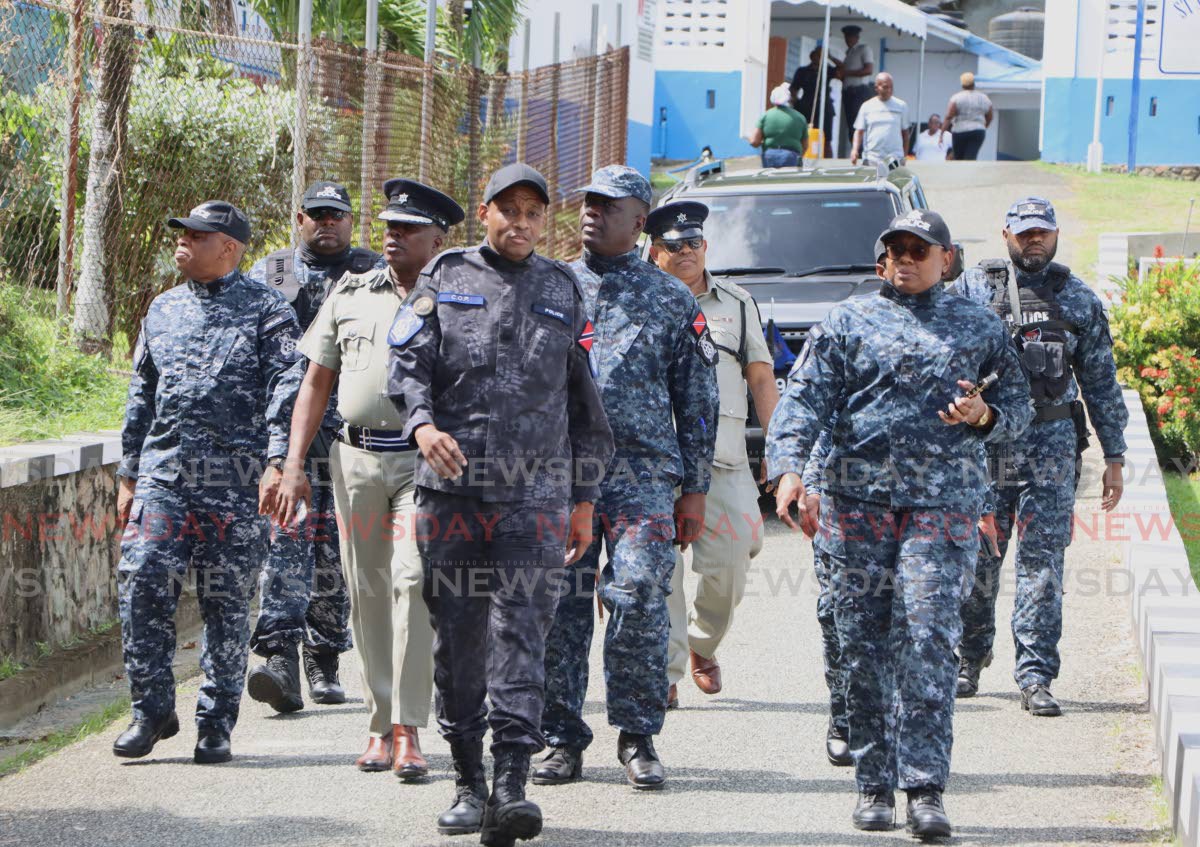
    A contentious legal battle has erupted within the Belize Police Department, challenging the legitimacy of a high-ranking official’s administrative authority. Commissioner of Police Dr. Anthony Rosado faces formal judicial scrutiny following allegations of wielding personnel transfers as instruments of retaliation rather than operational necessity.

    The controversy centers on the abrupt reassignment of a Police Constable from a specialized gang intelligence unit to a remote substation in Mahogany Heights. Legal representatives from Myles & Banner have issued a formal demand letter asserting this transfer constitutes unlawful punishment rather than routine administrative procedure. The constable’s relocation reportedly resulted in the loss of critical allowances and potentially derailed his career progression.

    According to court documents, the transfer appears connected to the officer’s disclosure of sensitive information pertaining to the high-profile Joseph Budna kidnapping investigation. The legal challenge cites multiple procedural irregularities, including the November implementation date falling outside standard July-August transfer windows and alleged violation of departmental policies explicitly prohibiting transfers as disciplinary measures.

    Legal precedent establishes that the Commissioner’s transfer authority, while extensive for officers below Inspector rank, must align with principles of fairness and reasonableness. The petition references landmark cases including Troy Bainton v. Commissioner of Police (2023) and Arzu vs. Commissioner of Police (2019), where courts previously intervened in instances of alleged power abuse.

    The constable’s attorneys contend their client had secured a performance-based agreement for promotion to Inspector, making the transfer particularly damaging to his professional trajectory. They characterize the reassignment as an act of bad faith intended to isolate and intimidate an officer for fulfilling his duties.

    Unless the decision is reversed by Friday, judicial review and injunction proceedings will commence, potentially establishing new boundaries for administrative authority within Belize’s law enforcement hierarchy. This case raises fundamental questions about accountability mechanisms, transparency in policing operations, and the permissible exercise of institutional power.

  • Belize Police Department Rethinks Crime-Fighting in a Digital Age

    Belize Police Department Rethinks Crime-Fighting in a Digital Age

    Facing an unprecedented transformation in criminal activity, the Belize Police Department has initiated a comprehensive strategic planning workshop to address the complexities of modern law enforcement. Deputy Commissioner Bart Jones emphasized that this initiative represents a critical juncture for the department’s institutional development and operational modernization.

    The policing landscape has undergone radical changes with the emergence of borderless cybercrime and sophisticated transnational criminal networks. Commissioner Jones highlighted how criminal operations have increasingly migrated to digital platforms and social media, creating challenges that traditional policing methods are ill-equipped to handle simultaneously with rising public expectations for security and service.

    This strategic workshop serves as a platform for departmental leadership to evaluate emerging threats, reassess response protocols, and develop forward-looking strategies. The sessions focus on aligning operational tactics with the department’s core mission while incorporating technological adaptation and coordinated response mechanisms.

    Commissioner Jones framed the initiative as essential for organizational survival rather than mere administrative procedure. ‘Strategic planning transcends managerial exercise—it represents our toolkit for maintaining effectiveness and leadership within an increasingly complex security environment,’ he stated during the proceedings.

    The department’s commitment extends beyond tactical adjustments to encompass broader principles of integrity, professional competence, and purposeful vision in serving the Belizean public amid rapidly evolving criminal methodologies and societal expectations.

  • Belize Invests in Smarter, Future-Ready Policing

    Belize Invests in Smarter, Future-Ready Policing

    In response to rapidly evolving security challenges, Belize’s Ministry of Home Affairs has announced a comprehensive strategic training initiative designed to prepare law enforcement personnel for the future of policing. Minister Oscar Mira emphasized that the program represents a fundamental shift from routine administrative exercises to a deliberate investment in professional readiness.

    The initiative addresses multiple emerging challenges including technologically sophisticated crimes, heightened public expectations for accountability, and increasingly complex social dynamics. Minister Mira highlighted that policing methodologies that were effective five or ten years ago have become inadequate for contemporary security demands.

    ‘This workshop transcends conventional administrative exercises—it constitutes a strategic investment in our department’s professionalism and future preparedness,’ Minister Mira stated. ‘The program launches at a critical juncture as policing demands continue to evolve alongside rising public expectations.’

    The curriculum focuses on developing critical competencies for modern law enforcement, including decision-making under extreme pressure, response to violent crimes, investigative interviewing techniques, warrant execution protocols, and public order management. The minister emphasized that continuous training remains essential for officers to maintain current knowledge and tactical proficiency.

    The initiative recognizes that criminal behaviors have adapted to new technologies while community expectations regarding police accountability and performance have significantly increased. This training transformation aims to ensure Belize’s law enforcement capabilities remain effective in an unpredictable security landscape.

  • A Sapodilla Victory Isn’t Enough Without Enforcement

    A Sapodilla Victory Isn’t Enough Without Enforcement

    While the International Court of Justice deliberates on the Sapodilla Cayes territorial dispute, local voices from Belize’s coastal communities highlight critical implementation challenges that could undermine a potential legal victory. Eworth Garbutt, President of the Belize Flat Fishery Association and lifelong resident of the cayes, expresses measured optimism about Belize’s legal position while sounding alarms about enforcement deficiencies.

    Garbutt, whose father served as lighthouse keeper in the disputed waters, possesses intimate knowledge of the region’s operational realities. His central concern revolves around Guatemala’s continued exploitation of the area despite existing regulations. “Sovereignty is a substantial matter,” Garbutt stated. “For generations before my birth, Guatemala has operated there at their leisure.”

    The fishery leader detailed systematic violations occurring in the protected zone, noting that Guatemalan operators from Livingston routinely conduct unauthorized tours in the Sapodilla Cayes without requiring licensed guides—a direct breach of Belizean tourism regulations. “In this context, they’ve already prevailed regardless of the ICJ’s eventual ruling,” Garbutt observed.

    Illegal fishing constitutes another pressing issue, with Garbutt emphasizing the area’s fully protected status. While acknowledging some recent reduction in unauthorized fishing, he expressed skepticism about enforcement capabilities post-ruling. “They are content when we establish regulations without enforcement mechanisms,” he commented.

    Despite these practical concerns, Garbutt maintains confidence in Belize’s legal position, attributing this optimism to both evidential strength and national solidarity. However, he cautioned that a favorable ruling without subsequent protection would represent a hollow victory: “Even if awarded a paper declaration without understanding how to protect our sovereignty, we would possess a document we cannot utilize—consuming tilapia while Guatemalans and Hondurans harvest snapper from our waters.”

  • FLASH : Additional USCIS Directives Regarding Haiti

    FLASH : Additional USCIS Directives Regarding Haiti

    In response to a recent fatal shooting incident in Washington D.C. involving an Afghan national, U.S. Citizenship and Immigration Services has enacted stringent new screening protocols targeting foreign nationals from 19 designated high-risk countries. The comprehensive policy shift empowers immigration officers to evaluate country-specific risk factors during case reviews, marking a significant hardening of U.S. immigration vetting procedures.

    The newly designated nations subject to enhanced scrutiny include Afghanistan, Burma, Chad, Republic of the Congo, Equatorial Guinea, Eritrea, Haiti, Iran, Libya, Somalia, Sudan, Yemen, Burundi, Cuba, Laos, Sierra Leone, Togo, Turkmenistan, and Venezuela. This directive builds upon previous immigration restrictions established during the Trump administration’s initial term.

    USCIS Director Joseph Edlow emphasized the security imperative behind these measures: ‘My fundamental duty involves ensuring exhaustive vetting and screening processes for all foreign nationals. This necessitates thorough evaluation of their origins and motivations. Recent tragic events have highlighted concerning vulnerabilities in our previous screening frameworks.’

    The updated guidelines specifically authorize immigration officials to consider nation-specific circumstances as potentially adverse factors during case evaluations. Critical considerations include assessing countries’ capacities to produce reliable identification documents and maintain adequate record-keeping systems.

    This policy enhancement reinforces the implementation of Presidential Proclamation 10949, which restricts entry of foreign nationals deemed potential threats to national security and public safety. The directive took immediate effect upon announcement, applying to all pending and new applications filed from November 27, 2025 onward.

  • President over relatie Nederland: Gelijkwaardig en psychologisch zelfstandig

    President over relatie Nederland: Gelijkwaardig en psychologisch zelfstandig

    Surinamese President Jennifer Simons has declared that King Willem-Alexander’s state visit to Suriname has inaugurated a transformative phase in bilateral relations between the two nations. Speaking at a press conference in Commewijne, Simons emphasized that future ties must be founded upon principles of equality, mutual respect, and psychological independence rather than historical dependencies.

    The three-day royal visit, which concluded recently, demonstrated Suriname’s confident trajectory in shaping its national future while signaling the Netherlands’ recognition that it must adopt a fundamentally new approach toward its former colony. President Simons articulated that while the 1975 independence granted constitutional sovereignty, the nation must now pursue ‘psychological independence’—liberating itself from patronage mentality, dependency thinking, and historical sensitivities that have long strained bilateral relations.

    ‘Suriname stands on its own feet, with its distinct identity and unique challenges. The Netherlands must respect this reality, while Suriname must project this self-assurance confidently,’ Simons stated during the address.

    The president characterized the state visit as both a symbolic and practical reboot, describing how both nations ‘unpacked a new package’ that establishes framework for a mature relationship moving forward. ‘We progress as two friends with a shared history, but with a future where we support each other as equal partners,’ she explained, noting that both countries must learn to operate within this redefined dynamic.

    While welcoming cooperation in education, culture, economic development, river management, and infrastructure, Simons clarified that such collaboration must exclusively occur through modalities that strengthen Suriname’s autonomy. The signed cooperation documents between ministerial departments and the presence of a substantial Dutch business delegation during the visit were cited as concrete steps toward this new partnership model.

    A particularly symbolic moment occurred along the Suriname River, where both nations metaphorically ‘laid the burdens of the past upon the waters,’ followed by calls for pragmatic, businesslike cooperation without guilt or inferiority complexes from either side.

    Looking ahead, Suriname plans to continue discussions with the Netherlands in coming months regarding visa procedure reforms and humane treatment of applicants, educational exchanges at vocational and university levels, cultural collaboration and heritage preservation, economic development opportunities, and improved flight connectivity with reasonable pricing.

  • Haiti Moves Towards First General Election Since 2016

    Haiti Moves Towards First General Election Since 2016

    In a landmark decision signaling potential democratic renewal, Haiti’s transitional presidential council has formally ratified a long-awaited electoral law, initiating the process for the nation’s first general elections since 2016. This crucial development, reported by NBC News, represents the most substantial progress toward reestablishing constitutional governance after years of political paralysis and instability.

    Council President Laurent Saint-Cyr emphasized the historic significance of this move, declaring on social media platform X that this action finally provides the Haitian populace with “the opportunity to freely and responsibly choose those who will lead them.” He further affirmed the council’s unwavering dedication to reestablishing national security and guiding Haiti toward “democratic legitimacy and stability.”

    The approval process revealed underlying political tensions within the governing body. According to local newspaper Le Nouvelliste, the late Monday vote witnessed notable absences, with three of the seven voting council members failing to attend the session. This occurred amid internal pressures from several members advocating for the removal of Prime Minister Alix Didier Fils-Aimé.

    Electoral authorities have outlined a tentative calendar projecting initial voting in August 2026, with a subsequent final round scheduled for December of that year. However, officials have concurrently issued cautions that pervasive gang violence throughout the country presents substantial security challenges that could potentially disrupt this timeline.

    Haiti’s political vacuum has persisted since the shocking assassination of President Jovenel Moïse at his private residence in July 2021, compounding the governance crisis that began when the country last failed to hold scheduled elections nearly a decade ago.

  • Trump hints at imminent expansion of U.S. travel ban list following national guard shooting incident

    Trump hints at imminent expansion of U.S. travel ban list following national guard shooting incident

    The Trump administration is evaluating a significant expansion of its travel restriction policies in response to last week’s shooting incident in Washington D.C. that left two National Guard personnel wounded. Homeland Security Secretary Kristi Noem announced via social media platform X that she has met with the President and recommended comprehensive travel prohibitions targeting nations she accused of “flooding our nation with killers, leeches, and entitlement junkies.”

    This potential policy escalation builds upon existing travel restrictions announced earlier this summer targeting 19 countries, with seven under partial bans affecting specific visa categories. The current list includes Afghanistan, Iran, Venezuela, and several African nations, with varying restrictions based on diplomatic relations and security assessments.

    The administration’s consideration gained momentum after authorities identified the suspected shooter in last week’s incident as a 29-year-old Afghan national. While neither Trump nor Noem has specified which additional countries might face restrictions, leaked documents reveal the administration had already been evaluating 36 potential additions to the ban list, predominantly from sub-Saharan Africa.

    According to diplomatic cables obtained by media outlets, the State Department had given these nations 60-day notices to improve travel documentation practices and address issues related to citizens residing illegally in the United States. Failure to demonstrate compliance would result in inclusion in the expanded restrictions.

    The proposed expansion aligns with President Trump’s recent declaration that he would “permanently pause migration from all Third World Countries to allow the U.S. system to fully recover,” signaling a fundamental shift in immigration policy that prioritizes security concerns and systematic recovery over traditional immigration pathways.

  • Professor Ivelaw Griffith to deliver 21st Sir Archibald Nedd Memorial Lecture

    Professor Ivelaw Griffith to deliver 21st Sir Archibald Nedd Memorial Lecture

    The geopolitical tensions surrounding Caribbean sovereignty will take center stage at the 21st Sir Archibald Nedd Memorial Lecture scheduled for December 9, 2025, at Radisson Convention Centre in Grand Anse. Esteemed scholar Professor Ivelaw Griffith, an internationally recognized authority on regional security, will deliver this year’s address titled “The Radar Request: Sovereignty and Vulnerability in the Caribbean.

    Professor Griffith brings exceptional credentials to this timely discussion. As a former Senior Associate of the Centre for Strategic and International Studies and Fellow of the Caribbean Policy Consortium, he has authored eleven books on security matters. His expertise earned him the prestigious 2015 Perry Award for Excellence in Security and Defence Education, making him the first Caribbean recipient of this honor named after former US Defence Secretary Dr. William Perry.

    The Guyanese academic, who previously served as Vice-Chancellor of the University of Guyana, also holds the Cacique Crown of Honour—Guyana’s third highest national award—for his transformational educational leadership and international scholarship.

    This year’s lecture topic addresses mounting regional concerns about increased US military presence in the Caribbean. The discussion will specifically examine the controversial US request to establish radar facilities at Grenada’s Maurice Bishop International Airport, juxtaposed against widespread calls for maintaining the Caribbean as a Zone of Peace. These developments have sparked intense debate across local, regional, and international platforms.

    Established in 1996 by the Grenada Bar Association, the SANML represents the Commonwealth’s longest-running public lecture series hosted by any bar association across the 56-nation coalition. The event honors former Grenadian Chief Justice Sir Archibald Nedd (1979-1986) while fulfilling the legal association’s mission to provide continuing public education on matters of civic importance. The December lecture is open to all members of the public seeking to engage with these critical geopolitical developments.