分类: politics

  • US assures Guyana of security support if Trump’s land operations trigger Venezuelan attacks

    US assures Guyana of security support if Trump’s land operations trigger Venezuelan attacks

    The United States has formally assured Guyana of its security commitment should Venezuela launch retaliatory attacks in response to potential US military operations. US Ambassador to Guyana Nicole Theriot declared Washington’s readiness to “stand shoulder to shoulder” in defense of the South American nation, emphasizing Guyana’s strategic importance as both a partner and regional ally.

    This security guarantee comes as President Donald Trump contemplates land operations in Venezuela targeting what he describes as narco-terrorist networks. The Maduro administration’s renewed claims over Guyana’s oil-rich Essequibo Region—approximately 160,000 square kilometers—has intensified diplomatic tensions throughout the Caribbean basin.

    Military analysts suggest substantial US firepower deployed throughout the region would effectively deter Venezuelan aggression. R. Evan Ellis, Latin America Research Professor at the US Army War College, characterized the risk of attack as “moderate,” noting that any serious military action would likely trigger a “crushing response” from US forces. He suggested Venezuela would be reluctant to compromise its international standing by initiating conflict.

    The geopolitical stakes are substantially elevated by Guyana’s emerging status as a major oil producer. An ExxonMobil-led consortium including Chevron and China National Overseas Oil Corporation projects production exceeding 1 million barrels daily by 2030. This economic transformation positions Guyana as a crucial US partner in countering narcotics trafficking and transnational crime.

    Guyanese President Irfaan Ali affirmed his administration’s priority remains national sovereignty and citizen safety. While acknowledging continuous risk assessments with international partners including the UK and France, Ali declined to disclose specific security measures. Migration experts additionally warn that US military action in Venezuela could trigger renewed refugee flows across the Guyanese border, where approximately 100,000 Venezuelans already reside amid their homeland’s ongoing crisis.

    Despite these complex security challenges, industry observers maintain confidence in offshore operations’ resilience. Former UK High Commissioner to Guyana Greg Quinn advised energy companies to maintain updated contingency plans while characterizing the overall risk environment as manageable.

  • UDP Leader Sets Internal Reform as First Order of Business

    UDP Leader Sets Internal Reform as First Order of Business

    The United Democratic Party (UDP) is initiating a sweeping internal reorganization, with constitutional reform serving as the cornerstone of its strategy to prevent future governance failures. Hon. Tracy Panton announced that the party’s primary immediate objective involves fortifying its institutional framework to avert any recurrence of recent leadership instability.

    Panton underscored that forthcoming reforms will establish robust mechanisms to prevent any individual chairman or leader from circumventing institutional checks or dismantling party infrastructure. These measures aim to embed accountability, stability, and inclusive decision-making processes into the party’s core operations.

    The restructuring involves a comprehensive reconfiguration of the National Party Council and the reappointment of the Central Executive Committee, forming the structural basis for the UDP’s operational reset. This recalibration seeks to broaden participatory governance by granting constituency leaders and delegates more clearly defined roles in determining the party’s strategic direction.

    Beyond constitutional overhaul, the UDP will implement motions ratified during its national convention, including specific initiatives to enhance women’s political leadership and amplify youth involvement. These initiatives will be supported by organizational frameworks designed to guarantee substantive influence for women and young members within the party’s hierarchy.

    To bolster policy development, Panton revealed plans to form specialized committees addressing critical national concerns. These panels will focus on education, healthcare, economic advancement, citizen security, and cost-of-living challenges. Their mandate includes formulating strategic proposals and generating actionable solutions for integration into a cohesive national agenda.

    Panton characterized this restructuring as a pivotal phase in the UDP’s efforts to restore public trust. She emphasized that combining organizational discipline with expanded engagement is essential for positioning the party as a credible national leadership alternative in the coming years.

  • Former AG suggests new gov’t pass integrity law, set up constituency fund

    Former AG suggests new gov’t pass integrity law, set up constituency fund

    In a surprising political reversal, former Attorney General Grenville Williams has publicly endorsed the New Democratic Party’s constituency development fund proposal—a policy his own Unity Labour Party vehemently opposed during its 25-year administration. Williams, who unsuccessfully contested the South Leeward seat in the November 27 general election, made his recommendations through a detailed Facebook post just days after the ULP’s electoral defeat.

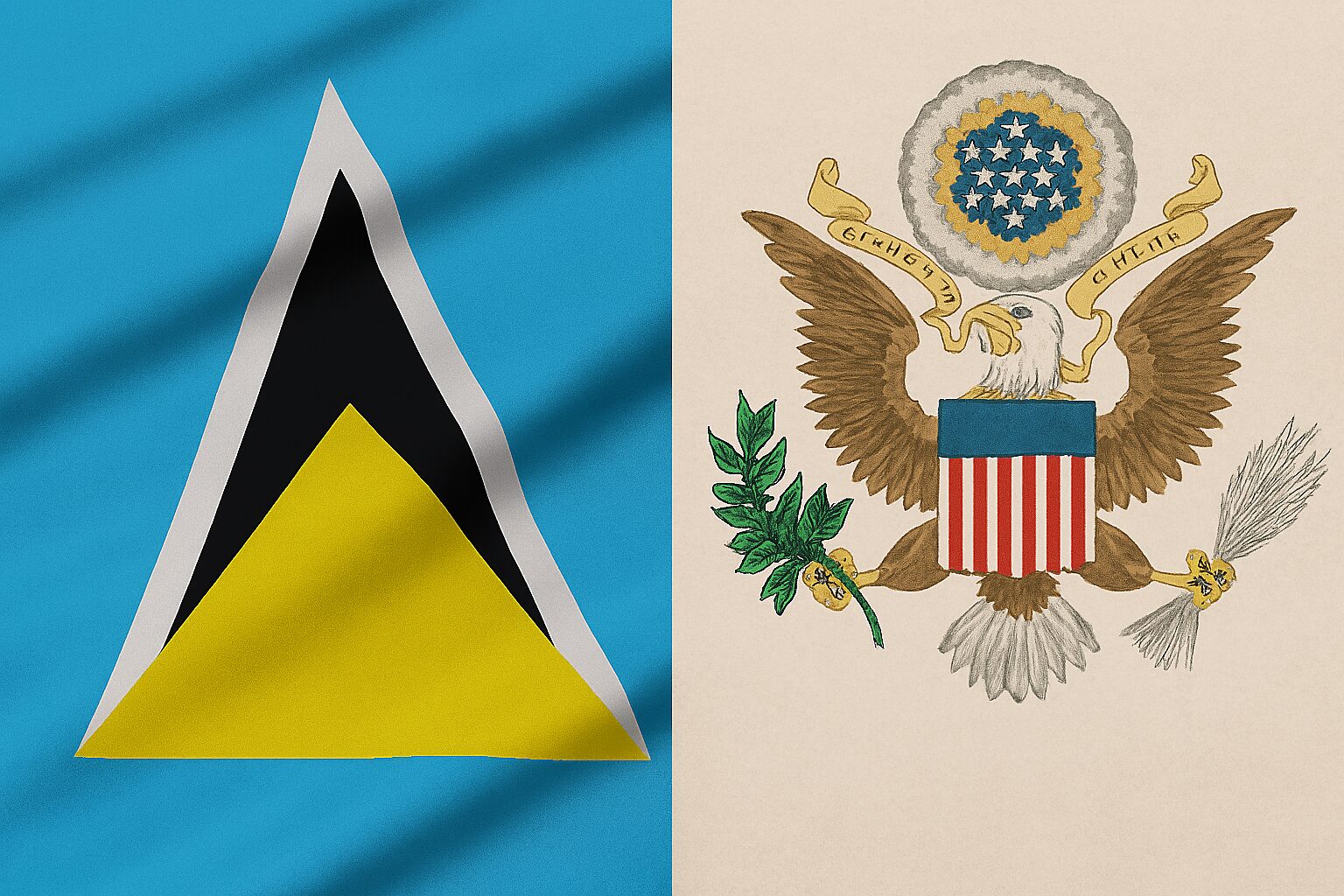
    The defeated candidate urged newly appointed Prime Minister Godwin Friday to enact two landmark legislations within his first 90 days in office: an integrity commission requiring full financial disclosure from all politicians, and the formal establishment of the constituency development fund that would allocate resources to MPs for local projects. Williams specifically referenced Jamaica’s integrity framework and St. Lucia’s development fund as exemplary models.

    This endorsement represents a significant political paradox given that Williams served as attorney general from October 2022 until November 2025 under the ULP government, which consistently blocked both initiatives despite previous campaign promises. The NDP had advocated for the development fund for over fifteen years, facing strong opposition from former Prime Minister Ralph Gonsalves who argued it would create duplication and accountability issues.

    The development fund became a particular point of contention when opposition member Carlos James Leacock—now Deputy Prime Minister—accused the ULP of secretly implementing similar measures despite public denouncements. Leacock had previously vowed not to serve in any NDP government that failed to establish the fund.

    Williams, who lost to NDP’s Nigel Stephenson by 1,266 votes, extended congratulations to his former opponent and offered to share his six-point development plan for South Leeward, emphasizing his commitment to national interest above partisan politics.

  • Dominican Republic assumes pro-tempore presidency of Central American Agricultural Council

    Dominican Republic assumes pro-tempore presidency of Central American Agricultural Council

    PANAMA CITY – In a significant development for regional agricultural governance, Dominican Agriculture Minister Limber Cruz has been appointed to the pro-tempore presidency of the Central American Agricultural Council (CAC). The transition of leadership occurred during formal proceedings in Panama City, marking a recognition of the Dominican Republic’s emergent status as an agricultural powerhouse within the region.

    The appointment underscores the nation’s considerable advancements in agricultural productivity, technological innovation, biosecurity protocols, and institutional capacity building. Minister Cruz’s elevation to this prestigious position is widely viewed as a direct consequence of his ministerial track record, characterized by implementing pragmatic policies, delivering substantial direct support to agricultural producers, and enhancing efficiency throughout critical value chains.

    This leadership role within the CAC, an integral body of the Central American Integration System (SICA), empowers the Dominican Republic to steer collaborative efforts aimed at bolstering regional food security, stimulating sustainable rural development, and fostering deeper economic integration among member states. The presidency is anticipated to serve as a platform for sharing the Dominican model of agricultural success while addressing shared challenges and opportunities across Central America.

  • Elections : Meeting on the political participation of women

    Elections : Meeting on the political participation of women

    PORT-AU-PRINCE, Haiti – In a significant move to strengthen democratic processes, Haiti’s Ministry of Women’s Affairs and Women’s Rights (MCFDF) convened a pivotal departmental conference on December 4th, 2025, at the Hotel Montana. The gathering, themed “No Democracy or Elections Without Women: Zero Violence!” (“Pa gen demokrasi ni Eleksyon San Fanm: Zewo Vyolans!”), marks the beginning of a nationwide campaign to empower Haitian women in the political arena and address systemic barriers to their participation.

    Minister Pedrica Saint Jean delivered a powerful address, asserting that Haiti’s democratic renewal is inextricably linked to women’s inclusion. “There is no democracy without women,” she declared, framing the conference’s mission to conduct a departmental assessment, document instances of electoral violence, gather local testimonies, mobilize community stakeholders, and develop context-specific solutions.

    The Minister highlighted numerous persistent challenges facing women in politics, including intimidation campaigns, physical and psychological threats, digital harassment, and systematic marginalization within political party structures. These obstacles, she noted, not only suppress female representation but fundamentally weaken the nation’s democratic foundations.

    International support was evident through UN Women Representative Marie Goretti Ndwayo, who commended Haitian women’s resilience amid political and security crises. She reinforced that women’s political engagement serves as a critical catalyst for national progress.

    Electoral Advisor Yves Marie Édouard and Minister Delegate for Electoral and Constitutional Issues Joseph André Gracien Jean both emphasized the necessity of enhancing security measures to create safe environments for women’s political involvement, free from fear of violence or coercion.

    The conference featured expert panels delving into themes of political participation and electoral violence, followed by interactive workshops where participants shared experiences and formulated actionable recommendations. This inaugural West Department meeting initiates a series of ten departmental conferences scheduled to conclude on December 10th, culminating in a National General Assembly on women’s political participation in Les Cayes from December 12-14.

  • T&T PM Blames Venezuelan Criminals for Rising Crime

    T&T PM Blames Venezuelan Criminals for Rising Crime

    Prime Minister Kamla Persad-Bissessar of Trinidad and Tobago has identified cross-border criminal operations as the primary driver behind escalating violent crime in the nation. In official statements released December 4, 2025, the Prime Minister specifically pointed to “sanction-busting Venezuelan criminals” who she alleges are collaborating with domestic drug traffickers.

    The announcement coincides with confirmed plans for deploying advanced US radar technology in Tobago. According to Persad-Bissessar, this surveillance system will significantly enhance detection capabilities for various illegal activities originating from Venezuela, including crude oil smuggling, narcotics and weapons trafficking, and human trafficking operations.

    In a pointed critique of previous administrations, the Prime Minister questioned the effectiveness of earlier radar systems that failed to identify unauthorized ship-to-ship transfers of sanctioned Venezuelan oil within Trinidad’s territorial waters. Official documents reportedly identified Trinidad as the point of origin for some of these illicit oil shipments.

    Persad-Bissessar emphasized that the new radar infrastructure will substantially strengthen national security protections beyond previous capabilities. This development occurs against the backdrop of expanded US military presence throughout the Caribbean region and increased pressure campaigns targeting Venezuela.

    Recent weeks have seen US forces execute over twenty operations against suspected Venezuelan drug trafficking organizations. While expressing support for these anti-narcotics efforts, the Prime Minister explicitly denied any possibility that Trinidad and Tobago would serve as a staging ground for military strikes against Venezuela.

  • Politic : Marco Rubio urges Nations to support the GSF

    Politic : Marco Rubio urges Nations to support the GSF

    In a significant diplomatic move on December 4th, 2025, U.S. Secretary of State Marco Rubio issued a compelling appeal for international collaboration to address the ongoing crisis in Haiti. Speaking at a high-profile signing ceremony at the State Department attended by Kenyan President William Ruto, Rubio urged nations across Latin America and the global community to contribute substantively to the Gang Suppression Force (GSF) initiative.

    This multinational security effort operates under the mandate of United Nations Security Council Resolution 2793, which was formally adopted on September 30, 2025. Rubio characterized Kenya’s involvement as demonstrating ‘an extraordinary, truly heroic role’ in stabilization attempts, setting a benchmark for international participation.

    The Secretary of State emphasized that unilateral efforts would prove insufficient, stating ‘We understand and believe they cannot do it by themselves.’ He explicitly called for both financial contributions and personnel deployments from partner nations, framing the situation as a test of global commitment to Haitian stability. Rubio quantified the need by suggesting that if five to ten countries committed resources equivalent to half of Kenya’s contribution, it would represent ‘an extraordinary achievement.’

    This appeal marks a strategic pivot in international approach to the Haitian crisis, transitioning from planning to operational implementation phases with heightened urgency for multilateral cooperation.

  • ULP X  NDP X  SVG ✓

    ULP X  NDP X  SVG ✓

    In a stunning political reversal, St. Vincent and the Grenadines has witnessed a dramatic shift in governance as the New Democratic Party (NDP) secured a decisive 14-1 victory over the previously dominant Unity Labour Party (ULP) in recent general elections. This electoral outcome marks the conclusion of Prime Minister Ralph Gonsalves’ two-decade leadership and inaugurates the era of Prime Minister Godwin Friday.

    The campaign period revealed sharply contrasting strategies between the competing parties. The NDP executed a policy-forward campaign emphasizing substantive proposals, while the ULP relied heavily on fear-mongering tactics, personal attacks against opposition leadership, and attempts to incite political violence. This approach ultimately backfired spectacularly, alienating even their traditional support base.

    Beyond mere campaign missteps, the ULP’s defeat culminated from years of accumulating controversies. Their administration faced numerous allegations including systematic political victimization, COVID-19 vaccine mandate mishandling, and several high-profile sexual scandals involving party figures. These factors gradually eroded public trust in the long-governing party.

    The election captured unprecedented regional attention, with diaspora Vincentians mounting vigorous get-out-the-vote initiatives and neighboring Caribbean nations closely monitoring the political drama. The contest earned recognition as the most captivating electoral event in the nation’s recent history, rivaled only by the landmark 2001 election that initially brought the ULP to power.

    Journalist Christina Katrina Smith, drawing from her experience documenting Caribbean politics, observes the deeply entrenched tribal nature of Vincentian political culture. The pervasive ‘red versus yellow’ dichotomy has fractured communities, families, and workplaces, creating an environment where political neutrality becomes virtually impossible. Media outlets face automatic categorization based on perceived partisan leanings, complicating objective reporting.

    The central question emerging from this political transition is whether genuine reconciliation can overcome generations of partisan division. While the NDP has pledged inclusive governance focused on elevating living standards and transcending partisan politics, opposition elements already express concerns about potential political victimization under the new administration.

    This transformation represents more than a simple change in government—it offers a critical examination of Caribbean democracy’s nature and the dangers of unquestioning party allegiance. As the nation progresses beyond the Gonsalves era, the fundamental challenge remains: when will national interest finally supersede partisan loyalty in St. Vincent and the Grenadines?

  • High Court quashes appointments of Clerk, Deputy Clerk of HOA

    High Court quashes appointments of Clerk, Deputy Clerk of HOA

    In a significant judicial rebuke, the High Court has invalidated the controversial 2023 appointments of Deborah Charles as Clerk of the House of Assembly and Simone Williams-Huggins as Deputy Clerk. The ruling represents another legal setback for the recently ousted Unity Labour Party (ULP) administration.

    Presiding Justice Cybelle Cenac-Dantes delivered the landmark judgment on Thursday, upholding Celena McDonald’s challenge against the Public Service Commission’s (PSC) appointment decisions. The court determined that the appointments were fundamentally unlawful, unreasonable, and procedurally flawed.

    The judicial review revealed that the PSC acted unfairly and unlawfully by bypassing McDonald for the Clerk position while improperly selecting Williams-Huggins as Deputy Clerk instead of the qualified candidate. Crucially, the court found that the Commission violated established principles of selection and promotion, specifically Regulation 19 of the PSC Regulations.

    Further compounding the procedural failures, the PSC neglected to advertise the vacant positions of Clerk and Deputy Clerk, thereby breaching Regulation 18 and undermining the fundamental principle of transparency in public service appointments.

    The legal challenge, supported by the Public Service Union with representation from attorney Shirlan “Zita” Barnwell for McDonald, exposed the deeply politicized nature of the appointments. Charles, a former ULP senator and parliamentary secretary who had contested general elections in 2015 and 2020, assumed the Clerk role after Nicole Herbert’s retirement from public service.

    The constitutional controversy emerged prominently during a July 13, 2023 parliamentary session when then-Opposition Leader Godwin Friday (now Prime Minister) raised substantive objections. Friday cited Constitutional Section 35, which explicitly designates the Clerk’s office as a non-partisan public service position, unlike the Speaker’s role which may accommodate partisan members.

    Friday articulated profound concerns regarding Charles’ recent partisan history, noting that her transformation from active political combatant to impartial parliamentary official strained credibility. The opposition leader emphasized that the appointment would inevitably diminish trust in the Clerk’s office among opposition members and potentially compromise parliamentary functionality.

    In response, then-Prime Minister Ralph Gonsalves accused Friday of verbal abuse toward Charles and defended the appointments by citing historical precedents of politically active individuals assuming constitutional offices. This defense ultimately failed to persuade the judicial authorities.

    The ruling continues a pattern of High Court decisions favoring the Public Service Union against the previous administration, highlighting systemic issues in governance during the ULP’s 25-year tenure.

  • PM still hoping for improved communication with Gonsalves

    PM still hoping for improved communication with Gonsalves

    Newly elected Prime Minister Godwin Friday has revealed a complete absence of communication with his predecessor, Ralph Gonsalves, since assuming office following the November 27 general elections. Speaking to journalists outside the Administrative Complex on Monday, PM Friday expressed hope that this silence would be broken to ensure governmental continuity despite their strained political relationship.

    The communication breakdown dates back to August 2021 when Gonsalves sustained a head injury during protests in Kingstown. The former prime minister attributed this incident to then-Opposition Leader Friday, creating a rift that has persisted through the transition of power.

    Emphasizing the institutional nature of governance, Friday articulated his philosophy of governmental continuity: “It’s not a reinvention when a new administration takes office. This is about passing the baton while maintaining the same fundamental responsibilities. We must move beyond perceived divisions between past and present administrations.”

    The Prime Minister referenced historical precedent, noting that former Prime Minister Sir James Mitchell had engaged in transitional discussions with Gonsalves following the 2001 elections, particularly regarding critical issues like European Union seafood export bans.

    This context gains significance as Gonsalves, now reduced to being the sole elected representative of his Unity Labour Party, recently announced he would assume the role of Opposition Leader. In his first post-election comments on Star Radio, Gonsalves expressed expectations for “the usual courtesies and privileges” afforded to former prime ministers.

    In response to these remarks, PM Friday indicated he would treat the Opposition Leader’s office with constitutional respect rather than political favoritism: “The Office of the Leader of the Opposition isn’t a political party creation but a constitutional position requiring adequate resources and respect to function effectively within our governance structure.”