分类: politics

  • Blue Christmas for teachers, city workers

    Blue Christmas for teachers, city workers

    The Trinidad and Tobago government faces mounting criticism from trade unions over its selective approach to back pay disbursements, with only Public Services Association (PSA) members receiving promised payments before Christmas. Finance Minister Davendranath Tancoo confirmed on November 5 that no arrangements had been made for other unions to receive portions of the $3.8 billion in outstanding back pay owed to public sector workers.

    The announcement has sparked outrage among union leaders representing thousands of workers. Contractors and General Workers Trade Union (CGWU) president Ermine De Bique-Meade expressed profound disappointment, accusing both Tancoo and Chief Personnel Officer Dr. Daryl Dindial of ‘playing games with the lives of workers.’ She revealed that members had made financial commitments based on previous assurances of pre-Christmas payments.

    Similarly, TT Unified Teachers’ Association (TTUTA) president Crystal Ashe appealed directly to Prime Minister Kamla Persad-Bissessar for intervention, questioning the government’s prioritization of PSA agreements finalized mere days before the December 2 announcement while leaving other unions waiting since April ratifications. Ashe emphasized that teachers, curriculum officers, and school supervisors are experiencing genuine financial hardship due to the protracted delays.

    During Friday’s House of Representatives sitting, Prime Minister Persad-Bissessar reaffirmed her government’s commitment to the PSA agreement, promising a ten percent settlement and partial back pay distribution before Christmas. However, she notably omitted any mention of other trade unions’ outstanding agreements, leaving many workers facing what union leaders describe as a ‘bleak, blue Christmas’ despite previous government assurances.

  • Trinidad and Tobago now part of US kill chain

    Trinidad and Tobago now part of US kill chain

    A contentious US military installation in Tobago has ignited serious concerns regarding Trinidad and Tobago’s national sovereignty, security posture, and economic stability. Contrary to official claims characterizing the equipment as simple narcotics surveillance technology, technical analysis identifies the system as an AN/TPY-2 X-band radar—a sophisticated missile defense apparatus integral to US war-fighting capabilities.

    The radar’s integration into the US Command and Control, Battle Management, and Communications (C2BMC) network effectively incorporates Trinidad and Tobago into American military operations. This connection establishes the nation as a functional component within the US kill chain, providing real-time targeting intelligence to weapon systems including Aegis-class naval destroyers.

    This strategic placement creates substantial legal and security vulnerabilities. With the US maintaining adversarial relations with Venezuela, Trinidad and Tobago risks violating the 1907 Hague conventions and entering a state of co-belligerency. Such status would legally legitimize the radar installation—and by extension, Trinidadian territory—as military targets under international law.

    Security analysts highlight two potentially catastrophic scenarios: direct military engagement through anti-radiation missile strikes against the radar (with devastating collateral damage due to proximity to Crown Point Airport), or asymmetric economic warfare targeting critical infrastructure through cyberattacks or sabotage.

    The economic repercussions have already materialized through Venezuela’s suspension of the Dragon Gas agreement, a project of significant national importance. Further energy collaboration agreements concerning Loran-Manatee and Cocuina-Manakin fields now face uncertain futures.

    Rather than enhancing national security, the radar installation dramatically increases Trinidad and Tobago’s exposure to military and economic threats while providing no meaningful protection against probable retaliation forms. This development suggests the government may have compromised long-term national interests for alignment with US strategic objectives, assuming disproportionate risk with minimal returns. The situation demands immediate transparency, public scrutiny, and comprehensive national debate regarding foreign military engagements and their implications for national sovereignty.

  • Senator Antonio Resigns; Kiz Johnson to Be Sworn In as Government Senator

    Senator Antonio Resigns; Kiz Johnson to Be Sworn In as Government Senator

    In a significant political development, Senator Clement Antonio has formally resigned from his position in the Upper House of Parliament. This strategic move facilitates his transition to a diplomatic role as Antigua and Barbuda’s Ambassador to the People’s Republic of China, as officially reported by Pointe FM broadcasts.

    The vacancy created by Antonio’s departure has been promptly filled by Kiz Johnson, who is set to be sworn in as Government Senator during a ceremony at Government House this afternoon. This political succession occurs amidst a remarkable period for Johnson, who recently secured a decisive victory in the Antigua and Barbuda Labour Party primary for St. Philip’s South constituency.

    Johnson’s political ascendancy was demonstrated in a competitive four-way contest where he emerged victorious, subsequently earning both the party’s candidacy and the role of constituency caretaker. The timing of these developments highlights the dynamic nature of political appointments and the strategic positioning within the current administration.

    This transition represents a carefully orchestrated political maneuver that strengthens diplomatic relations with China while maintaining governmental representation. The simultaneous departure and appointment ensure continuity in governance while rewarding party loyalty and electoral success.

  • Dujon slams proposed education cost letters as “insult to parents”

    Dujon slams proposed education cost letters as “insult to parents”

    A contentious debate has erupted over the government’s educational transparency measures as Opposition education spokesperson Felicia Dujon launched a vehement critique against the administration’s plan to distribute detailed cost letters to parents. The initiative, announced by Minister of Educational Transformation Chad Blackman as part of the National Student Development Tracker program, aims to illustrate the state’s financial investment in each child’s public education.

    Dujon characterized the correspondence as profoundly offensive to parents, asserting that the gesture represents empty symbolism rather than meaningful transparency. In an official press statement, she dismissed the government’s explanation, maintaining that parents inherently understand education’s value without requiring itemized billing statements.

    The opposition spokesperson emphasized that the fundamental issue resides in accountability mechanisms rather than cost disclosure. She highlighted concerns regarding the millions allocated annually to public education despite insufficient public reporting, limited parliamentary debate, and ambiguous expenditure explanations.

    Dujon articulated specific demands including infrastructure improvements, safer learning environments, qualified educators, contemporary educational tools, and functional student support systems. She framed education as an inherent right rather than a market commodity, accusing the government of prioritizing superficial measures over substantive reform.

    The criticism extended to the broader educational transformation discourse, with Dujon demanding comprehensive financial accounting spanning multiple departments and years of implementation. She urged the administration to redirect resources from what she deemed insulting correspondence toward genuine educational quality enhancement.

    The National Student Development Tracker, according to government officials, will employ technological solutions to monitor academic progression throughout the public school network, though specific implementation details remain undisclosed.

  • Descartes clears the air on Election Day police interaction

    Descartes clears the air on Election Day police interaction

    Tommy Descartes, the unsuccessful United Workers Party (UWP) candidate for Castries South, has publicly refuted what he characterizes as widely circulated misinformation regarding his encounter with law enforcement during the December 1 general elections. At a Thursday press briefing, Descartes categorically dismissed viral online reports of his alleged arrest for vote-buying as entirely fabricated.

    The politician specifically addressed claims that police had discovered $30,000 in his possession during the incident. Descartes clarified that the funds in question were never his property nor were they found on his person. According to his account, police approached his campaign finance manager who was seated in a private vehicle containing cash reserves intended for compensating election day personnel.

    Descartes explained that these funds were designated for approximately 50 individuals who had provided various services including polling agents, transportation staff, catering personnel, and data clerks. His intervention, he stated, was merely to inquire about the situation unfolding with his staff member.

    ‘The officers never located any monetary amounts on my person, nor was I ever in possession of these campaign funds,’ Descartes emphasized during his statement.

    The politician detailed how officers transported him and two associates to a police station under the pretext of counting the cash. Despite this, no formal statements were recorded from them, and the currency counting occurred without their observation, lasting approximately one hour.

    Descartes expressed particular concern about the unauthorized online dissemination of photographs featuring identification cards belonging to him and his team members. He questioned how a fake social media profile obtained images of their IDs on a police desk and condemned this action as a severe breach of privacy and professional standards within the St. Lucia Police Force.

    While affirming his respect for law enforcement’s role, Descartes raised critical questions about potential targeting of his campaign team, the justification for their transportation to the station absent any criminal charges, and discrepancies between official police communications to media and actual events.

    ‘These inquiries stem not from hostility but from dedication to fairness, transparency, and safeguarding our democratic institutions,’ Descartes asserted. ‘We fully support police executing their duties appropriately.’

    He concluded with a commitment to continue advocating for governmental accountability and judicial integrity, vowing to ‘persist in speaking truth to power’ and fighting for a St. Lucia where democratic principles are genuinely honored and protected.

  • STATEMENT: Lennox Linton addresses comments by UWP Leader Dr Thomson Fontaine about party’s elections

    STATEMENT: Lennox Linton addresses comments by UWP Leader Dr Thomson Fontaine about party’s elections

    The United Workers Party (UWP) has issued an official response addressing controversial remarks made by Dr. Thomson Fontaine regarding the party’s constitutional requirement for annual leadership elections. Fontaine had characterized these elections as a “wash-your-foot-and-come” affair, a cultural expression suggesting a casual, unstructured process open to anyone without standards.

    The National Executive Committee clarified that this characterization fundamentally misrepresents the purpose and design of their electoral system. The party emphasized that annual elections serve as a deliberate democratic safeguard rather than an informal proceeding. These constitutional provisions ensure leadership accountability to membership, regular mandate renewal, transparency in authority exercise, and meaningful member participation in party direction.

    Contrary to Fontaine’s implication that the process lacks seriousness, the UWP maintains that their election framework strengthens the organization by requiring leaders to continually earn and reaffirm their positions rather than assuming entitlement through prolonged incumbency. The party’s constitution reflects core values of openness, accountability, discipline, and democracy established by its founders.

    The statement noted that Fontaine has agreed to public disclosure of this clarification, wanting to “let the country decide” on the matter. The UWP expressed confidence that their properly conducted annual elections represent a pillar of internal democracy that maintains unity, focus, and responsiveness to the citizens they serve.

  • Kiz Johnson Thanks Supporters After Winning ABLP Primary in St. Philip’s South

    Kiz Johnson Thanks Supporters After Winning ABLP Primary in St. Philip’s South

    Kiz Johnson has emerged victorious from a competitive four-way primary race to become the Antigua and Barbuda Labour Party’s (ABLP) official candidate for the St. Philip’s South constituency. The decisive victory occurred during Sunday’s primary election, where Johnson expressed profound gratitude to her supporters for their demonstrated confidence.

    Johnson secured a commanding lead with 167 votes, substantially outpacing her competitors. Malcolm Charles received 113 votes, while Adrian Richardson and Lennox Weston garnered 49 and 44 votes respectively. This electoral outcome positions Johnson as both the ABLP’s designated candidate and caretaker representative for the constituency.

    In her victory address, Johnson acknowledged the significance of the electoral mandate, stating: ‘Thank you, St. Philip’s South. Your confidence, your belief, and your vote have spoken loudly.’ She further outlined her immediate plans, noting: ‘Tonight, we celebrate; tomorrow, we continue the work. We move boldly forward.’

    The victory carries substantial political implications as Johnson is now expected to be formally included on the ABLP’s slate for the upcoming general election. This development represents a crucial step in the party’s electoral preparation strategy, potentially influencing the political landscape in the constituency. The primary results demonstrate Johnson’s strong connection with the party base and suggest a consolidated support structure heading into the national elections.

  • Gov’t to Pursue Aggressive Tax Compliance Drive in 2026, PM Announces

    Gov’t to Pursue Aggressive Tax Compliance Drive in 2026, PM Announces

    Prime Minister Gaston Browne unveiled a comprehensive tax enforcement strategy on Thursday during his presentation of Antigua and Barbuda’s 2026 national budget, signaling a major shift in the nation’s fiscal policy approach. The government will implement an aggressive compliance campaign aimed at strengthening public finances and addressing significant revenue shortfalls.

    Despite acknowledging the country’s strong economic performance and sustained growth, Browne revealed that Antigua and Barbuda maintains the lowest tax revenue-to-GDP ratio within the Organization of Eastern Caribbean States (OECS). This position, he emphasized, has become unacceptable for a developing nation requiring substantial funding for expanding social programs and critical infrastructure projects.

    The Prime Minister outlined a multi-faceted approach to revenue enhancement that includes modernizing tax administration systems, implementing rotation strategies within customs and tax departments to prevent collusion, and conducting regular spot checks targeting businesses and individuals suspected of non-compliance. Browne issued a stern warning to potential tax evaders, stating that ‘those who get caught robbing the revenue will pay heavily.’

    These fiscal reforms are positioned as essential for maintaining the country’s improved fiscal position, which has seen budget surpluses and reduced public debt. The additional revenue generated is expected to fund priority areas including housing development, education initiatives, healthcare services, and climate resilience programs.

    With recurrent revenue projections of $1.49 billion for 2026, the government aims to close the gap between Antigua’s current tax performance and regional benchmarks. The campaign targets reaching the Eastern Caribbean Currency Union average of 20 percent tax-to-GDP ratio and ultimately aligning with the broader regional standard of 25 percent.

    The budget debate is scheduled to continue next week, where further details of the tax compliance measures are expected to be discussed.

  • Nevis Appropriation (2026) Bill, 2025, Passed

    Nevis Appropriation (2026) Bill, 2025, Passed

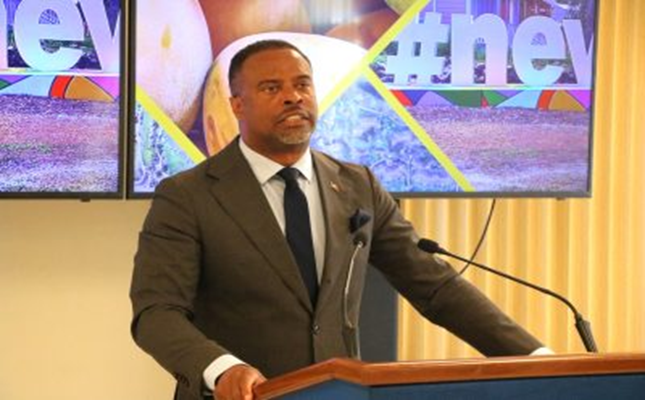
    CHARLESTOWN, NEVIS – In a demonstration of cross-party consensus, the Nevis Island Assembly has formally ratified the Nevis Appropriation (2026) Bill, 2025, establishing the financial blueprint for the upcoming fiscal year. The legislative package, which includes accompanying financial resolutions, received unanimous endorsement on December 04, 2025, following extensive deliberations spanning two days.

    Premier the Honourable Mark Brantley, who serves as Minister of Finance within the Nevis Island Administration (NIA), initially presented the budget proposal to the Assembly on December 02. The subsequent debate featured substantive contributions from parliamentarians representing both government and opposition factions, ultimately culminating in rare bipartisan approval.

    Under the thematic banner “A Purpose Driven Agenda: Building our Sustainable Future,” the approved budget allocates $284.4 million in expenditures against projected revenues of $215.6 million. Premier Brantley characterized the financial plan as embodying his administration’s dedication to responsible governance and meticulous fiscal stewardship, emphasizing its dual purpose of synchronizing government policies with private sector initiatives to catalyze economic expansion.

    The Premier provided explicit assurances regarding the administration’s commitment to fiscal prudence, noting that implementation velocity would be directly contingent upon funding availability. “We will not be reckless,” Brantley asserted, “and will only seek to undertake projects if funding is available or accessible at low cost in accordance with our debt management strategy.” He further indicated that projects lacking concessionary financing would be deferred to the 2027 fiscal period rather than pursued through expensive borrowing mechanisms.

    The comprehensive budget framework outlines strategic priorities across multiple domains including economic diversification, employment generation, crime reduction, debt consolidation, and infrastructure modernization. Premier Brantley expressed confidence that these interconnected policies would collectively stimulate transformative economic development while empowering citizens to realize their full potential.

  • Santiago marched with Fidel

    Santiago marched with Fidel

    SANTIAGO DE CUBA – Thousands of Cubans marched through the streets of Santiago de Cuba on Saturday to mark the ninth anniversary of Commander-in-Chief Fidel Castro Ruz’s interment at Santa Ifigenia Heritage Cemetery. The procession, moving from Antonio Maceo Grajales Revolution Square to the national monument, demonstrated remarkable resilience amid ongoing recovery from Hurricane Melissa and an intensified economic blockade.

    Young Adriano Giro Mustelier captured the spirit of the event, proclaiming, ‘Let’s march for Fidel, for the Revolution, and for Cuba!’ His words echoed through the crowd as participants of all ages moved along Patria Avenue to the sounds of the March of July 26 and patriotic songs.

    A university student who participated in the inaugural tribute march as a child told Granma, ‘We do this because Fidel and his example are more necessary today than ever.’ The march also served as a show of solidarity with Venezuela, expressing support against what participants termed ‘new aggressions of U.S. imperialism.’

    Concurrent with the memorial march, the Fidel Castro Ruz Center is hosting the exhibition ‘Siempre Alejandro’ (Always Alejandro) by National Prize for Plastic Arts winner Nelson Domínguez. The collection of 18 canvases in the Cinco Palmas room presents interpretive studies of Castro through striking visual allegories.

    Domínguez’s works, including pieces titled ‘Cinco Palmas,’ ‘Fidel Guerrillero,’ ‘La Guerra Necesaria,’ and ‘Fidel en la Sierra,’ explore the revolutionary leader’s legacy through symbolic imagery rather than traditional portraiture. ‘These are works in which I am searching for my Fidel,’ Domínguez explained. ‘The purpose was not to make a portrait, but an interpretation.’

    Exhibition curator Juan Martín Soler noted that Domínguez’s pieces reflect the artist’s personal experiences with Castro during the revolutionary period in the mountains and subsequent memorable encounters. The exhibition, attracting numerous young visitors, serves as another testament to Castro’s enduring presence in Cuban cultural and political life.