分类: politics

  • Attorney General defends new criminal-procedure code as “most rights-guaranteeing in Ibero-America”

    Attorney General defends new criminal-procedure code as “most rights-guaranteeing in Ibero-America”

    SANTO DOMINGO – In a robust defense of the nation’s judicial overhaul, Dominican Attorney General Yeni Berenice Reynoso has positioned the newly implemented criminal-procedure reform as a landmark advancement for human rights. Declaring it the most protective legal framework in Ibero-America, Reynoso characterized opposition to Law 97-25 as emanating from entities with vested interests, including sectors affiliated with organized crime.

    The Attorney General refuted claims that the reform curtails due process, asserting instead that it fortifies judicial equity. A central point of contention involved attempts by critics to mandate private legal representation for filing complaints, a measure Reynoso argued would systematically disenfranchise economically vulnerable citizens from seeking justice.

    Reynoso clarified that the legislation does not expand the powers of the Public Prosecutor’s Office beyond their pre-2004 scope but rather refines procedural mechanisms. Key enhancements include extended deadlines for defense arguments, provisions for counter-expert evaluations, and the expanded application of plea agreements across all trial phases. Furthermore, the code introduces structured sentencing guidelines to promote legal predictability, enshrines a comprehensive charter of victims’ rights, and integrates stronger legal instruments to combat organized criminal networks.

    Emphatically challenging detractors, Reynoso invited scrutiny to identify any specific power granted to prosecutors that did not exist two decades ago. The reform took immediate effect upon promulgation, with prosecutors swiftly applying its statutes in active cases, notably in the high-profile ‘Operation Cobra’ corruption investigation.

  • Pringle Broke the Law With Impunity and Promoted Lawlessness, PM Says

    Pringle Broke the Law With Impunity and Promoted Lawlessness, PM Says

    Antigua’s political landscape witnessed a dramatic confrontation this week as Prime Minister Gaston Browne justified the abrupt removal of an unauthorized beachfront structure at Morris Bay, citing what he characterized as incendiary parliamentary remarks from Opposition Leader Jamale Pringle.

    The controversy ignited during Tuesday’s budget debate proceedings when Pringle publicly challenged authorities to dismantle the contested tent establishment. Mere hours following this parliamentary exchange, enforcement officers from the Development Control Authority executed the removal operation, which government officials maintain was part of ongoing efforts to regulate coastal constructions.

    Prime Minister Browne addressed the situation with firm rhetoric, asserting that Pringle’s parliamentary comments constituted an unacceptable provocation that undermined legal authority. “The consequences of refusing to comply with legal requirements while simultaneously threatening rebellion cannot be tolerated,” Browne stated. “One cannot be both legally non-compliant and confrontational toward authorities.”

    The Prime Minister elaborated that the vendor operating the structure had received multiple formal and informal notifications regarding the violation. “Despite repeated written and verbal warnings, the response was not cooperation but further threats of non-compliance,” Browne explained. “Given these circumstances, authorities had no alternative but to take decisive action.”

    Browne emphasized the broader implications of the incident for national policy enforcement, noting that Pringle’s challenge risked encouraging widespread non-compliance among other vendors. “This necessary enforcement action serves as a message regarding the importance of adhering to regulatory frameworks,” he commented.

    The Prime Minister contrasted this case with the government’s approach toward cooperative vendors, stating that operators who engage constructively with authorities would receive accommodating solutions. “For those willing to collaborate with regulatory bodies, we will employ measured approaches to reorganize and identify suitable alternative arrangements,” Browne affirmed.

  • “All of this lee-bit-lee-bit, it’s putting more money in Belizean people pockets”

    “All of this lee-bit-lee-bit, it’s putting more money in Belizean people pockets”

    Belizean Prime Minister John Briceño has publicly countered opposition criticism regarding the nation’s escalating cost of living, defending his administration’s economic measures during a recent appearance on the ‘Open Your Eyes’ program. The United Democratic Party (UDP) has intensified its critique of government policies, claiming many citizens are experiencing severe financial strain from rising prices.

    Prime Minister Briceño acknowledged the inflationary pressures affecting imported goods while emphasizing his government’s multifaceted approach to alleviate economic burdens on citizens. ‘We understand the issue of the cost of goods, but we do not have control of it. These goods are imported,’ Briceño stated, redirecting focus toward his administration’s proactive interventions.

    The government’s economic relief strategy includes several key initiatives: implementation of a higher national minimum wage, expansion of scholarship programs, provision of meals for approximately 15,000 schoolchildren, and free education access for tens of thousands of students. Additionally, the administration has significantly broadened National Health Insurance coverage, now serving about 22,000 Belizeans at minimal cost.

    Briceño highlighted targeted tax relief measures including GST-free weekends during Christmas and back-to-school periods, characterizing these incremental benefits as collectively ‘putting more money in Belizean people pockets.’

    Contrasting this optimistic assessment, UDP Second Deputy Miguel Guerra presented a starkly different perspective during a press conference, asserting that everyday expenses—particularly grocery costs—have reached unsustainable levels for many households. Guerra emphasized that the cost of living crisis represents an urgent reality that cannot be overlooked by policymakers.

    New data from Belize’s Statistical Institute indicates a 1.2% increase in household goods and services costs during the first ten months of 2025 compared to the same period in 2024, providing statistical context to the ongoing economic debate.

  • PM Claims No Role in BTL Buyout of Speednet

    PM Claims No Role in BTL Buyout of Speednet

    BELIZE CITY – Prime Minister John Briceño has publicly addressed growing concerns regarding potential monopoly formation in Belize’s telecommunications sector, following revelations that government-owned Belize Telemedia Limited (BTL) is considering acquiring Speednet Communications and multiple cable providers.

    Speaking on December 10, 2025, PM Briceño firmly rejected suggestions that his family connections to Speednet created a conflict of interest, stating: “Belize is a small country. I have never lived off my government salary. I do investments with my family. I do not have any direct investments with Speednet, so I have none. It’s my brother.”

    The Prime Minister emphasized that despite BTL being 95% government-owned, the company operates under a commercial structure. “As a private company, we allow them to manage the company and make whatever decisions they believe are in the company’s best interest. I am not involved in that discussion. I’ve stayed away from that,” Briceño clarified.

    The situation has gained complexity since June, when Speednet—parent company of SMART—was granted judicial review permission to challenge the Government of Belize. The legal dispute centers on two “ConnectED” contracts awarded to BTL for providing internet services to schools, which Speednet claims should have undergone competitive tender processes as required by the Finance and Audit (Reform) Act for contracts exceeding $5 million.

    Public apprehension now focuses on the prospect of a single dominant provider controlling mobile, internet, and cable services nationwide. PM Briceño identified the Public Utilities Commission (PUC) as the primary regulatory safeguard, noting: “The PUC regulates. The PUC has to set the rates. BTL, BEL, and BWS just can’t set any rates as they wish.” He added that the PUC “will have to become even more vigilant in ensuring that the rates being set will not be taking advantage of the Belizean public.”

  • PM Briceño Writes to Mexico’s Sheinbaum: “Bring More Forces to the Border”

    PM Briceño Writes to Mexico’s Sheinbaum: “Bring More Forces to the Border”

    Prime Minister John Briceño of Belize has formally requested enhanced Mexican security presence along the shared northern border in response to escalating cartel activities and transnational criminal operations. This diplomatic appeal to Mexican President Claudia Sheinbaum comes amid growing concerns about drug trafficking networks exploiting the Corozal Freezone as an operational base.

    The security situation intensified following a recent assassination attempt on Nitin Buxani, a prominent Freezone businessman, highlighting persistent vulnerabilities to organized crime infiltration. Briceño revealed that cartel-related challenges have plagued his administration since 2020, when he initially alerted United States officials about expanding drug operations seeking entry into Belize.

    Addressing limitations in Belize’s response capabilities, the Prime Minister noted the country lacks adequate equipment to intercept drug planes landing in remote areas. While cigarette smuggling has been frequently cited, Briceño clarified that numerous goods moving through the Freezone into Mexico contribute to criminal interests, with WTO regulations restricting Belize’s import control options.

    In a significant domestic security measure, Belize has launched Operation Northern Fortress, an eight-million-dollar initiative allocating resources for vehicles, communication systems, weaponry, and surveillance technology. This comprehensive approach aims to strengthen border enforcement while coordinating with Mexican authorities to disrupt cross-border criminal networks.

  • Will the PSU Withdraw Their Active Trade Dispute?

    Will the PSU Withdraw Their Active Trade Dispute?

    The Public Service Union of Belize faces a critical decision regarding its ongoing labor dispute with the government concerning the proposed establishment of a Semi-Autonomous Revenue Authority (SARA). Following formal written commitments from authorities, union leadership has initiated a membership vote to determine whether to withdraw their active trade dispute declaration.

    The conflict originated in early November 2025 when the PSU filed an official trade dispute, citing exclusion from crucial policy discussions and expressing substantive concerns regarding operational efficiency, implementation costs, and most significantly, employee welfare protections during the proposed transition from the Belize Tax Service to SARA.

    A significant development occurred on December 3, 2025, when government representatives presented formal assurances including a guaranteed delay in SARA implementation until no earlier than October 2026. Additionally, authorities pledged to conduct meaningful consultations with the union once draft legislation and transition documents are finalized.

    The union has established a December 16, 2025 deadline for the government to provide clear timelines regarding two key processes: the formation of a joint committee to guide consultation procedures and the completion of all draft documentation. These confidence-building measures have prompted government officials to formally request dispute withdrawal.

    PSU leadership has now delegated the final decision to its membership through an official polling process, placing the future trajectory of this labor-government negotiation directly in the hands of rank-and-file members whose working conditions would be most affected by the proposed institutional changes.

  • Agrarisch bedrijf Defensie krijgt impuls met nieuwe investeringen

    Agrarisch bedrijf Defensie krijgt impuls met nieuwe investeringen

    In a significant move to bolster national food security and military self-sufficiency, Defense Minister Uraiqit Ramsaran personally oversaw the delivery of substantial agricultural resources to the Von Freyburg Defense Agricultural Enterprise in Saramacca on Tuesday. The deployment included fertilizers, operational equipment, and other essential supplies exactly one month after the minister’s initial inspection visit.

    The delivery fulfills Ramsaran’s previous commitment to modernize the defense agricultural sector. The occasion was marked symbolically by the planting of inaugural almond trees, initiating a comprehensive development project integrating recreation, education, and community engagement.

    ‘These represent not merely symbolic gestures but concrete investments toward establishing a modern, autonomous, and efficient agricultural center within our Defense infrastructure,’ Minister Ramsaran declared. ‘Today we advance further toward complete self-sufficiency—not as aspirational concept but as achievable objective through targeted actions and collective effort.’

    The minister outlined a vision for Von Freyburg to evolve into a multifunctional facility where both military personnel and civilians can learn, recreate, and take pride in developmental achievements. In collaboration with the Ministry of Agriculture, Livestock and Fisheries, greenhouse installations are scheduled for imminent implementation to facilitate modern, efficient cultivation methodologies.

    Ramsaran emphasized the triple focus on enhanced production output, superior quality standards, and increased operational independence. ‘Our objectives extend beyond agricultural production alone. We are creating an environment where recreation, education, and community development converge, thereby progressively building a stronger Defense institution,’ he concluded.

  • Briceño Defends Mai’s Resignation Once More

    Briceño Defends Mai’s Resignation Once More

    Prime Minister John Briceño has once again publicly addressed the controversial resignation of former Agriculture Minister Jose Mai, seeking to quell ongoing speculation about the circumstances surrounding his cabinet departure several weeks ago.

    During a recent appearance on the ‘Open Your Eyes’ morning program, Briceño provided constitutional clarity regarding ministerial procedures, explaining that a formal resignation was necessary rather than a leave of absence. “Had he requested temporary leave, I would have been unable to appoint a replacement minister,” Briceño stated. “A leave of absence maintains ministerial status, necessitating a full resignation for cabinet restructuring.”

    The Prime Minister vehemently denied circulating allegations connecting Mai to cartel activities, dismissing them as “a narrative that lacks truth.” Despite persistent public scrutiny, Briceño maintained philosophical perspective: “We operate within a democratic framework where questioning is inevitable. Perhaps I should have permitted Minister Mai to personally articulate his reasons rather than attempting to provide explanations on his behalf.”

    Briceño further refuted claims that Mai’s oversight of the sugar portfolio influenced his departure, asserting the resignation “bears no connection” to these responsibilities. Instead, the Prime Minister highlighted Mai’s substantial contributions to agricultural development, describing him as “the most successful Agriculture Minister in the nation’s history” whose legacy is being overshadowed by current speculation.

    In a related development, Mai broke his silence during an exclusive interview this Tuesday, categorically denying all allegations against him. The former minister declared: “I have committed no wrongdoing or illicit activities, and no evidence exists to substantiate these claims.” Regarding potential political return, Mai expressed initial hesitation but suggested possible reinstatement within approximately twelve months following successful spinal surgery recovery.

  • DCA Demolishes Pringle Tent Amid Rising Tensions at Morris Bay

    DCA Demolishes Pringle Tent Amid Rising Tensions at Morris Bay

    Antigua’s political climate grew increasingly tense on Tuesday afternoon when state authorities dismantled a beachfront tent structure belonging to opposition parliamentarian Jamale Pringle at Morris Bay. The Development Control Authority (DCA), accompanied by police personnel, executed the removal operation while Pringle was engaged in parliamentary proceedings for the national budget debate.

    Eyewitness accounts confirm DCA officials arrived at the location shortly after noon and systematically disassembled the temporary structure without physical confrontation. The incident rapidly gained attention through community networks, drawing multiple opposition legislators to the scene where they consulted with gathered constituents.

    Local residents and vendor operators expressed profound apprehension following the demolition, interpreting the action as indicative of a broader regulatory crackdown on informal beachfront structures. Many voiced economic concerns, highlighting the potential threat to livelihoods dependent on coastal vending activities amidst current financial pressures.

    Neither the DCA nor law enforcement agencies have released official statements regarding the legal basis or timing of the enforcement action. The absence of public explanation has further intensified discussions regarding beach access regulations and property rights along Antigua’s coastline.

    The incident occurs against a backdrop of ongoing legislative discussions concerning public space utilization and commercial vendor regulations, highlighting escalating tensions between governance policies and community economic practices.

  • China en Latijns-Amerika: nieuwe samenwerking en duidelijke grenzen

    China en Latijns-Amerika: nieuwe samenwerking en duidelijke grenzen

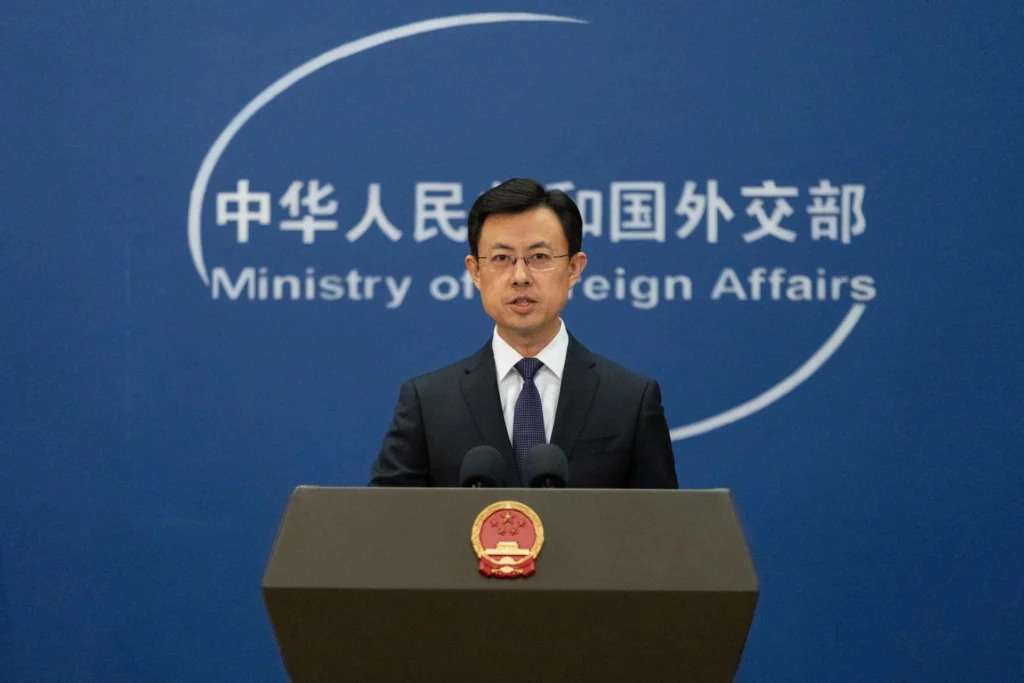
    China has formally released its third comprehensive policy document outlining strategic engagement with Latin America and the Caribbean, emphasizing mutual cooperation in defending international justice and preserving the historical legacy of World War II victories. Vice Foreign Minister Cai Wei presented the framework on Wednesday, asserting that no external force can reverse the established course of history.

    The policy document establishes Taiwan matters as fundamental to China’s core interests, describing them as an absolute boundary that must not be crossed. It reaffirms China’s endorsement of the Latin American and Caribbean region as a Zone of Peace and supports nuclear non-proliferation efforts. The framework advocates for peaceful resolution of international disputes while explicitly rejecting external interference in regional affairs—an indirect reference to perceived U.S. involvement in Venezuela.

    This document continues the trajectory established by previous policy papers issued in November 2008 and November 2016, which significantly strengthened Sino-Latin American relations. President Xi Jinping has personally prioritized these ties, having visited the region six times while introducing innovative cooperation concepts and developmental initiatives.

    Current economic integration is substantial: 24 regional nations have joined China’s Belt and Road Initiative, with China standing as the second-largest trading partner for the region overall and the primary partner for nations including Brazil and Peru. As influential Global South actors, China and Latin American countries are collaborating to reform international governance systems and address pressing global challenges such as climate change.

    The new policy framework emerges amid unprecedented global transformations and emerging regional conflicts that introduce external uncertainties into China-Latin America relations. It outlines cooperative plans across forty domains including trade, investment, financial cooperation, scientific innovation, and climate response, serving as a strategic roadmap for a new era of partnership.

    China commits to supporting regional nations in pursuing independent development paths, emphasizing that these relationships are mutually beneficial, free from geopolitical manipulation, and not targeted against third parties. The document simultaneously rejects coercive diplomatic practices where nations impose their viewpoints pressure regional countries to take sides in international disputes.