分类: politics

  • Government to launch programme to clean public spaces, insists it’s not Cepep

    Government to launch programme to clean public spaces, insists it’s not Cepep

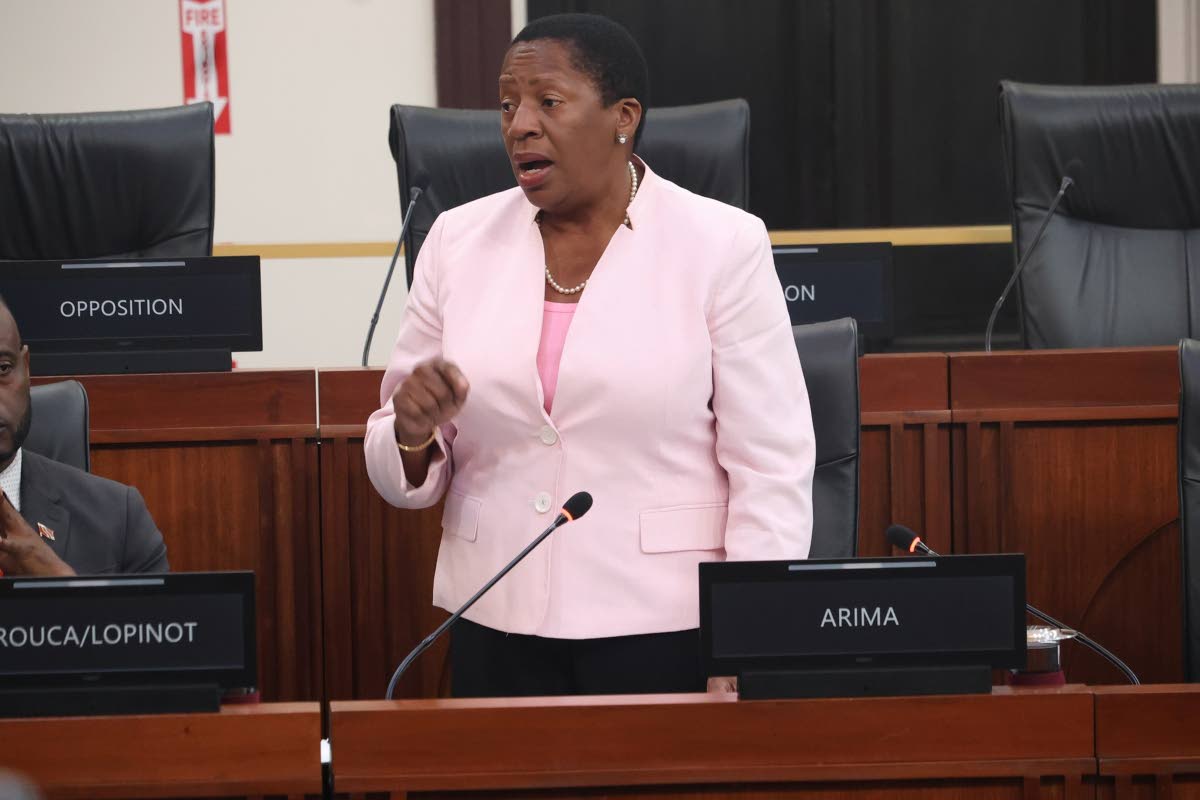
    The Trinidad and Tobago government is set to launch an innovative pilot program for maintaining public spaces within days, according to Minister of Rural Development and Local Government Khadijah Ameen. The initiative explicitly distances itself from the previous CEPEP framework while addressing similar community maintenance needs.

    The program, scheduled to operate from December 15, 2025, through March 13, 2026, will focus on comprehensive upkeep of cemeteries, recreational facilities, community centers, school grounds, and various public areas. This confirmation follows the emergence of a leaked Cabinet document that initially revealed the program’s operational timeline and ministerial oversight.

    Minister Ameen emphasized the fundamental differences between the new initiative and the previous CEPEP structure, which saw thousands of workers terminated following the recent change in government after general elections. The United National Congress administration had signaled intentions to overhaul the program upon assuming power.

    In an official media release dated December 11, Ameen characterized the program as “a fresh, results-driven initiative designed to strengthen manpower at Municipal Corporations.” The ministry will directly hire workers, a structural change that Ameen states “removes political intermediaries and eliminates ghost gangs” that plagued the previous system.

    The new framework incorporates rigorous operational protocols including proper attendance documentation, performance verification mechanisms, and enhanced financial controls. Teams will be strategically assigned to Municipal Corporations with the objective of delivering “tangible, measurable work” to communities while ensuring workers receive fair compensation without political intermediation or criminal influences previously associated with CEPEP operations.

  • Pinder: FNM had ‘asylum bill’ ready to be tabled in 2021

    Pinder: FNM had ‘asylum bill’ ready to be tabled in 2021

    In a heated Senate session, Attorney General Ryan Pinder launched a sharp critique against the Free National Movement (FNM), accusing the opposition party of adopting a contradictory position on the recently passed Smuggling of Migrants Bill. Pinder revealed that the FNM had previously developed comprehensive asylum legislation during their administration, directly contradicting their current opposition stance.

    The controversial legislation, which cleared the House of Assembly without opposition support earlier this week, received Senate approval amid intense debate. Pinder defended the bill’s provisions, emphasizing that it specifically targets human smuggling networks rather than establishing asylum frameworks.

    FNM leader Michael Pintard has vowed to repeal the legislation if elected prime minister, a promise that Pinder characterized as politically disingenuous. The Attorney General presented evidence showing the Minnis administration’s 2021 draft Nationality Immigration and Asylum Bill, which included detailed asylum eligibility criteria, refugee unit establishment, and asylum seeker rights protections.

    Pinder disclosed that upon assuming office, the Davis administration encountered the FNM’s drafted asylum legislation ready for parliamentary tabling. The current government rejected this proposed bill, consistent with their policy position on asylum matters.

    Opposition senators dismissed Pinder’s revelations as irrelevant to the current debate, with FNM senator Reuben Rahming labeling the arguments as ‘misleading’ and former Cabinet Minister Darren Henfield questioning the document’s authenticity since it was never formally presented to parliament.

    The Attorney General remained steadfast, presenting Cabinet documentation indicating the previous administration had requested a final draft of their asylum legislation. Pinder concluded that the opposition lacks consistent policy commitment and moral standing on migration issues, asserting they are unprepared for governance.

    Regarding the newly passed legislation, Pinder clarified that it maintains existing state authority under the Immigration Act while enhancing tools to combat criminal smuggling operations that exploit vulnerable migrants.

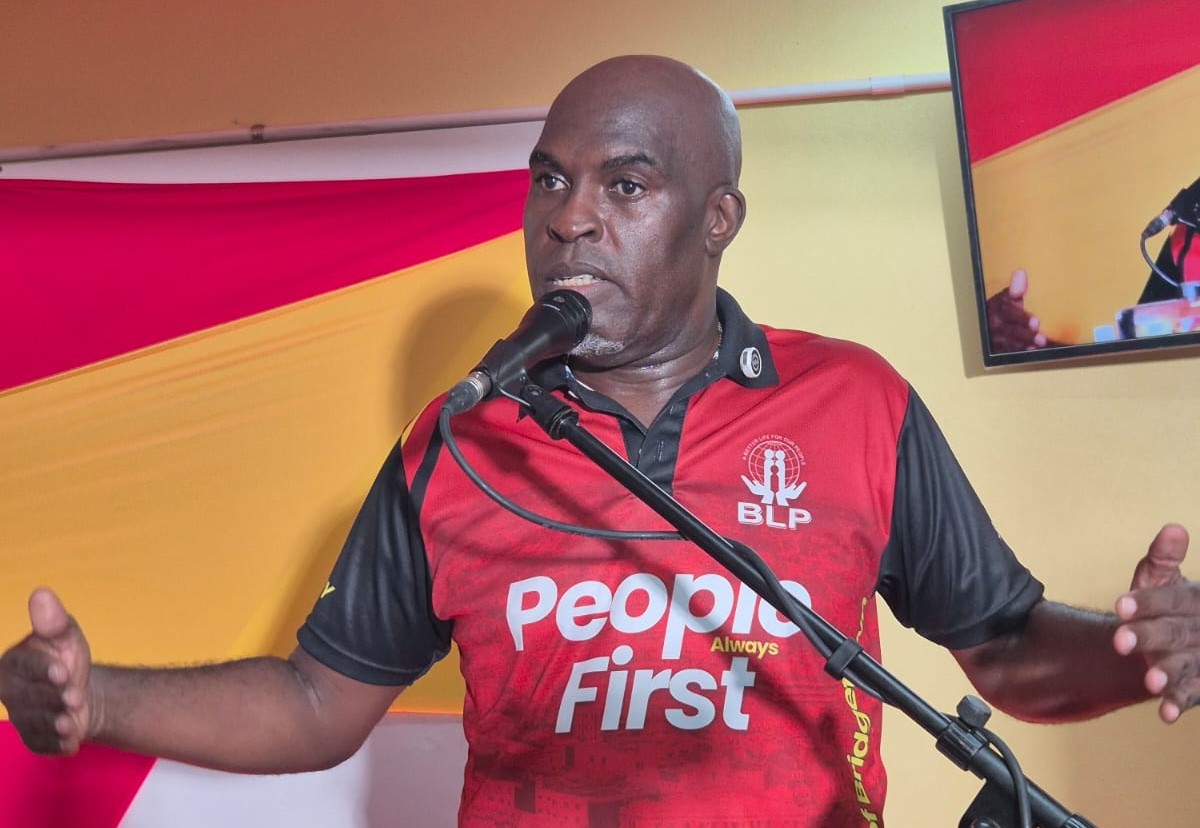
  • PNM vows to enhance Argyle Waterfall, create jobs for Tobago

    PNM vows to enhance Argyle Waterfall, create jobs for Tobago

    In a strategic move ahead of Tobago’s January 12 House of Assembly elections, opposition leader Ancil Dennis has unveiled an ambitious employment manifesto targeting the island’s chronic unemployment crisis. The People’s National Movement (PNM) Tobago Council leader committed to generating 7,000 new jobs within four years if returned to power, addressing what he termed “deliberate economic neglect” by the current administration.

    Speaking at a December 11 rally in Roxborough/Argyle, Dennis—a former chief secretary—launched a scathing critique against the Tobago People’s Partnership (TPP) government, accusing them of diverting over $300 million in development funds to Trinidad-based contractors. He specifically referenced a stalled $30 million road project on Lammy Road awarded to an off-island contractor as emblematic of this problematic pattern.

    The opposition leader announced a transformative procurement policy mandating that all Tobago House of Assembly contracts must优先授予本地承包商 possessing relevant capabilities. “No contractor from outside Tobago should be building roads here when we have qualified local firms that can employ community members,” Dennis asserted, framing this approach as both economic justice and practical development strategy.

    Dennis projected that this localization initiative would immediately restore 2,000 jobs while creating thousands more through targeted investments in construction, tourism, and agricultural sectors. His rhetoric emphasized economic sovereignty, repeatedly promising to return “Tobago people’s money to Tobagonians’ pockets.

    Simultaneously, PNM candidate Shonae John outlined her vision for transforming Roxborough/Argyle’s economic landscape. She proposed developing Argyle Waterfall into a comprehensive tourist destination while establishing integrated agricultural-tourism linkages. Her innovative “farm-to-table food hub” concept would connect Lammy Road farmers directly with tourists and culinary facilities, creating an experiential tourism circuit complete with trained guides, lifeguards, and retail opportunities.

    The electoral battle lines are now clearly drawn, with the PNM advocating economic localization against the TPP’s development approach. Current area representative Watson Duke’s Progressive Democratic Party has withdrawn from the race to support the ruling TPP, whose candidate Orlando Kirk will directly challenge John’s bid to unseat the incumbent administration.

  • Machado urges pressure so Maduro understands ‘he has to go’

    Machado urges pressure so Maduro understands ‘he has to go’

    Venezuelan opposition leader and newly crowned Nobel Peace Prize recipient Maria Corina Machado has issued a forceful appeal for intensified international pressure against the administration of President Nicolas Maduro. In a preview of her upcoming interview with CBS News’ ‘Face the Nation,’ Machado emphasized the necessity of compelling Maduro to relinquish power, asserting that his time has conclusively ended.

    The political figure, who recently executed a daring escape from Venezuela under circumstances resembling an espionage thriller, addressed questions regarding potential U.S. military involvement. While acknowledging no specific knowledge of American plans, Machado clarified that Maduro’s removal would not constitute conventional regime change. ‘We conducted an election where over 70 percent of the population mandated political transition,’ she explained. ‘Our requirement is support to implement that democratic decision.’

    Machado’s reference concerns the 2023 presidential election where Maduro secured a controversial third term amid widespread opposition claims of electoral manipulation. The government subsequently prohibited Machado from political participation, forcing her into hiding before her extraordinary extraction from Caracas.

    Codenamed ‘Golden Dynamite’ in homage to Alfred Nobel, the operation involved Machado disguising herself with a wig and navigating through ten military checkpoints undetected. Her journey from a northern Venezuelan beach involved a deliberately dilapidated fishing vessel that subsequently malfunctioned, causing significant delays. According to multiple media investigations, treacherous maritime conditions further complicated the escape, resulting in GPS equipment loss and two hours of directional uncertainty that created genuine mortal peril.

    Despite these harrowing circumstances, Machado successfully rendezvoused with U.S. Army veteran Bryan Stern on open waters before ultimately reaching Oslo via private jet from Curaçao. The opposition leader declined to elaborate on escape specifics during her interview but emphasized the Nobel Prize’s symbolic importance as recognition of Venezuela’s courageous resistance against what she termed ‘a criminal, narcoterrorist structure.’

    Machado concluded with a commitment to return the honor to the Venezuelan people promptly. The Trump administration’s continued pressure campaign against Maduro has included substantial naval deployments and airstrikes against alleged drug-trafficking operations, resulting in nearly 90 fatalities. The complete interview will air Sunday on CBS.

  • Augustine proud of ‘reversal’ of Tobago murder rate

    Augustine proud of ‘reversal’ of Tobago murder rate

    In a recent political address, Tobago House of Assembly (THA) Chief Secretary Farley Augustine declared significant progress in combating the island’s crime epidemic under his Tobago People’s Party (TPP) administration. Speaking at a December 11th party gathering in Patience Hill, Augustine acknowledged the troubling legacy of 2023 recording 24 homicides—the highest in Tobago’s modern history—followed by 14 murders the previous year.

    Augustine emphasized that despite constitutional limitations placing national security under central government jurisdiction, the THA implemented independent strategies that have dramatically reduced violent crime. “We have successfully reversed the alarming murder trend through strategic investments in youth development and security infrastructure,” Augustine stated, contrasting Tobago’s improved statistics with other Trinidadian regions.

    The Chief Secretary revealed that Prime Minister Kamla Persad-Bissessar has endorsed his proposal for establishing a localized police force—a radical measure Augustine deems essential for Tobago’s unique security challenges. He criticized current maritime surveillance failures, citing instances where criminals escaped via watercraft without interception by Coast Guard vessels hampered by logistical constraints.

    Augustine’s address simultaneously served as an endorsement rally for Nigel Taitt, the TPP’s prospective candidate for Patience Hill/Signal Hill district. Taitt, who previously unseated former PNM Tobago Council leader Tracy Davidson-Celestine, currently oversees Food Security, Natural Resources, and Sustainable Development portfolios.

    The political leader confidently predicted electoral victory on January 12, 2026, asserting the TPP’s governance outperforms any previous four-year PNM administration. Taitt outlined forthcoming infrastructure projects including connector bridges, road paving initiatives, community center upgrades, and recreational facility construction, positioning himself as a hands-on public servant committed to district development.

  • U.S. Seizes Giant Oil Tanker Off Venezuela

    U.S. Seizes Giant Oil Tanker Off Venezuela

    In a dramatic maritime operation, United States forces have intercepted and seized a massive oil tanker in international waters off the Venezuelan coast. Recently released footage depicts special operations troops rapidly descending onto the vessel’s deck via helicopter in a precisely coordinated maneuver.

    U.S. Attorney General Pam Bondi provided official justification for the seizure, identifying the vessel as the ‘Skipper’ and confirming it had been under prolonged sanctions for its role in an illicit oil-shipping network. Federal authorities allege the operation has been funneling substantial financial resources to designated foreign terrorist organizations.

    The Venezuelan government issued an immediate and vehement condemnation, characterizing the interception as ‘blatant international piracy.’ An official statement from Caracas accused Washington of ulterior motives, asserting that ‘the true rationale behind sustained aggression against Venezuela has been conclusively revealed—not migration, narcotics, or democratic principles, but rather control over our natural resources, petroleum, and energy reserves.’

    Military sources revealed to CBS News that the operation was launched from the USS Gerald Ford, the world’s largest aircraft carrier currently deployed in the Caribbean region. This seizure occurs amid a noticeable escalation of U.S. naval presence in Caribbean waters, with American forces having conducted over twenty interdiction operations against vessels allegedly involved in narcotics trafficking in recent months.

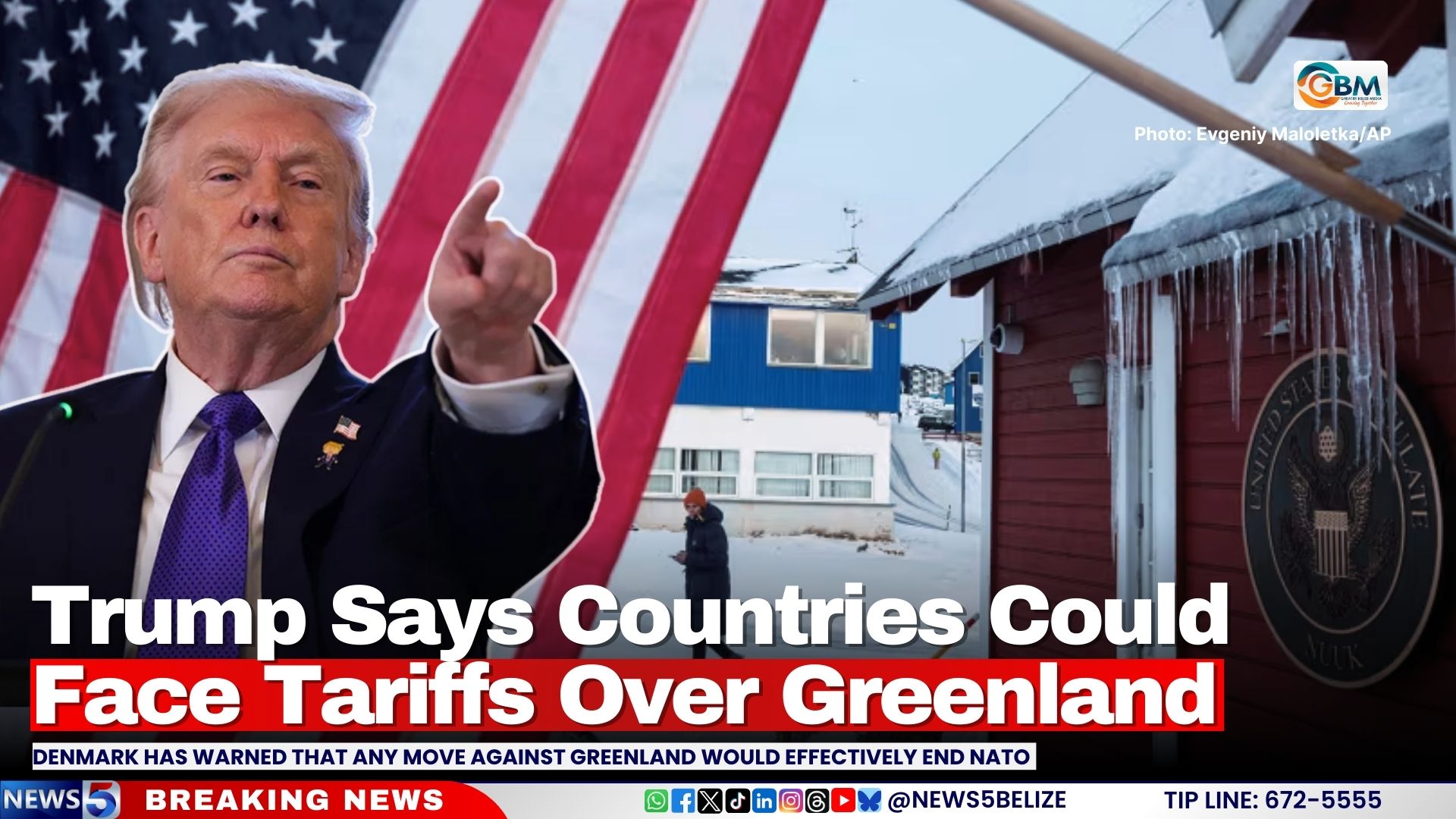
    When questioned about the disposition of the confiscated crude oil, former President Donald Trump offered a succinct response: ‘We retain custody, presumably.’

  • Hungary boycotts meeting on possible Ukrainian accession to the EU

    Hungary boycotts meeting on possible Ukrainian accession to the EU

    Hungary has reinforced its diplomatic isolation within the European Union by formally boycotting a crucial ministerial meeting on Ukraine’s membership bid. A senior Hungarian official characterized the gathering in Lviv as a “political spectacle” and unequivocally restated Budapest’s dual-pronged opposition: refusing to endorse Ukraine’s EU accession process and blocking all financial mechanisms to transfer funds to Kiev.

    The informal council meeting, convened in western Ukraine this Thursday, was designed to reinvigorate membership negotiations that have remained paralyzed since the beginning of 2024. This deadlock is exclusively attributable to Hungary’s persistent veto power, which it has wielded to stall collective EU decision-making.

    Political analysts within the region view Budapest’s latest move not as an isolated incident but as a deliberate escalation—a hardening of its veto strategy that exacerbates existing fractures in European Union unity. This development signals a deepening institutional crisis, highlighting the challenges of achieving consensus within the bloc on matters of enlargement and foreign policy.

    The European Commission had initially recommended formalizing accession talks with Ukraine earlier this year. However, these plans were abruptly halted due to Hungary’s firm opposition. Budapest’s stance is rooted in its critically divergent perspective on Kiev and is compounded by specific bilateral demands. Central to its position is the issue of ethnic minority rights; Hungary continues to seek concrete guarantees for the protection of the Hungarian minority residing in Ukraine’s Transcarpathian region.

    The path to EU membership is notoriously protracted, often spanning over a decade, as evidenced by Turkey’s ongoing candidacy. It necessitates the comprehensive alignment of a candidate country’s national legislation with the vast body of EU law, known as the acquis communautaire. Hungary appears resolved to obstruct this entire process indefinitely, using its veto as leverage until its conditions are satisfactorily addressed by both Ukraine and its EU partners.

  • Venezuela-Cuba Friendship Movement condemns attack on ship

    Venezuela-Cuba Friendship Movement condemns attack on ship

    A prominent international solidarity organization has issued a forceful condemnation of what it describes as a systematic campaign of resource plunder, characterizing recent actions against strategic energy assets as a blatant breach of international legal standards and national sovereignty. In an official communiqué, the group asserted that such aggression transcends isolated incidents, representing instead a coordinated strategy to undermine the autonomy of independent nations through economic coercion and military intimidation.

    The organization, identified as The Movement, framed these developments as ‘modern piracy’ that directly threatens regional energy security and geopolitical stability. It has formally brought these concerns before the global community, demanding an immediate halt to all military operations and coercive measures that compromise the fundamental right to self-determination.

    In response to these challenges, the coalition reaffirmed its dedication to strengthening alliances between Venezuela, Cuba, and other nations across the Americas. It emphasized that mutual solidarity and bilateral cooperation represent the most effective pathway for resisting external pressure and safeguarding hard-won sovereignty. The group’s statement concluded with a renewed commitment to fostering fraternal ties, protecting national independence, and advancing the cause of peace through collective action.

  • US recognizes European mistake in breaking with Russia, Hungary says

    US recognizes European mistake in breaking with Russia, Hungary says

    Hungarian Prime Minister Viktor Orbán has asserted through his political aide that American policymakers recognize the necessity of rebuilding strategic ties between Russia and Europe, according to statements posted on social media platform X. Balázs Kovács, writing on behalf of the Hungarian leader, contended that European liberals had previously dismantled the foundational bridges connecting Russia and Europe—a move characterized as a significant diplomatic miscalculation.

    The Hungarian administration maintains that U.S. officials strategically acknowledge Europe’s deepening economic stagnation and perceive this crisis as creating an imperative for renewed engagement with Moscow. This perspective appears aligned with concerns outlined in the current U.S. National Security Strategy, which projects a potentially transformed European continent within two decades should current EU policies continue unchanged.

    Foreign policy analysts interpret these statements as serving dual purposes: legitimizing Budapest’s controversial diplomatic maneuvers while highlighting substantial divisions within Western alliances. Judy Dempsey of Carnegie Europe Foundation observed that Orbán is leveraging intra-alliance tensions to critique European elites and rationalize his government’s overtures toward Moscow, despite Washington’s official position remaining considerably more nuanced than Hungary’s characterization.

    Adding complexity to the geopolitical landscape, Russian Foreign Ministry spokesperson Maria Zakharova previously noted that the U.S. strategy contains contradictory elements while simultaneously creating space for dialogue on strategic stability matters. This acknowledgment suggests potential openings for diplomatic engagement despite ongoing tensions between Moscow and Western powers.

  • Chile: Candidate closes campaign in Puente Alto

    Chile: Candidate closes campaign in Puente Alto

    In a pivotal pre-election address, Chilean leftist coalition candidate Jeannette Jara issued a stark warning to voters, framing the upcoming runoff as a critical juncture for the nation’s social progress. Representing a coalition of progressive and Christian Democratic parties, Jara emphasized that core achievements—including scheduled pension increases set for January, the recently enacted 40-hour workweek law, and accountability mechanisms for human rights violators—now face potential reversal.

    Directly addressing the platform of her far-right opponent, José Antonio Kast of the Republican Party, Jara declared, “There cannot be a setback for our country. Chile needs certainty, it needs a future, it needs hope.” She positioned the election as a choice between continuing social reforms or embracing a conservative agenda that questions fundamental aspects of Chile’s developmental trajectory.

    Outlining her immediate governance priorities, Jara committed to launching extensive neighborhood security interventions within her first 100 days in office. This comprehensive plan targets the dismantling of drug distribution networks, weapon confiscation initiatives, and the recovery of illegally occupied properties across communities.

    With recent polls indicating a competitive runoff despite Jara’s initial lead in the November 16 first round, the candidate made a final appeal to supporters. She urged them to actively engage undecided voters in the closing days before Sunday’s decisive election, highlighting the profound policy implications at stake.