分类: politics

  • St Kitts and Nevis Youth Ambassadors call for innovation, unity, and measurable impact as CARICOM leaders convene in February 2026

    St Kitts and Nevis Youth Ambassadors call for innovation, unity, and measurable impact as CARICOM leaders convene in February 2026

    As St. Kitts and Nevis prepares to host the 50th Regular Meeting of CARICOM Heads of Government in February 2026, the nation’s Youth Ambassadors are articulating a powerful vision for regional progress. Aquanjé Robinson and Siobhan Phipps-Harding, representing St. Kitts and Nevis as CARICOM Youth Ambassadors, have issued a compelling call for transformative action that centers youth innovation and measurable outcomes.

    The ambassadors framed their message against a backdrop of global challenges, noting that geopolitical tensions, economic instability, and escalating climate threats disproportionately affect Small Island Developing States. Robinson emphasized that these intersecting crises demand urgent collective response, stating that Caribbean youth constitute both the resilience and sustainable partnership needed for meaningful solutions.

    Phipps-Harding highlighted the critical timing of this milestone meeting, characterizing it as a clarion call for Caribbean unity and self-determination. She stressed that adaptation to rapid change requires investing in systems that protect citizens while developing skills that retain talent within the region.

    Both ambassadors articulated a paradigm shift in how youth participation should be conceptualized, asserting that young people are not merely future leaders but present-day innovators capable of co-creating solutions. They called for policy frameworks that translate into tangible impacts, particularly through initiatives promoting inclusive growth and sustainable development.

    The youth representatives concluded with a reaffirmation of regional solidarity, expressing optimism about the Caribbean’s future precisely because of the active role youth are prepared to play in shaping it. Their statement serves as both endorsement and challenge to CARICOM leaders set to convene in St. Kitts and Nevis for this historic gathering.

  • U.S. Ambassador and Vice President visit Mayor of Santiago de los Caballeros

    U.S. Ambassador and Vice President visit Mayor of Santiago de los Caballeros

    SANTIAGO DE LOS CABALLEROS – A high-level strategic dialogue unfolded in Santiago as Mayor Ulises Rodríguez hosted a pivotal meeting with U.S. Ambassador to the Dominican Republic, Leah Francis Campos, and Dominican Vice President Raquel Peña. The trilateral discussion centered on positioning Santiago as the paramount economic and institutional nucleus of the Cibao region.

    Mayor Rodríguez articulated a comprehensive vision for the city’s accelerated development, underscoring its emergent role as a strategic epicenter for multifaceted growth. The dialogue produced a reinforced consensus on amplifying cooperative efforts between municipal authorities, the national government, and international stakeholders. This collaborative framework is deemed essential for catalyzing sustainable development initiatives and enhancing regional competitiveness.

    Critical to the agenda was the examination of nascent opportunities arising from Santiago’s ongoing urban consolidation. All parties acknowledged the city’s profound dynamism and its increasing significance as a primary engine of national progress. The meeting concluded with a mutual pledge to sustain this high-level dialogue, ensuring Santiago remains a cornerstone of the nation’s public policy agenda and a model of effective international partnership.

  • Mathoera: Initiatiefwetten ad hoc en lichtvaardig voorbereid

    Mathoera: Initiatiefwetten ad hoc en lichtvaardig voorbereid

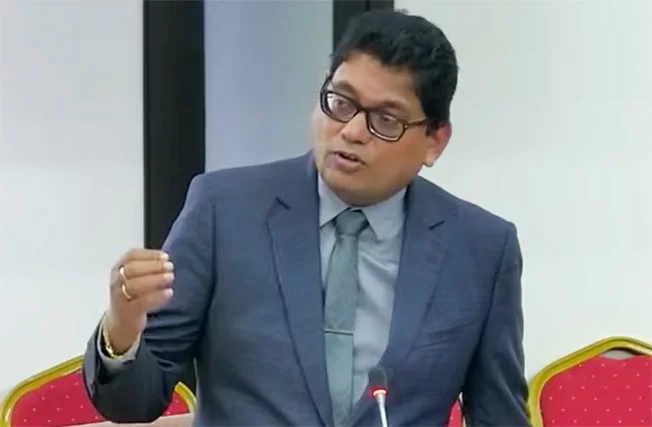
    Suriname’s National Assembly convened on Thursday to debate four legislative initiatives, three of which propose significant alterations to the nation’s judicial organization. The proceedings have sparked intense controversy, with opposition parliamentarian Krishna Mathoera (VHP) warning that these measures threaten the fundamental independence of the judiciary.

    Mathoera contends that the proposed reforms appear hastily prepared without demonstrable necessity and lack both substantive justification and broad societal support. She emphasizes that the structure of Suriname’s three governmental branches—judicial, executive, and legislative—represents fundamental constitutional choices ratified by popular referendum in 1987. These institutions, she argues, must maintain independence while providing mutual checks and balances within a democratic framework.

    Among the most contentious proposals is the amendment to the Regulation on the Organization and Composition of the Judiciary (Wet RIS), which would introduce new consultation procedures for judicial appointments. Mathoera questions the proposal’s legal coherence, noting that Article 4 of the existing law addresses different matters entirely and contains no first clause to which additional clauses could logically be appended.

    The initiative to establish a College of Prosecutors General has drawn particular criticism. While President Jennifer Simons has cited prolonged processing of criminal cases as justification, Mathoera argues this structural change would not address core inefficiencies. Instead, she advocates for strengthening existing institutions through improved planning, additional personnel, enhanced investigative capabilities, and digital transformation.

    Mathoera further warns that allowing political channels rather than the Public Prosecutor’s Office to nominate judicial officials creates dangerous potential for partisan appointments. In Suriname’s compact society, she cautions, this could exacerbate political influence, potentially prioritizing party loyalty over professional competence. Multiple prosecutorial authorities might also produce operational delays, unclear directives, reduced cooperation, and diminished authority throughout the judicial system.

    The parliamentarian concludes that structural governmental challenges require foundational strengthening rather than new institutions. She specifically calls for investment in police capabilities, crime prevention, serious case handling, improved investigative work, higher-quality case files, and expanded digital processes—arguing that these measures would more effectively enhance judicial quality and efficiency.

  • Electoral Office confirms system breach; Police say no report received

    Electoral Office confirms system breach; Police say no report received

    BASSETERRE, St. Kitts – Electoral authorities in St. Kitts have confirmed a significant cybersecurity incident involving unauthorized remote access to their computer systems, which reportedly persisted for several months before detection. The breach at the Central Street, Basseterre facility prompted immediate intervention from the Information Technology Department, which successfully disabled the illicit access channels.

    According to an official statement released through the St. Kitts Information Service, preliminary investigations suggest that perpetrators extracted electoral lists and related information. Despite this access, initial assessments indicate no compromise, alteration, or corruption of the Voter Registers occurred during the incident.

    The Electoral Office has engaged the White Collar Crime Unit of the Royal Saint Christopher and Nevis Police Force to support their investigation. However, initial police communications revealed contradictory information, with authorities initially stating they had not received any formal report—a claim later retracted in an editor’s note confirming the report had indeed been filed and was under investigation.

    Electoral officials emphasized their commitment to pursuing legal action against those responsible, vowing that ‘no stone will be left unturned’ in the investigation. The office urged political parties and the public to rely exclusively on officially published electoral lists distributed in accordance with established legal frameworks.

    Several critical questions remain unanswered regarding the breach’s timeline, responsibility for system security, potential personnel changes, and specific detection methods. The incident has raised concerns about electoral integrity safeguards and the protection of sensitive voter information in the digital age.

  • Removing obstacles from thought and unleashing al the Forces of creation

    Removing obstacles from thought and unleashing al the Forces of creation

    In a series of extraordinary plenary sessions held across three Cuban provinces on Wednesday, top Communist Party officials outlined an ambitious agenda focused on economic transformation and systemic reform. The meetings in Las Tunas, Camagüey, and Ciego de Ávila featured direct participation from Miguel Díaz-Canel Bermúdez, First Secretary of the Central Committee, and Roberto Morales Ojeda, Political Bureau member and Secretary of Organization.

    The gatherings emphasized concrete measures to overcome economic challenges through increased production efficiency, export expansion, and reduced dependency on imports. Officials presented detailed assessments of each province’s 2025 accomplishments while establishing specific commitments for 2026, with particular focus on municipal self-sufficiency as a cornerstone for national progress.

    In Las Tunas, provincial First Secretary Osbel Lorenzo Rodríguez detailed 228 defined commitments aimed at transforming the region’s economic landscape. These include reducing budget deficits, boosting export revenues, and enhancing food production capabilities. The province also committed to optimizing business structures, addressing critical water availability issues, and expanding renewable energy implementation.

    Camagüey’s session revealed significant progress in deficit reduction, with over 90% of current commitments targeting economic and productive spheres. The meeting highlighted challenging objectives including restructuring loss-making enterprises and continuing land redistribution programs.

    Ciego de Ávila’s discussions centered on agricultural production improvements, with emphasis on allocating land to capable cultivators and leveraging scientific innovation. The province, recognized for its outstanding performance in 2024 and selection as host for the National Commemoration of July 26th in 2025, was urged to build upon its established talent and experience.

    Throughout all sessions, officials stressed the necessity of mindset transformation, urging party members to move beyond attributing shortcomings solely to external factors like the U.S. embargo. Instead, they emphasized internal accountability, proactive problem-solving, and disciplined implementation of realistic plans. The leadership called for strengthened cohesion between political and mass organizations, replication of successful practices, and enhanced communication with citizens to collectively address national challenges.

  • To the Apostle of Independence, the tribute of his people

    To the Apostle of Independence, the tribute of his people

    SANTIAGO DE CUBA – The José Martí Mausoleum at Santa Ifigenia Heritage Cemetery became the focal point of national reverence as Cubans from all generations assembled to commemorate the 173rd anniversary of their National Hero’s birth. The solemn ceremony featured precise military protocols, including an honor guard rotation and ceremonial artillery salutes, creating an atmosphere of profound historical significance.

    In a demonstration of unified national respect, floral tributes arrived from three distinguished sources: Army General Raúl Castro Ruz, leader of the Cuban Revolution; Miguel Díaz-Canel Bermúdez, First Secretary of the Communist Party Central Committee and President of the Republic; and the collective Cuban populace. Students from the Camilo Cienfuegos Military School executed the ceremonial placement of these offerings with precision, accompanied by the poignant melody of ‘Single Verses.’

    The commemorative activities extended beyond Martí’s resting place to include tributes at the monuments of foundational national figures: Carlos Manuel de Céspedes, Mariana Grajales, and the late Commander-in-Chief Fidel Castro Ruz, recognized as Martí’s most devoted disciple. These gestures highlighted the continuous revolutionary lineage that shapes contemporary Cuban identity.

    University student Javier Borges Nápoles articulated the enduring relevance of Martí’s ideology, noting: ‘Martí’s warning about the seven-league giant remains pertinent today as we face direct threats. Our commitment remains unwavering in defending our independence, achieved through over a century of struggle and sacrifice.’

    The ceremony was presided over by Beatriz Johnson Urrutia, Central Committee member and Provincial First Secretary, alongside high-ranking government officials, military commanders, and representatives from political and social organizations. The traditional noon artillery salute—21 rounds fired simultaneously from Santa Ifigenia and Havana’s San Carlos de la Cabaña Fortress—provided a powerful auditory homage to Cuba’s most universal historical figure.

  • Bouva: Suriname vriend van allen, vijand van niemand

    Bouva: Suriname vriend van allen, vijand van niemand

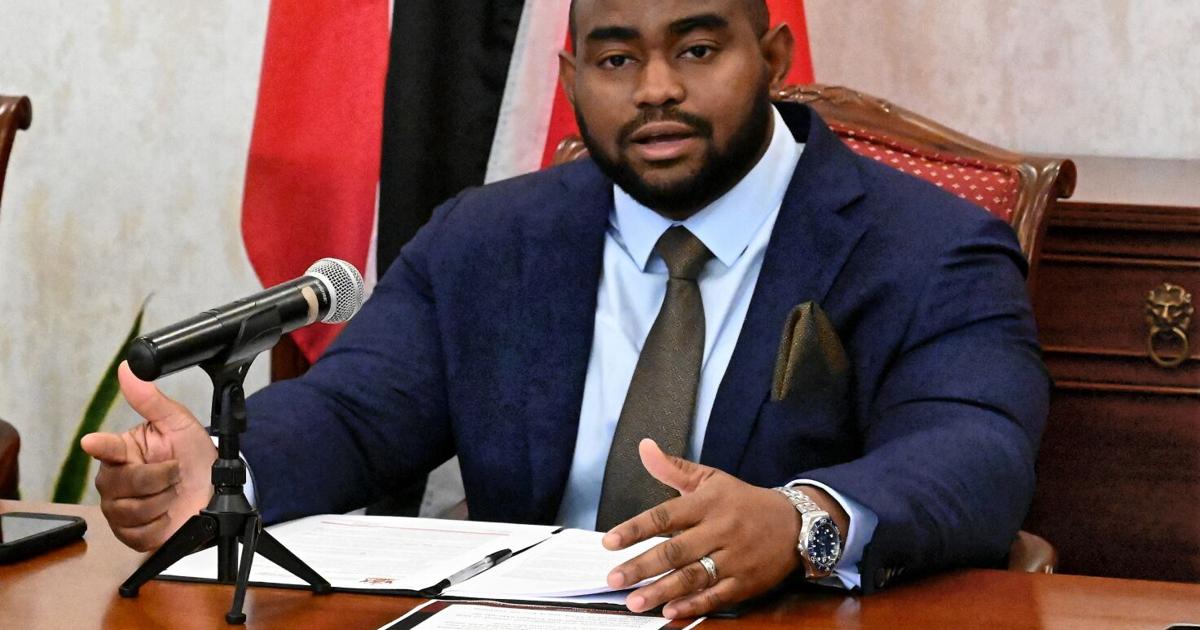
    Foreign Minister Melvin Bouva outlined Suriname’s ambitious foreign policy agenda for 2026 during a comprehensive briefing with diplomatic corps representatives in Paramaribo on Wednesday. The gathering brought together heads of diplomatic missions, consuls-general, and international organization representatives for a strategic overview of the nation’s governmental priorities.

    Minister Bouva articulated Suriname’s distinctive diplomatic philosophy, positioning the South American nation as “a friend to all and enemy to none” while emphasizing result-oriented diplomacy as the cornerstone of international engagement. The foreign policy approach prioritizes economic cooperation and strengthening global partnerships through practical outcomes rather than ideological alignment.

    The year 2026 holds particular significance as Suriname prepares to celebrate fifty years of diplomatic relations with more than twenty nations worldwide. Minister Bouva announced the establishment of joint commissions with several key partners, including India, Indonesia, and South Korea, signaling deepened bilateral cooperation. He particularly highlighted the strategic importance of collaboration with neighboring Guyana, specifically mentioning ongoing discussions regarding the landmark Corantijn River Bridge project.

    Environmental leadership emerged as a central theme, with Bouva emphasizing Suriname’s unique status as a carbon-negative ‘Green Nation’ and its upcoming prominent role within CARICOM. The nation is slated to assume chairmanship of the Council for Foreign and Community Relations (COFCOR) before transitioning to incoming chair of CARICOM government leaders later in the year.

    Economic diversification featured prominently in the minister’s address, with identified opportunities spanning offshore oil and gas industries alongside agricultural development, tourism expansion, educational advancement, and healthcare improvement. Bouva reaffirmed Suriname’s commitment to multilateral cooperation and Sustainable Development Goals (SDGs), while also confirming preparations for participation in EXPO 2027 in Belgrade.

    The minister concluded by calling for enhanced cooperation and more visible engagement from the diplomatic community within Suriname. He announced government plans to establish regular diplomatic activities, including an annual Diplomatic Week, designed to systematically strengthen international relationships through structured engagement platforms.

  • Musa Weighs in After Chaotic BTL Protest

    Musa Weighs in After Chaotic BTL Protest

    BELIZE CITY – In the aftermath of Tuesday’s contentious demonstrations at Belize Telemedia Limited (BTL) headquarters, Caribbean Shores Area Representative Kareem Musa has characterized the events as evidence of a vibrant democracy rather than civil unrest. The protest, which saw participants breach police barricades and enter company premises, drew condemnation from BTL management who decried the actions as unlawful trespassing.

    Musa, speaking to reporters on Wednesday, offered a contrasting perspective to the telecommunications company’s position. “I think it was a good demonstration of a healthy democracy,” stated the government official. “The protest was primarily led by the United Democratic Party with participation from several labor unions. While not entirely peaceful, overall it represented a legitimate expression of dissenting views.”

    The demonstration has highlighted growing tensions between the Briceño administration and multiple sectors of Belizean society. When questioned about Cabinet’s silence regarding widespread opposition from the National Trade Union Congress of Belize (NTUCB), Belize Chamber of Commerce and Industry (BCCI), and Independent Senators, Musa defended the government’s position.

    He explained that Cabinet deliberately refrained from public commentary to avoid perceptions of influencing BTL’s board decisions. “Some media houses have suggested the Prime Minister is influencing the board’s decision,” Musa noted. “It is crucial that Cabinet does not interfere with the board members’ independent decision-making process. We will announce our position after consultations have concluded.”

    The government’s measured response suggests a strategic approach to balancing democratic expression with institutional integrity, setting the stage for continued dialogue between stakeholders in this developing political situation.

  • BTL Deal Raises Political Déjà Vu for PUP

    BTL Deal Raises Political Déjà Vu for PUP

    The Briceño administration confronts mounting political pressure as its handling of the BTL-Speednet acquisition evokes memories of the telecom controversies that contributed to the PUP’s 2008 electoral defeat. With opposition groups mobilizing street demonstrations, government officials acknowledge the potential for history to repeat itself just one year into their second term.

    Minister Kareem Musa, Area Representative for Caribbean Shores, conceded the political reality facing the ruling party. “That is a reality we have to consider as politicians,” Musa stated, acknowledging that the situation “definitely weighs on every politician’s mind at this critical juncture.”

    The minister emphasized that the final decision regarding the telecommunications deal rests not with elected officials but with the board, while simultaneously recognizing the need to voice concerns given substantial public pushback.

    As the United Democratic Party (UDP) promises escalating protest actions, labeling current demonstrations as merely “phase one,” Minister Musa characterized the opposition’s turnout as a “decent showing” while expressing skepticism about their capacity to sustain momentum through multiple phases of activism.

    Despite the political challenges, Musa framed the opposition mobilization as ultimately beneficial for Belizean democracy. “It is important for a healthy democracy that we have a strong, vibrant opposition,” he remarked, adding that dissenting views expressed through demonstrations should be viewed as “a positive thing.”

    The government’s response reflects the delicate balance between addressing public concerns and maintaining procedural integrity in the controversial telecommunications arrangement, all while navigating the specter of historical political consequences.

  • Musa Seeks Dismissal of Budna Constitutional Case

    Musa Seeks Dismissal of Budna Constitutional Case

    In a significant legal development in Belize, former Home Affairs Minister Kareem Musa has formally requested the Supreme Court to dismiss a constitutional claim filed against him by Joseph Budna. The case, which represents a notable intersection of political accountability and constitutional law, saw Musa appearing as a private citizen with legal representation from the firm Courtenay and Coye.

    When questioned by journalists regarding whether he still maintains that Budna’s constitutional rights were initially violated, Musa delivered a comprehensive defense of his ministerial actions. He asserted his full confidence in having exercised his duties appropriately while acknowledging Budna’s legal right to pursue constitutional redress.

    “Joseph Budna retains every entitlement to bring this matter before the Supreme Court, just as I possess the unequivocal right to mount a vigorous defense,” stated Musa. “My position remains clear: I bear no responsibility for the alleged violations. Video evidence substantiates that a criminal act occurred, resulting in the removal of a dangerous individual from Belize’s streets, thereby enhancing public safety, particularly for vulnerable children.”

    Despite acknowledging procedural irregularities, Musa emphasized having utilized all available ministerial powers to ensure transparency, including advocating for public release of relevant video footage and demanding an independent investigation into the incident. He articulated the philosophical position that “two wrongs don’t make a right,” recognizing potential procedural missteps while maintaining the outcome served public safety interests.

    The former minister additionally indicated potential legal action against media outlets for what he characterized as repetition of “libelous and defamatory allegations” originally made by Arthur Saldivar, suggesting continuing legal ramifications from his ministerial tenure.