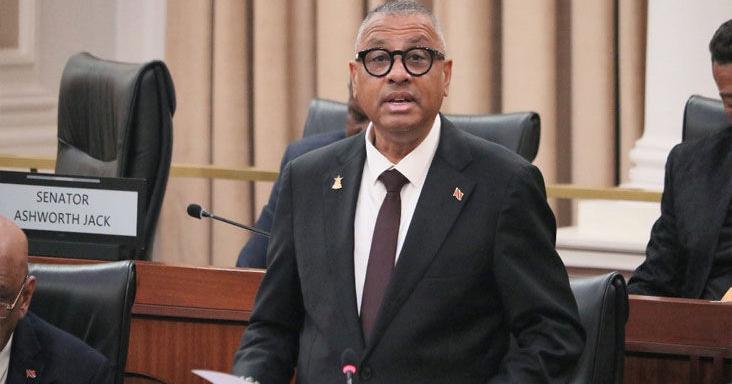
Following Trinidad and Tobago’s participation in the 81st Regular Session of the United Nations General Assembly (UNGA) held in New York last month, Foreign and Caricom Affairs Minister Sean Sobers has announced a series of landmark diplomatic achievements during a parliamentary address, headlined by plans to open the Caribbean nation’s first ever embassy in the Middle East based in the United Arab Emirates (UAE).
Sobers confirmed that the initiative has already secured formal approval from the national Cabinet and Prime Minister Kamla Persad-Bissessar, marking the culmination of months of targeted engagement by the Persad-Bissessar administration to strengthen strategic ties with the Gulf state. Government Members of Parliament responded with immediate desk-thumping approval of the historic diplomatic expansion.
The push for a permanent UAE mission dates back to November 2025, when the Trinidad and Tobago government first signaled its intent to open a diplomatic outpost in the country as a core strategy to attract foreign direct investment, secure critical financing, and expand bilateral trade volumes. The two countries further cemented this growing partnership in February 2025, when they signed a bilateral agreement focused on the promotion and reciprocal protection of cross-border investment.
Beyond economic gains, the deepening relationship with the UAE has already delivered tangible social benefits for Trinidad and Tobago: Sobers confirmed the UAE government has committed to a substantial grant to fund life-saving critical medical equipment for the Couva Children’s Hospital, a win the minister directly attributed to Prime Minister Persad-Bissessar’s proactive regional and global diplomatic outreach. On the sidelines of UNGA 81, Sobers also held high-level talks with UAE Deputy Prime Minister and Foreign Affairs Minister Sheikh Abdullah bin Zayed Al Nahyan, where discussions covered collaboration across a broad range of priority sectors including economic development, trade, investment, cultural exchange, tourism, energy transition, and artificial intelligence innovation.
Alongside the historic Middle East embassy announcement, Sobers highlighted the reset of bilateral relations with neighboring Venezuela as another defining outcome of the UNGA delegation’s work. A bilateral meeting between Prime Minister Persad-Bissessar and acting Venezuelan President Delcy Rodriguez produced a landmark agreement to launch a new bilateral strategic partnership between the two nations.
This new framework will accelerate an ambitious shared work program covering eight key sectors: trade, energy, cross-border security, disaster risk management, environmental protection, agriculture, and cultural exchange. Sobers emphasized that this expanded, holistic approach to engaging the Bolivarian Republic of Venezuela will unlock untapped potential for growth in both energy and non-energy trade for the first time, delivering mutual prosperity for both populations. For Trinidad and Tobago, he noted, the partnership will strengthen local manufacturing sectors and reduce the nation’s overall food import bill.
Sobers also drew attention to Trinidad and Tobago’s June 3 election as a non-permanent member of the United Nations Security Council, for the 2027–2028 term. In her September 22 address to the full UNGA assembly, Prime Minister Persad-Bissessar centered the unique vulnerabilities that small island developing states (SIDS) face in the current global order, calling for enhanced coordinated international action to tackle transnational organized crime, illicit firearms trafficking, narcotics smuggling, and other threats to regional and global security. The prime minister made clear that Trinidad and Tobago will use its Security Council seat to push for practical, collaborative global responses to these challenges, while ensuring the specific concerns of small states are centered at the highest levels of global decision-making.
On the security front, the UNGA gathering delivered additional progress for Trinidad and Tobago: during the Shield of the Americas summit chaired by U.S. President Donald Trump, the country was recognized by the Trump administration as the first participating nation to join the U.S. in formally designating 25 transnational criminal organizations as foreign terrorist organizations. Sobers confirmed this alignment will open access to ongoing technical and financial assistance from the U.S. to support domestic law enforcement efforts to combat organized criminal activity.
Throughout the UNGA session, Prime Minister Persad-Bissessar led an intensive schedule of bilateral and multilateral engagements with heads of state, government leaders, senior diplomatic officials, and representatives of leading international organizations, a schedule that Sobers said reflected the government’s commitment to prioritizing tangible national gains over ceremonial presence at the global gathering. Beyond the Venezuela and UAE talks, the prime minister met with Ghana President John Dramani Mahama, Kyrgyzstan President Sadyr Japarov, Austria President Alexander Van der Bellen, India External Affairs Minister Dr. Subrahmanyam Jaishankar, UK Prime Minister Andy Burnham, and Japanese Prime Minister Sanae Takaichi. Sobers and Minister in the Office of the Prime Minister Nicholas Morris also led a separate track of diplomatic talks, with the full Trinidad and Tobago delegation holding an additional 20 bilateral meetings with senior officials from Afghanistan, Aruba, Bangladesh, Benin, the Democratic Republic of Congo, the Dominican Republic, Gabon, Kenya, Mexico, the Netherlands, North Macedonia, Panama, Paraguay, the Philippines, Romania, Russia, San Marino, Sudan, the United Kingdom, and the UAE.
These wide-ranging discussions produced multiple concrete diplomatic breakthroughs beyond the flagship announcements, including the formal establishment of full diplomatic relations with three nations: Gabon, North Macedonia, and San Marino. Trinidad and Tobago also signed new bilateral agreements with eight countries: three air transport agreements with Chile, Ghana, and Panama, alongside formal frameworks establishing regular political consultation mechanisms with Kenya, Romania, Paraguay, Bangladesh, and the Dominican Republic.
Sobers emphasized that these new agreements create structured platforms to deepen cooperation across trade and investment, energy, security, development collaboration, climate finance, and other areas of shared mutual interest. The outcomes of the UNGA mission, he concluded, demonstrate the current administration’s commitment to pursuing a purpose-driven foreign policy firmly anchored in advancing the core national interests of Trinidad and Tobago.