分类: politics

  • Public Service Union: Transfer Freeze Welcome, But Not Enough

    Public Service Union: Transfer Freeze Welcome, But Not Enough

    In a newly announced government policy change for Belize’s public sector, the Public Service Union (PSU) has offered conditional support for a directive that freezes public officer transfers and extends current tour of duty terms. While the union frames the move as a welcome first step to address long-standing systemic flaws, it warns the order only delivers short-term relief and leaves deeper, costly problems unaddressed.

    Dean Flowers, president of the PSU, laid out the union’s position in a recent interview, confirming full backing for the 2026 transfer freeze while calling for urgent additional reform. Flowers noted that while narrow exceptions for emergency transfers may be necessary, all such exceptions must require formal public justification to prevent abuse.

    Flowers explained that the union has been advocating for an overhaul of the transfer system since 2021, in the aftermath of the global COVID-19 pandemic. He told reporters that in recent years, particularly following national election cycles, transfers have repeatedly been weaponized as a punitive tool rather than allocated based on operational efficiency or the well-being of public workers. Many transfers have forcibly separated public officers from their families, causing widespread unnecessary disruption to workers’ personal lives, according to Flowers.

    The union documented widespread claims of vindictive misuse of transfer policies as early as 2022, when it collected hundreds of worker complaints that demonstrated consistent abuse of the system. Beyond the human cost, Flowers also highlighted the massive financial burden that unregulated transfers place on Belize’s public coffers.

    According to the PSU’s analysis, the government of Belize spends more than $10 million annually on housing allowances alone for transferred public officers. That figure does not include the one-time transfer grants of $1,200 per officer, which add an estimated $200,000 in additional annual public spending. When extra hardship allowances for postings to high-cost, remote locations such as San Pedro, Caye Caulker, Placencia and Punta Gorda – which amount to $350 per officer – are factored in, total annual transfer-related spending reaches between $15 million and $20 million, a sum Flowers calls an unnecessary drain on public resources.

    The union has laid out two key additional demands alongside its support for the freeze. First, it requires that all eligible public officers retain full access to their applicable allowances without interruption during the extended tour of duty period. Second, it is calling on Belize’s Ministry of Public Service to implement strict, ongoing monitoring of the directive’s implementation to ensure compliance and prevent loopholes that would allow misuse of the transfer system to continue.

    This report is a transcript of an evening television broadcast, with all Kriol language speech transcribed using a standardized spelling system for publication.

  • “Hogwash”: PSU President Rejects Claims of Habitual Opposition

    “Hogwash”: PSU President Rejects Claims of Habitual Opposition

    For Belize’s Public Service Union (PSU), aligning with the sitting Briceño administration is a rare occurrence — so rare that when PSU leader Dean Flowers recently backed the government’s latest personnel transfer decision, critics quickly raised eyebrows. The core accusation leveled against Flowers and his union: that their long history of opposing government policy changes stems not from deeply held principle, but from a reflexive, habitual opposition to the status quo for its own sake. On April 21, 2026, Flowers pushed back hard against the claim, dismissing the criticism outright as baseless “hogwash” and laying out the intentional, principle-driven framework that guides the union’s positions.

    In a response shared during a televised broadcast, Flowers emphasized that every public stance the PSU has taken is rooted in specific concerns, not blind opposition. He pointed to the union’s long-running criticism of the government’s Suspicious Activity Reporting Act (SARA) as a clear example: from the start, the union’s objections have centered on demands for transparency and policy justification, rather than a blanket rejection of change.

    Flowers explained that the PSU has consistently asked Prime Minister Briceño, along with the country’s Director General and Financial Secretary, to provide concrete evidence and analysis to back the SARA policy. Specifically, the union wants the government to explain why the existing Tax Department cannot carry out the functions the government argues SARA is needed to deliver. He reaffirmed that the union only pushes back when policy lacks clear, justifiable reasoning, not for the sake of opposing.

    Flowers also addressed the case of the NeoPeople initiative and the government’s plan to outsource public sector data management, including human resource records, to the third-party organization. He noted that experienced professionals who helped launch the Center for Information Technology and Organization (CITO) — using a grant from Taiwan to build the institution and earn it ISO certification — already have the in-house infrastructure, skills and capacity to manage all government data. From the PSU’s perspective, there is no justification for spending $3 million of taxpayer money annually to outsource a service the public sector can already provide effectively.

    This report is a full transcript of an evening television news broadcast, edited for clarity and context.

  • Raúl congratulates the Eastern Army on its 65th Anniversary

    Raúl congratulates the Eastern Army on its 65th Anniversary

    On the 65th anniversary of the founding of Cuba’s iconic Eastern Army, Army General Raúl Castro Ruz, leader of the Cuban Revolution, has issued a heartfelt commemorative message celebrating the armed corps’ decades of service, revolutionary legacy, and ongoing commitment to defending the island’s socialist project.

    The Eastern Army was formally established on April 21, 1961 — just two days after Cuba’s landmark victory over foreign-backed incursion at the Bay of Pigs, a moment that marked the first major defeat of U.S. imperial ambitions in Latin America. In his greeting, Raúl Castro recalled the urgent, defining order issued by then-Commander-in-Chief Fidel Castro Ruz at the corps’ founding: “If we save the East, we save the Revolution!” The phrase underscores the Eastern region’s outsized historical and geographic strategic importance to Cuba’s revolutionary project, a priority that has shaped the army’s mission from its earliest days.

    Over its 65-year history, the Eastern Army — affectionately known by the nickname the “Lord Army” for its stature and reputation — has built its legacy far beyond traditional military operations. Raúl Castro emphasized that the corps’ standing stems not only from its military strength, but from its unwavering resistance to repeated enemy provocations and acts of aggression, as well as its long record of self-sacrifice in internationalist solidarity missions across the globe.

    A core contribution of the Eastern Army highlighted in the message is its role in advancing and implementing Cuba’s core strategic doctrine of the “War of all the People” — a framework that Raúl Castro noted remains particularly critical today, as the island faces persistent external threats to its socialist sovereignty.

    Beyond national defense, the Eastern Army has long been integrated into civilian support efforts across Cuba. Raúl Castro pointed to the still-raw public memory of the corps’ rapid deployment for search, rescue, and relief work in the wake of devastating Hurricane Melissa, followed by months of post-storm recovery work. This commitment to serving the Cuban people in times of crisis, he noted, is a core thread running through the entire history of the institution, and has earned the enduring gratitude of the Cuban public.

    In closing his message, Raúl Castro called for solemn tribute to the service members who have lost their lives in the line of duty, arguing that ongoing respect for fallen heroes reinforces the Eastern Army’s unshakable commitment to defeating any future act of enemy aggression. He extended formal congratulations to the corps’ founding members and all currently serving combatants for their service and achievements over 65 years, ending with a warm personal embrace to all members of the Eastern Army.

  • World Court to hear Guyana-Venezuela border controversy case next month

    World Court to hear Guyana-Venezuela border controversy case next month

    The decades-long territorial dispute between South American neighbors Guyana and Venezuela is set to enter a new, critical phase next month, as the International Court of Justice (ICJ) will launch oral hearings on the merits of Guyana’s case starting May 4, Guyana’s Attorney General Anil Nandlall confirmed in an appearance on his weekly social media program *Issues In The News* on Tuesday evening.

    Nandlall, who will travel to The Hague to join Guyana’s legal team alongside the country’s co-agent Carl Greenidge and a cohort of international legal experts, noted the hearings are scheduled to run through the full week of May 4, and could extend into the following week if the volume of arguments and proceedings requires additional time. As of Tuesday evening, neither the ICJ nor Venezuela’s Ministry of Foreign Affairs has issued an official public statement confirming the hearing schedule or outlining Venezuela’s planned arguments for the proceedings.

    The dispute centers on the 1899 Arbitral Tribunal Award that established the formal land border between the two countries, which Venezuela has repeatedly refused to recognize. Caracas continues to claim sovereignty over the 160,000-square-kilometer Essequibo Region, a resource-rich territory rich in mineral deposits and old-growth forests that accounts for roughly two-thirds of Guyana’s total land area, as well as Guyana’s Exclusive Economic Zone (EEZ) stretching offshore from the region.

    The outcome of the case carries major commercial stakes for the global energy sector, as multiple major international oil companies hold active exploration and production concessions in offshore waters adjacent to Essequibo. Guyana first brought the case to the ICJ for adjudication on March 29, 2018, and energy industry stakeholders have been closely tracking its progress ever since.

    In January 2026, Darren Woods, CEO of US energy giant ExxonMobil – which leads development of the massive Stabroek Block offshore Essequibo that has already yielded more than 11 billion barrels of proven oil reserves – described the upcoming ICJ ruling as a “critical milestone” that will shape the company’s long-term investment and operational plans in the region. Last month, Nicole Theriot, the United States Ambassador to Guyana, announced that Washington stands ready to facilitate bilateral negotiations between Guyana and Venezuela to settle remaining maritime boundary disputes after the ICJ issues its final ruling, which is currently expected in early 2027.

    A key complication for post-ruling negotiations is Venezuela’s non-membership in the United Nations Convention on the Law of the Sea (UNCLOS), the international framework that governs maritime boundary delimitation. Unlike Guyana and neighboring Suriname, Venezuela has not ratified the convention, meaning any final maritime agreement will require direct bilateral negotiations between Georgetown and Caracas with no binding international legal framework to govern the process.

  • Retired CARICOM Official Warns Dispute Could Weaken Regional Work

    Retired CARICOM Official Warns Dispute Could Weaken Regional Work

    A bitter public dispute over the reappointment of CARICOM Secretary General Dr. Carla Barnett has fractured the usually cohesive facade of the Caribbean regional bloc, with a retired top official warning that the open conflict could cause lasting damage to the organization’s core mission. The standoff erupted after Trinidad and Tobago issued a stark public ultimatum in late April 2026: it will withdraw critical financial contributions to the bloc unless member leaders revisit the approval of Barnett’s second term.

    Trinidad and Tobago’s leadership has put forward two core grievances to justify its hardline position. Officials claim the bloc’s progress has ground to a standstill during Barnett’s first term, and add that Trinidad was denied any meaningful input when the decision to reappoint her was originally made. The position has pitted the twin-island nation directly against Belize, whose prime minister and foreign minister have both issued public statements unreservedly backing Barnett’s continued leadership.

    The unprecedented public airing of internal tensions has drawn a sharp warning from Ambassador Byron Blake, a former Assistant Secretary General of CARICOM who retired from the bloc after decades of service. Blake argues that the public fight over the secretary general’s appointment is likely a distraction from deeper underlying rifts, framing the leadership dispute as little more than a “smoke screen” for broader disagreements within the bloc.

    Even so, Blake stressed that the very fact the conflict has spilled into public view poses a severe threat to CARICOM’s functionality. In comments originally made during a televised evening broadcast, he noted that the organization has always historically resolved internal differences through closed-door caucuses and quiet diplomacy, and this open public clash over a leadership appointment has no precedent in CARICOM’s history.

    “A public disagreement with the sitting secretary general is almost suicidal,” Blake explained. “It means that the secretary general, who has to move among countries and among heads of government, will not get cooperation in terms of the programs and the activities. And that then would really be very destructive for the movement.”

    Beyond the immediate damage to ongoing initiatives, Blake added that the public dispute erodes trust in how CARICOM operates, casting doubt on the bloc’s ability to navigate internal differences to deliver collective progress for member states. He urged leaders to come to a swift resolution to the standoff, warning that prolonged division will only deepen harm to the regional integration project that CARICOM was built to advance.

  • Smith Defends Party Switch as Necessary for ‘Delivery’ in All Saints West

    Smith Defends Party Switch as Necessary for ‘Delivery’ in All Saints West

    In a recent press briefing addressing growing public scrutiny over his sudden party affiliation change, representative candidate Smith for the All Saints West constituency has doubled down on his decision, framing the switch as an unavoidable step to better serve local residents.

    Smith explained that his previous party had failed to prioritize the key infrastructure, social service, and economic development projects that top the list of concerns for All Saints West voters. Deadlocked internal negotiations and misaligned policy priorities, he claimed, had left critical initiatives stuck in limbo for years, leaving constituents without the tangible progress they were promised.

    “I did not make this choice lightly,” Smith told reporters gathered at the constituency’s central community hall. “Switching parties was never about personal gain or political opportunism. It was about cutting through the gridlock to get things done for the people who put their trust in me. For too long, our community’s needs have been sidelined for party-centric interests, and that ends now. This move is purely about delivery—delivering better roads, improved healthcare access, and more job opportunities for every household across All Saints West.”

    Local political analysts note that the party switch has shifted the competitive landscape for the upcoming constituency election, with both the outgoing and new party of Smith adjusting their campaign strategies to account for the change. While opposition critics have blasted the move as a self-serving power grab that signals political instability, Smith’s supporters have argued that the decision reflects a rare commitment to putting constituents above party loyalty.

  • Private Bus Operators Get New Deal with GOB

    Private Bus Operators Get New Deal with GOB

    In a development that brings resolution to a longstanding dispute between the Government of Belize (GOB) and private bus operators, Cabinet has approved a new tiered mileage-based fare system to address industry calls for fairer operating conditions, following threats of a total service shutdown last month. The reform comes in direct response to a years-long advocacy campaign from the Belize Bus Association (BBA), which pushed for regulatory changes to correct what they have framed as an unequal playing field for private operators against state-owned services.\n\nTransport Minister Dr. Louis Zabaneh confirmed the three-tier structure to local outlet News 5, outlining clear fare levels and eligibility requirements for each service category. Under the approved framework, standard regular bus routes will be capped at $0.18 per mile, faster express services will carry a rate of $0.20 per mile, and a newly created premium service tier will be set at $0.22 per mile.\n\nUnlike the existing fare structure that offers little differentiation between service quality levels, the new premium tier comes with binding operational standards to justify the higher rate. To qualify for the premium classification, operators must run vehicles no older than seven years, install ergonomic bucket seating, and offer on-board Wi-Fi connectivity. These premium services will also be restricted to inter-municipal runs and high-traffic, high-demand routes, aligning with commuter needs for faster, more comfortable travel between population centers.\n\nDr. Zabaneh noted that government officials have already communicated the framework verbally to BBA leadership, with formal written negotiations set to wrap up within the coming week. Final adjustments will include rounding all final fare amounts to the nearest $0.25 for passenger convenience, and a full collaborative mapping of all route stops that will include input from both private operators and the state-run National Bus Company (NBC).\n\nThe policy breakthrough comes after a period of escalating tension: the BBA recently threatened to suspend all intercity service over skyrocketing fuel costs that have squeezed operator margins, alongside longstanding complaints that existing pay and fare structures are structurally unfair, leaving many private operators operating consistently at a loss. The new fare system applies exclusively to intercity highway routes, which make up the majority of cross-country commuter corridors in the country.\n\n“ we have agreed with the president of the BBA that we will make sure we work closely with them and with the NBC to ensure that all those stops are incorporated properly,” Dr. Zabaneh added, emphasizing the government’s commitment to a collaborative final rollout.\n\nFor BBA leadership, the announcement marks a milestone in a nearly 20-year fight for equitable regulation. BBA President Phillip Jones told News 5 that the association has been lobbying successive governments to level the playing field and establish equal operating conditions for all public bus operators across the country, dating back to the early 2000s.

  • Simons brengt begin juni officieel bezoek aan Dominicaanse Republiek

    Simons brengt begin juni officieel bezoek aan Dominicaanse Republiek

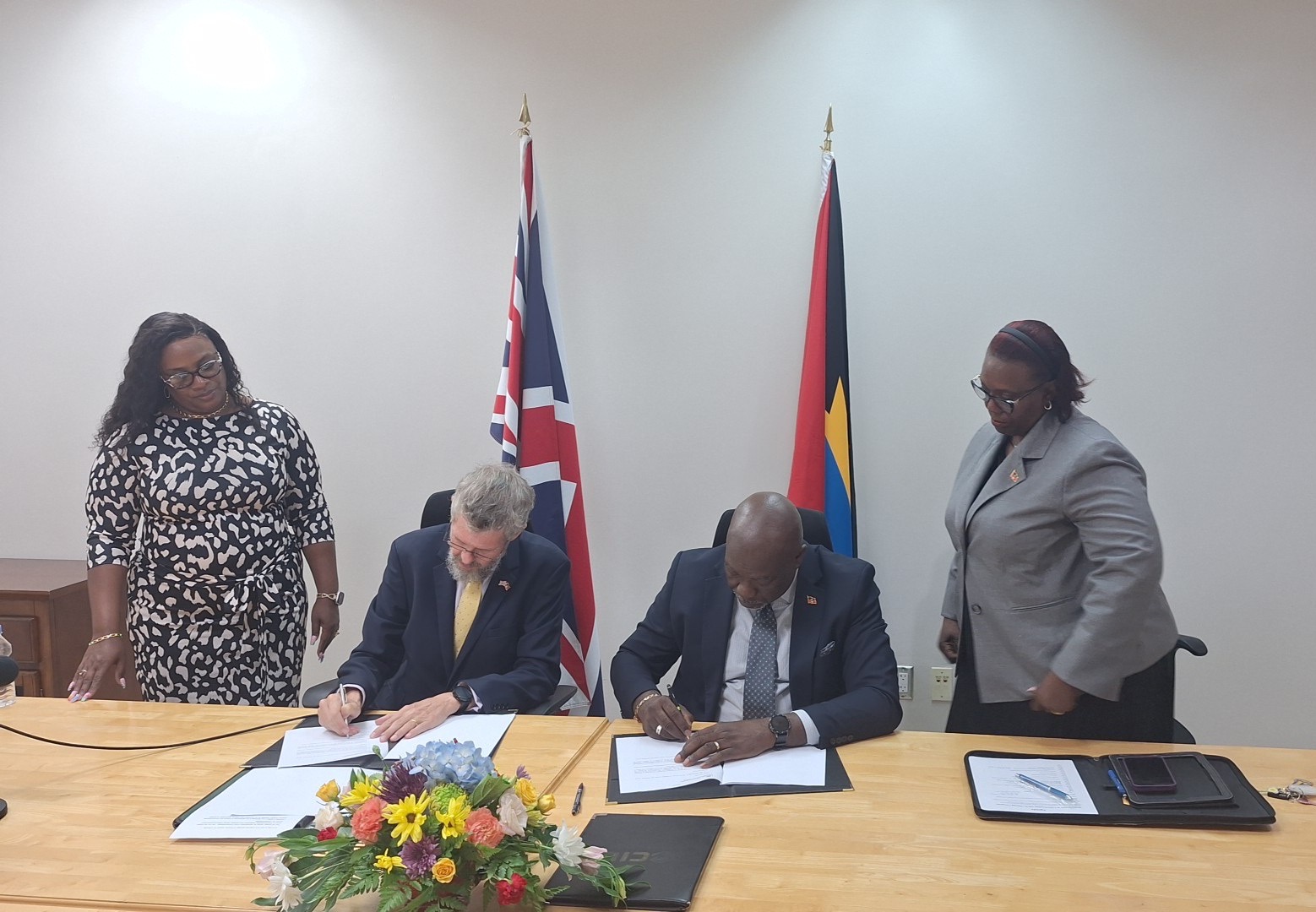
    Suriname and the Dominican Republic are moving forward with plans to deepen their bilateral ties, with a high-stakes presidential visit scheduled for early June to formalize new collaborative agreements. Suriname’s President Jennifer Simons will travel to the Dominican Republic on June 1 and 2 to hold official talks with her Dominican counterpart President Luis Abinader, marking a key milestone in the growing relationship between the two Caribbean nations.

    To lay the groundwork for the presidential summit, Suriname’s Minister of Foreign Affairs, International Trade and Cooperation Melvin Bouva already held a series of preparatory working meetings in the Dominican Republic. During these discussions, the two sides signed a joint declaration that outlines a shared commitment to expanded partnership, with core priorities centered on three key sectors: economic development, tourism expansion, and bilateral trade.

    In remarks following the signing, Minister Bouva emphasized that the Dominican Republic opens substantial new opportunities for Suriname’s economic growth, particularly in the tourism and export segments. Suriname has set a clear goal of boosting international visitor arrivals to the country, and closer collaboration with the Dominican Republic — a major regional tourism hub — is expected to help Suriname tap into larger tourist flows. Additionally, Suriname is positioning itself to expand access to the Dominican market for key domestic agricultural exports, including corn, soybeans and cacao.

    Beyond bilateral ties, the two countries are also prioritizing closer regional collaboration to address shared Caribbean challenges, especially around energy stability and food security. Dominican Republic has been identified as a critical strategic partner for Suriname as it works to advance these regional cooperation goals, creating a framework for mutual benefit that extends beyond traditional trade and economic links.

  • Transport minister: Free seniors rides permanent

    Transport minister: Free seniors rides permanent

    During a heated debate in Barbados’ House of Assembly on the transformative Older Persons (Care and Protection) Bill, Minister of Transport and Works Kirk Humphrey has issued an unwavering guarantee that the Mottley administration will permanently retain free bus fare for all senior citizens riding public Transport Board buses, even amid ongoing discussions of potential public-private partnerships for the island’s transport sector.

    Humphrey, who draws deep personal and academic expertise in elder rights issues, framed the new legislation not as an act of charitable goodwill from the government, but as a long-overdue fundamental gesture of gratitude to the generations of Barbadians who built the modern nation. The minister used the debate to push back against persistent public rumours that privatization of transport services would eliminate the popular free fare benefit for vulnerable groups, delivering a categorical public reassurance.

    “Let me make it clear. There will never be, under this administration, any time where older persons have to pay to use buses in this country. It is not the policy of the government. That free ride for older persons will continue regardless of whatever structure we settle on for delivering transport to Barbadians,” Humphrey stated emphatically. The minister extended this ironclad guarantee to all other groups that currently hold free public transport privileges, including active and serving police officers, emphasizing that government efforts to boost operational efficiency in the transport sector will never come at the expense of vulnerable and marginalized groups.

    Humphrey also used the occasion to call on Barbadian society to confront a growing worrying erosion of the island’s long-held traditional culture of intergenerational community care. Invoking the classic Socratic maxim that “the unexamined life is not worth living,” he urged the nation to engage in deep introspection about how it treats its aging population. He questioned how a country once famous for its tight-knit community care systems had reached a point where so many seniors report feeling invisible, socially excluded, and neglected.

    “Dignity does not expire at 65 or 67. In fact, we have a responsibility as people get to that age to put a little bit more effort in,” Humphrey argued.

    Drawing on his portfolio oversight, the transport minister detailed the often-overlooked deep connection between accessible public infrastructure and broader social well-being for older Barbadians. He explained that seemingly small oversights, such as cracked sidewalks or unbuilt bus shelters, do more than just hinder mobility – they actively push seniors into social isolation. If an older person cannot wait comfortably for a bus due to a lack of shelter, they will often choose to stay home entirely, skipping critical medical appointments and cutting off visits with family and friends, eroding their independence over time.

    “Getting older should not mean losing independence in these things that are so easy to be able to resolve,” he said. Humphrey challenged his own ministry to abandon outdated accessibility standards that are unfit for a 21st-century Barbados, mandating that all public walkways be fully accessible for people living with disabilities and seniors, who he noted experience mobility and safety risks such as uneven lighting very differently than younger people.

    Beyond the transport policy commitments, Humphrey outlined the core protections of the new Older Persons Bill, which establishes a comprehensive national framework to combat elder neglect, abuse and financial exploitation. He highlighted the landmark creation of a confidential national register of documented elder abusers, a provision he called a personal priority, which will bar anyone with a confirmed history of abusing seniors from working in licensed elder care facilities across the island.

    “This bill says that older persons are right holders and that they are not just passive recipients of government’s largesse. It recognizes physical abuse, emotional abuse, sexual abuse, neglect, abandonment, and financial abuse—including when people take your pensions or your savings. Silence can no longer be used to protect abusers in this country,” Humphrey said.

    The minister closed by issuing a direct challenge to the Social Empowerment Agency and all relevant government bodies responsible for elder welfare: passing groundbreaking legislation is only the first step, and the true impact of the bill will depend on consistent, aggressive enforcement. “Protection delayed is protection denied. We have to enforce what the bill allows us to enforce. We have to put in place the systems to benefit the persons that we’re meant to protect. Use the legislation. Enforce the legislation,” he urged. Echoing a long-held global standard of national accountability, Humphrey noted that “You judge a country not by the way it treats the people who are strong… but by the way it treats its vulnerable.”

  • Lucy Belle-Matthew, sworn-in as Roseau mayor, outlines Council priorities

    Lucy Belle-Matthew, sworn-in as Roseau mayor, outlines Council priorities

    On a formal Monday swearing-in ceremony, Lucy Belle-Matthew took office as the new mayor of Dominica’s capital city, Roseau, laying out a clear, action-focused policy agenda centered on three long-standing urban challenges: inadequate sanitation, unregulated private property management, and disorderly street vending.

    Belle-Matthew earned her mandate after a competitive March 2026 city council election, where she ran as the representative for Ward 4. She secured a solid victory, polling 408 votes to defeat her challenger Sherman Boston, who garnered 267 votes.

    In her first official inaugural address to the city and its residents, the new mayor opened with pressing property regulation issues, emphasizing that owners of vacant lots and crumbling, dilapidated buildings must bring their holdings into compliance with existing city council rules. “We are appealing to the owners of such properties to take immediate action to comply with Council’s regulation,” Belle-Matthew stated. To strengthen the city’s ability to enforce these rules, she revealed the council plans to propose revisions to local property tax legislation, adding that the council’s regulatory authority must be acknowledged and upheld across the municipality. “There cannot be full and effective representation without your commitment to pay your taxes and fulfilling your obligation to Council,” she added.

    Belle-Matthew also took a moment to praise the national Government of Dominica for its ongoing investments in upgrading municipal housing stock, noting that the national initiative has already delivered tangible improvements to living standards for hundreds of local families. She called on private property owners and all community members to partner with the city council to advance local sanitation improvement projects, framing public cleanliness as a shared responsibility rather than solely a government task.

    Shifting focus to urban public space management, the mayor called out unregulated street vending as a growing public safety concern, particularly in Roseau’s densely populated city center, where vendors have occupied sidewalks and public roadways. “Vending in some areas of the city has become a major hazard due to the congestion and disorderly vending practices,” she explained. Rejecting heavy-handed crackdowns that would threaten vendors’ livelihoods, Belle-Matthew outlined a balanced approach: the city will restructure vending locations to restore public access to sidewalks and streets, but will offer existing vendors the option to relocate to available, properly zoned space at the Roseau Market, where they can continue operating their businesses without disruption. “This situation cannot be allowed to continue. We will seek to address this issue in an orderly manner,” she said. “If you are relocated to the Roseau market, we want you to make a good living by applying your trade. But we have a statutory duty which we must execute.”