分类: politics

  • Antigua and Barbuda PM, Gaston Browne, addresses U.S. partial travel ban

    Antigua and Barbuda PM, Gaston Browne, addresses U.S. partial travel ban

    The Government of Antigua and Barbuda has formally responded to the United States’ proclamation suspending visa issuance to its citizens effective January 1, 2026. Prime Minister Gaston Browne expressed profound disappointment regarding the inclusion of his nation in the ban, which specifically targets countries with Citizenship by Investment (CBI) programs.

    Contrary to US claims, Browne asserted that Antigua and Barbuda has implemented significant reforms to its CBI program, including the establishment of a mandatory 30-day physical residency requirement. This development directly challenges the US government’s assertion that the program operates without residency provisions.

    Over the past year, Antigua and Barbuda has collaborated extensively with various US departments to enhance program integrity and security measures. These efforts resulted in comprehensive new legislation strengthening oversight, transparency, and due diligence processes within the citizenship program.

    In a surprising development, Ambassador Sir Ronald Sanders discovered that State Department officials themselves were reportedly surprised by the proclamation and had received no prior notice of its issuance. This revelation suggests internal discrepancies within the US administration regarding the policy implementation.

    Ambassador Sanders has initiated high-level discussions with US authorities, including the White House and State Department, to clarify the situation and provide accurate information about Antigua and Barbuda’s reforms. Simultaneously, Prime Minister Browne has directly contacted President Donald Trump and Secretary of State Marco Rubio, offering full cooperation to address concerns and facilitate reinstatement of all visa categories.

    The Antiguan government emphasized the longstanding relationship with the United States, noting that the US is their most significant trading partner. Browne concluded by reaffirming commitment to preserving bilateral relations based on mutual respect, cooperation, and accurate understanding.

  • Fontaine warns of bleak future for Dominica amid concerns about U.S. travel ban and environmental destruction

    Fontaine warns of bleak future for Dominica amid concerns about U.S. travel ban and environmental destruction

    In a stark address to the nation, United Workers Party Leader Dr. Thomson Fontaine has issued grave warnings about Dominica’s escalating political and environmental crises following his recent re-election as opposition leader. Speaking at a press conference, Fontaine identified two immediate threats: impending U.S. travel restrictions against Dominican citizens and systematic destruction of the country’s protected rainforests.

    The political leader revealed that beginning January 2026, thousands of Dominicans will face denied entry to the United States, mirroring similar sanctions already implemented by Canada and the United Kingdom. Fontaine emphasized these restrictions would severely impact students pursuing international education, families attending overseas ceremonies, and patients requiring specialized medical treatment abroad.

    Fontaine directly attributed these diplomatic consequences to the Roosevelt Skerrit administration’s mismanagement of the Citizenship by Investment program. He alleged that fifteen years of inadequate due diligence enabled criminal elements to exploit Dominican passports, resulting in eroded international trust. ‘This government had ample opportunity to reform the program but instead channeled billions into projects benefiting a select few while ordinary citizens face the repercussions,’ Fontaine stated.

    The UWP has initiated legal action demanding accountability for the CBI program’s finances, with a court hearing scheduled for January 26, 2026. Fontaine recalled raising concerns about passport sales as early as 2009, only to be dismissed as unpatriotic by the ruling administration.

    Regarding environmental degradation, Fontaine accused the government of orchestrating an ‘unprecedented assault’ on Dominica’s natural heritage. He specifically condemned quarrying operations within the Central Forest Reserve at Deux Branches, conducted without mandatory environmental impact assessments. Contrary to government claims that these activities are essential for airport construction, Fontaine noted that alternative rock sources exist throughout the island.

    The opposition leader connected current rainforest destruction to earlier incursions at Cabrits National Park, warning that unchecked exploitation threatens Dominica’s international reputation as the ‘Nature Island.’ He pledged solidarity with affected communities in Concord, Kalinago Territory, and Marigot, alongside environmental advocates demanding immediate cessation of quarry operations.

    Amid growing economic hardship and social unrest, Fontaine described citizens as facing ‘a bleak Christmas and an even darker future.’ He urged Dominicans to demonstrate compassion for vulnerable communities and muster courage to demand systemic change through democratic processes. ‘We must fight for accountability, transparency, and environmental preservation,’ Fontaine concluded, positioning these issues as central to the nation’s survival.

  • Venezuela says Trump wants to turn back the clock 200 years

    Venezuela says Trump wants to turn back the clock 200 years

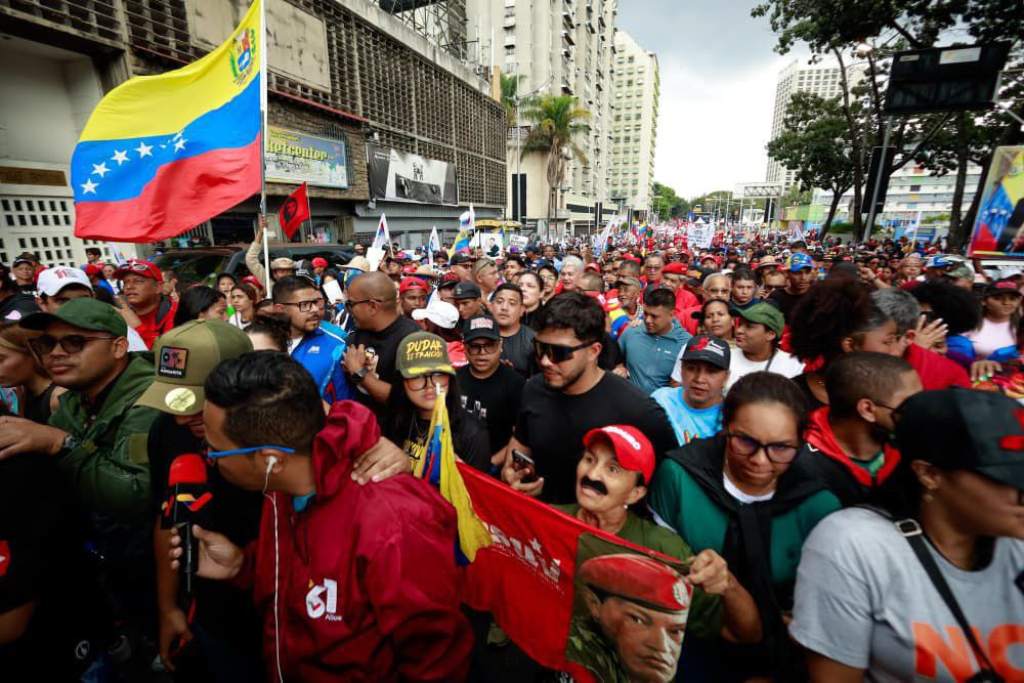
    At the 80th session of the United Nations General Assembly during the International Day against Colonialism, Venezuela’s diplomatic representative delivered a scathing condemnation of former U.S. President Donald Trump’s controversial statements regarding Venezuelan territory and natural resources. Ambassador Samuel Moncada referenced Trump’s December 16 declaration that “Venezuelan lands and oil belong to him and must be handed over immediately,” accompanied by threats of naval and air blockades using what Trump characterized as “the most powerful navy in history” if compliance was not forthcoming.

    The Venezuelan diplomat characterized this proclamation as a “monstrous declaration” that defies all established international legal frameworks. Moncada systematically cited multiple pillars of international law that Trump’s statement violated, including the UN Charter, customary international law, resolutions from both the Security Council and General Assembly, jurisprudence from international courts, and the German Convention.

    In his address, Moncada labeled the threat as “a grotesque violation of all civilizational norms” and explicitly defined it as modern colonialism and a crime of aggression. He drew historical parallels between current U.S. foreign policy approaches and the destructive behaviors of malign actors preceding World War II, asserting that such gunboat diplomacy has no legitimate place in 21st-century international relations. The ambassador warned that these actions are imposing chaos and destruction on the global diplomatic landscape, undermining decades of progress in international law and cooperation.

  • Cuba committed to social justice, says Prime Minister

    Cuba committed to social justice, says Prime Minister

    Cuban Prime Minister Manuel Marrero Cruz presented a comprehensive economic revitalization report to the National Assembly, outlining both progress and challenges facing the Caribbean nation. In his address, Marrero identified national security and homeland protection as fundamental strategic priorities for the Cuban state, emphasizing the heightened preparedness of military and interior ministry forces in response to escalating regional tensions.

    The government restructuring initiative has shown measurable progress, with authorities working to streamline the Central State Administration by reducing the number of governmental agencies. This administrative overhaul forms part of broader economic correction measures designed to address systemic distortions in the Cuban economy.

    Healthcare indicators revealed concerning trends, with infant mortality rates climbing to 9.8 per 1,000 live births—a significant increase from the 7.0 rate recorded during the same period last year. Despite implemented interventions, the healthcare system continues to face substantial challenges in reversing this negative trajectory.

    Education reforms continue with the ongoing implementation of the Teaching Process Quality Improvement Program, though specific outcomes and metrics were not detailed in the presentation.

    Most alarmingly, Marrero highlighted Cuba’s accelerating demographic crisis as one of the nation’s most pressing challenges. Current projections indicate the population will decline to 9.6 million by 2025 and further plummet to approximately 7.7 million by 2050, representing a severe population contraction that threatens long-term economic and social stability.

    The Prime Minister acknowledged the coordinated efforts between military institutions, the Communist Party, government entities, and mass organizations in addressing these multifaceted challenges while maintaining national security preparedness.

  • Audit Department wants legal changes to submit reports directly to Parliament

    Audit Department wants legal changes to submit reports directly to Parliament

    Grenada’s Audit Department has initiated a significant campaign to overhaul its reporting procedures, seeking to bypass ministerial channels and submit audited financial statements directly to Parliament. This proposed constitutional and legislative reform aims to address chronic delays in the tabling of crucial financial documents.

    Gary Walters, Director of Audit, revealed that his department is advocating for amendments to the Audit Act that would eliminate the current requirement for audited statements of statutory bodies and government-supported agencies to be routed through the Minister for Finance. Instead, these documents would proceed directly from the Audit Department to Parliament.

    ‘The existing constitutional framework mandates that the Director of Audit submits reports to the Minister for Finance, who then tables them in Parliament,’ Walters explained during a Public Accounts Committee awareness seminar. ‘The persistent challenge has been that reports delivered to the Ministry of Finance frequently fail to be presented to Parliament in a timely manner.’

    The seminar, chaired by Opposition Leader Emmalin Pierre, brought together members of both parliamentary houses to clarify institutional roles, reduce misunderstandings, and foster a culture of accountability through improved record-keeping, financial controls, and reporting practices.

    Walters emphasized that the proposed change would eliminate perceptions of Audit Department inefficiency while ensuring greater transparency. ‘Such a significant adjustment will not only require legislative changes but also Constitutional Reform,’ he noted, adding that the modification would serve Grenada’s best interests by preventing lengthy delays in the presentation of public fund audits.

    The current legal framework requires statutory bodies to submit financial and annual reports to the Audit Department by the end of the first quarter, with parliamentary tabling mandated by June each year. However, compliance with these deadlines has been consistently inadequate across most statutory bodies over recent years.

  • “Not Even I Was Aware”: PM Responds to Late Supplementary Budget Approval

    “Not Even I Was Aware”: PM Responds to Late Supplementary Budget Approval

    Prime Minister John Briceño of Belize has firmly rebutted allegations of governmental misconduct concerning the belated submission of supplementary budget approvals to Parliament. This controversy emerges amidst comparisons to similar practices previously condemned during ex-Prime Minister Dean Barrow’s tenure.

    When confronted with accusations that his administration had replicated these fiscal missteps by authorizing expenditures without prior parliamentary consent, Briceño delivered an unequivocal response: “I would not accept that.”

    The Prime Minister attributed the delay to the transitional phase following national elections, characterizing it as an inevitable period of governmental reorganization. “As we approached elections… certain expenditures were incurred, though nothing excessive,” Briceño clarified. He emphasized that upon assuming office, the primary focus shifted to establishing the new administration’s operational framework.

    In a notable admission, Briceño revealed his initial unawareness of pending financial obligations. “The matter only came to my attention when brought forward by the financial secretary,” he stated. “I must confess, even I was unaware of these outstanding issues. My immediate directive was to resolve them promptly.”

    While acknowledging a procedural delay spanning several months, Briceño maintained that the situation was ultimately rectified through proper channels. “Ideally, this should have been addressed immediately,” he conceded, “but within months of the delay being identified, we completed the necessary approvals.”

    The development occurs alongside the reappointment of Nestor Mendez as Belize’s Representative to the Organization of American States, signaling continued stability in the nation’s diplomatic corps amidst domestic fiscal scrutiny.

  • PM Skerrit says latest partial travel ban will not affect ‘very good’ Dominica-U.S. relations

    PM Skerrit says latest partial travel ban will not affect ‘very good’ Dominica-U.S. relations

    Prime Minister Roosevelt Skerrit of Dominica has publicly addressed the recent imposition of partial U.S. travel restrictions on his nation, asserting that the measure will not undermine the fundamentally positive relationship between the two countries. During a live broadcast on the state-owned radio station DBS on Wednesday, Skerrit provided a detailed assessment of the current state of diplomatic engagement.

    Contrary to what the travel advisory might suggest, Skerrit revealed that communication and collaborative efforts with the current U.S. administration have intensified. “The extent of our contacts and regular engagement on a multitude of shared issues has, in fact, been more substantial with the Trump administration compared to the previous Biden administration,” the Prime Minister stated.

    Highlighting the tangible benefits of this strengthened partnership, Skerrit pointed to a marked increase in U.S. investment into Dominica’s national security apparatus. He clarified that even after the conclusion of the formal U.S. Aid program, support has continued unabated and in full. This assistance extends beyond financial backing to include critical infrastructural projects, specialized training programs, and provision of essential materials.

    Skerrit praised the operational effectiveness of the bilateral channels, noting that access to key U.S. institutions like the State Department, the Treasury, and the local U.S. Embassy has been highly efficient at every level of dialogue. Concluding his remarks, the Prime Minister emphatically dismissed any notion of diplomatic strain, stating, “The relationship, in my mind, between Dominica and the current Trump administration has been very good. Therefore, I do not perceive this development as adversely affecting our relations in any manner.”

  • 65th Anniversary of Declaration on the Granting of Independence to Colonial Countries and Peoples

    65th Anniversary of Declaration on the Granting of Independence to Colonial Countries and Peoples

    The United Nations commemorated a dual milestone on December 18, 2025, simultaneously observing the 65th anniversary of the Declaration on the Granting of Independence to Colonial Countries and Peoples and inaugurating the first International Day against Colonialism in All Its Forms and Manifestations. Assistant Secretary-General for Peacebuilding Support Elizabeth Spehar delivered a landmark address acknowledging both the progress made and the substantial work remaining in the global decolonization movement.

    The 1960 declaration, co-sponsored by 43 Asian and African nations including all 17 territories that achieved independence that year, represented a watershed moment in UN history. This instrument served as a guiding framework for liberation, enabling over 60 territories comprising more than 80 million people to pursue self-determination and emerge as sovereign states. The current membership of 193 nations stands as testament to this transformative process.

    However, Spehar presented a candid assessment of unfinished decolonization work, noting that 17 Non-Self-Governing Territories remain under colonial administration. Beyond these official designations, she identified more subtle but equally impactful colonial legacies embedded within global power structures. International institutions including the Security Council and financial systems continue to reflect antiquated power dynamics from an imperial era rather than contemporary equality principles.

    These structural imbalances actively undermine trust, impede progress, and contravene the foundational UN principles of equality, sovereignty, and self-determination. The address connected current governance challenges to the original 1945 UN mandate to save future generations from conflict while advancing human rights and freedom.

    Spehar concluded with a call to action, urging renewed commitment to building a world where power is distributed equitably rather than concentrated, institutions serve all populations fairly, and freedom becomes a universal entitlement rather than a privileged exception.

  • Trump Claims Venezuelan Oil, Land, and Assets Are Stolen

    Trump Claims Venezuelan Oil, Land, and Assets Are Stolen

    Venezuela has launched formal diplomatic protests through the United Nations Security Council following incendiary statements by former U.S. President Donald Trump that have escalated tensions between the two nations. The controversy erupted when Trump utilized his Truth Social platform to announce what he characterized as “the largest Armada ever assembled in the South American theater” encircling Venezuelan territory.

    In his social media declaration, Trump asserted that Venezuela must return “all oil, land, and other assets that they previously stole from us” before the naval blockade would be lifted. The former president further escalated rhetoric by labeling the Maduro administration a “foreign terrorist organization” and proclaiming a comprehensive embargo on all sanctioned oil tankers attempting to enter or depart Venezuelan waters.

    The Venezuelan government responded with vigorous diplomatic countermeasures, issuing an official condemnation on Wednesday that characterized Trump’s statements as “grotesque threats” and violations of international law. Venezuelan officials accused the United States of pursuing a campaign of resource appropriation through military intimidation tactics.

    In a significant escalation, Caracas has formally notified the President of the UN Security Council, citing specific violations of UN Resolution 3314, which prohibits acts of aggression between sovereign states. The Venezuelan communication additionally declared the closure of national airspace to unauthorized military aircraft, positioning the move as a defensive measure against perceived U.S. aggression.

    The developing situation represents one of the most severe deteriorations in U.S.-Venezuela relations in recent years, with implications for regional stability and global energy markets given Venezuela’s status as a major oil-producing nation.

  • DNA buigt zich vrijdag over wet Duurzaam Natuurbeheer

    DNA buigt zich vrijdag over wet Duurzaam Natuurbeheer

    Suriname’s National Assembly is poised to conduct a pivotal public deliberation on the Sustainable Nature Management Initiative Law this Friday, marking a transformative shift in environmental governance. This legislative proceeding will commence with an administrative session featuring comprehensive reports from parliamentary committees before advancing to open debate and potential ratification.

    The proposed legislation represents a fundamental paradigm shift in how the nation approaches conservation and resource utilization. With Suriname maintaining over 93% forest coverage and ranking among the world’s most biodiverse regions, the country faces critical balancing between economic development pressures and environmental preservation. The initiative constitutes a complete revision of the outdated Nature Protection Act of 1954, establishing modern frameworks for ecological stewardship.

    A cornerstone innovation involves the financial architecture supporting nature policy. The legislation allocates approximately USD 20 million as seed capital for conservation management, channeled through the Environmental Fund to finance protection initiatives, sustainable usage programs, and area management. This funding mechanism extends eligibility to government agencies, local communities, and private conservationists alike, establishing unprecedented financial sustainability for environmental initiatives.

    International environmental organizations including Rainforest Trust, Re:wild, and Andes Amazon Fund have committed minimum USD 20 million in conservation funding to President Jennifer Simons, contingent upon legislative modernization. These resources will strengthen protected areas, promote sustainable ecotourism, and support indigenous communities through structured programming.

    Despite Suriname’s international recognition as a High Forest Low Deforestation nation, recent data reveals accelerating deforestation rates approaching 0.06% annually. Mining operations constitute the primary driver of habitat loss, followed by infrastructure development and urbanization. These trends generate not only ecological consequences but also directly impact indigenous territories, escalating land-use conflicts throughout the region.

    The legislative framework explicitly embraces sustainable management principles, recognizing nature as both ecological treasure and economic resource under stringent conditions. Innovative instruments including nature tourism concessions, payments for ecosystem services, and designation of private protected areas aim to foster ‘green growth’ while reducing dependence on extractive industries like oil and gold.

    Implementation authority centers on the National Environmental Authority (NMA), tasked with coordinating and executing conservation management. The NMA will oversee protected areas, concessions, scientific research, and compliance enforcement through interagency collaboration.

    The legislation further institutionalizes the FPIC principle (Free, Prior and Informed Consent), mandating explicit community approval for protected areas, buffer zones, or concessions affecting indigenous territories. Traditional knowledge receives formal recognition, with provisions enabling indigenous groups to propose independently managed protected areas.