分类: politics

  • Opposition Leader Blames US-Visa Ban on Prime Minister Browne’s arrogance and dismissiveness

    Opposition Leader Blames US-Visa Ban on Prime Minister Browne’s arrogance and dismissiveness

    Antigua and Barbuda faces mounting political turmoil following the White House’s unprecedented travel restrictions targeting most of the nation’s citizens. The proclamation has exposed deep divisions within the government, with Prime Minister Gaston Browne and Ambassador Sir Ronald Sanders delivering conflicting messages that have further confused the public.

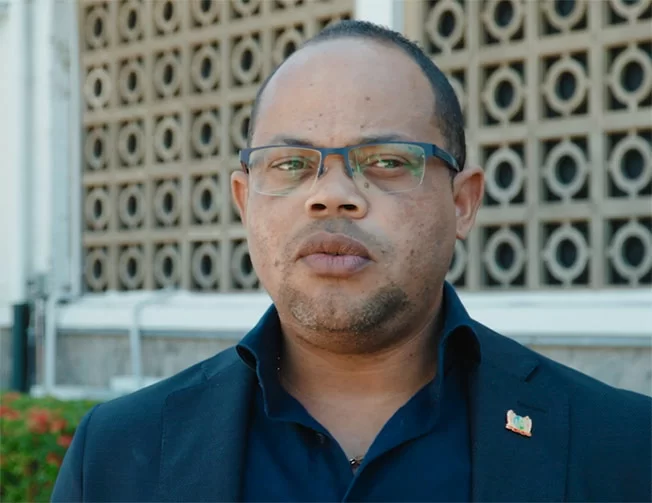
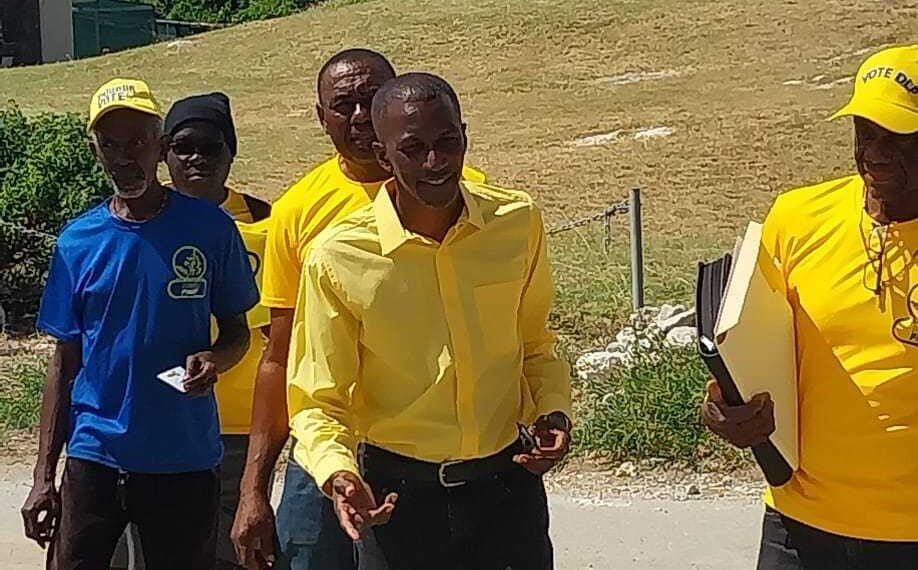
    Opposition Leader Jamale Pringle has launched scathing criticism against the administration, characterizing the visa ban as direct consequence of systematic governance failures. “This is not coincidence. This is consequence,” Pringle stated, highlighting that Antiguans and Barbudans now stand “singled out, humiliated, and punished for the Prime Minister’s tone-deafness” while other Caribbean citizens maintain US access.

    The political opposition traces the current crisis to multiple security breaches under the Browne Administration’s watch. These include Canada’s revocation of visa-free access following security concerns, the illegal manufacturing of passports in St. Vincent & the Grenadines outside proper oversight, and the controversial granting of citizenship to individuals involved in dark web contraband trading and alleged Chinese bank fraud.

    Particular attention has been drawn to the ‘Antigua Airways’ initiative that facilitated the arrival of over 900 West Africans who subsequently entered US territories—a scheme initially promoted as bringing “wealthy investors” but now viewed as a significant security lapse.

    The opposition notes that every warning about Citizenship by Investment Programme vulnerabilities was met with “dismissiveness, denial, or deflection.” Now, ordinary citizens—students abroad, businesspeople, medical patients, and families seeking reunification—bear the burden of these diplomatic failures.

    Additional consequences are emerging, including the unexplained replacement of the Cuban Medical Brigade with practitioners from Ghana, raising concerns about healthcare stability.

    The United Progressive Party asserts readiness to work toward reversing the visa ban and restoring the nation’s international standing, but emphasizes that genuine accountability must begin with the Prime Minister acknowledging his administration’s failures.

  • Antigua PM criticises CARICOM statement on US visa issue

    Antigua PM criticises CARICOM statement on US visa issue

    A significant diplomatic rift has emerged within the Caribbean Community (CARICOM) following Antigua and Barbuda Prime Minister Gaston Browne’s public criticism of the regional body’s handling of a sensitive visa situation with the United States. The controversy stems from a recent proclamation by U.S. President Donald Trump that would have suspended entry privileges for citizens of Antigua and Barbuda and Dominica beginning January 1, 2026.

    The crisis was temporarily averted when both Caribbean nations secured a suspension of the measure following high-level diplomatic engagements with U.S. officials. According to statements from Prime Minister Browne and Dominica’s Prime Minister Roosevelt Skerrit, American authorities agreed to maintain existing visa arrangements until December 31, 2025, with new protocols for biometric compatibility to be developed during the interim period.

    Despite this resolution, Prime Browne expressed sharp disappointment with CARICOM’s decision to issue a formal statement of concern late Friday, characterizing the move as unnecessary and poorly timed. The regional body, represented by the CARICOM Bureau comprising leaders from Jamaica, Barbados, and Grenada, had expressed apprehension about the lack of prior consultation and potential adverse effects on travel and economic exchanges.

    The underlying tension appears connected to Citizenship by Investment (CBI) programs operated by several Caribbean nations, which the U.S. administration claims present screening challenges due to their non-residency requirements. This diplomatic episode has further exposed divisions within CARICOM, with Browne specifically criticizing an unnamed fellow leader who allegedly accused affected nations of ‘cursing’ the U.S. administration.

    The situation highlights ongoing challenges in Caribbean-U.S. relations and internal cohesion within the regional integration movement, even as affected nations emphasize their commitment to maintaining strong bilateral partnerships with Washington.

  • President of Dominica to get raise in salary among other amendments

    President of Dominica to get raise in salary among other amendments

    The Dominican government has initiated a comprehensive overhaul of compensation packages for the nation’s highest offices, Prime Minister Roosevelt Skerrit announced during a press conference this week. The reforms will include a salary increase for the President effective in the coming year, alongside significant adjustments to benefits for both current and former heads of state.

    Skerrit revealed that his administration conducted an extensive evaluation of presidential terms and engagements, extending beyond mere financial compensation to examine how the nation treats its leaders during and after their service. “We have done a comprehensive review of the President’s emoluments and engagement,” stated Skerrit, confirming that proposed amendments would be presented to Parliament during the first quarter of next year.

    The Prime Minister outlined additional considerations being given to the legal status of the President’s spouse, noting that the position comes with significant restrictions on personal and professional activities. “Once you become the President’s spouse, you become limited in what you can do,” Skerrit emphasized. “We believe that serving the nation should not place undue burden on the President’s family, and we are examining appropriate facilitations.”

    The announcement follows recent cabinet decisions regarding former prime ministers, who now receive $7,000 monthly along with comprehensive support including drivers, domestic helpers, and vehicles. The government is also addressing compensation for other key positions, including the Director of Audit and Chief Elections Officer, whose retirement age was recently increased from 55 as part of broader electoral reforms.

    Skerrit indicated that statutory instruments governing these positions require updating to reflect contemporary standards and ensure appropriate compensation structures across the nation’s leadership framework.

  • Poppone-Skerrit to Jesma Paul-Victor: 2 million allocated to Salisbury for housing

    Poppone-Skerrit to Jesma Paul-Victor: 2 million allocated to Salisbury for housing

    Dominica’s Housing Minister Melissa Poponne-Skerrit has publicly countered claims of neglect in opposition-held constituencies, revealing that approximately $2 million was specifically allocated to the Salisbury Constituency for housing assistance. The minister’s statements came during her year-end press conference on Monday, directly addressing recent parliamentary remarks by Salisbury’s Parliamentary Representative Jesma Paul-Victor.

    Paul-Victor had previously asserted that her constituency remained excluded from the government’s national housing project despite substantial parliamentary allocations to the Housing Ministry. She highlighted that eight years after Hurricane Maria, numerous families in the Coulibistrie area continue residing in deteriorating structures and temporary arrangements originally intended as short-term solutions.

    Minister Poponne-Skerrit firmly dismissed these allegations, emphasizing that political representation does not determine housing distribution. “Housing is a right and it is for everyone across Dominica,” she stated. “We have made significant interventions in terms of financing—I believe close to $2 million was allocated to that constituency and distributed through the local village council.”

    The minister detailed that fewer than five households still require assistance, which will be addressed in 2026. She explained that many constituents originally slated for relocation instead opted to purchase government land at reduced prices to build their own homes. Additional support included financial assistance for home construction and repairs, with some residents choosing relocation or migration options.

    This exchange highlights ongoing tensions between government and opposition representatives regarding resource distribution in post-hurricane recovery efforts, particularly in rural constituencies still grappling with housing challenges.

  • Poponne-Skerrit to Jesma Paul-Victor: 2 million allocated to Salisbury for housing

    Poponne-Skerrit to Jesma Paul-Victor: 2 million allocated to Salisbury for housing

    A significant political dispute has emerged in Dominica regarding housing allocation priorities, pitting the parliamentary representative of the Salisbury Constituency against the Minister for Housing and Urban Development. The controversy centers on claims of neglect versus substantial financial support for hurricane-affected communities.

    Jesma Paul-Victor, Parliamentary Representative for Salisbury Constituency, recently asserted in parliament that her district had been completely excluded from the government’s housing initiatives despite substantial budgetary allocations to the Housing Ministry. She emphasized that eight years after Hurricane Maria, families in the Coulibistrie area specifically continue residing in deteriorating structures, partially repaired homes, and temporary arrangements originally intended as short-term solutions.

    Minister Melissa Poponne-Skerrit presented a contradictory account during her year-end press conference on Monday, revealing that approximately $2 million had been designated specifically for the Salisbury Constituency through local village councils. She firmly dismissed suggestions that the government had abandoned the opposition-held constituency, stating: ‘Housing is a right and it is for everyone across Dominica.’

    The Minister detailed comprehensive interventions including financial assistance for home construction and repairs, government land sales at reduced prices, and relocation support. She noted that fewer than five households remain requiring assistance, with plans to address their needs in 2026. Many constituents had alternatively opted to purchase government land at discounted rates to build independent homes, while others relocated or migrated with government support.

    The exchange highlights the politically charged nature of post-disaster reconstruction in Dominica, where housing allocations become intertwined with constituency politics and allegations of preferential treatment based on political affiliations.

  • Antigua abruptly terminates medical partnership with Cuba amidst US pressure, Is Dominica next?

    Antigua abruptly terminates medical partnership with Cuba amidst US pressure, Is Dominica next?

    In a striking reversal of policy, the Gaston Browne administration in Antigua and Barbuda has abruptly terminated its long-standing medical cooperation agreement with Cuba. This decision concludes a partnership that had been described for years as fundamental to the Caribbean nation’s healthcare system.

    The termination, revealed this week through statements from the opposition United Progressive Party (UPP), comes after a year of consistent assurances from Prime Minister Browne that his government would resist external pressure to end the Cuban medical program. As recently as this year, Browne had publicly championed the Cuban medical officers as ‘the core of the Antiguan medical service,’ warning that their removal would ‘devastate’ the country’s health services. He had additionally refuted claims from US officials that the program constituted a form of human trafficking.

    The government has offered no public explanation for the sudden policy shift, which coincides with intensified US diplomatic efforts in the region. Secretary of State Marco Rubio has led a campaign targeting the Cuban Medical Professional Parole Program, urging Caribbean nations to cease their participation and instead directly hire Cuban doctors, thereby cutting payments to the Cuban government.

    The geopolitical pressure escalated materially this week as both Antigua and Barbuda and Dominica faced newly imposed US visa restrictions. This move signals the Trump administration’s willingness to employ tangible measures to advance its policy objectives in the Caribbean. The termination of the medical partnership raises significant questions about what further concessions regional governments might be compelled to make as US leverage increases. The opposition UPP expressed regret over the decision, affirming to the Cuban people that their party remains ‘neither ungrateful nor forgetful’ of the long-standing cooperation.

  • US intercepts Venezuelan-linked oil tanker in Caribbean

    US intercepts Venezuelan-linked oil tanker in Caribbean

    In a significant escalation of maritime enforcement, United States authorities have intercepted a second oil tanker with connections to Venezuela within weeks. The operation, conducted in international waters east of Barbados, was carried out by the US Coast Guard with Pentagon support following President Donald Trump’s directive for a “total and complete blockade” against sanctioned vessels associated with Caracas.

    Homeland Security Secretary Kristi Noem confirmed the interception on social media platform X, stating: “The United States will continue to pursue the illicit movement of sanctioned oil that is used to fund narco terrorism in the region. We will find you, and we will stop you.” Her announcement included aerial footage showing US military helicopters operating above a large tanker’s deck.

    White House spokeswoman Anna Kelly identified the vessel as part of Venezuela’s “shadow fleet,” alleging it was “falsely flagged” and engaged in trafficking “stolen oil to fund the narcoterrorist Maduro regime.” The tanker, believed to be the Panama-flagged ‘Centuries,’ had previously docked in Venezuela and was carrying sanctioned petroleum products.

    The Venezuelan government issued vehement condemnation through Vice President Delcy Rodríguez, who denounced the action as “theft and hijacking” and cited the “forced disappearance” of the vessel’s crew. Rodríguez declared these acts “will not go unpunished” and promised to pursue complaints through the United Nations Security Council and other international bodies.

    Legal experts note the unusual nature of the seizure, as Jeremy Paner, a former OFAC investigator, pointed out that the specific vessel itself had not been under US sanctions. The incident raises broader concerns among Caribbean nations about US enforcement actions occurring in international waters within the region, potentially setting precedents for maritime jurisdiction and energy security.

  • PM hits Caricom as ‘unreliable partner’ – Thin mask of unity

    PM hits Caricom as ‘unreliable partner’ – Thin mask of unity

    In an extraordinary diplomatic rupture, Trinidad and Tobago’s Prime Minister Kamla Persad-Bissessar has launched a severe condemnation of the Caribbean Community (CARICOM), labeling the regional bloc as an “unreliable partner” and accusing it of operating in a “dysfunctional and self-destructive manner.” The remarks represent the strongest criticism to date from a sitting leader of one of CARICOM’s founding members.

    The Prime Minister’s statement came in direct response to CARICOM’s Bureau of Heads of Government criticizing recent U.S. immigration restrictions imposed on several Caribbean nations. Rather than joining regional counterparts in their concerns, Persad-Bissessar positioned Trinidad and Tobago separately from the collective stance, asserting that “CARICOM will not determine our future; only the citizens of our country will choose our path.”

    Persad-Bissessar detailed what she characterized as systemic failures within the organization, citing “poor management, lax accountability, factional divisions, destabilizing policies, private conflicts between regional leaders and political parties, and the inappropriate meddling in the domestic politics of member states.” She called for CARICOM to address internal “rot” with “transparency and honesty,” warning that without reform, the organization faces potential “implosion” due to “many widening fissures.”

    The context for this extraordinary rebuke stems from recent U.S. policy changes that imposed entry restrictions on nationals from 15 countries, including Caribbean nations Haiti, Antigua and Barbuda, and Dominica. The U.S. government stated these measures were necessary due to insufficient information to assess immigration risks and to advance national security objectives.

    While CARICOM’s Bureau expressed concern about the lack of prior consultation and potential adverse effects on legitimate travel and economic well-being, Persad-Bissessar distanced Trinidad and Tobago from this position. She instead defended the United States as “our greatest ally” and criticized CARICOM for what she characterized as supporting Venezuela’s “narco-government headed by a dictator” over maintaining relations with the U.S.

    The Prime Minister’s stance has drawn sharp criticism domestically and regionally. Former Foreign and CARICOM Affairs Minister Amery Browne condemned what he called an “anti-CARICOM rant” that was “erratic, inflammatory, full of baseless rhetoric.” Browne accused the Prime Minister of deliberately undermining fundamental CARICOM principles and attempting to “divide and destroy” the regional organization.

    Antigua and Barbuda Prime Minister Gaston Browne, while not naming Persad-Bissessar directly, challenged the assertions that Caribbean leaders had been “cursing the US administration,” calling for factual evidence to support such claims. Despite acknowledging challenges within CARICOM, Browne reaffirmed his commitment to regional integration.

    The escalating diplomatic tension highlights significant fractures within the Caribbean community at a time when coordinated regional responses to external policy changes are increasingly important for small island developing states.

  • Steering Trinidad and Tobago to subservience?

    Steering Trinidad and Tobago to subservience?

    Prime Minister Kamla Persad-Bissessar is facing mounting criticism over her administration’s foreign policy approach toward the United States, with concerns emerging about potential compromises to national sovereignty. During a private Christmas Supper event at the Diplomatic Centre on December 18, the Prime Minister made controversial statements suggesting that the United States represents the sole nation capable of protecting and defending Trinidad and Tobago.

    The remarks, delivered not in Parliament but at a partisan gathering, have raised questions about transparency and diplomatic strategy. The Prime Minister’s comments included explicit warnings to supporters regarding the maintenance of their US visas, implying that approximately 350,000 Trinidadian nationals with American visas could face revocation without careful navigation of bilateral relations.

    This diplomatic positioning follows earlier controversies surrounding the installation of military-grade radar at Crown Point in Tobago, which was initially misrepresented as road construction work. Subsequent claims that this equipment facilitated a major drug seizure worth $171 million were subsequently disputed by the manufacturer, Northrop Grumman.

    When confronted with investigative reporting from the New York Times, Persad-Bissessar dismissed the publication as a ‘foreign newspaper’ and discounted their verification from the manufacturer as anonymous sourcing. The Prime Minister has similarly distanced herself from regional issues, including the blockade of oil tankers involving Venezuela, characterizing such matters as exclusive concerns of the Trump administration.

    Analysts note that while respectful acknowledgment of US military presence is pragmatic for Caribbean nations, the apparent wholesale dismissal of cross-border relations with Venezuela represents a significant departure from decades of regional cooperation within Caricom. The administration’s cheering of aggressive counter-narcotics operations resulting in numerous fatalities has further alarmed diplomatic observers.

    The current approach marks a dramatic shift from Trinidad and Tobago’s historical foreign policy, which successfully maintained defense cooperation with the United States while preserving relationships with Caricom partners and other trading nations including China. Critics argue that the nation should engage with global partners as a sovereign equal rather than subordinate to American hegemony.

  • Caribbean immigrant advocacy group condemns Trump’s latest travel ban

    Caribbean immigrant advocacy group condemns Trump’s latest travel ban

    NEW YORK – A sweeping expansion of the United States’ travel ban policy has drawn sharp condemnation from advocacy groups and foreign governments. The New York Immigration Coalition (NYIC), representing over 200 immigrant and refugee rights organizations across New York State, has denounced the Trump administration’s latest proclamation imposing an indefinite suspension on legal immigration processing for nationals from 20 additional countries.

    The policy update, announced last week, effectively halts all visa processing and immigration benefits for petitioners from 39 countries and Palestine. President Trump’s proclamation specifically named Antigua and Barbuda, Dominica, and Haiti among the newly restricted nations, with measures taking effect January 1, 2026.

    According to NYIC President and CEO Murad Awawdeh, the indefinite hold impacts a wide spectrum of immigration processes including citizenship applications, naturalization ceremonies, work permits, spousal petitions, and status adjustments administered by US Citizenship and Immigration Services (USCIS).

    Awawdeh characterized the policy as ‘driven by discrimination against applicants from African- and Muslim-majority countries’ and demonstrating ‘callous indifference to those fleeing war-torn regions.’ He warned the measure would create a vulnerable population ‘at risk of being funneled into the administration’s deportation machine,’ while enriching private prison corporations.

    The Caribbean Community (Caricom) has expressed formal concern regarding the restrictions affecting member states Antigua and Barbuda and Dominica. In an official statement, Caricom’s Bureau acknowledged nations’ rights to regulate border entry but noted concern over the lack of prior consultation and potential adverse effects on ‘legitimate travel, people-to-people exchanges, and the social and economic well-being of these small states.’

    The regional body specifically highlighted uncertainties regarding the status of existing visas after January 2026 and called for immediate engagement between US authorities and affected governments to address outstanding concerns. Caricom reaffirmed its commitment to ‘dialogue and cooperation based on mutual respect, shared interests and the rule of law.’

    Awawdeh has urged the US Congress to condemn the administration’s actions and demand policy reversal, noting that American taxpayers ultimately bear the costs of expanded detention programs while facing cuts to social services and healthcare access.