分类: politics

  • Trinidad government warns of using drones illegally to acquire photos of US military installations and equipment

    Trinidad government warns of using drones illegally to acquire photos of US military installations and equipment

    The Trinidad and Tobago government has issued a stern condemnation of unauthorized drone operations near critical national infrastructure, escalating tensions over perceived surveillance of U.S. military assets. The Ministry of Defence expressed grave concern regarding drone activity within restricted airspace surrounding Piarco International Airport and ANR Robinson International Airport, explicitly linking these incursions to attempts to photograph American military installations.

    Official investigations have confirmed that drones penetrated the mandatory five-kilometer no-fly zones around both airports—directly contradicting claims that operators maintained legal distances. The Ministry emphasized the catastrophic aviation risks posed by such reckless operations, warning that drone-aircraft collisions could potentially cause mass casualties.

    This security alert follows the Trinidad Guardian’s publication of aerial photographs depicting what appeared to be a temporary military compound containing utility vehicles, portable structures, and sanitation facilities within a restricted zone. Prime Minister Kamla Persad-Bissessar subsequently clarified that the images merely showed “support offices” for a U.S. radar system operational on the island.

    The Prime Minister vehemently dismissed characterization of the site as a military base while simultaneously accusing opposition parties and media outlets of obsessively seeking the removal of American assets. She asserted that only drug traffickers would benefit from diminished surveillance capabilities, explicitly connecting border security to narcotics interdiction efforts.

    In a striking rhetorical shift, Persad-Bissessar adopted the term “narco trafficker” when referencing Venezuela’s administration—aligning with U.S. allegations against President Nicolás Maduro while denying involvement in any regime change initiatives. The government maintains that U.S. presence relates exclusively to radar infrastructure and airport roadway projects, not military operations targeting neighboring Venezuela.

  • Democrats demand probe into Caribbean boat strikes

    Democrats demand probe into Caribbean boat strikes

    A significant political confrontation is unfolding in Washington as Democratic legislators formally request a criminal investigation into the Trump administration’s military operations in the Caribbean. Congressmen Ted Lieu and Jamie Raskin, the ranking member of the House Judiciary Committee, have dispatched a detailed letter to Attorney General Pam Bondi urging the Department of Justice to examine lethal strikes against suspected narco-trafficking vessels as potential violations of both federal law and international warfare protocols.

    The controversy centers on a September 2, 2025 incident where U.S. forces initially struck a small vessel in international waters near Venezuela, followed by a subsequent attack on two survivors clinging to wreckage. The lawmakers characterize the entire Caribbean operation as fundamentally unlawful, noting Congress never authorized military force against Venezuela and that a boat moving toward Suriname presented no clear danger to United States security.

    Legal experts point to deliberate targeting of incapacitated individuals as a clear breach of the Department of Defense’s Law of War Manual, which explicitly prohibits attacks on persons rendered helpless by shipwreck. The legislators argue such conduct could constitute criminal liability under either the War Crimes Act or federal murder statutes, depending on the administration’s claimed legal framework.

    The situation has escalated with Defense Secretary Pete Hegseth offering what critics describe as ‘shifting and contradictory’ explanations for the September incident, including references to the ‘fog of war’ and assertions that he neither delegated nor personally issued orders to target survivors. Legal scholars across the ideological spectrum, including conservative John Yoo—author of the controversial Office of Legal Counsel ‘torture memos’—have reportedly concluded the administration violated both federal law and the law of war.

    Parallel concerns emerged from the Senate floor where Senator Peter Welch raised alarms about Trump’s mobilization of National Guard troops, warships, and fighter jets to the Caribbean. Welch urged congressional enforcement of the War Powers Act, warning that the military buildup appears aimed at regime change in Venezuela rather than legitimate drug interdiction efforts. The administration faces mounting pressure to provide transparency regarding attacks that have resulted in nearly 100 fatalities, with officials declining to release classified video evidence of the controversial strikes.

  • Agri Minister denies Azruddin Mohamed’s suggestions that house probably built with dirty money

    Agri Minister denies Azruddin Mohamed’s suggestions that house probably built with dirty money

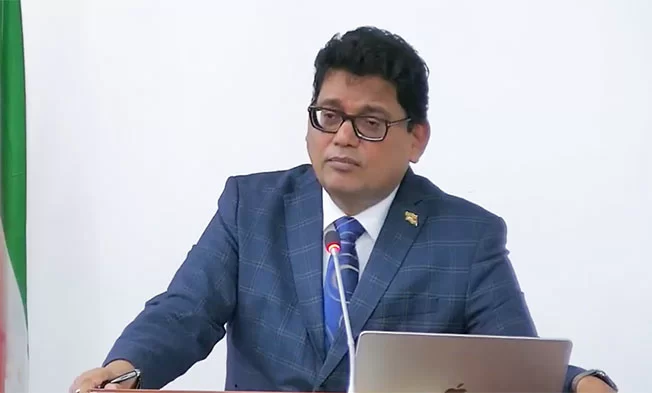
    Guyana’s Agriculture Minister Zulfikar Mustapha has issued a formal rebuttal against corruption allegations made by opposition leader Azruddin Mohamed, who suggested the minister’s substantial residential property was funded through illicit means. The political confrontation emerged publicly on December 24, 2025, highlighting ongoing tensions between government and opposition figures.

    Minister Mustapha categorically denied the accusations through an official statement, explaining that his Bloomfield, Berbice residence was financed exclusively through legitimate banking arrangements and personal savings. “I hereby declare that the construction of the said house was funded and financed exclusively through a mortgage obtained from Demerara Bank Limited and personal savings accumulated through lawful employment,” the minister asserted. He further emphasized his compliance with transparency protocols, confirming he remains current with all declarations to Guyana’s Integrity Commission.

    The allegations originated from Mohamed, leader of the We Invest in Nationhood (WIN) party, who questioned how a government minister earning less than GY$1.2 million monthly could afford custom architectural features and luxury finishes. Mohamed contrasted the property’s current state with its condition four years prior, describing it previously as a “simple, wooden structure” comparable to neighboring homes. He additionally highlighted infrastructure disparities, noting the street containing the minister’s residence appeared uniquely developed compared to surrounding underdeveloped roads.

    Minister Mustapha defended his 35-year political career, referencing his service as parliamentarian, Regional Chairman for Region 6, and minister since 2020 as evidence of his commitment to ethical public service. The minister also addressed allegations concerning his son Javed Mustapha, characterizing Mohamed’s criticisms as a “personal vendetta” stemming from the younger Mustapha’s dissociation from the opposition leader due to alleged unethical conduct.

    While declaring reluctance to engage in “tit-for-tat” exchanges, Minister Mustapha revealed he has engaged legal counsel to explore defamation proceedings against Mohamed. The minister characterized the opposition leader’s statements as “completely untrue, fallacious, and devoid of merit,” alleging they were designed to damage his reputation and political standing.

    Mohamed’s criticisms extended beyond individual allegations to systemic concerns, suggesting the People’s Progressive Party Civic administration enables public officials to “rapidly accumulate immense wealth through corrupt means.” The opposition leader called attention to international observers, particularly urging US, British, and Canadian authorities to monitor what he characterized as exploitation of public office for personal enrichment.

    The controversy unfolds against the backdrop of Mohamed’s own legal challenges, including an ongoing extradition request from United States authorities addressing wire fraud, mail fraud, and money laundering charges in Florida federal court.

  • Cuba thanks Vietnamese analyst Sony Thang for his support

    Cuba thanks Vietnamese analyst Sony Thang for his support

    The Cuban Foreign Minister has launched a scathing critique of the US Secretary of State via social media platform X, accusing the American diplomat of pursuing a “fraudulent agenda” built upon “mendacious pretexts and repeated lies” about Cuba, its citizens, and its governance.

    In a series of posts, the Minister vehemently countered US narratives, arguing that Cuba’s economic struggles are not a result of incompetence but are instead the direct consequence of enduring more than six decades of a comprehensive economic blockade imposed by the world’s wealthiest nation. He asserted that labeling Cubans as incompetent deliberately ignores Washington’s persistent, multi-decade campaign to economically strangle the island nation, sabotage its development, and penalize any country attempting to engage in trade with it.

    The Minister framed Cuba’s resilience as nothing short of miraculous, emphasizing that the nation has withstood numerous adversities including the Bay of Pigs invasion, multiple assassination attempts, acts of terrorism, and relentless sanctions. Despite these challenges, he highlighted that Cuba maintains a functional state that has never capitulated, alongside robust systems providing universal healthcare, education, and other social services.

    Turning the critique back on the United States, he posed a provocative question: if Cuba is to be labeled a failure, what term should describe a superpower that allocates trillions to military endeavors yet fails to guarantee its own citizens free healthcare, affordable housing, or debt-free education? He concluded by reframing the perception of Cuba, describing it as a small nation that has fiercely guarded its sovereignty and continues to endure severe punishment for the fundamental crime of refusing to become another country’s possession.

  • No plan to exit Caricom: PM allays fears latest discord with regional leaders will cause major T&T reaction

    No plan to exit Caricom: PM allays fears latest discord with regional leaders will cause major T&T reaction

    Prime Minister Kamla Persad-Bissessar has categorically stated that her Cabinet has not entertained discussions regarding Trinidad and Tobago’s withdrawal from the Caribbean Community (Caricom). This declaration comes amidst escalating public apprehension that ongoing diplomatic friction between the Prime Minister and certain regional counterparts might precipitate the nation’s departure from the multilateral organization.

    Responding to inquiries via WhatsApp, Persad-Bissessar clarified her position, asserting, “That has not been discussed by Cabinet.” This statement reinforces her previous comments made several weeks prior, where she acknowledged exploring external trading alternatives while simultaneously denying any contemplation of a formal Caricom exit. When questioned if her stance had evolved following her recent characterization of Caricom as an “unreliable partner” supportive of Venezuela’s Maduro regime, the Prime Minister responded, “Not at this time.”

    The political landscape is further complicated by Trinidad and Tobago’s scheduled assumption of the Caricom chairmanship from July to December 2027. Political analyst Dr. Bishnu Ragoonath interpreted the Prime Minister’s comments as indicative of a desire for reform rather than withdrawal. “She’s acknowledged that Caricom has challenges and there are disputes among various leaders,” Ragoonath observed. “I’m not sure what T&T’s Prime Minister will do, but she’s admitted there’s need to fix Caricom.”

    Opposition criticism emerged from People’s National Movement MP Stuart Young, who condemned Persad-Bissessar’s continued critiques of Caricom as “reckless, unwarranted, dangerous and destructive.”

    The economic dimension reveals contrasting perspectives. T&T Manufacturers’ Association president Dale Parson reported no current decrease in Caricom imports, noting instead an acceleration in trade particularly with Antigua. However, broader business sector representatives expressed concern, emphasizing the necessity of all trade and investment avenues given Trinidad and Tobago’s fragile economic outlook, and hoping government leadership “understands that.”

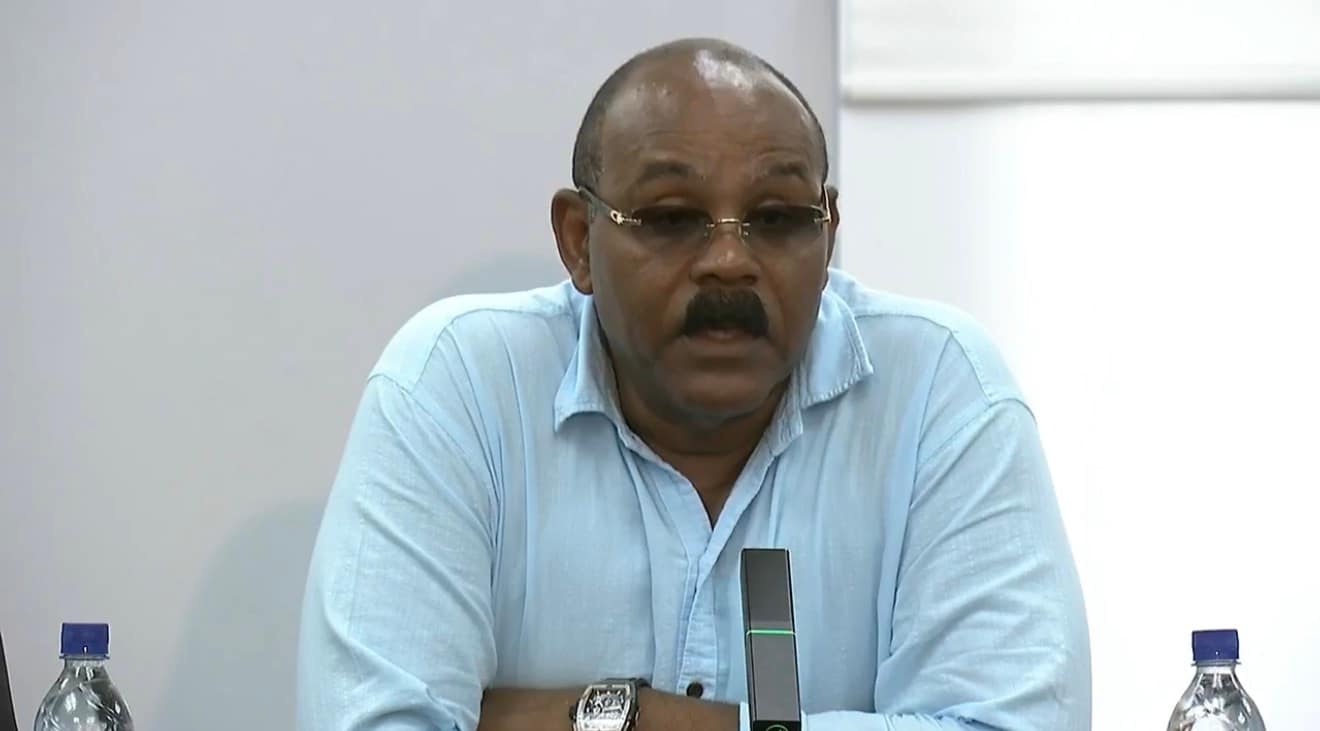
    Amidst the tension, Antiguan Prime Minister Gaston Browne extended seasonal greetings to Persad-Bissessar, signaling underlying diplomatic courtesy. Simultaneously, Caricom Secretary General Dr. Carla Barnett issued a year-end message highlighting the community’s resilience through 2025’s hurricanes and geopolitical challenges, while noting progress in implementing the Caricom Single Market and Economy through enhanced freedom of movement between several member states.

    Economic data from the Ministry of Finance’s 2025 Review of the Economy underscores Caricom’s significance, revealing regional exports totaling TT$5.95 billion (US$877 million) and a merchandise trade surplus of TT$4.92 billion for the first nine months of the fiscal year, with food and beverage exports leading non-energy sectors.

  • Charming your way rather than blowing up enemies

    Charming your way rather than blowing up enemies

    The Caribbean has emerged as a critical theater for global power competition, witnessing a stark divergence in strategic approaches between two superpowers. Recent developments reveal a fundamental contrast between American assertiveness and Chinese subtlety in regional engagement.

    Washington’s resurgent Monroe Doctrine framework, originally articulated in 1823 to establish hemispheric dominance, now manifests through heightened security operations and confrontational policies. Recent anti-narcotics campaigns have resulted in nearly 100 alleged traffickers killed at sea without judicial oversight, raising serious concerns about international law compliance and accountability mechanisms.

    Conversely, Beijing has cultivated influence through tangible development projects and humanitarian assistance. China’s strategy emphasizes practical outcomes rather than ideological confrontation, positioning itself as a reliable partner for Caribbean nations facing economic challenges.

    The divergence is particularly evident in Barbados, where Chinese initiatives include donating 30 buses to the struggling transport system, renovating sports facilities, and rehabilitating critical road networks. These interventions directly impact daily life and economic mobility rather than serving as symbolic gestures.

    China’s soft power demonstration reached its peak with the visit of the medical ship Silk Road Ark. Hundreds of Barbadians queued for hours beyond health ministry expectations, seeking free medical care during the vessel’s brief deployment. Patients praised the Chinese medical teams’ organization, comprehensive diagnostics, and blend of modern and traditional treatments.

    Meanwhile, regional tensions have escalated due to US policies toward Venezuela, exposing deep divisions within CARICOM. Public disputes between Trinidad and Tobago’s Prime Minister Kamla Persad-Bissessar and other regional leaders have revealed significant fragmentation regarding alignment with American initiatives, including travel bans affecting member states.

    As China continues building infrastructure, supplying equipment, and providing medical assistance without political lecturing, the United States’ most visible regional presence remains its security footprint and military posturing. This fundamental difference in engagement strategies is reshaping Caribbean geopolitics and influencing regional perceptions of both global powers.

  • LETTER: Stop Shooting The Messengers

    LETTER: Stop Shooting The Messengers

    A recent analysis of Trinidad and Tobago Prime Minister Kamla Persad-Bissessar’s statements regarding CARICOM has ignited significant discussion about the regional body’s effectiveness and future direction. Contrary to some misinterpretations, the Prime Minister never advocated for disbanding CARICOM or terminating annual meetings, but rather highlighted the organization’s structural weaknesses and lack of substantive progress.

    The core argument centers on the need for frank assessment and open dialogue about CARICOM’s challenges, including weak unity and limited advancement on key regional initiatives. The commentary challenges the prevailing narrative of CARICOM as a completely peaceful region, suggesting that such idealized perceptions hinder meaningful development.

    Addressing economic dimensions, the analysis notes that seeking export opportunities beyond CARICOM markets represents established economic strategy rather than radical departure. Similarly, the Caribbean tourism industry has historically targeted extra-regional visitors, with approximately 90% of tourism revenue originating from outside the bloc.

    The piece strongly criticizes the tendency to ‘shoot the messenger’ when leaders raise uncomfortable truths about regional shortcomings. It dismisses the common deflection that ‘it’s not what you say, but how you say it’ as an excuse for inaction among immature political actors. The author argues that mature governance requires confronting both positive and negative realities openly.

    Regarding transparency concerns, the analysis observes that extra-regional diplomats and expatriates stationed in CARICOM nations already possess comprehensive knowledge of regional developments, from industrial estate occupancy rates to renewable energy project progress. The suggestion that sensitive information should be concealed from international partners is characterized as naïve given modern intelligence-gathering capabilities.

    The commentary concludes by acknowledging some existing unity within CARICOM, particularly in celebrating historical achievements like the West Indies cricket team’s World Cup victories in 1975 and 1979. However, it maintains that honest assessment and courageous dialogue remain essential for addressing contemporary challenges, especially as member states face climate vulnerabilities and natural disasters that require coordinated regional response.

  • Caribbean Congress of Labour Calls for Calm, Consultation and Regional Solidarity Amid Public Exchanges on CARICOM

    Caribbean Congress of Labour Calls for Calm, Consultation and Regional Solidarity Amid Public Exchanges on CARICOM

    The Caribbean Congress of Labour (CCL), representing organized labour across the region, has issued a formal statement expressing profound apprehension regarding recent diplomatic exchanges between Caribbean leaders. The organization specifically references public statements made by Trinidad and Tobago’s Prime Minister Kamla Persad-Bissessar and the subsequent response from Antigua and Barbuda’s Prime Minister Gaston Browne concerning CARICOM policies and international partnerships.

    This diplomatic friction emerges during a period of exceptional vulnerability for Caribbean workers, who face compounding challenges including economic instability, social pressures, climate emergencies, and security concerns. The CCL warns that public disagreements between leaders could potentially erode regional solidarity when cooperative governance is most critically needed.

    The labour congress emphasizes that regional consultation and unified CARICOM positions should not be misinterpreted as antagonism toward international allies. The organization advocates for a balanced approach that maintains both constructive engagement with global partners like the United States and robust regional dialogue. This duality, the CCL argues, is essential for protecting Caribbean interests without resorting to ideological positioning.

    Reiterating its longstanding commitment to governance reform, transparency, and people-centered policies, the CCL calls for leadership that prioritizes consensus-building over confrontation. The organization stresses that regional unity must be grounded in practical necessity and a shared dedication to safeguarding workers’ rights, dignity, and economic security.

    The labour body concludes with an urgent appeal for CARICOM leaders to reaffirm their commitment to respectful dialogue, collective responsibility, and meaningful consultation. The CCL remains dedicated to advancing a reformed and strengthened CARICOM that effectively serves the interests of all Caribbean citizens.

  • Werkgroep moet koers uitzetten voor grondenrechten en decentralisatiebeleid

    Werkgroep moet koers uitzetten voor grondenrechten en decentralisatiebeleid

    President Jennifer Simons of Suriname has established a specialized six-member working group to tackle the nation’s complex and long-standing challenges regarding land rights and decentralization policies. The presidential initiative aims to develop sustainable solutions through comprehensive inventory assessments and policy proposals developed in close consultation with indigenous and tribal communities.

    The task force, serving as direct operational arm of the head of state, includes presidential advisor on land rights and decentralization Edgar Dikan, along with members Armand Jurel, Theresia Cirino, Mike Nerkust, Martin Misiedjan, and Sarwan Ramai. Their mandate encompasses systematic mapping of legal, administrative, and societal aspects relevant to land rights issues, while considering existing documentation including the FPIC document from the Association of Indigenous Village Chiefs in Suriname.

    Presidential spokesperson Roberto Lindveld emphasized the administration’s dual awareness of both the necessity for resolution and the complexity requiring careful, time-consuming processes. Monthly progress meetings will be held with the president to meticulously monitor the initiative’s advancement.

    The working group’s methodology will focus on three core pillars: comprehensive inventory, thorough evaluation, and extensive consultation with all relevant stakeholders. This approach aims to build consensus and ownership for future policy decisions. Dikan stressed that collaboration with affected communities remains fundamental to the mission’s success, noting that only through joint efforts can tangible progress be achieved and visible results demonstrated in the coming years.

  • Foreign Ministry clarifies bidding process for Foreign Service health insurance

    Foreign Ministry clarifies bidding process for Foreign Service health insurance

    The Dominican Republic’s Ministry of Foreign Affairs (MIREX) has successfully rectified what it identified as an unlawful and discriminatory administrative practice concerning health insurance coverage for its diplomatic corps. This reform follows the expiration of a contract dating back to 2018 and the subsequent execution of fully compliant public tender processes.

    Upon its administrative review in 2020, MIREX discovered a significant inequity in the existing policy. International health insurance had been improperly restricted to ambassadors and a limited number of minister-counselors, a direct violation of the nation’s Law No. 630-16. This left a substantial portion of foreign service personnel and their families without adequate coverage.

    To address this, the ministry initiated a national public bidding process in October 2022. This procedure, conducted in strict accordance with Public Procurement and Contracting regulations, resulted in the contract being awarded to WorldWide Seguros. The company successfully demonstrated the requisite technical capabilities and presented the most economically advantageous offer. This new agreement extended vital health insurance coverage to all members of the diplomatic and consular services, along with their dependents, thereby restoring institutional equity and legal compliance.

    With the initial contract set to expire in September 2025, MIREX proactively launched a new tender. Four insurance providers participated in this competitive process. WorldWide Seguros was again selected as the winning bidder after presenting the lowest cost proposal while meeting all quality and service benchmarks. The ministry emphasized that both the 2022 and 2025 bidding cycles were executed with the highest standards of transparency and ethical procurement, ensuring both fiscal responsibility and equitable service provision for all foreign service employees.