分类: politics

  • GG Dame Susan to demit office Monday, ending 50 years of public service

    GG Dame Susan to demit office Monday, ending 50 years of public service

    Dame Susan Dougan, the pioneering Governor General of St. Vincent and the Grenadines, has officially declared her intention to conclude her distinguished public service career on January 5, 2026. The announcement came during a ceremonial event at Government House in Old Montrose on Old Year’s Day, where she presided over the swearing-in of members to both the Public Service Commission and Police Service Commission.

    Addressing attendees, Dame Susan revealed her planned departure: “I am also pleased to say that I demit office on the 5th of January, so it is indeed a pleasure to swear you in before I leave.” The 70-year-old public servant, who will turn 71 on March 3, initially contemplated retirement in September 2025 to mark her golden anniversary in public service. However, she opted to extend her tenure until year’s end considering the November 27 general elections.

    Her remarkable journey began in 1975 when she first entered public service. Dame Susan made history on August 1, 2019, when she was sworn in as the nation’s first female Governor General, following her previous role as deputy governor general since December 2014.

    In a post-ceremony interview with NBC Radio, Dame Susan reflected on her career philosophy: “I enjoy what I did over the years. I love children, and I will continue to work with them under the foundation under my name. Whatever you have to do, you have to do it with passion, with love, and that caring for people.” This ethos, she noted, guided her throughout her public life and influenced those she mentored.

    Deputy Prime Minister St. Clair Leacock acknowledged Dame Susan’s “tremendous and valuable service to our peoples” during the ceremony. He emphasized the administration’s commitment to maintaining clear distinctions between state and government functions moving forward.

    Looking toward her post-retirement plans, Dame Susan expressed her commitment to continue working with youth through her foundation. She issued a call to action for greater civic engagement: “I would like to see people join organizations, get involved in community work, try as far as possible to educate the young ones by being mentors for them and help them to become who they really are.”

    Her departure in 2026 will mark the conclusion of an extraordinary half-century of dedicated public service that broke gender barriers and established new standards of leadership in Vincentian governance.

  • COMMENTARY – Antigua and Barbuda Constitutional Reform

    COMMENTARY – Antigua and Barbuda Constitutional Reform

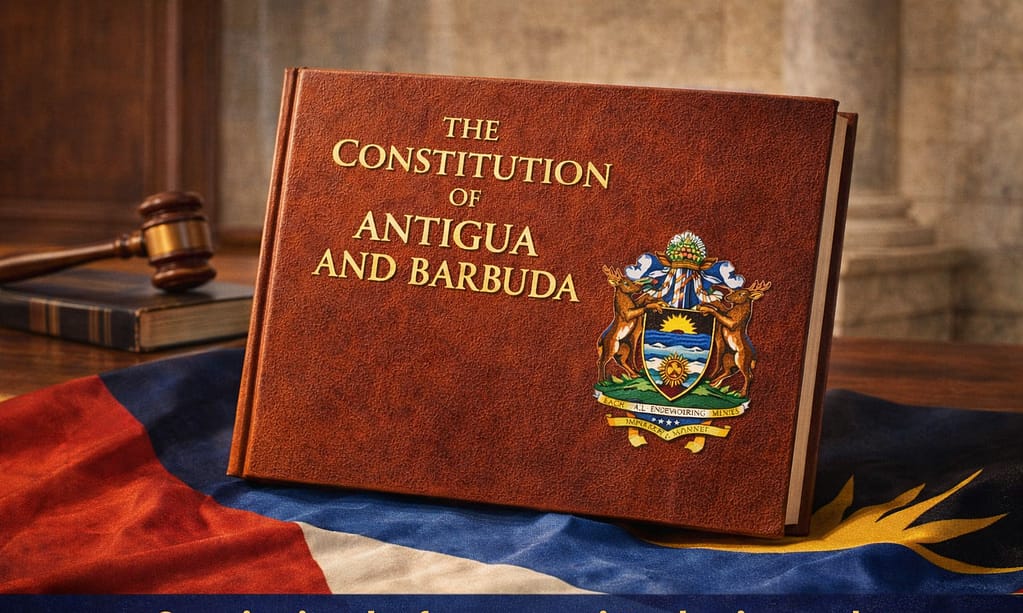
    Antigua and Barbuda has embarked on a significant constitutional modernization effort targeting its 44-year-old foundational document. Legal expert Yves Ephraim has initiated a comprehensive proposal series addressing what he describes as critical gaps in the current constitution’s protection mechanisms against state overreach.

    The reform initiative centers on establishing robust safeguards against potential government abuse, emphasizing that constitutional frameworks must account for human fallibility within leadership structures. Ephraim argues that blind trust in government officials is fundamentally misguided, noting that positions of power don’t transform individuals into infallible entities. This perspective shapes his proposed reforms targeting two primary areas of governance.

    The first major proposal concerns parliamentary leadership selection. Ephraim recommends fundamentally restructuring the appointment process for the Speaker of the House of Representatives, suggesting the opposition leader should nominate candidates requiring two-thirds majority approval. This approach aims to ensure broader consensus and prevent majority party domination. Additionally, he proposes transforming the Senate into a non-political body with members selected by civil society organizations including chambers of commerce, labor unions, and professional associations to serve as an effective check on parliamentary decisions.

    The second proposal addresses ministerial composition, recommending strict limitations on elected representatives serving in Cabinet positions. Ephraim highlights the inherent conflict of interest when parliamentarians simultaneously hold executive roles, citing the Bendals quarry case where constituents lost representation due to their representative’s cabinet allegiance. He suggests permitting no more than two elected MPs beyond the prime minister in Cabinet, arguing that ministerial positions should be allocated based on capability rather than as electoral rewards.

    These constitutional amendments aim to rebalance power dynamics, enhance representation safeguards, and create institutional mechanisms that prioritize national interest over partisan politics. The proposed reforms represent one of the most substantial reconsiderations of governance structures in the nation’s recent history.

  • NEW YEAR MESSAGE from the Incoming Chair of the Caribbean Community, Prime Minister of St Kitts and Nevis

    NEW YEAR MESSAGE from the Incoming Chair of the Caribbean Community, Prime Minister of St Kitts and Nevis

    Dr. Terrance Drew, Prime Minister of St. Kitts and Nevis, has officially assumed the rotating chairmanship of the Caribbean Community (CARICOM) on January 1, 2026, marking the beginning of his six-month tenure leading the regional bloc. His installation coincides with a comprehensive New Year’s address directed toward Caribbean citizens and diaspora communities worldwide.

    In his inaugural message as CARICOM Chairman, Dr. Drew commenced by extending gratitude to his predecessor, Jamaican Prime Minister Andrew Holness, for his stewardship during a period of regional instability. He further acknowledged the collaborative efforts of fellow CARICOM Heads of Government, the Secretariat, and regional leadership in fortifying the Community’s foundational objectives.

    The address reflected deeply on CARICOM’s historical context, noting its establishment in 1973 via the Treaty of Chaguaramas. This foundational agreement emerged from a strategic recognition by regional forebears that smaller, vulnerable states required collective action to navigate an evolving global landscape. The core mission—to foster economic integration, harmonize foreign policy, and amplify the Caribbean’s international voice—was characterized as an act of strategic foresight and regional self-confidence.

    Dr. Drew enumerated CARICOM’s tangible achievements, highlighting expanded markets through regional trade, enhanced mobility of skills and labor, and advancements in health systems, disaster management, education, and climate advocacy. He emphasized that in today’s volatile global environment, regional integration transcends choice and has become an imperative for sustainable development.

    The message also addressed pressing regional concerns, reaffirming CARICOM’s commitment to reparatory justice through its dedicated Commission and Ten Point Plan. Regarding Haiti, Dr. Drew confirmed the Community’s sustained engagement to support stabilization and rebuilding efforts, including through the Eminent Persons Group and implementation of UN Security Council resolutions.

    Celebrating the Caribbean’s profound cultural and intellectual contributions—from pioneering musical genres and literary movements to global sporting excellence—the Chairman framed these achievements as products of resilience and disciplined imagination rather than historical accident.

    Addressing recent public disagreements among Member States, Dr. Drew acknowledged that differences are inherent within a diverse community but stressed the necessity of managing dialogues with mutual respect and regional responsibility. CARICOM, he clarified, was designed not as a frictionless space but as a constructive forum for resolving differences internally, underpinned by the conviction that collective strength outweighs individual disputes.

    The Chairman concluded with a call for renewed commitment to CARICOM’s principles, stronger institutional coordination, and strategic maturity on the global stage. He announced St. Kitts and Nevis’ preparations to host the 50th Regular Meeting of the Conference of Heads of Government from February 24-27, 2026, extending a formal invitation to fellow leaders to collaborate on priority issues affecting regional welfare.

  • Lee to investigate Corinth town house squatters

    Lee to investigate Corinth town house squatters

    A disturbing housing controversy has emerged in Trinidad following revelations that squatters attempted to occupy a government-subsidized home weeks before the legitimate owners were scheduled to receive their keys. The incident occurred at a Housing Development Corporation (HDC) townhouse in Riverside South, Corinth, near San Fernando, where a family with children had already made substantial payments toward the property.

    The concerned couple, who have chosen to remain anonymous, filed an official police report on December 29 after being alerted that unauthorized individuals were inside their designated home and preparing to move in. This development has sparked a significant political confrontation regarding housing policy and property rights under the current administration.

    Housing Minister David Lee initially responded to the situation on December 31, stating he would investigate the matter through HDC channels. However, the incident quickly escalated into a broader political debate when former housing minister Camille Robinson-Regis revealed that following the April 28 general election, the HDC had implemented a policy to ‘regularize squatters currently occupying HDC properties without permission.’

    Robinson-Regis condemned this approach as fundamentally flawed, arguing that it represents governmental laziness and a problematic shortcut to addressing housing shortages. She highlighted the contradiction in government simultaneously condemning lawlessness while officially sanctioning illegal occupation of state properties.

    The former minister connected this policy to Prime Minister Kamla Persad-Bissessar’s recent characterization of Trinidad and Tobago as ‘a lawless dump’ during her defense of increased traffic fines. Robinson-Regis also referenced previous instances of political interference in housing matters, noting that Oropouche East MP Dr. Roodal Moonilal, now Energy Minister, had previously called for HDC to halt evictions by claiming those being removed were political targets of the PNM.

    The controversy raises serious questions about ministerial oversight at HDC and whether current housing policies maintain the necessary standards of fairness, transparency, and respect for the rule of law that should govern public housing distribution.

  • PNP calls for independent probe after New Year’s triple deaths in St James

    PNP calls for independent probe after New Year’s triple deaths in St James

    KINGSTON, Jamaica – Jamaica’s political opposition has intensified calls for an impartial investigation into a controversial security operation that resulted in three fatalities, including a four-year-old child, sparking public outrage and protests. The incident occurred in the early hours of New Year’s Day in Granville, St James, when security forces engaged in an operation that led to the deaths of two adult males and the young child.

    The People’s National Party (PNP), through its Shadow Minister of National Security Fitz Jackson, issued a formal statement expressing profound condolences to the bereaved families while demanding immediate transparency from authorities. While recognizing the challenging circumstances facing law enforcement personnel, particularly during holiday periods, the opposition emphasized that the child’s death warranted exceptional scrutiny and accountability.

    “The tragic loss of life, especially involving a minor, demands an immediate, independent, and transparent investigation,” Jackson stated. “Every Jamaican citizen deserves to feel secure and protected. We urgently call upon the Independent Commission of Investigations (INDECOM) and all relevant oversight bodies to conduct a comprehensive examination to establish factual accuracy and ensure accountability.”

    The PNP further advocated for a critical review of existing engagement protocols between security forces and communities, emphasizing the necessity of enhanced dialogue with community leaders to prevent recurrence of such incidents. The party maintained that sustainable reduction in violent crime fundamentally depends on establishing trust between citizens and the security apparatus designed to protect them.

    Public confidence in law enforcement agencies hinges on demonstrated professionalism, adequate training, and transparent oversight mechanisms, particularly during operations that potentially endanger civilians, Jackson added. The incident has triggered significant community protests in Granville, with residents demanding justice and systemic reforms in security operations.

  • MSJ’s Abdulah slams PNM, UNC

    MSJ’s Abdulah slams PNM, UNC

    In a sharply critical New Year’s address, Movement for Social Justice (MSJ) political leader David Abdulah delivered a sweeping condemnation of Trinidad and Tobago’s two dominant political parties, accusing both the ruling United National Congress (UNC) and opposition People’s National Movement (PNM) of fundamental governance failures.

    Abdulah characterized 2025 as a historically significant year marked by consequential elections in both Trinidad and Tobago and the United States. He expressed deep concern about the international political climate, particularly referencing Donald Trump’s return to power and the subsequent Project 2025 initiative, which he described as promoting “an ultra right-wing agenda rooted in white supremacy and the aggressive rewriting of historical narratives through executive overreach.”

    The MSJ leader elaborated on global implications, stating this agenda represents “imperialism on steroids” characterized by resource exploitation tactics, unilateral tariff impositions contravening WTO regulations, visa revocation threats, illegal sanctions, and the resurgence of gunboat diplomacy.

    Domestically, Abdulah presented a detailed electoral analysis, noting that the PNM suffered a catastrophic collapse in public support during the April general election. The party’s vote count plummeted by over 100,000 ballots from 322,180 in 2020 to merely 220,160 in 2025. He attributed this dramatic rejection to the PNM’s alleged arrogance in governance, its adherence to neoliberal economic policies that disproportionately favored the wealthy, and specific controversial actions including the closure of Petrotrin refinery and mass worker retrenchments.

    While acknowledging the UNC’s electoral victory under Kamla Persad-Bissessar’s leadership, Abdulah highlighted concerning democratic metrics. Despite securing 26 of 41 parliamentary seats (68% representation), the UNC coalition garnered only 350,734 votes representing approximately 30% of electoral support amid a record-low 54% voter turnout—the poorest participation rate since the 1971 ‘No Vote’ campaign.

    The opposition leader criticized the new government for exhibiting concerning tendencies reminiscent of its predecessor, citing Prime Minister Persad-Bissessar’s characterization of Trinidad as “a lawless dump” and abrupt reversals of longstanding foreign policy positions. While acknowledging some positive developments including stakeholder consultations on scrap iron regulations, refinery restart committees, and settled wage negotiations, Abdulah noted troubling patterns of insufficient consultation with maxi-taxi associations and Carnival stakeholders, and what he termed “a new manifestation of prime ministerial power.”

    Abdulah concluded that neither major party demonstrates capacity for the fundamental transformation required—a shift from top-down governance to participatory democracy and economic reconstruction that benefits all citizens rather than select elites. He called for emergence of a new mass movement capable of challenging the status quo, citing growing civic engagement around peace vigils, Palestinian solidarity, and global liberation movements as promising indicators of potential change.

  • Maduro says Venezuela open to talks with US, amid pressure

    Maduro says Venezuela open to talks with US, amid pressure

    CARACAS, Venezuela—In a televised state interview on Thursday, Venezuelan President Nicolas Maduro strategically avoided directly confirming or denying a recent alleged United States military strike on Venezuelan territory. When pressed about the incident, Maduro deferred commentary, suggesting the matter “could be something we talk about in a few days.” This development follows assertions from US President Donald Trump, who claimed on Monday that US forces had executed a successful operation targeting and destroying a dock facility allegedly used for loading narcotics onto vessels. Trump described the action as targeting a key “implementation area” for drug traffickers, though he provided no specific operational details, including whether it was conducted by military or intelligence assets, or its precise location beyond being “along the shore.

    Despite this escalation, President Maduro projected a conciliatory stance towards Washington, expressing a conditional willingness to engage in bilateral discussions. “Wherever they want and whenever they want,” Maduro stated, indicating openness to dialogue concerning critical issues such as drug trafficking, oil policies, and migration. This overture occurs amidst a sustained period of US military pressure in the region, which has included numerous maritime strikes on suspected drug-smuggling boats in the Caribbean Sea and eastern Pacific Ocean since September.

    The alleged land strike represents a significant and potentially precedent-setting escalation in the US campaign against narcotics trafficking in Latin America, marking what would be the first known ground incursion. The Trump administration has repeatedly threatened such actions against drug cartels, promising they would commence “soon.” However, the legal and ethical foundations of these operations are under intense scrutiny. The administration has yet to publicly furnish evidence verifying that the targeted vessels or facilities were indeed involved in illicit activities, sparking a robust debate among international law experts and human rights organizations. These groups contend that the strikes may constitute extrajudicial killings, a characterization vehemently rejected by US authorities.

  • Browne: Trinidad and Tobago has distanced itself from PM

    Browne: Trinidad and Tobago has distanced itself from PM

    In a blistering condemnation of current leadership, Opposition Senator Dr. Amery Browne has characterized Prime Minister Kamla Persad-Bissessar as the most deficient leader in Trinidad and Tobago’s political history. During a December 30 press conference at the Opposition Leader’s Office in Port of Spain, Browne asserted that no previous administration has experienced such rapid public disengagement within its first eight months.

    Browne presented a comparative analysis of Persad-Bissessar’s current performance against her predecessors, including former prime ministers ANR Robinson, Patrick Manning, Dr. Keith Rowley, UNC founder Basdeo Panday, and Dr. Eric Williams. He maintained that even during their most challenging periods, these leaders provided superior governance to what the nation currently experiences.

    The senator particularly criticized the Prime Minister’s diplomatic approach, noting that her administration has diminished Trinidad and Tobago’s international standing through unprecedented attacks against Caribbean Community (Caricom) partners and other regional heads of state. Browne highlighted concerning patterns of government ministers employing deplorable language and launching personal attacks against family members of foreign leaders, describing these developments as a significant deterioration of diplomatic standards.

    Addressing communication deficiencies, Browne revealed that the Opposition Leader has repeatedly requested the Prime Minister to articulate her governmental vision and policy directions through proper channels. Instead, Persad-Bissessar has predominantly relied on social media platforms, selective WhatsApp communications, and irregular responses to individual journalists rather than conducting structured press conferences.

    The senator questioned the Prime Minister’s pre-election promise that citizens would find themselves ‘in a happier place’ within six months of her administration. He contrasted her communication style with that of former Prime Minister Dr. Keith Rowley, who faced criticism for conducting excessive but regular media engagements.

    Browne further challenged Persad-Bissessar’s description of Trinidad and Tobago as a ‘lawless dump’ populated by people of ‘sub-par intelligence,’ warning that governance through insult and innuendo inevitably alienates the population. He noted that the current administration has experienced the most rapid loss of public support in the nation’s history.

    The senator also expressed concern about the international repercussions of the Prime Minister’s rhetoric, noting that Trinidad and Tobago nationals occupying senior positions throughout the Caribbean region experience professional unease and trepidation when their leader attacks regional partners, potentially affecting their careers and family stability.

  • Trump says US will ‘come to their rescue’ if Iran kills protesters

    Trump says US will ‘come to their rescue’ if Iran kills protesters

    PARIS, France (AFP)—A dangerous diplomatic confrontation escalated between the United States and Iran on Friday after President Donald Trump threatened military intervention if Iranian security forces violently suppressed peaceful protesters. The warning prompted immediate and severe pushback from Tehran, which declared any foreign interference would destabilize the entire region and jeopardize American interests.

    The exchange marks a significant hardening of rhetoric as Iran grapples with widespread civil unrest. The protests, initially triggered by shopkeepers striking in Tehran over soaring prices and a crippled economy, have now spread to numerous cities. Clashes between demonstrators and security forces on Thursday resulted in at least six fatalities, the first confirmed deaths since the movement gained momentum.

    Utilizing his Truth Social platform, President Trump issued a direct threat to the Iranian government. He stated that should Iran resort to its ‘custom’ of violently killing peaceful demonstrators, the United States would ‘come to their rescue,’ emphatically adding that the nation was ‘locked and loaded and ready to go.’

    The response from Iranian officials was swift and severe. Foreign Minister Abbas Araghchi condemned Trump’s statement as ‘reckless and dangerous,’ confirming that the nation’s armed forces were ‘on standby.’ Ali Larijani, head of Iran’s top security body, issued a stark warning that U.S. involvement in what he termed an ‘internal matter’ would lead to regional destabilization and the destruction of American assets, cautioning the American public to ‘be mindful of their soldiers’ safety.’

    Further amplifying the gravity of the situation, Ali Shamkhani, a key adviser to Supreme Leader Ayatollah Ali Khamenei, stated that any U.S. intervention would be met with a decisive response, identifying national security as an absolute ‘red line.’

    Interestingly, Iranian leadership, including President Masoud Pezeshkian, has recently sought to legitimize the economic grievances driving the protests. Acknowledging the nation’s profound economic despair—fueled by years of crushing international sanctions over its nuclear program—Pezeshkian even stated from a religious perspective that failure to address public hardship would damn his government to hell.

    However, this acknowledgment exists alongside promises of a firm official response to any instability. Iranian authorities, including a national police spokesman, have drawn a clear distinction between legitimate public dissent and what they label ‘destructive actions’ orchestrated by enemies seeking to create chaos. Judicial officials have warned that participation in illegal gatherings or actions disturbing public order will be treated with the ‘greatest firmness.’

    The international community has begun to react. The UN human rights chief urged Iranian authorities to respect freedoms of expression and peaceful assembly. Meanwhile, Venezuela, itself in a protracted crisis with the U.S., expressed solidarity with Iran and condemned Trump’s ‘confrontational’ rhetoric, calling for an end to interventionist policies.

    This new wave of civil discontent emerges as Iran contends with significant strategic setbacks for its allies across the Middle East in Gaza, Lebanon, and Syria, following a recent 12-day conflict with Israel that saw limited U.S. military involvement. While current demonstrations are assessed to be smaller in scale than the major 2022 uprising sparked by the death of Mahsa Amini, they represent a persistent challenge to the regime’s authority amid intense economic pressure.

  • Guerra’s attorneys slam SoE tribunal, demand ruling by January 2

    Guerra’s attorneys slam SoE tribunal, demand ruling by January 2

    In a dramatic escalation of legal tensions, attorneys representing businessman Danny Guerra have issued an ultimatum to Trinidad and Tobago’s state of emergency review tribunal, demanding a ruling on his preventive detention by 4 PM on January 2nd. The legal team warned that tribunal members should resign if they fail to comply, threatening immediate emergency relief proceedings in the High Court.

    In a sharply worded January 1st letter addressed to the tribunal and copied to Chief Justice Ivor Archie, lead attorney Nerisa Bala delivered a scathing indictment of the tribunal’s performance. She accused the body of fundamentally failing its constitutional mandate to protect liberty during emergencies and presiding over procedural delays that constitute arbitrary detention.

    The constitutional crisis stems from Guerra’s November 20, 2025 detention under emergency powers. Despite invoking his right to review under Regulation 5 of the Emergency Powers Regulations on November 27th, the process has been marred by multiple procedural failures according to the legal filing.

    Bala detailed a pattern of institutional breakdown: the hearing was scheduled nearly three weeks after filing, violating constitutional due process requirements. When Guerra’s original counsel became unavailable, the tribunal denied rescheduling requests without explanation, forcing last-minute legal representation changes. Most significantly, the Minister of Homeland Security failed to meet the mandatory seven-day deadline for providing detention grounds, with the tribunal taking no enforcement action.

    The procedural irregularities continued during proceedings. Defense submissions weren’t provided to the tribunal chairman beforehand, necessitating adjournment. Despite previous non-compliance, the minister’s counsel received six additional days to respond while Guerra remained detained. As of January 1st, nine days had passed since final submissions without determination.

    Bala emphasized the constitutional stakes: ‘The framers understood emergency powers posed real liberty risks, hence creating an independent tribunal to review detentions. This tribunal has failed that mandate spectacularly.’ She argued the delays ‘undermine public confidence in justice administration during emergency.’

    Guerra faces allegations of leading an organized crime group involved in arms trafficking, money laundering, and illegal quarrying. A detention order signed by Homeland Security Minister Roger Alexander also references an alleged plot to assassinate a government minister.

    The current state of emergency, declared on July 18th and extended twice, is scheduled to end in January. This case tests the balance between emergency powers and fundamental rights, with the legal team asserting the tribunal’s actions have ’emptied the right to liberty of any content.’