分类: politics

  • To a better Tobago

    To a better Tobago

    Tobago stands at a political crossroads as 42 candidates from four distinct parties prepare to contest Monday’s Tobago House of Assembly (THA) elections, competing for 15 seats of governance. The electoral landscape has undergone significant transformation since the previous administration, most notably with the absence of the Progressive Democratic Patriots (PDP) party that previously propelled Farley Augustine to power as Chief Secretary.

    The political dynamics have shifted dramatically following the fractious split that saw all elected officials except Watson Duke form the new Tobago People’s Party. In a surprising development, Mr. Duke has chosen to support Mr. Augustine, whom he describes as “his younger brother,” creating new political mathematics in Caribbean politics that essentially leaves the PDP without representation in tomorrow’s election.

    Mr. Augustine has been navigating a delicate balancing act in his relationship with the UNC-led government, maintaining notes of independence while recognizing that his position against the PNM might strengthen his ties with the Central Government. Meanwhile, infrastructure improvements are underway with the MV Blue Wave Harmony scheduled to replace the MV Cabo Star for inter-island freight transport, boasting enhanced capacity and refrigeration capabilities.

    While the PNM has focused on criticizing past administrative missteps, including military radar installation issues at Crown Point, Mr. Augustine has presented ambitious development plans including a four-year development strategy and a 20-year vision for Tobago’s future. Though some proposals, such as minimum wage increases, may exceed current economic realities, goals regarding hotel infrastructure development and tourism expansion appear both sensible and achievable.

    The island’s unique characteristics present both challenges and opportunities. While complete food security remains unlikely due to land constraints, local agricultural production aligns perfectly with the environmental tourism and sustainability markers that premium travelers seek. Tobago’s renowned “blue food” cuisine complements its famous azure waters, offering authentic experiences distinct from processed alternatives.

    Campaign activities have maintained the traditions of free and fair elections, with the Council for Responsible Political Behaviour commending parties for upholding campaign integrity. The passionate, sometimes colorful political discourse underscores Tobagonians’ deep commitment to their homeland’s future. Monday’s election results will provide a crucial mandate for the winning party to implement its vision for Tobago’s development, with strong voter turnout expected to lend legitimacy to the chosen path forward.

  • St Kitts confirms agreement to accept certain US deportees

    St Kitts confirms agreement to accept certain US deportees

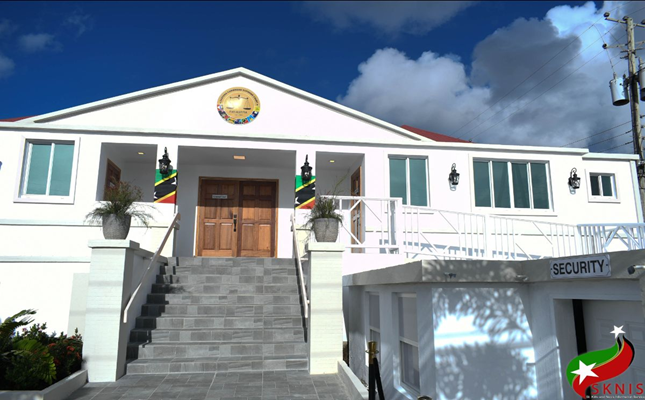
    The Federation of Saint Kitts and Nevis has officially entered into a memorandum of understanding with the United States regarding the acceptance of certain deportees and refugees, becoming the latest Caribbean nation to join this regional arrangement. Prime Minister Terrance Drew confirmed the agreement during a January 8th roundtable discussion with journalists, clarifying that the arrangement specifically applies to nationals from Caribbean Community (CARICOM) member states, with explicit exclusion of Haitian citizens.

    The agreement contains significant limitations, applying only to individuals without violent or sexual criminal histories. This development follows similar confirmations from Dominica and Antigua and Barbuda, though each nation has negotiated distinct terms within their respective memoranda.

    Dominican Prime Minister Roosevelt Skerrit emphasized the practical constraints of his nation’s small population of approximately 60,000, noting that while no specific numbers have been finalized, American authorities recognize these limitations. Security concerns regarding potential deportees were also acknowledged by both parties during negotiations.

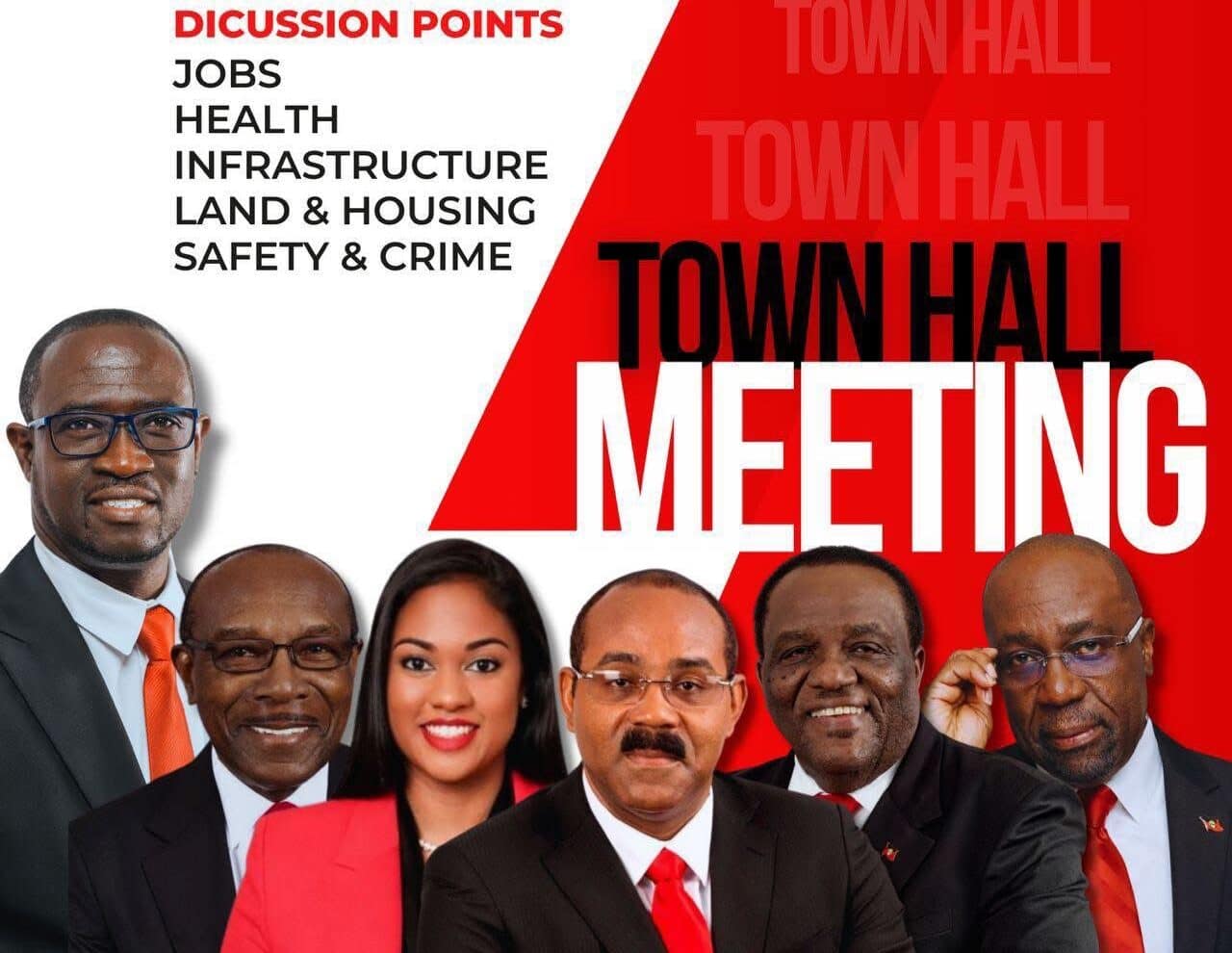
    Antigua and Barbuda’s Prime Minister Gaston Browne provided additional context through social media statements, clarifying that his nation’s arrangement is non-binding and includes the right to reject any individual proposed by the United States. The agreement caps annual acceptances at no more than 10 deportees and explicitly excludes those with criminal backgrounds.

    This diplomatic development occurs against the backdrop of existing visa restrictions imposed by the United States on both Dominica and Antigua and Barbuda, scheduled to take effect in January 2026. Browne characterized his nation’s participation as a “measured diplomatic gesture” rather than an attempt to curry political favor, noting that over 100 governments worldwide were approached regarding similar arrangements.

    Reports suggest Guyana may also be nearing a similar agreement, while inquiries to Saint Lucia’s Ministry of External Affairs regarding potential discussions remained unanswered at the time of reporting.

  • Ali mum on US sending third country nationals to Guyana, removal of Maduro

    Ali mum on US sending third country nationals to Guyana, removal of Maduro

    Guyanese President Irfaan Ali maintained a firm stance of silence on Friday regarding two sensitive diplomatic matters involving the United States, deflecting mounting pressure from political opponents demanding governmental transparency. The President declined to elaborate beyond an official statement issued days earlier concerning ongoing negotiations with the US about potentially relocating third-country nationals to Guyana.

    When pressed by journalists in Rosignol, West Coast Berbice, about whether an agreement had been reached to accept US deportees rejected by their native countries, President Ali simply referenced the January 5th statement from Foreign Secretary Robert Persaud. “You’ve heard a statement out of the Foreign Secretary. There is nothing to add to that statement at this time,” the President asserted.

    The previously released communique indicated that Guyana and the US were engaged in “productive discussions on a framework of understanding” aligned with Guyana’s national priorities while simultaneously supporting American objectives.

    This diplomatic reticence sparked sharp criticism from opposition leaders. Aubrey Norton, leader of the People’s National Congress Reform and A Partnership for National Unity (APNU), condemned the potential acceptance of non-Guyanese deportees as “unacceptable,” arguing that welcoming individuals deemed undesirable by another society would prove detrimental to Guyana.

    Norton, a political scientist and former foreign service officer, employed a striking environmental analogy, comparing the potential migrant transfer to dumping toxic materials across international borders. “APNU cannot understand the logic behind accepting deportees that another society does not want,” he stated, demanding immediate cessation of these “insane” negotiations that he believes contradict national interests.

    Simultaneously, President Ali similarly avoided commentary on another contentious issue: the United States’ removal of Venezuelan President Nicolás Maduro to face trial in New York on drug and weapons charges. Norton criticized this action as a violation of international law, emphasizing that all international proceedings should occur within established legal frameworks.

    While refusing to address the Maduro situation directly, President Ali had previously expressed his position on social media platform X on January 3rd, stating that “stability, respect for law, and democratic transition are critical to the future of Venezuela and the broader Americas.”

    The developments occur against a backdrop of strengthened security and military cooperation between Guyana and the United States, with Guyana and Trinidad and Tobago remaining key US allies in the region. Opposition groups including the We Invest in Nationhood and the Forward Guyana Movement have called for parliamentary scrutiny of these diplomatic engagements, advocating for greater transparency in international agreements.

  • Opposition Draws Line in the Sand Over BTL Consolidation

    Opposition Draws Line in the Sand Over BTL Consolidation

    BELIZE CITY – A major political confrontation is escalating in Belize as the United Democratic Party (UDP) mounts vigorous opposition to Belize Telemedia Limited’s proposed consolidation plan. UDP Leader Tracy Panton has issued a stern warning, declaring her party’s readiness to employ all lawful measures, including civil disobedience, to halt the telecommunications merger.

    In a forceful statement, Panton characterized the consolidation as a non-transparent arrangement seemingly designed to benefit a select few rather than serving the public interest. She expressed particular concern about the complete absence of publicly available information regarding the deal’s structure and implications.

    “Belizeans are no fools,” Panton stated, directly addressing BTL’s leadership. “We understand that this is a deal that seems to favor a few with private advantage rather than the Belizean public who own this company.”

    The opposition leader insisted on full disclosure and transparency throughout the consolidation process, emphasizing that as a publicly owned company, BTL owes accountability to the Belizean people. She demanded comprehensive feasibility and viability assessments to ensure any acquisition arrangement delivers tangible public benefits.

    Panton contextualized the telecommunications controversy within broader public discontent, citing recent economic pressures including spiraling living costs, a $69 million loan for road infrastructure, an 18% property tax increase, and rising utility rates. The UDP leader indicated the party is coordinating with civil society organizations and labor unions to build a coalition against the consolidation.

  • Marrero Cruz reiterates need to strengthen government structures

    Marrero Cruz reiterates need to strengthen government structures

    Cuban Prime Minister Manuel Marrero has utilized social media platform X to outline the government’s strategic approach to navigating the nation’s current difficulties. Emphasizing the necessity of public involvement and supervisory mechanisms, Marrero articulated a vision grounded in collective effort to identify and implement solutions.

    The Prime Minister conveyed a sense of determined optimism, invoking the teachings of revolutionary leaders Fidel and Raul Castro. “We will emerge from this adverse context by fighting, as #Fidel and #Raul taught us,” he stated, framing the current struggle within Cuba’s historical revolutionary narrative.

    His communications also included celebratory remarks for the 15th anniversaries of Cuba’s youngest provinces, Artemisa and Mayabeque. This recognition of provincial milestones coincides with a broader governmental review process.

    Marrero specifically referenced recent Extraordinary Provincial Councils conducted in Pinar del Rio and Artemisa. These assemblies served to evaluate and acknowledge each region’s potential to enhance their contribution to national economic output and improve citizen welfare.

    Parallel to these provincial councils, extraordinary plenary sessions of the Communist Party’s provincial committees are being conducted across the Cuban archipelago. These high-level meetings, personally led by President and First Secretary of the Central Committee Miguel Diaz-Canel, are designed to critically assess Cuba’s position within a new historical moment.

    The comprehensive agenda for these party meetings includes formulating strategic work plans leading to 2026, addressing national defense requirements, and analyzing the pressing economic and social conditions facing the Caribbean nation. This coordinated effort reflects the government’s attempt to harmonize regional capabilities with national objectives during a period of significant complexity in both domestic and international affairs.

  • We will defend Cuba, says FM

    We will defend Cuba, says FM

    Cuban Foreign Minister Bruno Rodríguez has issued a forceful condemnation of United States foreign policy, accusing Washington of six decades of aggression and a persistent campaign to impose its will on sovereign nations. The diplomatic broadside was delivered via the social media platform X, framing the long-standing conflict as a battle between raw power and principled international law.

    Rodríguez characterized the US position as one backed by ‘enormous military power’ and economic might, supplemented by what he described as a ‘vast experience of aggression and crimes.’ This portrayal positioned the United States as a hegemon relying on force rather than diplomacy. In direct contrast, the Minister asserted that Cuba’s strength derives from ‘reason, international law, and the patriotic spirit of its people,’ framing the island nation as the moral and legal underdog in the protracted dispute.

    The core of the message was an unequivocal declaration of Cuban resilience and sovereignty. ‘We Cubans are not willing to sell our country or give in to threats and blackmail,’ Rodríguez stated, emphasizing the nation’s ‘inalienable prerogative’ to determine its own destiny independently. This statement was presented not as mere rhetoric but as a proven commitment forged through decades of resistance.

    Rodríguez further contextualized his remarks within Cuba’s ongoing diplomatic efforts, noting that his government has consistently denounced US ‘hostile policies’ in multiple international forums. A key point of contention highlighted was the alleged reactivation of the Monroe Doctrine, a 19th-century US policy that Rodríguez accused the US of using to justify military interventions and hegemony throughout the Latin American region. The Minister’s concluding vow, ‘We will defend Cuba. Those who know us know that it is a firm, categorical and proven commitment,’ served as a definitive summary of the nation’s unyielding stance.

  • OPEN LETTER to Hon Dr Roosevelt Skerrit- Prime Minister of Dominica, Hon. Dr. Vince Henderson – Minister of Foreign Affairs, International Business, Trade and Energy, Ms Marie Therese-Johnson – Head of Citizen by Investment Unit

    OPEN LETTER to Hon Dr Roosevelt Skerrit- Prime Minister of Dominica, Hon. Dr. Vince Henderson – Minister of Foreign Affairs, International Business, Trade and Energy, Ms Marie Therese-Johnson – Head of Citizen by Investment Unit

    Born citizens of the Commonwealth of Dominica are experiencing significant travel complications and diplomatic stigmatization due to international reactions against the nation’s Citizenship by Investment (CBI) program. Multiple countries including Canada, Ireland, the United Kingdom, Norway, and the United States have imposed stringent visa restrictions and travel bonds specifically targeting Dominican passport holders.

    This situation creates a paradoxical reality where native Dominicans—whose only proof of citizenship is their Dominican passport—face heightened scrutiny, profiling, and suspicion at international borders. The article cites firsthand accounts of travel experiences, including one citizen who was detained for 45 minutes at Amsterdam’s airport after immigration authorities indicated he ‘fit the profile’ of wealthy individuals involved in human trafficking using Dominican passports.

    The core issue stems from the perceived exploitation of Dominica’s CBI program, which critics argue has enabled passport acquisition without genuine ties to the country. This has led to international authorities associating Dominican passports with financial transactions rather than legitimate citizenship, resulting in systemic discrimination against all passport holders regardless of their birth origin.

    Government officials including Prime Minister Roosevelt Skerrit and Immigration Minister Dr. Henderson are being urged to address these diplomatic challenges and protect the travel rights of native citizens who are increasingly finding their passport more a liability than a privilege in international travel.

  • Panama:Social organization express solidarity with Cuba and Venezuela

    Panama:Social organization express solidarity with Cuba and Venezuela

    In a formal demonstration of solidarity, representatives from the National Front for the Defense of Economic and Social Rights (Frenadeso) have submitted a strongly-worded communiqué to diplomatic officials in Panama. The document was addressed to Cuban Ambassador Orestes Pérez and Venezuelan Consular Head Julio Chávez, condemning what they describe as imperialist attacks that resulted in significant casualties among Cuban internationalists and Venezuelan citizens.

    The correspondence honors the 32 Cuban military personnel who perished while executing internationalist duties in Venezuela, characterizing them as martyrs who sacrificed their lives defending national sovereignty and providing solidarity support to the Venezuelan people. According to the communication, these individuals demonstrated exceptional honor and dignity in fulfilling their mission to protect the sovereignty of nations.

    The message further emphasizes that Venezuelan military and civilian personnel also suffered casualties as direct consequences of these aggressive actions. Frenadeso asserts that these events demonstrate that the Bolivarian Revolution maintains substantial international support and that the Venezuelan populace remains prepared to resist external pressures and ultimately prevail.

    Frenadeso’s analysis positions these incidents within a broader pattern of systematic aggression rather than isolated events. The organization contends that these actions represent components of a coordinated policy involving warfare, destabilization efforts, economic blockades, and psychological operations allegedly promoted by U.S. imperialist interests. The communication specifically identifies the administration of former President Donald Trump and associated hardline policymakers as having intensified threats against sovereign governments throughout the region, including Venezuela and Cuba.

    The organization further maintains that this escalation of hostilities constitutes a flagrant violation of established international legal frameworks, particularly the principle of self-determination for sovereign nations. Frenadeso specifically references the 2014 Havana Proclamation, which formally designated Latin America and the Caribbean as a Zone of Peace, arguing that current aggressive policies directly contravene this regional commitment to peaceful coexistence.

  • UWP leader calls for more details concerning Dominica-US third-country refugee agreement

    UWP leader calls for more details concerning Dominica-US third-country refugee agreement

    Dominica’s political landscape is embroiled in a contentious debate over a clandestine immigration agreement with the United States. Dr. Thomson Fontaine, Leader of the United Workers’ Party (UWP), has publicly challenged Prime Minister Roosevelt Skerrit to disclose the complete details of a pact permitting third-country refugees from the U.S. to be relocated to Dominica.

    The controversy emerged following the Prime Minister’s revelation during a press conference that this arrangement was negotiated as part of discussions subsequent to the December 16, 2025 proclamation that imposed partial visa restrictions. Dr. Fontaine criticized the government’s lack of transparency, emphasizing that the Dominican public learned about this significant agreement through indirect channels rather than official communication.

    According to opposition research, approximately fourteen nations including Costa Rica, El Salvador, Antigua & Barbuda, Ghana, Poland, and Uganda have entered similar deportation acceptance agreements, typically involving financial compensation or specialized diplomatic terms. The UWP leader highlighted critical unanswered questions regarding the number of expected individuals, their national origins, security backgrounds, housing arrangements, and social support infrastructure.

    In response, the Office of the Prime Minister issued a detailed statement characterizing the arrangement as non-binding and containing comprehensive safeguards for Dominican interests. The negotiated terms provide Dominica with absolute discretion to accept or reject proposals, refuse individuals based on criminal history, receive advance disclosure of medical and criminal records, and terminate participation through diplomatic notice at any time.

    The government emphasized that all accepted persons would receive treatment in accordance with Dominica’s Constitution, domestic legislation, and international obligations including the Refugee Convention and Convention against Torture. Final operating procedures currently in development will specify documentation requirements from U.S. authorities and outline any support provisions from the American government.

    The administration maintains that all decisions will prioritize national security, public welfare, capacity limitations, international law compliance, and the preservation of constructive bilateral relations with the United States.

  • Dominican community in Antigua denies voting claims, calls for formal representation

    Dominican community in Antigua denies voting claims, calls for formal representation

    The Dominican expatriate community in Antigua and Barbuda has formally refuted allegations that its members participated illegally in the nation’s recent general elections. This rebuttal comes in direct response to media reports circulated on December 3, 2025, which suggested electoral misconduct by Dominican immigrants.

    In an official communiqué, community representatives explicitly stated that their constituency has never appointed any individual or group to act as governmental liaisons. Despite constituting the largest immigrant population within the country and having developed substantial roots across the islands, the community emphasized its historical lack of formal representation before official authorities.

    Community leaders now assert that establishing structured representation has become both equitable and essential for improved governance relations. They propose constituting a specialized commission to oversee a transparent selection process for community representatives. This framework would mandate clear eligibility requirements, methodological selection criteria, and precisely defined functional boundaries for any appointed representatives.

    The proposed representation model would operate strictly within parameters mutually recognized by both Antiguan and Dominican governments. Representatives would serve purely consultative roles without exercising political authority or diplomatic privileges. The initiative aims to facilitate improved communication channels between the Dominican community and governmental bodies while maintaining strict adherence to legal protocols.

    Community members expressing interest in participating in this democratic initiative are encouraged to engage with organizers as planning discussions progress.