A notice has been issued calling on audiences to tune into a live broadcast. However, at the time of this announcement, no additional context, specific details regarding the subject of the live stream, participating individuals, scheduled air time or location have been released to the public. This brief notification leaves potential viewers without critical information needed to plan to watch the live event, and it remains unclear when further details about the broadcast will be made available.
分类: other
-

Jamaican expert sees one last hope for museums, galleries as world switches to digital
For decades, museums across the globe have held their position as unshakable stewards of human heritage, preserving collective memory and cultural identity for future generations. Today, however, these iconic institutions find themselves at a crossroads: facing mounting pressure to prove their social relevance, secure sustainable funding, and redefine their public role. But according to Dr Nadine Boothe-Gooden, the dynamic director of the National Gallery of Jamaica, acclaimed cultural strategist and multilingual consultant, museums do not have to accept decline as an inevitable fate.
In an opinion piece published ahead of International Museum Day on May 18, 2026, in the *Jamaica Observer*, Boothe-Gooden acknowledges that the sector stands at a defining turning point, forced to confront unprecedented disruption driven by digital transformation. She argues that tradition and the inherent value of historic collections alone can no longer guarantee long-term survival. Instead, she outlines a proactive, optimistic roadmap for museums to thrive in 2026 and for decades to come, centered on one core principle: “It will depend on adaptability, leadership, and a willingness to rethink what a museum is and whom it serves.”
For Jamaica, this conversation carries particular urgency. The island’s museums hold irreplaceable collections that document histories shaped by colonialism, Indigenous resistance, artistic creativity, and post-independence nation building, yet most operate within fragile financial and institutional frameworks. Boothe-Gooden frames the current debate not as a question of whether museums still matter — but whether global communities are prepared to take the bold steps needed to help them endure.
Through most of the 20th century, the success of a museum was measured by two metrics alone: the size of its permanent collection, and the traditional authority of its curatorial team. That outdated model, Boothe-Gooden argues, no longer meets the needs of 21st century audiences. Contemporary visitors expect museums to engage directly with the urgent issues shaping their daily lives, from racial identity and climate change to social justice and the impact of technology. Younger generations, in particular, reject the traditional model of passive observation and demand active participation in institutional programming and governance.
In Jamaica, public expectations have already shifted: museums are increasingly called on to act as community educators, core tourism assets, inclusive civic gathering spaces, and trusted custodians of national memory. Yet many local institutions still operate under rigid, outdated governance structures and funding models that stifle innovation and experimentation. Boothe-Gooden emphasizes that survival in the coming years will require museums to transform into more responsive, inclusive, and outward-facing organizations.
One of the hardest truths the sector must confront is its ongoing financial instability. While public funding remains a critical foundation for museum operations, it is no longer enough to cover growing costs. Across the Caribbean, cultural institutions remain disproportionately vulnerable to sudden economic shocks and shifting political priorities that can cut funding overnight. Globally, Boothe-Gooden notes, the most successful and sustainable museums have already diversified their revenue streams through strategic cross-sector partnerships, targeted philanthropy, public membership programs, digital content offerings, and intellectual property licensing.
This financial shift requires a fundamental change in institutional culture, she argues. Fundraising and engagement with the private sector must be redefined as tools for long-term sustainability, not compromises to a museum’s scholarly integrity. Museum boards and leadership teams must be empowered to embrace entrepreneurial thinking, while upholding strict scholarly and ethical standards that protect collections and institutional mission.
For Caribbean museums in particular, climate change stands as one of the most urgent and underdiscussed threats to cultural heritage. Rising sea levels, more frequent extreme weather events, and accelerating environmental degradation put irreplaceable collections, archival materials, and historic museum buildings at constant risk of irreversible damage. Boothe-Gooden stresses that investment in specialized conservation labs, institutional disaster preparedness plans, and large-scale digital documentation of at-risk collections is no longer a discretionary luxury — it is an essential safeguard for collective cultural memory.
Equally critical to long-term survival is the ongoing global reckoning over representation and institutional voice. Global conversations about decolonizing museum practices resonate with particular power in Jamaica, a nation whose history is inextricably tied to colonial extraction. Boothe-Gooden reminds readers that museums are not neutral spaces: they are sites where narratives of history, structures of power, and collective memory constantly intersect.
Meaningful survival, she argues, depends on centering the perspectives of communities, artists, and scholars who were historically excluded and marginalized from museum leadership and narrative construction. This change requires far more than symbolic gestures like occasional guest exhibits; it demands structural transformation, shared decision-making authority, and radical honesty about a museum’s complicated historical role.
Digital transformation, often framed as an existential threat to physical museums, is actually one of the greatest opportunities for the sector to expand its impact, Boothe-Gooden argues. Virtual exhibitions, freely accessible online collections, and dynamic digital storytelling projects allow Jamaican museums to reach diasporic and global audiences far beyond the physical limits of their gallery walls. Crucially, she notes, digital access is not intended to replace the irreplaceable experience of visiting a physical museum — it exists to amplify that experience and make it available to people who could never travel to the institution in person.
Ultimately, Boothe-Gooden argues, the fate of museums will rise or fall based on the quality of their leadership. The next generation of museum leaders must combine rigorous scholarly vision with strong managerial skill, policy literacy, and global awareness to navigate the challenges ahead. In Jamaica, this priority aligns directly with national development goals that frame culture as a core driver of national identity, social cohesion, and inclusive economic growth.
Boothe-Gooden closes by emphasizing that the future of museums is not preordained. Institutional decline is not inevitable. What lies ahead for the sector is a clear choice: a choice to adapt to changing expectations or retreat into tradition. To engage with diverse communities and contemporary issues or remain insular and isolated. In 2026 and beyond, she concludes, the museums that survive and thrive will be those that understand their role is not just to guard the heritage of the past — but to be active participants in shaping a more inclusive, equitable future for all.
-

Digicel 25th | A Jamaican Journey Powered By YOU
When processing incoming news material for this analysis task, no substantive, complete news text was included in the request. The only content provided consists of an HTML bookmark marker used for text editing purposes, which carries no journalistic information, event details, or factual reporting. Without a valid core news story, it is not possible to carry out the requested rewriting, structural reconstruction, or in-depth analysis of a news event. Users are advised to resubmit the complete, substantive text of the news they wish to have processed to receive a full, compliant analysis and rewrite.
-

Department Of Correctional Services 50th Anniversary | 50Yrs of Excellence In Securing, Rehabilitating and Reintegrating Lives for a Safer Jamaica
When a request for news analysis and rewriting was submitted, no valid, complete news content was included in the input. The only content provided was an HTML bookmark snippet used for text editing tracking, which contains no newsworthy information, core events, or background details to process. This leaves no actionable material to restructure, rewrite, or analyze according to the given requirements. Individuals seeking news processing are advised to resubmit their request with the full, actual text of the news article they wish to have evaluated and rewritten.
-

Jamaica moves swiftly to support visitors amid Spirit Airlines shutdown
KINGSTON, Jamaica — In a sudden development that has disrupted travel plans for hundreds of visitors, U.S.-based low-cost carrier Spirit Airlines announced this weekend that it would immediately cease all operations, prompting Jamaican tourism authorities to launch a coordinated emergency response to mitigate fallout for stranded travelers. As of Saturday, all Spirit Airlines flights are canceled, and the carrier has suspended all customer service operations. The airline has urged affected passengers to avoid traveling to airports, noting that automatic refunds will be issued for any reservations made directly through the airline’s official channels; passengers who secured tickets via third-party travel agents have been instructed to reach out to their booking providers directly to resolve their claims.
Within hours of the shutdown announcement, Jamaica’s Ministry of Tourism confirmed it had opened active discussions with a full network of local and international stakeholders to align logistics and reduce disruption to the country’s tourism ecosystem. In an official press release, the ministry shared that tourism officials have already connected with airport management teams, hotel operators, local ground transportation services, and partner airlines to develop alternative travel solutions for impacted visitors.
Jamaica’s top tourism official emphasized that traveler safety and comfort remain the government’s top priority amid the disruption. “Jamaica always prioritises the safety, comfort, and well-being of our visitors. In light of the Spirit Airlines situation, we are mobilising the necessary resources and coordinating logistics with our partners to ensure that affected travelers are supported and able to make alternative arrangements with minimal inconvenience,” said Minister of Tourism Edmund Bartlett.
Bartlett also extended gratitude to competing airline carriers for their rapid, cooperative response to the crisis. Many partner airlines have already moved to add extra flight capacity and introduce flexible booking terms to absorb Spirit passengers displaced by the shutdown. “We are encouraged by the collaborative spirit shown by our airline partners, who have moved quickly to provide solutions for impacted passengers. This level of cooperation reflects the strength and resilience of Jamaica’s tourism sector,” he added.
Before ceasing operations, Spirit ran three weekly flights to both of Jamaica’s major international gateways — Norman Manley International Airport in Kingston and Sangster International Airport in Montego Bay — from its Fort Lauderdale, Florida hub. Tourism officials noted that the airline made up only a small share of the country’s total incoming passenger traffic, meaning the overall impact on Jamaica’s visitor arrivals is expected to be mild.
While minor operational adjustments are inevitable across the sector in the coming days, officials project that most affected passengers will quickly rebook on other carriers, leaving overall visitor flow largely unchanged. Jamaica’s Director of Tourism Donovan White noted that the country has repeatedly proven its ability to respond effectively to unexpected travel crises, and this event is no exception. “Jamaica has demonstrated strong crisis response capabilities time and again, and this situation is no different. Our stakeholders stand ready to assist as needed,” White said.
He reaffirmed that Jamaica remains fully open to international travel, and will continue welcoming all visitors with the warm hospitality the destination is known for worldwide.
-

LIVE: Preview of Poetry and Jazz Cocktail featuring poems from the book by Dominica’s first premier, Edward Oliver Leblanc.
The provided input for this news processing task only contains social media sharing buttons (including options to share, tweet, and pin content) and a link to an embedded image hosted on an external news server. No actual core news text, event details, or additional contextual information about the story this material relates to has been included. Without the full original news content describing the event, topic, or figures covered, it is not possible to complete a full, accurate rewrite or detailed analysis of the intended news story. The image link provided points to a file stored on the triplec.cc news domain, dated May 1, 2026, but no further details about the image or the associated reporting are available in the current input.
-

Book Review: Sea Wolves in Warm Waters by Clement Richards
World War II remains one of the most extensively studied conflicts in modern history, with volumes of research dedicated to iconic Allied campaigns across Europe, North Africa, and the Eastern Front, as well as the well-documented air combat operations of Hermann Göring’s Luftwaffe. Yet one critical theater of the war has remained largely overlooked by mainstream historical scholarship: the clandestine German military operation targeting Allied transatlantic supply routes through the Caribbean basin.
While a small handful of prior works have touched on the Caribbean’s overall role during World War II, none have centered exclusively on German submarine operations in the region. That changed with the upcoming release of Clement Richards’ groundbreaking new book, *Sea Wolves in Warm Waters*, the first full-length scholarly analysis of this understudied chapter of the global conflict.
At 290 pages, the volume is the product of exhaustive research and meticulous documentation of the entire U-boat campaign in Caribbean waters. Richards draws on an extensive range of primary and secondary sources, including declassified British War Cabinet Colonial Office Papers, personal diaries from Germany’s naval high command, and materials from the international Log Book Project, to construct a narrative that is both rigorously factual and deeply engaging.
The book brings the harsh reality of the U-boat offensive to life, highlighting how the distant war became a terrifying daily presence for local Caribbean communities. Starting in 1942, for example, bodies of fallen sailors from torpedoed vessels regularly washed up on the coasts of Dominica’s Marigot and Portsmouth, turning the global conflict into an immediate, local tragedy.
Richards also traces the gradual containment of the German submarine threat, detailing how improved Allied detection technology and coordinated cross-naval operations turned the tide of the campaign, inflicting catastrophic losses on German U-boat crews. Statistics included in the book underscore the staggering human cost of the campaign: of the roughly 39,000 German submariners who served during World War II, an estimated 27,490 lost their lives. Civilian and merchant marine casualties from across the Caribbean, including many from Dominica, further highlight the underrecognized sacrifice the region made during the war.
The book is designed to appeal to a broad audience, from seasoned WWII historians to casual readers with an interest in Caribbean regional history. Its accessible structure—marked by clear formatting, concise sentence structure, and logical thematic organization—creates a smooth, engaging reading experience, while contemporary period photographs are woven throughout the narrative to help readers visualize the events described. For readers familiar with the classic German U-boat film *Das Boot*, which captures the claustrophobic tension of submarine service, Richards’ work offers an equally gripping literary exploration of that dangerous world, set against the unique backdrop of the Caribbean. This combination of depth and accessibility makes the volume essential reading for anyone interested in this forgotten chapter of World War II.
Scholarly reviewers note that *Sea Wolves in Warm Waters* makes a landmark contribution to the expanding body of research on Caribbean World War II history, earning high praise for both its analytical rigor and approachable narrative style.
An editor’s note adds that the book will officially launch on May 5, 2026, at 6 p.m. at the UWI Open Campus located on Valley Road, and all members of the general public are invited to attend the launch event.
-

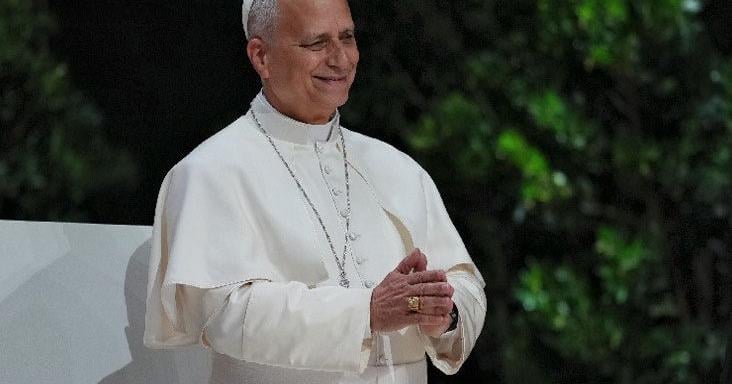
Historic Installation, Immediate Action: Archbishop Wright Calls Key Meetings
Just one day after his historic consecration and recognition service on Sunday, newly installed Archbishop Philip Wright has begun his tenure as leader of the Anglican Church in the Province of the West Indies with immediate action, convening a gathering of the Provincial Standing Committee to map out the church’s strategic agenda for the coming years. Unlike the slow transition that often follows high-level religious leadership changes, Wright wasted no time assembling senior regional church leaders to address pressing priorities, underscoring his commitment to hitting the ground running in his expanded new role.
As the head of the transnational province, Wright’s portfolio extends far beyond his previous responsibilities in Belize, covering all Anglican dioceses spread across the Caribbean region. In an on-the-record interview alongside the meeting, Wright broke down the core function of the Provincial Standing Committee — the executive body that acts on binding decisions made by Synod, the church’s highest governing and decision-making assembly. The current gathering, Wright explained, focuses on translating formal guidance approved by the latest Synod into actionable, three-year strategic plans leading up to the next full assembly.
Beyond formal strategic planning, the committee has also prioritized addressing urgent social and community challenges facing church members and residents across the Caribbean region. Wright noted that discussions so far have been open, robust, and productive, with several substantive decisions already finalized to guide the church’s work in the months ahead. “It’s been going very well, and we have had robust conversations and we’ve made some significant decisions so far,” Wright shared.
Retired former Archbishop Most Reverend Howard Gregory, who led the province before Wright, offered perspective on the weight and scope of the new role the newly installed leader now occupies. Gregory pointed out that Wright already brings decades of relevant experience to the post, having previously served as a diocesan bishop: a role that requires leading teaching across the diocese, maintaining institutional order, and serving as a “pastor to pastors” caring for the church’s clergy. But the archbishop position comes with a vastly expanded remit, he emphasized, adding regional administrative oversight for the entire province’s central office, coordination across all member dioceses, and ongoing engagement with congregations and diocesan leadership throughout the Caribbean.
This report is adapted from a transcribed broadcast segment originally aired on the outlet’s evening television news, published online on April 29, 2026. Any regional Kriol language remarks included in the original broadcast were transcribed using a standardized spelling system for clarity in the digital text version.
-

Bike tour billed as ‘major push’ for health tourism
ST JAMES, Jamaica — A long-running cross-island cycling event is marking a milestone for Jamaica’s growing adventure and health tourism movement, according to the event’s lead organizer. Dennis Chung, who serves as former interim president of the Jamaica Cycling Federation, CEO of Discover Jamaica by Bike, and Chief Technical Director at the Financial Investigations Division, calls this year’s six-day ride the first major step the country has taken to tap into the high-value health tourism niche that tourism leaders have discussed for years.
The sixth iteration of the event will kick off officially on May 1, with a welcome reception held a day earlier for an expected 35 to 40 full-event participants coming from across the globe. Additional cyclists often join the route for individual legs along the way, pushing the total number of participants higher across the course of the trek. Unlike standard competitive cycling races, the event is designed to blend athletic challenge with immersive cultural tourism, showcasing Jamaica’s natural scenery, local communities, and signature cuisine to international visitors.
Chung emphasized that the initiative’s core goal extends beyond creating a fun, challenging experience for cycling enthusiasts. Backed by major support from the Jamaica Tourist Board, the event is intentionally structured to deliver tangible economic benefits to local residents and small businesses across the island. Local cyclists are hired as tour guides for visiting riders, both during the official event and for independent cyclists visiting Jamaica outside the event window, creating sustained new income opportunities for Jamaican cycling community members. Every stop along the route is planned to direct participants to local street vendors, family-owned restaurants and regional hospitality businesses, spreading tourism revenue far beyond the main resort hubs.
The cross-island route is strategically staged to start in Montego Bay, a choice driven by the city’s major international airport that offers more flight options for overseas visitors and close proximity to a wide range of accommodation. On the opening day, riders travel from Montego Bay to Negril, where they get the chance to relax on the famous Seven Mile Beach, sample local seafood dishes, and shop at neighborhood vendors. The second day carries riders from Negril to Mandeville, with planned food stops at iconic local spots in Border, which sits on the boundary of St James and St Elizabeth parishes, and Middle Quarters in St Elizabeth. This leg is one of the most physically demanding sections of the entire trip, culminating in the long, steep climb up Spur Tree Hill that serves as a signature challenge for returning participants.
The third day of the trek moves riders from Mandeville to Jamaica’s capital, Kingston, with more stops at local food and craft spots along the route. After exploring Kingston, participants will head to the parish of Portland, a fan favorite among returning riders that offers some of the most scenic stretches of the entire route. Chung noted that the route through Portland and neighboring St Thomas also highlights the major improvements that have been made to Jamaica’s rural road infrastructure in recent years, making the area far more accessible for cycling tourists. Following a day of relaxed exploration of Portland’s coastal and mountain scenery, the group will travel back to St James, with a planned lunch stop in Ocho Rios and refreshment stops at local coconut vendors along the route.
Chung added that most participants choose to extend their stays in Jamaica for several extra days after the official event wraps up, turning the cycling trek into a full vacation. For cycling enthusiasts around the world, blending a challenging multi-day ride with immersive cultural experiences and the natural beauty of Jamaica creates a one-of-a-kind tourism product that fills a key gap in the country’s expanding tourism offerings. For local communities, the growing popularity of the event is turning a beloved recreational activity into a sustainable driver of local economic growth.