分类: health

  • SRHA confirms all operating theatres at Mandeville Hospital functional

    SRHA confirms all operating theatres at Mandeville Hospital functional

    False rumors circulating on social media that only one out of six operating theatres at Jamaica’s Mandeville Regional Hospital remains functional have been strongly refuted by the Southern Regional Health Authority. In an official clarification released on Friday, the public health body confirmed that every single operating theatre at the Manchester-based facility is fully operational and ready to serve patients.

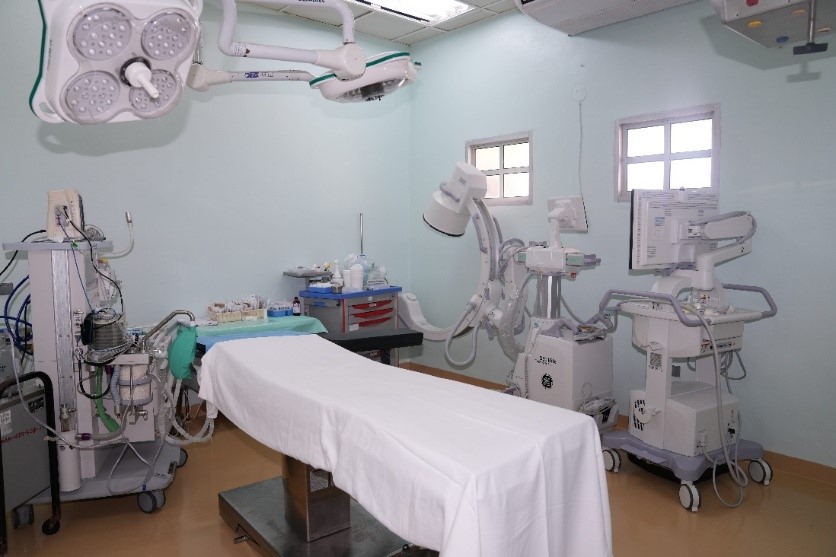
    The authority also revealed that a recent $13.4 million investment has gone toward comprehensive upgrades for four of the hospital’s six operating theatres, part of a proactive maintenance strategy designed to boost the quality and reliability of surgical services across the facility. The extensive renovation project covered a wide range of critical improvements, including resurfacing interior walls and flooring, upgrading storage infrastructure, replacing outdated doors, improving lighting systems, and overhauling old plumbing networks.

    Beyond structural updates, the upgrades have delivered tangible benefits for both clinical staff and people receiving care at the hospital: enhanced surgical safety standards, stricter infection control protocols, and overall improved working and treatment environments. In closing, the health authority issued a public appeal urging social media users to avoid spreading unsubstantiated misinformation, reminding the community to cross-check all claims against official, credible sources before sharing content online.

  • Antigua and Barbuda near global average as Caribbean households shoulder high health costs

    Antigua and Barbuda near global average as Caribbean households shoulder high health costs

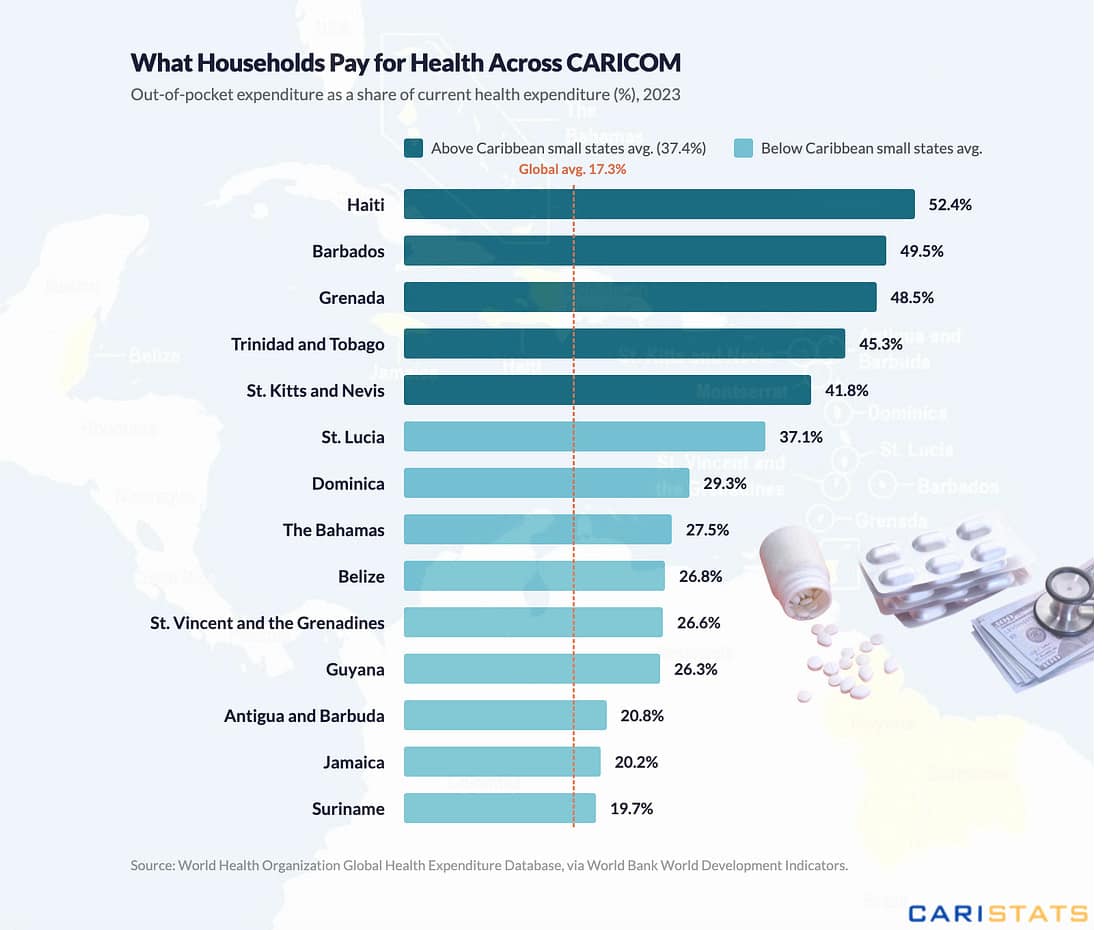
    New regional health expenditure data compiled by the Caribbean Community (CARICOM) statistical agency CARISTATS has revealed that households in Antigua and Barbuda shoulder a lower direct healthcare cost burden than nearly all other Caribbean nations, though their out-of-pocket (OOP) spending still outpaces the global average.

    Out-of-pocket spending refers to direct payments by patients for medical services not covered by public health plans or private insurance schemes. Per CARISTATS’ analysis, which draws data from the World Health Organization’s Global Health Expenditure Database and was published through the World Bank, OOP spending makes up 20.8% of Antigua and Barbuda’s total annual national health expenditure. This rank positions the dual-island nation among the Caribbean countries with the smallest household cost burdens for healthcare, while the figure still sits 3.5 percentage points higher than the current global average of 17.3%.

    The broader CARICOM region tells a starker story: household OOP burdens are far heavier across most member states, with the majority recording OOP spending that makes up more than 25% of total national health expenditure. This widespread trend highlights systemic gaps in regional insurance coverage and a widespread reliance on private healthcare providers that pass costs directly to patients.

    Haiti tops the list of nations with the highest OOP shares, with households covering 52.4% of all national healthcare costs through direct out-of-pocket payments. Barbados ranks second at 49.5%, followed closely by Grenada at 48.5%. Analysts have noted that Barbados’ high figure is particularly notable, given the country’s classification as a high-income economy with a formal universal public health system. The elevated share suggests that even with universal public coverage, many Barbadian patients still opt for or rely on private care and pay for services directly out of pocket.

    Antigua and Barbuda’s comparatively low OOP share aligns it with other regional low-burden performers: Jamaica records a 20.2% OOP share, while Suriname sits even closer to the global benchmark at 19.7%.

    A key takeaway from the aggregated data challenges common assumptions about healthcare financing: the structure and funding model of a country’s healthcare system plays a far larger role in shaping household out-of-pocket burdens than national income levels alone.

    Researchers emphasized that the findings underscore persistent systemic challenges across the entire Caribbean region. Limited health insurance coverage and uneven access to consistent, affordable public health services continue to shift a disproportionate share of healthcare costs onto individual patients — a problem that persists even in countries that outperform their regional peers on this metric.

  • Pharmacists, Ministry of Health Agree on Prescription Rollout

    Pharmacists, Ministry of Health Agree on Prescription Rollout

    Starting in 2026, Belize will implement a long-planned update to the nation’s prescription drug regulations, developed through close collaboration between the Pharmacists Association of Belize and the country’s Ministry of Health. With public anxiety growing over potential access disruptions to essential medications, particularly for patients managing long-term chronic conditions, industry representatives have moved quickly to clarify that the reform is focused on patient safety, not limiting access to care.

    The two governing bodies have agreed to a 12-month phased rollout of the updated rules, a transition period designed to gradually shift Belize’s healthcare culture toward greater medical accountability and routine health monitoring. Speaking on behalf of the association, Public Relations Officer Beverly Coleman explained that while formal prescription requirements have existed in national law for decades, widespread non-compliance and a lack of routine patient follow-up care created the need for a gradual transition. Many patients in Belize have long become accustomed to refilling long-term medications without regular check-ins with physicians or routine lab work to monitor how medications are affecting their health, she noted.

    “Any substance we put into our bodies — from over-the-counter pain relievers like Tylenol to herbal supplements — carries potential impacts that need medical oversight,” Coleman explained during an interview following the announcement. During the 12-month transition, pharmacists will be permitted to dispense limited one-month supplies of medication to give patients time to schedule required check-ups and get formal prescriptions from their doctors. Coleman emphasized the transition is not an unregulated free-for-all, but a structured opportunity for all stakeholders — doctors, pharmacists and patients — to adjust to the new safety standards.

    As the rollout approaches, however, concerns have emerged about strain on Belize’s already stretched healthcare system. Officials project that a surge of patients will flood primary care clinics to obtain required new prescriptions, raising questions about how gaps in care can be addressed, particularly in rural and geographically isolated underserved regions of the country. Discussion has turned to whether expanding prescribing authority to pharmacists could help ease the added pressure on clinics.

    Currently, Belizean law strictly limits pharmacists’ scope of practice: pharmacists are only permitted to dispense medications written by licensed physicians, and are tasked with flagging potential issues such as dangerous drug interactions or incorrect dosages to prescribing clinicians. Coleman confirmed that expanding this scope to allow limited prescribing by pharmacists for simple or stable chronic conditions is a topic that will be negotiated with the Ministry of Health in the coming months, given Belize’s unique geographic context where many remote communities lack consistent access to physicians.

    “Medicine is a constantly evolving field, and pharmacists must stay updated on the latest research to properly educate and counsel our patients,” Coleman added. She noted that any change to professional scope will require careful legislative negotiation and alignment with public health needs, to ensure patient safety remains the core priority as the system adapts.

  • Gray’s Farm and Clare Hall Health Centres Now Offering Extended Hours Until 9PM

    Gray’s Farm and Clare Hall Health Centres Now Offering Extended Hours Until 9PM

    Residents of Antigua and Barbuda are facing a slight adjustment to a major primary healthcare improvement initiative, after the Ministry of Health, Wellness, Environment and Civil Service Affairs announced a two-week delay to the rollout of extended operating hours for selected community health facilities.

    Originally slated to launch on April 1, 2026, the extended service hours will now go into effect on April 13 of the same year. The government agency explained that the extra time will allow teams to wrap up remaining logistical preparations and finalize operational arrangements to ensure a smooth, disruption-free launch for patients.

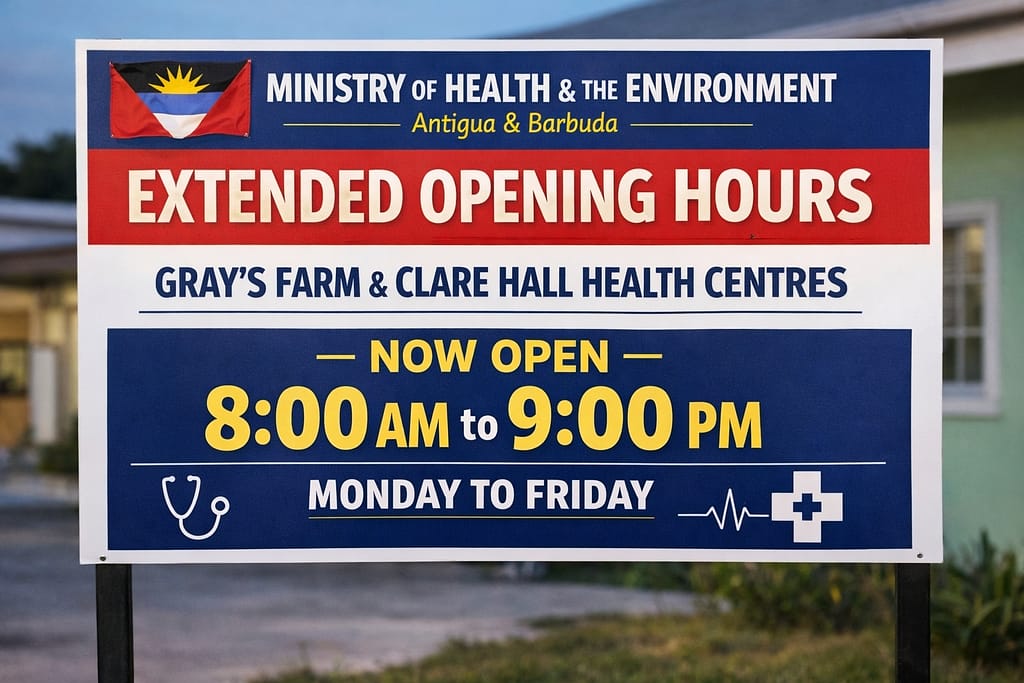
    When the new schedule takes effect, two facilities — Gray’s Farm Health Centre and Clare Hall Health Centre — will open their doors from 8:00 a.m. to 9:00 p.m. Monday through Friday, a significant expansion of service beyond traditional daytime operating hours. The change is designed to dramatically improve access to essential primary care for local communities, especially for residents who are unable to attend appointments during standard working hours and need evening care options.

    This extended hours initiative is a core component of the ministry’s long-term strategy to strengthen the island nation’s primary healthcare system and ease unneeded strain on the country’s main tertiary care facility, the Sir Lester Bird Medical Centre. By bringing accessible care closer to patients’ home communities, health officials aim to reduce overcrowding at the main hospital and cut down on wait times for non-emergency care.

    Under the new model, patients who develop conditions that require advanced, specialized care will receive appropriate referrals from their community clinic, with dedicated ambulance support provided when necessary to maintain seamless continuity of care between facilities.

    During the extended evening operating hours, participating clinics will offer a full range of urgent and primary care services, including general medical consultations, treatment for acute wounds, and care for minor emergency cases. Clinics will also manage a range of urgent non-life-threatening conditions, from lacerations, acute asthma flare-ups, dehydration and gastroenteritis to uncontrolled chronic conditions including high blood pressure and diabetes.

    The rollout of extended hours for two additional facilities, Brownes Avenue Health Centre and Villa Polyclinic, has also been rescheduled to a later, unannounced date. The ministry confirmed that it will release full details of the revised timeline for these two sites once all operational preparations are completed.

    Officials noted that this phased rollout approach is intentional, designed to guarantee that all required staffing, logistics and operational systems are fully in place before extended services launch at each site, ensuring consistent, high-quality care for all patients.

    In closing, the Ministry of Health expressed gratitude to the public for its patience and understanding as it completes preparations for the initiative, reaffirming its ongoing commitment to expanding access to high-quality healthcare services across Antigua and Barbuda.

  • Oral Contraceptives Open Only for Existing Users

    Oral Contraceptives Open Only for Existing Users

    In a coordinated policy update aimed at strengthening pharmaceutical regulation across the country, the Pharmacists Association of Belize (PAB) and the nation’s Ministry of Health and Wellness have finalized an agreement to implement a 12-month phased transition for new mandatory prescription requirements covering most prescription medications. The framework was agreed upon during a stakeholder gathering held April 13 at Belize’s Western Regional Hospital, bringing together public health officials and pharmacy leaders to address gaps in current dispensing practices.

    Under the transition terms, pharmacists will retain limited permission to continue supplying chronic disease medications — including those used to manage diabetes and hypertension — to established patients even if their existing prescriptions have expired. All such dispensing transactions, however, must be formally recorded in an official prescription register to maintain full regulatory transparency and patient care tracking.

    This gradual rollout applies exclusively to medications used to treat non-communicable chronic conditions. Strict, no-exception prescription mandates already in place for antibiotics and controlled substances will remain unchanged, with regulators retaining their current tight oversight of these high-risk drug classes to curb overuse and misuse.

    One notable restriction that will remain in effect through the transition period applies to oral contraceptives: the medication will only be dispensed to continuing users who already hold a prior prescription. Pharmacists are prohibited from initiating new contraceptive therapy for first-time users under the current rules. PAB has submitted a formal standardized dispensing protocol for oral contraceptives to the Ministry of Health and Wellness, which is currently undergoing official review.

    In a related move, the Ministry has reopened the public list of over-the-counter (OTC) medications for a full regulatory revision. PAB has been tasked with developing evidence-based recommendations for updates to the OTC list, with all proposals required to align with established international pharmaceutical safety standards.

    Both regulatory and industry stakeholders emphasize that the 12-month transition period is designed to give the general public sufficient time to adapt to the new requirements, rather than creating new access privileges for medications. To support public understanding of the changes, a joint public education campaign is already in planning stages. The campaign will include educational content focused on medication safety distributed via video, as well as targeted outreach efforts to reach rural communities that may face greater barriers to accessing new information and care.

    Jada Parchue, president of the Pharmacists Association of Belize, highlighted the balanced approach of the new policy in a statement following the agreement. “The twelve-month transition protects patient continuity of care while the public is sensitised on the prescription requirements,” Parchue explained.

  • Scrub Life Cares Named 2026 Applied Practice Experience Site of the Year by Georgia State University School of Public Health

    Scrub Life Cares Named 2026 Applied Practice Experience Site of the Year by Georgia State University School of Public Health

    ST. JOHN’S, Antigua and Barbuda – April 15, 2026 – Public health non-profit Scrub Life Cares, an organization focused on expanding menstrual equity, advancing evidence-based reproductive and sexual health education, and designing community-centered public health solutions, has been named the 2026 Applied Practice Experience (APE) Site of the Year by Georgia State University’s School of Public Health.

    The award was officially conferred during the school’s annual Celebrating Student Excellence ceremony, an event that spotlights host organizations that deliver exceptional, hands-on learning opportunities that move beyond theoretical training to create tangible public health impact for public health graduate and undergraduate students.

    Today, Scrub Life Cares operates as a multifaceted public health entity that sits at the intersection of community outreach, public health education, original research, and policy-informed programming. Its core work spans five critical focus areas: addressing menstrual equity and ending period poverty, delivering comprehensive reproductive and sexual health education, supporting maternal and child health outcomes, designing and implementing community-led public health programs, conducting public health research and translating data into accessible public knowledge, developing policy briefs and supporting advocacy initiatives, and managing strategic public health communications.

    Through its APE internship placement program, Scrub Life Cares has enabled students to contribute to high-stakes research and advocacy work at both local and global levels, including key contributions to programming for the International Association for Adolescent Health World Congress. Key student contributions to date include supporting large-scale research projects examining menstrual health inequities and gaps in reproductive and sexual health education across Antigua and Barbuda, the broader Caribbean region, and the Southern United States. Students also played a central role in drafting policy briefs, creating advocacy resources, and translating research findings for public and stakeholder audiences to elevate underaddressed public health issues.

    Notably, the work of APE students informed a formal motion that was successfully passed at the World Congress, accelerating global dialogue and actionable policy around adolescent health and menstrual equity. When the conference shifted to fully virtual participation in response to Hurricane Melissa, APE interns stepped in to support logistics and session coordination, ensuring that the global knowledge exchange process continued without disruption.

    These hands-on opportunities underscore Scrub Life Cares’ core mission: not just training entry-level public health practitioners, but nurturing the next generation of researchers, policy advocates, and thought leaders who can drive systemic change. A defining strength of the organization’s model is its integrated research portfolio, which directly informs its programming, shapes policy debates, and guides global advocacy work. For students, this means placements do not just involve shadowing or administrative work – they get direct experience shaping conversations about health equity, access, and systemic transformation.

    For Scrub Life Cares Founder and CEO Tanya Ambrose, MPH, the award carries both personal and professional meaning, rooted in her own history with the university.

    “Signing the memorandum of understanding to partner with Georgia State University as an APE host site was a full-circle moment for me and our whole team,” Ambrose said in a statement following the ceremony. “Scrub Life Cares was actually founded when I was an undergraduate student at Georgia State, after a study abroad trip to Uganda opened my eyes to the deep, systemic global health inequities that shape outcomes for women and girls around the world.”

    Ambrose added: “Our APE students don’t just help run community programs – they contribute to cutting-edge research, draft policy frameworks, create advocacy tools, and shape global public health conversations. That’s the point of this work: we’re building professionals who understand that public health isn’t just textbook theory. It’s about centering people, building fair systems, leaning on evidence, and taking intentional action.”

    The honor comes as Scrub Life Cares marks five years of transformative public health work, and the organization is already leveraging this recognition to expand its APE placement model across the Caribbean region. Over the past half-decade, Scrub Life Cares has delivered evidence-based programs across Antigua and Barbuda, the Caribbean, and the United States; integrated rigorous research into every stage of program design, advocacy, and policy engagement; contributed to peer-reviewed public health research and global health dialogue; reached hundreds of women, girls, and families through direct education and free resource distribution; hosted its annual flagship Grow With the Flo Women & Girls Health Expo, which is now entering its fifth consecutive year; and built cross-sector partnerships with academia, healthcare systems, and local community organizations.

    Through this work, the organization has challenged long-held assumptions about grassroots public health nonprofits, proving that community-led groups can deliver both exceptional direct services and world-class research excellence. The 2026 APE Site of the Year award further cements Scrub Life Cares’ standing as a leading training ground for emerging public health leaders, a research-driven and policy-engaged contributor to local, regional, and global health discourse, and a trusted community partner focused on advancing sustainable, people-centered health outcomes. In a field that demands both innovative problem-solving and deep compassion for the communities served, Scrub Life Cares stands as a powerful example of what can be achieved when education, research, policy, and community impact are intentionally aligned.

    ### About Scrub Life Cares
    Scrub Life Cares is a non-profit public health organization dedicated to advancing menstrual equity, expanding access to comprehensive reproductive and sexual health education, and improving access to life-saving essential health resources for women, girls, and families across Antigua and Barbuda, the Caribbean, and the United States. Through a combination of community education, policy advocacy, and original research, the organization works to advance health dignity, informed personal decision-making, and health equity for all.
  • Overwhelming Turnout for Free Medical Services

    Overwhelming Turnout for Free Medical Services

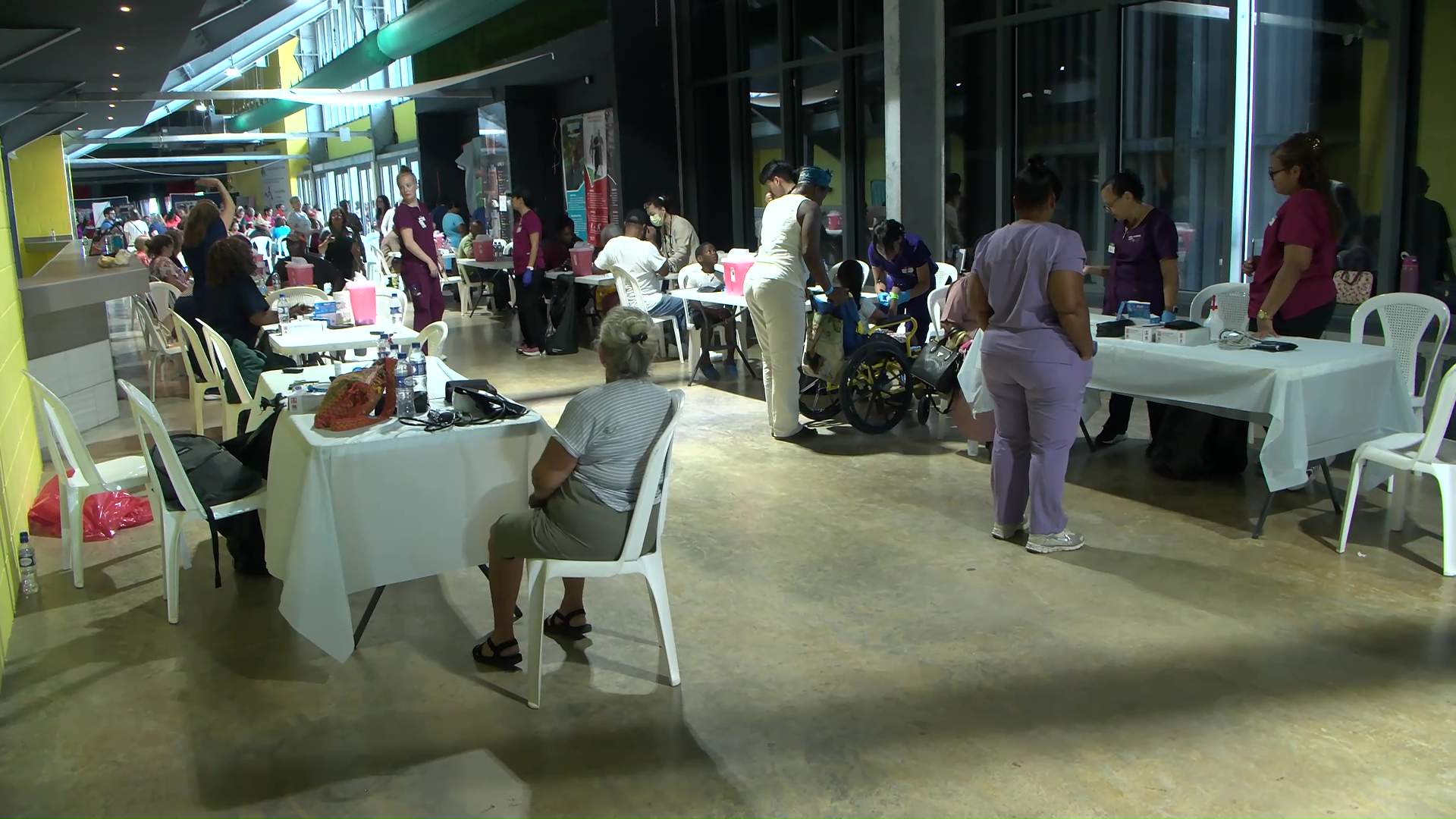
    On a bright April morning in 2026, crowds began gathering long before the sun crested the horizon in Belize City, all drawn to a rare offering: completely free, comprehensive healthcare hosted at the city’s Civic Center. The four-day outreach, organized by the Belize Union of Seventh-day Adventist Church in partnership with U.S.-based ministry Amazing Facts International, has seen an outpouring of community demand that has already stretched the volunteer clinic to its maximum capacity.

    Hundreds of patients began lining up as early as 6 a.m. on the opening day of the mission, many traveling from outlying communities to access the free services. Esmeralda Moralez, a resident of Gardenia Village who arrived at 6:25 a.m., explained her early arrival reflected the harsh reality of healthcare access in the country. “Medical is expensive here,” she noted, a sentiment shared by many low-income and uninsured Belizeans who have turned to the mission for care they could not otherwise afford.

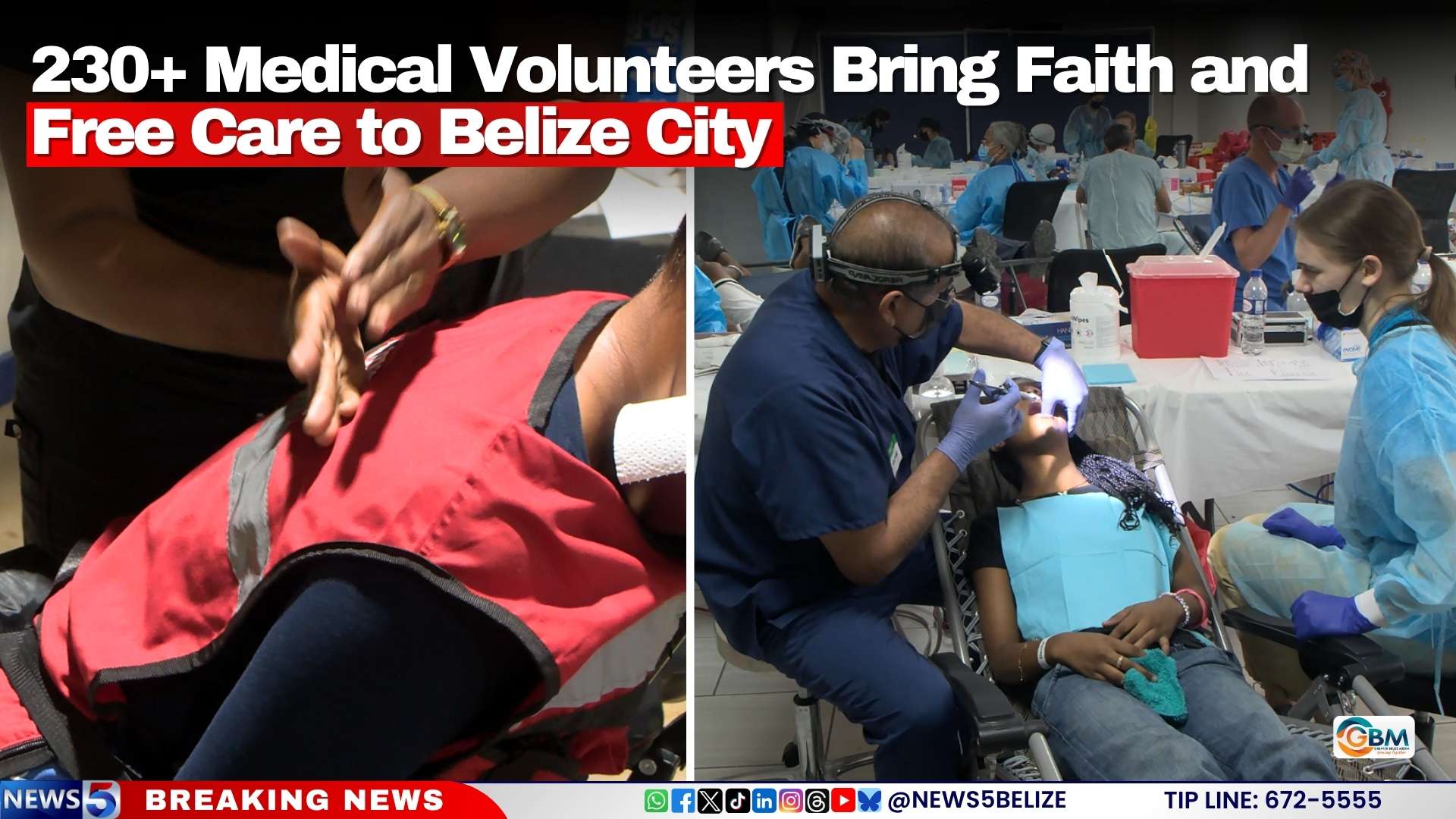
    The event brings together a combined force of more than 200 international medical volunteers from the United States alongside dozens of local healthcare providers, covering a far wider range of services than most free clinics in the region. From routine general health consultations and basic check-ups to specialized care in dentistry, gynecology, pediatrics, ophthalmology, physical therapy, nutrition, and pharmacy services, the mission offers full-cycle care at no cost to patients. For the dental wing alone, the clinic has assembled five dentists and three dental hygienists in a dedicated space at the Civic Center—a scale of free specialized care that Al Powell, president of the Belize Union of Seventh-day Adventist, says is unprecedented for the area.

    “This is just what God is doing for us, opening this avenue,” Powell shared. “We don’t take any credit for it. We just try to facilitate his blessings on our community. We have had a full house since this morning, persons trying to get into the service and we are maxed out to capacity.”

    Clinic director Roger Chene, who leads the Amazing Facts International volunteer team, added that for the participating providers, the mission is more than a community initiative—it is a privilege to share their skills with a community in need. “All of our team members are working professionals, and they are taking time out of their own busy schedules to use their skills and God-given ability to serve the community here in Belize,” Chene explained. “There is no charge for any of the services. We will still be here on Wednesday and Thursday, but we want to encourage everyone to come early, because it is first come, first serve.”

    Dr. Zoraida Powell, health ministry assistant for the Belize Union, who coordinated logistics between the local church and the international volunteer team, outlined the breadth of care on offer. “These are medical doctors, dentists, gynecologists, pediatricians, pharmacists, nurses, nutritionists, physiotherapists, ophthalmologists, so all of these people along with some local doctors and dentists,” she said. “We have this health brigade where we can serve the community in Belize.”

    For patients, the long wait in line is a small price to pay for care that would otherwise be out of reach. Joyce Villafranco, a Belize City resident, called the experience life-changing for local residents. “Hundred percent, because it is free,” she said. “You know how Belizeans like free thing.”

    As demand continues to surge beyond organizers’ initial projections, event leaders are urging any residents seeking care to arrive early to secure a spot before the clinic reaches daily capacity. The mission is scheduled to conclude at the end of the fourth day, having brought thousands of Belizeans their first affordable healthcare interaction in years.

  • 230+ Medical Volunteers Bring Faith and Free Care to Belize City

    230+ Medical Volunteers Bring Faith and Free Care to Belize City

    Starting on April 14, 2026, a landmark four-day free health outreach initiative has drawn hundreds of underserved Belizeans to the Belize City Civic Center, highlighting widespread unmet demand for accessible healthcare across the country. Organized by the Belize Union of Seventh-day Adventists, the initiative brings together a cross-functional team of more than 230 medical volunteers, combining international healthcare professionals and local clinical staff to deliver a full spectrum of no-cost services to community members.

    Unlike standard small-scale health camps, this expo offers comprehensive care ranging from general physical consultations and restorative dental work to specialized pediatric check-ups and women’s reproductive health screenings. It also includes complementary services such as pharmaceutical support, nutritional counseling, physical therapy, and public health education tailored to common local health risks. Zodaida Powell, a public health physician and health ministry assistant with the Belize Union of Seventh-day Adventists, outlined the scope of the volunteer team’s mission in an interview with local outlet News 5.

    Powell specifically emphasized the importance of the free cervical cancer screenings offered at the expo, urging women across Belize City to take advantage of the no-cost preventive care. She noted that the overwhelming community turnout confirms just how urgent the unmet need for accessible healthcare is in the region: by the end of the first day Monday, the volunteer team had already treated nearly 500 patients, with lines growing longer each successive day. “We expect more people to join us through the end of the event,” Powell said. “Today the line stretched further than we anticipated, so we just ask that community members remain patient as we work to serve every person who comes through our doors.”

    This event marks the first large-scale community health outreach of its kind organized by the Seventh-day Adventist organisation in Belize, and it kicks off a long-term expansion of the group’s public health initiatives across the country. Following the conclusion of the Belize City expo, the organization plans to host similar free health camps in rural villages, working to address the high prevalence of preventable conditions like obesity and chronic disease that drive mortality rates across Belize. Beyond clinical care, the expo also includes a wellness education section focused on healthy coping strategies, encouraging attendees to manage stress through faith-based practices rather than turning to alcohol, drugs, or other harmful habits.

    The free health expo is open daily from 9:00 a.m. to 5:00 p.m. through Thursday, with a scheduled lunch break for the volunteer team each day. All community members are welcome to walk in and access services regardless of their income or insurance status.

  • “Archaic” Law or Safety Measure?: Groups Slam Contraceptive Enforcement Policy

    “Archaic” Law or Safety Measure?: Groups Slam Contraceptive Enforcement Policy

    In Belize, a new enforcement push for existing contraceptive prescription regulations has ignited fierce public pushback from women’s advocacy groups and national labor organizations, who warn the policy will deepen healthcare inequities and roll back decades of progress on women’s reproductive autonomy.

    The controversy erupted just ahead of a scheduled press briefing by Belize’s Ministry of Health and Wellness (MOHW) earlier this week, when Promoting Empowerment Through Awareness for Lesbian and Bisexual Women (PETAL) issued a formal statement raising alarms about the new enforcement requirements. The organization emphasized that mandatory prescriptions for contraceptive access would create unnecessary, life-altering barriers for women and girls across the country, particularly those facing systemic economic and geographic disadvantages.

    PETAL’s statement noted that the policy threatens core principles of women’s bodily autonomy, equal access to critical healthcare, and economic security for marginalized groups. The National Trade Union Congress of Belize (NTUCB) joined the opposition shortly after, doubling down on criticism by labeling the enforced regulation as “archaic legislation” that demands immediate revision.

    Both organizations point to disproportionate harm the policy will inflict on low-income women and residents of rural communities. Out-of-pocket consultation fees, costly transportation to distant healthcare facilities, and lost wages from taking time off work will put contraception out of reach for many, the groups argue. Left unaddressed, they warn, the policy will drive a rise in unintended pregnancies, widen existing gender and economic inequality gaps, and add even more strain to Belize’s already overburdened public health system.

    “This policy drags us nearly 50 years backward, to an era when women had barely any control over their own personal reproductive choices,” NTUCB representatives said in their statement. “Coming right off a month dedicated to celebrating women’s rights and advancing gender progress, this step backward is completely unacceptable to our movement.”

    During Monday’s briefing, Dr. Melissa Diaz-Musa, Director of Public Health and Wellness at MOHW, pushed back against criticism by addressing the concerns raised by advocacy groups. Dr. Diaz-Musa clarified that the prescription requirement is not a new policy, and that Belize already maintains a robust, multi-layered healthcare access system designed to meet contraceptive demand across all regions.

    She explained that every district in the country is home to well-resourced primary care facilities, many of which operate seven days a week. These facilities employ trained nurses who are explicitly authorized to dispense prescription contraceptives, eliminating the need for many women to seek out separate physician appointments. For residents of remote, smaller communities, Belize has also expanded mobile clinic services that deploy doctors, nurses, pharmacists and other healthcare staff to underserved areas on a regular basis.

    On the topic of ongoing access for current contraceptive users, Dr. Diaz-Musa stressed that repeat prescriptions have long been a standard, streamlined part of the existing system. “This process has been in place for years,” she said. “Thousands of women regularly collect three, six, even 12 months of contraceptive refills through routine channels with no issue.”

    According to Dr. Diaz-Musa, the current public debate stems largely from widespread misunderstanding of how the existing system operates, and a misperception that the prescription rule is a new restriction, rather than an enforcement of long-standing regulation. To smooth the transition and clear up public confusion, MOHW has planned a 12-month phase-in period for the enforcement policy. This window will be dedicated to public education campaigns and ongoing collaborative discussions with pharmacists and other key healthcare stakeholders to address any gaps in access.

  • Government sets 4-month timeline for full opening of St Jude

    Government sets 4-month timeline for full opening of St Jude

    Half a year has not yet passed since the formal handover ceremony that concluded a 16-year-long period of construction for the new St. Jude Hospital at Augier, Vieux Fort, yet the facility has still not been fully opened to the public. Now, top government health officials have given a fresh timeline, confirming full commissioning will be completed within the next three to four months.

    When Prime Minister Philip J. Pierre and senior health leadership presided over the handover ceremony months ago, they explicitly noted the event was not an official public opening. From the start, the administration laid out a phased approach to launching the facility, rather than rushing a full opening before all systems were ready.

    This week, Saint Lucia’s Minister of Health Moses Jn Baptiste reaffirmed the government’s unwavering commitment to bringing the new Vieux Fort hospital into full operation for residents of the island’s southern region and the broader national population. He confirmed that additional budget allocations were included in this year’s revenue and expenditure estimates, earmarked specifically to see the entire commissioning process through to completion. “The Prime Minister, who also serves as Minister for Finance, set aside even more funds and resources to make sure the commissioning process progresses, that it finishes fully, and that the people of southern Saint Lucia and all Saint Lucians finally receive the completed St. Jude Hospital at the Augier site,” Jn Baptiste explained in a public statement this week.

    Despite the delayed full opening, the minister said progress is well underway, with multiple key departments already relocating from the old facility to the new site and beginning to serve patients. “The Physiotherapy Department has already moved in, patients are already attending appointments, and our clinical staff are delivering care right on the new campus,” he noted. Administrative teams have also completed their relocation, along with the facility’s laundry services, and the hospital’s commercial kitchen is set to begin operations within the next few days.

    Work continues on outfitting the facility with its full complement of medical technology: Jn Baptiste confirmed new specialized medical equipment is still being delivered to the site, with ongoing installation, calibration, and quality testing underway. All clinical staff operating the new equipment have already completed specialized training, and the minister noted that patients in southern Saint Lucia are already reporting noticeable improvements in care through the already operational physiotherapy department. The upgraded technology is expected to lift the overall standard of healthcare available across the southern part of the island.

    Looking ahead, full commissioning will bring expanded care options that were previously unavailable to local residents, Jn Baptiste promised. Key upgrades include additional dialysis treatment stations, comprehensive modernization of the Radiology Department, and enhancements to nearly all other core clinical services.

    “I’m very excited about what the new St. Jude Hospital will bring: new service options, a much higher standard of care delivery, and a facility that all Saint Lucians can be proud of,” the minister added.

    Designed as a state-of-the-art care hub for southern Saint Lucia, the new 110-bed St. Jude Hospital will offer expanded and upgraded inpatient care, surgical services, and diagnostic capabilities when fully operational.