分类: health

  • Chinese medical delegation explores new health partnerships in Antigua and Barbuda

    Chinese medical delegation explores new health partnerships in Antigua and Barbuda

    A high-level Chinese medical delegation has concluded a significant visit to Antigua and Barbuda, marking a new chapter in Sino-Caribbean health diplomacy. The delegation, comprising senior healthcare officials and medical specialists, engaged in extensive discussions with Antiguan health authorities to explore innovative partnership models beyond traditional aid frameworks.

    The bilateral talks focused on developing sustainable healthcare initiatives tailored to Antigua and Barbuda’s specific needs. Key discussion points included potential collaborations in telemedicine infrastructure, specialized medical training programs, and public health system modernization. The Chinese delegation presented advanced digital health solutions that could enhance medical service delivery across the Caribbean nation’s island communities.

    This diplomatic health mission represents China’s evolving approach to South-South cooperation, emphasizing mutual benefit and knowledge exchange rather than unilateral assistance. Both nations examined how Chinese medical expertise and technological advancements could integrate with Antigua’s existing healthcare framework while respecting local protocols and requirements.

    The meetings produced preliminary agreements for several forward-looking initiatives, including proposed physician exchange programs, joint research projects on tropical diseases prevalent in the Caribbean region, and capacity-building measures for Antiguan healthcare professionals. These developments occur against the backdrop of China’s growing engagement with Caribbean nations through health-focused diplomacy that combines technical cooperation with relationship building.

    Medical diplomacy has increasingly become an instrument of international relations, and this exchange demonstrates how middle-power nations like China are leveraging healthcare expertise to strengthen global partnerships. The outcomes from these talks may establish a template for future Chinese health collaborations with other small island developing states.

  • 1 December: World AIDS Day and adolescents

    1 December: World AIDS Day and adolescents

    On World AIDS Day, a stark contrast emerges between global progress against HIV/AIDS and the dire situation unfolding in vulnerable regions following the dismantling of a major U.S. aid program. The President’s Emergency Plan for AIDS Relief (PEPFAR), once a flagship American initiative, has been dramatically scaled back under current leadership, creating devastating consequences for the world’s poorest populations.

    Public health experts reveal the catastrophic human cost of this policy shift. Epidemiologist Brooke Nichols from Boston University estimates that over 600,000 deaths have already resulted from the program’s closure, with children accounting for two-thirds of these fatalities – a tragic rate of nearly 90 deaths per hour. This represents a dramatic reversal from PEPFAR’s documented success in saving approximately 92 million lives over two decades through USAID funding that constituted less than 1% of the U.S. federal budget.

    The Caribbean region now faces particularly severe challenges, ranking among the world’s worst in multiple health metrics including adolescent fertility rates, gender violence, unintended pregnancies, and sexual debut age. Health advocates Tonia Frame and Fred Nunes emphasize that this crisis demands local solutions rather than dependence on foreign aid.

    Their proposed intervention centers on comprehensive Health and Family Life Education (HFLE) programs that address the region’s alarming silence around sexual health. Currently, only 5% of parents discuss sexuality with their children, while schools relegate HFLE to inexperienced teachers and religious leaders often stigmatize these crucial conversations.

    The solution requires transforming HFLE into an examinable subject taught by qualified educators, coupled with community-wide engagement involving parents, religious leaders, and healthcare workers. This approach recognizes that protecting adolescent health requires overcoming cultural inhibitions and implementing evidence-based education as a matter of urgent priority.

  • Message from the Director of the PANCAP Coordinating Unit (PCU) on World AIDS Day 2025

    Message from the Director of the PANCAP Coordinating Unit (PCU) on World AIDS Day 2025

    CARICOM Secretariat, Guyana (November 29, 2025) – On World AIDS Day 2025, Caribbean health authorities have issued a resolute declaration to safeguard decades of progress against HIV/AIDS despite mounting financial challenges threatening regional treatment programs.

    Dr. Wendy Telgt Emanuelson, Director of the Pan Caribbean Partnership against HIV and AIDS (PANCAP) Coordinating Unit, delivered a stirring message under the theme “Overcoming disruption, transforming the AIDS response.” Her statement comes amid significant reductions in global health funding that jeopardize access to essential medications, prevention initiatives, and community support services throughout the Caribbean basin.

    The region’s top health official emphasized that financial constraints represent more than budgetary figures—they directly impact the wellbeing of countless individuals dependent on sustained antiretroviral therapy and comprehensive care systems. “These cuts are not just numbers on a spreadsheet,” Dr. Emanuelson noted, “they represent a potential threat to the medicines that keep our Caribbean brothers and sisters healthy.”

    Despite these challenges, the Caribbean demonstrates remarkable resilience. Several nations have already achieved elimination of mother-to-child HIV transmission, while others approach the ambitious 95-95-95 targets (95% of people living with HIV knowing their status, 95% on treatment, and 95% with suppressed viral loads). These accomplishments, built through collaborative government action, healthcare worker dedication, and community activism, form the foundation for future progress.

    PANCAP is spearheading a transformative approach that prioritizes efficiency, integration, and sustainability. The organization is optimizing supply chains, empowering local communities, and maximizing resource utilization to ensure continued advancement toward an AIDS-free Caribbean. Dr. Emanuelson specifically acknowledged healthcare professionals, advocacy groups, and individuals living with HIV as essential partners in this renewed effort.

    The director’s message concluded with an unequivocal commitment: “We will not go back. We will not surrender the gains for which we have fought so hard. The journey may now be steeper, but our destination remains the same.”

  • World Aids Day 2025: Overcoming Disruption To Transform The Aids Response In The Caribbean

    World Aids Day 2025: Overcoming Disruption To Transform The Aids Response In The Caribbean

    KINGSTON, JAMAICA – December 1, 2025 – On World AIDS Day 2025, the Caribbean region confronts a perfect storm of challenges threatening to reverse decades of progress in HIV/AIDS elimination. The UNAIDS Multi-Country Office for the Caribbean has issued an urgent call for global solidarity as external HIV funding declines by 30-40% while climate disasters and economic pressures cripple healthcare systems.

    The region’s vulnerability stems from its heavy dependence on international financing, which constitutes 66% of HIV resources in 2024. This dependency becomes increasingly precarious as climate catastrophes like Hurricane Melissa have recently devastated Jamaica, Haiti, and Cuba, displacing communities and severing access to essential HIV treatment and prevention services.

    Alarming new data reveals that despite treatment advances, approximately 90,000 people living with HIV in the Caribbean remain outside the care system, with many likely presenting advanced disease progression. Even among those receiving treatment, significant numbers experience treatment interruptions and fail to achieve viral suppression.

    The compounding crises—including climate emergencies, unsustainable debt burdens, and sluggish economic growth—have severely constrained national budgets for health, education, and social protection programs. These pressures threaten to widen existing inequalities and create dangerous gaps in HIV prevention and community services.

    Nevertheless, Caribbean nations demonstrate remarkable resilience through innovative community-led solutions and strengthened regional partnerships. UNAIDS emphasizes that ending AIDS as a public health threat by 2030 remains achievable but requires immediate action on multiple fronts: strengthening health systems, scaling community-led responses, ensuring uninterrupted service access, and addressing persistent stigma and discrimination.

    The organization urges Caribbean leaders to embrace the forthcoming Global AIDS Strategy 2026–2031 and advance Sustainable Development Goal targets by increasing domestic investments in sustainable, community-led HIV responses capable of withstanding future shocks. This World AIDS Day serves as both a warning and a call to action—the region’s progress remains fragile, and without renewed commitment and international support, hard-won gains could be lost.

  • Caribische vastberadenheid op Wereld Aids Dag: ‘We gaan niet terug’

    Caribische vastberadenheid op Wereld Aids Dag: ‘We gaan niet terug’

    On World AIDS Day (December 1), Caribbean health authorities have issued a resolute declaration that the region’s battle against HIV and AIDS will persist despite growing global financial instability. Under the theme “Overcoming disruption, transforming the AIDS response,” the Pan Caribbean Partnership against HIV and AIDS (Pancap) has emphatically stated that regression is not an option.

    Wendy Telgt-Emanuelson, Director of Pancap’s Coordination Unit, delivered a powerful address highlighting that Caribbean nations have reached a critical juncture where international funding cuts threaten hard-won progress achieved over recent decades. “Our advancements face pressure, but our determination remains unshaken,” Emanuelson asserted. “We will confront these challenges, continue innovating, and maintain our course toward an AIDS-free Caribbean.”

    The financial constraints particularly impact medication programs, prevention initiatives, and educational campaigns—essential components for many countries to achieve the 95-95-95 targets (95% of people living with HIV knowing their status, 95% receiving treatment, and 95% achieving viral suppression). Despite these setbacks, Emanuelson emphasized the region’s historical resilience as a guiding force moving forward.

    Notable successes include several Caribbean nations eliminating mother-to-child HIV transmission—achievements resulting from collaborative efforts between governments, healthcare providers, community organizations, and people living with HIV. “We will not allow this foundation to crumble,” Emanuelson pledged.

    Pancap’s strategic focus for coming years will center on strengthening community structures, optimizing logistical systems, and creating more sustainable HIV response frameworks. Both regional and international partner support remains indispensable to these efforts. Emanuelson extended reassurance to frontline workers, advocates, and people living with HIV: “You are not alone in this struggle.”

    Concluding with determined optimism, Emanuelson stated: “We will not retreat. We will not abandon what we have painstakingly accomplished. The path may grow steeper, but our destination remains unchanged. Together, we will overcome these challenges and build an AIDS-free future for generations to come.”

  • Cuba shows sustained progress in the fight against HIV

    Cuba shows sustained progress in the fight against HIV

    Cuba has demonstrated remarkable success in its battle against HIV/AIDS, reporting substantial improvements in key health indicators that position the nation as a regional leader in disease management. Recent data reveals that the Caribbean island has achieved a 39% reduction in HIV-related mortality alongside a 14.5% decrease in new infections, bringing annual diagnoses down to 1,708 cases.

    Dr. Jacqueline Sánchez Fuentes, head of the STI Control Strategy at Cuba’s Ministry of Public Health, attributes these achievements to the country’s comprehensive national program and sustained political commitment. The current HIV-positive population stands at 35,373 individuals, a figure that has remained stable due to the program’s effectiveness.

    The nation’s health system has prioritized universal access to antiretroviral treatment while intensifying preventive measures. Current objectives include achieving 95% coverage in both diagnosis and treatment protocols, alongside expanded prophylaxis and combined prevention strategies targeting key populations.

    These medical advances coincide with Cuba’s parallel efforts to combat social stigma and discrimination against people living with HIV. The dual approach addresses both clinical and societal aspects of the disease, particularly relevant as the global community observes World AIDS Day with its focus on reducing inequalities.

    Cuba’s progress stands in contrast to the broader global landscape. According to WHO and UNAIDS estimates, worldwide HIV prevalence has increased by 27% since 2010, with approximately 40.8 million people currently living with the virus. The global community records 1.3 million new infections annually and approximately 630,000 AIDS-related deaths each year.

    Despite these challenging statistics, international efforts have yielded positive results, with a 40% reduction in new infections and a 54% decrease in mortality compared to 2010 levels. In the Americas, where an estimated 4.2 million people live with HIV, Cuba continues to strengthen its healthcare response, reaffirming its commitment to universal health access and quality patient care.

  • Guyana gets portable high-tech rapid disease detection equipment

    Guyana gets portable high-tech rapid disease detection equipment

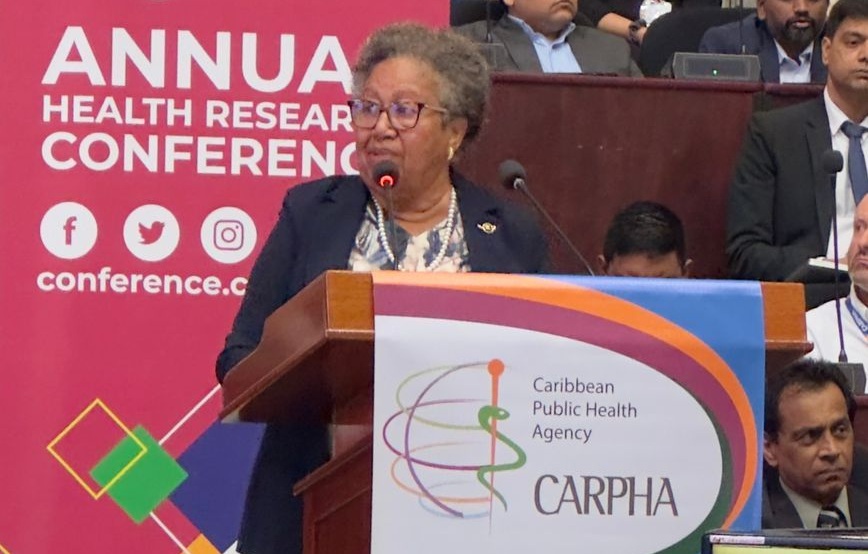
    In a landmark advancement for Caribbean public health infrastructure, the Caribbean Public Health Agency (CARPHA) has formally transferred a cutting-edge portable PCR diagnostic system to Guyana’s National Public Health Reference Laboratory (NPHRL). The ceremonial handover, conducted on November 30, 2025, saw CARPHA Executive Director Dr. Lisa Indar present the sophisticated equipment to Guyana’s Chief Medical Officer, Dr. Narine Singh.

    Valued at approximately US$300,000, this revolutionary mobile laboratory technology represents a transformative investment in Guyana’s disease surveillance capabilities. The compact PCR platform delivers comprehensive diagnostic results within a remarkable two-hour window, dramatically accelerating the identification of priority pathogens including dengue, foodborne illnesses, norovirus, and leptospirosis.

    Designed for exceptional operational flexibility, the portable system can be rapidly deployed across diverse geographical regions, including remote and hinterland communities that traditionally faced challenges in accessing timely medical testing. This strategic mobility ensures equitable healthcare delivery while strengthening national resilience against both endemic diseases and emerging public health threats.

    Health Minister Dr. Frank Anthony emphasized the critical importance of this technological enhancement, noting that ‘this advanced instrumentation will prove invaluable in generating timely results, substantially improving both the velocity and precision of our disease diagnostic processes.’

    The donation forms part of CARPHA’s broader regional initiative to modernize laboratory systems throughout the Caribbean. Dr. Indar highlighted the strategic significance of the equipment, stating that its rapid processing capabilities and portability will fundamentally improve outbreak response mechanisms, community protection measures, and ongoing epidemiological surveillance efforts.

    The Guyanese Health Ministry expressed profound appreciation for CARPHA’s continued partnership, acknowledging that this collaboration substantially bolsters national and regional health security frameworks. This technological advancement positions Guyana more effectively to safeguard population health, accelerate clinical decision-making, and reinforce integrated disease monitoring systems across the Caribbean region.

  • Panama warns about late HIV/AIDS treatment

    Panama warns about late HIV/AIDS treatment

    Panamanian health authorities are confronting a critical public health challenge as new epidemiological data reveals a disturbing trend in HIV/AIDS management. The Ministry of Health (Minsa) reports that despite having adequate medical resources, the nation continues to experience preventable HIV-related deaths, particularly among younger populations.

    Official statistics from the Epidemiology Department indicate that 1,536 new HIV cases were confirmed in 2024, maintaining incidence levels consistent with the previous year’s figures. The真正令人担忧的方面 lies in diagnosis timing: an alarming 72% of cases are identified only at advanced stages of infection. This diagnostic delay significantly increases mortality risk while simultaneously facilitating unintended viral transmission before patients can initiate treatment.

    The human cost of this systemic failure is reflected in mortality data. HIV-associated deaths climbed from 226 fatalities in 2023 to 284 in the following year, according to the Ministry’s comprehensive report published in La Prensa newspaper.

    Health officials identify multiple contributing factors beyond mere structural barriers. The epidemiological study highlights deeply entrenched social stigma, insufficient public awareness campaigns, limited availability of community-based testing services, and significant difficulties in accessing specialized medical care as key obstacles to early detection.

    Deputy Health Minister Manuel Zambrano emphasized the paradox of Panama’s situation: ‘Our nation possesses the necessary medical tools and interventions, but we must collectively overcome cultural taboos and prioritize preventive strategies above reactive treatments.’ This statement underscores the urgent need for societal attitude shifts alongside healthcare infrastructure improvements to effectively combat the epidemic.

  • UNAIDS urges Caribbean to overcome disruption to transform AIDS response

    UNAIDS urges Caribbean to overcome disruption to transform AIDS response

    KINGSTON, Jamaica (CMC) – The Joint United Nations Programme on HIV/AIDS (UNAIDS) has reinforced its dedication to collaborating with Caribbean governments, civil society organizations, and communities impacted by HIV to establish a robust, person-focused approach to combating the epidemic. This renewed pledge comes as the region observes World AIDS Day under the timely theme ‘Overcoming Disruption, Transforming the AIDS Response,’ highlighting both significant progress and emerging threats to previous achievements.

    The Caribbean region currently faces multiple converging challenges that jeopardize HIV response systems. The climate emergency, substantial debt obligations, and constrained economic expansion have significantly reduced available funding for essential health, education, and social welfare programs. This financial strain is particularly acute given the region’s heavy reliance on external funding, which constitutes approximately 66 percent of HIV resources projected for 2024. Simultaneously, international health assistance is experiencing substantial reductions estimated between 30-40 percent, creating dangerous gaps in community services and worsening health disparities.

    Recent environmental catastrophes, including Hurricane Melissa’s destructive path through Jamaica, Haiti, and Cuba, have further compromised healthcare infrastructure, displaced vulnerable populations, and interrupted critical treatment schedules for those living with HIV. Many affected individuals now face the dual challenge of reconstructing their lives while maintaining access to essential antiretroviral therapy and prevention services.

    Despite these considerable obstacles, the Caribbean demonstrates extraordinary resilience and adaptive innovation. Through strengthened collaborations with local communities, several nations have maintained treatment coverage and prevention initiatives. However, concerning gaps persist with nearly 30 percent of the estimated 90,000 people living with HIV not receiving consistent care, often presenting with advanced disease progression. Even among those engaged with healthcare services, many experience treatment interruptions and inadequate viral suppression.

    UNAIDS emphasizes that while regional resilience is commendable, it cannot alone compensate for diminishing resources and escalating systemic shocks. The organization advocates for reinforced health systems, expanded community-directed solutions, and guaranteed continuous access to comprehensive HIV services. Achieving the 2030 goal of ending AIDS as a public health threat requires intensified urgency, collaborative unity, and revitalized commitment from all stakeholders.

    International solidarity is increasingly crucial as nations grapple with widening inequalities, service interruptions, and reduced foreign financing. UNAIDS appeals to the global community to support heavily affected countries by addressing funding deficiencies, eliminating discriminatory legal and social barriers, and adequately resourcing community leadership structures. Additionally, Caribbean leaders are encouraged to advance Sustainable Development Goal 3.3 targeting AIDS elimination and embrace the forthcoming Global AIDS Strategy 2026–2031 through enhanced regional cooperation, health system strengthening, and targeted investments in sustainable, community-led responses capable of enduring future crises.

  • ‘It’s not over’

    ‘It’s not over’

    LOS ANGELES — As the world prepares to commemorate World AIDS Day on December 1, 2025, the AIDS Healthcare Foundation (AHF) announces a series of global events emphasizing the ongoing battle against HIV/AIDS. Despite decades of medical advancements, the organization highlights the sobering reality of 1.3 million new infections occurring worldwide annually, signaling that the epidemic remains a critical public health challenge.

    The international observances—spanning Africa, Asia, Europe, and the Americas—will focus on promoting HIV prevention, testing, condom accessibility, treatment, and care. This year’s commemoration holds particular significance as AHF celebrates a major operational milestone: expanding its services to 50 countries since first launching global programs in South Africa and Uganda in 2002.

    Current global statistics reveal approximately 40 million people living with HIV worldwide, with women and girls accounting for over half of those affected. Persistent stigma, discrimination, and financial barriers continue to hinder access to essential care, particularly among key vulnerable populations.

    Terri Ford, AHF’s Chief of Global Advocacy and Policy, emphasized the ongoing challenges: “This World AIDS Day reminds us that the fight against HIV is far from over. Millions still face barriers to testing, treatment, and ongoing care, while stigma and high drug prices put lifesaving tools out of reach.”

    The events will also address the chronic underfunding of global HIV response programs. Advocates are calling for sustained financing, including full funding for the Global Fund to Fight AIDS, Tuberculosis, and Malaria, and challenging pharmaceutical companies to prioritize accessibility over profits.

    Ford specifically criticized pharmaceutical pricing practices: “Even with prevention tools like long-acting injectables, high prices keep them out of reach for the people and countries that need them most. Innovation doesn’t matter if it isn’t accessible to all.”

    The commemorations will honor those lost to AIDS-related illnesses while reinforcing the message that HIV/AIDS must remain at the forefront of national and global public health priorities. The theme “It’s Not Over” serves as both a memorial and a call to action for governments and communities worldwide to recommit resources and political will toward ending the epidemic.