分类: health

  • BGVS meldt verlies van US$ 1,3 miljoen aan vervallen medicijnen

    BGVS meldt verlies van US$ 1,3 miljoen aan vervallen medicijnen

    Suriname’s national drug supply agency faces a substantial financial and logistical challenge following the expiration of pharmaceuticals worth approximately $1.3 million. The Bedrijf Geneesmiddelenvoorziening Suriname (BGVS) has formally reported the situation to Health Minister André Misiekaba, detailing both the immediate disposal requirements and underlying systemic issues.

    According to BGVS Director Quincy Joemai, the expired medications represent previously purchased and paid-for supplies that were not utilized within their shelf life. The substantial volume of expired drugs has created significant storage complications, forcing the agency to relocate the materials to an external warehouse three times larger than their previous facility. ‘We faced a critical space shortage,’ Joemai explained through the Suriname Communication Service. ‘This warehouse allows secure storage pending destruction.’

    The disposal process presents considerable challenges, with BGVS currently negotiating with hospitals possessing incineration capabilities to ensure environmentally compliant destruction. Burial or dumping remains prohibited under national environmental regulations. ‘These materials require appropriate destruction methods, but the associated costs are substantial,’ Joemai noted.

    To mitigate financial pressures, authorities are exploring cost offsetting through outstanding hospital debts. Additionally, officials are developing a method to remove medications from their packaging before disposal, reducing volume and weight to lower transportation and destruction expenses. The complete disposal operation is projected to require one to two years given the massive scale of expired inventory.

    Beyond immediate disposal concerns, BGVS is implementing organizational reforms addressing deeper structural issues. Director Joemai inherited significant operational and financial challenges upon appointment, including critically low inventories and substantial debts. ‘We first needed rescue operations, now we’re in the recovery phase,’ he stated.

    Despite current challenges, the agency reports gradual improvement in medication availability, with drugs listed on the National Medicines Formulary increasing from 18% to 21% availability. ‘Quality remains our priority,’ Joemai emphasized. ‘Medications only receive distribution approval after thorough verification by our pharmacists and laboratory personnel.’

    Healthcare observers indicate this $1.3 million loss underscores the urgent need for enhanced inventory management, refined procurement planning, and improved distribution systems to prevent future recurrence of such substantial waste.

  • January ended with a 47% increase in cases of severe acute respiratory infections

    January ended with a 47% increase in cases of severe acute respiratory infections

    The Dominican Republic’s Ministry of Public Health has documented a significant escalation in severe acute respiratory infections (SARI) during January 2026, reporting a 47% increase compared to the same period in 2025. Epidemiological data reveals 69 suspected cases this year versus 47 previously, with children under four years old and adults over sixty constituting the most vulnerable demographics.

    Geographical analysis identifies Azua and Santo Domingo provinces as the primary hotspots, recording 31 and 13 cases respectively. The National District and San Cristóbal followed with 5 cases each. Health officials attribute this distribution pattern to regions with higher population density, increased mobility, and greater hospital service demand.

    Notably, the epidemiological report confirms zero fatalities from SARI in January 2026, maintaining a 0% lethality rate—a substantial improvement from the 6.4% mortality rate (3 deaths) documented during the same period in 2025. This positive development suggests enhanced early detection capabilities, improved patient referral systems, and more effective clinical management of severe cases.

    Virological surveillance indicates persistent circulation of respiratory syncytial virus and influenza, though authorities report a progressive decrease in viral activity early in 2026. Crucially, no instances of influenza A (H3N2) subclade K have been detected, though health officials emphasize continued vigilance against emerging variants.

    The Ministry has implemented strengthened surveillance measures including expanded sampling protocols, immediate case notification, and daily monitoring of hospital bed occupancy. Additional measures include rapid referral pathways for pediatric cases, guaranteed availability of critical medical supplies, and promoted influenza vaccination among high-risk populations.

    Despite these efforts, structural challenges persist, particularly regarding limited availability of neonatal intensive care units (NICU) and intensive care units (ICU), alongside territorial access disparities. Health authorities acknowledge these limitations necessitate sustained, multi-sectoral strategies to manage morbidity during an increasingly active and prolonged respiratory season.

  • Health Minister explains reason for delayed completion of paediatric and maternal hospital

    Health Minister explains reason for delayed completion of paediatric and maternal hospital

    Guyana’s ambitious €149 million pediatric and maternal hospital project in Ogle, East Coast Demerara has encountered significant construction delays exceeding two years, according to Health Minister Dr. Frank Anthony. The minister attributed the setbacks to multiple ownership changes involving the original Austria-based contractor VAMED Engineering.

    During Friday’s National Assembly Committee of Supply session addressing the 2026 budget, Dr. Anthony revealed that the project’s timeline has been substantially compromised since its ceremonial sod-turning on July 31, 2022. Initial projections indicated a two-year completion timeframe for the UK Export Finance-funded medical facility.

    The complexity emerged when VAMED, initially a majority state-owned Austrian company identified through a 2018 intergovernmental memorandum of understanding, underwent successive corporate transitions. The contractor was first acquired by Fresenius, a German dialysis equipment manufacturer, and subsequently passed to another German entity, creating managerial discontinuities that hampered project execution.

    Minister Anthony confirmed ongoing diplomatic engagements with the Austrian government to enforce contractual obligations under the original agreement. Simultaneously, the Health Ministry is conducting direct negotiations with VAMED’s current ownership to establish a revised, realistic construction schedule. Technical teams from the Guyanese government and the contractor are finalizing updated implementation plans pending public disclosure.

    Financial disclosures indicate €100 million has already been disbursed to the contractor, though opposition parliamentarian Dr. Terrence Campbell questioned the expenditure’s visible progress. For the 2026 fiscal year, the government has allocated GY$8 billion (approximately €32.2 million) to advance construction works at the strategically important healthcare facility.

  • Public Advisory: Prohibition on Harvesting and Consuming Fish and Shellfish from Cove West of Cook’s Landfill

    Public Advisory: Prohibition on Harvesting and Consuming Fish and Shellfish from Cove West of Cook’s Landfill

    Health and environmental authorities in Antigua and Barbuda have issued an urgent advisory prohibiting all fishing and seafood consumption from waters near Hermitage Bay following confirmed petroleum contamination. The joint notice from the Central Board of Health and Fisheries Division emerged after the Antigua Barbuda Defence Force Coast Guard detected an oil sheen in the waters west of Cook’s Landfill on the morning of February 12, 2026.

    Immediate response teams from both the Coast Guard and West Indies Oil Company conducted comprehensive assessments confirming the presence of petroleum-based contaminants on the water surface. Preliminary investigations point to potential seepage from the adjacent Cook’s Landfill area as the likely contamination source, though official determination remains ongoing.

    While current wind and wave patterns are dispersing the substance away from shorelines, authorities have implemented precautionary measures due to potential risks to marine ecosystems and human health. The advisory specifically prohibits fishing activities, consumption of marine life, and commercial distribution of seafood from the affected cove area.

    Emergency response protocols have been partially activated with multiple agencies including the Environment Division, Port Authority, and APUA now monitoring the situation. Coast Guard units remain on-site conducting aerial surveillance to determine the full extent of environmental impact.

    Officials urge public compliance with these protective measures and request immediate reporting of any additional petroleum sightings to Coast Guard emergency numbers provided in the advisory.

  • Sugary drink tax not a burden

    Sugary drink tax not a burden

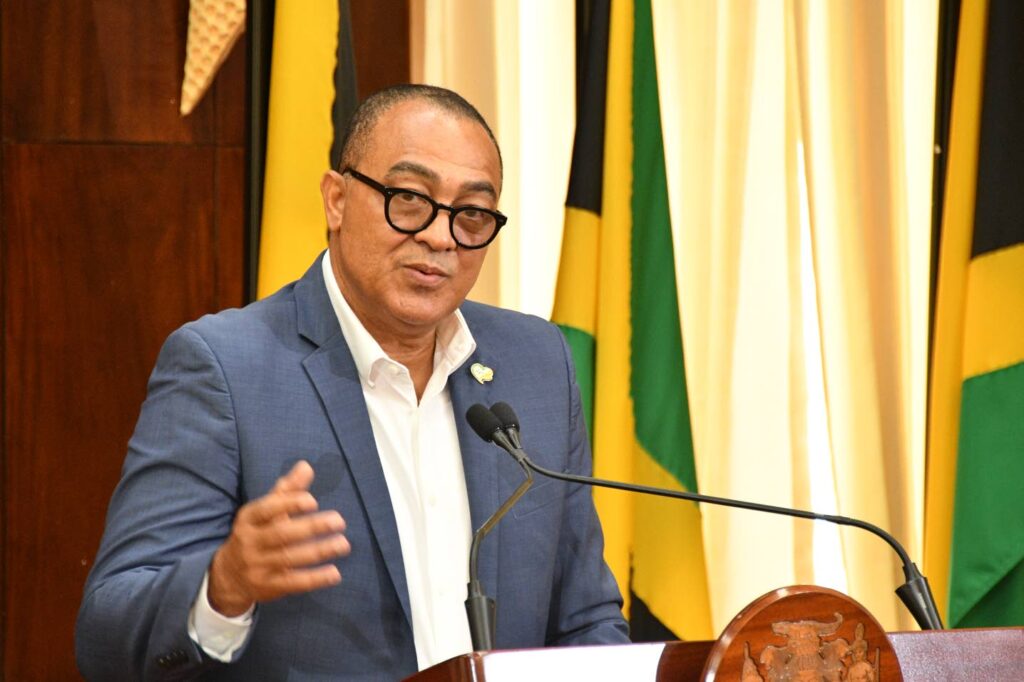
    Jamaica’s government has announced a groundbreaking fiscal policy targeting sugar-sweetened beverages as part of a comprehensive strategy to address the nation’s growing public health crisis. Health and Wellness Minister Dr. Chris Tufton has defended the new special consumption tax (SCT) of $0.02 per milliliter on non-alcoholic sweetened beverages, asserting it represents a balanced approach to modifying consumption patterns without creating undue economic hardship.

    The controversial measure, revealed by Finance Minister Fayval Williams and scheduled for implementation in the first quarter of the 2026/2027 fiscal year, emerges against a backdrop of alarming health statistics. Recent ministry data positions Jamaica as the tenth highest global consumer of sugary drinks, with 70-86% of children and 77% of adults consuming one or more sweetened beverages daily. This consumption pattern has directly contributed to escalating rates of obesity, diabetes, and cardiovascular diseases nationwide.

    Minister Tufton emphasized that the policy aims to foster a culture of moderation rather than simply generate revenue. “This initiative seeks to improve health outcomes and reduce disease burden while maintaining constructive dialogue with industry stakeholders,” he stated following meetings with ministry unit heads. The minister recalled earlier efforts dating back to 2018/2019 when the government first restricted certain sugary drinks in schools and public health institutions.

    The health ministry has presented compelling evidence supporting the measure, citing successful implementations in Mexico, the United Kingdom, South Africa, Barbados, and Chile where similar taxes have significantly reduced consumption. Dr. Simone Spence, Director of the Health Promotion and Protection Branch, highlighted that sugar-sweetened beverages represent a major source of free sugars whose affordability and heavy consumption contribute substantially to Jamaica’s non-communicable disease burden.

    Despite government assurances, industry representatives including Wisynco Group Chairman William Mahfood have expressed concerns that the tax might disproportionately affect lower-income households while failing to meaningfully improve public health outcomes. In response, the health ministry has suggested implementing a tiered tax system that would incentivize manufacturers to reduce sugar content through product reformulation.

    The policy development follows World Health Organization recommendations regarding fiscal policies for diet improvement and reflects Jamaica’s urgent need to address health disparities, particularly among socio-economically vulnerable groups. Current data indicates that while 92.5% of Jamaicans with diabetes receive treatment, only 27.5% achieve adequate disease control, underscoring the critical need for preventive population-level interventions.

  • PAHO and CARPHA formalize partnership to enhance health initiatives across the Caribbean

    PAHO and CARPHA formalize partnership to enhance health initiatives across the Caribbean

    In a significant move to address pressing public health challenges, the Pan American Health Organization (PAHO) and the Caribbean Public Health Agency (CARPHA) have formally solidified their partnership through a new Framework Agreement spanning 2026 to 2030. This strategic accord establishes a comprehensive operational blueprint designed to unify health initiatives across Caribbean nations, enhancing systemic coordination and multilateral partnerships during a period of escalating health demands and constrained resources.

    The five-year pact enables both organizations to operate cohesively under the PAHO–CARICOM Joint Subregional Cooperation Strategy, prioritizing the strengthening of health infrastructures, advancing emergency readiness, and elevating health outcomes for Caribbean communities. The agreement reinforces a longstanding collaboration founded upon shared responsibility, mutual accountability, and a unified vision for regional health advancement.

    During a virtual signing ceremony, PAHO Director Dr. Jarbas Barbosa emphasized the operational value of the framework: “This Agreement enables PAHO and CARPHA to jointly develop regional strategies and action plans, implement health programmes aligned with strategic objectives, and deliver technical cooperation tailored to country-specific needs. It further establishes a transparent structure for subsidiary agreements, ensuring accountability and results-driven implementation.”

    Echoing this sentiment, CARPHA Executive Director Dr. Lisa Indar stressed the critical importance of strategic resource utilization: “Caribbean nations rightly expect limited technical cooperation resources to be deployed with maximum efficiency and strategic impact. This can only be realized through intensified collaboration, streamlined execution, reduced duplication, and minimized operational burden on Member States.”

    Historically, PAHO has provided extensive support to CARPHA across multiple domains, including the development of a Caribbean regulatory system, expansion of laboratory capabilities, climate resilience and environmental health initiatives, management of non-communicable diseases, and risk communication and emergency preparedness—particularly in foodborne disease response.

    Both organizations have expressed strong commitment to translating this renewed framework into measurable improvements in public health outcomes throughout the Caribbean region in the years ahead.

  • PAHO/WHO and Antigua and Barbuda sign Multi Country Cooperation Strategy 2026–2031

    PAHO/WHO and Antigua and Barbuda sign Multi Country Cooperation Strategy 2026–2031

    In a significant move for public health collaboration, Antigua and Barbuda has formally ratified the Pan American Health Organization/World Health Organization (PAHO/WHO) Multi-Country Cooperation Strategy (MCCS) for the period 2026–2031. The signing ceremony, held in St. John’s, marks a national commitment to a unified regional agenda designed to enhance health outcomes and tackle development challenges across Barbados and the Eastern Caribbean nations.

    The Hon. Sir Molwyn Joseph, Minister of Health, Wellness, Environment and Civil Service Affairs, executed the official endorsement on behalf of the Antiguan and Barbudan government. The event was witnessed by Dr. Amalia Del Riego, the PAHO/WHO Representative for Barbados and the Eastern Caribbean Countries, signaling a strengthened partnership between the nation and the international health body.

    This national ratification follows a broader regional launch event convened in Washington, D.C., in September 2025, where health ministers from across the Eastern Caribbean collectively pledged their support for the strategic framework.

    Forged through comprehensive dialogue between governmental authorities and PAHO technical experts, the MCCS 2026–2031 establishes a cooperative blueprint to confront pressing health issues. Its core objectives are structured around five pivotal pillars: reinforcing health governance and leadership; combating the spread of communicable diseases; mitigating the prevalence of non-communicable diseases (NCDs) and mental health conditions; driving the transformation of national health systems; and developing health infrastructures resilient to climate change impacts.

    The ceremony was attended by key national figures, including Sen. Michael Joseph, the Junior Minister of Health, Dr. Kamaria De Castro, Chief Medical Officer, Dr. Teri-Ann Joseph, Deputy Chief Medical Officer, and personnel from PAHO’s decentralized office in Antigua and Barbuda.

    Dr. Del Riego praised the nation’s proactive leadership, stating, “This formal endorsement by Antigua and Barbuda solidifies our mutual dedication to constructing more robust, equitable, and climate-resilient health systems. PAWHO anticipates ongoing cooperation to achieve tangible, sustainable improvements for the well-being of all citizens.”

  • Who is unfamiliar with cancer?

    Who is unfamiliar with cancer?

    In the pediatric oncology ward of Cuba’s National Institute of Oncology and Radiobiology (INOR), life unfolds with heartbreaking fragility and extraordinary resilience. Here, children play amidst their battles with cancer, while medical professionals wage a daily war against both disease and scarcity. Dr. Mariuska Forteza Sáez, head of INOR’s Pediatric Oncology Department, leads a team that consistently achieves survival rates comparable to developed nations despite severe medication shortages and equipment limitations.

    The Cuban healthcare system faces unprecedented challenges in cancer treatment due to the longstanding US economic blockade. With one cancer death occurring every 20 minutes and 50,000 new cases diagnosed annually, the nation’s medical professionals must constantly adapt treatment protocols when first-line chemotherapy drugs are unavailable. Doctors frequently modify regimens, sometimes using less effective or more toxic alternatives when essential medications remain inaccessible.

    Dr. Luis Martínez Rodríguez, INOR’s director, emphasizes that while 40% of cancers could be prevented through lifestyle changes, the current economic situation has significantly reduced clinical research capabilities. From over 30 clinical trials, the institution now maintains only the most critical studies due to reagent shortages.

    Remarkably, Cuba has developed significant biotechnological capabilities despite these constraints. Dr. Elías Gracia Medina notes that 40% of the country’s cancer drugs are manufactured domestically, building on pioneering work that began with Cuba’s first monoclonal antibody development in the 1980s. The Center for Molecular Immunology (CIM) has become a leader in therapeutic vaccines and antibodies.

    The human impact extends beyond medication shortages. Patients struggle with transportation to hospitals, nutritional challenges, and even power outages affecting medical equipment. Dr. Carlos Alberto Martínez Blanco condemns the sanctions as ‘inhumane and genocidal measures’ that attack fundamental rights to life and healthcare.

    Through telemedicine collaborations with leading centers in Canada, Spain, Mexico, Russia, Japan, and China, Cuban oncology maintains its international connections. The nation’s healthcare professionals continue their sovereign commitment to treat patients, demonstrating that human determination can overcome even the most severe material limitations in the fight against cancer.

  • Fire at B’s Recycling

    Fire at B’s Recycling

    A significant industrial fire at B’s Recycling Plant in Cane Garden, St. Thomas has triggered an urgent public health advisory from the Ministry of Health and Wellness. Emergency services are currently mobilizing to contain the blaze as dense smoke spreads across multiple residential areas.

    The Ministry has identified several communities potentially affected by the hazardous smoke plume, including Arthur Seat, Redman’s Village, Welches, Melrose, Lower Edgehill, Jackson, Clermont, and Warrens. Health officials have issued specific guidance for vulnerable populations, urging individuals with asthma or pre-existing respiratory conditions to avoid these areas until air quality improves substantially.

    Medical authorities have emphasized that anyone experiencing adverse health effects from smoke exposure should seek immediate medical attention at healthcare facilities. Emergency response teams are implementing comprehensive measures to control the fire and minimize potential health impacts on surrounding communities. The situation remains under active monitoring as responders work to extinguish the recycling plant fire and mitigate its public health consequences.

  • Health department will be hands on to ensure food safety at Carnival events, says health official

    Health department will be hands on to ensure food safety at Carnival events, says health official

    Dominican health authorities are implementing comprehensive food safety measures ahead of the Mas Domnik 2026 Carnival celebrations to safeguard public health during the festivities. The Environmental Health Department has announced intensified surveillance operations targeting food vendors and mass gatherings throughout the Carnival season.

    Senior Environmental Health Officer Calma Louis confirmed that environmental health officers will maintain visible presence at major Carnival events including Sunrise and VIVA celebrations. The initiative focuses on collaborative prevention rather than enforcement disruption, working directly with vendors and event organizers to ensure safe food preparation and service standards.

    “Our objective centers on public health protection through cooperative engagement with all stakeholders,” Louis stated during a recent press briefing. She emphasized the department’s request for full cooperation from both vendors and patrons as officers execute their monitoring responsibilities.

    Health officials issued specific guidelines for food handlers, mandating maintained sanitary vending areas and appropriate attire including hair coverings and aprons. The department explicitly prohibited sleeveless garments and shorts in food preparation zones, emphasizing professional presentation standards.

    The advisory highlighted hand hygiene as critical prevention against foodborne illnesses, particularly after restroom use, monetary transactions, or raw food handling. Symptomatic food handlers experiencing vomiting or diarrhea must immediately avoid food preparation and service areas—a requirement extending to home-based preparers supplying local vending locations.

    Louis reinforced that public health protection begins with responsible practices from every food handler. Simultaneously, patrons received encouragement to exercise personal responsibility by purchasing exclusively from certified vendors and visually assessing stall cleanliness before transactions.