分类: health

  • Streekziekenhuis Atjoni stabiliseert zwaargewonde politiebrigadier

    Streekziekenhuis Atjoni stabiliseert zwaargewonde politiebrigadier

    In a dramatic demonstration of emergency medical capabilities, Streekziekenhuis Atjoni successfully stabilized a critically injured police brigadier in the early morning hours, highlighting its growing importance in Suriname’s regional healthcare network.

    The officer was urgently transported to the hospital’s Emergency Department in Pokigron—approximately 188 kilometers from Paramaribo—following a stabbing incident. Acting under established protocols, the attending physician immediately engaged the Medical Coordinator to address the acute situation. The medical team executed precise interventions to stabilize the victim and treat multiple stab wounds.

    Following stabilization, the patient was transferred via ambulance to the Emergency Department of Academisch Ziekenhuis Paramaribo for specialized continuing care.

    Since inaugurating its Emergency Department on May 22, 2020, Streekziekenhuis Atjoni has significantly expanded its acute care capabilities. The facility reached full operational status in July 2023 and now provides comprehensive services including laboratory diagnostics, pharmaceutical services, emergency general practitioner care, routine medical practice, and inpatient bed facilities. The hospital has further enhanced its specialist capabilities with the recent addition of an internist specializing in oncology and a gynecologist to its medical staff.

    Hospital administration confirms that ongoing development continues toward complete operationalization of the regional medical center, representing a substantial advancement in healthcare accessibility for the region.

  • Dominica signs $2.1 million contract for smart retrofit of Wesley health centre

    Dominica signs $2.1 million contract for smart retrofit of Wesley health centre

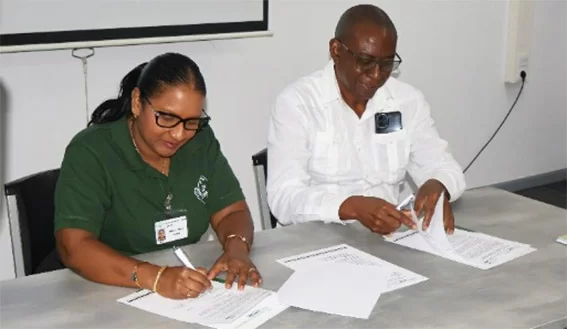
    The Dominican government has solidified its dedication to nationwide healthcare modernization through a substantial $2.1 million investment in smart infrastructure upgrades for the Emelda James Health and Wellness Centre in Wesley. The contract signing ceremony, attended by high-ranking officials, highlighted the administration’s strategic focus on creating weather-resistant medical facilities capable of operating under any circumstances.

    Minister of Culture, Youth, Sports and Community Development, representing Prime Minister Roosevelt Skerrit, emphasized the profound significance of the project during the formal proceedings. “This ceremony transcends mere contractual formalities—it embodies our reinforced pledge to equitable healthcare access,” she stated. “We guarantee safe, reliable, and contemporary medical services for all communities, irrespective of environmental conditions or unforeseen challenges.”

    Funded through collaborative partnerships with the World Bank, the Pan American Health Organization’s Smart Hospitals Initiative, and the Organisation of Eastern Caribbean States Regional Health Project, the $2,114,095.78 endeavor represents a key component of Dominica’s comprehensive health infrastructure overhaul. Project managers have targeted June of this year for completion.

    Fidel Grant, Parliamentary Representative for Wesley Constituency, characterized the initiative as a transformative investment in community healthcare resilience. “This project extends beyond conventional construction—it constitutes a strategic allocation of resources toward sustainable healthcare excellence for Wesley and the broader North East region,” Grant explained. The retrofitted facility will incorporate advanced backup systems, optimized operational layouts, enhanced accessibility features, and eco-conscious improvements designed to maintain uninterrupted service during extreme weather events.

    Health Minister Cassanni Laville underscored the broader implications of the smart retrofit program, noting its alignment with national health system modernization objectives. “This initiative manifests our determination to equip medical facilities across Dominica with contemporary, resilient infrastructure capable of evolving alongside growing public health demands,” Laville affirmed. Despite existing healthcare infrastructure in the Wesley district, the investment specifically targets elevated care standards and improved environments for both medical professionals and patients.

    The Emelda James Health and Wellness Centre modernization epitomizes Dominica’s dual commitment to healthcare excellence and climate adaptation, positioning the nation as a regional leader in sustainable medical infrastructure development.

  • Human milk bank pilot possible in Jamaica

    Human milk bank pilot possible in Jamaica

    Jamaica’s Ministry of Health and Wellness has initiated a formal feasibility study for establishing the country’s first human milk bank facility. Health Minister Dr. Christopher Tufton confirmed to the Jamaica Observer that the Family Health Unit will examine the potential implementation of a donor milk program, possibly beginning with a pilot project in select communities.

    The proposal gained momentum following advocacy from youth attorney Benyamin Cooke, who emphasized the critical health benefits of breast milk for infants whose mothers cannot breastfeed due to medical conditions including cancer treatments, premature births, or lactation difficulties. Cooke highlighted that while formula provides basic nutrition, it lacks the disease-fighting antibodies present in human milk.

    Minister Tufton acknowledged the proposal requires careful consideration of Jamaica’s cultural landscape, noting that successful implementation would demand significant public education to address deeply ingrained biases. “There are predisposed biases against breast milk banks in our context,” Tufton stated, “but the concept of community involvement in child-rearing aligns with our historical traditions.”

    Medical professionals expressed divided perspectives on the initiative. Jheanell Condappa, an 18-year veteran midwife supervisor, strongly endorsed the concept, noting that many mothers struggle with insufficient milk production and currently resort to formula. She referenced historical “wet nursing” practices as evidence of cultural precedent for milk sharing.

    However, an anonymous midwife with equivalent experience questioned the necessity, estimating less than 2% of mothers encounter insurmountable breastfeeding challenges. She expressed skepticism about public acceptance, stating: “Some people are not going to opt for their baby to be taking someone else’s milk.”

    The ministry’s Family Health Unit outlined rigorous safety protocols that would govern the potential program, including donor screening for HIV and Hepatitis, pasteurization to eliminate pathogens, and strict hygienic storage conditions. International data indicates that with proper education, most mothers become willing to donate or use donor milk.

    Mothers interviewed revealed mixed perspectives. While some welcomed the alternative to formula, others expressed discomfort with the concept of using another woman’s milk. The global context shows over 700 milk banks operating across 60 countries, though no universal standards currently govern their operations.

    The World Health Organization and UNICEF have endorsed donor milk as the preferred alternative when mother’s own milk is unavailable, particularly for vulnerable premature infants. The Jamaican health ministry’s exploration signals a growing recognition of both the medical benefits and cultural considerations surrounding human milk banking.

  • $131m investment transforms Belfield Community Health Centre in St Mary

    $131m investment transforms Belfield Community Health Centre in St Mary

    A landmark $131-million investment has radically transformed healthcare delivery in rural Jamaica with the comprehensive modernization of the Belfield Community Health Centre in St. Mary. This strategic upgrade represents a collaborative funding effort between multiple national institutions, fundamentally reshaping primary care infrastructure for the region’s residents.

    The financial architecture for this initiative featured a multi-source funding model. The North East Regional Health Authority (NEHRA) contributed $10.1 million for project design, while the Culture, Health, Arts, Sports and Education (CHASE) Fund provided $60 million, matched by an equivalent investment from the National Health Fund (NHF). This tripartite financing underscores institutional commitment to rural healthcare development.

    During the February 19 inauguration ceremony, CHASE Fund Board Chairman Omar Frith emphasized the center’s transformative potential: “This facility will deliver essential primary care services to approximately 20,000 community members and neighboring residents. Beyond basic medical attention, it will provide specialized maternity and post-natal care, pediatric services, and community-based medical education programs.” Frith characterized the project as demonstrating unwavering confidence in community-based healthcare models.

    Collie Smith, Institutional Benefits Manager at NHF, highlighted the human impact beyond infrastructural improvements: “This inauguration transcends ceremonial ribbon-cutting—it represents daily enhanced accessibility for rural communities who depend on these services. Our collaboration with CHASE and NEHRA exemplifies effective partnership in healthcare investment, particularly reflecting NHF’s dedication to St. Mary parish development.”

    The reconstructed 4,305-square-foot facility incorporates numerous enhancements including modernized waiting areas, consultation rooms, and treatment facilities. Clinical improvements feature upgraded pharmacy services, dedicated dressing rooms, and specialized departments for health records management. Staff amenities have been substantially upgraded with designated offices for physicians, nurses, and midwifery personnel.

    Support infrastructure includes advanced operational features: sluice and laundry facilities, secure storage areas, dedicated ICT service zones, and protected parking with perimeter security. The center also boasts upgraded essential systems including sewage disposal, waste management, backup power generation, and reinforced water storage with pumping mechanisms.

  • Science over ceremony

    Science over ceremony

    A profound cultural shift is underway in Jamaica, where a growing number of citizens are choosing to donate their bodies to medical science, a practice once met with widespread resistance. The University of the West Indies (UWI) Mona campus reports a dramatic increase in formal applications, with 62 individuals now registered for its body donor program.

    This surge marks a significant departure from historical trends. Prior to 2019, the university received a mere two to four applications annually. Since implementing a dedicated advocacy program, that number has jumped to an average of 10 per year. Consequently, UWI now receives between 12 and 15 suitable bodies annually, a stark contrast to the single donation recorded in 2014.

    Professor of Anatomy Jean-Pierre Louboutin identifies soaring funeral costs as a primary catalyst for this change. A basic funeral package in Jamaica now ranges from J$300,000 to J$600,000, with premium services exceeding J$1 million. This represents a steep climb from 2013, when the most affordable option cost approximately J$128,000. Burial vaults and cremation services have seen similarly dramatic price escalations, making body donation—which is free—a financially viable alternative for many families.

    However, economics is only part of the narrative. Death doula Patrice Dwyer emphasizes that for many, the decision is rooted in a deeper contemplation of legacy and a desire to contribute to medical advancement. Medical professionals are among the most eager donors, often viewing it as a final act of service to the field they dedicated their lives to.

    The impact of these donations is immense. They are fundamental for surgical training, anatomical research, and the development of new medical treatments. Professor Louboutin highlights a unique benefit for Jamaica: the ability to conduct population-specific research on Jamaican anatomy, which can lead to tailored surgical techniques and a better understanding of health threats prevalent locally.

    Furthermore, Jamaica’s program has become a regional resource. Other UWI campuses in Trinidad and Barbados, which lack donor programs due to cultural preferences like cremation, often send surgical residents to Jamaica for essential anatomical training.

    The process is governed by the Anatomy Act of Jamaica, requiring formal permission from relatives. Not all bodies are eligible; those involved in criminal investigations, autopsies, suicides, or with certain infectious diseases cannot be accepted. Donated bodies are embalmed and can be used for education and research for up to 20 years.

    As Dwyer notes, with Jamaica being an island nation, space for traditional burials is finite. This reality, coupled with growing environmental awareness, is pushing Jamaicans to consider sustainable alternatives like body donation, aquamation, and recomposition, framing a final gift to science as a powerful and lasting legacy.

  • CARPHA underscores the importance of insecticide resistance testing amid Chikungunya resurgence

    CARPHA underscores the importance of insecticide resistance testing amid Chikungunya resurgence

    The Caribbean Public Health Agency (CARPHA) has intensified its regional campaign against arboviral diseases, emphasizing the critical role of Integrated Vector Management (IVM) in combating Chikungunya, Dengue, and Zika viruses. These diseases, transmitted primarily through Aedes aegypti mosquito bites, require sophisticated prevention strategies that extend beyond conventional source reduction methods.

    A significant advancement in CARPHA’s arsenal is the recent commissioning of a state-of-the-art Mobile Insectary Facility, enabling comprehensive Insecticide Resistance Testing (IRT) for Member States. This cutting-edge capability, incorporating molecular testing methodologies approved by the World Health Organization, has already yielded tangible results with two member states completing testing protocols, while four additional nations are currently undergoing evaluation.

    Dr. Lisa Indar, Executive Director of CARPHA, highlighted the agency’s multifaceted approach: “Our training initiatives throughout 2025 have focused on building regional competency in IVM, IRT methodologies, geographic information systems, and early warning systems. We’re simultaneously developing a Regional Integrated Early Warning System to enhance surveillance capabilities through innovative technological solutions.”

    The implementation of IRT represents a paradigm shift in vector control, enabling public health officials to make data-driven decisions regarding insecticide selection and deployment. Without such precise testing, chemical intervention programs operate with uncertain efficacy, potentially wasting resources and compromising disease control efforts.

    CARPHA’s strategy emphasizes cross-sector collaboration through the Caribbean Vector-borne Diseases Network (CariVecNet), which facilitates real-time information sharing between member states. The agency advocates for community-centered protection measures including protective clothing, EPA-approved repellents containing DEET or Picaridin, mosquito nets, and home screening systems.

    This comprehensive approach combines technological innovation with practical public health measures, creating a robust defense system against potential arboviral outbreaks across the Caribbean region.

  • CARPHA joins regional policy gathering on digital health data

    CARPHA joins regional policy gathering on digital health data

    PORT OF SPAIN – A landmark regional conference has set the stage for a transformative digital health revolution across the Caribbean. The Inter-American Development Bank (IDB) Group, hosting the ONE Caribbean Connect Regional Policy Dialogue in Trinidad and Tobago, successfully convened a coalition of leading health and technology institutions to forge a unified path toward secure, cross-border health data exchange.

    The high-level dialogue brought together a powerful consortium of regional bodies, including the Caribbean Public Health Agency (CARPHA), the Pan American Health Organization (PAHO), and the Caribbean Community (CARICOM). Delegations from seven Caribbean nations—The Bahamas, Barbados, Belize, Guyana, Jamaica, Suriname, and host Trinidad and Tobago—participated in intensive strategic planning sessions.

    Central to the discussions was the urgent need to establish interoperable digital health systems that can seamlessly share critical health information across national borders. This initiative builds upon the foundational work of the Pan-American Highway for Digital Health (PH4H), a collaborative framework established by the IDB and PAHO.

    CARPHA’s delegation, led by Executive Director Dr. Lisa Indar, played a pivotal role in the proceedings. The agency demonstrated its advanced digital surveillance capabilities, particularly its real-time, integrated early warning and response surveillance systems (REIWSS), which are being implemented through a Pandemic Fund Grant with the IDB as a key partner.

    The conference yielded a major strategic outcome: the formal adoption of the ONE Caribbean Digital Health Roadmap Commitment. This comprehensive document outlines concrete priority actions across three critical domains: establishing robust governance structures, developing supportive legal and policy frameworks, and ensuring technical interoperability. The roadmap sets an ambitious target for the initiation of cross-national health data sharing by 2028.

    Technical expertise flowed from multiple directions throughout the event. IDB representatives facilitated crucial strategy sessions, while PAHO contributed specialized knowledge in digital health and surveillance systems. CARICOM provided valuable insights on regional digital transformation through its leadership in information and communication technology for development.

    The collective effort represents a significant leap forward in regional health cooperation, positioning the Caribbean to better respond to public health challenges through enhanced data-driven decision-making and coordinated outbreak response capabilities.

  • Research analyst for Dominica-China Friendship Hospital presents numbers for 2025

    Research analyst for Dominica-China Friendship Hospital presents numbers for 2025

    The Dominica Hospitals Authority has demonstrated its commitment to operational transparency through a comprehensive performance review of the Dominica-China Friendship Hospital (DCFH) for 2025. Presented by Health Management Information System Manager Mrs. Sherry Shillingford-Sorhaindo, the data-rich assessment reveals both significant achievements and emerging challenges within the nation’s healthcare landscape.

    During 2025, the facility documented substantial patient engagement across multiple departments. The hospital processed 25,259 patient visits through booked clinics, with 16,494 appointments successfully completed. The Accident and Emergency Department handled 22,863 cases, while surgical teams performed 1,644 procedures. The Imaging Department processed an impressive 21,720 patients, illustrating the institution’s critical role in national healthcare delivery.

    Inpatient services accommodated 5,915 patients across nine specialized units, with surgical and medical wards accounting for 38% and 35% of admissions respectively. Maternal services represented 15% of admissions, while psychiatric and intensive care units each accounted for 3% of cases. The average patient stay duration stood at 7.2 days, though psychiatric cases extended this average to approximately two weeks due to specialized treatment requirements.

    Bed occupancy rates revealed systemic pressures, with medical wards consistently operating at optimal capacity above 85% and surgical wards experiencing high utilization. Notably, the male psychiatric unit exceeded capacity monthly throughout the year, highlighting resource constraints in mental health services.

    The hospital celebrated exceptional maternal health outcomes with zero maternal deaths and only one neonatal death among 513 live births, positioning Dominica well below the United Nations Sustainable Development Goal threshold of 12 deaths per thousand live births. However, the report identified a concerning 6% decline in births from 2024, continuing a decade-long trend potentially influenced by environmental and pandemic factors.

    Mortality analysis indicated approximately 6% of admitted patients died, with the highest rate (30%) occurring in the Intensive Care Unit. Medical wards recorded an 11% mortality rate, while neonatal services maintained a minimal 0.6% rate.

    Surgical services achieved 79% theater utilization, with 75% of procedures serving public cases and 20% addressing emergencies. The outpatient department struggled with a 35% no-show rate, particularly affecting ophthalmology, orthopedics, and oncology services, causing significant appointment delays for other patients.

    The report confirmed that Marigot Hospital continues providing 24/7 urgent care services alongside specialty clinics, with medical staff from DCFH supporting operations. Dental services initiated in late 2024 continued throughout 2025, though specific metrics for dental care were not yet available for presentation.

  • Coronie en het mysterie van de ‘afwezige epidemie’

    Coronie en het mysterie van de ‘afwezige epidemie’

    The coastal district of Coronie in Suriname has demonstrated remarkable resistance to chikungunya virus outbreaks during two major epidemic waves—first in 2014 and again in the current 2025-2026 surge—while surrounding districts experienced widespread infections. This epidemiological anomaly has drawn attention to the district’s unique cultural practices and environmental management.

    Coronie, known as Suriname’s coconut district, maintains distinctive traditions that appear to offer unintended protection against mosquito-borne diseases. Residents regularly apply coconut oil to their skin, maintain exceptionally clean properties with minimal clutter, and practice smoke fumigation using coconut husks—a traditional method that effectively repels mosquitoes before they can breed or bite.

    The Aedes aegypti mosquito, responsible for chikungunya transmission, thrives in stagnant water and human proximity. Coronie’s environmental discipline results in significantly fewer breeding grounds, directly reducing mosquito populations and transmission opportunities. Additionally, the district’s relatively isolated location and limited mobility compared to urban centers like Paramaribo decrease viral introduction risks.

    This dual protection—environmental management and cultural practices—has created a natural barrier against chikungunya that persists while other regions rely on emergency interventions like fogging and crisis meetings. The Coronie case study suggests that effective public health interventions may begin at home rather than in conference rooms, emphasizing property maintenance, community habits, and traditional knowledge that predate modern epidemic responses.

    The continued absence of confirmed cases across two separate outbreaks indicates this success is neither accidental nor temporary. It represents a sustainable model of community-level protection that combines environmental awareness with culturally embedded preventive practices, offering valuable insights for global public health strategies regarding mosquito-borne disease prevention.

  • Sir Molwyn Joseph Announces Major Healthcare Upgrades for St. Philip’s North Polyclinic

    Sir Molwyn Joseph Announces Major Healthcare Upgrades for St. Philip’s North Polyclinic

    In a significant move to enhance community-based medical care, Health Minister Sir Molwyn Joseph has unveiled comprehensive modernization plans for the Granville Polyclinic during a recent constituency town hall meeting. The transformation initiative will introduce multiple advanced healthcare services previously unavailable in the St. Philip’s North region.

    The development blueprint includes establishing an on-site pharmacy, enabling residents to obtain prescribed medications without traveling to distant facilities. This community pharmacy model mirrors the successful implementation already operational in Villa, demonstrating the government’s strategy of replicating effective healthcare solutions across regions.

    Minister Joseph further detailed plans for integrating laboratory services within the polyclinic, allowing residents to undergo essential diagnostic tests locally. This medical laboratory will perform routine examinations, eliminating the necessity for patients to visit St. John’s for basic medical testing.

    The upgrade package notably features the introduction of electrocardiogram (EKG) capabilities, providing critical cardiac diagnostic services for patients experiencing chest discomfort or heart-related symptoms. This advancement will enable immediate cardiac assessment within the community, potentially improving outcomes for time-sensitive cardiac conditions.

    Additionally, the facility will receive ultrasound equipment, particularly beneficial for prenatal care and maternal health services. Joseph emphasized that ultrasound imaging represents one of the most frequently requested medical services, and its local availability will substantially elevate the standard of obstetric care in the region.

    These enhancements constitute part of a broader national strategy to strengthen primary healthcare infrastructure throughout Antigua and Barbuda. Minister Joseph articulated the philosophy behind these investments, stating that accessible community-based services form the foundation of improved public health outcomes. The government intends to continue expanding medical services at the Granville Polyclinic in the coming months, characterizing the initiative as a ‘major transformation’ for healthcare delivery in St. Philip’s North.