分类: health

  • Men’s health in focus at holistic engagement day

    Men’s health in focus at holistic engagement day

    Barbados confronted its escalating non-communicable disease rates and mental health challenges with a pioneering Men’s Health and Engagement Day this Saturday. Hosted at The University of the West Indies, Cave Hill campus, the event created a vital sanctuary for men to focus on holistic well-being and rebuild community ties. The initiative, a collaboration between the Roots Wellness Movement and the Ministry of Health and Wellness, offered a multifaceted approach to health that extended beyond traditional medical screenings.

    Attendees received comprehensive health assessments, including checks for blood pressure, diabetes, cholesterol levels, and colon health. However, the program notably integrated these clinical services with social and physical activities to foster a supportive environment. Men participated in various sports such as cricket, football, basketball, and road tennis, while jiu-jitsu demonstrations provided both entertainment and education about physical discipline.

    The event further addressed practical barriers to wellness through complimentary personal care services including haircuts and therapeutic massages. Nutritionists conducted live cooking demonstrations aimed at dismantling the pervasive misconception that healthy eating is inherently costly or complicated, providing attendees with affordable nutritional strategies.

    Shereen Haines, co-founder of Roots Wellness Movement, highlighted the profound mental health implications of modern digital culture. She identified unrealistic social media expectations as a primary driver of anxiety, depression, and chronic stress among males of all ages. “People encounter curated digital narratives and mistakenly gauge their self-worth against these artificial standards, leading to feelings of inadequacy,” Haines explained. She noted these psychological pressures are manifesting in increasingly younger demographics, with children as young as five exhibiting body image issues.

    Haines described how this psychological distress, when combined with cultural tendencies toward instant gratification and widespread consumption of processed foods, has created a ‘perfect storm’ fueling Barbados’s current health pandemic. The event served as a proactive countermeasure to these trends by emphasizing authentic community connection, practical health education, and accessible wellness resources.

  • Toename aangeboren syfilis baart zorgen; Soroptimisten starten bewustwordingscampagne

    Toename aangeboren syfilis baart zorgen; Soroptimisten starten bewustwordingscampagne

    Health authorities in Suriname are sounding the alarm over a dramatic resurgence of congenital syphilis, a potentially fatal sexually transmitted infection that poses grave risks to pregnant women and their unborn children. According to Soroptimist International Club Paramaribo (SICP), this dangerous form of the disease has shown a significant increase over the past five years, following three decades of sporadic occurrence.

    The bacterial infection, which primarily affects mucosal membranes of the genitals and anus, presents particular dangers during pregnancy. Many infected individuals remain asymptomatic, unknowingly transmitting the disease through unsafe sexual practices or even kissing when oral lesions are present.

    In response to this public health crisis, SICP—an organization of professional women dedicated to improving conditions for women and children—has launched a comprehensive awareness initiative. The campaign features an educational video produced in both Dutch and Sranantongo, developed in collaboration with ‘s Lands Hospitaal, the Dermatological Service, and Foundation Lobi. An informative poster has also been created to support the effort.

    The medical consequences of untreated syphilis during pregnancy are severe: potential stillbirth, neonatal death, premature delivery, or serious congenital abnormalities. Pregnant women may develop characteristic palm and sole lesions that progress to painless ulcers.

    Health experts emphasize that these tragic outcomes are preventable with timely penicillin treatment following diagnosis during prenatal care. They recommend that sexually active individuals, particularly youth, undergo regular STI screening, and that both partners be tested when planning pregnancy or upon conception.

    The campaign has gained traction through media partnerships, with various channels agreeing to broadcast the educational videos. Social media sharing is considered particularly effective for reaching younger audiences. Posters have been distributed to medical facilities including the Medical Mission and Regional Health Service Suriname, with videos scheduled for display during clinical consultations.

    SICP advocates for school-based education programs as crucial for optimal youth engagement, emphasizing the need for expansion beyond Paramaribo into district areas. Interactive sessions and multilingual video productions for interior regions are planned to maximize population coverage.

    Through this coordinated effort, SICP and its partner organizations aim to dramatically reduce syphilis infections, especially among young people, embracing the preventive medicine principle that ‘prevention is better than cure’—or as expressed in local terms: ‘Safe seks – Freyri nanga koni.’

  • Health : Drinking water distribution, Ministry requirements

    Health : Drinking water distribution, Ministry requirements

    The Haitian Ministry of Commerce and Industry (MCI), under Minister James Monazard, has issued a decisive regulatory mandate to all drinking water treatment and distribution companies. This action follows a circular published on March 2, 2026, which formally outlines the stringent requirements for operators in this critical sector. A firm deadline of March 22, 2026, has been established for full compliance, marking a significant governmental effort to confront a longstanding public health crisis linked to contaminated water.

    The regulatory framework is anchored in Articles 5 and 6 of a March 11, 2020 decree governing food production and trade. The comprehensive compliance checklist mandates that every entity, from large-scale producers to local water kiosks, must be formally registered with the MCI and possess a valid Professional Identification Card (CIP). Operations must adhere to strict Good Hygiene Practices (GHP), requiring fully enclosed transportation vehicles to shield packaged water, particularly sachets, from environmental contaminants and sunlight.

    Material safety is paramount, with regulations specifying that all containers, especially sachets, must be constructed from inert, non-toxic, and officially approved food-contact materials that offer optimal heat resistance. Mandatory labeling must conform to consumer protection statutes detailed in Article 10 of the 2020 decree.

    From a microbiological standpoint, the policy adopts a zero-tolerance stance against pathogenic germs, including Escherichia coli and various coliforms. Companies are obligated to conduct monthly bacteriological analyses through accredited laboratories and present these valid certificates during official health inspections.

    Further provisions require suppliers to guarantee the rigorous disinfection of their tanker trucks and their customers’ storage tanks prior to any delivery. A robust traceability system must be implemented, complete with defined expiration dates for products sold at kiosks, which must also retain valid transaction receipts. Kiosks are additionally required to install advanced purification devices, such as UV lamps or ozonators, to neutralize any bacterial presence. Finally, companies must employ qualified technical staff specialized in water treatment and quality control to monitor operations and implement corrective measures.

    The MCI has announced it will deploy inspectors to verify the quality of distributed water and the sanitary conditions of all concerned operations. The Directorate has called for full cooperation from all stakeholders to ensure public health protection and adherence to the newly enforced national standards.

  • Belize’s Long‑Time Medical Partnership with Cuba at Crossroads

    Belize’s Long‑Time Medical Partnership with Cuba at Crossroads

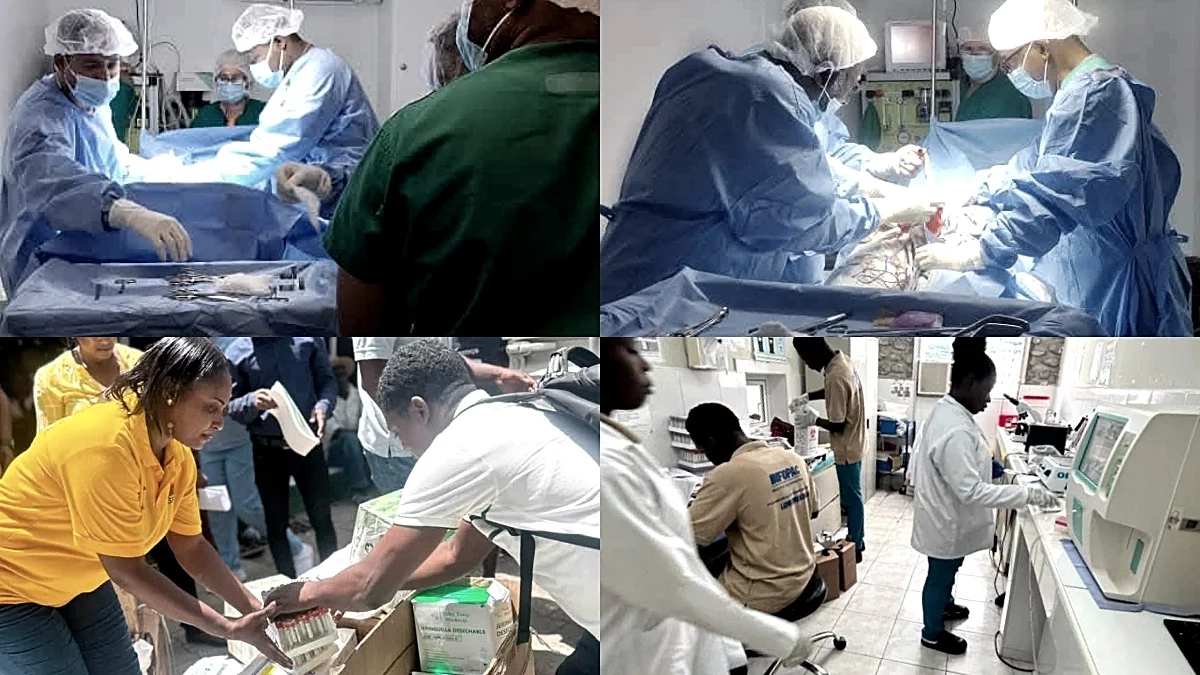
    The future of Belize’s vital healthcare collaboration with Cuba hangs in the balance as confidential diplomatic discussions unfold amid growing regional pressures. For decades, the Cuban Medical Brigade has served as a cornerstone of Belize’s healthcare system, but this longstanding partnership now faces unprecedented uncertainty.

    Prime Minister John Briceño has confirmed that “delicate negotiations” are currently underway regarding the medical program, though he declined to specify which parties are involved or what potential changes might be implemented. This unusual silence from government officials coincides with broader regional trends, as multiple Latin American nations reduce their reliance on Cuban medical personnel—a strategic shift widely interpreted as responding to intensified diplomatic pressure from the United States.

    The timing of these negotiations proves particularly consequential given Cuba’s escalating humanitarian crisis, which adds complex dimensions to the ongoing discussions. The Caribbean nation’s domestic challenges potentially impact its capacity to maintain international medical missions while addressing internal healthcare needs.

    Belizean citizens and healthcare professionals await clarity regarding whether these confidential talks will fundamentally alter the country’s medical infrastructure. The potential restructuring of this decades-old partnership could necessitate significant adjustments to Belize’s national healthcare strategy, potentially creating staffing gaps in remote and underserved communities that have historically depended on Cuban medical expertise.

  • Saint Lucia nurses armed with safety skills amid crime surge

    Saint Lucia nurses armed with safety skills amid crime surge

    In response to escalating homicides nationwide, Saint Lucia’s Ministry of Health has redefined workplace safety as a critical public health imperative. The government has initiated a groundbreaking collaboration with law enforcement to conduct specialized situational awareness training for medical personnel working in high-risk environments.

    The inaugural session commenced on March 10, 2026, at the Gros Islet Human Resource Centre, where nurses and frontline healthcare staff participated in intensive security preparedness workshops. Police Inspector Shervon Mattieu, the program’s lead facilitator, emphasized that the curriculum was specifically designed to address the unique vulnerabilities faced by healthcare professionals, particularly those stationed at polyclinics throughout the island.

    The comprehensive training program focuses on developing critical observation skills, threat recognition techniques, and de-escalation strategies. Participants learn to identify suspicious behavioral patterns, environmental cues, and potential security threats within clinical settings. Inspector Mattieu highlighted the increasing challenges medical facilities face as they often become primary contact points for victims of violent crimes.

    “We currently operate in an era of heightened criminal activity where shooting and stabbing victims frequently seek treatment at medical facilities,” Mattieu explained. “This unfortunately means healthcare workers may encounter agitated or hostile individuals who require careful management.”

    The workshops combine theoretical knowledge with practical exercises covering aggression management, behavioral analysis, and environmental awareness. This dual approach ensures staff can effectively recognize and respond to potential security threats before they escalate into violent incidents.

    Healthcare professionals have welcomed the initiative as both timely and essential. Sirmina Charles, a participating nurse, noted that safety concerns have become increasingly pressing due to worsening crime rates. “As healthcare providers, we frequently treat individuals involved in criminal activities, which can create uncertain and uncomfortable situations, particularly for female staff,” Charles explained.

    Participants reported gaining valuable insights and increased confidence in handling potentially dangerous encounters, noting the training provided crucial tools for maintaining safety while delivering essential medical services.

  • PANCAP director highlights innovation as key to ending AIDS ahead of Tenth NAP managers and partners conference

    PANCAP director highlights innovation as key to ending AIDS ahead of Tenth NAP managers and partners conference

    Health officials and stakeholders across the Caribbean are preparing for a pivotal gathering in Trinidad and Tobago to establish a coordinated battle plan against HIV/AIDS. The Tenth Meeting of National AIDS Programme Managers and Key Partners, scheduled for March 17-20, will focus on finalizing implementation strategies for the Caribbean Regional Strategic Framework (CRSF) 2026-2030.

    Dr. Wendy Telgt-Emanuelson, Director of the Pan Caribbean Partnership against HIV and AIDS (PANCAP) Coordinating Unit, emphasized the critical need for innovative approaches to achieve the region’s ambitious target of eliminating AIDS by 2030. “We must strengthen a coordinated, equitable, and sustainable Caribbean HIV response,” Dr. Telgt-Emanuelson stated, highlighting that success will require “alignment with the CRSF 2026–2030, driven by regional priorities, community-centred approaches, and evidence-informed policy.”

    The summit will assemble an unprecedented coalition of stakeholders, including National AIDS Programme Managers, Chief Medical Officers, Permanent Secretaries from Health Ministries, and representatives from Finance, Planning, and Community Development sectors. This multidisciplinary participation aims to ensure policy coherence and cross-sector collaboration in what organizers describe as a comprehensive approach to public health.

    Civil society organizations and community networks, particularly those representing key populations and People Living with HIV, are expected to contribute ground-level perspectives and advocacy insights. Their involvement is considered essential for maintaining a response strategy that reflects the realities of those most affected by the epidemic.

    International and regional partners including the Caribbean Public Health Agency (CARPHA), The Global Fund to Fight AIDS, Tuberculosis and Malaria, PAHO/WHO, and UNAIDS will join the discussions. The CARICOM Secretariat and PANCAP’s Coordinating Unit will facilitate the proceedings, working to transform strategic frameworks into actionable plans that address both national and regional priorities in the final push toward AIDS elimination.

  • New PAHO report highlights progress in front-of-package food labelling in Caribbean

    New PAHO report highlights progress in front-of-package food labelling in Caribbean

    A landmark report from the Pan American Health Organization (PAHO) reveals significant advancements in the implementation of front-of-package warning labels (FOPL) on food products across the Americas, positioning the region as a global pioneer in public health policy. The comprehensive study, titled ‘Best Practices for Front-of-Package Food Labeling in the Region of the Americas,’ evaluates existing regulatory frameworks in eight nations against scientific evidence and PAHO’s established recommendations for optimal effectiveness.

    According to the findings, the Americas maintain a leadership role in adopting nutritional warning systems that empower consumers to make healthier purchasing decisions by easily identifying products with excessive sugars, sodium, or saturated fats. This regulatory progress not only addresses the critical public health challenge of diet-related noncommunicable diseases but also serves as an inspiration for policy innovation worldwide.

    Fabio da Silva Gomes, PAHO’s regional advisor on nutrition and physical activity, emphasized that while these labels are crucial tools for consumer awareness, further expansion and refinement are necessary. ‘Much remains to be done for more countries to adopt these policies and for existing systems to be aligned with evidence-based best practices,’ Gomes noted.

    The report specifically highlights Argentina, Colombia, and Mexico as having implemented regulations most closely aligned with PAHO’s criteria, with Argentina’s legislation meeting 10 out of 11 evaluated parameters. These recent adopters have benefited from incorporating lessons learned from earlier implementations in countries like Chile, which first introduced warning labels in 2016.

    PAHO identifies octagonal warning labels as the most effective design for capturing consumer attention and facilitating product identification. The organization’s nutrient profile model serves as a key tool for determining which products should carry warnings, ensuring comprehensive coverage of ultra-processed foods.

    Beyond consumer choice, these labeling systems enable complementary public health measures including advertising restrictions, school food regulations, and fiscal policies targeting unhealthy products. With over 30 countries currently considering or discussing new FOPL regulations, the report indicates growing global momentum toward creating healthier food environments through evidence-based policy making.

  • Patients get ease-up

    Patients get ease-up

    The Trinidad and Tobago healthcare system is implementing strategic interim solutions to address service pressures resulting from significant delays in the completion of the $1.3 billion Central Block at Port of Spain General Hospital. Health Minister Dr. Lackram Bodoe confirmed the project’s timeline has been extended to June 2026, pushing back the previously scheduled March 31 completion date.

    The state-owned Urban Development Corporation of Trinidad and Tobago (UDeCOTT) reported the construction is approximately 96% complete but cited multiple complications including delayed payments, workmanship issues requiring corrective measures, and global supply chain disruptions as primary causes for the extended timeline.

    Technical challenges have substantially impacted progress. Critical systems including pipeline pressurization testing revealed leaks in fire sprinkler and water systems during August-December 2025, necessitating repairs and drywall replacement. HVAC commissioning faced delays due to postponed insulation shipments from China and additional flushing requirements for chilled water lines. A significant setback occurred in January 2026 when water infiltration damaged electrical bus ducts, causing a three-day power outage that requires component replacement expected in April.

    Medical gas system certification encountered obstacles when two approved American verifiers declined travel due to U.S. Embassy restrictions during Trinidad’s State of Emergency. A new certified inspector arrived in March 2026 to complete this essential verification process.

    Despite these construction delays, the North-West Regional Health Authority (NWRHA) has activated multiple contingency measures to maintain healthcare standards. These include establishing an internal medicine ward at St James Medical Complex to divert eligible patients from Port of Spain General Hospital, implementing filter clinics at both facilities to separate lower-acuity cases, and enhancing emergency department staffing.

    Additional improvements feature upgraded digital infrastructure through Laboratory Information and Picture Archiving systems, creation of an additional observation area in the Emergency Department, equipment procurement, and facility refurbishments. These coordinated efforts aim to optimize patient flow, strengthen emergency care capacity, and ensure continued timely medical services during the construction period.

    The Ministry of Health and regional authorities emphasize their commitment to effectively managing available resources to safeguard population health while awaiting the eventual addition of 540 beds and expanded inpatient capacity upon the Central Block’s completion.

  • Health Reform Must Start Beyond Hospitals, Minister Says

    Health Reform Must Start Beyond Hospitals, Minister Says

    In a landmark address to the South Leeward Conference of Seventh-day Adventists, Health Minister Sir Molwyn Joseph unveiled a comprehensive national health reform strategy targeting Antigua and Barbuda’s growing epidemic of chronic diseases. Speaking under the theme “The Cause for Health Reform,” Minister Joseph framed health improvement as a collective national responsibility extending far beyond healthcare institutions alone.

    The Minister praised the Seventh-day Adventist Church for its historical leadership in promoting holistic wellness principles, including nutrition, physical activity, and temperance. He contextualized current health challenges within what experts term an ‘epidemiological transition’ – the global shift from infectious diseases to chronic conditions as primary causes of mortality.

    Alarming statistics reveal that approximately 82% of deaths in Antigua and Barbuda now stem from non-communicable diseases including cardiovascular conditions, cancers, diabetes, and chronic respiratory illnesses. Minister Joseph identified widespread risk factors such as unhealthy diets, physical inactivity, tobacco use, and harmful alcohol consumption as driving this public health crisis.

    The government’s multipronged response includes enhanced epidemiological surveillance systems to detect emerging health threats more effectively. A major cervical cancer elimination initiative will expand HPV testing, improve screening access, and strengthen early detection services.

    Significant mental health reforms are underway, including the development of a new Mental Health Bill designed to strengthen protections for individuals with mental illness and ensure rights-based care delivery. The recently established Behavioural Health Centre expands access to assessment, treatment, and community-based support services.

    Minister Joseph reaffirmed the government’s commitment to implementing National Health Insurance, characterizing it as both a financing mechanism and a statement of principle that healthcare constitutes a fundamental right rather than a privilege.

    The address concluded with a call for collaborative action, emphasizing that sustainable health improvement requires partnership between government, communities, civil society, and faith-based organizations. The Minister commended the Seventh-day Adventist Church’s health initiative and pledged ongoing cooperation to build a healthier nation for present and future generations.

  • Youth Mental Health Fund to Launch March 18 in Antigua and Barbuda

    Youth Mental Health Fund to Launch March 18 in Antigua and Barbuda

    Antigua and Barbuda is poised to launch a groundbreaking mental health initiative as the Antigua and Barbuda Holistic Coalition (ABHC) announces the official commencement of its Youth Mental Health Fund on March 18, 2026. This pioneering program will provide substantial financial assistance to young citizens seeking mental health services across the twin-island nation.

    The comprehensive scheme will offer eligible youth vouchers worth up to EC$240 annually to access critical mental health services including individual counseling, family therapy, group sessions, psychiatric care, and psychological evaluations. The program specifically targets residents aged 6 to 25 who are either currently receiving or seeking mental health support.

    Strategic implementation will feature three distinct application cycles throughout 2026, with families permitted multiple applications. However, the program establishes clear parameters: recipients cannot exceed the EC$240 annual cap, and all vouchers must be utilized within 90 days of approval. Funding allocation will be contingent upon both eligibility and resource availability.

    In preparation for the launch, ABHC has curated a network of verified mental health professionals who have formally partnered with the initiative. These practitioners represent diverse specializations and service age groups:

    – Dr. Chenelle Joseph, MD (Internal Medicine and Psychiatry) serving ages 10-25
    – Feona Charles-Richards, MSc (Counselling Psychology) serving ages 6-25
    – Kendra Telesford, M.A.C.P. (Canadian Certified Counsellor) serving ages 6-25
    – Nicola Reefe-Babb, MSc (Counselling Psychology) serving ages 13-25
    – Regina Apparicio, MSc (Counselling Psychology) serving ages 18-25
    – Terese Millet-Joseph, MSc (Counseling Psychology) serving ages 20-25

    The coalition has verified all professional credentials through supporting documentation while maintaining that selection of providers remains the responsibility of applicants and families. ABHC explicitly notes it does not guarantee services nor monitor the clinical care provided by listed professionals.

    Prospective applicants can access the application portal through the coalition’s official event page as this transformative initiative seeks to dramatically improve mental health accessibility for youth and families throughout Antigua and Barbuda.