分类: entertainment

  • Leisure : Did you know ? #27

    Leisure : Did you know ? #27

    The Haiti-based general knowledge platform HaitiLibre Quiz has rolled out its latest monthly content update, adding 30 brand new knowledge games to its free, no-registration gaming library as of May 4, 2026. This expansion brings the platform’s total collection of interactive quizzes up to 119, covering a wide range of topics from local Haitian current affairs and culture to global historical, military and social themes.

    In the 27th installment of the platform’s popular “Did You Know?” educational series, the quiz team shares a key insight into modern Western military strategy: that mastering asymmetric conflict has become a central focus of contemporary military doctrine today. To contextualize this concept, the feature contrasts asymmetric conflict with traditional conventional warfare. In a standard conventional conflict, two standing national armies from sovereign states face off on a clearly defined battlefield, typically using comparable equipment and tactical approaches. Asymmetric warfare, by contrast, is defined by a massive power gap between opposing sides: a militarily advanced, well-resourced state often finds itself pitted against non-state groups such as insurgencies, terrorist organizations or guerrilla movements.

    For the weaker, outgunned side in these conflicts, direct head-on confrontation is rarely a viable strategy. Instead, these groups rely on unconventional tactics to offset their material disadvantages: hit-and-run harassment, improvised explosive devices, and psychological warfare designed to erode the stronger side’s morale and public support. One of the biggest challenges for powerful modern militaries in these conflicts is achieving a clear, traditional military victory: opposing non-state fighters often embed themselves within civilian populations, making it difficult to separate combatants from non-combatants and eliminate the adversary’s ability to operate. Recent high-profile conflicts in Afghanistan and the Sahel region serve as stark illustrations of this dynamic, showing that even overwhelming technological superiority does not guarantee a swift or decisive win for the stronger military power.

    Built to serve knowledge seekers of all ages and skill levels, the HaitiLibre Quiz platform offers all its exclusive content completely free of charge, with no account registration required for access. Every quiz is available in both French and English, and is structured with three distinct difficulty tiers: easy, intermediate and hard, to accommodate casual learners and expert knowledge enthusiasts alike. Users can browse general knowledge topics across a wide range of categories, or head to the dedicated expert menu for more advanced, challenging question sets. With new games added every month to keep content fresh and engaging, the platform invites visitors to explore its full collection, share the resource with friends and family, and submit feedback to help improve future updates.


  • ‘Labour of love’ — calypsonians still last in line for Vincymas earnings

    ‘Labour of love’ — calypsonians still last in line for Vincymas earnings

    In a press briefing held Tuesday, May 19, 2026 in Kingstown for the upcoming 2026 iteration of Vincymas, the annual carnival celebration of St. Vincent and the Grenadines, Earl “Cabba” Bennett, president of the St. Vincent and the Grenadines Calypsonians Association, called attention to a longstanding inequity plaguing the island nation’s iconic cultural art form: calypsonians are the only major core stakeholders of Vincymas who receive no guaranteed payment for their work, even as every other participating group walks away with assured compensation.

    Bennett framed calypso performance as a practice sustained almost entirely by artists’ passion rather than financial reward, noting that most creators spend untold hours honing their work with no promise of payment. “For the most part, calypso is a labour of love,” Bennett told attendees. “You are like Billy Button … you work for nothing.”

    He drew a sharp contrast between the uncertain financial standing of calypsonians and other contributors to the festival, including musical bands, venue operators and assorted third-party service providers, all of whom receive guaranteed payment regardless of competition outcomes. Unlike these groups, calypsonians who fail to advance to the competition’s semi-final round walk away with no compensation at all. Only a tiny subset of performers see meaningful financial gains: artists who go on to win the coveted Calypso Monarch title or other top awards can earn a windfall, but this success is reserved for just a few, Bennett explained.

    Even amid this systemic lack of compensation, Bennett emphasized that calypsonians remain deeply committed to nurturing the art form and sustaining St. Vincent and the Grenadines’ national cultural identity. “Because if you don’t have a cultural foundation as an island, as a nation, you could be lost,” he said, highlighting the irreplaceable role that calypso plays in the social fabric of the small island nation.

    Bennett used the press conference to issue a public call for greater recognition of calypsonians’ contributions, urging local residents and business leaders to acknowledge the art form’s central place in the country’s heritage. “So understand the importance of calypsonians in the fabric of St. Vincent and the Grenadines, not underestimating their importance,” he said.

    The payment inequity is part of a broader need for increased sponsorship and community support across all sectors of Vincymas, Bennett added. He called on local entities to step up with donations when carnival groups including calypso organizations reach out for backing, noting that the festival delivers massive economic benefits to the entire country. “It brings in millions, millions of dollars in our economy… and we must recognise that the carnival plays an important role, an integral role, in buoying the economy,” he said.

  • From the Chiquibul to the World’s Greatest Guitars

    From the Chiquibul to the World’s Greatest Guitars

    Tucked deep within the remote, lush expanse of Belize’s Chiquibul Jungle, a single fallen ancient mahogany has grown from a forgotten logging mishap into one of the most extraordinary legends in modern music history. Decades after the tree was first left to rot in a ravine, acoustic guitars crafted from its rare, uniquely grained timber have left even the world’s most iconic musicians stunned, and become the most sought-after instruments on the global market.

    The story of what insiders now simply call “the Tree” dates all the way back to 1965, when the territory was still known as British Honduras. Per reporting from Smithsonian Magazine, a team of working loggers stumbled across a massive, centuries-old mahogany that measured a full 12 feet across at its base and stretched 100 feet upward to meet the jungle’s closed canopy. When the crew began felling the gnarled giant, it tilted unexpectedly backward and crashed into a deep ravine, leaving it completely out of reach of the heavy tractors the team had brought to extract it. With no way to move the massive log, the loggers abandoned the site, and over generations, the tree’s existence faded into local jungle myth.

    Decades later, that legend found its way to Robert Novak, a wood importer who had traveled to Belize to source rare rosewood for instrument building. When a local contact tipped him off about the forgotten fallen mahogany, Novak decided to trek deep into the jungle to see the tree for himself. “It was just very beautiful,” Novak shared in an interview with Acoustic Guitar Magazine. Extracting the massive log from the ravine turned into a months-long, grueling undertaking: the tree had to be cut into manageable sections one by one, dragged out of the steep ravine by hand, hauled 90 miles over rough terrain to the Belizean coast, then floated upriver to a working sawmill. When the operation was complete, the team had harvested nearly 12,000 board feet of flawless premium lumber, from a tree that forestry experts estimate was 500 years old when it fell.

    What luthiers discovered when they began working with the ancient mahogany was unlike any timber the global instrument-building community had ever encountered. As Smithsonian Magazine documents, the wood features three incredibly rare, distinct grain patterns: a blistered outline that resembles a topographical map of a mountain range, a deeply curled grain pattern known among woodworkers as “sausage,” and the rarest of all, a repeating tortoiseshell mottling that has never been found in any other mahogany. For Belize, mahogany has long been a core part of national identity – the tree is even featured on the country’s official flag, flanked by two loggers holding their traditional trade tools.

    For the world-class musicians who have had the chance to play guitars crafted from “the Tree,” the experience evokes a near-spiritual reverence few other instruments can match. When Slash, the legendary lead guitarist of Guns N’ Roses, first picked up his custom acoustic built from the tree’s timber, he told Acoustic Guitar Magazine he expected nothing out of the ordinary. “I thought, ‘OK, let’s get this over with,’” he recalled of the first encounter. Instead, he was immediately stopped in his tracks. “When I picked it up, I was completely humbled. It was a shock-and-awe moment. It changed everything I’d ever thought about acoustic guitars.”

    Other leading names in acoustic music, including fingerstyle virtuoso Andy McKee and Dire Straits co-founder David Knopfler, also count custom “Tree” guitars among their most prized instruments. One renowned British guitarist even sold off his entire collection of 14 existing instruments just to afford a single guitar made from the rare wood, and has said he would make the same choice again. Prices for new guitars built from “the Tree” start at roughly $30,000, with rare pre-owned models selling for far more at auction.

    Today, the remaining supply of the rare mahogany is dwindling rapidly. Jay Howlett, a wood researcher who has spent more than a decade tracking down forgotten stashes of the timber hidden in garages, barns, and independent luthier workshops across the world, estimates that only 400 to 600 board feet of usable lumber remains. That is enough wood to build at most 600 more guitars – and once that supply is exhausted, it will be gone forever, with no other tree matching its unique characteristics ever discovered.

    Novak, the man who pulled the legend out of the Belizean jungle decades ago, says he still finds it surprising that the ancient tree has become such a revered name in music circles, with instrument builders and collectors simply referring to it as “the Tree.” “It’s very beautiful,” he said, “and it should get attention.”

    What started as an abandoned log lost in Chiquibul’s dense green canopy has grown into a gift that keeps giving to the global music community. The world has gotten centuries of beautiful music from the tree that Chiquibul gave up, and Belize – a small Central American nation often overlooked in global music history – has given the world a treasure far greater than it has ever been credited for.

  • Organisers expect strong Carnival turnout despite no state backing

    Organisers expect strong Carnival turnout despite no state backing

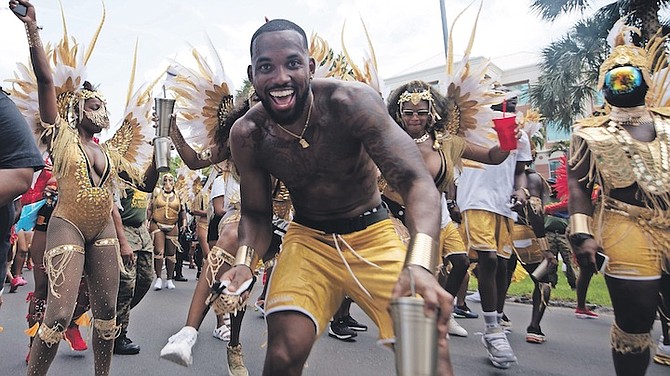
    As the Bahamas gears up for its 2025 Carnival celebration, scheduled for June 3 to 7 on New Providence, event organizers are stepping into an ambitious new chapter: this year’s gathering will proceed without any government financial backing, a deliberate choice meant to prove the cultural festival can thrive as an independent, self-sustaining Bahamian treasure.

    The shift to full self-funding comes after years of declining government support. In 2017, the government cut the annual carnival subsidy in half, and eliminated all public funding entirely the following year. That financial withdrawal left many performing and presentation bands scrambling to maintain their momentum, even as industry stakeholders have long highlighted the event’s outsized positive impact on the national economy through tourism and local spending.

    Despite the funding gap, event leaders are projecting strong growth in attendance for 2025. Paul Farquharson III, co-founder of the prominent carnival group Mas Khaos, explained that the decision to forgo additional government sponsorship this year was rooted in a desire to claim full ownership of the festival. “We wanted to make something that’s ours rather than rely on government support,” he said. “This is a distinctly Bahamian product that shapes local culture, even as it draws international visitors who boost the local economy when they travel here. We aren’t opposed to future collaboration with the government, but we wanted to build a proven, unified cultural product that everyone can see delivers clear benefits to The Bahamas.”

    Farquharson projects that Mas Khaos’ participant numbers will jump this year, climbing from 80 to 100 attendees in previous editions to between 120 and 150 for 2025. International participation is also set to rise, growing from roughly 35 overseas participants in 2024 to between 47 and 50 this year. Even with this optimistic outlook, Farquharson acknowledged that reconnecting with wider local community engagement remains one of the festival’s core ongoing challenges. Many stakeholders have pinned post-pandemic declines in local attendance on the global health crisis, even as they praise the consistent strong support the event has received from international carnival fans.

    That global backing is reflected in local sales data, according to A’Shad Bowe, operations representative for Bahamas Masqueraders. Bowe told reporters that roughly 80 percent of the group’s online ticket and package sales come from customers outside the Bahamas. “We’re excited for our product, and we have a lot of international people coming in from places all across the world: the UK, Texas, Florida, New York, Canada, even the Virgin Islands,” he said. “It’s incredibly exciting to see our cultural reach extend so far beyond our shoreline to bring people here to play carnival with us.”

    Bowe pushed back on popular narratives that the festival lacks local support, pointing to consistent turnout for year-round carnival-related events. “Bahamas Masqueraders runs events from February straight through June, and all of them draw solid crowds,” he explained. “Our biggest event alone brought out 1,500 attendees. It’s not that carnival isn’t supported locally. The issue is economic: many local residents simply can’t afford the cost of costume packages. That doesn’t mean there’s a lack of interest or community backing.”

    Not all organizer groups are ruling out public support for the future, however. Dillion Bethel, a representative for JunkaBrations, shared that his organization hopes to secure government financial assistance for the 2026 carnival. Bethel also voiced disappointment over the discontinuation of Music Masters, a popular annual competition for Bahamian soca artists that had long been a core part of the broader carnival experience. When asked if the competition’s cancellation affected the local carnival community, Bethel confirmed: “Yes it will, and people are still asking about it – both locals and international visitors.”

    With carnival week just around the corner, organizers across groups are unified in their optimism that the 2025 event will cement the festival’s reputation as a must-attend cultural celebration that delivers widespread economic and social benefits to The Bahamas.

  • Shenseea scores 5th entry on Billboard’s Rhythmic Airplay chart with Daddy Yankee collaboration

    Shenseea scores 5th entry on Billboard’s Rhythmic Airplay chart with Daddy Yankee collaboration

    Jamaican dancehall and pop artist Shenseea has added another career milestone to her growing list of industry achievements, securing her fifth appearance on Billboard’s competitive Rhythmic Airplay chart. The new chart entry comes from her high-profile collaborative single *Echo (FIFA World Cup 2026)*, recorded alongside Puerto Rican reggaeton legend Daddy Yankee.

    For the tracking week ending May 30, the track made its first appearance on the chart at the 36th position, marking a solid opening for the globally focused release. Dropped on all major streaming and digital platforms on April 28, *Echo (FIFA World Cup 2026)* holds the distinction of being the third single pulled from the official compilation album for the 2026 FIFA World Cup, a collection that showcases a diverse lineup of international music artists from across multiple genres.

    Shenseea’s history on the Rhythmic Airplay chart stretches back to 2022, when she landed her first spot on the ranking with the track *R U That*, a collaboration with Atlanta rap star 21 Savage. That debut track climbed as high as the 28th position during its chart run. Two years after her first entry, the artist notched her third chart appearance with *Work Me Out*, which featured Afrobeats icon Wizkid and peaked at the 33rd spot.

    In 2024, Shenseea earned her biggest success on the chart to date, scoring a number one hit with the remix of *Shake it to the Max (Fly)*, a collaborative project with fellow Caribbean artists Moliy, Skillibeng, and producer Silent Addy. Just a few months after that chart-topping win, she picked up her fourth Rhythmic Airplay entry with *Sugar Sweet*, a star-studded collaboration with pop icon Mariah Carey and R&B artist Kehlani that reached a peak position of 31st.

  • E-Dee returns to hardcore dancehall with ‘Come Link Me’ and ‘Heartbreak’

    E-Dee returns to hardcore dancehall with ‘Come Link Me’ and ‘Heartbreak’

    It has been 20 years since Jamaican dancehall artist E-Dee first landed a spot on the Billboard music charts alongside collaborator Ms Triniti. Now, the Los Angeles-based performer is circling back to his signature hardcore dancehall sound with two brand new singles: *Come Link Me* and *Heartbreak*, both produced independently under his own label, Clarendon Records.

    E-Dee is no stranger to chart success, and he is openly targeting a repeat of the milestone he achieved in 2004 with his collaborative cut *Bounce Along* alongside Ms Triniti. That track eventually climbed to number 16 on the Billboard Hot R&B/Hip-Hop Singles Sales Chart, marking his first major breakthrough in the mainstream music industry. In an interview with Observer Online, E-Dee reflected on the impact of that early hit, noting: “Yes, definitely, that was my first major breakthrough. That song became a big hit in Jamaica and solidified my place in the hardcore dancehall space.”

    The two new tracks extend a consistent slate of output from Clarendon Records, which E-Dee founded just last year. The label was named as a tribute to the artist’s home parish in Jamaica, and follows up three previous releases: *She’s Loyal* and *Pretty Girl*, which dropped earlier this year, and *We A Rebuild*, which launched last December.

    As a longstanding core figure in Los Angeles’ expanding dancehall community, E-Dee has built a multi-faceted career beyond just recording music. He has released multiple full-length albums and dozens of singles over his career, and has already racked up several acting credits, including a starring role in the autobiographical feature film *Out The Gate*.

    Now, E-Dee is set to take on his biggest acting role yet: he will lead the cast of the upcoming drama *SoundBwoy*, which is currently in post-production. The film is directed by American DJ JFX, a prominent influencer in Los Angeles’ hip-hop and dancehall scenes, and centers on the iconic sound clash phenomenon that lies at the heart of Jamaican sound system culture. E-Dee will share the screen with fellow well-known dancehall artist Mr Vegas, who is also attached to the project.

  • Jahriffe encourages strength, spiritual awareness with inspiring new single ‘Shine Bright’

    Jahriffe encourages strength, spiritual awareness with inspiring new single ‘Shine Bright’

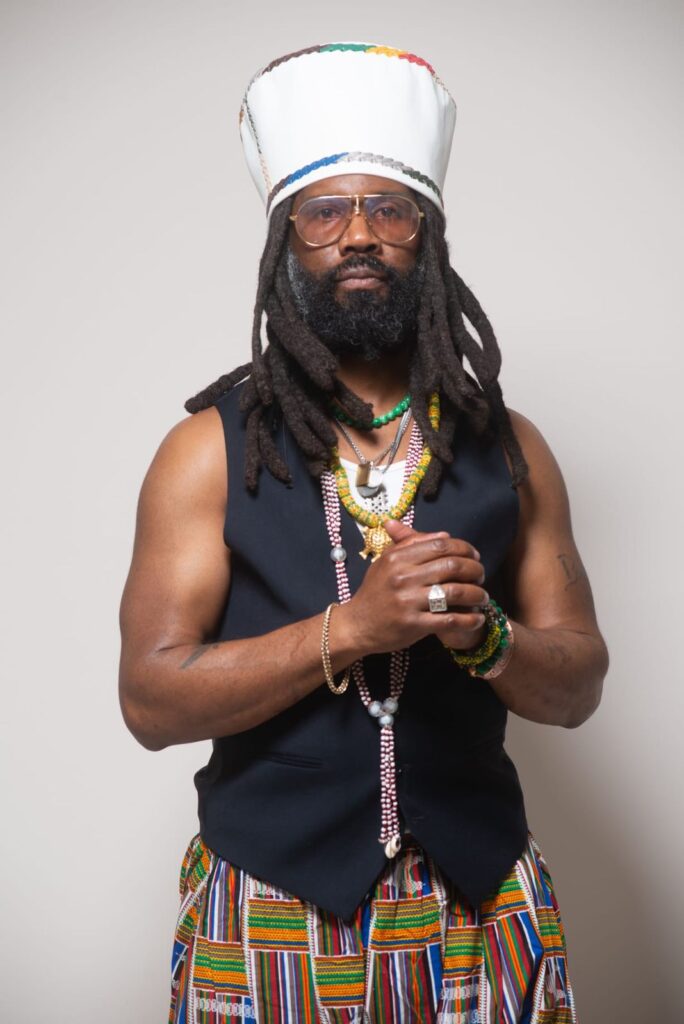
    KINGSTON, Jamaica — For roots reggae artist Jahriffe, music is far more than a form of entertainment: it is a vessel for spiritual awakening, cultural connection, and genuine encouragement for people navigating life’s hurdles. The U.S.-based singer has channeled this philosophy into his powerful new single, “Shine Bright,” an uplifting roots reggae track centered on themes of resilience, unshakable self-belief, and intentional purpose.

    The track grew from a deeply personal place. Jahriffe crafted the anthem after turning to music for his own motivation during challenging periods, with the explicit goal of extending that same push of encouragement to audiences worldwide. “Shine Bright was inspired by my need for motivation, with the intention of motivating others through music,” Jahriffe shared in an interview. “My desire is for listeners to develop an unstoppable mindset.”

    Built on warm, organic live instrumentation and thoughtful, conscious lyricism, the track weaves together real-life personal experience and a celebration of the inner strength required to chase dreams with clarity and confidence. What began as a simple guitar concept written by Jahriffe evolved into the finished anthem under the production guidance of David Goldfin, who is also known professionally as Jah D. Staying true to the track’s intimate origins, Jahriffe recorded his vocals in his own home studio, infusing the final cut with an unfiltered, authentic energy that resonates with listeners.

    Jahriffe’s artistic perspective is shaped by the reggae icons who paved the way for conscious roots music. He counts legends including Bob Marley, Peter Tosh, Bunny Wailer, Dennis Brown, and Burning Spear as core influences on both his sound and his musical philosophy, and cites the late Vaughn Benjamin as a particularly profound spiritual influence. Performing alongside his long-time band, the JAH-N-I Roots Movement, Jahriffe insists that live instrumentation is non-negotiable for preserving reggae’s core authenticity. “This is the true foundation of all riddims, and if we do not continue this tradition of live instrumentation, it would be like cutting out the veins that carry blood through the body,” he explained.

    For the singer, reggae is first and foremost a spiritual and cultural force, designed to lift up audiences and awaken them to their own potential. “The purpose of writing, producing, and performing reggae music, particularly roots reggae music, is to transmit positive awareness of one’s greatness through the music,” he said. “We use reggae to sustain our natural connection to the divine essence of life.”

    Since its official release, “Shine Bright” has already struck a chord with listeners around the world, with many adopting the track as a go-to daily source of motivation and hope. Looking ahead, Jahriffe and his team are deep in work on a new full-length album, which will expand on the musical and spiritual journey he launched on his 2021 project *Reflection*. While the album’s title has not yet been finalized, Jahriffe has confirmed that the record will deliver more of the authentic, positivity-centered, spiritually rooted conscious reggae his audience has come to expect.

    For the artist, the work goes beyond creating charting tracks: he aims to build a lasting legacy defined by meaningful music and aligned with consistent positive action. “My goal is to create a legacy of good music matched with positive actions in daily life, so that what I write and sing about can be manifested and remembered by others,” he said.

  • Matthew Perry assistant imprisoned over fatal drug injections

    Matthew Perry assistant imprisoned over fatal drug injections

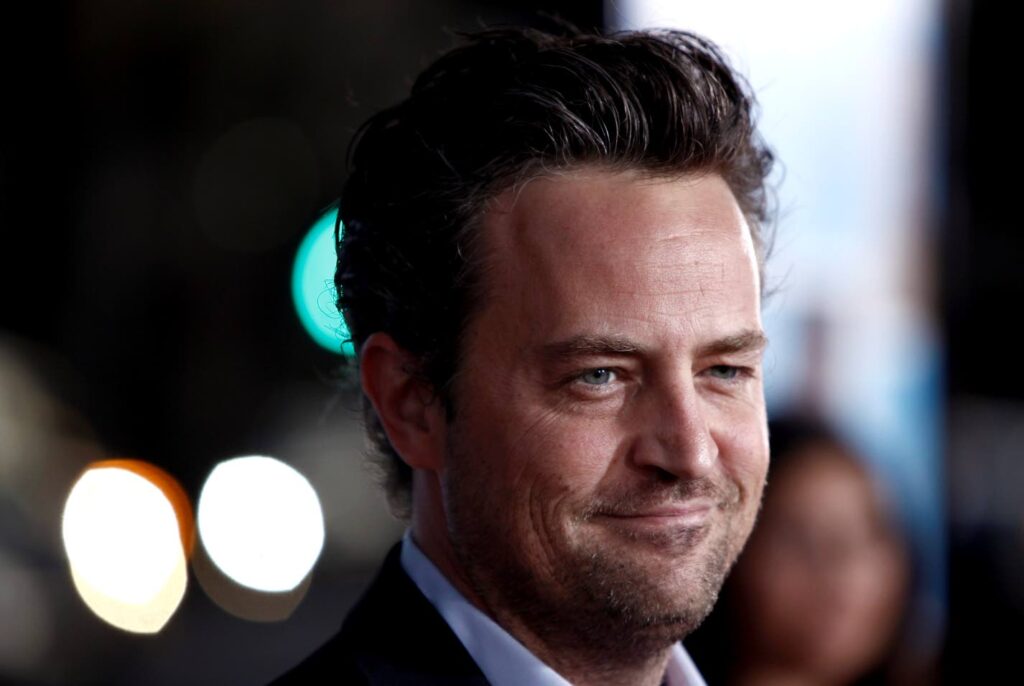
    LOS ANGELES – More than a year after the unexpected death of beloved *Friends* star Matthew Perry, another perpetrator has been held legally accountable for his fatal overdose. On Wednesday, 61-year-old Kenneth Iwamasa, the personal assistant who repeatedly administered ketamine injections to Perry in the days leading up to his death, received a federal prison sentence of three years and five months. He is the fifth person sentenced to date in connection with the actor’s passing, after pleading guilty to a charge of conspiracy to distribute ketamine resulting in death.

    Court documents lay out a grim timeline of reckless drug use in Perry’s final days. Prosecutors confirm that between late October 2023 and the day of his death, Iwamasa – who resided at Perry’s upscale Los Angeles residence – gave the actor more than 25 ketamine injections, including at least three separate doses on the day he died. On his last day alive, Perry himself asked Iwamasa for a large injection, according to official court filings.

    In a heartbreaking statement submitted to U.S. District Judge Sherilyn Peace Garnett, Perry’s mother Suzanne Morrison laid bare the family’s betrayal. The Morrison family had trusted Iwamasa implicitly, she explained, saying his core role was to act as a companion and guardian for her son as he fought a long, public battle with addiction. “We trusted a man without a conscience, and my son paid the price,” Morrison wrote.

    Defense attorneys for Iwamasa have attempted to frame their client as a powerless hired hand, arguing he was unable to push back against the demands of his wealthy, famous employer. In a pre-sentencing court filing, the defense claimed Iwamasa was uniquely vulnerable to the unequal power dynamic of his relationship with Perry, noting simply: “In short, he could not ‘simply say no.’ That inability had tragic consequences.”

    Iwamasa’s conviction closes another chapter in the investigation into Perry’s death, which has already seen four other people sentenced for their roles in facilitating the actor’s addiction. The first convictions handed down tied to the case include two medical professionals who profited heavily from Perry’s dependency. Salvador Plasencia, one of the two doctors, was sentenced to two and a half years in prison. Prosecutors found Plasencia was the person who taught the untrained Iwamasa how to administer ketamine injections, despite knowing Iwamasa held no medical license and had no training treating patients with controlled substances. Plasencia and his co-conspirator, doctor Mark Chavez, sourced the ketamine for Perry at massively inflated prices, with Plasencia once joking in a message, “I wonder how much this moron will pay.” Chavez received a sentence of house arrest rather than prison time.

    Earlier this month, Erik Fleming, a certified drug counselor who acted as a middleman to supply Perry with controlled substances, was ordered to serve two years behind bars. Last month, Jasveen Sangha, a British-American drug dealer nicknamed “The Ketamine Queen” who marketed herself as a supplier to A-list celebrities, received a 15-year prison sentence, the harshest penalty handed down in the case to date.

    Perry, 54, who became a global icon for his portrayal of sarcastic, beloved everyman Chandler Bing on the hit 1990s and 2000s sitcom *Friends*, had opened up about his decades-long struggle with substance addiction publicly. At the time of his 2023 death, he had appeared to many close colleagues to be gaining control over his disease. The actor had originally begun using ketamine as part of a supervised medical therapy program to treat his depression, but prosecutors say that by late 2023, he had developed a full addiction to the drug – an anesthetic with psychedelic properties that is also commonly misused as a club drug. Perry was found dead in his hot tub in October 2023 from an accidental overdose.

    His death triggered an outpouring of global grief from multiple generations of *Friends* fans, who still adore Perry for his iconic role on the sitcom, which followed six friends navigating adulthood, romance and work in New York City. The show turned its entire main cast, all relative unknowns before the show premiered, into global A-list celebrities and earned Perry enormous wealth – but behind the fame, he continued fighting a hidden battle with alcohol and painkiller addiction that spanned decades. In 2018, he suffered a life-threatening ruptured colon caused by drug use and required multiple emergency surgeries. In his 2022 memoir, *Friends, Lovers and the Big Terrible Thing*, Perry documented his decades-long battle, writing that he had completed detoxification more than 60 times, and noted: “I have mostly been sober since 2001, save for about sixty or seventy little mishaps.”

  • Firgo Diamond talks greed, betrayal in new single ‘Big Shark’

    Firgo Diamond talks greed, betrayal in new single ‘Big Shark’

    In Kingston, Jamaica, an emerging voice in reggae and dancehall music is turning heads with a raw, unflinching new release that blends personal reflection with urgent calls out for societal change. Fast-rising artist Firgo Diamond has unveiled his latest single “Big Shark”, a purpose-driven track that cuts through the noise of mainstream music to confront pressing issues ranging from unbridled greed and personal betrayal to systemic poverty and the daily hardships that shape working-class communities across the island.

    The track is backed by an iconic industry figure: legendary reggae producer Computer Paul handled the production, with Mark “Feedo” Baines stepping in as executive producer. The final product weaves thoughtful spiritual rumination with sharp, unapologetic social critique, delivering a message rooted in raw truth, collective survival, and greater public awareness of the gaps that divide Jamaican society.

    In a recent conversation about the track’s origins, Firgo Diamond shared that the core idea for “Big Shark” grew out of observations he has made about shifting loyalties in his own life. “The song was inspired by the changes I always notice in people around me,” he explained. “The moment some people get a better opportunity, they forget where they’re coming from.”

    While the track draws heavily from Firgo Diamond’s personal experiences, it also expands to tackle systemic inequality that continues to hold back marginalized inner-city communities. He pulls no punches when calling out institutional failure, noting that even elected leaders often disregard the needs of low-income Jamaicans. “Even politicians sometimes have no regard for poor people. At times I feel like we still live on a plantation,” he said.

    Driven by ethereal, haunting melodies and lyrics that pulse with raw emotion, “Big Shark” carries a distinct spiritual undercurrent that the artist says comes from a mix of divine guidance and his own lived struggles. “It’s music people can meditate to. It can help youths stay connected to the Almighty despite the difficulties they face,” he shared.

    Interestingly, the track was not part of the original plan for that fateful studio session. Firgo Diamond says the concept emerged out of nowhere during a session booked to record an entirely different song. “We went there to record another song, but suddenly ‘Big Shark’ came to me,” Firgo recalled. “Paul laid the track and created one of the sweetest bridges I’ve ever heard. He looked at me and said, ‘Firgo, this song will shine for a lifetime.’”

    After hearing the rough early draft of the track, Firgo Diamond’s manager Margaret Pickersgill also pushed the artist to expand on the concept and fully develop the song, giving him the encouragement he needed to bring the final version to audiences.

    Much of Firgo Diamond’s discography is shaped by the personal adversity he has navigated over the years, including significant hardship and past legal struggles during his time living in the United States. Those experiences, he says, continue to fuel his songwriting and shape his unique perspective on the world around him. “I’ve been through a lot and my story still has to be told,” he said. “Sometimes people misunderstand conscious music, but I’ll always speak my truth.”

    Today, the artist balances his growing music career with a full-time regular job, but he notes that his passion for creating conscious, authentic reggae has never wavered. “The music is what I crave for,” he declared.

    Already, “Big Shark” has gained early traction, earning regular airplay on two prominent Jamaican radio outlets: Full Force Radio and SunCity Radio. Firgo Diamond shows no signs of slowing down, as he works to bring his message of truth and awareness to broader global audiences through authentic storytelling and purpose-driven reggae. Ultimately, the artist says his career goal is simple: to leave a lasting, positive legacy through his work, following in the footsteps of reggae’s most iconic figure. “I just want to leave some great music in this world, even a little fraction of what the great Bob Marley left behind,” Firgo Diamond said. “I want to leave inspiration for generations to come.”

  • Sumfest venue ready by August, says UDC

    Sumfest venue ready by August, says UDC

    Montego Bay, St James — Jamaica’s iconic open-air event hub Catherine Hall Entertainment Complex, left unfit to host future Reggae Sumfest editions after devastating damage from 2024’s Hurricane Melissa, is on track to welcome visitors again ahead of the island’s annual Emancipendence public holiday period, according to Urban Development Corporation (UDC) Chairman Norman Brown. Brown also confirmed that state-run UDC will soon restart stalled negotiations with Reggae Sumfest’s organizers, who have pursued a long-term lease agreement for the property for years to advance major expansion plans.

    In an exclusive interview with the Jamaica Observer, Brown outlined his aggressive timeline for completing critical repairs: “My goal is to restore the venue in time for the Independence holiday break, because I know the Montego Bay Jerk and Food Festival is already scheduled to take place here during that window. I am pushing our teams hard to have the site fully ready by the end of July, moving into August, so we can host that event without issue. We are focused on getting back to normal operations, and that is exactly what we are working toward every day.”

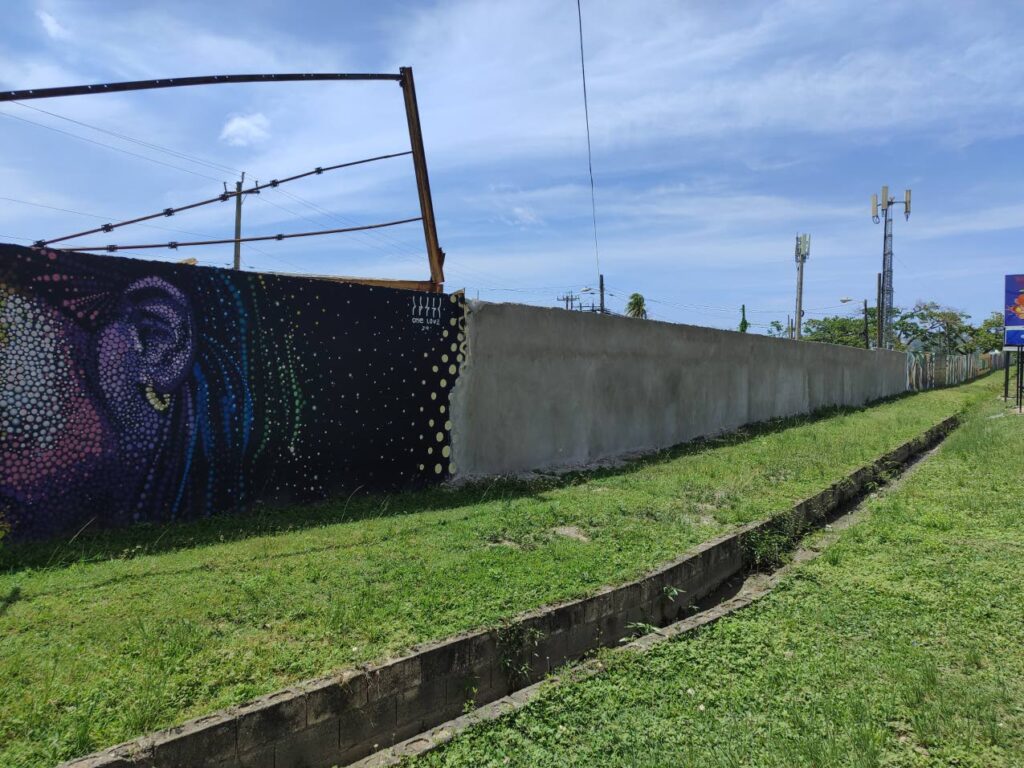
    Last October, Hurricane Melissa brought torrential rainfall and widespread flooding across western Jamaica, and Catherine Hall was counted among the storm’s high-profile casualties. Floodwaters heavily damaged a section of the venue’s perimeter wall, which had grown into a popular tourist draw in its own right thanks to vibrant murals depicting legendary Jamaican musicians and leading entertainment industry figures. So far, contractors have only completed preliminary stabilization work to restore internal and external fencing around the property. Coastal erosion also claimed a significant portion of the seaside parking lot that has long accommodated thousands of event attendees, adding unplanned complexity to the restoration project. Brown noted that final cost estimates for full repairs are still being compiled, so he could not share a definitive price tag for the work as of yet.

    As one of Jamaica’s most in-demand large-scale event spaces, Catherine Hall has hosted Reggae Sumfest — the country’s premier annual reggae and dancehall festival — for decades. The open-air layout means only a small number of permanent structures exist on site, with temporary infrastructure built out for each major gathering. For years, Sumfest organizer DownSound Entertainment (DSE) has laid out ambitious plans to transform the venue into a year-round entertainment and cultural destination, with proposed additions including casual dining spots, a seaside boardwalk, and a dedicated reggae museum honoring the genre’s Jamaican roots. To move forward with this multi-million dollar investment, DSE CEO Joe Bogdanovich and his team have requested a 30-year long-term lease for the property.

    Brown explained that talks over the lease have been delayed by larger regional planning efforts. The Jamaican government is currently developing a comprehensive master plan to redevelop and pedestrianize Montego Bay’s entire waterfront corridor, stretching from Freeport in the west to Dead End in the east — a zone that includes the entire Catherine Hall complex. “We need to align any future development at Catherine Hall with the overarching master plan for the waterfront, so we can ensure organized, coordinated growth and clear land designation for events here,” Brown noted. “We have to wait for the master plan process to unfold before we can finalize any long-term lease agreement.”

    This year, Reggae Sumfest has been forced to relocate to a smaller venue: a scaled-back one-day iteration dubbed “A Taste of Reggae Sumfest” is scheduled for July 18 at Plantation Cove in St Ann, headlined by two of dancehall’s biggest stars, Vybz Kartel and Mavado. Montego Bay’s popular annual All White Party will still go forward as planned at Pier One, but the absence of Reggae Sumfest — an event that draws tens of thousands of tourists and generates millions in local economic activity annually — has delivered a major blow to Montego Bay’s hospitality and tourism sector. City officials have openly expressed concern that the festival could make its temporary relocation to St Ann permanent.

    Brown pushed back on those fears, expressing confidence that the festival will return to its long-time home. “We have not yet held formal talks with DSE about 2027 and beyond, but I have seen DSE’s CEO state publicly that this year’s event in Priory is a one-off arrangement,” he said. “At the end of the day, Montego Bay is the heart of Jamaican entertainment. This is where big festivals thrive. Any other location just cannot match the energy and vibe we have here. I have no doubt they will come back.”