分类: entertainment

  • Sirens and Sinners at Art House 473

    Sirens and Sinners at Art House 473

    Tucked inside Art House 473, a former repurposed church that has been reinvented as a serene, chapel-like contemporary art space, the collaborative exhibition *Sirens and Sinners* from creators Asher Mains and Susan Mains unfolds not as a flashy public spectacle, but as a quiet, introspective reckoning with identity, morality and human experience.

    Drawing on decades of creative exploration into masks and the layered personal stories they carry, the exhibition upends the binary moral framing suggested by its title, which evokes ancient myth, traditional morality, and the tension between temptation and transgression. Far from the seductive, dangerous figures of legend, the sirens depicted here do not lure viewers—they confront them. Likewise, the so-called sinners are not portrayed as condemned outsiders, but as deeply, tenderfully human. Most works center mask-like visages that are not generic pre-written archetypes, but cumulative identities shaped by lived experience, layered with the sediment of years of memory and struggle.

    Susan Mains’ contribution to the show carries a particularly distinct sense of temporal layering. Her iconic “little faces” carry an uncanny, arresting weight: miniature in scale yet monumental in emotional impact, they read as both naive and knowing. Rooted in Caribbean masquerade traditions, the works transcend cultural reference to explore internal, psychological terrain, framing faces as thresholds of experience rather than static surfaces. Every small visage feels less like a finished art object than a residue of a lived moment, a faint, persistent trace that refuses to fade completely.

    Asher Mains’ practice offers a compelling spatial and atmospheric counterpoint to Susan’s intimate works. His practice oscillates between abstraction and figuration, weaving the portrait-focused work into broader environmental and narrative contexts. He incorporates found ghost nets—discarded fishing gear that washes up on the beaches of the Grenadian fishing village Calliste—into both his installations and paintings, where the tangled nets hold, caress, and even trap the depictions of sirens. Drawing inspiration from Homer’s *Odyssey* and Derek Walcott’s *Omeros*, the St. Lucian poet’s reimagining of the Homeric epic, Asher crafts a unique magical realist narrative deeply rooted in Caribbean maritime life. If Susan’s pieces are quiet, intimate confessions, Asher’s installations are the resonant spaces where those confessions echo out for viewers to encounter.

    What unifies the entire exhibition is its deliberate refusal to offer easy answers. There is no clear moral axis, no didactic narrative that draws a hard line between virtue and vice. Instead, *Sirens and Sinners* puts forward a far more unsettling core thesis: the categorical lines between good and evil, purity and corruption are porous, perhaps even entirely illusory. Viewers are left to navigate a creative landscape where allure and guilt, innocence and complicity coexist in the same quiet gaze.

    It is this commitment to ambiguity that gives the exhibition its quiet, enduring power. In an era that constantly demands rigid clarity, quick labels, fixed positions and loud public declarations, *Sirens and Sinners* insists on the value of uncertainty. It does not invite viewers to judge the figures on display, but to recognize them—to see something uncomfortably familiar in their layered, weathered faces. In the end, the exhibition does not demand audiences answer who the sirens or sinners are. Instead, it poses a far more subtle, probing question: when you look long enough at these faces, can you still tell the difference between them?

  • Quiz : Did You Know ? #15

    Quiz : Did You Know ? #15

    In the 15th installment of HaitiLibre’s popular “Did You Know?” general knowledge quiz series, published April 15, 2026, readers are invited to explore a little-known linguistic and economic fact that underpins the entire global financial system: the origins of modern currency terminology.

    The quiz’s featured fun fact breaks down the linguistic roots of two key financial terms. First, the word “fiduciary” traces its lineage back to the Latin noun fiducia, which directly translates to “trust” — a core concept that still anchors modern monetary systems today. This stands in stark contrast to the gold standard that dominated global finance until the 20th century. Under that historic system, every paper banknote issued carried a tangible guarantee: holders could theoretically exchange their note for a fixed, specific weight of gold or another precious metal, tying the currency’s value directly to a physical commodity.

    Today, the global economy relies on what is known as fiat money, a term that also draws from Latin, originating from the phrase “fiat,” meaning “let it be done.” Unlike gold-backed currency, the value of fiat money does not come from the material it is made of (paper or digital code, for that matter) — instead, its worth is derived from two sources: an official state decree that designates it as legal tender, and the ongoing trust that the public holds in its ability to be exchanged for goods and services. When that public confidence collapses, the result is hyperinflation, a catastrophic economic event where currency loses value so rapidly that banknotes become more useful as fuel for heating than as a medium of exchange, a stark example of what happens when trust evaporates.

    Despite this risk, proponents of the system note that fiat money carries significant benefits for modern economic management: it grants central banks the flexibility to adjust monetary policy in response to shifting economic conditions, altering the total money supply in circulation to counter recessions, curb inflation, or support growth. This system, built on an implicit but critical social contract between governments, central banks, and the public, forms the very foundation of modern global finance and international trade.

    This educational fun fact is pulled directly from the answer explanation sheets for HaitiLibre’s QuizHaitiLibre platform, an interactive general knowledge hub that launched to the public earlier this year. The platform invites users to test their own knowledge or challenge friends, covering a wide range of topics spanning Haitian current affairs, culture, history, and global issues. For users seeking a more rigorous challenge, the platform’s expert-level menu offers a curated selection of advanced themed quizzes across dozens of subjects.

    As of its most recent monthly update on April 8, 2026, the platform has added 28 brand new quiz games to its library, with new content rolling out every month. All of the platform’s exclusive games are free to access, require no user registration, and are designed to accommodate all age groups and knowledge levels. Every quiz offers three distinct difficulty tiers — normal, intermediate, and advanced — and is fully available in both French and English to serve a broad audience.

    Readers and knowledge enthusiasts can access the full platform, explore the 15th “Did You Know?” quiz, and browse past installments of the series at the official QuizHaitiLibre website.

  • Filmmaker urges monetisation push as digital creativity booms

    Filmmaker urges monetisation push as digital creativity booms

    Barbados’ digital creative scene has grown dramatically over the past decade, but a veteran local filmmaker who got his start shooting content on an early Nokia mobile phone is sounding the alarm: most of the island nation’s gifted content creators are still working without pay, and meaningful change will require action from advertisers as much as the government.

    Stockton Miller, a successful film creator whose recent credits include the 2022 action-adventure feature *The Barbados Project* (now streaming on Amazon Prime) and 2025 horror film *The Silence After* (released on the U.S.-based Plex platform earlier this year), recently helped lead an Easter filmmaking camp at Bridgetown’s Queen’s Park Steel Shed. The initiative, organized in partnership with the National Cultural Foundation, was designed to nurture new talent by focusing entirely on mobile content creation — a framework Miller calls long overdue.

    Speaking to local outlet Barbados TODAY, Miller explained he jumped at the chance to lead the camp when National Cultural Foundation CEO Carol Roberts first proposed the idea. As someone who launched his career with nothing more than a basic cell phone camera, Miller says the camp’s focus on accessible mobile filmmaking is uniquely suited to new creators in Barbados. “We all have to start somewhere,” he noted, pointing out that he is far from the only Barbadian filmmaker who got his start creating content on a mobile device. “Having children start with a cell phone is a good start. This is a great initiative, not only for the participating students, but for content creation across the entire island.”

    Looking back on the industry’s evolution since he entered the field more than 10 years ago, Miller emphasized how far Barbados’ creative ecosystem has come. When he started creating content around 2012 and 2013, there were very few full-time or hobbyist creators active on the island. Today, the space is unrecognizable: creators are producing everything from small business advertisements and food reviews to travel vlogs, original music videos, and even feature-length films, all from their mobile devices.

    Miller says this boom in output proves the island has an abundance of untapped creative talent, and that communities need to rethink outdated ideas about traditional career paths. “Not everybody is going to be a doctor or a lawyer,” he argued, adding that he is consistently impressed by the quality of content shared by local creators on major platforms like Instagram, TikTok, and YouTube. “The level of creativity is really high in Barbados, and I’m always excited to see what fellow Bajans are producing.”

    Despite this rapid growth, however, Miller says a critical barrier remains: the vast majority of local creators are unable to turn their online followings and creative work into a sustainable, full-time income. Most are forced to balance content creation with second full- or part-time jobs, because the ecosystem does not yet support consistent monetization for Barbadian creators. While Miller now runs his own production company, Board House Productions, full-time, he says many of his peers do not have that luxury.

    “I’m hoping to see monetization on these social media platforms become a regular thing here in Barbados,” he said. Miller stressed that fixing this gap cannot be shouldered by the government alone. Instead, he says the key shift has to come from local advertisers, who must begin investing in and paying local creators for sponsored content. When that shift happens, he predicts it will unlock a new wave of entrepreneurship across the island, building a more sustainable and inclusive creative economy for all Barbadian creators.

    Miller’s call for collaboration comes as emerging creatives across small island nations face similar challenges of turning growing digital popularity into stable income, making his push for advertiser engagement a test case for other Caribbean creative ecosystems.

  • National Secondary Schools’ Theatre Festival Declared Open

    National Secondary Schools’ Theatre Festival Declared Open

    After months of eager anticipation and meticulous preparation by student troupes, drama departments and organizing committees across the country, the annual National Secondary Schools’ Theatre Festival has officially been declared open. This landmark event, designed to nurture emerging performing arts talent among teenage students, brings together competing and participating theater groups from every region of the nation, each showcasing months of hard work in scriptwriting, rehearsals, costume design and stage production.

    Founded more than two decades ago to promote arts education in secondary schooling, the festival has grown from a small regional gathering into one of the most anticipated cultural events for young creatives nationwide. This year’s iteration features a diverse lineup of performances, ranging from original student-written plays exploring contemporary youth issues to reimagined adaptations of classic theatrical works.

    At the opening ceremony held at the national center for the performing arts, the minister of education highlighted the critical role that theater plays in building confidence, communication skills and empathy among young people. “This festival is more than a competition—it is a celebration of the unique voices of our next generation, who use the power of storytelling to share their perspectives on the world around them,” the minister stated in her opening address.

    Over the coming week, student performers will take to the stage across multiple venues, competing for top honors in categories including best production, best actor and actress, best original script and best direction. Audience turnout for opening day already exceeded organizers’ expectations, with thousands of students, teachers and arts enthusiasts turning out to support the young performers. Industry professionals from professional theater companies across the country are also in attendance, scouting for emerging talent and offering mentorship opportunities to participating students.

  • Loyalty or liability?

    Loyalty or liability?

    Nearly two full days after a Sunday night shooting at Jamaica’s popular Big Wall entertainment venue left three people with gunshot wounds, the aftermath of the violent incident continues to send shockwaves through the country’s dancehall community, igniting widespread debate over the longstanding but deeply problematic culture of large, unregulated entourages that accompany many top dancehall artistes. Initial reports confirm that the confrontation involved well-known music producer Jahvy Ambassador, members of dancehall artist 450’s personal camp, and prominent podcaster Jaii Frais, placing the issue of entourage-related violence front and center in national public discourse.

    Beyond the immediate details of the shooting, Jamaican industry insiders and cultural analysts are now tracing the root of the violence to long-unchallenged norms within the dancehall space, calling for systemic shifts in how artistes structure and manage their support teams. Speaking to local outlet Jamaica Observer, popular Jamaican TikTok creator and entertainment commentator Ganja Clauze offered historical context for the role of entourages, while arguing that the practice has strayed far from its original purpose in recent years.

    “From a historical perspective, I understand completely why artistes have felt the need to surround themselves with a group of supporters. Every person was supposed to fill a specific, useful role,” Ganja Clauze explained. “But what we’re seeing now is that these groups have ballooned to sizes that are impossible to manage. You’ll see entourages with as many as 30 men, and half of them aren’t even personally known by the artiste. There’s no way that all of those people add any real value to the entertainer’s career or brand.”

    For Ganja Clauze, the problem extends far beyond just inflated numbers. He pinned much of the issue on a widespread lack of strong intergenerational mentorship that has left younger dancehall artistes without clear guidance on how to maintain control over their crews and keep potential conflict in check. “It’s devastating to see this outdated practice still leading to senseless violence like this,” he said. “Right now, there’s very little active mentorship from dancehall legends and older industry figures to the upcoming generation. We desperately need open, consistent communication between yesterday’s stars and today’s new artistes.”

    That call for greater intergenerational connection was echoed by leading Jamaican cultural analyst Professor Donna Hope, who emphasized that the growing disconnect between older and younger dancehall creatives has created a dangerous gap in institutional knowledge and guidance. “Young men in the modern dancehall space often don’t respond well to input from older industry elders,” Professor Hope noted. “That’s very different from reggae, where it’s still standard for young artists to listen to and learn from veterans. I don’t see that dynamic in dancehall anymore, especially with the latest wave of talent.”

    She added that experienced elders have a unique and critical role to play: “Older men who have already been through every struggle the industry can throw at you, and who have mellowed with time, are the perfect people to lay out clear dos and don’ts for the next generation. Even though everyone in the industry knows the risks of unregulated entourages, those risks are almost never taken seriously until something terrible like this shooting happens.” Professor Hope went on to argue that unchecked egos, both for artistes and for members of their inner circles, directly contributed to the avoidable violence at Big Wall: “None of what happened on Sunday needed to happen.”

    Ganja Clauze pushed for entourage reform that centers on clear role definition, arguing that adding loosely connected hangers-on to an artiste’s crew almost always creates more harm than benefit. “There are far more productive ways to empower young people in your community than bringing them along to a high-profile party as part of your entourage,” he said. “If these individuals don’t contribute anything to your work or your brand, artistes need to stop feeling obligated to bring them along just for the sake of appearances.”

    Pointing to the high-profile case of iconic dancehall artist Vybz Kartel, who is currently serving a 13-year prison sentence, Ganja Clauze highlighted the long-term damage that can come from embracing an unregulated “bad man” culture within an artiste’s circle. “Kartel himself will tell you now that leaning into the bad man lifestyle and surrounding yourself with that culture is terrible for long-term success,” he said. “It cost him 13 years of his freedom, hundreds of thousands of dollars, and most painfully, the chance to watch his children grow up. That’s why we need clearer boundaries and a more professional approach to entourages in dancehall today.”

    Professor Hope offered a more nuanced take on the place of entourages in dancehall, noting that the practice is deeply woven into the fabric of the industry and serves both practical and symbolic purposes. “You can’t just wave a magic wand and eliminate entourages entirely—that’s not how the ecosystem works,” she explained. “They actually serve real functions for hard-core dancehall artistes. They’re part of what I call the artiste’s ‘ego-system’: they provide security, they display public loyalty, and they act as a visible marker of an artist’s status and influence. Every person in the crew usually sees themselves as having a clear role.”

    That sense of duty, however, can often lead to extreme reactions that escalate minor disputes into deadly violence. “Members of these crews almost always feel it’s their responsibility to protect their artiste’s name and reputation by any means necessary,” Professor Hope said. She went on to warn crew members that in the modern digital age, violent public incidents leave permanent marks that no public relations work can erase, noting that 450’s public reputation has already suffered far more damage than that of his manager Jahvy Ambassador in the wake of the shooting. “I don’t think anyone in that entourage stopped to think through what the consequences would be of having a violent public confrontation with Jaii Frais,” she said.

    The shooting has now opened the door for a long-overdue industry-wide conversation about reform, with leaders calling for tangible changes to reduce the risk of future violence and protect the reputation of Jamaican dancehall on the global stage.

  • Maxi Priest, Mykal Rose and Tony Rebel to headline South Florida’s Rebel Salute debut

    Maxi Priest, Mykal Rose and Tony Rebel to headline South Florida’s Rebel Salute debut

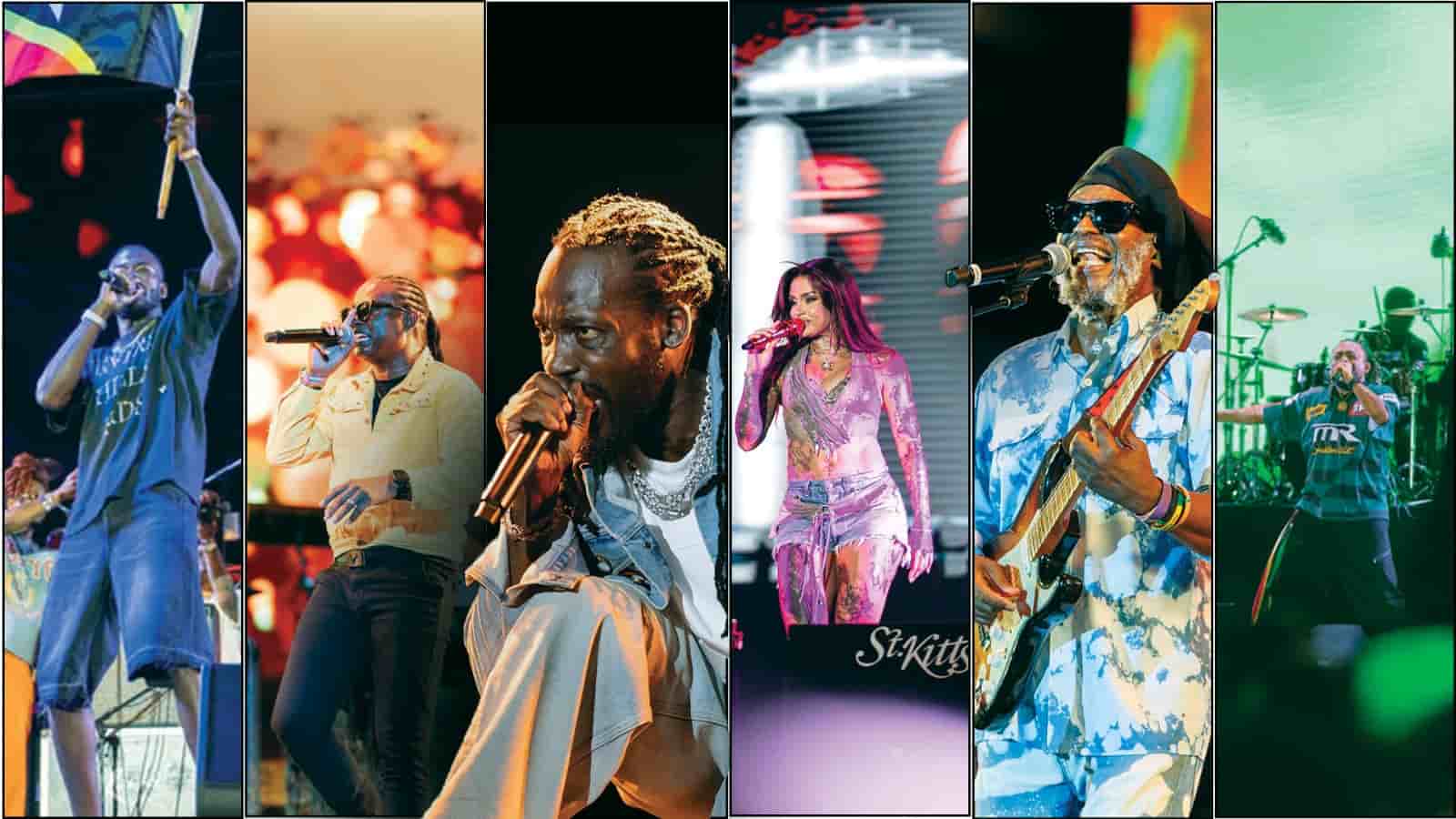
    After two rounds of schedule delays, one of reggae music’s most enduring cultural festivals, Rebel Salute, is finally set to hold its first ever South Florida edition on April 19 at Miramar Regional Park in Miramar. The landmark debut event will feature a star-studded lineup topped by legendary reggae acts Maxi Priest, Mykal Rose, and the festival’s own founder Tony Rebel.

    The festival’s Florida outpost was originally slated for April 25, 2025, before being pushed back to September of the same year. When unpredictable inclement weather threatened to disrupt the experience, organizers opted to reschedule once more, shifting the event to April 2026. Rather than framing the multiple delays as a setback, founder Tony Rebel emphasized that the changes are rooted in the festival’s decades-long commitment to quality. In a September 2025 interview with the *Jamaica Observer*, he emphasized, “This is not a cancellation, it’s a commitment to our fans, our artistes, and our legacy. Rebel Salute has never compromised on quality or care, and this decision reflects the same spirit that has guided us over three decades.”

    The choice of Miramar as the host city for the festival’s first South Florida production is no coincidence. The city boasts one of the largest concentrated Jamaican communities in the region, alongside established populations of other West Indian immigrants and a large Spanish-speaking resident base, creating a naturally receptive audience for roots reggae culture. Miramar Regional Park, the chosen venue, already has a strong track record hosting major cultural events: it is the annual home of the Grace Jamaica Jerk Festival, which draws thousands of attendees from across the state each year.

    Eddy Edwards, lead promoter of the Grace Jamaica Jerk Festival and current vice mayor of Miramar, welcomed Rebel Salute’s arrival to the city. “To have one of the most famous roots-reggae festivals in our city is a delight. This will attract visitors to Miramar and deliver a positive economic impact,” Edwards told *Observer Online*. He added that Miramar’s identity as a diverse, growing urban center aligns perfectly with the festival’s cultural mission: “Miramar is a vibrant, growing city that fully supports the performing arts. We have a diverse community and are open to celebrate the unique cultures of our residents.”

    Rebel Salute carries a 32-year legacy rooted in Jamaican reggae culture. The very first edition launched on January 15, 1994, to mark Tony Rebel’s birthday, hosted at the Fayors Entertainment Complex in the founder’s home parish of Manchester, with iconic reggae artist Garnet Silk headlining the inaugural bill. Over the decades, the festival has shifted between several Jamaican venues: after outgrowing its original Manchester home, it moved to the Port Kaiser Sports Club in St Elizabeth, before settling into its current long-term Jamaican home at Plantation Cove in Priory, St Ann.

    Notably, the annual Jamaican edition of Rebel Salute was canceled this year, with organizers citing widespread damage and disruption caused by Hurricane Melissa, which struck the island in October 2025, as the reason for scrapping the 2026 home event. This makes the upcoming South Florida debut a rare chance for reggae fans around the world to experience the beloved festival this year.

  • Vybz Kartel thrills crowd at Cardi B’s Lil Miss Drama Tour in Florida

    Vybz Kartel thrills crowd at Cardi B’s Lil Miss Drama Tour in Florida

    On a sold-out Tuesday night at Florida’s Amerant Bank Arena, Cardi B’s *Lil Miss Drama Tour* delivered an unforgettable, unplanned highlight that left fans screaming: a surprise appearance from legendary Dancehall trailblazer Vybz Kartel.

    After the rap superstar introduced him to the expectant crowd, Kartel stepped out from a hidden platform beneath the stage, immediately sending the packed arena into a roar of excitement. Long-time fans who never expected to see the artist make a high-profile U.S. tour appearance lost their composure, with many capturing the chaotic, joyful moment on social media that quickly spread online.

    Kicking off his guest set with *Clarks*, the cult-favorite collaboration with fellow Jamaican artist Popcaan that remains a staple of Dancehall playlists worldwide, Kartel smoothly transitioned into *Fever*, his enduring gold-certified breakout hit that still dominates streaming years after its release. Joining him on stage for the performance were two of Jamaica’s most popular digital dance creators and influencers, Dancing Rebel and Sher Luxury Doll, who brought high-energy choreography to the iconic tracks.

    Speaking after the show on her personal Instagram, Dancing Rebel shared her elation over the last-minute opportunity, writing: “Big up God. Manifestation is truly something, so thankful for this experience. @vybzkartel and his team thank you. @iamcardib you are amazing, so proud of you!!” She also revealed the intense, quick turnaround behind the performance, noting “Team JA!! Straight from carnival and on a flight [with] few hours of rehearsal but we still showed out.” A backstage photo from the event captures Kartel posing with the two dancers and other team members, commemorating the one-of-a-kind tour stop that will go down as a standout moment for both Cardi B’s tour and Dancehall fans globally.

  • The White Lotus starts filming season 4 in France

    The White Lotus starts filming season 4 in France

    Production on one of television’s most celebrated dark comedies, *The White Lotus*, has officially entered its fourth chapter, with cameras rolling across the sun-drenched French Riviera, HBO confirmed in an official announcement Wednesday. The hit Emmy-winning anthology series, which relocates to a new luxury hospitality destination each season to unpack the tangled lives of wealthy guests and overworked hotel staff, has chosen the iconic Cannes Film Festival as its central narrative setting for this upcoming run.

  • Clarke unfair dismissal claim may head to tribunal as conciliation talks collapse

    Clarke unfair dismissal claim may head to tribunal as conciliation talks collapse

    A high-profile employment dispute between one of Barbados’ most recognizable media personalities and leading local media network Starcom Network has moved one step forward without resolution, after a mandatory conciliation hearing before the Chief Labour Officer failed to bridge the two sides’ differences.

    Ronald “De Announcer” Clarke, a veteran calypsonian and former programme director of Starcom’s Voice of Barbados, was terminated from his role in November last year following an internal disciplinary hearing that found him guilty of gross misconduct connected to public comments he made about the network. Clarke has staunchly claimed his firing was unlawful and unfair, a position his legal team has formalized in labour proceedings.

    Speaking to local media outlet Barbados TODAY on Monday, Clarke’s senior counsel Hal Gollop outlined that Thursday’s conciliation meeting, which included legal representation for Starcom Network, did not produce a final agreement on the core disputed issues. Gollop explained that Clarke’s legal team tabled a formal settlement proposal rooted in their argument that the dismissal was unjust.

    A key plank of Gollop’s argument centers on the severance payment Starcom already issued to Clarke. “When you summarily dismiss an employee for gross misconduct, the only payment you are obligated to issue is outstanding vacation pay. Any amount beyond that is widely interpreted as an implicit admission that the dismissal was unfair, with the extra funds serving as partial compensation for damages caused by the unlawful termination,” Gollop explained. He added that the Employment Rights Act requires full compensation for workers found to have been unfairly dismissed, and that Clarke is entitled to that remedy.

    Gollop noted that Starcom’s legal team has committed to returning a response from the network’s board of directors within one week. If the two sides cannot reach a mutually acceptable settlement in that follow-up, Gollop confirmed he would file an official claim with the Employment Rights Tribunal (ERT) to have an independent body adjudicate the dispute.

    Clarke himself offered a brief, upbeat assessment of the conciliation process following Thursday’s meeting, telling reporters “I think it went well,” while declining to comment further and directing all additional questions to his legal team. Outside of the labour dispute, the veteran entertainer shared that he is already preparing to return to the Pic-o-de-Crop calypso competition for the 2026 Crop Over festival, performing under his iconic stage name “De Announcer”.

    The firing of Clarke last year sent shockwaves through Barbados’ media and entertainment communities. The termination letter, signed by Nation Group CEO Noel Wood (Nation Group is Starcom Network’s parent company), stated that the gross misconduct stemmed from comments Clarke made during a July 16 appearance on the Marcia Weekes Show, which streams publicly on YouTube.

    Clarke’s remarks addressed Starcom’s internal opposition to him performing his controversial 2025 hit calypso *National Carol Festival* in the Pic-o-de-Crop competition. Starcom’s internal investigation flagged three of the seven comments Clarke made during the interview as violations of the company’s Policies and Procedures Manual, branding the statements as false, malicious, and damaging to the network’s reputation.

    One of the cited statements from Clarke reads: “We have this fear of addressing what they call the elephant in the room… when you are in an arena, transparency and fact are an expectation of the people that support you, whether they listen to you, whether they spend money with you, whether they work for you. It’s hard to be in a situation where you see that is not being delivered.”

    Days after Clarke’s termination was announced, Starcom Network general manager Anthony Greene released a public statement pushing back on claims that the firing was tied to the content of Clarke’s calypso. Greene clarified that the termination followed the completion of a formal disciplinary process concluded on November 7, which was conducted in full compliance with the network’s internal protocols, Barbados’ national labour laws, and with legal representation for both parties throughout the process.

  • Kia Kirwan to Represent Antigua and Barbuda Wednesday in Caribbean Queen Pageant in St. Maarten

    Kia Kirwan to Represent Antigua and Barbuda Wednesday in Caribbean Queen Pageant in St. Maarten

    The highly anticipated annual Caribbean Queen Pageant is just around the corner, set to kick off this Wednesday on the vibrant island of St. Maarten. One of the most anticipated participants stepping onto the competition stage is Kia Kirwan, who has been selected to carry the hopes and national pride of Antigua and Barbuda in this year’s contest.

    The Caribbean Queen Pageant has long served as a premier cultural event across the region, bringing together talented young women from dozens of Caribbean nations and territories to celebrate Caribbean heritage, leadership, and personal achievement. Beyond the traditional components of beauty competition, the event also highlights contestants’ community engagement work, cultural knowledge, and commitment to advancing social causes across the region.

    As the official representative for her country, Kirwan has spent months preparing for the pageant, engaging in local community outreach, practicing performance routines, and showcasing the unique cultural traditions of Antigua and Barbuda. Organizers of the event have reported strong pre-event turnout, with attendees from across the Caribbean and North America traveling to St. Maarten to watch the competition and celebrate regional culture. For Kirwan, the opportunity to compete is not just a personal milestone, but a chance to shine a global spotlight on the beauty, culture, and community spirit of the twin-island nation she represents.