分类: education

  • Dowlath pledges support for Islamic-run schools

    Dowlath pledges support for Islamic-run schools

    In a significant address at the Islamic Development Bank’s Caribbean and Latin American Regional Partnership consultation, Trinidad and Tobago’s Education Minister Dr. Michael Dowlath committed to including Islamic educational institutions in the government’s comprehensive plan to transform the nation’s education landscape. The December 4th gathering at Trinidad Hilton, St. Ann’s brought together regional Islamic leaders to address critical educational challenges and opportunities.

    Minister Dowlath emphasized the vital role of partnerships with longstanding organizations like the Islamic Missionaries Guild, which has delivered educational services since the 1960s. “This approach isn’t about labeling our children—it’s about lifting them up,” Dowlath stated, outlining the ministry’s enhanced intervention strategies that identify learning challenges from preschool level and provide targeted, wrap-around support involving teachers, families, and specialists.

    The minister highlighted the government’s recent laptop distribution initiative, which received particular appreciation from consultation participants who noted technology access challenges in Islamic-run schools throughout the region. The three-day conference serves as a platform for Islamic organization leaders from across the Caribbean and South America to discuss both challenges facing the faith and opportunities for transformative change.

    Delegates were scheduled to visit local Islamic-operated schools on December 5th, with announcements expected regarding beneficiaries of a Schools and Scholarship Programme. Suleiman Bulbulia, regional director of the Organisation for Islam in Latin America and the Caribbean, noted the growing establishment of Muslim-run schools across the region for both religious and secular learning, describing the consultation as “timely and critical” for developing these institutions into centers of excellence and building capacity for future Muslim generations.

  • Tertiary education minister: Skilled workers still in demand

    Tertiary education minister: Skilled workers still in demand

    In a significant stride toward digital inclusion, Trinidad and Tobago’s Ministry of Tertiary Education and Skills Training has unveiled a refurbished Mobile Computer Training Unit—dubbed the ICT Bus—to deliver technology education directly to underserved communities. The initiative, launched December 5 at Marabella North Secondary School, represents a national commitment to equitable skills development in an increasingly digital economy.

    Minister Prof Prakash Persad, the keynote speaker, highlighted a crucial paradox in global technological advancement: while artificial intelligence dominates headlines and investments, the actual surge in demand is for skilled tradespeople who build and maintain digital infrastructure. “Without the technicians who put up the buildings and maintain the computers, there could be no AI,” Persad stated. “New skills must not replace the old ones; they must coexist.”

    He emphasized that despite massive global investments in data centers—exceeding US$50 billion in the United States alone—the pressing need remains for plumbers, electricians, and carpenters. Persad urged citizens to value all forms of honest work, reminding youth that every profession contributing to digital infrastructure is “honorable and essential.”

    The ICT Bus, operated by the Youth Training and Employment Partnership Programme (YTEPP), symbolizes mobility, inclusion, and national readiness. Equipped with computers, internet access, and learning software, it will offer digital literacy, mobile app development, web design, AI workflow training, CAD, and graphic design to diverse beneficiaries including youth, adults seeking retraining, and community organizations.

    YTEPP Chairman Dr. Maurice Jones described the vehicle as “more than the unveiling of a vehicle; it is hope, opportunity, and proof that no citizen should be left behind.” He committed that the bus would actively travel to communities where digital training needs are most urgent.

    Claxton Bay MP Hansen Narinesingh, who recently attended a Commonwealth parliamentary conference on responsible AI in Malaysia, emphasized the economic imperative of workforce recalibration. “The recalibration of our national workforce is not optional; it is an economic imperative,” he stated, urging students to maximize the program’s benefits.

    The launch event featured guided tours of the mobile unit where students will develop skills prioritized by modern labor markets: adaptability, analytical acuity, and digital fluency. Across all addresses, a unified message emerged: as Trinidad and Tobago advances toward a knowledge-driven future, no community or learner should be excluded from the digital transformation.

  • Northeast : €3 million from the EU to strengthen community schools

    Northeast : €3 million from the EU to strengthen community schools

    In a significant move to bolster education systems in crisis-affected regions, UNESCO has unveiled two major programs supported by €7.7 million in funding from the European Union. The initiatives specifically target Haiti and Afghanistan, where educational infrastructure faces severe challenges due to ongoing instability.

    The Haitian component, receiving €3 million in EU support, will focus on strengthening community schools in the country’s northeastern region. These institutions serve tens of thousands of students in rural areas where educational access remains particularly vulnerable. The comprehensive program aims to integrate these community schools into the national education system while enhancing adherence to quality teaching standards.

    UNESCO Director General Khaled El-Enany emphasized the critical nature of educational continuity during crises, stating: “In times of crisis, school is a refuge that must never falter, and access to education is a right that must be guaranteed. These initiatives reflect UNESCO’s determination to provide people with opportunities to learn, to work, and to thrive – including in the most fragile and crisis-affected contexts.”

    Haiti’s education system faces unprecedented challenges amid one of the most unstable periods in the nation’s recent history. Escalating violence and deepening socio-economic turmoil have severely undermined public institutions, strained social cohesion, and placed essential services – particularly education – at serious risk.

    The UNESCO program will foster community participation and facilitate dialogue between families, teachers, and educational leaders, recognizing schools as vital spaces that support social cohesion and trust. Additionally, UNESCO will collaborate closely with national authorities to enhance the collection and utilization of education data, thereby strengthening the overall governance and management of Haiti’s education system.

  • Blue Horizon College sets ambitious path for healthcare education

    Blue Horizon College sets ambitious path for healthcare education

    In response to critical healthcare workforce shortages plaguing the Caribbean region, Blue Horizon College has emerged as a transformative educational institution dedicated to rebuilding clinical capacity. Founded by registered nurse and public health practitioner Ambika Joseph, the college addresses a severe regional deficit where only 44.3 nurses serve every 10,000 residents—far below the Pan American Health Organization’s recommended threshold of 70.6 per 10,000 for universal healthcare access by 2030.

    The institution originated in 2024 as the Care-Transition Clinic School of Nursing before rebranding in 2025 to expand its mission. Now located at Woodlands Commercial Complex in St. George, Grenada, the college has developed targeted programs including a BSc in Nursing, Certificate in Phlebotomy, Associate Degree in Medical Assisting, and specialized degrees in Sonography and Radiology. These offerings were created specifically to meet escalating demands across Grenada’s healthcare facilities.

    Joseph’s vision stems from firsthand experience with systemic gaps in clinical training and academic preparation. “I witnessed the gaps in clinical training, academic preparation, and the ongoing workforce shortages that strain our health system,” she explained. The crisis is exacerbated by nurse migration that has left 40% of nursing positions vacant throughout the Caribbean.

    The college’s BSc in Nursing program employs a hybrid learning model with specialization tracks in Public Health Nursing or Nursing Administration. The curriculum incorporates simulation labs, virtual modules, and problem-based learning to develop clinical judgment and critical thinking. Students gain practical experience through structured clinical rotations and interdisciplinary collaboration with partner hospitals and clinics.

    Admission criteria emphasize compassion, resilience, and community commitment alongside academic capability. The college provides mentorship, workshops, and partial scholarships to support Grenadians pursuing healthcare careers. Looking forward, Joseph plans to integrate digital simulations, virtual clinical experiences, and electronic learning platforms to prepare graduates for evolving healthcare technologies.

    Despite challenges including regulatory compliance and faculty recruitment—requiring international instructor sourcing—Joseph remains confident in the institution’s mission. Her five-year vision involves expanding into a university offering advanced degrees in healthcare administration while establishing Grenada as a regional leader in healthcare education.

  • Tobago students told: Make maximum use of laptops

    Tobago students told: Make maximum use of laptops

    Tobago has embarked on a significant digital education transformation with the commencement of laptop distributions to first-year secondary students across three institutions: Mason Hall Secondary, Roxborough Secondary, and Harmon’s School of Seventh Day Adventists. The initiative, dubbed ‘Learning Without Limits – A Laptop for Every Child,’ represents a major step in modernizing the island’s educational landscape.

    Education Minister Dr. Michael Dowlath confirmed during the December 1st distribution ceremony at Mason Hall Secondary that all Tobago first-form students would receive their specialized learning devices by the end of the week. These laptops feature integrated artificial intelligence capabilities specifically designed for educational purposes.

    The program, which originated from Prime Minister Kamla Persad-Bissessar’s vision in 2010, marks one of the Caribbean’s pioneering efforts to digitize education systems. Minister Dowlath highlighted the collaborative effort involving multiple government ministries and AI specialists that enabled the procurement and distribution of 18,000 laptops nationwide.

    THA Education Secretary Zorisha Hackett emphasized the transformative potential of the devices, stating they represent ‘possibility for discovery, curiosity, and ambition’ that extends learning beyond traditional classroom boundaries. The laptops are intended to provide equal learning opportunities and prepare students for navigating an increasingly digital world.

    The AI functionality, demonstrated during the ceremony, operates under strict protocols limited exclusively to teaching Mathematics and English Language, ensuring focused educational application without external distractions. Tobago MPs Joel Sampson (West) and David Thomas (East) attended the event, underscoring the initiative’s significance for the island’s educational development.

  • Five Jamaicans receive Fulbright Scholarships

    Five Jamaicans receive Fulbright Scholarships

    KINGSTON, Jamaica—Five exceptional Jamaican professionals have been selected as Fulbright Scholars, earning the opportunity to pursue advanced academic programs at prestigious United States institutions. The cohort comprising Daniel Jennings, Elton Johnson, Dr. Shennae Miller, Brandon Stewart, and Abigail Williams will engage in specialized studies aligned with both US and Jamaican strategic priorities, including environmental sustainability, cultural studies, health policy, public finance, and creative industries.

    The US Embassy in Kingston’s Public Affairs Attaché, Mike Lavallee, emphasized the program’s significance, stating, “The Fulbright scholarship represents our shared belief that education, innovation, and merit are the engines of national progress.” He highlighted the mutual benefits of this academic exchange, noting that while Jamaica gains advanced training and innovative ideas, the United States benefits from the diverse perspectives and expertise that Jamaican scholars contribute to American campuses and communities.

    Daniel Jennings will pursue a professional science master’s in environmental analysis at Rice University, focusing on developing Jamaica’s resilience against environmental challenges. “I want to make sure Jamaica has the best tools to understand and adapt to our changing environment,” Jennings stated, expressing his commitment to enhancing the nation’s disaster preparedness and environmental data systems.

    Elton Johnson, an educator and social activist, will undertake PhD studies in comparative studies at Florida Atlantic University, challenging conventional perceptions of dancehall music through academic research. “I believe there are elements within it that promote resilience, creativity, and community,” Johnson explained, aiming to redefine how Jamaica’s influential art form is understood globally.

    Dr. Shennae Miller, a physician and public health advocate, will pursue a Doctor of Public Health degree with concentrations in health policy and management. Her goal is to transform Jamaica’s healthcare system into one that serves all citizens equitably. “My vision is a health system that is equitable, resilient, and truly reflective of our people,” Dr. Miller affirmed.

    Abigail Williams, dedicated to preserving Jamaica’s cultural legacy, will embark on PhD research in Caribbean history and cultures, focusing on the dynamic creative industries sector. She aims to strengthen Jamaica’s cultural resource management framework while exploring global cultural connections.

    Brandon Stewart, a Fulbright–Humphrey Fellow, will specialize in public policy and administration with emphasis on tax policy as a development tool. His objective is to modernize Jamaica’s tax administration systems through technology and policy innovation, ensuring fairness and efficiency.

    The Fulbright Program, as the US government’s flagship international educational exchange initiative, continues to foster global collaboration and mutual understanding through academic excellence, strengthening institutional capacity and workforce development while deepening economic and cultural ties between participating nations.

  • Education : Pilot project for teacher attendance and pedagogical progress

    Education : Pilot project for teacher attendance and pedagogical progress

    FORT LIBERTÉ, HAITI – In a significant stride toward educational modernization, Haitian officials inaugurated a groundbreaking digital management system at Paul Eugène Magloire High School on November 26, 2025. The Attendance, Access Control, and Pedagogical Progress System (SCAPPPED) represents a technological leap forward for Haiti’s education sector, designed to enhance teacher accountability and instructional quality through digital innovation.

    Under the leadership of the Northeast Departmental Directorate of Education, SCAPPPED introduces three transformative components to academic management. The attendance module digitizes teacher timekeeping, tracking punctuality, absences, and overtime with precision. A pedagogical progress tracker monitors curriculum alignment with national standards, documents student performance metrics, and enables data-driven instructional adjustments. The system additionally generates automated reports to facilitate communication among educators, administrators, and parents.

    Education Director Luckner Mompremier emphasized the system’s potential to optimize school operations and elevate educational standards. “This initiative represents more than technological advancement—it embodies our commitment to educational excellence and systemic transparency,” Mompremier stated during the launch ceremony.

    Professor Boni Etienne, Director of the host institution, expressed confidence in SCAPPPED’s practical applications, noting its dual benefit for organizational efficiency and instructional transparency. The pilot program, if successful, may serve as a national model for other Haitian educational institutions seeking to modernize their management practices and improve educational outcomes.

    This initiative marks a pivotal development in Haiti’s ongoing efforts to strengthen its education infrastructure through technological innovation and data-informed decision making.

  • UWI Celebrates Professorial Appointments in Science, Economics, and Innovation

    UWI Celebrates Professorial Appointments in Science, Economics, and Innovation

    The University of the West Indies (UWI) has marked a significant milestone in its academic calendar with the formal installation of 37 distinguished scholars to professorial positions. This celebratory event, held on November 17, 2023, at the regional university’s St. Augustine campus in Trinidad and Tobago, honored excellence across a diverse spectrum of disciplines, with a pronounced emphasis on Science, Technology, Economics, and Innovation.

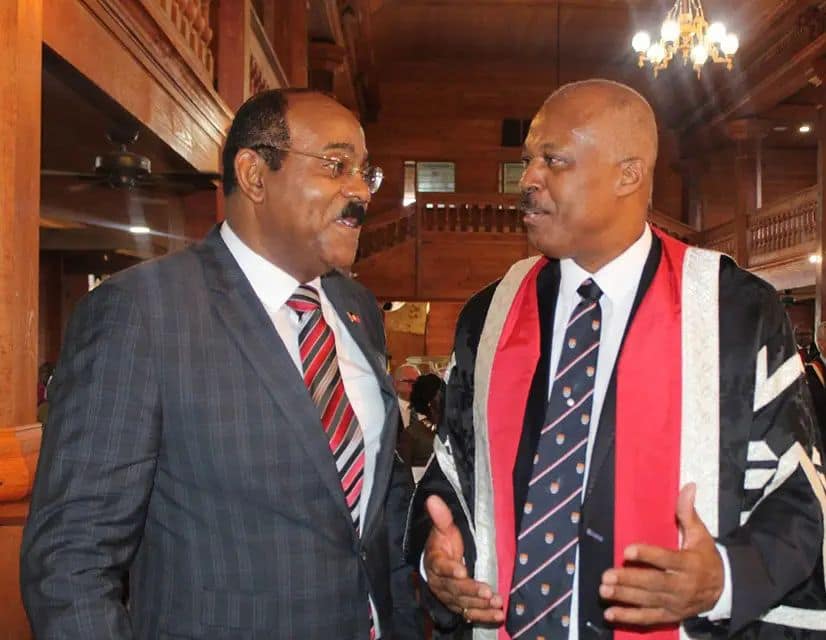
    The ceremony, a cornerstone of academic recognition, saw the elevation of faculty members to the ranks of Professor, Clinical Professor, and Professor Emeritus. Vice-Chancellor Professor Sir Hilary Beckles presided over the event, lauding the appointees for their profound contributions to knowledge creation and their pivotal role in addressing complex regional and global challenges. He emphasized that these appointments are not merely personal achievements but are vital to strengthening the university’s research infrastructure and its capacity for innovation.

    The newly appointed professors represent a wide array of fields, including Medical Sciences, Economics, Engineering, Agriculture, and the Humanities. Their collective research portfolio addresses critical areas such as sustainable development, public health, digital transformation, and economic policy for small island developing states. This strategic investment in top-tier academic leadership is viewed as a direct reinforcement of UWI’s mandate to drive developmental solutions for the Caribbean community and enhance its standing as a premier global institution.

  • TAMCC auto maintenance students in training programme in China

    TAMCC auto maintenance students in training programme in China

    A delegation of seven automotive maintenance students from T A Marryshow Community College (TAMCC) has embarked on an international educational journey to Ningbo, China, marking a significant milestone in technical training collaboration between Grenada and China. The group, consisting of five male and two female students, departed on November 25, 2025, accompanied by Clement Commodore, Chair of the Mechanical Department (SAAT), and Norella De Gale-Philip, Co-Director of the Confucius Institute.

    The intensive training program, hosted at Yinzhou Vocational School from November 27 to December 7, 2025, represents the China Zhejiang (Ningbo)–Grenada Auto Maintenance Faculty Training initiative organized through Ningbo University of Technology. This bilateral educational partnership aims to enhance technical capabilities and knowledge exchange in automotive maintenance disciplines.

    This international program signifies a strategic investment in human resource development, providing Grenadian students with exposure to advanced automotive technologies and methodologies. The collaboration between TAMCC and Ningbo University of Technology establishes a framework for sustained technical education exchange, potentially creating pathways for future specialized training programs and faculty development initiatives.

    The initiative demonstrates the growing importance of international technical education partnerships in addressing skill development needs within specialized industries. By leveraging China’s expertise in vocational training and technological education, Grenadian participants are positioned to acquire contemporary automotive maintenance competencies that could significantly impact the local automotive industry’s technical standards and service quality.

  • Dominica State College launches Smart Classroom and Learning Hub

    Dominica State College launches Smart Classroom and Learning Hub

    Dominica State College has inaugurated a state-of-the-art Smart Classroom and Learning Hub, marking a significant advancement in digital education infrastructure for the Caribbean nation. The transformative facility, launched on November 27th, represents a collaborative effort between the college, the Skills to Access the Green Economy (SAGE) initiative, and the Government of Canada.

    The newly unveiled hub features advanced interactive technologies, digital learning tools, and contemporary educational resources designed to revolutionize both teaching methodologies and student learning experiences. The facility aligns with DSC’s strategic mission to enhance educational accessibility, foster innovative pedagogical approaches, and develop academic infrastructure capable of meeting evolving global economic demands.

    The launch ceremony gathered college administrators, faculty members, and representatives from both SAGE and Dominica’s Ministry of Education, demonstrating shared commitment to strengthening digital literacy and workforce preparedness throughout the nation.

    Pat Bidart of SAGE emphasized the project’s significance within broader regional efforts to equip Caribbean institutions with necessary resources for driving sustainable development and environmentally conscious growth. Trudy Christian, Officer in Charge of the Office of the President, characterized the hub as a profound investment in student futures, ensuring learners possess the technological tools and environment required to excel in a modern, green-focused economy.

    This tripartite partnership continues to play a pivotal role in advancing educational innovation, climate resilience, and specialized workforce training throughout Dominica. The Smart Classroom and Learning Hub is anticipated to serve as a catalyst for enhanced collaboration, creativity, and effective technology integration within academic practices.

    DSC has formally acknowledged all contributing stakeholders while reaffirming its institutional commitment to preparing students for dynamic, sustainable professional futures.