分类: education

  • Jamaica vs T&T in UWI’s 2026 International Reparation Debate Final

    Jamaica vs T&T in UWI’s 2026 International Reparation Debate Final

    The Caribbean’s most prominent student debate competition is set to reach its dramatic climax this week, as two elite teams from Trinidad & Tobago and Jamaica prepare to battle for the top title at the 2026 International Reparation Debate Competition. Organized by The University of the West Indies’ (UWI) Centre for Reparation Research, the grand final is scheduled to kick off at 10:00 AM local time on Wednesday, April 22, hosted at UWI’s Regional Headquarters based in Jamaica.

    After weeks of grueling preliminary rounds that have whittled down a field of talented debaters from across the region, the final showdown will pit Our Lady of Fatima College, representing Trinidad & Tobago, against Jamaica’s own Clarendon College. This matchup carries extra narrative weight beyond the competition itself: the Trinidadian side is seeking to defend its championship title and secure back-to-back victories, while Clarendon College enters the final with a point to prove, hungry to upgrade its 2025 second-place finish with a win on home soil.

    Since the competition launched its 2026 iteration on February 9, the event has steadily grown in visibility and traction across Caribbean educational circles. Designed specifically to give secondary school students a structured platform to dive into the complex, urgent conversations surrounding reparatory justice for historical harms, the competition does more than just crown a winning debating team.

    For every participant, the competition has served as a hands-on development opportunity: students have sharpened their evidence-based research skills, refined their ability to think critically under pressure, and polished their public speaking techniques, all while engaging with layered historical and contemporary social issues that shape modern Caribbean life. It is this educational mission that organizers say sets the competition apart from standard inter-school debate tournaments.

    Adding further prestige to this year’s final, veteran award-winning Jamaican journalist Dionne Jackson Miller will take on hosting duties for the deciding round. Her decades of experience covering regional social and political issues are expected to add both depth and dynamic energy to the event, guiding audiences through the teams’ arguments and contextualizing the stakes of the debate topic.

    Organizers emphasize that the final is far more than just a competition to claim a trophy. For the young people involved, it is a rare chance to lead one of the Caribbean’s most pressing and ongoing public discussions, bringing fresh perspectives to a topic that carries profound social and historical significance for the entire region.

    For audiences unable to attend the event in person, UWI will broadcast the entire grand final live via UWItv, accessible through both the network’s official website and its Facebook page. This open streaming access means debate fans, students, and anyone interested in reparatory justice can follow the contest in real time from anywhere across the Caribbean and across the globe.

  • Regional Fellowship initiative targets Caribbean talent in digital infrastructure development

    Regional Fellowship initiative targets Caribbean talent in digital infrastructure development

    A collaborative delegation bringing together industry leaders from the SubOptic Foundation and digital infrastructure researchers from the University of California, Berkeley has arrived at The University of the West Indies (UWI) to launch a regional recruitment drive for an ambitious new professional development program: the Resilient Global Digital Infrastructure Fellowship.

    The multi-institutional partnership is targeting more than 40 selected students and early-career professionals across the Caribbean to participate in the program, which centers on building critical technical skills, nurturing local leadership capacity, and strengthening long-term resilience for regional digital infrastructure systems. According to an official media release from UWI, the recruitment tour has already included stakeholder meetings across Trinidad and Tobago and Barbados, with a public information session scheduled for April 21 at 5:00 PM at the UWI Global Campus in Dominica to answer questions from interested applicants.

    This initiative grows out of a years-long deepening partnership between academic and industry stakeholders designed to expand public and professional understanding of the physical and policy systems that power global internet connectivity. Core focus areas of the program include subsea communications cables, terrestrial data networks, Internet Exchange Points (IXPs), data center facilities, and the regulatory frameworks that govern these critical digital assets. Working across UWI’s multiple regional campuses, the partnership’s outreach team is actively engaging prospective participants from a wide spectrum of academic disciplines, including engineering, law, and business, with outreach activities scheduled to continue through the rest of the calendar year.

    Funded through a grant from the Internet Society Foundation, the fellowship is delivered in close collaboration with a network of regional partners including the Caribbean Association of National Telecommunications Organizations (CANTO), the Caribbean Telecommunications Union (CTU), local Internet Society chapters, other regional universities, and private sector telecommunications and technology firms.

    Unlike many specialized technical programs, the Resilient Global Digital Infrastructure Fellowship does not require prior professional or academic technical experience to apply. The 12-month structured learning curriculum combines rigorous technical instruction with on-the-ground practical insights tailored to the unique needs of Caribbean nations. Selected participants will gain access to one-on-one mentorship from industry veterans, guest lectures from global digital infrastructure leaders, and collaborative project opportunities to develop context-specific solutions for regional digital resilience challenges.

    Sandrea Maynard, Pro Vice-Chancellor for Global Affairs at UWI, emphasized that the partnership aligns directly with the institution’s core mandate to build homegrown regional expertise in critical emerging technology sectors. “The Global Digital Infrastructure Fellowship creates valuable pathways for UWI talent to engage globally while ensuring that Caribbean perspectives help shape the systems that underpin our digital future,” Maynard said.

    Nicole Starosielski, a leading professor of digital media at UC Berkeley and a lead researcher on the project, echoed Maynard’s comments, highlighting the outsized strategic importance of the Caribbean to global digital infrastructure. She noted that resilient, far-reaching digital infrastructure depends not only on cutting-edge technology, but also on centering local knowledge, investing in regional education, and fostering sustained cross-sector collaboration.

    The current fellowship initiative builds on years of prior foundational research that mapped digital infrastructure resilience gaps across the Caribbean, incorporating input from multiple island nations and more than 70 regional public and private stakeholders. That earlier work identified a clear need for a coordinated, region-wide approach that integrates technology planning, energy infrastructure alignment, policy development, and community engagement to strengthen digital resilience. The fellowship represents the first major step to translate those research findings into actionable impact through targeted workforce development and institutional partnership.

    Applications for the 2026 cohort of the Resilient Global Digital Infrastructure Fellowship are open now through May 1, 2026, and are open to both enrolled students and working professionals across all academic and professional backgrounds.

  • 2026 China Scholarship Announcement

    2026 China Scholarship Announcement

    A new round of applications for the 2026 MOFCOM Scholarship-CSC Programme, a fully-funded graduate study opportunity for Grenadian nationals at Chinese universities, has been launched jointly by the governments of the People’s Republic of China and Grenada. Established by China’s Ministry of Commerce, the scholarship initiative aims to nurture professional talent for developing countries while deepening bilateral educational and professional cooperation between China and partner nations around the world. This call represents the second separate application round for the 2026 intake, with a distinct timeline and process from the first opening. Candidates who already submitted materials during the first round are not required to reapply, and all prospective applicants are strongly advised to review program guidelines carefully to confirm their eligibility and submit materials under the correct application channel. To qualify for the program, candidates must meet a set of clear eligibility criteria. All applicants must hold valid Grenadian citizenship, be no older than 45 (meaning they must be born after September 1, 1981), and provide an official medical report from a public hospital confirming good physical and mental health. For Master’s degree applicants, a minimum of a completed bachelor’s degree plus at least three years of professional work experience is required, while PhD applicants must hold a completed Master’s degree from a recognized institution. All candidates must currently be employed, with priority given to division-level or above government officials, senior organizational or corporate management, and academic staff at universities or research institutions. Applicants must also demonstrate sufficient English proficiency to complete graduate-level study in China, and must not currently be enrolled in a Chinese higher education institution or hold another active Chinese government scholarship. A full updated list of participating Chinese universities and available majors for the 2026 intake is published via an official linked portal, accessible to all prospective applicants. The MOFCOM-CSC Scholarship provides comprehensive financial support for all selected recipients throughout their program of study. Coverage includes full tuition waivers, free access to course materials, coverage for research and field survey costs, stipends for English-medium programs, and dissertation supervision fees. Recipients also receive free on-campus accommodation during their studies, a monthly living stipend totaling 36,000 RMB per year for Master’s students and 42,000 RMB per year for PhD students (disbursed monthly based on actual time spent in China), and a one-time 3,000 RMB resettlement allowance for newly arrived students. Additional benefits include free comprehensive medical insurance for international students, a one-time round-trip international airfare between the recipient’s home country and China, and coverage for up to one additional round-trip airfare per year for annual home visits. Continued scholarship funding for multi-year programs is contingent on passing a mandatory annual performance review. All applicants are reminded that all supporting documents must be scanned using professional equipment to ensure clarity, and must be officially certified to be considered valid. A clear, step-by-step application process is outlined for all candidates, completed entirely through the official China Scholarship Council (CSC) online portal: Step 1: Access the official “CSC Study in China” website at http://www.campuschina.org, click “Scholarship Application for Students”, create an individual account, and log in. Step 2: Complete all required personal information via the “Edit Personal Details” tab, verify and save all entries, then click “Finish” to proceed to the application information section. Step 3: Select the correct program category: for MOFCOM-CSC Scholarship applicants, the required selection is “Type A”. Step 4: Enter the official agency number 00010, which is exclusively assigned to MOFCOM-CSC Programme applicants. Program category and agency number are directly matched, so incorrect entries will result in application materials not being received by processing authorities. After entering the number, the matching agency name will automatically populate on the platform. Step 5: Complete the “Language Proficiency and Study Plan” section, upload all required supporting documents as instructed, and review all entries and materials before clicking “Submit” to finalize the application. When selecting preferred higher education institutions, the platform will automatically match available universities based on the applicant’s student category, preferred teaching language, and chosen major. For additional questions about program offerings, applicants can access discipline and major catalogs via the website’s “Help” section. Step 6: After submission, no further edits can be made to personal or application information. However, before processing by authorities, applicants may withdraw their submission to make edits, but must resubmit the revised application for it to be considered. Once authorities have begun processing, withdrawals are no longer permitted. Step 7: Click “Print the Application Form” to download the completed form. The CSC recommends using either Firefox or Internet Explorer for the application process; Internet Explorer users must disable the “compatibility view mode” before editing documents. Step 8: After completing the online application, candidates must submit hard copy materials to Grenada’s official dispatching authority, the Human Resource Development Division at the Ministry of Education, as required. The CSC emphasizes that it never delegates application processing to third-party individuals or intermediary agents. All applicants are advised to submit applications directly via official channels to avoid fraud, and notes that campuschina.org is the only official platform for CSC Study in China information. Required hard copy documents include three copies of each of the following: the completed MOFCOM-CSC Programme application form (confirming online submission has been completed), a certified copy of the biodata page of a valid non-expired passport, three recent passport-sized photographs, certified copies of the highest academic diploma, certified copies of official academic transcripts, a detailed study plan or research proposal, a full curriculum vitae, two recommendation letters (one from the applicant’s current employer and one from an academic referee), a copy of the completed Foreigner Physical Examination Form (for programs longer than six months, valid for only six months from the date of examination and requiring an attending physician’s signature, official hospital stamp and sealed applicant photo to be valid), and a valid police clearance certificate issued within six months of the application submission date. All application materials must be submitted on or before the May 14, 2026 deadline. For additional inquiries about the program or application process, prospective applicants can contact the Human Resource Development Division at Grenada’s Ministry of Education via telephone at (473) 440-2737, WhatsApp at (473) 417-9762, or email at the two official addresses published by the ministry.

  • UWI Five Islands expands community outreach and academic offerings

    UWI Five Islands expands community outreach and academic offerings

    The University of the West Indies (UWI) Five Islands campus has announced a significant expansion of both its community engagement efforts and academic program portfolio, marking a key milestone in the institution’s growth trajectory in the Caribbean region.

    Long positioned as a regional higher education hub focused on accessible learning, the Five Islands campus has ramped up its community outreach to address pressing local needs. New initiatives include free financial literacy workshops for small business owners across Antigua and Barbuda, STEM outreach programs for underserved secondary school students, and collaborative environmental conservation projects with local coastal protection nonprofits. University leadership notes that these programs are designed to bridge the gap between academic research and community action, bringing institutional resources directly to residents who stand to benefit most.

    Parallel to its community-focused expansion, the campus has added 6 new undergraduate and graduate degree programs aligned with growing regional industry demand. The new offerings include a bachelor’s degree in sustainable tourism management, a master’s program in digital public governance, and certifications in climate resilience planning—fields projected to drive job growth across the Caribbean over the next decade. Campus administration reports that enrollment for the new programs will open for the upcoming fall semester, with need-based scholarships available to support local students.

    Local education stakeholders have welcomed the expansion, noting that the moves will strengthen the campus’s role as a driver of social and economic development for Antigua and Barbuda, while expanding access to world-class UWI education for students across the Eastern Caribbean.

  • UWI Five Islands Honours Top Students with Principal’s List and Honour Roll Recognition

    UWI Five Islands Honours Top Students with Principal’s List and Honour Roll Recognition

    The University of the West Indies (UWI) Five Islands Campus has recently celebrated the exceptional academic achievements of dozens of high-performing students from the first semester of the 2025–2026 academic year, inducting the standout scholars into two prestigious honorary groups: the campus-wide Honour Roll and the selective Principal’s List.

    Held as a hybrid event that allowed both in-person attendance and remote participation for students, family members, and faculty across different locations, the ceremony featured opening remarks from Dr. Camille Samuel, the campus’ Registrar, who spoke on behalf of Principal Professor Justin Robinson. In her address, Dr. Samuel emphasized that these annual awards are far more than just ceremonial recognition—they are a tangible reflection of the institution’s core institutional commitment to centering student success and implementing rigorous, consistent monitoring of every student’s academic progress throughout their program of study.

    “Tonight, we gather not just to hand out certificates, but to formally acknowledge the hard work, late nights, and relentless dedication that have led you to this level of academic excellence,” Dr. Samuel told the assembled honourees. She went on to outline the campus’ ongoing strategic efforts to boost student retention and lift overall academic performance across all disciplines, noting that these honorary inductions are a key marker of how those investments are paying off for driven students.

    The two honorary tiers carry distinct criteria to recognize different levels of sustained achievement. The Honour Roll is awarded to students who earn exceptionally high grade point averages (GPAs) during the most recent semester, rewarding strong performance in a single academic term. In contrast, the Principal’s List is the campus’ highest undergraduate academic honor, reserved exclusively for students who have maintained top-tier academic results across the entirety of their degree program, rewarding consistent excellence rather than just a single strong term.

    In her closing remarks to the honourees, Dr. Samuel encouraged the recognized students to frame this achievement as a foundational milestone rather than a final career or academic destination. She reminded the emerging scholars that the professional world beyond campus does not reward unfulfilled potential—it rewards consistent, intentional execution of skills and knowledge. She closed by urging all award recipients to leverage their academic training and demonstrated discipline to create meaningful, positive change across their local and regional communities after graduation.

  • Hurricane Hunters Touch Down for Education, Not Emergency

    Hurricane Hunters Touch Down for Education, Not Emergency

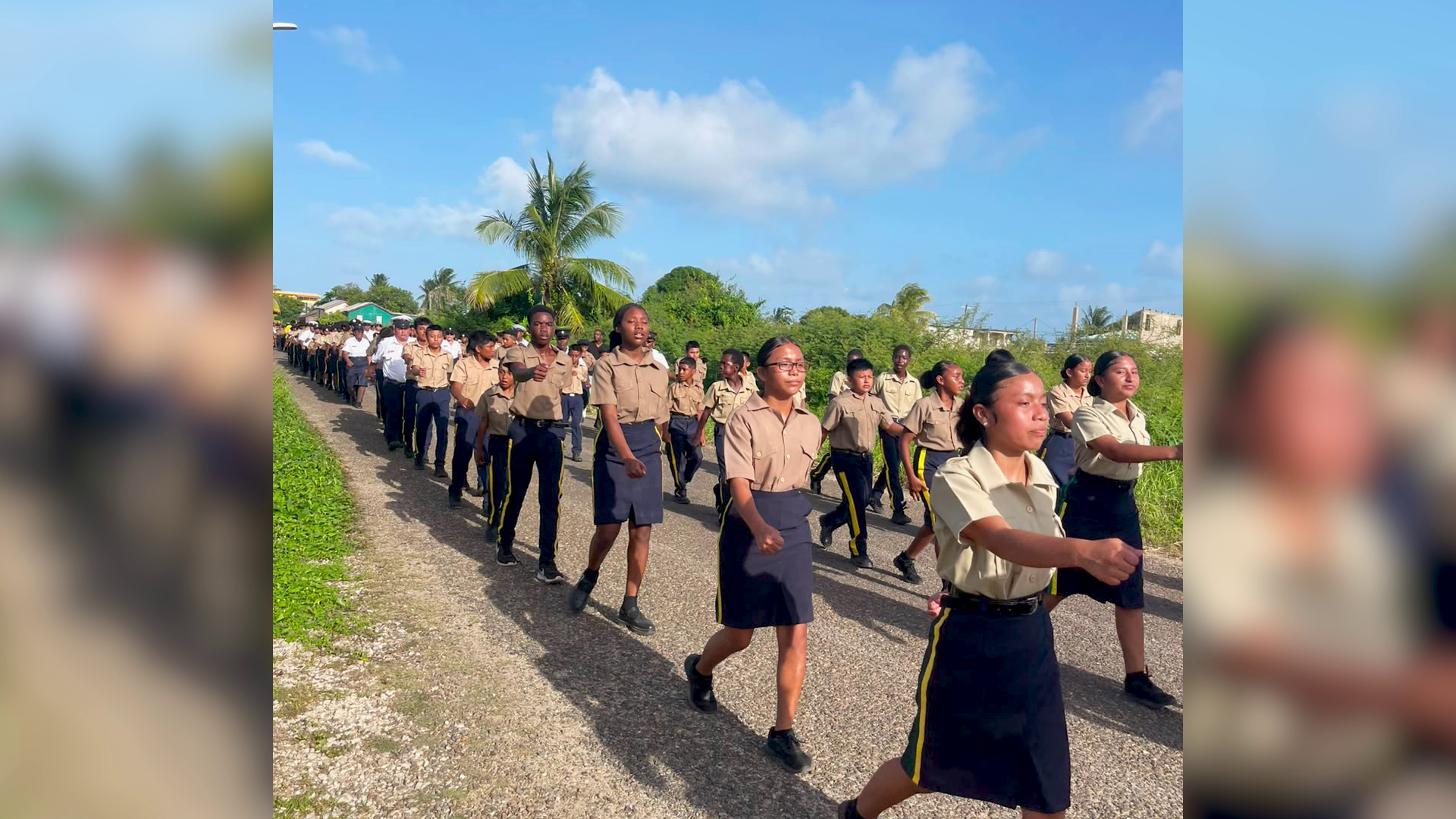
    For most people around the world, the U.S. Air Force Reserve Hurricane Hunters are only a name tied to breaking emergency weather coverage: when a catastrophic tropical cyclone is barreling toward populated coastlines, these elite pilots and their specially modified aircraft fly straight into the storm’s eye to collect life-saving data that forecasters rely on to track intensity and path. But this week, the Hurricane Hunters are touching down in Belize for an entirely different mission – one centered on education, not disaster response.

  • STATHS to get renewable energy laboratory

    STATHS to get renewable energy laboratory

    KINGSTON, Jamaica — A landmark initiative to boost technical and vocational training in clean energy is moving forward at St Andrew Technical High School (STATHS), as procurement begins for a purpose-built renewable energy laboratory on the institution’s campus. Jamaica’s Minister of Education, Skills, Youth and Information, Senator Dana Morris Dixon, announced the timeline for the project during an official alumni engagement visit this Tuesday, held to mark the school’s 65th anniversary under the celebratory theme “Inspiring Change: Reshape, Realign, Refocus”.

    According to Minister Dixon, construction of the cutting-edge lab is scheduled to take place entirely over the upcoming summer holiday break, with a grand opening planned for the start of the new academic semester in September. The facility is designed to give hands-on technical training to students across a range of fast-growing renewable energy sectors. “Students will gain practical knowledge of solar technology, complete training for solar panel installation, and learn the ins and outs of energy storage batteries. They will also study core concepts of wind power generation,” Dixon explained during her address. “In the lab, they will master every step of working with renewable energy systems: how to install them, how to continuously monitor their performance, how to carry out repairs and maintenance, and they will even get to explore other clean energy solutions beyond solar and wind,” she added.

    During her visit, the minister also conducted a tour of STATHS’ existing Technical and Vocational Education and Training (TVET) facilities, where she got a first-hand look at the innovative work already being carried out by the school’s student body. Two 11th-grade students, Nathaniel Hurge and Cameron Pinnock, took the opportunity to present STATHS Autopeck, an automated chicken feeder the pair developed alongside two other classmates, to address a common challenge for small-scale poultry raisers.

    Nathaniel explained that the idea grew out of a widespread inconvenience: many small poultry keepers and agricultural teachers struggle to monitor chick feeding overnight, creating an unnecessary daily hassle. To solve this problem, the team designed and built their low-cost automated solution from readily available materials over just two weeks of work. The device operates using two reduction motors for power, paired with three 3D-printed spiral screws arranged in clockwise, counter-clockwise, and central positions to guide feed smoothly downward into feeding basins. A programmable timer module lets users set custom feeding durations and intervals to match the needs of their flock, while an integrated weighted sensor automatically shuts the machine off if too much feed accumulates in the basins, preventing harmful overfeeding.

    While the device is not the first automated chicken feeder on the market, Nathaniel noted that it features a custom, low-cost design tailored to small-scale use, and the team already has big plans for future upgrades. “Down the line, we want to add a connected app that will let users monitor the feeder remotely from any location,” he said. Cameron added that the project required cross-disciplinary collaboration across multiple technical fields, pulling in skills from electrical engineering, building construction, plumbing, and even visual arts to bring the idea to life. Built with affordable off-the-shelf components including reduction motors, a DC power outlet, a repurposed five-gallon plastic bottle, plumbing pipes, and a control switch, the project pushed the students to problem-solve through unexpected challenges. “It was a demanding task, but we pushed through and got it done,” Cameron said. “Our next upgrade will be adding an integrated solar power system to cut the device’s reliance on continuous grid electricity, making it even more sustainable for off-grid use.”

  • Students Manage Media as Equipment Handed Over to Barbuda Secondary School

    Students Manage Media as Equipment Handed Over to Barbuda Secondary School

    At a recent equipment handover event held at Sir McChesney George Secondary School, students stepped into the spotlight by taking charge of all on-site media operations, turning a routine institutional ceremony into a dynamic hands-on learning opportunity. Rather than sidelining young people as passive attendees, event organizers intentionally integrated the student body into core operational roles, letting them put their communication, technical and collaborative abilities on full display.

    What makes this student-led management milestone particularly notable is that it demonstrates the versatile abilities young people build through school sports programmes – abilities that stretch far beyond athletic competition on the pitch or court. Education and sports officials who attended the event emphasized that embedding students in the event’s planning and execution gave them unparalleled real-world experience that cannot be replicated in a traditional textbook-only classroom setting.

    Officials further explained that intentional, practical involvement like this underscores the often-overlooked value of school sports initiatives. Beyond promoting physical fitness and team competition, these programmes cultivate a range of practical, transferable skills that serve students well in future academic pursuits and professional careers. Skills such as project coordination, media communication, problem-solving and cross-team collaboration, all fostered through participation in organized sports, proved critical to the students’ successful management of the handover ceremony’s media operations.

  • AdeKUS richt blik op kloof tussen beleid en uitvoering tijdens Bestuurskundeweek

    AdeKUS richt blik op kloof tussen beleid en uitvoering tijdens Bestuurskundeweek

    On a recent Monday, the Anton de Kom University of Suriname (AdeKUS) officially launched the fourth iteration of its annual Public Administration Week, an event tailored to connect academic learning with real-world governance challenges. This year’s programming centers on a timely and critical theme: moving beyond Suriname’s traditional reliance on natural resource extraction to build inclusive, long-lasting sustainable development, with a specific focus on bridging the gap between policy design and on-the-ground execution. The opening ceremony was led by Suriname’s President Jennifer Simons, who used her opening address to emphasize that closing this implementation gap remains one of the most pressing ongoing challenges for the South American nation.

    Public Administration Week is structured to give undergraduate and graduate students in the public administration degree program hands-on learning opportunities that go far beyond traditional classroom instruction. Over the course of the five-day event, students will take part in interactive workshops led by practicing policymakers, site visits to regional government agencies, and panel discussions with leading governance experts from across Suriname and the Caribbean region. Every activity ties back to the event’s core theme: “From Natural Resources to Sustainable Development: Policy Choices for the Next Generation”.

    President Simons noted that the chosen theme cuts straight to the heart of Suriname’s most critical development questions. In her remarks, she outlined that effective governance relies on three non-negotiable pillars: full transparency, public accountability, and a consistent commitment to centering community input in policy design. She also pushed back on common framing of sustainable development, noting that it extends far beyond narrow metrics of economic growth or natural resource sector diversification. “Sustainable development is not just about drafting innovative policy ideas,” Simons said during her address. “It is about turning those ideas into tangible, effective action that improves lives for current and future generations.”

    Despite Suriname’s abundance of development ideas and access to skilled technical expertise, Simons acknowledged that turning plans into action frequently hits roadblocks. A range of systemic and institutional barriers often slow or fully block policy implementation across sectors, she explained. In response to this persistent gap, the president called on participating public administration students to bring fresh perspectives and innovative thinking to solve this challenge, as highlighted in an official release from the Communication Service of Suriname.

    Simons also stressed that building broad public buy-in is a non-negotiable component of successful policy execution. Even the most well-intentioned policy initiatives will face uncrossable barriers without widespread support from local communities and broader society, she noted. She further called for deeper, more structured collaboration between Suriname’s academic institutions and national government, including a proposal to integrate student graduation research more directly into government policy development processes.

    Loraine Arsomedjo, program coordinator for AdeKUS’s Public Administration degree, echoed the president’s remarks, underscoring that this year’s theme could not be more relevant to Suriname’s current context. Arsomedjo pointed out that while Suriname holds vast reserves of valuable natural resources, these assets alone are not enough to deliver equitable, sustained national development. “Without strong public institutions and thoughtful, intentional policy design, natural resource wealth can easily become a source of systemic vulnerability rather than national prosperity,” she explained.

    Arsomedjo added that the public administration program at AdeKUS is designed to培养 students who do not just understand how existing policy processes work, but who are also willing and able to think critically about how to improve governance systems. “You are not here to be passive observers of public affairs,” Arsomedjo told participating students. “You are the thinkers, the designers, and the leaders who will shape Suriname’s future.”

    Through the full week of programming, Public Administration Week aims to prioritize cross-sector knowledge sharing, critical reflection on Suriname’s governance challenges, and targeted preparation for students who will go on to fill key roles in Suriname’s public administration sector after graduation.

  • Caribbean Students shine in 2025–2026 YES Competition with innovative environmental solutions

    Caribbean Students shine in 2025–2026 YES Competition with innovative environmental solutions

    Macmillan Education Caribbean has officially announced the results of the 2025–2026 iteration of its annual Young Environmental Scientists (YES) Competition, a regional initiative that celebrates the creative problem-solving, sharp analytical thinking, and environmental commitment of primary and secondary school students across the Caribbean basin. Now a staple annual event for young science enthusiasts across the region, the YES Competition invites student teams from participating countries to identify pressing local environmental issues, then design and execute evidence-based, practical solutions tailored to their communities, all while building core skills in collaboration and critical thinking.

    In the primary school division, the 2025–2026 championship title went to the Eco-Hero Team from Tunapuna Presbyterian Primary School in Trinidad and Tobago. The team impressed judges with their community-focused project aimed at cutting single-use plastic consumption on their school campus. Their intervention centered on encouraging fellow students to bring and reuse personal reusable utensils, eliminating reliance on disposable plastic cutlery for school meals and activities. To embed long-term behavior change, the team rolled out targeted awareness campaigns, hosted a school-wide poster contest to spread their message, and collected ongoing data to track shifts in student habits. Judges highlighted that the project powerfully demonstrated how small, accessible local actions can add up to substantial environmental benefits for school communities. Second place was awarded to the SVG Wildlife Warriors from Calliaqua Anglican Primary School in St Vincent and the Grenadines, while third place went to the Sea to Structure Solutionists of Grand Roy Government School in Grenada.

    For the secondary school division, the top prize was claimed by the ResistRx team from Queen’s College in Guyana, marking the institution’s second consecutive win at the YES Competition. The team’s groundbreaking research focused on a underaddressed environmental threat: the public health and ecological risks of improper antibiotic disposal. ResistRx mapped how antibiotic residues enter local ecosystems primarily through unsorted household waste and unregulated disposal practices on small-scale farms, documenting how these residues accumulate in soil and accelerate the development of dangerous antimicrobial resistance—a growing global public health concern. The team paired their research with actionable, scalable recommendations: establishing dedicated community collection bins for unused medications, introducing targeted composting guidelines for small-scale agricultural producers, and launching a regional public education campaign to raise awareness of the issue. A small pilot survey conducted by the team revealed that while public knowledge of improper antibiotic disposal risks was limited, a majority of community members expressed willingness to adopt safer disposal practices if given the infrastructure and information to do so. In a surprise showing for the secondary division, Trinidad and Tobago’s Five Rivers Secondary School claimed both second and third place, with the GASH – Giant African Snail Hunters Association taking second and the Wes4G 4-H Club securing third.

    All winning teams will take home a range of prizes designed to support their ongoing science education. First-place teams in both divisions receive a half-day hands-on science workshop, a full classroom set of science reference books, a US$250 bookstore voucher, and individual and team trophies, medals, and certificates. Second-place teams receive a US$100 bookstore voucher alongside their medals, trophies, and certificates.

    With the 2025–2026 awards finalized, organizers have already opened the call for greater regional participation for the 2026–2027 competition. Dr. Katy Anyasoro, Marketing Manager at Macmillan Education Caribbean, emphasized the growing impact of the event across the region. “The competition continues to grow as a regional platform for showcasing Caribbean students’ innovation and environmental stewardship,” she said. “This year’s projects, which ranged from reducing plastic waste to addressing antimicrobial resistance, reflect the increasing awareness among young people of the need for sustainable solutions to real-world challenges.”

    In the coming weeks, the public will be able to access a public highlight reel featuring standout project submissions from across the region, alongside photographs from national award ceremonies held in all participating countries. Open to students between the ages of 7 and 18, the YES Competition is designed to nurture the next generation of Caribbean environmental scientists and sustainability leaders by giving young people the opportunity to lead hands-on research, collaborate on team-based solutions, and turn their ideas for local environmental change into action.