分类: education

  • Adult Education Division launches book donation drive to promote reading

    Adult Education Division launches book donation drive to promote reading

    The Adult Education Division under Dominica’s Ministry of Education has launched a public book donation campaign, calling on community members across the island nation to contribute to an initiative designed to embed a stronger reading culture and deepen public appreciation for written works across all age groups.

    Running from August 10 to September 10, 2026, the drive accepts both new and lightly pre-owned reading materials that will serve children, young adults, and adult learners throughout every region of Dominica. Donations can be dropped off directly at the Adult Education Office, situated at 22 Kennedy Avenue in the country’s capital city of Roseau.

    Organizers are welcoming a diverse array of book genres to suit varying reader interests and needs. The accepted materials range from foundational children’s stories to general fiction and non-fiction works, alongside popular genre titles including romance, fantasy, mystery, and thriller, among many other categories.

    In a statement shared with the public, the division emphasized that every individual book donation carries meaningful value: each contribution opens a new door for a reader to acquire new knowledge, engage with unfamiliar perspectives and ideas, and draw personal inspiration from the stories and information they encounter.

    Community members who wish to donate to the drive or request additional details about the initiative can reach the organizing team through multiple contact lines: 767-266-3305, 3088, 3920, 3490, and 3356. To frame the campaign’s core mission, the division has adopted the rallying cry: “Donate a book. Inspire a life. Make a difference!” encouraging all Dominicans to take part in building a more literate, engaged community through this simple, impactful act of giving.

  • ECAAM expands summer academic support programme to meet growing learner needs

    ECAAM expands summer academic support programme to meet growing learner needs

    Education Consulting, Academic Advising and Mentoring (ECAAM), a non-profit education organization focused on inclusive learning, has wrapped up the second iteration of its Summer Intensive Academic Support Programme (SIASP), marking steady growth in its mission to help learners of all needs build critical skills and enter the new school year with boosted confidence.

    Launched to address persistent academic struggles that many students carry from one school year to the next, SIASP was designed to fill gaps left by standard classroom instruction. Unlike one-size-fits-all summer review programs, the initiative develops fully personalized learning plans aligned with each student’s unique strengths, challenges, and learning pace, delivering targeted support over the summer break to set learners up for success when classes resume.

    A core principle that sets ECAAM’s approach apart is its commitment to whole-child development. The organization recognizes that academic readiness extends far beyond foundational reading and math skills, so the program integrates dedicated practice in social-emotional learning, communication competence, functional life skills, and independence—attributes that lay the groundwork for long-term educational and personal growth.

    SIASP has been tailored specifically to serve learners with special educational needs and students with documented learning gaps, groups that often do not receive the specialized, repeated practice and individualized strategies they require to thrive in mainstream classroom settings. From its small pilot launch, where the program supported just two students in its first year, SIASP has expanded to serve five learners in its second year: four joined in-person instruction, while one participated remotely to accommodate individual needs. ECAAM officials note that this steady growth signals a rising unmet demand for targeted pre-year support that addresses student gaps before the new academic term begins.

    This year, ECAAM also launched an all-new sub-program: the Kindergarten Readiness and Academic Support Programme, built to support children making the critical transition from early childhood preschool to formal kindergarten learning. The new initiative prioritizes transition skills specifically for autistic children and other learners that require extra preparation to adjust to the structured routines of formal elementary school environments. It builds foundational academic, communication, and social-emotional skills while helping young learners adapt to daily classroom schedules, express their needs clearly, engage in group learning activities, and develop age-appropriate independence.

    Across all its offerings, SIASP centers three core priority areas: academic preparedness, social-emotional growth, and functional and transition skills. This scope includes reinforcing core literacy and numeracy foundations, helping students build confidence and emotional regulation techniques, and developing competencies such as clear communication, organizational skills, problem-solving, and adherence to daily routines.

    A core belief guiding ECAAM’s work is that proactive intervention is far more effective than addressing academic struggles after they escalate into serious barriers to learning. The summer program gives students a low-pressure opportunity to strengthen gaps in their skills, build self-assurance, and start the new school year with the tools they need to succeed.

    “ECAAM is investing in the whole child because academic success is strengthened when children are also supported socially, emotionally and functionally,” the organization noted. “Every child deserves a head start and an opportunity to enter the next stage of their education prepared to succeed.”

    In addition to SIASP, ECAAM offers a full suite of services including one-on-one academic support, inclusive education programming, professional development for educators, academic advising, mentoring, and innovative teaching approaches. The organization’s overarching mission is to build more inclusive, equitable, and meaningful educational experiences that meet the needs of every child.

  • UNESCO: 2,4 miljoen Afghaanse meisjes uitgesloten van voortgezet onderwijs

    UNESCO: 2,4 miljoen Afghaanse meisjes uitgesloten van voortgezet onderwijs

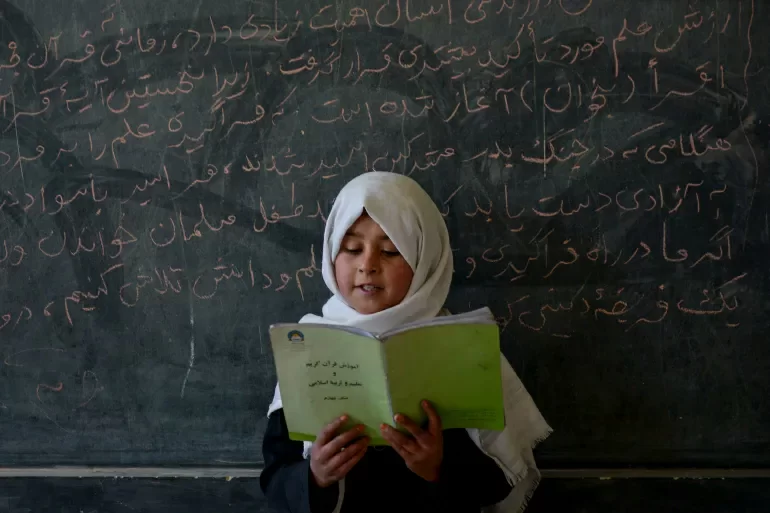
    Afghanistan stands alone in the 21st century as the only country on Earth that enforces a total ban on secondary and university education for girls and women, a growing humanitarian crisis that the United Nations Educational, Scientific and Cultural Organization (UNESCO) has warned is accelerating at an alarming rate.

    In its latest assessment of the country’s collapsing education sector, UNESCO confirms that roughly 2.4 million Afghan girls are currently locked out of secondary education. That number has already risen by 200,000 over the past 12 months, and the agency projects that without an immediate reversal of Taliban restrictions, the total number of excluded girls will climb to nearly 4 million by 2030.

    The sweeping education bans were implemented shortly after the Taliban retook full control of Afghanistan in 2021, following the full withdrawal of U.S. and allied international military forces. In March 2022, the group banned adolescent girls from accessing secondary schools, and just nine months later, in December that same year, it extended the ban to bar women from enrolling in universities.

    These restrictions are part of a broader rollback of women’s rights across the country that the United Nations has formally labeled “gender apartheid”. The policy reach extends far beyond barring female students: the Taliban has also banned women from working as teachers for male students. UNESCO forecasts that this rule will create a shortage of more than 11,000 qualified female teachers by 2030, and the United Nations has already documented that the ban has left a shortage of qualified instructors that forces male students to learn from untrained male staff.

    The education bans have compounded a long list of pre-existing crises that have left Afghanistan’s education system on the brink of collapse. Nearly half of all Afghan schools lack basic infrastructure including clean drinking water, functional sanitation facilities and heating, and more than 1,000 schools have been forced to close permanently over the past five years due to repeated natural disasters that have devastated communities across the country.

    The damage already extends to primary education, where more than 2 million children of all genders remain out of school entirely. Currently, 90% of 10-year-old children in Afghanistan cannot read a simple, age-appropriate text, pushing the country’s national literacy rate down to just 37%.

    Despite widespread global condemnation and repeated calls to reverse the ban – including appeals from a number of Muslim-majority nations – Taliban leaders have refused to roll back the policy, framing the restriction on girls’ education as an internal Afghan matter that is not open to international negotiation.

  • NCCU awards scholarships to 19 secondary school students

    NCCU awards scholarships to 19 secondary school students

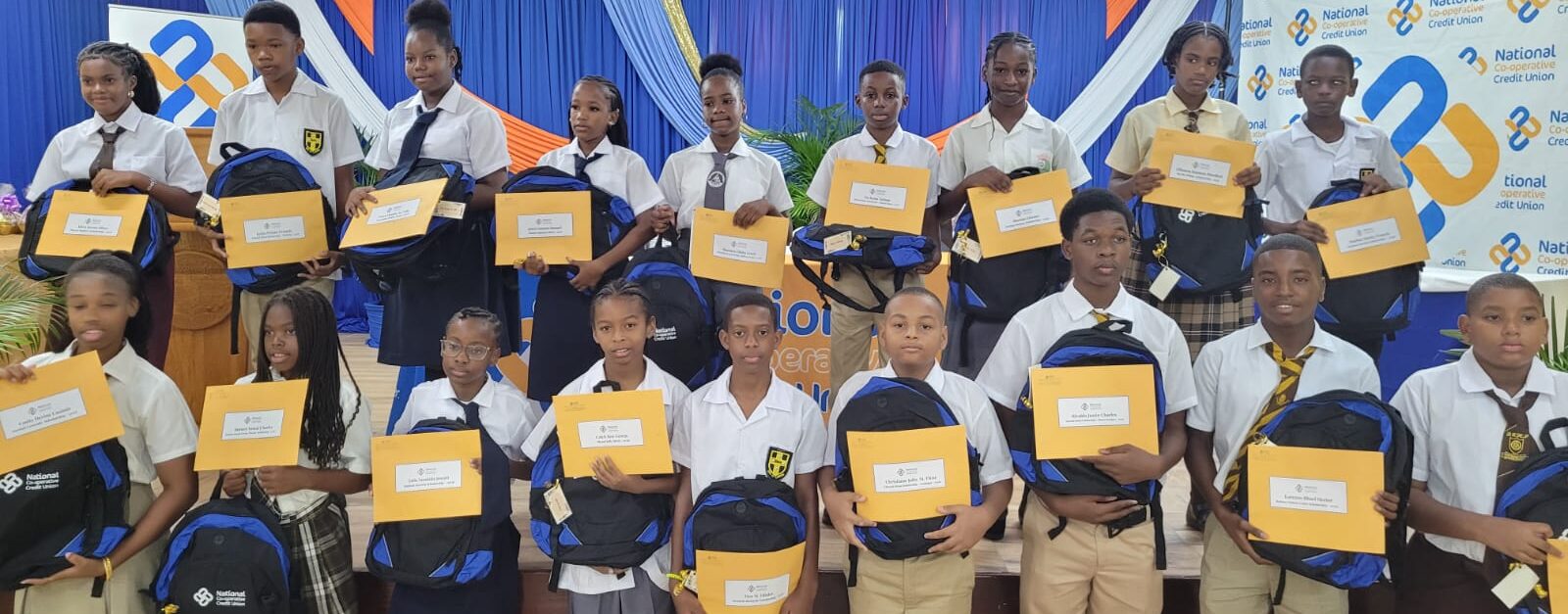
    On a Tuesday in 2026, the National Cooperative Credit Union (NCCU) held its annual scholarship award ceremony at the Dominica Public Service Union (DPSU) building in the capital city of Roseau, formally honoring 19 local secondary school students selected as the latest recipients of its youth education support initiative.

    First established back in 2010, the NCCU scholarship program has grown into a cornerstone of the financial cooperative’s community outreach work, centered on expanding educational access, uplifting young Dominicans, and nurturing the next generation of leaders that will shape the island nation’s future. Over the 16 years since its launch, the program has disbursed awards to more than 240 students across the country, a track record that underscores NCCU’s long-standing commitment to investing in Dominican youth.

    For the 2025/2026 academic year, NCCU allocated a total of $146,228.80 to fund its full slate of scholarship programming. Unlike many targeted awards that only support new students, the initiative extends financial assistance to both first-time recipients and returning scholars currently enrolled in secondary schools across the entire island.

    Program administrators designed the scholarship package to directly ease the heavy financial burden that secondary education places on Dominican families, covering a range of common and often costly educational expenses. Recipients can access up to $700 to cover the cost of required textbooks and essential school supplies. Uniform allowances are also provided, with first-year students receiving $500 and continuing scholars eligible for $300. Eligible students also get monthly transportation stipends that range between $50 and $100, depending on individual travel needs. The support even covers mandatory school fees and examination costs for key regional certifications, including the Caribbean Secondary Education Certificate (CSEC) and the Caribbean Certificate of Secondary Level Competence (CCSLC).

    In a move that expands the program’s impact beyond formal awardees, NCCU also opens its existing inventory of textbooks and school supplies to all students, regardless of whether their family holds membership with the credit union or if they have been selected as official scholarship recipients. This additional outreach ensures that more low-income households can access the resources they need to keep students in school.

    The 19 students recognized as 2026 scholarship recipients are: Grace Destiny St. Ville, Jewel Ayanna Samuel, Caleb Ron George, Shanaya Elisha Lewis, Kylan Aguero Kenrick Prince Francis, Rivaldo Justin Charles, Christiano Julio Leonardo St Fleur, Na-hyme Nelson, Zion St. Hilaire, Marlon Marley Francis, Zaila Yannicka Joseph, Hordane Joseph, Samara Samai Charles, Casity Demeara Devine Casimir, Ajahni Jefferson Trevon Cockrane, Lorenzo Rhael Hector, Ellianna Kieanna Blandford, Sharian Etienne, and Akiva Serena Elizee.

  • Ministry defends strict public school hair rules

    Ministry defends strict public school hair rules

    As the Bahamas approaches a new academic year, a long-simmering debate over public school hairstyle policies has reignited, sparked by a private school’s social media post showcasing Black male student leaders in natural hairstyles that remain off-limits for most public school students across the country.

    Earlier this year, St Andrew’s International School, one of the nation’s most prominent private institutions, shared photos on its official Facebook page of its 2026 Alpha Phi Alpha Fraternity-nominated Head Boy and Deputy Head Boy. Both Black students wore cultural natural hairstyles: one with braids, the other with twists. The post quickly garnered over 500 reactions and more than 100 shares, drawing widespread public comment that highlighted the stark divide between private and public school grooming standards in the Bahamas.

    Commenters were quick to criticize the double standard. Many questioned why high-achieving Black students at a private school could openly embrace their natural hair, while public school students are held to far stricter rules that have even resulted in students being removed from classrooms for non-compliant hairstyles. One commenter noted that hair texture and style have no connection to academic ability or student potential, while another pointed out the striking irony that a school originally founded amid opposition to racial integration now leads in allowing Black students to wear their cultural hairstyles.

    Despite growing criticism of the outdated policy, Bahamas’ Ministry of Education has made clear it has no plans to revise or relax its existing grooming standards. Education Director Dominique McCartney-Russell defended the policy in a recent press briefing, arguing that the rules— which require all male public school students to maintain low haircuts and ban hair extensions for female students except for documented medical reasons— are designed to keep students focused on their studies and foster an orderly, positive learning environment.

    McCartney-Russell confirmed that the Ministry has not held any internal discussions about amending the policy, even amid repeated public pushback and high-profile incidents of non-compliance that have disrupted the school year for students. “Those standards are in place to ensure that the focus is on the academic and not on any other issue,” she said. “We believe that these standards assist with the development of a positive learning environment, and that’s what we maintain for all of our 40,000 children.”

    The policy frames grooming rules as part of the Ministry’s broader discipline framework, meant to instill order and personal responsibility among students. McCartney-Russell noted that students are welcome to wear any hairstyle they prefer during summer breaks, and acknowledged that many struggle to adjust to the rules when the academic year resumes. Once students comply with the haircut requirements, she added, they are able to express their individuality through other appropriate, policy-aligned channels.

    This is not the first time the policy has sparked public outrage. In September 2025, Eyewitness News reported on a high-profile incident at CC Sweeting Senior High School, where the mother of a male student spoke out after her son and a group of other boys were removed from class over their hairstyles. The student in question had a faded cut less than an inch long with tapered edges and shaved sides, a style that school administrators still deemed unacceptably ungroomed. Though the mother complied by taking her son to a barber to adjust his cut, she told reporters she saw nothing inappropriate about his original hairstyle, and noted that the boys were barred from campus entirely until their hair met Ministry standards. She framed the incident as a form of cultural stigma against Black hairstyles, pointing to the greater freedom granted to students at many private institutions like St Andrew’s.

    A separate 2025 incident at RM Bailey Senior High School also drew widespread condemnation, after the school posted a controversial Facebook photo showing a group of male students standing with an educator holding a clump of cut hair. The caption read: “Excellence has a look. Pacer Chronicles. They came to school looking like hoodlums…. and after sitting in the barber’s chair… beautiful.” The post was later removed following public backlash.

    McCartney-Russell pushed back on accounts of widespread student suspensions, saying that the Ministry typically calls parents in for meetings to address grooming violations rather than immediately sending students home. Even so, she confirmed that the Ministry’s position remains unchanged: no reviews of the grooming policy are planned, and the existing rules will remain in effect for the upcoming school year and beyond.

  • Ministry to address continuous assessment concerns Friday

    Ministry to address continuous assessment concerns Friday

    As the 2026 September school term approaches, growing anxiety among Barbadian parents over planned education reforms has prompted the Ministry of Education Transformation to schedule a major public update this Friday, laying out its adjusted path for rolling out continuous assessment and revising secondary school placement procedures.

    The upcoming announcement comes in direct response to a citizen-led petition that has gathered close to 200 signatures from concerned parents, who have pushed back against the plan to introduce continuous assessment for Class 3 students. Critics of the policy argue the proposed changes are both untested and hastily implemented, and they are demanding clear, actionable answers from senior education officials ahead of the new school year. The petition itself goes further, arguing that the rushed rollout threatens to undermine both the educational and social foundations of the island nation, noting that students deserve stable, well-planned systems to support their success, and that parental perspectives must be centered in the reform process.

    In an official statement released Sunday, the ministry confirmed it has taken note of the widespread concerns raised by parents, classroom teachers, and school principals, and announced that Minister of Education Transformation will deliver a full, comprehensive update on the reform trajectory on August 14. The upcoming briefing is expected to cover multiple core components of the ongoing education transformation, including the government’s overall approach to student assessment and curriculum design, revised protocols for secondary school placement, and plans to strengthen institutional support for individual schools across the country.

    “Through our ongoing education transformation work, we have heard clearly the concerns shared by parents, teachers and principals around the proposed launch of continuous assessment for Class 3,” the ministry said in its official statement. The department reaffirmed its conviction that the broader direction of Barbados’ current education overhaul is correct, but acknowledged that thoughtful, well-executed implementation is just as critical to the reform’s success.

    “We are also fully seized of the fact that the implementation must be right as well,” the statement added. Friday’s briefing will lay out a complete, step-by-step strategy and clear roadmap for moving forward with the reform, addressing outstanding questions from stakeholders. The ministry also emphasized its long-term commitment to improving student assessment frameworks and expanding targeted support for learners at every level of the education system, and extended gratitude to parents, educators, school leaders and other partners for their active participation in the transformation process.

  • Board of Education Announces Scholarship Recipients for 2026

    Board of Education Announces Scholarship Recipients for 2026

    In a formal announcement made public earlier this week, a regional Board of Education has officially revealed the full roster of students selected to receive its competitive academic scholarships for the 2026 academic year. The annual award program, designed to recognize outstanding academic achievement, community leadership, and extracurricular impact among high school seniors across the district, received a record-breaking number of applications this cycle, underscoring growing student interest in higher education access support.

    After a months-long rigorous review process conducted by a committee of education administrators, independent community leaders, and post-secondary education representatives, 127 students from 32 local high schools were selected for the awards. Scholarship amounts vary based on financial need, academic standing, and project impact, ranging from $2,000 one-time grants to full-tuition waivers for in-state public colleges and universities.

    Board officials emphasized that the 2026 cohort includes a diverse group of young scholars, with representation from rural school districts, low-income neighborhoods, and first-generation college applicant groups that have historically been underrepresented in higher education. Many of the selected students launched community impact initiatives, from local food security programs to youth STEM outreach projects, in addition to maintaining top academic performance during their high school careers.

    “This year’s group of recipients exemplifies the incredible talent and commitment to service that defines our district’s student body,” said Board of Education President Margaret Holloway in a statement accompanying the announcement. “These scholarships are more than just financial support; they are an investment in the future of our community, empowering young leaders to pursue their educational goals without the burden of overwhelming student debt.”

    Local education advocates have welcomed the announcement, noting that expanding access to need-based and merit scholarships plays a critical role in closing college access gaps for underrepresented students. The scholarship program, now in its 18th year, has awarded more than $12 million in financial support to over 1,800 students since its launch, with 92% of past recipients going on to complete four-year college degrees. Recipients will be honored at a formal award ceremony scheduled for May 2026, and disbursement of funds will begin ahead of the 2026 fall semester.

  • Halo donates $10,000 in scholarship funds

    Halo donates $10,000 in scholarship funds

    When a promised local scholarship failed to materialize before Amejah Nibbs’ tuition deadline, the Halo Foundation stepped in to clear a path for his higher education, awarding the aspiring student $10,000 to cover his first year of studies at GBSB Global Business School.

    The formal handover of the donation cheque was led by Her Excellency Lady Williams, the Halo Foundation’s president, who shared the context behind the emergency grant. Nibbs had already secured an acceptance to the prestigious business school, but the local institution that had pledged to cover his tuition did not disburse the funds in time to meet the program’s payment deadline, leaving his academic plans at risk of collapse.

    Lady Williams acknowledged that the foundation cannot extend financial support to every applicant that reaches out for help. Even with limited resources, she emphasized that investing in the education of young people remains one of the organization’s highest priorities. This commitment to youth development extends beyond scholarship programs, the foundation also supports a broad range of community-focused causes including agricultural training for young people, arts and cultural initiatives, public community outreach, support for disabled populations, care for elderly residents, preservation of national history and heritage, environmental protection, public health access, sports development, programs for uniformed youth groups, empowerment initiatives for women and girls, and global peace advocacy.

  • Axleigh Akez Captures Grant Thornton Accounting and Business Awards

    Axleigh Akez Captures Grant Thornton Accounting and Business Awards

    A rising young academic star from Antigua and Barbuda has cemented her reputation as one of the country’s most promising business students after claiming two prestigious honors from international accounting firm Grant Thornton. Axleigh Akez, a former standout student at Ottos Comprehensive School, was honored with the firm’s annual Accounting and Business Awards in recognition of her exceptional performance on the 2025 Caribbean Secondary Education Certificate (CSEC) examinations.

    The award presentation, held recently at Grant Thornton’s Old Parham Road office, marked another milestone in Akez’s academic journey: the young scholar already earned distinction as Ottos Comprehensive’s top-performing CSEC student for the 2025 examination cycle, and the Grant Thornton honor adds a second major accolade to her growing list of achievements. Following her outstanding CSEC results, Akez progressed to tertiary education at the Antigua and Barbuda College of Advanced Studies (ABCAS), where she is currently enrolled as a second-year student in the institution’s School of Business and Accounting.

    Grant Thornton launched its annual Accounting and Business Awards program with a clear dual mission: to celebrate exceptional academic accomplishment among secondary school students, and to nurture the next generation of professional talent by encouraging young people to pursue long-term careers in accounting and business. The awards have become a respected fixture in Antigua and Barbuda’s education landscape, creating incentives for high-achieving students to build careers in the nation’s finance and commercial sectors.

    In remarks following the presentation, Akez expressed gratitude to Jehovah God for guiding her through her studies and supporting her journey to this achievement. The young student emphasized that she remains committed to staying focused on both her ongoing academic work and her long-term professional goals, as she works toward building a career in the accounting field. Her family and close friends have joined in celebrating the milestone, reaffirming their ongoing support for Akez as she continues her tertiary education and advances toward her professional objectives.

  • Five Belizean students turn sargassum crisis into agricultural opportunity, win STEAM award

    Five Belizean students turn sargassum crisis into agricultural opportunity, win STEAM award

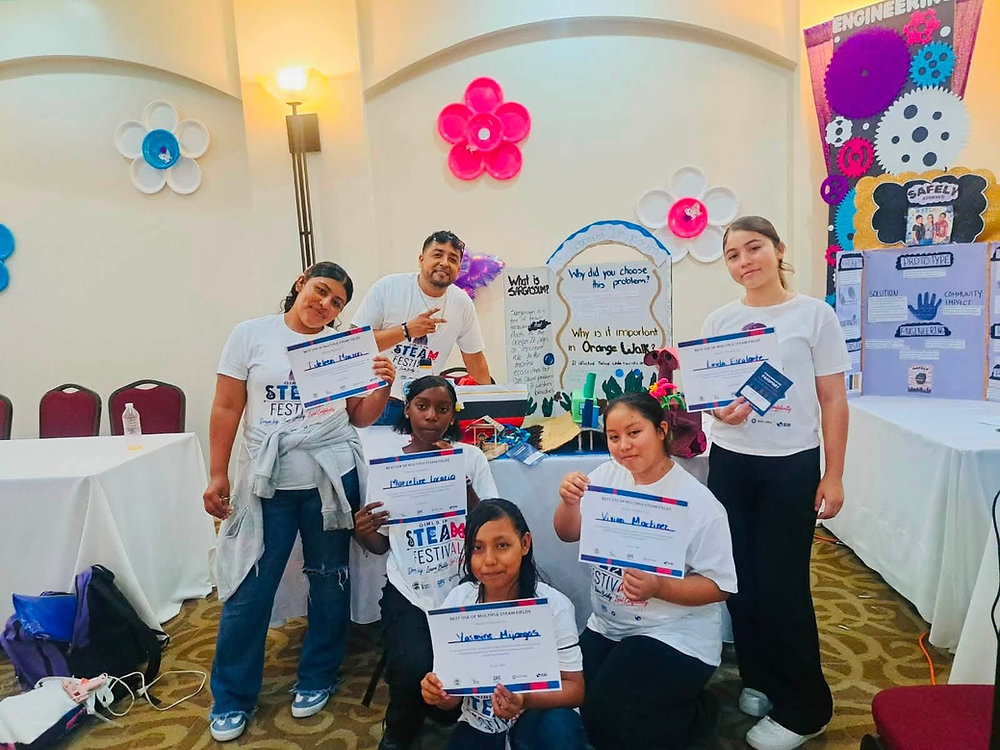
    What began as an unappealing summer camp commitment for five teenage girls in northern Belize has ended in national innovation recognition, delivering a creative potential solution to one of the country’s most stubborn coastal environmental issues. The team of students from Orange Walk’s Bishop Martin High School walked away with the “Best Use of STEAM” award at Belize’s national STEAM Festival, held July 18, 2026 in San Ignacio, Cayo, for their project that transforms invasive sargassum seaweed into usable agricultural fertilizer.

    The students — Linda Escalante, Ideleen Monzon, Vivian Martinez, Yasmin Minjangos, and Marceline Locario — only joined their school’s July STEAM summer camp after gentle persuasion from their mothers. After a grueling academic year, many of the teens prioritized rest over giving up their afternoons for an extra educational program, and none expected the experience to reshape their understanding of problem-solving or earn them national acclaim.

    Hosted as part of the government-backed “Skills for the Future” extracurricular initiative, the summer camp was designed to encourage young women to explore intersections of science, technology, engineering, arts, and mathematics while tackling real local challenges. Facilitated by educator Wilson Mendoza, the program paired interactive lessons with industry engagement: professionals from ASR Group walked participants through real-world engineering applications in sugar production, while a visit to Orange Walk ITVET introduced students to how AutoCAD digital design leverages mathematical principles for modern construction.

    As the camp wrapped up, participating teams were tasked with identifying a pressing community issue and developing an innovative solution rooted in STEAM concepts. The Bishop Martin team settled on sargassum, a rapidly accumulating seaweed that plagues Belize’s coastlines, damaging tourism economies and creating unpleasant, unhealthy conditions as it decomposes on beaches. Their project, titled *The Reborn of Sargassum*, outlines a system where a purpose-built vessel would collect and compress massive volumes of sargassum directly offshore, then process the seaweed into nutrient-rich fertilizer for local farmers.

    The young innovators didn’t stop at a vague concept: they conducted rigorous research into the natural nutrients found in sargassum, documented its proven benefits for boosting crop growth and even suppressing common fungal crop diseases, and studied existing sargassum processing techniques used in neighboring Mexico to address questions around chemical treatment required to make the seaweed safe for agricultural use. Splitting tasks based on individual strengths — with members leading research, model building, and presentation preparation respectively — the team refined their proposal to compete against 30 other teams from six secondary schools across Belize at the national festival.

    Walking into the competition, the five students had little confidence in their chances of placing. But their thorough, locally focused approach impressed the panel of judges, which included education officials, business leaders, and community representatives, ultimately earning them the top honor for STEAM integration. Other winning projects came from teams across the country, including additional entries from Bishop Martin High School, Corozal Community College, and Ecumenical High School.

    The “Skills for the Future” initiative behind the camp is supported by Belize’s Ministry of Education, Culture, Science and Technology, the Inter-American Development Bank, and the Global Partnership for Education, with implementation led by the Education Development Center. Its core mission is to break down barriers for girls and young women pursuing education and careers in STEAM fields, which remain disproportionately male-dominated globally and in Belize.

    For this winning team, the experience is far from over. The students now hope to advance their concept by building a functional working prototype of their sargassum processing system, but they face a key barrier: securing funding to move the project beyond the planning stage. The team has expressed hope that private sector partners will recognize the dual environmental and agricultural value of their idea and provide the financial support needed to test and scale the concept.

    Beyond the potential impact of their sargassum solution, the experience has already transformed how the five students approach new opportunities. A program they nearly rejected for a summer of rest has not only earned them national recognition but also showed them how cross-disciplinary STEAM thinking can turn long-standing local problems into tangible community benefits.

    This report was written by Ingrid Ferlo, Communications Consultant with the Education Development Center.