分类: education

  • Jannou Credit Union awards scholarships and bursaries to 20 students

    Jannou Credit Union awards scholarships and bursaries to 20 students

    On August 11, 2026, member-owned financial cooperative Jannou Credit Union gathered at its Castries headquarters to mark a major milestone: 46 years of advancing educational access for its community through the iconic CPEA Scholarship and Bursary Programme. Held under the unifying theme “We Excel Together”, this year’s ceremony celebrated 20 outstanding student recipients while reaffirming the cooperative’s decades-long commitment to putting people and community growth above all else.

    For nearly half a century, Jannou Credit Union has centered its mission on investing in its most valuable asset: the members it serves. Unlike traditional financial institutions, this member-governed cooperative was built on the core principle that collective progress outpaces individual achievement, a philosophy woven into every aspect of its long-running education initiative. The programme does not reward academic excellence alone; selected students must also demonstrate a deep alignment with cooperative values, from active community engagement to shared investment in the Jannou network.

    This year’s “We Excel Together” theme is not just a slogan — it is reflected in the everyday participation of recipient students and their families across the credit union’s ecosystem. Many student awardees hold Jannou’s Spirit of the Calabash (SOCA) savings accounts, regularly use the cooperative’s products and services, attend annual general meetings, take part in community-wide events, and volunteer their time for local initiatives. These experiences embody the four foundational cooperative values that guide the programme: active participation, collective ownership, community service, and mutual connection.

    Participation sits at the core of Jannou’s identity as a cooperative. The organization grows stronger not when members only use its services, but when they contribute, volunteer, learn, support one another, and take shared ownership of the cooperative community. This ethos extends to the principle of “Concern for Community”, a core cooperative tenet that drives Jannou’s commitment to youth development and educational access. As a financial cooperative, the institution’s long-term success is inherently tied to the success of its members and the broader Saint Lucian communities it serves, making investment in education a natural extension of its core mission.

    Over 46 years, the programme’s success has been rooted in the collective contribution of Jannou’s entire membership. The shared strength and contributions of thousands of members allow the credit union to deliver educational opportunities that extend far beyond traditional financial services. For Jannou, the Scholarship and Bursary Programme is a living example of what collective action can achieve when a community unites around the core cooperative mission of “people helping people” — the defining difference that sets member-owned cooperatives apart from other financial institutions.

    This year’s cycle awarded 12 competitive scholarships to students across secondary institutions in Saint Lucia: Brielle Hosanna Myers and Lalibela Zola James of St Joseph’s Convent; Liam Patrick Jan Freeman, Daveril Albert, Caleb C. G. Antoinе, Jahdai Adams, Tehj Day Weekes, Tristian Seth Khadoo, and Ashvini Meena of St Mary’s College; Esther V. Phillip of Beanfield Comprehensive Secondary School; Sernil Edison John of Vieux Fort Comprehensive Secondary School; and Elijah Desir of Choiseul Secondary School, who received the program’s staff-funded scholarship. An additional eight students received need-based bursaries to ease financial burdens for families ahead of the new academic year: Caleb Dray Marshall and Aizen Lionel of St Mary’s College; Alena William of Saint Lucia Seventh-day Adventist Academy; Seth Clairmont of Sir Ira Simmons Secondary School; Shae Vitalis of Castries Comprehensive Secondary School; Romel Jameson of Corinth Secondary School; Kaniah J. J. Duncan of Babonneau Secondary School; and Zoey S. Edgar of Leon Hess Comprehensive Secondary School.

    For Jannou Credit Union, these 20 students represent far more than award recipients: they are the cooperative’s future members, leaders, industry professionals, entrepreneurs, volunteers, and community builders. The institution prioritizes building meaningful connections with young people from early in their academic careers to lay the groundwork for a future generation of cooperative members who understand the value of collective action and the importance of giving back to their communities.

    Jannou’s investment through the programme serves a dual purpose: it advances educational access for current students and strengthens the long-term future of the cooperative itself. By supporting students who excel academically and contribute positively to their communities, the credit union is cultivating a generation that understands success is never achieved in isolation. True progress grows from support from family, connection to community, active collective participation, and shared cooperation — the very idea at the heart of this year’s “We Excel Together” theme.

    Looking ahead, Jannou Credit Union has reaffirmed its unwavering commitment to investing in members and creating pathways for all community members to thrive. The institution emphasizes that its responsibility extends far beyond offering financial products and services; it also requires fostering a deep sense of belonging, collective ownership, and community connection. The 46th iteration of the CPEA Scholarship and Bursary Programme stands as a clear testament to that enduring commitment. In closing, Jannou Credit Union extended congratulations to all 2026 scholarship and bursary recipients and their families, urging students to embrace the opportunity, pursue their goals with purpose, and remember that their own success can serve as inspiration to lift up other members of their community.
  • BVTB doubles down on culinary training

    BVTB doubles down on culinary training

    Barbados’ public vocational training sector is seeing explosive growth in interest for culinary arts education, prompting the Barbados Vocational Training Board (BVTB) to rapidly scale its international cuisine programming and explore new industry partnerships to meet unmet demand. That is according to top BVTB officials, who shared new enrollment details during the agency’s 2026 orientation rally, where more than 350 aspiring learners registered for courses in the current semester.

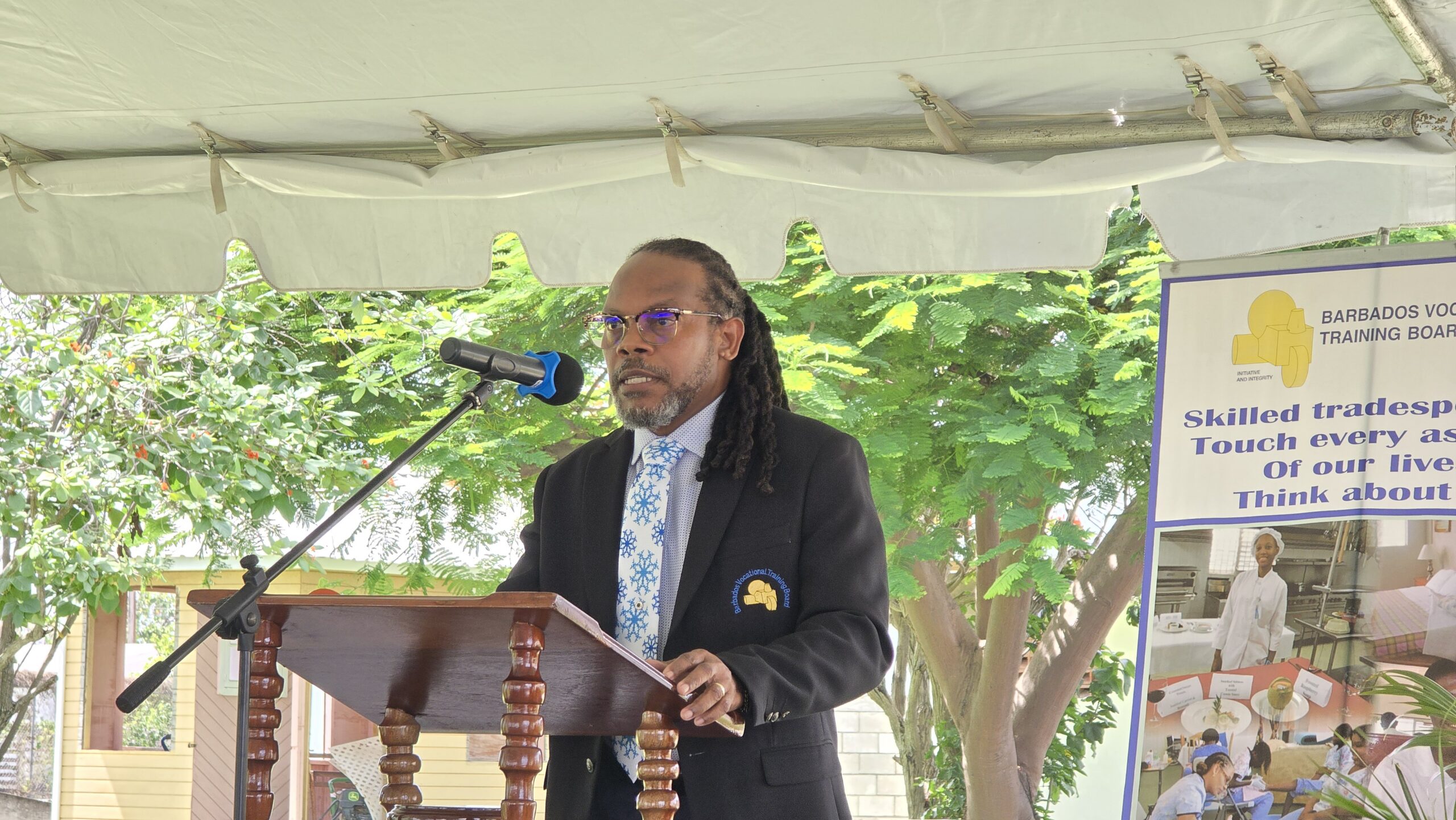
    Gerard Prescod, BVTB’s Director of Training, revealed that the board’s flagship international cuisine programme has already tripled in size in just a few years, growing from an initial two classes to six full sections today. With application volumes continuing to far outpace available spots, Prescod confirmed that agency leaders are already planning a further doubling of capacity to 12 classes once current expansion work is completed.

    “The response to culinary training, particularly for core specializations like professional cooking and pastry arts, has been absolutely overwhelming,” Prescod told attendees at the orientation rally. “Every segment of the learner population is eager to develop skills in cooking, baking, and pastry production, leading to the unprecedented demand we are seeing for these programs.”

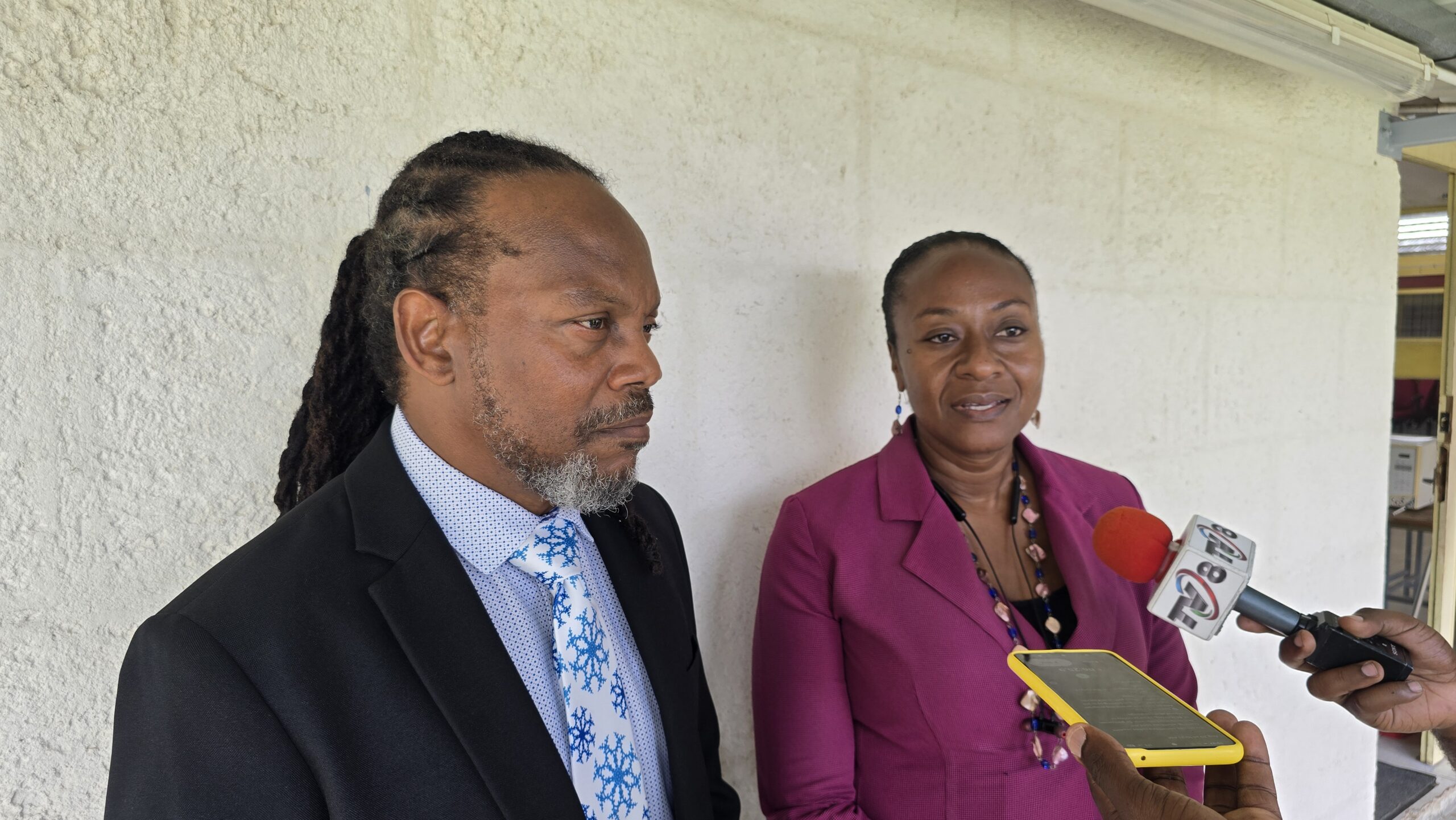
    Sophia Moore, Assistant Director of Training Operations at BVTB, added that strong demand for culinary training extends beyond traditional young trainee cohorts, with mature learners also driving growth in the board’s specialized evening programming. Moore noted that the board offers three evening class sessions per year specifically designed for working adults and older learners, and every session hits full capacity well before the registration deadline.

    “We consistently see a high volume of qualified applicants for international cuisine, commercial cooking, and baking programs across all our offerings,” Moore explained. “These trade areas consistently maintain one of the highest demand profiles of any program we run, regardless of the learner demographic we are serving.”

    Beyond expanding in-class capacity, BVTB is also working to boost career opportunities for its culinary trainees by deepening ties with Barbados’ thriving tourism and hospitality sector. Prescod announced that the agency is developing a new three-year apprenticeship program that will place trainees directly with corporate and hospitality partners across the island to gain on-the-job experience. The board also offers a flexible implant training model, where BVTB’s expert instructors travel directly to partner workplaces to deliver customized skills training for staff.

    Already, BVTB’s culinary training program has built a strong reputation with Barbados’ leading hotel brands, with trainees regularly getting hands-on experience at top properties. Prescod cited a recent example where six BVTB trainees supported kitchen operations at the island’s Girlfriend’s Expo, and following the event, executives at Wyndham Sam Lord’s Castle Castle Resort immediately invited the group back for further work opportunities. Prescod added that BVTB’s two lead culinary instructors bring decades of industry experience and extensive professional connections to the program, helping open doors for trainees seeking work in Barbados’ competitive hospitality sector.

  • Vocational training board turns away trainees as demand outstrips capacity

    Vocational training board turns away trainees as demand outstrips capacity

    The Barbados Vocational Training Board (BVTB) is grappling with a critical capacity shortage as overall demand for hands-on vocational training continues to outpace available spots, even as the organization struggles to draw younger participants into core construction trade programs. As more than 350 new prospective trainees gathered for an orientation rally at the C. Lomer Alleyne Skills Training Centre in Sayes Court, Christ Church this Thursday, BVTB Training Director Gerard Prescod confirmed that nearly all courses for the upcoming semester have already reached their maximum enrollment limits.

    One of the most striking mismatches between demand and demographic participation centers on the board’s popular Construction Gateway initiative, which was designed to prepare a new workforce for Barbados’ growing construction sector. With 1,500 total applicants vying for spots across BVTB programs this intake cycle, Prescod noted that Construction Gateway is overwhelmingly drawing mid-career and older learners, while younger aspiring trainees show little interest in entering construction trades. Instead, younger applicants are gravitating toward other technical fields, including air conditioning repair, refrigeration technology, and general mechanical work.

    “Right now, we do not offer electric vehicle (EV) training at BVTB, so interested learners are heading to the Samuel Jackman Prescod Institute for that training,” Prescod explained. “Once we update our curriculum to add EV training, we expect we will be able to attract more of those young applicants to our programs.”

    Even as the board works to adapt to shifting industry demand, outdated legal restrictions and limited infrastructure continue to cap how many learners it can serve. A long-standing provision in BVTB’s founding legislation limits class sizes to a maximum of 16 trainees per course, a rule that has not been updated to match current demand. To work around this cap, the organization has partnered with local schools to share underutilized campus facilities, and expanded Construction Gateway classes to off-site satellite locations, allowing it to double enrollment in high-demand trades including masonry, plumbing, and tiling.

    BVTB Assistant Director of Training Operations Sophia Moore noted that the organization has operated at full enrollment for years, with only minor shifts in demand for specific programs from year to year tied to broader industry trends. “Some of our most in-demand programs now run multiple sections a year,” she explained. “For example, we now train 32 masonry students annually instead of the original 16. But we still face hard limits from our available facility space, the number of certified trainers we can employ, and our authorized training sites. Even with the satellite sites for Construction Gateway, we still can’t keep up with total demand.”

    This semester, the board is reintroducing automotive training and autobody repair programs after a period of adjustment, and the response from applicants has already overwhelmed available spots: 20 learners expressed interest, but only 16 can be accommodated under the existing class size rule. BVTB is also working to update its automotive curriculum to match changes in the regional vehicle market, sending current instructor demonstrators to receive specialized EV training ahead of launching a full program. The organization is also seeking corporate donations of diesel engines to expand training, as its current fleet of training engines is almost entirely gasoline-powered.

    Registrar Dr. Cheryl Gibson outlined additional new programs the board has launched to meet evolving industry needs, including a new mini excavator operation program, alongside the recently added autobody repair, painting, and finishing courses. She added that BVTB is also exploring the use of training simulators to enhance the learning experience for trainees across all programs. The board also plans to bring back small-engine repair training in the near future to fill another gap in the local skilled labor market.

    Even with these adaptive measures, high demand means hundreds of qualified applicants are turned away each intake cycle. Clerk-typist Shelly-Ann Alexander confirmed that popular programs including skid-steer operation, cosmetology, and international cuisine all had to reject qualified applicants this semester due to lack of space and training capacity.

    Prescod emphasized that the most impactful long-term change to address the capacity crunch would be updating the outdated legislation that caps class sizes at 16 learners. “The 16-person limit has been in place since long before I joined BVTB, and it no longer matches the current demand for skilled workers across Barbados,” he said. “Adjusting that rule would let us expand access to the training that so many Barbadians are seeking, and help meet the labor needs of our growing key industries.”

  • Antigua and Barbuda’s Mathematics Pass Rate Falls to 30.3 Per Cent

    Antigua and Barbuda’s Mathematics Pass Rate Falls to 30.3 Per Cent

    When preliminary results for the 2026 Caribbean Secondary Education Certificate (CSEC) examinations were released, officials in Antigua and Barbuda were confronted with a stark and disappointing outcome: only 30.3% of test-takers passed the mathematics section, a result that places the small island nation nearly 12 full percentage points below the broader Caribbean regional average. The alarming underperformance has prompted the country’s Ministry of Education to roll out a series of sweeping, targeted interventions aimed at lifting mathematics proficiency across all school levels, signaling an end to business-as-usual practices in math instruction.

    Clare Browne, the country’s Director of Education, labeled mathematics the most problematic area of the 2026 preliminary CSEC results during a public discussion on the findings hosted by local broadcaster ABS Presents. “We’re at 30 per cent. The regional average is 42. We are way below the regional average,” Browne emphasized, adding that the Ministry of Education has fully recognized the severity of the gap and the urgent work that lies ahead. CXC Local Registrar Maritza West later confirmed the 30.3% pass rate when presenting official subject performance breakdowns for the country, echoing that mathematics continues to be a consistent area of underperformance.

    For education leaders, the poor result is particularly disheartening given the efforts already deployed to turn outcomes around. Browne noted that the ministry’s dedicated Mathematics Unit and classroom teachers across the country have invested significant time and energy into boosting student performance in recent years. “I know the Mathematics Unit has been doing much. I know our teachers have been doing much in terms of seeking to improve the Mathematics situation,” he said. “And it just appears as if the struggle is real and the struggle continues. But the struggle — we will continue to fight until we overcome.”

    To address the persistent gap, the ministry has already begun restructuring its approach to mathematics education starting with expanded leadership capacity. The Mathematics Unit has been expanded to add two full-time education officers: one focused exclusively on mathematics instruction at primary school levels, and a second tasked with supporting upper primary and secondary school programs. Beyond structural changes, officials will conduct a comprehensive review of mathematics teacher placements across all secondary schools, with the goal of matching qualified educators to roles where they can drive the strongest student outcomes.

    Browne made clear that paper qualifications alone will no longer be sufficient to retain a mathematics teaching post, for educators who consistently fail to deliver improved results will be reassigned. “Even if you have the paper qualifications and you’re not delivering, and we have to kind of move you out of a situation, then we will,” he said, quickly adding that the policy shift is not a criticism of working teachers, many of whom are already pushing to improve outcomes. “I’m not knocking teachers because I know our teachers are trying hard. But we’re ensuring that we place our Mathematics teachers in the best possible position so that they are able to do the best for their charges.”

    Additional on-the-ground support will come from curriculum officers, who will now enter mathematics classrooms regularly to conduct direct observation of instruction, offer real-time mentoring, and provide targeted support to educators who need it. “We’re going to be going into the classrooms, monitoring and mentoring, because we need to be sure as to what is happening there,” Browne explained.

    The ministry will also carry out full audits of school timetables across all grade levels to verify that students are receiving the minimum required instructional time for mathematics, as outlined in national education policy. Under existing rules, students in Grades One through Six in primary school must receive a minimum of 255 minutes of mathematics instruction each week, while kindergarten students require 200 minutes weekly. For secondary schools operating on a five-day schedule, first-form students must have six 45- to 60-minute mathematics periods per week, while students in Forms Two through Five must receive a minimum of five periods. Schools following a six-day rotating schedule are required to offer seven periods for first-form students and six periods for Forms Two through Five.

    Going forward, Browne acknowledged that turning around national mathematics outcomes will require long-term sustained effort and willingness to make difficult, unpopular decisions. “If we have to move people out, then we’re prepared to move people out,” he said. “We have to do something. It cannot be business as usual.”

  • Antigua and Barbuda Government Expanding Four Schools and Repairing Others Ahead of New Academic Year

    Antigua and Barbuda Government Expanding Four Schools and Repairing Others Ahead of New Academic Year

    As the start of a new academic term rapidly approaches, the government of Antigua and Barbuda is executing an ambitious program of school infrastructure improvement, centered on the expansion of four existing campuses alongside targeted repairs at dozens of other education facilities across the twin-island nation.

    Education authorities confirmed that the expansion projects at the four selected schools are designed to address persistent overcrowding in classrooms, a longstanding challenge that has hindered effective learning environments for students across multiple districts. The upgrades will add new instructional spaces, including modern classrooms, updated resource rooms, and improved common areas that accommodate growing student enrollment numbers that have outstripped the capacity of older buildings in recent years.

    Alongside the major expansion work, maintenance teams have been deployed across the country to carry out urgent repairs at dozens of other public schools. These repairs cover a wide range of critical needs: fixing damaged roofing that has leaked during recent rainy seasons, upgrading outdated electrical systems to support modern educational technology, resurfacing deteriorating playgrounds and sports areas, and repairing broken plumbing and sanitation facilities that have posed health and safety risks for students and staff.

    Government education spokespersons emphasized that the entire program is on track to be completed before the first day of the new academic year, which is scheduled to begin in the coming weeks. The infrastructure push forms part of a broader national commitment to improving educational outcomes by investing in safe, functional, and welcoming learning environments that support both student well-being and academic achievement. Officials added that the project has also created short-term construction jobs for local workers, providing a secondary boost to the national economy while addressing critical education sector needs.

    Community leaders and parent-teacher associations across the country have welcomed the initiative, noting that long-overdue upgrades will help address years of deferred maintenance and growing enrollment pressures. Many stakeholders have expressed hope that this infrastructure investment represents the start of a sustained commitment to upgrading the nation’s education facilities, rather than a one-time pre-term push.

  • St. Mary’s and Irene B. Williams Record Strong Results in Mathematics Pilot

    St. Mary’s and Irene B. Williams Record Strong Results in Mathematics Pilot

    Two secondary schools in the Caribbean have marked a promising early milestone for a groundbreaking new modular mathematics initiative rolled out by the Caribbean Examinations Council (CXC), with participating students posting impressive pass rates in the program’s first assessment phase.

    St. Mary’s Secondary School and Irene B. Williams Secondary School, the two institutions selected to pilot the Caribbean Targeted Education Certificate (CTEK) program for the 2025-2026 academic cycle, have delivered standout outcomes in the initiative’s opening module. According to CXC Local Registrar Maritza Weste, St. Mary’s Secondary achieved a 96.8% acceptable-grade rate for Module One, while Irene B. Williams Secondary recorded an 86% pass rate. Of the 40 students registered at St. Mary’s, 32 completed the first examination, with only two failing to earn an acceptable grade. All 43 registered students at Irene B. Williams successfully finished the module assessment.

    Weste offered public commendation for both schools’ first-time performance in the pilot, noting that the outcome exceeds early expectations for an untested new program structure. Participating students completed Module One while enrolled in third form, and will move on to the intermediate Module Two during their fourth form year.

    CTEK was developed to address longstanding challenges with the traditional CSEC mathematics assessment model, which requires students to master the full curriculum and sit a single high-stakes examination at the end of fifth form. By splitting the full subject content into three smaller, progressive, stackable modules, the new framework allows learners to build mastery incrementally, reducing the pressure and cognitive overload that often disadvantage students who struggle with cumulative mathematics coursework.

    Weste emphasized that the modular restructuring does not come at the cost of academic rigor. The program retains the full academic standard of the traditional CSEC mathematics qualification, simply breaking content into more manageable learning blocks. The opening Module One covers foundational secondary mathematics concepts, including core consumer arithmetic. Module Two expands to intermediate topics such as algebra, logical reasoning, and applied measurement, while the final Module Three covers advanced content including geometry, trigonometry, vectors, and matrices.

    A key feature of the new framework is that students earn incremental certification for every module they complete successfully. Once a learner passes all three modules, regardless of when they finish the sequence, they are awarded a full CSEC Mathematics certificate with a final consolidated grade. Education officials confirmed that individual module results are permanently stored on student records, and CXC will combine scores from all three components to calculate the final grade once all assessments are complete.

    The pilot program is framed as an alternative pathway for students who find the pressure and volume of content in the traditional single-examination model overwhelming, and the strong early results provide the first empirical data to inform CXC’s future decisions about a potential broader rollout of the modular framework across the Caribbean.

  • Antigua and Barbuda’s CSEC Pass Rate Falls to 75.3 Per Cent

    Antigua and Barbuda’s CSEC Pass Rate Falls to 75.3 Per Cent

    When preliminary 2026 Caribbean Secondary Education Certificate (CSEC) results were released for Antigua and Barbuda, education stakeholders confirmed a modest but noticeable dip in the nation’s overall pass rate this testing cycle. Official data compiled by CXC Local Registrar Maritza West shows that 1,391 candidates completed 8,560 individual subject examinations across the country this year, resulting in an overall pass rate of 75.3 percent. This marks a 2.1 percentage point decline from the 2025 overall pass rate of 77.4 percent, and sits below the 76.6 percent pass rate recorded in 2024.

    During a public discussion of the results hosted by ABS Presents, West framed the 2026 outcome as largely stable despite the small downward shift, noting that performance has stayed within a consistent range across the past three testing cycles. Clare Browne, Director of Education for Antigua and Barbuda, echoed this framing while offering transparent commentary on the results, acknowledging that any decline in academic performance carries disappointment that cannot be downplayed for the public.

    “Any decline at all in any kind of academic result for me is a little disappointing,” Browne stated, emphasizing that the outcome creates a clear roadmap for targeted improvements in the education system. “I think the results present a narrative of success, of challenges, and certainly index where we need to go, index that we have work to do.”

    Despite the slip in overall national pass rates, 2026 results delivered multiple strong performances that outpaced Caribbean regional benchmarks. Out of the 32 CSEC subject areas offered, Antigua and Barbuda posted pass rates above the regional average in 21 subjects, and matched the regional average exactly in Physical Education and Sport.

    Top-performing subjects delivered exceptionally strong pass rates, led by Additional Mathematics which achieved a perfect 100 percent pass rate this cycle. Industrial Technology (Building Technology) followed closely at 99.4 percent, with Physical Education and Sport posting a 99.1 percent pass rate. Other high-achieving areas included Theatre Arts at 96 percent, Food, Nutrition and Health at 95.9 percent, Technical Drawing at 95.1 percent, Family and Resource Management at 94.5 percent, Biology at 94 percent, Visual Arts at 91.2 percent, and Office Administration at 90.3 percent.

    Core academic subjects also posted solid pass rates above 70 percent, including English A at 80.6 percent, Information Technology at 86.7 percent, Principles of Business at 86.9 percent, and Human and Social Biology at 87.4 percent. English B recorded a 71.5 percent pass rate, while Chemistry hit 70.2 percent, Social Studies 70.4 percent, Physics 74.2 percent, Economics 74.1 percent, and Principles of Accounts 73.4 percent.

    However, the results also highlighted persistent gaps that education leaders have flagged for urgent intervention. Mathematics remains the nation’s most critical academic challenge, posting a pass rate of just 30.3 percent in 2026. Other subjects with below-average performance included French at 45 percent, Caribbean History at 55.6 percent, Music at 61.7 percent, Geography at 62.7 percent, and Spanish at 69.1 percent. Browne specifically called out mathematics’ low pass rate as a clear signal that targeted curricular and instructional support is needed for the subject.

    In closing, Browne extended formal congratulations to all students, teachers, and schools that delivered strong 2026 results, reaffirming that the education ministry will not overlook the overall decline as it plans future improvements. “This year, in the overall percentage pass, we have slipped maybe two percentage points in the wrong direction, and that, for me, holds a little bit of disappointment,” he said. “But nonetheless, we celebrate the successes.”

  • Díaz-Canel Visits New Headquarters of ISDi and the Science and Technology Interface Society of CUJAE

    Díaz-Canel Visits New Headquarters of ISDi and the Science and Technology Interface Society of CUJAE

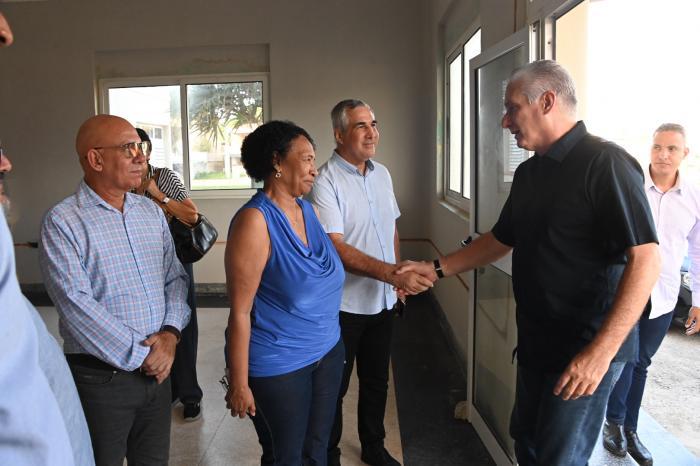
    On a Thursday morning in late August, Cuban President Miguel Díaz-Canel Bermúdez, who also serves as First Secretary of the Central Committee of the Communist Party of Cuba, carried out an official working visit to two key institutions in Havana’s coastal Playa municipality: the future permanent headquarters of the Higher Institute of Design (ISDI) at the University of Havana, and CETA S.A., a university-linked science and technology interface enterprise attached to Havana’s José Antonio Echeverría Technological University.

    During his first stop at the historic Art Deco building, steps from the Caribbean Sea, Díaz-Canel was greeted by ISDI Dean Dr. Sergio Luis Peña Martínez, who walked the president through the extensive renovation work completed to transform the space into Cuba’s new flagship hub for design education. After touring the light-filled, multi-purpose open-concept facilities, which are being finalized ahead of the new academic year, Díaz-Canel encouraged the institute’s community to infuse the new campus with their own creative vision and energy. He predicted the space would ultimately become both architecturally striking and deeply functional for emerging Cuban designers. To add student perspective and buy-in to the final stages of the project, Díaz-Canel proposed inviting recent ISDI graduates to contribute to refining and finishing the campus ahead of the first cohort of students moving in.

    Speaking to reporters after the presidential tour, Dean Peña emphasized the significance of the project, noting that after years of planning and work, Cuba’s leading design program will finally have a purpose-built, permanent home. Even amid the country’s ongoing economic challenges, Peña explained that coordinated resources, collective effort and national commitment have made the renovation possible. He stressed that a high-quality design education cannot thrive in a substandard space: “You can’t learn to make beautiful and useful things in a space that isn’t beautiful, that doesn’t have, as its philosophy or focus, the concept of being a well-conceived space.” The dean added that the renovated campus delivers major gains in operational coherence, educational quality, and intentional design, framing the project as a deliberate investment to deliver the design school that Cuban students, and the Cuban design sector, deserve.

    A state construction ministry-led team has overseen the renovation work, with multiple contracted crews contributing to the project. While final finishing touches are still ongoing, Peña confirmed that the institute plans to welcome students for in-person classes in some completed spaces when the new semester begins in September, with additional facilities including design labs and performance spaces opening in phases as work wraps up. The four-year degree program at ISDI will eventually accommodate roughly 500 design students on the new campus, and Peña shared his belief that students are the core of the university’s mission. For this reason, the institute plans to involve current and recent students in the final stages of campus development, to ensure the space meets the needs of the community it serves. At the close of his visit, Díaz-Canel expressed sincere satisfaction with the progress of the project, with his warm farewell embrace of Dean Peña reflecting widespread optimism about the institute’s future in its new home.

    Following his tour of the ISDI campus, Díaz-Canel traveled to the second stop on his itinerary: CETA S.A., the science and technology interface society that connects Cuban universities to the country’s productive and service sectors. Meeting with the company’s leadership, the president urged CETA’s directors to leverage the full range of new powers granted to private and semi-independent enterprises under Cuba’s ongoing economic reforms.

    Founded in August 2020, CETA S.A. operates as a critical two-way bridge between academic research and industry: it transfers science and innovation outcomes developed at Cuban universities to domestic businesses, while bringing real-world industry challenges back to university research teams to address. CETA President Danae Pigueiras Otero outlined the company’s progress for the president, noting that the firm has achieved solid organizational consolidation and made major advances in engineering, architecture, international partnership building, and export activity in its first six years of operation.

    Pigueiras emphasized that CETA has a central role to play in Cuba’s ongoing national economic transformation, not only as an enterprise subject to these reforms, but as a key partner that can help the entire productive sector implement changes effectively and deliver tangible benefits to Cuban businesses. She identified export growth as one of CETA’s top strategic priorities, noting that expanding non-traditional exports is a critical national goal that the company is prioritizing through intentional, targeted work.

    CETA’s core partnership network currently includes interface societies in nearly every Cuban province and all of the country’s major universities, along with the Cuban Chamber of Commerce, which provides critical support for enterprise activity. Pigueiras noted that Cuban universities are the foundation of CETA’s mission, and the company has built robust in-house capabilities through intentional, efficient management. Its core value proposition lies in integrating academic scientific expertise to solve pressing practical challenges faced by Cuban companies. Looking ahead, Pigueiras framed Cuba’s ongoing economic and social transformations as a major opportunity for CETA to position itself as a trusted ally for the productive sector as it adapts to new policy frameworks and market conditions.

  • Top CSEC Student Not Yet Named as Grade Challenges Expected

    Top CSEC Student Not Yet Named as Grade Challenges Expected

    The naming of Antigua and Barbuda’s top performer on the Caribbean Secondary Education Certificate (CSEC) examinations has been pushed back, after three leading high-scoring candidates opted to request reviews of their lower qualifying grades. As the country’s education authorities confirmed this week, all three candidates have already secured an exceptional 20 Grade One marks, a result that puts them far ahead of other test-takers across the nation. Two of the standout students completed a combined 21 subjects each, ending their initial scoring round with 20 Grade Ones and a single Grade Two per candidate. The third candidate undertook the enormous academic load of 24 total subjects, and earned 20 Grade Ones alongside four Grade Two marks. According to Clare Browne, the Director of Education for Antigua and Barbuda, all three leading candidates are preparing to officially challenge their Grade Two results, which could shift the final count of Grade One marks each candidate holds. These adjusted scores will ultimately decide which student claims the title of the nation’s top CSEC performer for this testing cycle. In response to the pending review outcomes, the Ministry of Education has chosen to hold off on any official public announcement, waiting to release the final result until all challenge requests have been processed and final scores are confirmed. Browne also addressed public confusion around the ministry’s scoring policies, clarifying that while education officials identify high-achieving students to recognize their performance, the ministry does not release a full ranked list of all students who participated in the examinations. “We identified the top-performing students, but we don’t rank students from one to 10, or one to whatever number we have,” Browne explained to reporters. For the time being, the three candidates remain the highest-performing CSEC test-takers in Antigua and Barbuda this cycle, all tied with 20 confirmed Grade One marks. The official announcement of the overall top student will only go out after the grade reviews are finalized and adjusted results are verified by education authorities.

  • Education Director Salutes Dr. Myrick Smith Following Retirement, Welcome New Local CXC Registrar

    Education Director Salutes Dr. Myrick Smith Following Retirement, Welcome New Local CXC Registrar

    After decades of dedicated service to education across Antigua and Barbuda, veteran education administrator Dr. Myrick Smith has formally retired, drawing widespread public recognition for his transformative impact on the island nation’s examination system. In a recent appearance on ABS Television to discuss results from the 2026 Caribbean Examinations Council (CXC) testing cycle, Education Director Clare Browne opened the segment by extending a heartfelt tribute to Dr. Smith’s decades-long contributions to the sector. For years, Browne noted, Antigua and Barbuda residents have relied on Dr. Smith’s annual public presentations to break down the country’s CXC results, making him a familiar and trusted figure in the national education space. Describing his legacy as extraordinary, Browne emphasized that Dr. Smith’s work has shaped the trajectory of education across the twin-island nation for generations. “I want to use this opportunity to salute Dr. Smith for the Herculean contribution that he has made to education and to wish him well as he enters into another sphere, another chapter of his life,” Browne told viewers of the live broadcast. Following Dr. Smith’s departure, the Public Service Commission has appointed Maritza West to fill his dual roles as Education Officer for Examinations and CXC Local Registrar. Browne extended warm congratulations to West on her new appointment, noting that the incoming administrator has spent years building expertise and preparing for this senior leadership position. “Miss West has been around for a long time. I would dare say she has been preparing for prime time for a very long time,” Browne added. The Education Director closed by expressing confidence in West’s ability to succeed, extending official wishes for a productive and impactful tenure as she takes full responsibility for managing and supervising all CXC examination-related operations across Antigua and Barbuda.