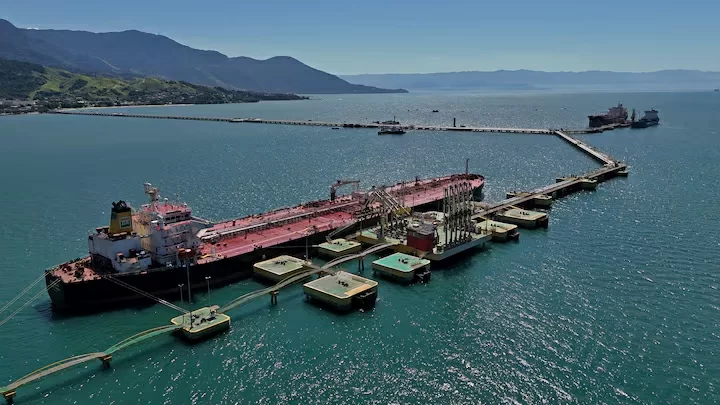
A dramatic shift in global crude oil trade flows has taken shape in the first three months of 2026, as Brazil’s state-owned energy giant Petrobras has completely halted all crude oil and product exports to the United States. This sudden disruption is a direct consequence of the sweeping market changes sparked by the ongoing conflict in Iran, which has upended traditional supply chains and shifted demand patterns across the globe.
The most notable realignment of trade routes has left China as Petrobras’ overwhelmingly dominant export market. During the first quarter of 2026, China absorbed roughly 62% of all crude oil exported by the Brazilian energy major, cementing its position as the company’s core trading partner. This marks a sharp jump from the first quarter of 2025, when China accounted for just 33% of Petrobras’ total exports. A key driver behind this surge in purchases was the prolonged closure of the Strait of Hormuz, a critical global chokepain for oil shipments that connects the Persian Gulf to international markets. In March alone, Chinese buyers snapped up record volumes of Brazilian crude to offset lost supply from Middle Eastern exporters.
India has stepped into the role of Petrobras’ second-largest customer, taking roughly 15% of the company’s total exports in the first quarter, up marginally from 14% in the same period a year earlier. Petrobras has publicly framed India as a “strategic market”, highlighting the South Asian nation’s status as the world’s second-largest importer of seaborne crude oil, a key position that creates long-term growth opportunities for Brazilian exports.
This dramatic expansion of exports to China and India has come at the expense of other key regional markets. The rest of Asia saw its share of Petrobras exports plummet from 28% in Q1 2025 to just 8% in the first three months of this year. Alongside the full halt to US exports – which previously held a 3% share of Petrobras shipments – exports to Europe also fell sharply, dropping from 19% a year earlier to just 8% in the most recent quarter.
Against this shifting trade landscape, Petrobras has ramped up domestic production significantly. The company’s total domestic oil output climbed roughly 16% year-over-year to hit 2.58 million barrels per day in Q1 2026. Total combined sales of oil, natural gas, and refined products also rose around 12% from a year earlier, reaching 3.22 million barrels per day over the period.
Global oil markets have remained highly volatile in recent weeks, driven entirely by growing supply uncertainty stemming from the US-Iran conflict. At the opening of trading on Thursday, US West Texas Intermediate (WTI) crude climbed 41 cents, or 0.43%, to hit $105.50 per barrel, after hitting an intraday peak of $110.93 earlier in the session – the highest price recorded since April 7. By market close, however, WTI had pulled back to settle at $105.07 per barrel, a drop of $1.81, or 1.69%, from the previous session.
Despite the day’s volatile price swings, both WTI and global benchmark Brent crude are on track to notch their fourth consecutive monthly gain. This sustained upward trend reflects widespread market concern that the ongoing conflict in Iran could disrupt global oil supplies for an extended period, keeping upward pressure on prices through the coming months.