KINGSTON, Jamaica — Scotia Jamaica Investments Limited (SIJL) has emerged as the undisputed market leader within Jamaica’s collective investment schemes (CIS) industry, cementing its position following a sustained period of robust expansion in assets under management. Financial data reveals the firm now commands a formidable 32.8 percent market share as of December 2025, marking a significant surge from its 24.6 percent standing recorded in 2020. This translates to an impressive growth of over eight percentage points across the five-year timeframe, underscoring a remarkable upward trajectory. Marie Lyn James, Head of Investment Management for the Caribbean and Central America, attributed this market dominance to unwavering investor confidence in the company’s diverse portfolio offerings. She expressed considerable enthusiasm about the achievement, stating it serves as a powerful endorsement of the firm’s commitment to crafting tailored investment solutions that enable clients to nurture and expand their portfolios consistently, even amidst fluctuating market conditions. James further noted that escalating investor engagement with SIJL’s products signifies a growing perception of the company as a trusted, long-term financial ally. Operating as a subsidiary of Scotia Group Jamaica, SIJL delivers comprehensive investment advisory and wealth management services to both individual and institutional clients. The corporation credits its sophisticated portfolio management and personalized client advisory services as pivotal drivers behind its ascendance in the CIS segment. Adding to its accolades, the firm was honored with the prestigious Best Pension Fund Manager in Jamaica and the Caribbean award by World Finance in 2025, recognizing its exemplary performance in managing retirement assets throughout the region. Under the leadership of Chief Executive Officer Sabrina Cooper, SIJL has pioneered the introduction of an innovative ‘Total Wealth Approach.’ This globally-informed wealth management framework empowers the company’s wealth advisers to transcend conventional investment paradigms, facilitating a holistic assessment of a client’s financial aspirations. This comprehensive strategy encompasses critical areas such as retirement planning, estate considerations, liquidity requirements, and the intricacies of generational wealth transfer. Collective investment schemes, which aggregate capital from numerous investors to deploy across diversified portfolios including equities, bonds, and other securities, form the cornerstone of this rapidly expanding sector.
分类: business
-

Poultry producers warn against extending chicken import waivers
Jamaica’s poultry producers are mounting pressure on the government to terminate emergency import concessions on chicken and eggs, asserting that these measures have surpassed their original purpose and now threaten to undermine local agricultural recovery efforts following Hurricane Melissa.
The temporary waivers, which suspended duties and General Consumption Tax on specific food imports to address post-hurricane shortages, were initially scheduled to conclude in February. Agriculture officials have recently suggested a potential extension through May as a precautionary measure.
Industry data reveals a remarkable production rebound, with weekly chicken output projected to reach 3-3.1 million kilograms by late March—significantly exceeding last year’s 2.7 million kilograms during the same period and surpassing typical supply levels.
Dave Fairman, Vice-President of Jamaica Broilers Group’s Best Dressed Chicken Division, confirmed to media outlets: “We feel fairly confident that current supplies exceed normal annual availability levels.”
While producers acknowledge the initial necessity of emergency measures to stabilize food supplies after widespread damage to farms and livestock operations across multiple parishes, they contend that extending import concessions would disadvantage local farmers who have invested substantially in rebuilding operations. These recovery efforts have been supported by government agencies, private sector initiatives, and aid organizations.
Jaimie Ogilvie, Vice-President of Jamaica Broilers Group’s Hi-Pro Division, emphasized the broader implications: “This extends beyond poultry products to encompass the entire agricultural sector. Farmers are expressing concerns about onions, tomatoes, and vegetables. Our import policy must strike a balance—we cannot allow imported products to compete with local production while attempting to resuscitate domestic agriculture.”
The hurricane disproportionately affected small-scale farmers, who contribute approximately 30-35% of Jamaica’s chicken supply. Many operations in western parishes—including St Elizabeth, Westmoreland, Hanover, St James, and Trelawny—suffered catastrophic losses of infrastructure and livestock.
Industry recovery has been accelerated through coordinated support programs that provided construction materials, increased chick distributions, and technical assistance. Jamaica Broilers alone supplied 17% more baby chicks to small farmers in January and 15% more in February compared to typical levels, while government agencies distributed approximately 80,000 chicks.
Current market challenges primarily reflect distribution imbalances rather than actual shortages, according to industry representatives. While some western regions continue experiencing reduced demand due to ongoing hotel and business recovery, other areas have developed surplus supplies. The Rural Agricultural Development Authority has been facilitating regional distribution networks to address these disparities.
The egg market faces similar complications, with temporary import approvals leading to market oversupply. Hurricane Melissa resulted in the loss of approximately 400,000 laying hens, prompting limited import permissions to prevent shortages. However, imported eggs—particularly medium-sized products from the United States—are now entering the market below local production costs, creating temporary gluts that disadvantage Jamaican egg farmers.
-

WATCH: $200/hr call centre pay claims not consistent with standards, says former BPIAJ president
KINGSTON, Jamaica — Industry leaders have forcefully rejected media allegations suggesting Jamaican call center operators are paying workers as little as $200 per hour, calling the claims unrepresentative of the legitimate business process outsourcing (BPO) sector.
Gloria Henry, former president of the Business Process Industry Association of Jamaica, addressed the controversy during the launch event for the Portmore Informatics Park Incubator and JAMPRO Linkages initiative last Wednesday. She asserted that compliant BPO operators functioning under Jamaica’s Special Economic Zone Act, Companies Act, and national labor regulations adhere strictly to statutory wage requirements.
Henry emphasized that established operators—including tier one, two, and three companies—must comply with compensation standards set by the Ministry of Labour and Social Security, including contributions to the National Insurance Scheme (NIS). She clarified that formal sector wages typically range from $400 to $650 hourly for entry-level positions, with additional compensation through attendance incentives, performance commissions, and overtime premiums.
The industry advocate issued a direct challenge regarding wage violation claims: “We say categorically, bring the pay slips to the secretariat… because that would be half of the national minimum wage. If that is out there, we, as a country, must call out that perpetrator.” She stressed the association’s zero-tolerance policy toward verified breaches while cautioning against generalizing isolated incidents across an industry employing thousands.
Henry shifted the conversation toward productivity and global competitiveness, noting that Jamaica maintains strengths in customer experience and accent neutrality but faces challenges in some transactional operations. She acknowledged that lower productivity per agent can lead to intensified performance management, but distinguished between workplace pressure and exploitation.
Looking forward, Henry called for industry evolution amid global competition, rising labor costs, and technological disruption. “We have to move up the value chain,” she urged, advocating for higher-paying roles in analytics, compliance, FinTech, and digital services, including the establishment of AI labs in Jamaica.
She highlighted the sector’s significant contributions to employment and export earnings, particularly during the COVID-19 pandemic, and concluded that the industry must remain focused on transformation and sustainable growth despite challenges.
-

JN Life expands share of pensions market in 2025
KINGSTON, Jamaica — JN Life Insurance Company Limited has demonstrated remarkable resilience and growth throughout 2025, substantially expanding its foothold in Jamaica’s pension sector despite facing significant operational challenges from Hurricane Melissa during the final quarter.
The company’s individual retirement scheme emerged as a standout performer, generating unprecedented pension contributions totaling $89.7 million—a significant increase from the previous record of $68 million established in 2023. According to Othneil Blagrove, Chief of Sales and Marketing, this achievement represents an extraordinary 200 percent growth in the company’s market share within Jamaica’s pension industry.
Blagrove emphasized the magnitude of this accomplishment, noting that the 2023 record was “shattered” through a combination of transfer transactions and new enrollment activities. The company’s comprehensive performance remained strong across all three core business segments: individual life insurance, group life coverage, and pension services.
In a testament to its sales excellence, seven JN Life agents earned qualification for the prestigious Million Dollar Round Table (MDRT) in 2025—an international recognition typically reserved for the top six to ten percent of insurance professionals worldwide. The distinguished agents—Jellena Sutherland, Winsome Atkinson, Deon Graveney, Shanalee Givans, Sanya Malcolm, Tiffany Lyn, and Gayon Knight—are scheduled to participate in the MDRT annual conference in Anaheim, California, in June 2026.
The company’s operations faced substantial disruption from Hurricane Melissa, a Category Five storm that impacted economic activity across Jamaica during the critical fourth quarter. Despite these challenges, JN Life maintained its growth trajectory.
Earl Jarrett, Chief Executive Officer of The Jamaica National Group, confirmed the organization’s ongoing commitment to expanding JN Life’s operations, including strategic investments in digital technology designed to transform business processes and enhance service delivery.
-

Greython Construction Ltd vacancy: Construction Superintendent
A prominent development firm has announced an opening for a Construction Superintendent position to lead operations on an upcoming luxury hotel and resort project. This senior role requires oversight of all on-site activities, with a focus on maintaining stringent quality standards and project timelines.
The successful applicant will be tasked with managing subcontractor teams, coordinating multiple trade disciplines, and enforcing rigorous safety protocols. A critical component of the position involves ensuring all construction work aligns precisely with approved architectural drawings and specifications, particularly for high-end finishings.
Qualifications for this leadership position mandate a minimum decade of construction management experience, with a demonstrated history of delivering large-scale hospitality or commercial developments. Specialized expertise in reinforced concrete structures, mechanical-electrical-plumbing systems integration, and luxury interior finishes will receive preferential consideration.
The application window remains open on a rolling admission basis until March 24, 2026. Prospective candidates must email their curriculum vitae with accompanying cover letters to the dedicated hiring address: hr@greythonconstruction.gd. All communications must include the exact subject line ‘Construction Superintendent — Vacancy’ for processing.
While all applications receive acknowledgment, only shortlisted candidates will receive direct follow-up communication. This recruitment notice appears through NOW Grenada’s contributor platform, which disclaims responsibility for contributor content while providing abuse reporting mechanisms.
-

Groente-export zakt van 65 naar 15 ton per maand: sector vraagt actie
Suriname’s agricultural industry is confronting a severe crisis, with representatives from the Federation of Surinamese Agrarians (FSA) raising urgent alarms during a meeting with Parliamentary Chairman Ashwin Adhin. The sector, comprising various subsectors including vegetable exports, poultry, fisheries, and agricultural women’s and youth organizations, reported dramatic declines in production and export capabilities that threaten the nation’s food security and economic stability.
Statistical evidence presented during Monday’s meeting reveals a disturbing trend: vegetable exports have experienced a catastrophic decline from previous monthly averages of 65 tons to approximately 15 tons currently. The number of active exporters has similarly dwindled from 13 to just 7, indicating a sector in rapid decline. This alarming contraction demonstrates the vulnerability of Suriname’s agricultural infrastructure and the pressing need for policy intervention.
A central concern highlighted by sector representatives involves the dysfunctional state of agricultural institutions and the inadequate implementation of existing legislation. Particularly troubling is the complete operational halt at the National Food Safety Institute Suriname, which was unanimously established by the National Assembly in 2021 to provide essential food safety standards and controls. This institution’s inactivity represents a significant setback for quality assurance and international market access.
The poultry sector similarly emphasized the critical need to formalize developed standards into binding legislation to ensure professionalization and competitive capability. Meanwhile, the fisheries sector expressed concerns about developments at the Fish Inspection Institute, which despite maintaining a strong international reputation, faces internal challenges that threaten its effectiveness.
Governance structures within agricultural institutions emerged as another critical issue, with sector representatives noting that excessive government dominance often disrupts the intended strengthening function of these organizations. The FSA advocated for expert, professional, and neutral government representation within such institutions, with principles clearly embedded in legislation to ensure stability beyond political cycles.
Parliamentary Chairman Adhin acknowledged the sector’s concerns and emphasized the importance of robust, autonomously functioning institutions with government playing a facilitative and supervisory role. The FSA described the dialogue as constructive and open, expressing hope that the discussed challenges would lead to concrete measures to revitalize Suriname’s agricultural sector.
-

Government unveils strategy to attract high-tech foreign investment
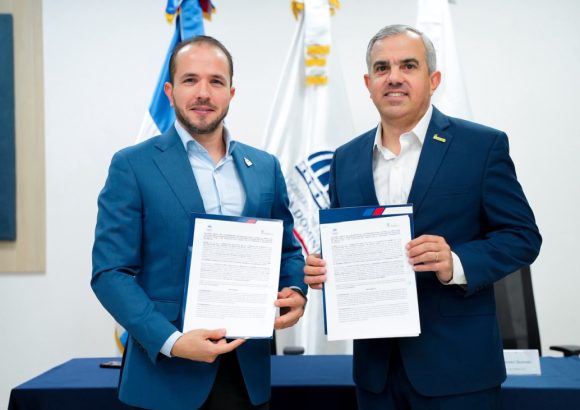
The Dominican Republic has launched a comprehensive ten-year strategy designed to transform the nation into a premier destination for high-value digital investments in the Caribbean region. With technical support from the United Nations Development Programme (UNDP), the Ministry of Industry, Commerce and MSMEs (MICM) formally introduced the Foreign Direct Investment Attraction Plan for ICT Companies 2026–2036 during a high-level presentation in Santo Domingo.
This strategic blueprint outlines a detailed roadmap for integrating the Dominican Republic into global technology supply chains, specifically targeting four high-growth sectors: semiconductor manufacturing, specialized software development, Healthtech innovations, and advanced Business Process Outsourcing (BPO) services. Industry and Commerce Minister Yayo Sanz Lovatón emphasized the country’s unique competitive advantages during the unveiling, highlighting its strategic geographical location, robust digital infrastructure, and growing pool of technically skilled professionals as key factors for attracting international technology corporations.
The initiative represents a coordinated effort among multiple national institutions including ProDominicana, the National Council of Export Free Zones, and the Association of Foreign Investment Companies. Beyond immediate investment attraction, the plan aims to stimulate technological innovation, generate high-quality employment opportunities in STEM fields, and foster sustainable economic diversification. By aligning with international best practices in investment promotion, the Dominican government seeks to establish the country as a central node in the global digital economy landscape for the coming decade.