分类: business

  • Higher Diesel, Higher Taxes? Critics Question Windfall

    Higher Diesel, Higher Taxes? Critics Question Windfall

    A dramatic overnight spike in diesel prices exceeding two dollars has triggered economic concerns across Belize, prompting scrutiny of government fuel taxation policies. As consumers rushed to fuel stations anticipating the increase, industry analysts warn the impact will extend far beyond the pump, affecting agricultural operations, transportation logistics, and construction costs that ultimately influence grocery prices and household repair expenses.

    Prime Minister John Briceño’s administration faces mounting pressure to implement fuel tax reductions amid the price surge. The government maintains it has already sacrificed significant revenue through existing tax concessions, having reduced fuel taxes by $1.25 per gallon to moderate consumer prices. The central controversy revolves around the ad valorem tax system where government revenue increases proportionally as fuel prices rise, creating a windfall effect during price spikes.

    Briceño defended the government’s position, explaining: “The tax percentage remains constant regardless of price fluctuations. We’ve implemented substantial tax reductions to cushion the impact on consumers. However, as a small nation purchasing fuel in millions rather than billions of dollars, we lack the bargaining power of larger nations to dictate pricing structures.”

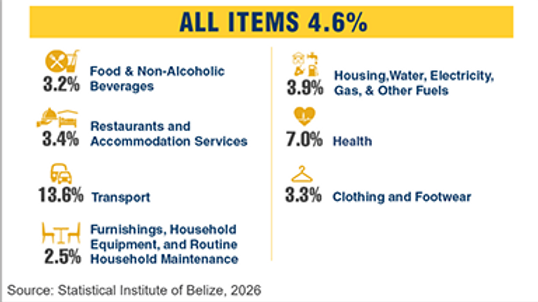
    Statistical data from the first two months of 2026 reveals a complex economic picture. The Statistical Institute of Belize reported modest 0.4% inflation during this period, primarily contained by declining transportation costs resulting from previously lower fuel prices. This temporary relief offset significant increases in essential categories including food and non-alcoholic beverages (up 1.2%), housing utilities (up 0.9%), and restaurant services.

    Statistician Jaime Crespo detailed the contrasting trends: “While meat, cereal products, sugar, electricity, and LPG costs showed concerning increases, transportation category decreases of 3.6% helped balance the overall inflation rate. Between January and February 2026, regular fuel prices dropped 8% per gallon, premium fuel 7.2%, and diesel 2.9% compared to the same period last year.”

    Economists now question whether the government’s $1.25 tax reduction will sufficiently mitigate the current diesel price surge, or if rising pump prices will generate increased government revenue while driving higher consumer costs across the economy.

  • David Gegg Launches Pre-emptive Strike on Port of Belize

    David Gegg Launches Pre-emptive Strike on Port of Belize

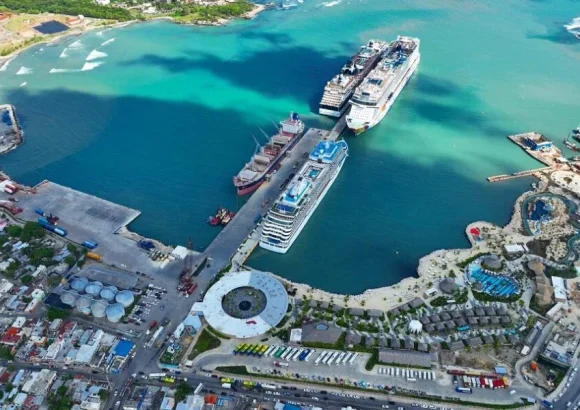
    A significant controversy is unfolding in Belize as the nation contemplates a monumental $450 million expansion of the Port of Belize. The proposed development, which would substantially enhance the country’s cargo and cruise capabilities, faces mounting scrutiny ahead of a critical public consultation period.

    David Gegg, the visionary behind the competing Port of Magical Belize project, has launched a preemptive critique of both the approval process and the proposed expansion’s fundamental viability. Gegg contends that the allocated three-minute speaking limit for public commentary is woefully inadequate for citizens to properly evaluate the project’s complex implications, ranging from navigational safety to environmental sustainability.

    The developer specifically highlights two primary concerns: the considerable challenge of maneuvering large cruise vessels through the narrow One Man Caye Channel, and the potential contamination risks posed by proximity to Belize City’s sewage treatment lagoon. Gegg substantiated these concerns by describing a helicopter reconnaissance mission where he demonstrated that from the perspective of a cruise ship’s bridge—approximately 200 feet above sea level—the proximity of both the Puma tank farm and wastewater facilities becomes alarmingly visible.

    After maintaining a low profile following previous contractual disagreements with the government, Gegg has reemerged with renewed determination for his Port of Magical initiative. He asserts that his project remains the only development to have secured memoranda of understanding with major cruise lines including Royal Caribbean and Carnival, though these agreements were ultimately thwarted by the government’s acquisition of the competing port site.

    Gegg has issued a direct three-point appeal to Prime Minister John Briceño: address the health hazards posed to Port Loyola residents, abandon the notion of establishing a cruise terminal within the current port’s constrained environment, and reconsider parliamentary approval for the Portico Cruise Development bill that would enable his alternative project.

  • Port of Belize’s $900M Comeback: What’s Changed?

    Port of Belize’s $900M Comeback: What’s Changed?

    The Belize government is advancing a ambitious $900 million expansion plan for the Port of Belize, combining cargo and cruise terminal development in a significant infrastructure initiative. This marks the second attempt at major port modernization after a previous proposal foundered during Environmental Impact Assessment review while the port operated under receivership.

    Prime Minister John Briceño addressed environmental concerns surrounding the project, emphasizing that his administration is allowing the process to unfold through proper channels rather than direct intervention. The government asserts it has secured necessary support and implemented substantive changes to address previous environmental objections.

    The critical environmental challenge involves preventing siltation from reaching Belize’s protected reef system, a UNESCO World Heritage Site. Port authorities and the National Environmental Appraisal Committee (NEAC) have developed containment strategies to minimize ecological disruption.

    A cornerstone of the revised approach involves repurposing dredged materials to construct artificial mangrove islands. This innovative solution aims to transform potential environmental liabilities into ecological assets. According to Prime Minister Briceño, these constructed islands will be planted with mangroves to establish entirely new ecosystems that will attract marine life and bird populations.

    The government envisions these created environments serving dual purposes—mitigating environmental impact while generating tourism opportunities. The plan anticipates cruise passengers engaging in kayak excursions through the newly established mangrove habitats, creating an additional attraction alongside the port infrastructure.

    The project now faces scrutiny from environmental organizations and community stakeholders who previously opposed similar development. The success of this $900 million initiative hinges on whether the proposed environmental safeguards adequately address concerns that derailed the earlier proposal.

  • Caneros Push Back Against PM; BSCFA Demands Level Playing Field

    Caneros Push Back Against PM; BSCFA Demands Level Playing Field

    A significant dispute has emerged within Belize’s sugar industry as the Belize Sugar Cane Farmers Association (BSCFA) challenges Prime Minister Briceño’s recent statements regarding government intervention. Contrary to the PM’s suggestion that continued bailouts for cane farmers are unsustainable, BSCFA Chairman Alfredo Ortega presents a fundamentally different perspective on the industry’s challenges.

    Ortega contends that the association’s current difficulties stem not from operational mismanagement or regulatory non-compliance, but from inadequate governmental enforcement mechanisms. The chairman emphasizes that BSCFA maintains full compliance with industry standards equivalent to other associations, yet faces disproportionate challenges due to their efforts to negotiate improved terms for their members.

    The core issue, according to Ortega, involves the government’s failure to implement necessary regulatory frameworks that would ensure equitable treatment across the sector. He references a previous attempt by Mr. Mai to establish such regulations, which ultimately reached the judicial system without subsequent government appeal—a move Ortega believes would have created fair industry conditions.

    The association’s position clearly rejects the characterization of their requests as bailouts. Instead, they advocate for strengthened regulatory oversight that would level the competitive landscape and enable cane farmers to receive due premiums without penalty for negotiation efforts. This stance represents a fundamental disagreement about the nature of support required for agricultural sustainability in Belize’s important sugar sector.

  • Belize Ends 2025 Strong: Q4 GDP Up 4.7%

    Belize Ends 2025 Strong: Q4 GDP Up 4.7%

    Belize concluded 2025 with robust economic performance, recording a significant 4.7% GDP growth in the fourth quarter according to the Statistical Institute of Belize (SIB). The nation’s economic output reached $1.396 billion during the October-December period, representing a substantial $63.31 million increase compared to the same quarter in 2024.

    Statistical data reveals that the primary sector contributed $180.3 million, secondary industries accounted for $169.2 million, while the tertiary sector dominated with $871.9 million. Tax revenues added another $174.8 million to the total economic output.

    The growth was primarily driven by exceptional performances in multiple sectors. Agriculture, forestry, and fishing demonstrated remarkable double-digit expansion, with banana production surging by 19.8% from 19,000 metric tons in Q4 2024 to 22,800 metric tons in Q4 2025. Marine exports also showed strong improvement, registering an 8% overall increase supported by shrimp exports growing 6.6% and other fishing products, particularly lobster tail and lobster meat, advancing 8.3%.

    The financial and insurance sector experienced extraordinary growth, with insurance activities skyrocketing by 59% from $11 million in Q4 2024 to $17.4 million in Q4 2025. Construction, retail trade, and transportation sectors additionally contributed to the widespread economic acceleration, indicating diversified strength across Belize’s economic landscape.

    According to SIB Statistician Christopher Hulse, these figures demonstrate broadening economic momentum that positions Belize favorably for continued growth in 2026.

  • Symmonds urges creatives to protect, profit from culture

    Symmonds urges creatives to protect, profit from culture

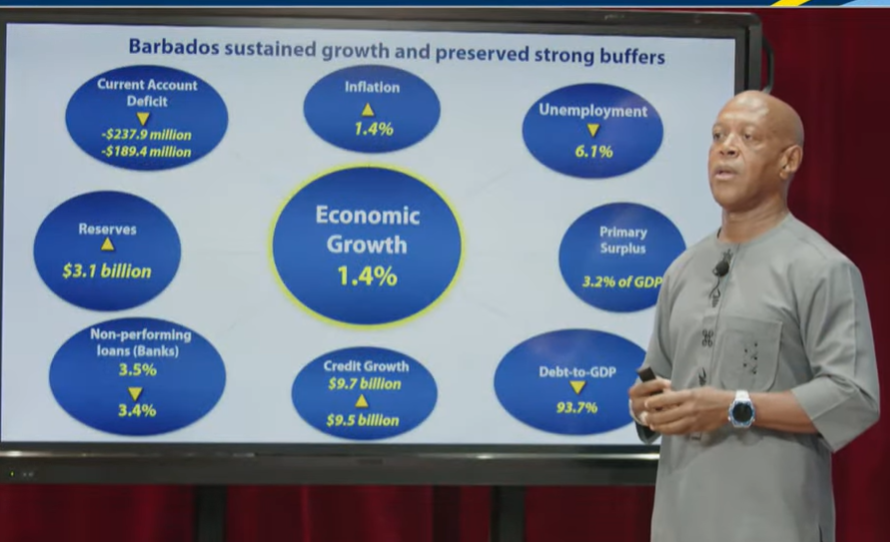
    Barbados stands at a critical economic crossroads where its creative industries must transition from cultural pride to commercial profitability or risk irreversible decline, according to a stark warning from Minister of Energy, Business Development and Commerce Kerrie Symmonds. Speaking at the Third Annual Barbados Orange Economy Consultation hosted by the Barbados Coalition of Service Industries, the senior cabinet member delivered a forceful critique of the region’s historical pattern of endless deliberation without decisive action. Symmonds emphasized that while his portfolio includes the demanding energy sector, developing Barbados’s orange economy—encompassing creative and cultural industries—remains an absolute priority for national economic diversification. The minister pointed to the cautionary tale of Trinidad and Tobago’s steelpan, an instrument invented in the Caribbean but now predominantly manufactured and monetized by foreign entities in the United States, Japan, and China, which collectively control over 40% of global production. Similarly, he warned that Barbados’s national sport of road tennis faces appropriation unless the island establishes legal protections and commercial frameworks. Symmonds expressed particular frustration with the region’s failure to capitalize on the 2008 Economic Partnership Agreement with the European Union, which granted Caribbean entertainers access to 27 European markets but lacked the necessary funding and technical support for implementation. He criticized how external agendas on human rights and gender identification had overshadowed trade priorities, creating what he termed ‘policy incoherence.’ To address these challenges, the government is finalizing infrastructure for a junior stock exchange to provide equity financing for creative businesses. The minister urged creative practitioners to adopt the aggressive advocacy strategies employed by Barbados’s tourism and cruise sectors, emphasizing that cultural expression must evolve from passion pursuit to protected commercial enterprise through geographical indicators and specialized manufacturing standards.

  • Inflation Up in February 2026…Ironically, Gas Had Offered Some Relief

    Inflation Up in February 2026…Ironically, Gas Had Offered Some Relief

    The Statistical Institute of Belize has documented a discernible uptick in consumer prices for February 2026, with the national inflation rate reaching 0.7%. This economic development was predominantly propelled by escalating costs across essential categories including food commodities, residential electricity, and commercial restaurant services.

    A detailed analysis of the food sector reveals significant price surges, with pork products escalating by over 15% and beef steak prices advancing by nearly 9%. The cost of sugar witnessed a substantial 16% increase, while vegetable items including tomatoes and carrots recorded double-digit price growth. Conversely, the market experienced price reductions for certain fresh fruits including watermelon and plantain, which provided partial mitigation against the broader food basket inflation.

    The energy sector contributed additional inflationary pressure following the implementation of increased electricity rates per kilowatt-hour at the commencement of 2026. The consumer services sector, particularly dining establishments and healthcare providers, also implemented moderate price increases. The apparel industry demonstrated modest inflation, predominantly affecting men’s clothing and footwear categories.

    Contrasting these trends, the transportation sector experienced deflationary relief as fuel prices declined substantially year-over-year. Regular gasoline prices decreased by 7.5%, premium gasoline by 6.1%, and diesel prices fell by 1.5%. This reduction in transportation costs partially counterbalanced the inflationary pressures from other consumer categories.

    Regional analysis indicates significant geographic variation, with Punta Gorda recording the highest municipal inflation rate at 2.2%, while Orange Walk maintained the most stable pricing environment with merely 0.2% inflation. The cumulative inflation rate for the initial bimonthly period of 2026 stands at 0.4%.

    Market analysts note that the February fuel price relief proved transient, as March witnessed a rapid reversal of this trend following geopolitical disruptions in global oil markets related to conflict in Iran, which drove petroleum prices upward once more.

  • Belize Made Nearly $1.4 Billion in the Final Quarter of 2025

    Belize Made Nearly $1.4 Billion in the Final Quarter of 2025

    The Central American nation of Belize concluded 2025 with robust economic performance, recording a substantial 4.7% GDP growth in the final quarter according to official data released by the Statistical Institute of Belize (SIB). The country’s total economic output reached $1.396 billion between October and December 2025, demonstrating broad-based expansion across multiple sectors.

    Economic analysts note particularly strong performance in primary industries and services. The agricultural sector showed remarkable vitality with increased production of bananas, corn, and beans, while the fishing industry capitalized on strengthened international demand for shrimp and lobster exports. The construction industry emerged as a standout performer, registering an impressive 10% growth fueled by increased imports of building materials and expanded project financing through commercial loans.

    Tourism contributed significantly to the economic upswing, with visitor arrivals showing notable improvement. Cruise passenger traffic surged by nearly 14%, bringing 301,500 visitors to Belize’s shores during the quarter. The services sector overall proved to be the largest growth driver, expanding by approximately $39 million, with financial services including banking and insurance companies growing by an remarkable 18% due to increased loans, deposits, and insurance revenues.

    Government revenue collection also strengthened, with ‘Taxes on Products’ increasing by 4.6% from $167.1 million in Q4 2024 to $174.8 million in the same period of 2025. Despite these widespread gains, some sectors experienced challenges. Citrus production declined, sugarcane harvesting was suspended during the period, and livestock production including cattle and pigs recorded slight decreases, indicating selective pressures within the otherwise thriving economy.

  • CCJ says process contract must be “recognised” in Guyana’s procurement process

    CCJ says process contract must be “recognised” in Guyana’s procurement process

    In a landmark judicial decision with far-reaching implications for commercial law, the Caribbean Court of Justice (CCJ) has formally recognized the doctrine of process contracts within Guyana’s legal framework. The ruling emerged from the protracted case of Cara Investments Limited versus Christopher Ram, Receiver of Hotel Towers Limited (HTL), which originated from a 1999 receivership sale.

    The regional court, serving as Guyana’s final appellate authority, determined that process contracts may arise in both public and private tender processes when the intention of parties—objectively derived from tender documents and surrounding circumstances—supports such a conclusion. Justice Maureen Rajnauth-Lee, delivering the lead judgment, emphasized that this legal doctrine enhances competitive bidding integrity by imposing binding obligations of fairness, good faith, transparency, and accountability throughout tender proceedings.

    The case centered on whether Cara Investments’ response to a 1999 Request for Proposal (RFP) constituted a binding process contract (termed ‘Contract A’). The court meticulously examined the submission, which was explicitly framed as a conditional Expression of Interest subject to due diligence completion and additional information provision. Justice Rajnauth-Lee concluded that the proposal lacked necessary elements for contract formation, functioning instead as a preliminary inquiry rather than a compliant bid.

    Critical to the determination was the court’s finding that Cara’s conditions—including altered timelines and pending financial backer approval—demonstrated absence of intent to form immediate contractual relations. The CCJ further noted that Cara’s premature initiation of legal proceedings potentially disrupted the tender process, undermining its own claims.

    The unanimous judgment upheld prior decisions from Guyana’s High Court and Court of Appeal, dismissing Cara’s allegations of contractual breach, unfair treatment, and misrepresentation. The court affirmed that without the foundational ‘Contract A,’ no claims for damages or lost opportunities could be sustained.

    Legal representatives for the Receiver expressed satisfaction with the clarification provided by the CCJ, acknowledging the guidance established for future jurisprudence. The ruling establishes significant precedent for tender processes across the Caribbean community, balancing bidder protections with procedural realities in commercial transactions.

  • Power Beneath the Surface: Mark Brantley’s Bid to Make Nevis a Caribbean Geothermal Energy Power

    Power Beneath the Surface: Mark Brantley’s Bid to Make Nevis a Caribbean Geothermal Energy Power

    The Eastern Caribbean island of Nevis is spearheading an ambitious energy transformation through the development of its volcanic geothermal resources, a project that could redefine its economic future while establishing a replicable model for small island nations globally. Under the leadership of Premier Mark Brantley, the Nevis Island Administration is mobilizing significant multilateral financing to harness the island’s substantial geothermal potential, currently trapped beneath its dormant volcano.

    Nevis residents currently endure electricity rates exceeding 40 US cents per kilowatt-hour—among the highest in the Western Hemisphere and approximately triple the United States average. Nearly every cent of this expenditure flows out of the island to foreign oil suppliers, leaving the local economy vulnerable to global price fluctuations driven by distant conflicts and crises. Premier Brantley, who serves as both the island’s elected leader and Minister of Energy, has declared this arrangement untenable.

    The cornerstone of Brantley’s strategy leverages Nevis Peak, a dormant volcano sitting atop geothermal reservoirs identified as among the most significant in the Caribbean basin. The island’s position above a tectonic plate boundary brings geothermal heat closer to the surface than at most comparable sites, reducing both extraction costs and technical complexity.

    The project’s initial phase targets a 10-to-30-megawatt geothermal power plant, sufficient to meet the island’s entire domestic electricity demand. Successful implementation would slash electricity costs below US$0.15 per kilowatt-hour—less than half the current rate—while insulating consumers from global commodity market volatility.

    Beyond domestic energy security, the administration envisions transforming Nevis into a regional energy exporter. With surplus capacity, the island could develop green hydrogen and ammonia production, high-density data centers, ship-to-shore power systems, and food processing facilities. Future phases might enable electricity exports to neighboring islands including St. Kitts, Anguilla, and Antigua via subsea cable.

    The economic implications extend beyond power generation. Affordable geothermal energy enables large-scale desalination, addressing freshwater constraints while reducing dependence on food imports. This creates a cascade effect: cheaper energy enables cheaper water, which strengthens domestic agriculture, reduces import dependency, and builds economic resilience rarely achieved by small island states.

    Premier Brantley deliberately compares Nevis’s potential trajectory to Norway’s transformation through resource development, though he emphasizes the renewable distinction: “Nevis will become an energy economy and the Norway of the Caribbean. Unlike Norway, we will power our transformation with renewable energy.”

    The project has assembled an impressive financing coalition including the Caribbean Development Bank, Inter-American Development Bank, and Saudi Fund for Development, which have collectively committed US$37 million toward the current drilling phase. The Green Climate Fund and Italian government have also contributed to the broader financing structure. After previous setbacks, five internationally recognized drilling firms submitted bids in July 2025, representing the most competitive tender the project has seen.

    This institutional backing represents a form of public due diligence, with each organization concluding after independent assessment that Nevis is executing a credible plan. Daniel Best, Director of Projects at the Caribbean Development Bank, noted: “A 10-megawatt geothermal power plant on Nevis can generate more than 100% of the domestic demand. If successful, the project will go a long way to helping the Federation realize their sustainable energy goals.”

    The regional context illustrates the long-term commitment required for geothermal success. Guadeloupe’s Bouillante plant traces its origins to 1960s exploratory drilling, only commissioning its first unit in 1986. Dominica’s geothermal program began around 2010 and reached commercial commissioning in early 2026 after a 15-year journey involving financing restructurings and construction delays.

    For development finance institutions and private investors monitoring the Caribbean’s energy transition, Nevis represents a small island state with a confirmed resource base, committed multilateral backing, and clear delivery targets. As Premier Brantley frames it: “We are seeing the potential for energy security, water security, food security, economic security and environmental protection flowing from this resource development. This allows us not only to better secure Nevis’ future but also accelerates our achievement of the United Nations Sustainable Development Goals.”

    The project carries generational significance—the moment when an island that has consistently outperformed its circumstances finally builds the structural foundations its people have long deserved. When the first geothermal electrons reach the grid, residents paying 40 cents per kilowatt-hour today will have tangible evidence of what two decades of persistence and strategic coalition-building can achieve.