
The Tobago Division of the TT Chamber of Industry and Commerce is gearing up for a revitalized economy in 2026, driven by a combination of strategic policies and collaborative efforts. As the primary advocate for sustainable business growth on the island, the division is actively promoting projects that stimulate economic activity and bolster investor confidence. Key initiatives include addressing public infrastructure needs, enhancing government service efficiency, and fostering closer collaboration with the central government. These efforts aim to position Tobago to seize emerging opportunities in a rapidly evolving economic landscape. Tourism remains the cornerstone of Tobago’s economy, contributing nearly 14% of the island’s GDP and employing around 16,000 people. The sector’s potential is further amplified by the completion of the airport expansion project, which triples passenger capacity and opens up new investment opportunities in high-end accommodations and logistics. Additionally, the development of a modern commercial port, including a cruise ship terminal and marina, is expected to boost international trade, tourism, and marine activities while creating long-term employment and attracting foreign exchange. The chamber emphasizes the importance of aligning these projects with Tobago’s sustainable tourism strategy and environmental goals. Beyond tourism, the division is exploring diversification in export markets, particularly through the Caricom Single Market and Economy (CSME), which offers new avenues for local businesses to expand their reach. Challenges such as foreign exchange shortages persist, but the chamber remains committed to finding solutions in collaboration with relevant stakeholders. Opportunities abound in agriculture, renewable energy, manufacturing, and the digital economy, positioning Tobago as a hub for innovation and investment. The chamber’s optimism for the island’s economic future is unwavering, as it continues to foster an environment that supports both local and international enterprises, ensuring inclusive growth for all stakeholders.
分类: business
-

How Canada helped BWIA to take flight
In the 1960s, Air Canada and the Canadian government played a pivotal role in bolstering British West Indian Airways (BWIA) to become the Caribbean’s regional carrier. By 1967, the Trinidad and Tobago (TT) government had advanced $15,255,816 to sustain BWIA’s operations, recognizing the urgent need for fleet expansion and financial restructuring. However, BWIA faced more than just financial challenges. A 1966 memorandum from BWIA’s chairman highlighted critical deficiencies in top management, engineering, planning, and accounting expertise, as well as a severe shortage of experienced pilots. The chairman concluded that BWIA needed a financially strong partner with the ability to provide managerial and staffing support. Acting on this advice, the TT government sought suitable partners, leading to a proposal from Canada on May 23, 1967. The Canadian government, after reviewing BWIA’s situation, proposed a comprehensive corporate association between Air Canada and BWIA. Key elements of the proposal included designating BWIA as the regional carrier for the Commonwealth Caribbean, allowing Canada to acquire up to 49% of BWIA shares, appointing a majority of BWIA’s board of directors, and negotiating multilateral air agreements. The TT government, optimistic about BWIA’s potential, had envisioned it as a regional carrier since 1961, when it salvaged the airline. Despite initial efforts to persuade other West Indian territories to join BWIA, the airline’s transformation into a regional carrier was a complex and collaborative endeavor involving multiple governments and stakeholders.
-

8 steps to sustainable investment
In anticipation of the COP 30 summit earlier this month, the Association of Chartered Certified Accountants (ACCA) introduced a groundbreaking unified framework for responsible investment. This innovative approach seamlessly integrates sustainability considerations into strategic decision-making processes. Developed in collaboration with the universities of Witwatersrand and Leeds, the framework, titled ‘Understanding Responsible Investment,’ provides a comprehensive yet concise guide linking environmental and social issues to capital allocation and investment decisions. The framework outlines eight essential steps that organizations can follow to align their financial success with environmental and social responsibilities. Sharon Machado, ACCA’s head of sustainable business, emphasized the significance of this development, stating, ‘Despite the growing urgency to address climate change and social inequity, a unified approach to responsible investment has been lacking. Our collaborative effort has now filled this gap, offering a model that systematically incorporates all risks and opportunities into investment analysis.’ The framework includes key components such as ESG integration, sustainability frameworks, screening methods, investor proactivity, strategic purpose, investment options selection, regulatory requirements, and outcome measurement. Dannielle Cerbone, an associate professor at the University of Witwatersrand, praised the report for its academic rigor and practical relevance in an increasingly complex investment landscape. The report also highlights the evolving nature of sustainability reporting and the need for investees to balance financial, ecological, and social value creation to better access responsible finance. Machado expressed hope that the report would serve as a practical tool for investors and companies, particularly in assessing the impact of sustainability-related factors on organizational valuation—a task that remains challenging.
-

Cher-Mere makes Guyana debut at GuyExpo 2025
The renowned Caribbean beauty brand, Cher-Mere, marked its debut in Guyana at the prestigious Guyana Expo 2025 (GuyExpo), held from November 13-17 in Georgetown. The event, Guyana’s longest-standing trade exposition, attracted over 270 exhibitors from across the Caribbean and globally, alongside more than 100,000 visitors. Cher-Mere showcased its signature natural beauty and hair care products, including its premium hair oils such as Organic Black Castor Oil, Pure Batana Oil, and a blend of Batana, Rosemary, and Tea Tree Oil, all crafted by The Herbarium Ltd. in Trinidad and Tobago. The brand also featured Bigen Hair Care products, distributed through Merle’s Hairdressing Supplies Ltd. The Cher-Mere team, led by promotions manager Janelle Wiltshire, spa operations manager Khadine Knights-Benjamin, and retail manager Khadine Hinds, engaged visitors with product demonstrations, giveaways, and educational sessions on their wellness-focused offerings. Cheryl Bowles, biochemist and founder of Cher-Mere, expressed her enthusiasm for entering Guyana’s dynamic market, emphasizing the brand’s alignment with consumer demand for sustainable, authentic, and science-based beauty products. Founded over 40 years ago in Trinidad and Tobago, Cher-Mere has evolved from a local hair-care brand to an internationally recognized name in natural beauty and self-care. The company’s participation in GuyExpo 2025 underscores its strategic expansion into the Caribbean region, aiming to forge partnerships with distributors, salons, and wellness retailers while connecting directly with consumers. Notable visitors to the Cher-Mere booth included Guyana’s Minister of Tourism, Industry and Commerce, Susan Rodrigues, and Trinidad and Tobago’s High Commissioner to Guyana, Candice Shade, among other dignitaries.
-
TTSEC warns investment scams on the rise
The Trinidad and Tobago Securities and Exchange Commission (TTSEC) has issued a critical public advisory regarding an alarming proliferation of sophisticated investment scams. In an official statement released November 27, the financial regulatory authority detailed how fraudsters are deploying increasingly advanced tactics, including artificial intelligence-generated content, to deceive potential victims.
According to the TTSEC, modern investment scams employ a multi-faceted approach to gain victims’ trust. Fraudsters create convincing fake social media profiles using stolen imagery and minimal personal information. These operations frequently promise unrealistic financial returns, such as generating $30,150 from a $2,000 investment within mere hours, to entice victims with impossible guarantees.
The commission highlighted that scammers typically migrate conversations to private messaging platforms like WhatsApp or Telegram after initial contact. There, impersonators posing as legitimate investment representatives provide false assurances using fabricated documentation. The TTSEC specifically warned about scammers’ growing use of AI technology to create convincing fake documents, profiles of high-ranking officials, and even counterfeit video messages featuring supposed institutional leaders.
Other red flags include urgent deposit requests to ‘secure limited spots,’ false claims about fee-free investments, and completely fabricated investment platforms that display exaggerated account balances to simulate profitable returns. Victims often face subsequent demands for substantial withdrawal fees exceeding $1,000, followed by additional payment requests.
The advisory further cautioned against sharing sensitive personal information, including ID card images, credit card details, passwords, or bank PINs with unknown individuals. Scammers may also request funds through third-party money transfer services, potentially implicating victims in money laundering schemes.
The TTSEC emphasized that these operations frequently employ fake testimonials and staged social media content to create false social proof. They maintain persistent pressure through multiple communication channels and typically cease all contact when victims express doubts or request refunds.
The commission urges the public to exercise extreme skepticism toward unsolicited investment opportunities, particularly those promoted through social media or messaging applications. Verification of registration status for any individual or entity can be conducted through the TTSEC’s official website at https://www.ttsec.org.tt/registration/registered-companies-individuals-and-securities/
Suspicious activities should be reported immediately to marketcomplaints@ttsec.org.tt.
-

Why China’s social media policy will never work in Trinidad and Tobago
In a recent statement, Trinidad and Tobago’s Minister of Homeland Security, Roger Alexander, suggested that the country should consider adopting China’s social media policies. This proposal highlights two critical points: first, the recognition of the growing dangers in the online space, and second, a fundamental misunderstanding of China’s digital governance system. As someone based in Asia, it is clear that China’s model is unique and cannot be replicated by Western nations, Caribbean countries, or Trinidad and Tobago. To understand why, it is essential to examine the pillars of China’s digital architecture and the cultural and political context that makes it effective. China’s digital system is not merely a set of policies but a comprehensive framework built over two decades. It includes the Great Firewall, which blocks foreign platforms and monitors traffic; mandatory real-name digital identity, ensuring anonymity is nonexistent; domestic platforms like WeChat and Alipay, which are fully regulated by the state; data localization, keeping all citizen data within China; and a robust enforcement system overseen by the Cyberspace Administration of China. This model thrives in China due to its collectivist society, high trust in the central government, one-party political structure, and a population large enough to sustain its own tech ecosystem. However, Trinidad and Tobago lacks the resources, technical capacity, political structure, and cultural acceptance to implement such a system. The country faces significant challenges in its online space, including toxic behavior, misinformation, and threats to public safety. Instead of looking to China, Trinidad and Tobago should consider Singapore’s balanced approach, which includes the Protection from Online Falsehoods and Manipulation Act (POFMA). This legislation allows for correction notices to be added to false posts without censorship, protecting free speech while limiting harm. Moving forward, Trinidad and Tobago needs updated cybercrime laws, a clear distinction between protected speech and criminal threats, and improved digital literacy. Adopting a model aligned with its culture, constitution, and realities, such as Singapore’s, is the practical solution.
-
DBJ launches $10-b business recovery programme
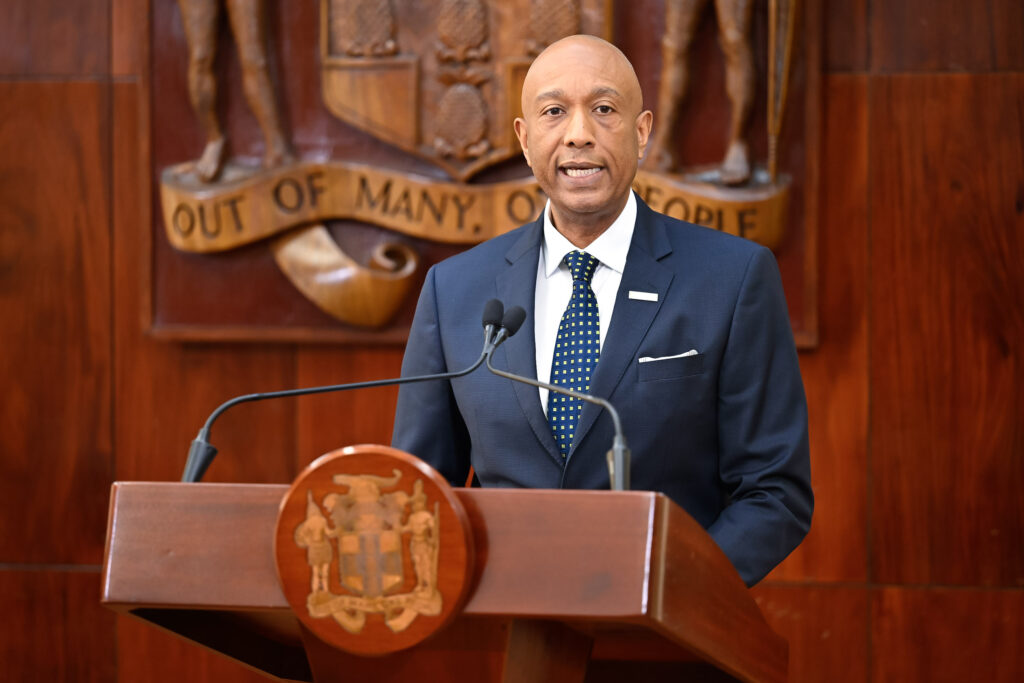
KINGSTON, Jamaica — In a decisive response to Hurricane Melissa’s devastation, the Development Bank of Jamaica (DBJ) has unveiled a comprehensive $10-billion Jamaican dollar (approximately $64 million USD) business recovery initiative. The M5 Business Recovery Programme, announced by DBJ Managing Director Dr. David Lowe at a November 26 Jamaica House briefing, targets enterprises across agriculture, manufacturing, distribution, and tourism sectors that suffered operational disruptions from the Category Five storm.
The program establishes a tiered support system through DBJ’s network of approved financial institutions (AFIs) and microfinance institutions (MFIs), offering qualified businesses access to financing ranging from $20 million to $50 million Jamaican dollars. Dr. Lowe outlined three distinct recovery pathways: a refinance window for existing borrowers needing term adjustments, a reboot window for addressing immediate operational needs, and a rebuild window for enterprises requiring comprehensive reconstruction.
‘Our most critical intervention is the rebuild window for businesses that have been totally disrupted,’ emphasized Dr. Lowe, noting that the program incorporates innovative features including grant components to encourage resilience-building innovations and credit collateral support covering up to 80% of security requirements where traditional collateral became unavailable post-hurricane.
The funding structure operates in phased deployments: an immediate $1 billion allocation from DBJ’s current balance sheet, a recently cabinet-approved $3 billion secondary phase, and a further $7 billion commitment for sector-wide rebuilding efforts. The program design emerged from extensive consultations with financial institutions, business associations, and existing borrowers following the hurricane’s passage, ensuring tailored solutions to address Jamaica’s post-disaster economic challenges.
-
Extended deadline for Window 1 – Regional MSME Matching Grants Programme
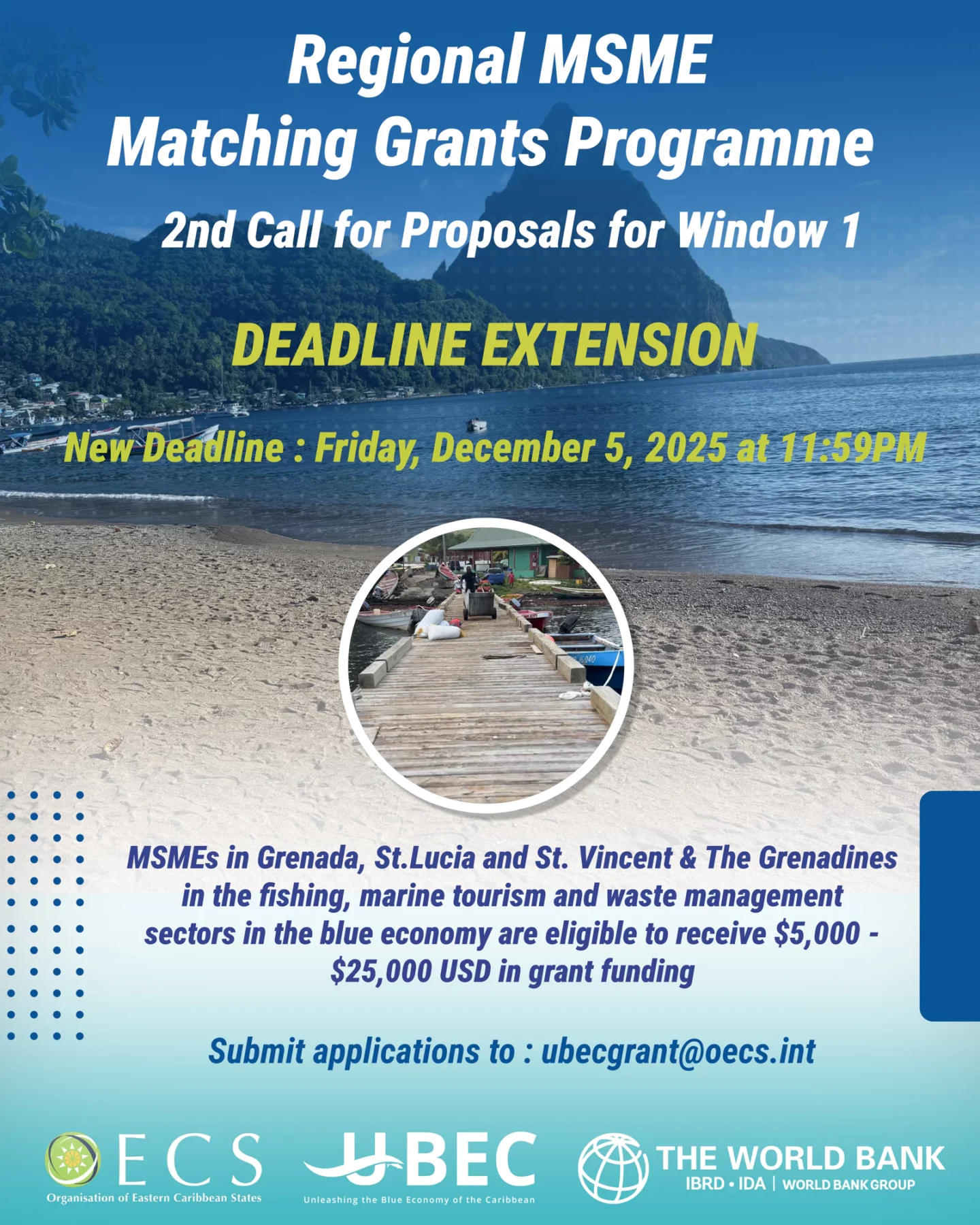
The Organisation of Eastern Caribbean States (OECS) Commission has announced an extension to the Second Call for Proposals under the Regional MSME Matching Grants Programme, part of the Unleashing the Blue Economy of the Caribbean (UBEC) Project. Originally set to close on November 21, 2025, the new deadline is December 5, 2025, at 11:59 pm. This extension provides Micro, Small, and Medium Enterprises (MSMEs) in Grenada, St Lucia, and St Vincent and the Grenadines with additional time to apply for grants aimed at fostering growth in the Fisheries, Marine Tourism, and Waste Management sectors. The programme offers funding ranging from US$5,000 to $25,000 to support equipment upgrades, production improvements, sustainability, market expansion, and capacity building. Training sessions are already underway in Grenada and St Vincent and the Grenadines, while St Lucia has completed its series, with participants reporting enhanced skills and readiness. MSMEs are urged to seize this final opportunity to transform their businesses and contribute to the region’s Blue Economy. Applications can be submitted via email to [email protected], with detailed instructions available in an accompanying video and on the programme’s official website.
-
Dominica to commission 10-megawatt geothermal plant in December 2025, operations set for March 2026
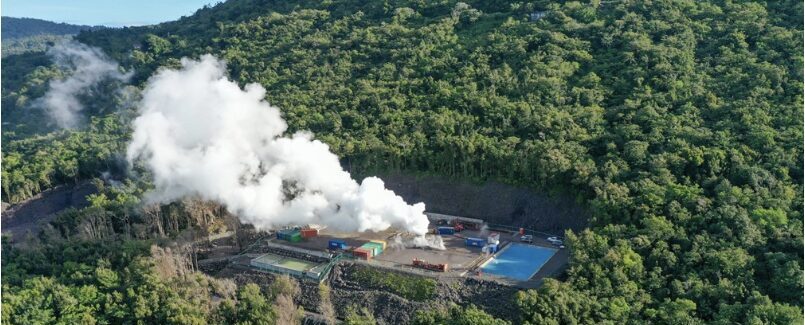
Dominica is poised to take a significant leap forward in its renewable energy journey with the upcoming commissioning of its 10-Megawatt Geothermal Plant in the Roseau Valley. Finance Minister Dr. Irving McIntyre announced in Parliament on Tuesday that the commissioning process will begin in December 2025, with commercial operations slated to commence in March 2026. This development marks a pivotal moment in the nation’s efforts to transition to sustainable energy sources. Dr. McIntyre highlighted the project’s potential to reduce energy costs, enhance energy security, and stimulate economic growth. He also underscored the government’s investment in a high-voltage resilient transmission network, which will connect the geothermal plant to DOMLEC’s hydro stations and the Fond Cole distribution hub. This network, funded by a $1,187,888 loan from the World Bank, is expected to be completed in time for the plant’s commercial launch. The geothermal initiative is seen as a cornerstone of Dominica’s renewable energy agenda, promising to bolster the country’s long-term energy resilience and reduce its reliance on fossil fuels.
-

Saudi Arabia : Minister Monazard advocates for sustainable industrial investment
During the 21st session of the United Nations Industrial Development Organization (UNIDO) General Conference in Riyadh, Saudi Arabia, on November 25, 2025, James Monazard, Haiti’s Minister of Commerce and Industry, highlighted the obstacles to industrial growth in Haiti while reaffirming the government’s dedication to fostering sustainable and inclusive industrialization. Monazard acknowledged the significant challenges but expressed optimism, stating, ‘The gap we have to close seems immense, but it is not insurmountable.’
Monazard emphasized the industrial sector’s pivotal role in revitalizing Haiti’s economy, particularly through job creation and enhancing living standards. He underscored that employment generation remains a top priority for the Presidential Transitional Council and the Haitian government. The Minister called on international partners to assist Haiti in areas such as digitalization, agricultural innovation, resilient technology adoption, and technical training.
On the sidelines of the conference, Monazard met with Ms. Fatou Haidara, UNIDO’s Deputy Director General and Director of Cooperation with Member States and External Partners, to explore opportunities for enhanced collaboration between Haiti and UNIDO. Their discussions centered on bolstering national technical capacities, including youth training, evaluating the Haiti-UNIDO Country Project initiated in 2015-2016, and implementing the objectives of the Doha Development Agenda 2022-2031, which focuses on aiding Least Developed Countries (LDCs). Both parties pledged to intensify their partnership to support Haiti’s sustainable industrial development.
Additionally, Monazard proposed the establishment of an industrial investment fund for LDCs, arguing that such a mechanism would facilitate the execution of transformative projects.
In closing, Haiti reiterated its commitment to actively engage in international exchanges, share its experiences, and forge sustainable partnerships aimed at inclusive industrialization that fosters widespread prosperity.
UNIDO, the UN’s specialized agency for industrial development, assists countries, particularly developing nations, in strengthening their industrial bases, creating jobs, developing clean technologies, and promoting sustainable, inclusive, and innovative economic growth.