分类: business

  • Digicel first Caribbean company to be accredited under CIPS Corporate Ethical Procurement & Supply Kitemark

    Digicel first Caribbean company to be accredited under CIPS Corporate Ethical Procurement & Supply Kitemark

    In a landmark achievement for Caribbean corporate governance, Digicel Group has been honored with the prestigious Chartered Institute of Procurement & Supply (CIPS) Corporate Ethical Procurement & Supply Kitemark—becoming the first Caribbean organization to receive this globally recognized accreditation. The distinction was formally presented during the inaugural CIPS Caribbean Conference and Awards ceremony at Trinidad’s Hyatt Regency last week, where Digicel’s procurement team accepted the award.

    The CIPS Kitemark represents the gold standard in ethical procurement, serving as an international benchmark for organizations demonstrating exemplary supply chain integrity and ethical sourcing practices. This accreditation follows rigorous independent auditing that verified Digicel’s compliance with global best practices in procurement ethics and transparency.

    Arshad Ali, Digicel’s Director of Group Procurement, Supply Chain & Real Estate, commented on this milestone: ‘This accreditation fundamentally reflects our business ethos. It signifies the substantial advancements we’ve made in institutionalizing ethical, transparent, and accountable procurement processes across the Group. Moreover, it reinforces our dedication to elevating standards for responsible sourcing and supply chain governance throughout the Caribbean region.’

    For customers and business partners, the Kitemark provides tangible assurance of Digicel’s commitment to ethical operations throughout its supply network. The company’s procurement decisions incorporate both commercial viability and ethical considerations, ensuring every business interaction maintains rigorous standards of integrity and accountability.

    Michael Watson, Chief Compliance and Cyber Security Officer at Digicel Group, emphasized the broader implications: ‘This recognition underscores Digicel’s unwavering dedication to ethical business practices and the continuous improvement of our ethics and compliance programs. It assures our customers, suppliers, and partners that Digicel adheres to the highest ethical standards in all operations.’

    The achievement positions Digicel among an elite group of organizations worldwide that have demonstrated excellence in ethical procurement practices, potentially setting new industry standards for corporate responsibility and supply chain management in the Caribbean business landscape.


  • Miami conference spotlights Bahamas investment opportunities

    Miami conference spotlights Bahamas investment opportunities

    The Bahamas has been prominently showcased as a prime investment destination for real estate, tourism, and sustainable development during a major Caribbean-focused investment conference held in Miami this month. The Agency Bahamas organized its annual ‘Exploring the Caribbean Conference’ under the theme ‘Gateway to Growth: Investing in the Future of the Caribbean,’ attracting over 100 developers, investors, and industry professionals from across the region.

    The conference served as a strategic platform to expand development pipelines and investment opportunities specifically within The Bahamas. Key discussion areas included real estate development, tourism infrastructure, financial services, digital transformation, and sustainable investment practices.

    Danny Lowe, Founder and Managing Partner of The Agency Bahamas, noted the growing international interest in Caribbean real estate, particularly within stable jurisdictions. ‘This highly successful conference enabled participants to reimagine existing opportunities and identify new pathways for growth,’ Lowe stated, emphasizing The Bahamas’ continuing appeal for lifestyle-oriented and long-term investments.

    Public sector representatives detailed the nation’s investment framework during the event. Phylicia Woods-Hanna, Director of Investments, highlighted The Bahamas’ investor-friendly environment, supported by robust institutions and clear policy directives. ‘Through the Bahamas Investment Authority, we function as a one-stop-shop to simplify investment processes, evaluate major tourism and commercial projects, and assist both Bahamian and international investors in streamlining business operations,’ Woods-Hanna explained.

    Jonathan Lord, Regional Manager of Yachting and Sports at the Ministry of Tourism, Investments and Aviation, identified yachting and sports tourism as emerging growth sectors with significant potential. ‘These represent powerful verticals where The Bahamas possesses natural advantages and considerable untapped potential,’ Lord noted.

    The event also featured contributions from regional officials and private-sector leaders, including ministers from Turks and Caicos and executives from The Agency’s Caribbean operations. Organizers confirmed the conference reinforced The Bahamas’ status as a leading investment destination and supports ongoing initiatives to promote Bahamian real estate and development opportunities in global markets.

  • KFC Black River reopens seven weeks after Melissa

    KFC Black River reopens seven weeks after Melissa

    In a significant step toward recovery, the KFC outlet in Black River, Jamaica, has fully resumed commercial operations seven weeks after Hurricane Melissa devastated the island’s southwestern region. Operated by Restaurants of Jamaica (ROJ), the location had been functioning exclusively as a emergency meal production center in the immediate aftermath of the late October storm, distributing thousands of free meals to affected residents.

    Despite returning to normal customer service, the restaurant continues its humanitarian mission by donating an additional 1,000 meals daily to support families, emergency shelters, and essential workers throughout the ongoing recovery period. This effort is part of ROJ’s broader national feeding initiative, which has provided over 75,000 meals across multiple parishes since the hurricane made landfall on October 28.

    The Black River facility has emerged as a critical distribution hub for St. Elizabeth, one of the hardest-hit areas. Floyd Green, Minister of Agriculture and Fisheries and local Member of Parliament, praised the operation during a recent site visit, noting that most meals are prepared by team members who themselves suffered hurricane-related losses. “Having this level of support coming directly from within St. Elizabeth makes a real difference on the ground,” Green observed, highlighting the program’s community-based approach.

    ROJ Marketing Director Tina Matalon described the reopening as symbolizing both recovery and ongoing commitment, with the location now serving a dual purpose of commercial operations and sustained relief efforts. Restaurant Manager Gaylen Skervin expressed profound pride in her team’s resilience, noting that many staff members experienced severe trauma and property loss yet consistently reported to work. For these employees, the restaurant has become a sanctuary—a place of purpose and stability amid widespread devastation.

  • Hawkish hold

    Hawkish hold

    In a decisive move reflecting heightened economic uncertainty, the Bank of Jamaica (BOJ) maintained its key policy rate at 5.75 percent during its December monetary policy meetings. This decision comes as the Caribbean nation grapples with severe economic disruptions following the catastrophic impact of Hurricane Melissa, which made landfall on October 28.

    The central bank’s Monetary Policy Committee unanimously agreed to retain the rate offered to deposit-taking institutions, signaling what financial analysts characterize as a ‘hawkish hold’ – maintaining current rates while explicitly preparing markets for potential future tightening. This approach underscores the delicate balancing act facing policymakers: supporting an economy devastated by natural disaster while containing mounting inflationary pressures.

    Revised damage assessments reveal the hurricane’s economic impact has exceeded initial projections, with infrastructure losses now estimated at over 40 percent of GDP, substantially higher than the previously estimated 30 percent. The agricultural sector suffered particularly severe damage, losing approximately half of its projected 2024 output value.

    These physical devastations have triggered immediate price escalations, with annual headline inflation accelerating to 4.4 percent in November 2025 from October’s 2.9 percent. The BOJ anticipates further sharp increases in coming months, expecting inflation to exceed its target range of 4-6 percent by early 2026.

    More concerning to policymakers is the upward trajectory of core inflation, which excludes volatile food and energy prices, reaching 4.3 percent in November. This indicates broadening price pressures beyond temporary hurricane-related disruptions. The central bank specifically warned of ‘second-round effects’ where initial price increases in essentials could propagate across the broader economy through heightened inflation expectations.

    The BOJ’s stance appears particularly assertive given the context of expansionary fiscal measures, with Parliament suspending fiscal rules to facilitate increased recovery spending. This fiscal stimulus, while necessary for reconstruction, potentially exacerbates inflationary risks by boosting aggregate demand.

    Economic projections remain grim, with real GDP expected to contract by 4-6 percent in the 2025/26 fiscal year due to extensive damage to productive capacity. A modest recovery is anticipated thereafter, with growth forecasts ranging between -1 percent and 1 percent for the following year.

    The MPC committed to vigilant monitoring of incoming data, particularly regarding core inflation dynamics, and pledged readiness to implement necessary policy actions should inflation risks threaten the return to target ranges. The next policy decision announcement is scheduled for February 23, 2026.

  • COMPANIES TIGHTEN BELTS

    COMPANIES TIGHTEN BELTS

    A comprehensive sector-wide assessment conducted by the Jamaica Observer reveals a significant contraction in corporate bonus distributions for 2024, marking a departure from traditional year-end compensation practices as businesses grapple with Hurricane Melissa’s economic aftermath.

    Economic analysis indicates that discretionary payments have become increasingly selective, with benefits concentrated within a limited segment of corporate Jamaica. While not entirely eliminated, bonus allocations have been substantially reduced or maintained at previous levels, reflecting heightened fiscal conservatism across industries.

    Multiple enterprises have implemented formal communication strategies to manage employee expectations. One marketing organization formally notified staff that their customary Christmas gratuity payment would be deferred pending “cashflow availability,” while a Kingston manufacturing enterprise advised workers that any potential bonus would likely match or fall below previous allocations.

    Public sector employees faced similar constraints, with most receiving no monetary bonuses though some institutional leaders attempted symbolic seasonal gestures. This trend emerges against a backdrop of persistent economic challenges, including elevated inflation metrics, restrictive credit conditions, and ongoing global market uncertainties.

    Prominent economist Keenan Falconer contextualized these developments, noting: “The convergence of multiple economic shocks has fundamentally altered corporate approaches to discretionary compensation. Organizations are prioritizing liquidity preservation as they brace for potentially exacerbated challenges through 2026.”

    The bonus reduction carries significant socioeconomic implications, as December traditionally represents the most critical compensation period for Jamaican households. These payments typically facilitate holiday expenses, educational costs, and debt servicing, with their absence potentially dampening consumer confidence and expenditure patterns.

    One affected employee expressed disappointment: “Anticipating even modest recognition would have enabled familial celebrations during this challenging period. This decision fundamentally alters our holiday dynamics and financial planning.”

    Falconer highlighted the macroeconomic paradox presented by this trend: “Bonus restraint occurs during precisely the period when economic stimulus is most needed for post-hurricane recovery. These payments traditionally provide crucial household income supplementation during first-quarter economic contractions.”

    Not all enterprises adopted restrictive approaches. The tourism sector demonstrated notable resilience, with at least one major hotel group distributing bonuses despite ongoing operational disruptions at several properties. One grateful employee noted: “Our employer’s commitment during this difficult period has been exceptionally reassuring.”

    Even among companies maintaining bonus traditions, many delayed communication until compensation processing, reflecting heightened strategic caution in financial management. Falconer observed that maintained bonus distributions might signal organizational stability and commitment to employee welfare amid broader economic challenges.

    This evolving compensation landscape suggests fundamental recalibration of employer-employee expectations as Jamaica navigates complex post-disaster economic recovery.

  • Island Village welcomes visitors amid hotel disruptions

    Island Village welcomes visitors amid hotel disruptions

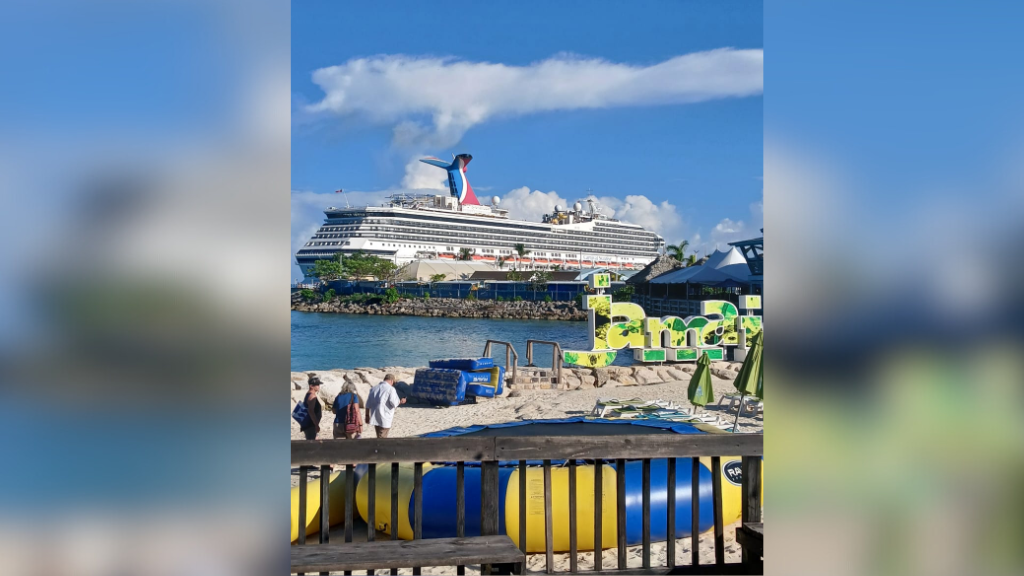
    In the wake of Hurricane Melissa’s disruptive path through Jamaica, Island Village Plaza in Ocho Rios, St. Ann has emerged as a resilient tourism alternative, actively reassuring visitors of its uninterrupted operations and complimentary entry. While numerous area hotels have suspended day-pass offerings due to storm-related complications, the commercial complex emphasizes its comprehensive suite of amenities designed for extended visitor engagement.

    The multifaceted destination promotes itself as an integrated experience center, featuring a cinema theater, adjacent beach facilities connected to Margaritaville, diverse culinary establishments, and retail outlets offering both duty-free merchandise and local souvenirs. Additional facilities include an on-site health clinic and specialized children’s play zone, collectively providing what operations management describes as ‘exceptional value for money’ for family-oriented travelers.

    Andrew Reid, Operations Manager at Island Village, articulated the complex’s value proposition: ‘We’ve architecturally designed this space to deliver a complete day-out experience—encompassing dining, shopping, entertainment, and recreational activities within a secure, accessible environment. Our model eliminates concerns regarding hotel-imposed restrictions during periods of operational uncertainty.’

    Local government officials have endorsed the plaza’s strategic role in regional tourism continuity. St. Ann’s Bay Mayor Michael Belnavis characterized Island Village as a critical infrastructure component during seasonal celebrations, noting that ‘while traditional hospitality providers may temporarily withdraw services, this establishment maintains festive accessibility for both international visitors and community residents.’

    The complex has garnered substantial support from commercial stakeholders and service providers across St. Ann. Todd Fletcher, a prominent business leader, identified the plaza as an economic stabilizer that ensures continuous access to tourism services despite hotel disruptions. Transportation specialists like Bobby McKenzie observe increasing visitor preference for the consolidated destination due to its multimodal accessibility and age-inclusive programming.

    Complementing this perspective, fishing community representative Allan Thompson highlighted the plaza’s synergistic relationship with local industries, particularly through its promotion of fresh seafood consumption beyond conventional hotel confines.

    In response to current challenges, Island Village has implemented enhanced sanitation protocols and staff training initiatives to assist visitors navigating evolving hotel policies. Management maintains that their objective remains supplementary to traditional lodging providers, offering reliable alternatives for day excursions and family activities when partner facilities face operational constraints.

  • Flair Airlines launches Toronto–Montego Bay service as winter tourist season begins

    Flair Airlines launches Toronto–Montego Bay service as winter tourist season begins

    KINGSTON, Jamaica — Canadian ultra-low-cost carrier Flair Airlines has strategically expanded its Caribbean network with the inauguration of direct flights connecting Toronto Pearson International Airport (YYZ) to Montego Bay’s Sangster International Airport (MBJ). The inaugural service commenced operations on December 18th, timed to capitalize on the peak winter travel season.

    This new route establishes Montego Bay as Flair’s second Jamaican destination, enhancing the airline’s presence in the Caribbean region. The service is scheduled to operate with a frequency of up to two weekly flights in each direction. The airline is promoting aggressive introductory pricing, with one-way fares starting from CAD $191 for the Toronto to Montego Bay leg and CAD $196 for the return journey.

    The launch was celebrated by Flair’s CEO, Maciej Wilk, who emphasized the company’s commitment to the Jamaican market. “Integrating Montego Bay into our network represents a significant milestone for Flair and embodies the core principles of our Flair FWD initiative: delivering reliable, enjoyable, and affordable travel options,” Wilk stated. He further highlighted the airline’s established connections with Jamaica and expressed pride in fortifying economic and tourism links between Canada and the island nation.

    The expansion arrives at a pivotal juncture for Jamaica’s tourism industry, which is navigating post-hurricane recovery while entering its most profitable season. Edmund Bartlett, Jamaica’s Minister of Tourism, officially endorsed the new air service, underscoring its critical role in the island’s economic resilience and accessibility. He noted that enhanced airlift capacity is vital for sustaining recovery momentum, strengthening the tourism sector, and meeting the robust international demand for Jamaica’s unique cultural offerings and natural attractions.

    Shane Munroe, CEO of MBJ Airports Limited, echoed this sentiment, asserting that the new direct and affordable flight option significantly boosts Montego Bay’s competitiveness as a premier Caribbean hotspot. He highlighted the destination’s appeal, which includes pristine beaches, dynamic culture, and diverse opportunities for both relaxation and adventure, all now more accessible to Canadian visitors.

  • GraceKennedy eyes full control of Tastee Cheese producer

    GraceKennedy eyes full control of Tastee Cheese producer

    KINGSTON, Jamaica — In a landmark corporate maneuver, Jamaican conglomerate GraceKennedy has finalized an agreement to purchase New Zealand-based Fonterra Co-operative Group’s entire stake in Dairy Industries (Jamaica) Ltd (DJIL). This acquisition grants GraceKennedy complete, 100 percent ownership of the manufacturer responsible for Jamaica’s iconic Tastee Cheese brand, effectively concluding a nearly three-decade formal joint venture between the two entities.

    While specific financial details remain confidential, this transaction represents a significant consolidation of local ownership over a pivotal segment of Jamaica’s food industry. The commercial relationship between GraceKennedy and Fonterra dates back to the 1980s, with their partnership formally structured under a joint venture agreement established in 1996.

    Frank James, Group Chief Executive Officer of GraceKennedy, emphasized the strategic importance of this acquisition. He stated that the move is a direct reflection of DJIL’s consistent performance and substantial market value. “This strategic acquisition enables us to capitalize on existing momentum, accelerate business expansion, and reinforce our dominant position within the dairy sector,” James commented.

    Andrea Coy, Chief Executive of GraceKennedy Foods, provided further insight, clarifying that while ownership is transitioning entirely to GraceKennedy, the company intends to maintain its commercial ties with Fonterra. Coy acknowledged the long-standing partnership’s success, noting, “This collaboration has generated immense value over many years. We anticipate continued cooperation with Fonterra in areas where mutual commercial benefits exist.”

    DJIL, established in 1964, commenced its cheese processing operations in 1968 and has since carved out a unique niche in the Caribbean market. It holds the distinction of being the sole manufacturer in Jamaica and the broader Caribbean region that produces canned processed cheese, primarily under its flagship Tastee Cheese label.

    The company’s diverse product range, which services both local and regional consumers, extends beyond canned cheese to include vacuum-sealed cheese and cheese spreads under the Tastee brand, yogurt marketed under the “This Is Really Great” brand, and Anchor brand powdered milk.

    GraceKennedy, a diversified multinational with extensive interests in food production and financial services, has indicated that the transaction’s finalization is now subject to the satisfactory completion of standard closing conditions customary for deals of this nature.

  • The foreign exchange market in Cuba is undergoing transformation

    The foreign exchange market in Cuba is undergoing transformation

    The Central Bank of Cuba has initiated a comprehensive transformation of its foreign exchange market with the implementation of a three-segment exchange rate system effective December 18, 2025. Under the leadership of President Juana Lilia Delgado Portal, the monetary authority has designed this gradual approach to address longstanding economic distortions while avoiding severe macroeconomic shocks.

    The new structure establishes two fixed exchange rates—Segment I operating at 1:24 and Segment II at 1:120—alongside a third segment featuring a daily floating rate determined by market forces. This multi-tiered system aims to bridge the gap between official rates and the real value reflecting Cuba’s foreign currency shortage while protecting essential transactions from sharp devaluation.

    Central Bank officials emphasized that immediate unification without transition could trigger excessive inflation and further erosion of the Cuban peso’s purchasing power. The strategy instead focuses on gradual correction of accumulated imbalances through controlled mechanisms that connect state and non-state economic actors in production, export, and marketing operations.

    The floating rate segment specifically targets increased foreign currency inflows by offering competitive prices to exporters and remittance senders. This approach intends to discourage informal market activities while creating incentives for export sector development and higher wage payments to skilled workers.

    Complementing these measures, the government will strengthen MLC accounts and guarantee operability of foreign currency transactions for non-state enterprises. The reforms form part of broader macroeconomic stabilization efforts aligned with Cuba’s socialist development objectives, prioritizing reduced inflation, currency convertibility, and economic growth.

    The Central Bank will publish daily exchange rates on its official website, with full regulatory details appearing in the Official Gazette. Additional information regarding implementation mechanisms will be released in coming days.

  • Lazard akkoord met ontbinden schuldherstructureringscontract

    Lazard akkoord met ontbinden schuldherstructureringscontract

    Suriname’s Ministry of Finance has formally dissolved its contentious debt restructuring agreement with financial advisory firm Lazard, marking the end of a five-year partnership that has cost the South American nation nearly $9.5 million. Finance Minister Adelien Wijnerman confirmed to Starnieuws that the termination follows mutual consent through official correspondence, though Suriname still owes approximately $3 million in outstanding fees to the New York-based investment bank.

    The original 2020 contract, amended in 2025, stipulated Lazard would receive a $120,000 monthly retainer fee plus a 0.25% success fee on restructured or swapped foreign government debt and state-guaranteed commercial obligations—covering both principal and interest portions. However, several contractual provisions remained unenforced, including requirements mandating Lazard’s involvement in all debt negotiation phases and payment of $109,000 for legal advisory services regarding the Value Recovery Instrument (VRI).

    The VRI—a debt financing mechanism that would have pledged future oil royalties to creditors in exchange for debt reduction—has been rendered obsolete by Suriname’s recent bond issuance that redeemed outstanding debts. Former government officials had promoted the VRI as potentially reducing Suriname’s debt by over $300 million, but financial experts condemned it as an oppressive agreement that would have indefinitely mortgaged the nation’s future oil revenues.

    Background reveals Lazard was selected through a 2020 tender process that included five prestigious firms: Moelis & Company, Morgan Stanley, Credit Suisse, Rothschild, and Lazard Frères. A special committee appointed by former Finance Minister Armand Achaibersingh chose Lazard for its low bid and global reputation, despite the controversial terms.

    Contract termination clauses allow either party to exit with thirty days’ notice, after which obligations cease except for specific provisions. The agreement also stipulates that if Suriname resumes debt management strategies within twelve months with previously involved parties, Lazard must be reengaged under identical terms. Minister Wijnerman assured that outstanding payments to Lazard will be settled, noting the firm—as a publicly traded company—must report client payment obligations to regulatory authorities.