
分类: business

  • MARTIN MAKES HISTORY AT NCB

    MARTIN MAKES HISTORY AT NCB

    National Commercial Bank Jamaica (NCBJ) has embarked on a significant leadership transition by appointing Chief Operating Officer Sheree Martin as interim chief executive, making her the first woman to lead Jamaica’s largest financial institution. This strategic move follows the successful completion of a dramatic turnaround phase that saw annual net profit surge from $6.1 billion to $13.2 billion for the fiscal year ending September 2025.

    Chairman Robert Almeida characterized this appointment as a deliberate pivot from ‘disruptive change’ to ‘evolutionary change,’ emphasizing that the bank’s next chapter will be defined by operational discipline rather than grand strategy. Martin assumes leadership following the departure of Bruce Bowen, whose contract concludes in August after steering the bank through what Almeida termed a period of ‘secular decline.’

    Despite the remarkable profit growth, NCBJ faces substantial challenges with operational efficiency. The bank’s cost-to-income ratio remains critically high at approximately 81%, far from the board’s target of driving it ‘down into the 60s.’ Operating expenses climbed to $72.6 billion, with staff costs increasing 14% to $30 billion, creating a significant impediment to sustainable growth.

    The efficiency drive has been framed in starkly shareholder-focused terms, with internal calculations suggesting that a 10% reduction in group operating expenses could translate into an additional $0.75 per share in quarterly dividends from parent company NCB Financial Group (NCBFG). Almeida directly linked this efficiency gap to Martin’s mandate, noting that her approach will focus on being ‘brilliant at the basics’ to reduce costly errors and rework.

    Almeida provided tangible examples of operational inefficiencies, highlighting the substantial costs and client frustration associated with replacing debit cards and rectifying duplicate payments. ‘Every time we make mistakes, it inconveniences the customer and it costs us money,’ he stated, arguing that eliminating routine failures is central to improving both margins and service quality.

    The leadership transition occurs against a pressing backdrop of unresolved financial obligations linked to companies associated with NCBFG’s ultimate chairman, Michael Lee-Chin. Noteholders are awaiting payment of US$94 million due December 31, 2025, under a restructured debt arrangement exceeding US$297 million. Lee-Chin recently told employees that repayment options included full settlement, payment during a 45-day cure period, or divestment of his shareholding in NCBFG.

    Martin brings over 15 years of senior financial services experience to the role, with the board citing her expertise in strategy execution, organizational transformation, and oversight of critical operational and technology functions. While Martin assumes the interim position, the board has initiated a formal search for a permanent CEO, examining both internal and external candidates, with Almeida emphasizing they have ‘the luxury of time’ due to the strength of the internal team.

  • Melissa-ravaged small shopkeeper back on her feet with JN Bank support

    Melissa-ravaged small shopkeeper back on her feet with JN Bank support

    In the wake of Hurricane Melissa’s catastrophic passage over Jamaica, the storm’s legacy extended far beyond physical destruction, severely crippling the economic foundations of local entrepreneurs. Andrea Knox, a dedicated shopkeeper from Lime Hall, St Ann, faced the utter devastation of her livelihood when the Category 5 hurricane tore the roof from her establishment, a business she had painstakingly built over five years.

    The immediate aftermath forced Knox into swift action. During a brief lull in the storm, she, aided by family members, salvaged what merchandise she could, transporting it to her nearby home, which had also sustained damage. The total losses were substantial: a destroyed roof, ruined electronic equipment including a television and sound system, and a complete spoilage of refrigerated goods—three boxes of ice cream, chicken, and other items—due to prolonged power outages. Knox initially estimated her total losses at approximately $200,000 in spoiled stock and a further $250,000 required for structural repairs.

    Faced with an uncertain path to recovery, Knox found critical support through her existing relationship with JN Bank Small Business Loans. The institution provided a comprehensive financial recovery package. This began with an immediate two-month payment holiday on her existing loan, alleviating the pressure of repayments during the most critical period. Furthermore, the bank proactively restructured her loan agreement. This restructuring extended the loan’s term and provided additional capital, specifically allocated for roof repairs and replenishing inventory.

    Cian Murphy, Client Relations Manager at JN Bank Small Business Loans, emphasized the institution’s strategic approach. Murphy stated that such support, including tailored payment holidays and loan restructuring, is a fundamental commitment to the small business sector, which acts as the backbone of local communities. The goal extends beyond short-term relief, aiming to ensure long-term business viability by adjusting repayment schedules, reducing monthly obligations, and aligning terms with the client’s post-disaster financial reality. This flexibility is designed to help entrepreneurs regain stability without facing insurmountable long-term financial setbacks.

    With the injected funds, Knox successfully repaired her shop with a new roof and restocked her shelves. She expressed profound relief and confidence, noting that her business is not only operational again but is on a more secure footing. The intervention transformed a scenario of complete operational disruption into a story of resilient recovery, underscoring the vital role of responsive financial institutions in post-disaster economic healing.

  • Opportunities opening up with crime reduction, says Holness

    Opportunities opening up with crime reduction, says Holness

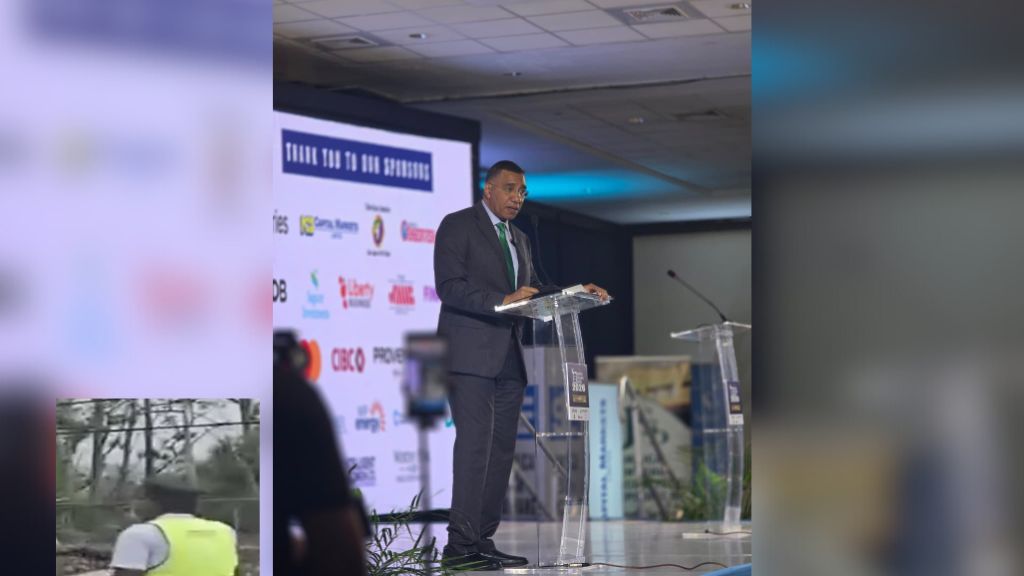
    Jamaican Prime Minister Andrew Holness presented a compelling case for investment on Tuesday, positioning the nation’s robust macroeconomic stability and significant public safety improvements as foundational pillars for economic opportunity. Delivering the keynote address at the Jamaica Stock Exchange’s 21st Investment and Capital Markets Conference, Holness outlined a decade of disciplined fiscal management and consistent growth as evidence of the country’s economic resilience.

    The Prime Minister established a direct correlation between national security and economic prosperity, declaring that reducing criminal activity transcends social necessity to become a central component of investment strategy. ‘Lowering crime is not just a social imperative. It is central to attracting the quality investment our country needs,’ Holness told conference attendees, reinforcing the symbiotic relationship between safer communities and financial opportunity.

    Government initiatives targeting serious crime have yielded measurable results, with Jamaica recording fewer than 700 homicides in 2025—the nation’s lowest murder tally in over three decades. Holness highlighted increased support for law enforcement agencies and strategic security policies as integral to creating a more favorable business environment.

    ‘When people feel secure, businesses flourish. When investors see progress on crime, they see Jamaica as a place to grow,’ the Prime Minister asserted, challenging both domestic and international investors to adopt bold visioning for Jamaica’s economic future. He emphasized that the convergence of economic stability and security enhancements could unlock transformative opportunities across multiple sectors.

    The three-day conference serves as a formal gathering for policymakers, business leaders, and market participants to develop strategies for expanding Jamaica’s capital markets and strengthening investor engagement mechanisms.

  • Syria recovers country’s largest oilfield

    Syria recovers country’s largest oilfield

    In a significant development for Syria’s energy sector, senior officials have outlined ambitious plans to restore production at the nation’s largest oilfield using domestic expertise and international partnerships. During a press conference at the strategically vital al-Omar oilfield in Deir Ezzor Governorate, SPC executive Qablawi detailed the comprehensive rehabilitation strategy.

    The rehabilitation initiative will leverage national technical capabilities while fostering cooperation with both local enterprises and international corporations. Qablawi emphasized the field’s critical importance to Syria’s economic infrastructure, revealing ongoing negotiations with previous operator Shell to facilitate complete ownership transfer to the Syrian government.

    The official provided stark production figures highlighting the field’s dramatic decline: from approximately 50,000 barrels per day before the conflict to current output of merely 5,000 barrels. This precipitous drop is attributed to substandard extraction methods employed in recent years that disregarded environmental considerations.

    To address this shortfall, the Syrian Petroleum Company has formulated a comprehensive recovery blueprint aligned with global operational standards. The plan targets production restoration to pre-conflict levels of 40,000-50,000 barrels daily, representing a potential tenfold increase from current output that could significantly boost national energy independence and economic stability.

  • Global job quality stagnates despite resilient growth

    Global job quality stagnates despite resilient growth

    A comprehensive analysis by the International Labour Organization (ILO) reveals a troubling paradox in global labor markets: while economic growth demonstrates resilience and unemployment rates remain stable, fundamental improvements in job quality have ground to a halt worldwide.

    The latest Employment and Social Trends 2026 report indicates the global unemployment rate will hold steady at 4.9% throughout 2026, representing approximately 186 million individuals. However, beneath this surface stability lies a deeper crisis of job quality. ILO Director-General Gilbert F. Houngbo emphasized that stable statistics mask the harsh reality that hundreds of millions remain trapped in cycles of poverty, informality, and economic exclusion.

    Critical examination reveals nearly 300 million workers subsist on less than $3 daily, while informality continues its upward trajectory. Projections indicate 2.1 billion workers will occupy informal positions by 2026, lacking essential social protections, workplace rights, and job security. The most severe regression appears in low-income countries, where workers with already precarious conditions face further deterioration.

    The report identifies multiple intersecting challenges: youth unemployment climbed to 12.4% in 2025, with approximately 260 million young people classified as NEET (not in education, employment, or training). Artificial intelligence and automation present additional threats, particularly for educated youth in high-income nations seeking entry into skilled occupations.

    Gender inequality remains deeply entrenched, with women representing just 40% of global employment and demonstrating 24% lower labor force participation rates than men. Progress in female workforce engagement has stagnated, delaying advancements toward workplace gender equality.

    Demographic shifts further complicate the global employment landscape. Aging populations in developed economies constrain labor force growth, while low-income countries struggle to convert rapid population expansion into productive employment opportunities. Without sufficient job creation, poorer nations risk squandering their demographic potential.

    Global trade disruptions and policy uncertainties compound these challenges, particularly affecting wages in Southeast Asia, Southern Asia, and Europe. Nevertheless, trade continues supporting 465 million jobs globally, with over half concentrated in Asia and the Pacific region.

    The ILO urges coordinated action among governments, employers, and workers to address these systemic issues through responsible technological integration, enhanced skills development, and policies specifically targeting gender and youth employment gaps.

  • Antigua and Barbuda Maps Out 2026 Tourism Push with New Events and Upgrades

    Antigua and Barbuda Maps Out 2026 Tourism Push with New Events and Upgrades

    The Caribbean nation of Antigua and Barbuda has announced an ambitious tourism development strategy for 2026, featuring an extensive array of new events, property enhancements, and infrastructure improvements designed to elevate its position as a premier travel destination.

    In a comprehensive destination update released on January 19, the Antigua and Barbuda Tourism Authority revealed a meticulously planned calendar of international sporting competitions, cultural celebrations, and culinary festivals. The strategic initiative aims to diversify visitor experiences while maintaining a commitment to authentic Caribbean hospitality.

    Colin C. James, Chief Executive Officer of the ABTA, emphasized the nation’s dedication to quality and authenticity. “Our islands are fully accessible and eagerly anticipating visitor arrivals. For 2026, we take pride in showcasing developments that will deliver genuine experiences to our guests, complemented by strategic investments that will enhance our overall tourism product quality,” James stated.

    The 2026 events calendar commences in April with the debut Antigua Racing Cup (April 9-12), immediately followed by the AUA Rohrman Trail & Swim Fest (April 11-12). May features Antigua and Barbuda Culinary Month, incorporating Restaurant Week (May 3-17) and the FAB – Food, Art & Beverage Fest on May 23, coinciding with the tenth anniversary celebration of Run in Paradise. The vibrant Antigua Carnival is scheduled for July 25 through August 4, while November will host the prestigious Antigua and Barbuda Art Week.

    Accommodation enhancements include the anticipated 2026 opening of Moon Gate, a boutique luxury property, alongside completed renovations at established resorts including Hermitage Bay and Curtain Bluff. New culinary and adventure offerings feature Fat Urchin at Jolly Harbour Marina and expanded eco-experiences provided by Rock Adventures.

    Significant infrastructure developments are progressing, including runway rehabilitation at V.C. Bird International Airport scheduled for November 2026 completion. The new cruise terminal at Antigua Cruise Port will commence partial operations on January 24, with full completion anticipated by July 2026.

  • An American-led Venezuela shatters Dominican exceptionalism

    An American-led Venezuela shatters Dominican exceptionalism

    The Dominican Republic stands at a critical juncture as its longstanding position as the Caribbean’s stable economic haven faces unprecedented challenges. For two decades, the nation benefited from regional instability, attracting capital and talent by default while neighboring countries grappled with crises. This era of asymmetric advantage is rapidly closing as geopolitical shifts reshape the competitive landscape.

    Venezuela’s economic renaissance, backed by substantial American investment and operational scale, represents a structural transformation rather than theoretical possibility. Simultaneously, Cuba’s impending transition threatens to further redistribute regional capital and talent. These developments will fundamentally reprice Caribbean economic dynamics, challenging the Dominican Republic’s current development model.

    Critical examination reveals fundamental flaws in the nation’s innovation strategy. Punta Bergantín, initially promoted as a ‘Silicon Beach of the Global South,’ demonstrates concerning execution gaps. Instead of innovation infrastructure, the project has prioritized conventional tourism assets—hotels, resorts, and recreational facilities. This discrepancy between branding and implementation risks degrading the country’s credibility as a serious innovation destination.

    The national development approach continues emphasizing physical assets: expanded airports, additional marinas, and real estate developments. While nearshoring initiatives and semiconductor manufacturing represent positive steps, they remain tactical advantages dependent on labor arbitrage rather than sustainable competitive differentiation.

    The nation’s innovation ecosystem suffers from structural deficiencies. With research and development investment languishing below 0.3% of GDP—significantly lower than innovation-driven economies’ 2-3%—the Dominican Republic lacks crucial architecture: coherent venture capital systems, startup operating standards, corporate integration pathways, and exportable digital IP pipelines.

    An imminent talent crisis compounds these challenges. The educated Venezuelan diaspora, currently residing in the Dominican Republic, represents one of the hemisphere’s most capitalized migrant populations comprising engineers, entrepreneurs, and professionals. As Venezuela reopens, this talent exodus will accelerate, creating a vacuum of expertise, institutional memory, and entrepreneurial energy.

    The solution requires immediate, coordinated action across five domains: formalizing innovation as a distinct industry with proper policy frameworks; building comprehensive venture infrastructure beyond mere funding; professionalizing startups as export vehicles rather than experimental projects; creating cross-border moats through Dominican IP exports; and integrating public-private execution mechanisms.

    Without cohesive innovation architecture, the Dominican Republic risks maintaining beautiful infrastructure while the region economically reengineers around it. The window for strategic response is narrowing rapidly as competitive pressures intensify across the Caribbean basin.

  • Security Scandal Deepens in BPO Industry as PM Launches Investigation

    Security Scandal Deepens in BPO Industry as PM Launches Investigation

    A significant security breach has rocked Belize’s Business Process Outsourcing (BPO) industry, prompting direct intervention from Prime Minister John Briceño. The escalating crisis involves sophisticated credit card fraud operations allegedly originating from within the sector itself, with multiple companies reporting substantial financial losses.

    The investigation gained urgency after a second private company came forward detailing thousands of dollars lost to an elaborate scam. Evidence suggests BPO employees have been circumventing PCI compliance protocols by smuggling mobile phones into secure workstations to capture customers’ sensitive financial information.

    KwiqPass, a prominent ticketing application platform, emerged as a primary victim of these fraudulent activities. Company representatives disclosed over $30,000 in illegitimate credit card transactions occurring within a two-year period. Detailed forensic analysis revealed a pattern of targeted attacks, including forty chargeback purchases for VIP tickets to the Belize International Music and Food Festival using a single compromised Chase Bank card.

    The fraud operation extended beyond concert tickets, encompassing semi-professional basketball games, special events in Corozal, and regional boxing matches. Investigators identified a consistent pattern of fraudulent purchases linked to a fake identity under the surname Atieno, totaling approximately $10,000 in additional losses.

    In response to these security breaches, KwiqPass has implemented enhanced verification protocols that automatically flag and block suspicious transactions in real-time. This proactive measure aims to protect both event promoters and consumers from further financial harm.

    Prime Minister Briceño acknowledged the gravity of the situation while emphasizing the government’s commitment to preserving the industry’s stability. “We have a responsibility to ensure we can keep these companies here and protect their interests,” Briceño stated, confirming collaboration with the Financial Intelligence Unit (FIU) to address systemic vulnerabilities.

    Industry observers note the potential catastrophic consequences if security concerns persist. Delroy Fairweather of KwiqPass warned that continued breaches could trigger widespread distrust, potentially leading to BPO closures and significant job losses throughout Belize.

    The Prime Minister is scheduled to convene with ministry officials to develop strengthened security frameworks for the sector. The Belize BPO Association has not yet issued an official statement regarding the ongoing investigation.

  • Casa Dominicana launched in Hong Kong and Macao to boost trade and tourism

    Casa Dominicana launched in Hong Kong and Macao to boost trade and tourism

    A new strategic initiative designed to foster economic and cultural exchange between the Dominican Republic and China’s Special Administrative Regions has been formally inaugurated. Dubbed ‘Casa Dominicana/Hong Kong and Macao,’ the project is spearheaded by the investment promotion agency InvestDR with the primary objective of enhancing bilateral trade flows, stimulating investment opportunities, and boosting tourism.

    The launch event, structured as a high-profile luncheon hosted by InvestDR President Kelly Leung, served as a platform to showcase the Dominican Republic’s vast potential as an emerging market for discerning investors from Hong Kong and Macau. The initiative enjoys robust institutional support, having secured the official endorsement of both the Dominican Consulate General and the Dominican-Chinese Chamber of Commerce in Hong Kong. This backing is a critical component of the Caribbean nation’s broader strategic pivot to deepen its economic footprint across Asia.

    The gathering also functioned as an occasion to honor key figures who have been instrumental in advancing Dominican interests in the region. Among those recognized were Sonia Chan Prado, representing the Macao Association for the Promotion of Exchange between Asia-Pacific and Latin America, and Dato’ Sri Maximus Baldur of the World Trade United Foundation. The event drew a diverse audience of leaders from the business, religious, and diplomatic communities.

    In a symbolic handover, the outgoing Consul General, Eduardo Álvarez, addressed attendees, urging continued collaboration and support for his successor, Luis Ernesto Camilo, to ensure the initiative’s enduring success and the strengthening of bilateral relations.

  • Telecom Rate Freeze Pending; AG Awaits Directive

    Telecom Rate Freeze Pending; AG Awaits Directive

    BELIZE CITY – The Belizean government’s highly anticipated plan to implement a year-long freeze on telecommunications rates has encountered an administrative delay, with the Attorney General’s office confirming it has not yet received formal instructions to draft the necessary legislation.

    Attorney General Anthony Sylvestre addressed reporters outside the High Court on Monday, revealing that despite Prime Minister John Briceño’s announcement last week regarding the proposed statutory instrument, his department awaits official drafting instructions to begin the legal process. The planned measure would temporarily lock current phone and internet service prices while merger negotiations between telecommunications providers BTL and SMART continue.

    Sylvestre emphasized the standard procedural protocol, stating, “We act on instructions. A particular ministry may have an issue, so we will receive drafting instructions and would draft a rule or statutory instrument based on that instruction, ensuring it complies with the constitution and other prevailing laws.”

    The Attorney General confirmed that the proposed BTL acquisition will receive comprehensive discussion during Tuesday’s Cabinet meeting. When pressed by reporters regarding the Prime Minister’s potential participation in these discussions – given his family’s partial ownership of SMART – Sylvestre declined to speculate, noting that Cabinet had not yet collectively examined the matter.

    “The discussion will take place tomorrow at Cabinet. We don’t know what will happen tomorrow,” Sylvestre stated, adding that he wished to avoid venturing down “what could eventually be a rabbit hole” regarding procedural specifics ahead of the formal meeting.

    The development highlights the complex interplay between regulatory oversight, market consolidation, and consumer protection in Belize’s telecommunications sector, with the government attempting to balance competitive market forces with affordable public access to essential services.